
Review · TOKYO
Tokyo After 5: Authentic Japanese Food & Drink Night Tour
Tokyo’s best evening food is often found in small places where menus are hard to read and tables are close together. This three-and-a-half-hour walk takes you from polished Ginza to the griddles of Tsukishima and the smoky skewers of Yurakucho. I like the hands-on monjayaki stop and the chance to enter local eateries you may well miss on your own.
I also like the small group of no more than eight and the practical help with ordering, subway travel, and food customs. Guides such as Yuko and Mizuki have earned especially warm praise for making unfamiliar dishes easier to understand. The main caution is that the food portion may feel light for the price, and some outings have included only two operating restaurants rather than three.
Key points to know before you book
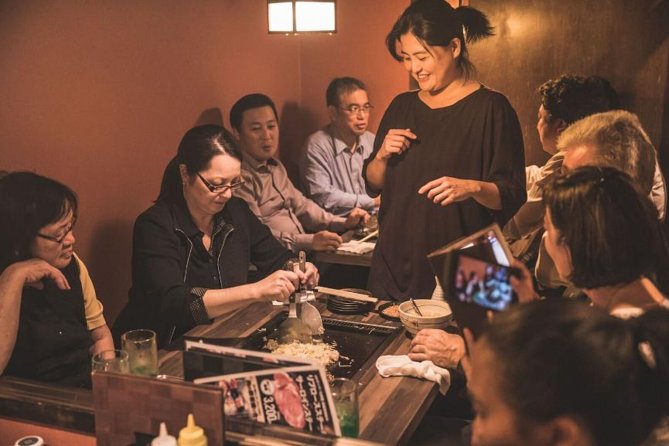
- Monjayaki is the evening’s most distinctive dish: You cook this soft Tokyo pancake on a hot plate at the table, often with cabbage and seafood.
- Ginza is only the opening act: The main food stops are in Tsukishima and Yurakucho, reached by subway with two transit tickets included.
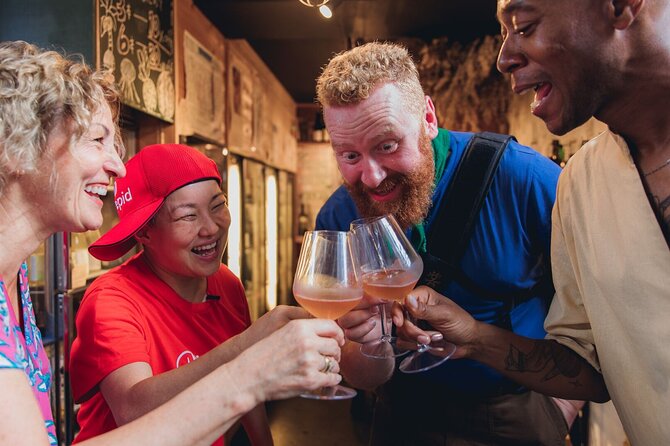
- You receive two drinks: Choose from options such as sake, beer, or a soft drink, with extra drinks available to buy.
- Yakitori may include less familiar cuts: The final stop can feature cartilage or other chicken parts, not just standard meat skewers.
- The food plan is not suitable for every diet: Vegetarian, vegan, and gluten-free meals are not available.
- Allow for brisk walking and stairs: Comfortable shoes matter, especially during subway transfers and the route to the first full meal.
From Mitsukoshi’s Lion to Tokyo after dark
Meet your guide at 5 p.m. in front of the famous Lion statue outside Mitsukoshi Ginza. This is a useful landmark, but the tour starts on time, so give yourself a little extra time to reach Ginza Station and find the department store entrance.
The first 15 minutes are spent gathering the group and getting oriented. Since the maximum group size is eight, you should have a better chance to hear your guide and ask questions than on a large bus-style food outing. That small size also matters later, when everyone needs to fit around a grill or into a compact neighborhood bar.
The tour then moves through Ginza, Tokyo’s polished shopping district. You may stop at Itoya, the famous stationery shop, and look at wagashi, traditional Japanese sweets. The sweets are part of the included food sampling, though the format can feel more like a department-store introduction than a full tasting session.
That distinction matters. If you expect to eat your way through Ginza from the first minute, you may find this opening slow. One account describes the early portion as a department-store visit and a stop to collect sweets, followed by a long wait for an elevator. The better way to view Ginza is as a short cultural prelude before the evening turns toward small local food shops.
More Evening Food Tours in Japan
- Tokyo Night Foodie Tour in Shinjuku – Seasonal Sushi, Wagyu Beef
★ 5.0 · 1,161 reviews - Kyoto Night Foodie Tour in Gion (9+ dishes + 6 Sake tastings)
★ 5.0 · 1,762 reviews - Kyoto Night All-Inclusive Eats and Streets, Gion and Beyond
★ 4.6 · 576 reviews
Why monjayaki is worth the subway ride
The first substantial food stop is Tsukishima Monja Street. Tsukishima is closely associated with monjayaki, a Tokyo specialty that resembles a savory pancake but has a much softer, wetter texture than the familiar Osaka-style okonomiyaki.
You cook it on a hot plate at your table. The guide or chef helps with the process, and you can watch the mixture sizzle as it cooks. The dish is often built around cabbage with seafood or other additions. It is not a neat fork-and-knife meal. You scrape small portions from the hot plate with a little metal spatula, which makes the meal social and slightly messy in the best way.
I like this stop because it gives you a food experience, not just a plate placed in front of you. You learn how the dish developed, talk with the chef, and take part in the cooking. For many people, monjayaki is the most memorable part of the evening because it is strongly tied to Tokyo rather than being a general Japanese restaurant item.
Still, set your expectations correctly. Monjayaki is not a large meal by itself. Some portions may include cabbage, shrimp, mussels, or other modest ingredients, and one account found the first serving too small to do much for hunger. If you are arriving after a long day of sightseeing, eat a light snack beforehand rather than assuming this first stop will fill you.
The route to Tsukishima involves the subway and walking. Two subway tickets are included, which removes a small layer of Tokyo transit hassle. Your guide also helps you move through the system, a useful service if you are still learning the city’s many station entrances and lines.
Yurakucho’s yakitori alley brings the evening to life
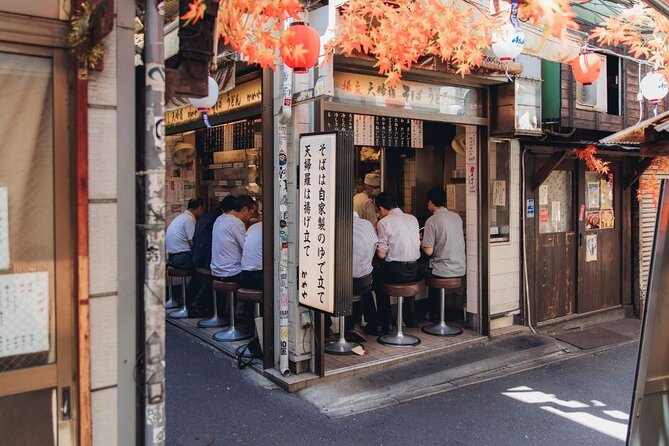
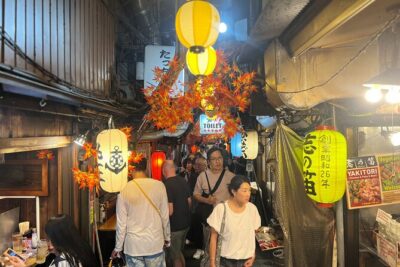
The final food area is Yurakucho Sanchoku Inshokugai, often described as Yakitori Alley or a farm-to-table dining alley. Here, the mood changes from table-side cooking to compact bars and casual eateries near the tracks and central Tokyo nightlife.
Yakitori means grilled chicken skewers, usually finished with salt or a sweet-savory tare sauce. Each shop may use its own sauce, which gives the final stop a bit of local character. You receive yakitori with one included drink, such as sake or beer, and you can buy more if you want to continue the evening.
This is the part of the tour that best matches the idea of Tokyo after work. Office workers may be winding down, the bars are small, and the food comes in simple portions meant to accompany conversation and drinks. You are not being taken to a polished restaurant designed for sightseeing groups. The setting is more immediate and local.
The tradeoff is that yakitori can include unfamiliar cuts. One person expected ordinary chicken skewers but received cartilage instead. Another found some grilled meat underdone for their taste. If you are adventurous, this is part of the appeal. If you prefer predictable cuts cooked firmly, tell your guide early and ask what is being served.
The tour officially ends near Ginza Station, but you may remain at the bar after the scheduled finish if the arrangement allows. You can also continue into Ginza nightlife on your own. That makes the ending flexible, particularly if you want a later dinner or another drink.
Three food moments, but not always three restaurants
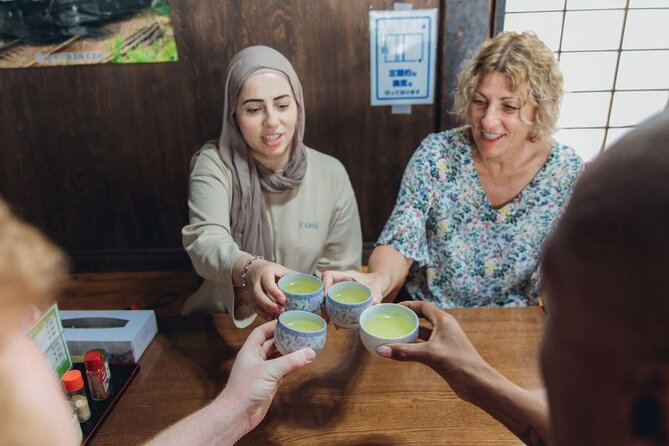
The advertised plan includes three local food items: wagashi, monjayaki, and yakitori. It also includes two drinks and describes visits to three eateries. In practice, the exact shape of the evening can vary.
Some outings have included only two restaurant venues, with the wagashi handled as a sweet bought at the department store rather than a separate restaurant stop. That is an important point when you compare this tour with a food crawl that promises several full tastings.
I would think of the experience as two main savory stops plus a sweet introduction, not as three full meals. The monjayaki and yakitori are the central foods. Wagashi adds a traditional taste and a look at Japanese food presentation, but it should not be counted as a substantial course.
Timing may also shift. The listed schedule gives about 15 minutes at Mitsukoshi and Ginza, 90 minutes around Tsukishima, and 75 minutes in Yurakucho. Delays can happen when the group gathers, waits for transit, or moves through busy stations. One account described an unusually long elevator wait and a delayed start, while other accounts found the movement smooth.
More Evening Food Tours in Tokyo:
- Winner 2025 Rome Twilight Trastevere Food Tour by Eating Europe
★ 5.0 · 5,157 reviews - Winner 2025 Florence Sunset Food & Wine Tour by Eating Europe
★ 5.0 · 5,015 reviews - Saigon By Night and Street Food By Motorbike | Opt: Ao Dai Riders
★ 5.0 · 4,066 reviews - Private Street Food Evening Walking Tour in Ho Chi Minh City
★ 5.0 · 3,175 reviews
Guides make or break the experience
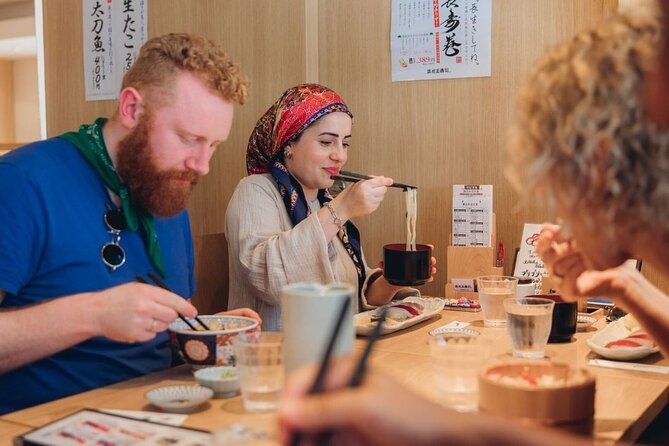
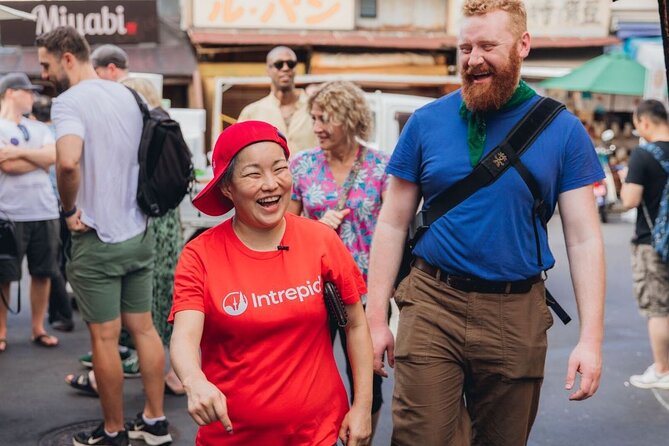
The guide is central to the value here. The best guides do more than lead you from one address to another. They explain how to handle the grill, translate menus, describe food customs, and help you move through Tokyo’s subway system.
Yuko received especially strong praise for guiding people through the underground connections and explaining the monjayaki preparation. Mizuki was also praised for his courtesy, humor, and explanations of foods that were new to the group. Shohei was described as friendly and effective at making the food enjoyable. Rocky, a newer guide at the time of one outing, made a strong effort to keep the group happy.
You cannot guarantee a particular guide, so treat those names as examples of what the experience can be at its best. English ability and presentation may vary. A few people found their guide difficult to understand or felt that explanations about Tokyo and the food were too limited. That is a serious concern because translation and interpretation are a large part of what you are paying for.
A useful approach is to ask specific questions at the start. Ask what you will eat, which items contain seafood or unusual chicken parts, and how the two drinks are allocated. If you are curious about customs, say so early. A guide who knows what you want to learn can make the walking time far more useful.
Is $122.33 a fair price?
At $122.33 per person, this is not a cheap way to eat in Tokyo. You are paying for a guide, three and a half hours of coordination, two subway tickets, three food tastings, and two drinks. You are also paying for access to small local establishments where ordering can be difficult if you do not speak Japanese.
The value is strongest for a first evening in Tokyo. You get an introduction to Ginza, practice using the subway, a hands-on local dish, and a casual drinking district at the end. The guide can also give you ideas for what to eat and see during the rest of your stay.
The value weakens if you judge the tour by food quantity alone. Monjayaki portions may be modest, wagashi may be a small sweet rather than a sit-down course, and the yakitori stop may include only a few skewers and small dishes. Extra drinks cost more, so your final bill can rise if you want to stay with the group.
I would book it for orientation and access, not for a large dinner. If you are comfortable finding Tokyo restaurants yourself, $122.33 could buy several independent meals. If you want a guide to handle the language, route, and ordering while introducing you to foods you might not choose alone, the price is easier to justify.
Walking, age rules, and food restrictions
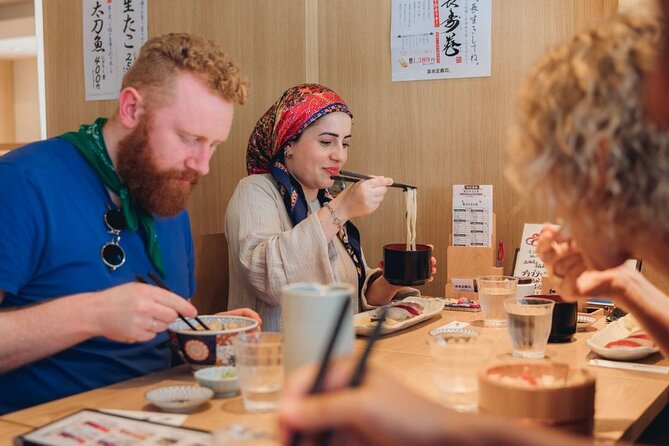
The tour includes a moderate amount of walking, subway transfers, and some stairs. Wear comfortable shoes and keep your hands free. The pace has been described as brisk at times, so stay close to the guide in crowded areas and at station entrances.
The minimum age is 12. The legal drinking age in Tokyo is 20, and anyone under 20 receives non-alcoholic drinks instead of sake or beer. The experience is not suitable for vegetarian, vegan, or gluten-free diets because the participating establishments cannot cater to those requirements.
The tour is offered with a mobile ticket and is near public transportation. Most people can take part, but you should be ready to stand, walk, climb stairs, and sit at compact neighborhood tables. The restaurants are locally owned and run, which is a real advantage for anyone who wants food in ordinary local settings rather than a destination built only for sightseeing groups.
Free cancellation is available if you cancel at least 24 hours before the start time. Changes made within 24 hours are not accepted, and poor weather can lead to a different date or a full refund.
Who should book this Tokyo food walk?
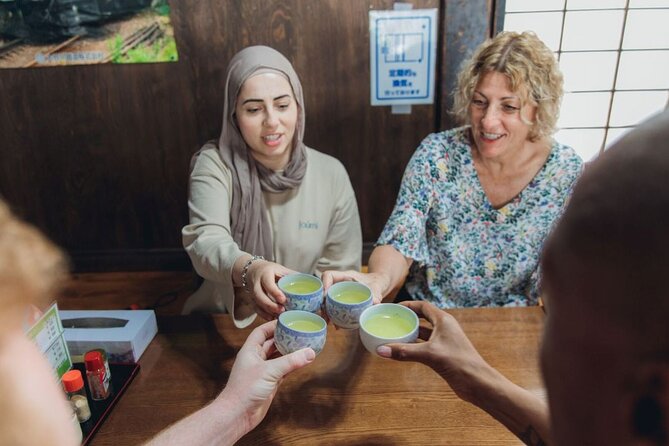
I would recommend it to a first-time visitor who wants a guided introduction to Tokyo nightlife without spending an evening trying to decode menus and station maps. It also suits adventurous eaters who are happy to try soft monjayaki, seafood additions, sake, and less familiar yakitori cuts.
It is a good fit for solo visitors and couples who like meeting a small group. The maximum of eight people keeps the outing personal, and the shared grills and compact bars naturally create conversation.
I would be more cautious if you want a full dinner, a long lesson in Japanese cuisine, or a carefully controlled menu. It is also a poor choice for vegetarians, vegans, people avoiding gluten, and picky eaters who want standard chicken skewers. Families with children aged 12 to 19 can join, but the alcohol portion will be replaced with soft drinks.
Should you book Tokyo After 5?
Book this tour if you want help finding the less obvious side of Tokyo food culture, especially monjayaki and the small bars of Yurakucho. The subway guidance, local venues, two included drinks, and hands-on cooking give the evening a clear purpose beyond simply eating.
Do not book it expecting three large restaurant meals. Think of it as a guided introduction with two main savory stops, a wagashi tasting, and a night walk through Ginza and nearby neighborhoods. At $122.33, the tour is worth it when translation, navigation, and local access matter more to you than quantity.
FAQ
Where does the tour start?
It starts at Mitsukoshi Ginza, at 4-chōme-6-16 Ginza, in front of the Lion statue facing Chuo Street.
Where does the tour end?
The tour ends at Ginza Station, at 4-chōme-1-2 Ginza. Tokyo Metro Ginza Station is the listed end point.
How long does the tour last?
The experience lasts approximately three hours and 30 minutes.
What food and drinks are included?
You receive wagashi, monjayaki, and yakitori, along with two drinks such as sake, beer, or a soft drink. Additional drinks are available to purchase.
Can children join the tour?
The minimum age is 12. People under 20 cannot be served alcohol and will receive non-alcoholic drinks instead.
Are vegetarian, vegan, or gluten-free options available?
No. The participating bars and restaurants cannot accommodate vegetarian, vegan, or gluten-free requirements on this tour.
Fresh off the menu around Tokyo
- Shinjuku Tokyo: Authentic Japanese Home-Style Culinary Class★ 4.9 · 125 reviews
- Shinjuku: Golden Gai Food Tour★ 4.6 · 77 reviews
- Shinjuku: Food Tour – 15 Dishes at 4 local eateries★ 4.8 · 246 reviews
- Shibuya Tokyo: Sushi Making Class (Vegan/Vegetarian/Halal)★ 4.7 · 29 reviews
- Shibuya: Ramen Dojo Tokyo | Make All 3 (Tonkotsu/Shoyu/Miso)★ 4.8 · 207 reviews
- Tokyo: Secret Food Walking Tour★ 4.7 · 38 reviews
- Ramen Making from Scratch +Akihabara Tour –Cooking Class★ 5.0 · 25 reviews
- Exclusive Tokyo Ramen Kitchen Experience★ 4.7 · 34 reviews
Tokyo Food Tours, compared.
Tokyo: Shinjuku Food Tour (13 Dishes at 4 Local Eateries)
Read our review →
Sushi Making Tokyo Roll and Authentic Japanese Sushi Class
Read our review →
Tokyo Tsukiji Fish Market Food and Culture Walking Tour
Read our review →
Best of Shinjuku: Izakaya Food Tour (4 Stops, 14+ Tastings)
Read our review →
Tokyo: Sushi Making Class in a Happi Coat near a Famous Spot
Read our review →
Sushi Making Tokyo! Popular Maki Sushi & Japanese Sushi(+Recipe!)
Read our review →
Tokyo Sushi Making Class in Tsukiji with Professional Chef
Read our review →
Tokyo Night Foodie Tour in Shinjuku – Seasonal Sushi, Wagyu Beef
Read our review →Browse the lists this tour appears in