
Review · TOKYO
Shinjuku: Golden Gai Food Tour
Shinjuku after dark is a feast for the senses: neon signs overhead, smoke from yakitori grills, tiny bars, and alleys that can feel impossible to understand on your own. This three-hour walk ties those sights to food, taking you from postwar stories and street snacks to a final drink in Golden Gai.
I like the small group size, capped at eight, because a guide can explain ordering customs and keep the evening conversational. I also like the mix of yakitori, sushi, ramen, and local dishes, rather than one long meal in a single restaurant. Guides such as Alex, Ray, Wes, and Yappy have earned especially warm praise for their energy and local tips.
The main caution is price. At $170 per person, this is not a cheap way to eat inexpensive Japanese food, and a few stops may feel ordinary for the cost. You are paying for the guide, the introductions, the two included drinks, and the ease of moving through places that can be hard to navigate alone.
Key points to know before you book
- Three hours through Shinjuku after dark: Expect food, walking, local history, and nightlife rather than a sit-down dinner.
- Yakitori, sushi, ramen, and more: Several stops provide a broad taste of casual Tokyo food.
- Golden Gai is the finale: End in a tiny bar among more than 200 pubs, karaoke rooms, and drinking spots.
- Two drinks are included: Additional food and drinks cost extra.
- Small groups matter here: The tour is limited to eight people, though one past booking had nine.
- Arrive early: The meeting point is outside Tajimaya Coffee House, and the guide waits only five minutes.
Why this tour works as a first night in Tokyo
Shinjuku can be a lot to take in on your own. The station is huge, the streets change character every few blocks, and the best food often sits behind a small doorway with little English signage. A guide gives the evening a clear shape.
This is not simply a list of restaurants. You walk through several sides of the district, hear how it grew after the war, and see the contrast between old drinking alleys and the towering neon of modern Tokyo. Along the way, your guide can explain table manners, ordering habits, and what to look for on a menu.
That makes this a good opening-night activity. You get food in manageable portions, a general sense of direction, and practical advice you can use for the rest of your stay. Guides including Ray and Wes have been praised for explaining etiquette and answering random questions without making the evening feel like a lecture.
The group size is important. Eight people is still enough for a social evening, but small enough to move through narrow lanes without taking over every doorway. The setting is intimate by nature, and a large tour would work against it.
More food tours around Tokyo:
- Tokyo: Shinjuku Food Tour (13 Dishes at 4 Local Eateries)
★ 5.0 · 6,603 reviews - Sushi Making Tokyo Roll and Authentic Japanese Sushi Class
★ 5.0 · 3,971 reviews - Tokyo Tsukiji Fish Market Food and Culture Walking Tour
★ 5.0 · 3,184 reviews
Starting near Shinjuku Station and finding your guide
The meeting point is in front of KISSATEN Tajimaya Coffee House at 1 Chome-2-6 Nishishinjuku, Shinjuku City. From Shinjuku Station, follow signs for the West Gate and leave through exit B15.
Give yourself extra time. Shinjuku Station is not a place to cut things close, especially if you are unfamiliar with Tokyo. The tour can wait only five additional minutes after the scheduled start, and once the group leaves, the guide cannot provide directions or take phone calls to help late arrivals.
That rule may feel strict, but it matters on a walking tour with restaurant bookings and a fixed sequence of stops. I would arrive at least 15 minutes early, use the station signs rather than relying only on a map pin, and treat the coffee house as your fixed landmark.
Hotel pickup is not included. It may be arranged for an additional charge, but most people will simply make their own way to the station area. Transportation costs are also your responsibility.
Yakitori and the smoky taste of Shinjuku
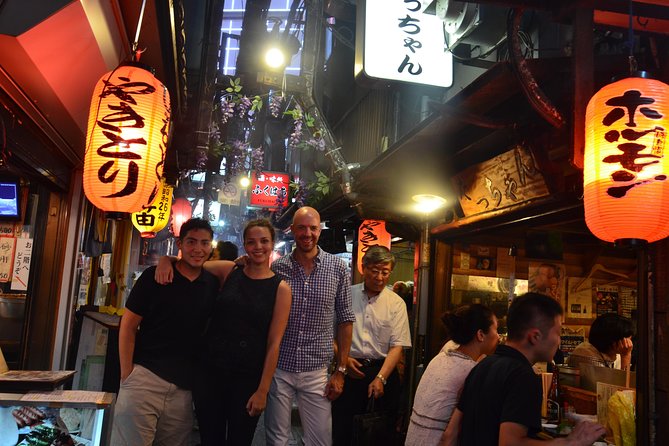
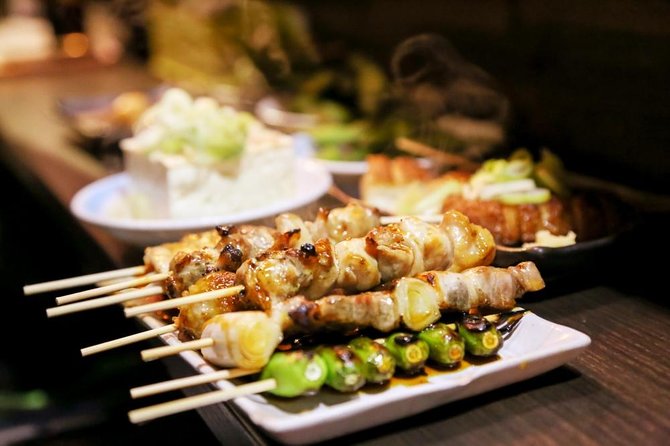
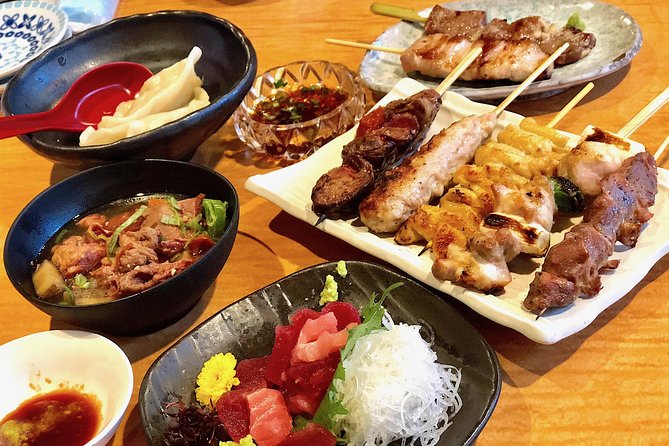
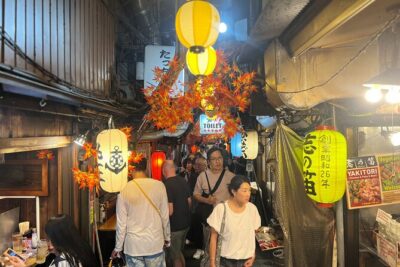
One of the early food highlights is yakitori, grilled chicken skewers served in the kind of compact drinking district where locals stop after work. The appeal is not fancy presentation. It is the smell of the grill, the quick service, and the chance to eat the same kind of food that fits naturally into an evening out.
A stop in the area sometimes called Piss Alley gives the experience useful historical context. The district grew from a postwar black market, and its narrow lanes still feel far removed from the broad avenues and tall buildings nearby. You may see tiny counters, close-set stalls, and signs competing for attention overhead.
Your guide can help with the basics: how to order, how to handle shared dishes, and how to read the rhythm of a small Japanese eatery. This is one of the places where local help has real value. You can find yakitori on your own, but you may not know which door to enter or how much food to order before moving on.
Portions appear to be generous across the tour. That is good news if you arrive hungry, but plan accordingly. This is not a light sampling walk. Several people have found the amount of food more than expected, and you may want to keep breakfast or lunch modest if this is your evening plan.
Sushi and local dishes between the alleys
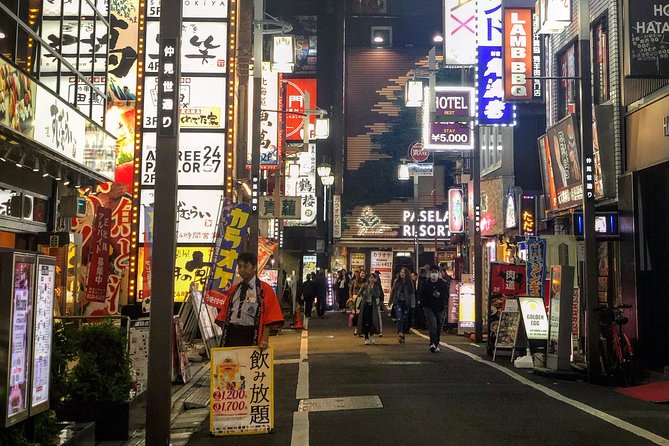
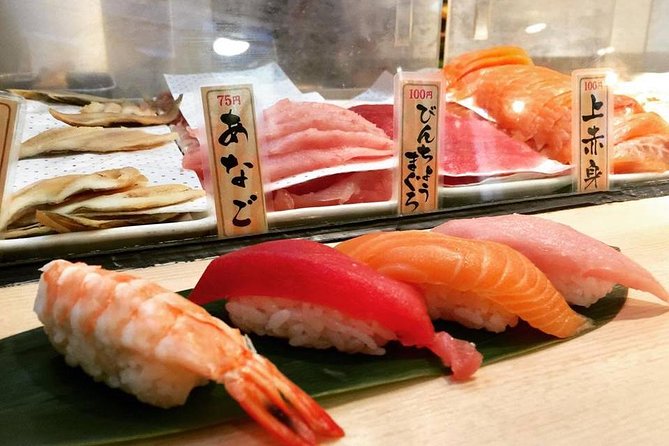
The food stops vary, but the format gives you a useful range of everyday Japanese eating. Along with skewers, the route can include sushi and other local dishes before the ramen course.
A guide may show you how to eat sushi properly and explain why certain items are served in a particular way. That kind of instruction is helpful if this is your first visit to Japan, though it is also useful for experienced visitors who want more context than a menu provides.
The food is meant to support the walk, not turn the tour into a high-end dining event. This is important when judging the cost. You are trying several casual places, and the individual dishes may not be the most memorable meals you have in Tokyo.
One past participant found the food average compared with the price, and another felt the food section was underwhelming. That criticism is fair to consider. Group-friendly restaurants are not always the same places a serious food enthusiast would choose for a special meal.
On the other hand, the variety is a strength. You can try items you might not recognize, get help ordering, and keep moving instead of spending the full night at one restaurant. A few people particularly liked being introduced to dishes they would not have ordered alone.
Same city, a different plate:
- Tokyo: Shinjuku Food Tour (15 Dishes and 4 Eateries)
★ 4.9 · 2,033 reviews - Tokyo: Roll and Authentic Sushi Making Class in Asakusa
★ 4.9 · 1,957 reviews - Best of Shinjuku: Izakaya Food Tour (4 Stops, 14+ Tastings)
★ 5.0 · 1,863 reviews - Tokyo: Sushi Making Class in a Happi Coat near a Famous Spot
★ 4.9 · 1,377 reviews
Ramen with a local ordering lesson
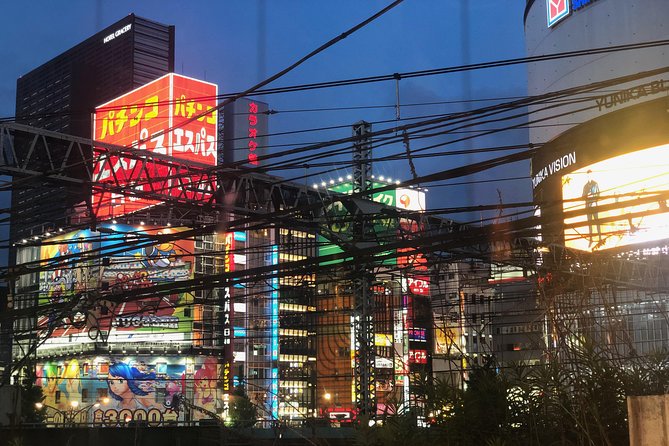
The ramen stop gives the evening a hearty finish before Golden Gai. You can expect a bowl with the savory, filling flavors that make ramen such a central part of casual Tokyo dining.
One useful detail from the route is the ordering advice. At one ramen shop, the recommended choice was found at the top left of the vending machine. That sort of small tip can save you from staring at a row of buttons while a line waits behind you.
The ramen is not presented as a luxury tasting. It is a practical Tokyo meal, and you will likely appreciate it more after several hours of walking. If you have dietary restrictions, allergies, or strong dislikes, ask about them before booking or tell the guide at the start. The supplied details do not promise special menus or substitutions.
Because food is served at several stops, the pace can feel full. You will not have much control over how long you linger at each place. If you prefer to choose one restaurant, order slowly, and focus closely on each dish, a dedicated ramen or food class may suit you better.
Stories of postwar Shinjuku and modern neon
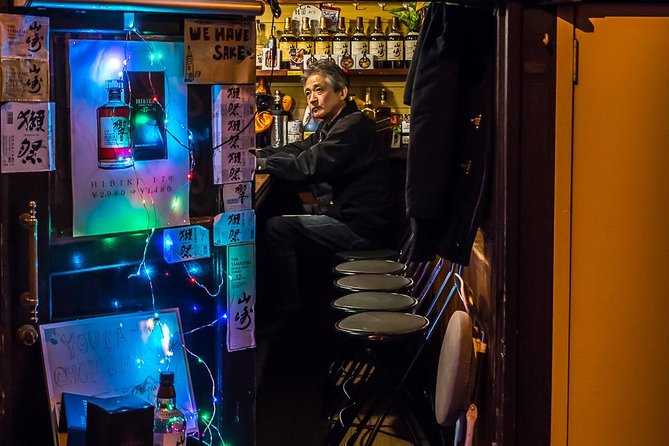
The best part of the route is the connection between food and place. Shinjuku is not just a backdrop for dinner. Its bars, alleys, entertainment streets, and station crowds reflect several periods of Tokyo life.
Your guide explains how parts of the district once operated as a postwar black market. That background helps you understand why some streets feel improvised and tightly packed rather than carefully planned. The tour also passes through the entertainment area often described as Asia’s largest red-light district, a part of Tokyo that can feel surprising if your image of Japan is limited to temples, gardens, and department stores.
You may also see the Godzilla landmark during the walk. It is a quick visual reminder of how pop culture and commercial spectacle fit into Shinjuku’s identity.
Guides use local stories and, in some cases, historic photos shown on a portable slideshow. That is a worthwhile touch because it lets you compare the street in front of you with its earlier appearance. The history is brief and tied to what you are seeing, rather than separated into a long classroom talk.
The strongest guides bring personality to this section. Alex has been praised for charm and clear explanations. Ray is known for food culture and table etiquette. Wes has been singled out for useful area tips, while Yappy has been praised for navigation and lively conversation. Guide quality can vary from one departure to another, but the experience clearly depends on having someone who can connect the facts to the streets.
Golden Gai, where the tour becomes a night out
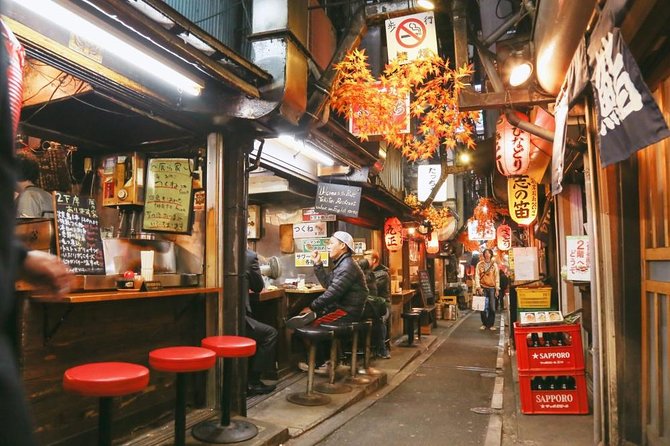
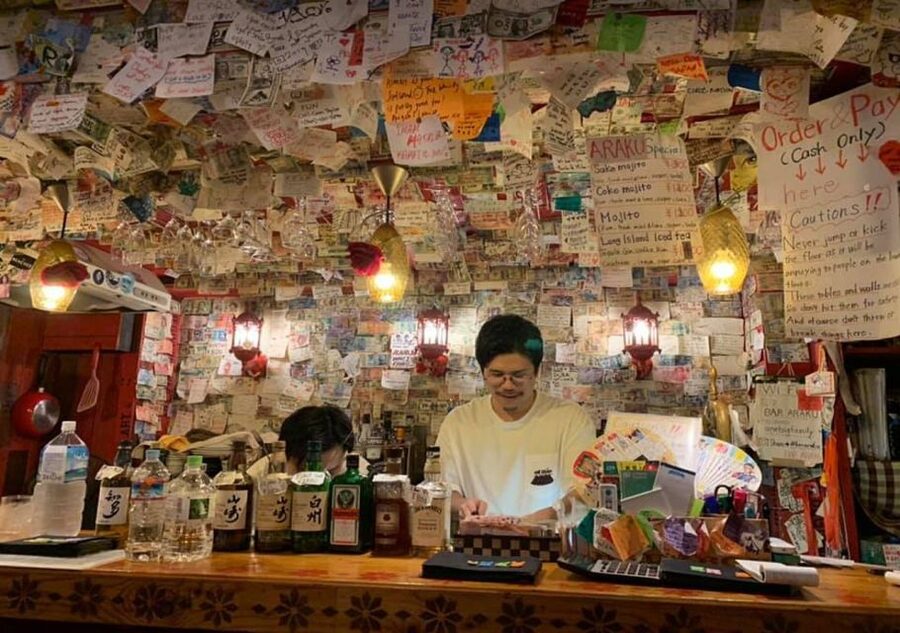
Golden Gai is the final act. This famous maze contains more than 200 small pubs, karaoke bars, and quirky drinking spots, many of them large enough for only a handful of people.
The scale is the point. You are not entering a broad cocktail lounge with room to spread out. You are stepping into a compact bar where the design, regulars, and house rules may matter as much as the drink itself. Retro decorations and dim lighting recall the 1950s, giving the area a time-capsule feel.
The tour includes a bar visit and two drinks overall. One drink is typically saved for the Golden Gai portion, though the exact sequence can vary. Extra drinks and food are not included, so keep some yen available if you want to continue the evening.
A karaoke bar has been a memorable finish for some departures, adding a playful end to the walk. You should not assume every group will have precisely the same bar or activity, since small venues and local arrangements can change.
This is where a guide is most useful. Golden Gai has many rules that are not always obvious, and some bars may charge cover fees or restrict entry. The tour gives you a way to enter with a local connection rather than wandering from doorway to doorway trying to guess where you belong.
What the $170 price really covers
At $170 per person, the tour costs more than the food alone. Yakitori, ramen, and casual sushi are generally not expensive in Tokyo, so you should not book this expecting a bargain meal.
The value comes from several things:
- A local English-speaking guide for three hours
- Food at multiple stops
- Two included drinks
- A Golden Gai bar visit
- History and neighborhood orientation
- Help with ordering and etiquette
- A small group capped at eight people
I would call it a convenience and orientation purchase. You are paying to avoid research, reduce the risk of entering the wrong place, and move through several parts of Shinjuku with someone who knows the alleys.
The price is easier to justify for a first-time visitor who wants a planned night and may not feel ready to explore Golden Gai alone. It is harder to justify for a repeat Tokyo visitor who already knows Shinjuku, speaks Japanese, and mainly wants the cheapest possible route to yakitori and ramen.
Gratuity is not included. Transportation, hotel pickup, and extra food or drinks also cost extra. The tour offers free cancellation up to 24 hours before departure and lets you reserve now and pay later, which is useful if your Tokyo plans are still shifting.
Who should book this Shinjuku evening
I would choose this tour if you are visiting Tokyo for the first time, enjoy trying several foods in one night, and want an easy introduction to nightlife. It also suits solo visitors and couples who would rather have company than decode Shinjuku alone.
The minimum age is 20 for every member of your group. This is not a family activity, and minors cannot join because the evening centers on alcohol and bars.
You should also be comfortable walking through crowded streets and standing or sitting in compact restaurants. The supplied details do not give a specific distance or accessibility plan, so ask the operator directly if mobility support is important to you.
Food-focused travelers should set their expectations carefully. You will taste plenty, but the tour is not built around Japan’s top restaurants. The guide, access, stories, and route are as important as the dishes.
Should you book the Golden Gai Food Tour?
Book it if you want a friendly, structured first look at Shinjuku after dark. The mix of yakitori, ramen, history, ordering tips, and a Golden Gai drink gives you much more than a standard restaurant meal, and the small group makes the narrow venues easier to manage.
Skip it if $170 feels too high for casual food, if you dislike drinking, or if you prefer to choose restaurants at your own pace. For the best value, arrive hungry, get to B15 early, and think of the fee as payment for access and local guidance rather than for the food alone.
FAQ
Where does the Shinjuku Golden Gai food tour meet?
Meet in front of KISSATEN Tajimaya Coffee House at 1 Chome-2-6 Nishishinjuku, Shinjuku City, Tokyo 160-0023. From Shinjuku Station, follow signs for the West Gate and exit through B15.
How long does the tour last?
The tour lasts three hours. Starting times vary, so check availability when booking.
What food is included?
The tour includes a variety of dishes at multiple food stops. The supplied details specifically mention yakitori, sushi, local dishes, and ramen.
Are drinks included?
Two drinks are included. Additional drinks and food are available to purchase at your own expense.
Does the tour visit Golden Gai?
Yes. The tour includes a bar visit in Golden Gai and finishes with a drink there.
What language is the tour conducted in?
The tour is conducted in English by a live English-speaking local guide.
Can people under 20 join?
No. Every member of the group must be at least 20 years old because the tour focuses heavily on nightlife and alcohol.
What happens if I arrive late?
The guide can wait only five minutes after the scheduled start. After that, the tour departs, and the guide cannot provide directions or be contacted by phone during the tour.
Fresh off the menu around Tokyo
- Shinjuku Tokyo: Authentic Japanese Home-Style Culinary Class★ 4.9 · 125 reviews
- Shibuya Tokyo: Sushi Making Class (Vegan/Vegetarian/Halal)★ 4.7 · 29 reviews
- Shinjuku: Food Tour – 15 Dishes at 4 local eateries★ 4.8 · 246 reviews
- Shibuya: Ramen Dojo Tokyo | Make All 3 (Tonkotsu/Shoyu/Miso)★ 4.8 · 207 reviews
- Tokyo: Secret Food Walking Tour★ 4.7 · 38 reviews
- Ramen Making from Scratch +Akihabara Tour –Cooking Class★ 5.0 · 25 reviews
- Exclusive Tokyo Ramen Kitchen Experience★ 4.7 · 34 reviews
- Eat/Drink like a LOCAL-Taverns & Ramen★ 4.9 · 23 reviews
Tokyo Food Tours, compared.
Tokyo: Shinjuku Food Tour (13 Dishes at 4 Local Eateries)
Read our review →
Sushi Making Tokyo Roll and Authentic Japanese Sushi Class
Read our review →
Tokyo Tsukiji Fish Market Food and Culture Walking Tour
Read our review →
Best of Shinjuku: Izakaya Food Tour (4 Stops, 14+ Tastings)
Read our review →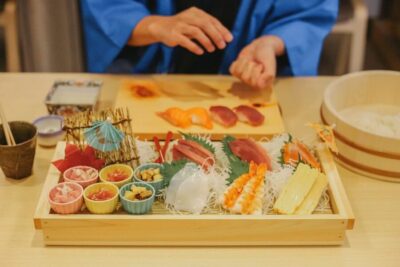
Tokyo: Sushi Making Class in a Happi Coat near a Famous Spot
Read our review →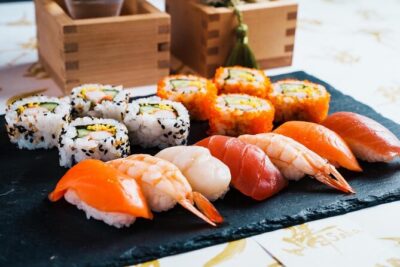
Sushi Making Tokyo! Popular Maki Sushi & Japanese Sushi(+Recipe!)
Read our review →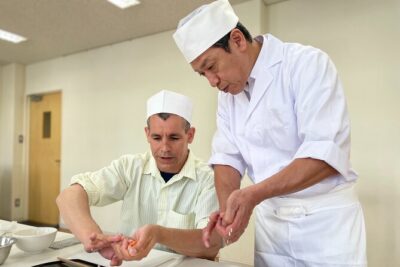
Tokyo Sushi Making Class in Tsukiji with Professional Chef
Read our review →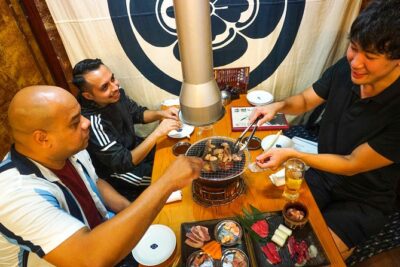
Tokyo Night Foodie Tour in Shinjuku – Seasonal Sushi, Wagyu Beef
Read our review →Browse the lists this tour appears in