
Review · TOKYO
Tokyo Tsukiji Fish Market Food and Culture Walking Tour
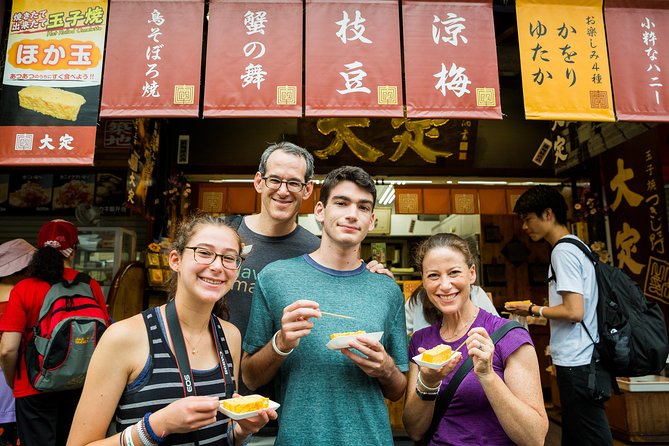
Tsukiji is less a single market than a maze of food stalls, counters, tools, and seafood shops, and this tour gives you a local handrail through it. You may see sea urchin packed in neat boxes, tuna being cut, and pufferfish in tanks before sitting down to sushi or a seafood bowl. I like the food variety and the way guides connect each bite to Japanese cooking. I also like the stop at Tsukiji Honganji Temple, an easy-to-miss part of the area.
The main catch is expectation. This is a tour of the outer Tsukiji market, not the former inner wholesale market and tuna auction site. Food portions can also feel light for the price, and some guides are more lively than others. If you need vegetarian, halal, gluten-free, or allergy-friendly food, this is not the right choice.
Key points to know before you book
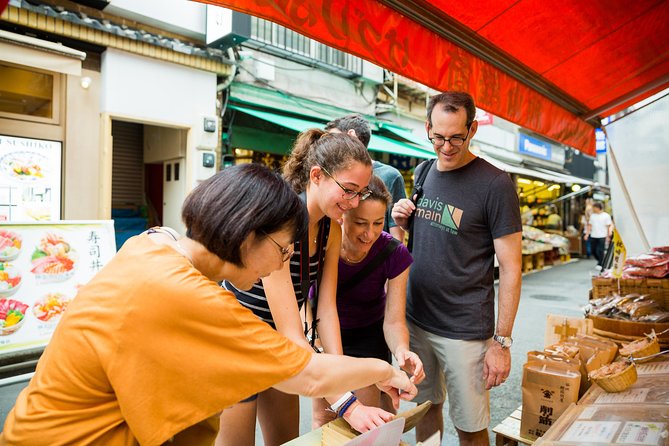
- Three hours of tasting and market walking: Expect dashi soup, green tea, fish cakes, Japanese omelette, seasonal fruit, Wagyu beef, seafood, and either sushi or a fish bowl.
- Meet at Tsukiji Honganji Temple: Go to the main gate on the front side, not the back side shown by some map directions.
- The outer market is the focus: You will see shops and food stalls, not the old inner wholesale auction operation.
- Guide quality matters: Guides named Kiyo, Naz, Shoko, Masa, Nick, and Yuki have been praised for history, food knowledge, and good pacing, though a few visitors found their guide slow or lacking energy.
- Market days affect the menu: The Uogashi wholesale section is closed on Wednesdays, Sundays, and other market holidays, so some tastings may be unavailable.
- Plan for a fish-heavy morning: You need to eat seafood, and walking shoes are a must.
Why Tsukiji works so well for a food tour
Tsukiji is a useful first lesson in Tokyo food culture because food is not tucked away in one polished hall. It spills along narrow lanes, shop fronts, tiny counters, and specialist stores. You might pass a shop selling knives, another selling cookware, and a stall focused on one kind of dried fish or seasoning.
That variety can be exciting, but it can also leave you unsure where to stop. A guide helps you move through the market without spending half the morning deciding what to try. The better guides also explain what you are seeing instead of simply pointing at food.
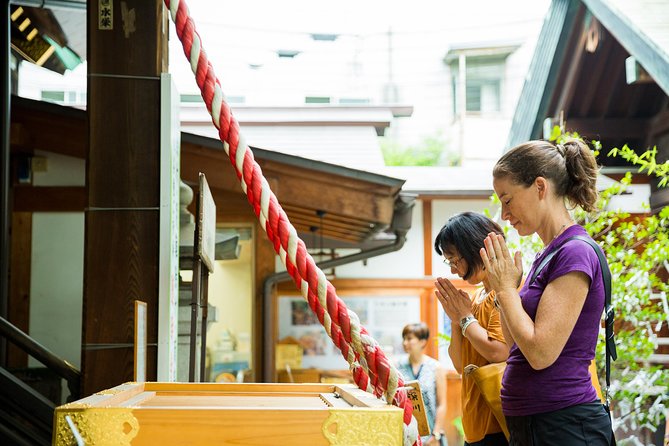
The tour begins outside Tsukiji Honganji Temple, whose unusual architecture gives the meeting point more interest than a standard station entrance. Guides may explain the temple’s design and local importance before taking you into the market. That short introduction helps connect the neighborhood’s religious, commercial, and culinary sides.
I especially like this start because you get your bearings before the food rush begins. The temple is easy to skip if you visit Tsukiji alone, yet it makes a calm counterpoint to the tight market lanes.
More Market Food Tours in Japan
- Tsukiji Fish Market Guided Tour and Sushi Making with Pro Chef
★ 5.0 · 775 reviews - Tokyo: Tsukiji Fish Market Food and Culture Walking Tour
★ 4.7 · 757 reviews - Tsukiji Fish Market: Street Food & Culture Walking Tour
★ 5.0 · 669 reviews
What you see in the first 90 minutes at Tsukiji Jogai Market
The longest part of the tour takes place at Tsukiji Jogai Market, the outer market. This is where you get the strongest sense of the district as a working food center. The market has about 80 years of history as one of Japan’s best-known seafood areas, and local cooks still come here for fresh ingredients and kitchen supplies.
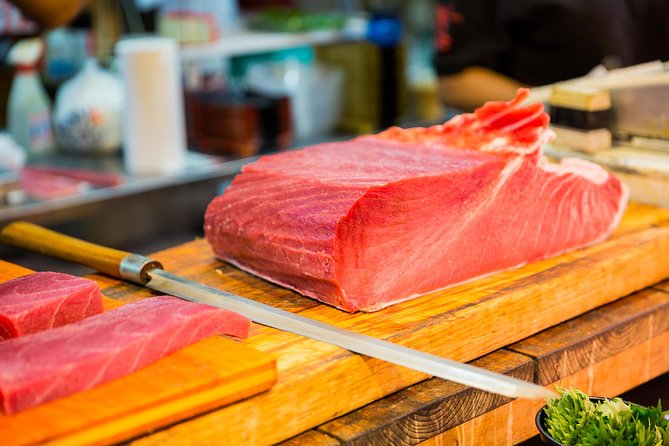
You may see sea urchin arranged in boxes, fish and shellfish prepared for sale, pufferfish in tanks, and large tuna being cut. These are quick scenes, not staged demonstrations, so what you see depends on the day and the pace of business.
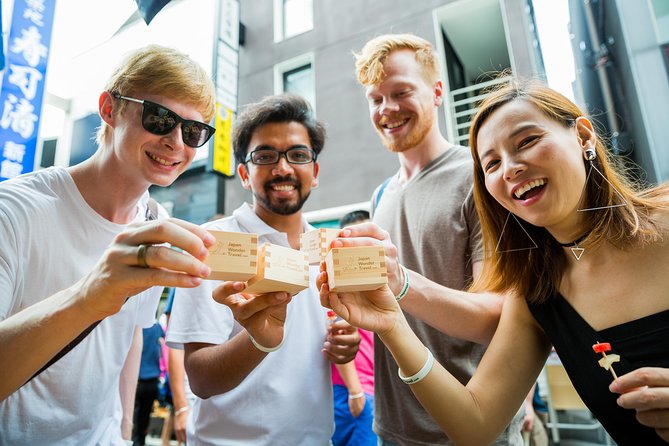
Your guide may also point out ingredients that are hard to identify on your own. Dashi soup and green tea are early samples, giving you a small taste of the everyday foundations of Japanese cooking. Later bites can include Japanese omelette, fish cakes, seaweed, tuna, Wagyu beef skewers, and seasonal fruit.
The Wagyu stop adds useful contrast. Tsukiji is famous for seafood, but the market’s food culture is broader than fish alone. A beef skewer beside a seafood stall shows how the tour moves beyond a narrow fish-market checklist.
The tastings are usually spread across several stops rather than served as one large meal. That is a good format if you enjoy trying many small foods, but it can disappoint if you arrive expecting a full breakfast. One useful rule is to have a small meal before the tour if you tend to get hungry. The included food should help fill you up, but the amount can vary.
The old Tsukiji market and the market’s complicated identity
The tour includes a short food-focused section in the old Tsukiji market area. This is where the difference between old descriptions of Tsukiji and the present-day experience matters.
The former inner wholesale fish market, including the famous auction operation, moved away from Tsukiji. The outer market remains open, active, and well worth visiting, but it is not the same site. If your main goal is to watch the old wholesale trade at close range, this tour will not deliver that experience.
What you do get is a closer look at the shops that serve cooks and food lovers. The pace may include time to browse or buy items, particularly if your group is small. Some guides can help you choose ingredients or explain how they are used at home. Shoko, for example, was praised for giving cooking tips and helping with market purchases.
There may also be a kitchen-tool stop. This is a practical addition if you are looking for Japanese knives, cookware, or other tools, though it will interest some people more than others. Ask your guide if you have a specific item in mind.
Tsukiji Uogashi and the limits of the itinerary
The tour also passes through Tsukiji Uogashi, a smaller wholesale area with many kinds of fresh fish. This section gives you a look at the trade side of Tsukiji, but it has an important schedule limit.
Uogashi is closed on Wednesdays, Sundays, and holidays, along with other designated market closure days. When it is shut, the route and food lineup change. Japanese omelette, fish cakes, and fruit may not be available on those days because the relevant shops are closed.
That does not cancel the whole experience, but it changes the balance between sightseeing and tasting. Check the day of your booking if those foods are important to you. The tour provider also says that the final meal may be sushi or a seafood bowl, depending on the day and time.
This flexibility is normal for a working market. It also means you should not treat the menu as a fixed restaurant tasting course. You are eating what the market can provide that day.
More Seafood Tours in Tokyo:
- Tsukiji Fish Market: Street Food & Culture Walking Tour
★ 4.8 · 259 reviews - Seafood trail
★ 5.0 · 766 reviews - From Santiago: Rías Baixas Galicia Seafood & Wine Day Tour
★ 4.6 · 209 reviews - New Orleans: Food Tour with Seafood Boil in French Quarter
★ 4.6 · 146 reviews
The final sushi or seafood bowl
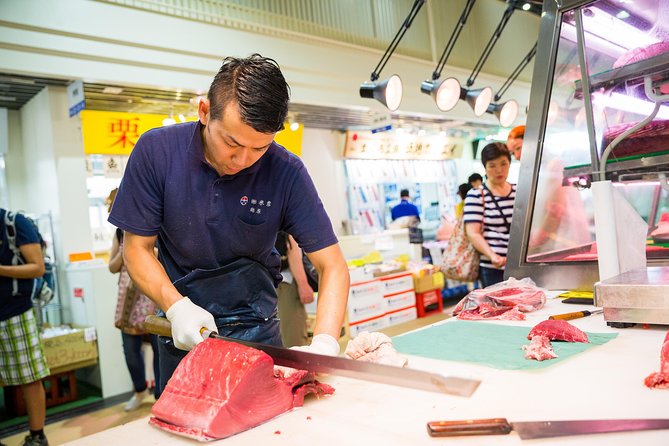
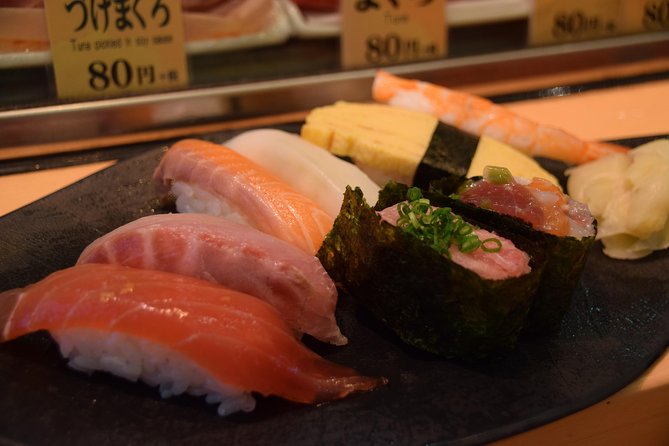
The tour ends with a serving of sushi or a seafood bowl. This gives the morning a proper meal after the smaller samples, though the final portion and format can differ.
Some guides have arranged a particularly memorable restaurant finish. One account described sashimi prepared by the owner of Moritaya, while another included a sea bass preparation demonstration followed by making sushi. Those details are not guaranteed for every departure, but they show how the final stop can add more than a plate of food when the restaurant and guide allow it.
The seafood quality is the main reason to book this tour. If you already enjoy sushi, you will likely appreciate the chance to eat fish in the neighborhood where chefs shop for ingredients. If you are new to sushi, the tasting format lets you try unfamiliar items with a guide nearby.
Do not expect a long restaurant lunch with many choices. The final stop is part of a larger three-hour walk, not a stand-alone dining reservation. Depending on the day, you may receive sushi or a bowl, and the tour does not promise specific fish.
Guides can make or break the morning
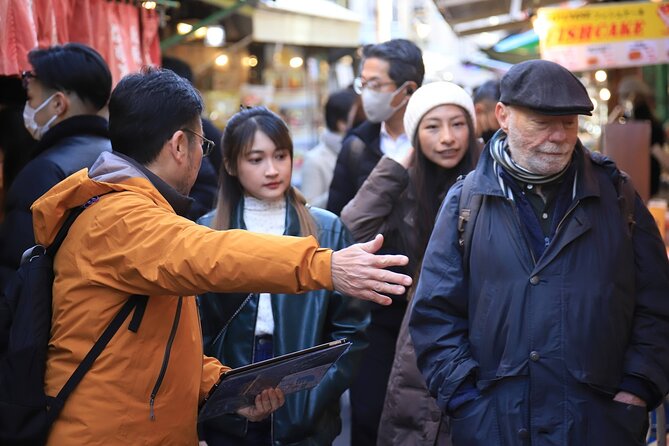
The strongest part of this experience is often the person leading it. Guides such as Kiyo, Naz, Miky, Kayoko, Joy, Mieko, Nick, Yuki, Shoko, Masa, and Take have been praised for explaining food, customs, history, and everyday cooking.
Masa was described as patient, calm, humorous, and good at mixing cultural details with food. Shoko helped with ingredient choices and cooking ideas. Nick connected tastings with nearby urban landmarks and finished at a respected sashimi restaurant. Yuki was praised for clear English and for explaining local customs.
Small groups can improve this part of the experience. The advertised maximum is 20 people, but some departures are much smaller. A group of four is easier to hear, easier to move through narrow lanes, and more flexible if you want to shop. One couple even received help visiting an additional shop after the formal tour ended, though that kind of extra time should not be expected.
The experience is not perfectly consistent. A few accounts describe a young or low-energy guide, long waits, or explanations that were difficult to understand. That matters because the market itself can be explored without paying for a guide. At $99.49 per person, you are paying for interpretation, food access, and navigation. If your guide is passive, the value drops.
Is $99.49 a fair price?
At $99.49, this is not a cheap way to eat breakfast in Tokyo. You can visit the outer market by yourself and buy food one item at a time for less money. The question is what you want the extra cost to do.
I think the price makes better sense for a first visit, especially if you want someone to explain what you are seeing and guide you past the obvious tourist counters. The included lunch and snacks also remove some guesswork. You are paying for about three hours of structure, translation, local context, and a selection of tastings.
The value is weaker if you already know Tsukiji well, prefer to choose every dish yourself, or expect large portions. One person could reasonably feel the tour is more about looking and learning than eating. Arriving hungry and expecting a full multi-course meal is a mistake.
Small groups improve the calculation. When the group is compact, you can hear the guide, ask questions, and pause at shops. With the full 20-person maximum, narrow lanes and crowded counters may feel less comfortable.
Timing, meeting point, and practical planning
The meeting point is the main gate of Tsukiji Honganji Temple at 3-chome 15-1 Tsukiji, Chuo City. Go to the front side of the temple. The instructions warn that some map directions lead to the back side, so check the approach before you leave.
The tour starts on time and cannot be extended for late arrivals. There is no refund for arriving late or canceling on the day. You can cancel for a full refund up to 24 hours before the start time, based on Tokyo local time.
Wear comfortable walking shoes. The route includes market lanes and enough walking to matter, especially if you are traveling with an older relative. One guide was praised for keeping a comfortable pace for an elderly father, but you should still expect to be on your feet for much of the three hours.
The activity is near public transportation, but transportation to the meeting point is not included. Hotel pickup and drop-off are also not included, and extra food, drinks, shopping, and personal expenses cost extra.
The minimum drinking age is 20. If you are under 20, the tour offers another drink instead.
Who should book this Tsukiji experience?
I would recommend it to first-time visitors who want an organized introduction to Japanese market food. It also suits people who enjoy small tastings, want help with unfamiliar ingredients, or feel uneasy navigating a crowded market alone.
It works well for a couple or small group that wants both food and cultural context. A guide can point out details you might miss, such as how ingredients are displayed, where chefs shop, and how a food stall fits into the wider neighborhood.
I would not choose it for vegetarians, people avoiding fish, or anyone with halal, gluten-free, or serious allergy requirements. The provider says these requests cannot be accommodated, and fish is central to the tour.
It is also not the best match for someone seeking the old tuna auction. For that, you need to adjust your expectations before booking. This is an outer-market food walk with a seafood meal, not a backstage look at the former wholesale market.
Should you book the Tsukiji food tour?
Book it if you want a guided introduction to Tsukiji, enjoy seafood, and value explanations as much as the food itself. The best version of the tour gives you a useful mix of market scenes, Japanese snacks, cooking advice, local history, and a satisfying sushi or seafood-bowl finish.
Skip it if you are happy exploring independently, need dietary flexibility, or want a large meal for the price. Also check your day carefully, since market closures affect both the route and the tastings.
For many first visits to Tokyo, the tour’s real benefit is not simply the food. It is knowing which stalls to notice, what you are tasting, and why this corner of the city still matters after the main wholesale market moved away.
FAQ
Where does the tour meet?
Meet your guide at the main gate of Tsukiji Honganji Temple, at 3-chome 15-1 Tsukiji, Chuo City, Tokyo. Use the front side of the temple, not the back side.
How long does the experience last?
The tour lasts approximately three hours and ends back at the meeting point.
What food is included?
Lunch and snacks are included. Possible tastings include dashi soup, green tea, fish cakes, Japanese omelette, seaweed, Wagyu beef skewers, seafood, seasonal fruit, and either sushi or a seafood bowl.
Is the sushi or seafood bowl guaranteed?
The final meal is either sushi or a seafood bowl, depending on the day and time. The exact option is not fixed.
Is the former wholesale fish market included?
The tour focuses on Tsukiji’s outer market. It also passes through Tsukiji Uogashi when that section is open, but the former inner wholesale market is now located elsewhere.
Which days is Tsukiji Uogashi closed?
Tsukiji Uogashi is closed on Wednesdays, Sundays, holidays, and other designated market closure days. On those days, some tastings, including omelette, fish cakes, and fruit, may not be available.
Can the tour accommodate dietary restrictions?
No. Vegetarian, halal, gluten-free, and allergy-related requests cannot be accommodated. You also need to be able to eat fish to join the tour.
What should I wear?
Wear comfortable walking shoes because the experience is mainly a walking tour. The tour requires a moderate level of physical fitness.
What happens if I arrive late?
The group leaves at the scheduled start time, and the tour cannot be extended for late arrivals. Same-day late arrivals and cancellations are not refundable.
More Market Food Tours in Tokyo
- Chef Guided Food Tour of Pike Place Market
★ 5.0 · 3,733 reviews - London Bridge & Borough Market Food Tour with 7 Authentic Dishes
★ 5.0 · 1,972 reviews - Pike Place Market Tasting Tour
★ 5.0 · 1,696 reviews - Small Group Cooking Class & Market Food Tour in Florence
★ 5.0 · 1,574 reviews
Fresh off the menu around Tokyo
- Shinjuku Tokyo: Authentic Japanese Home-Style Culinary Class★ 4.9 · 125 reviews
- Shinjuku: Golden Gai Food Tour★ 4.6 · 77 reviews
- Shibuya Tokyo: Sushi Making Class (Vegan/Vegetarian/Halal)★ 4.7 · 29 reviews
- Shinjuku: Food Tour – 15 Dishes at 4 local eateries★ 4.8 · 246 reviews
- Shibuya: Ramen Dojo Tokyo | Make All 3 (Tonkotsu/Shoyu/Miso)★ 4.8 · 207 reviews
- Tokyo: Secret Food Walking Tour★ 4.7 · 38 reviews
- Ramen Making from Scratch +Akihabara Tour –Cooking Class★ 5.0 · 25 reviews
- Exclusive Tokyo Ramen Kitchen Experience★ 4.7 · 34 reviews
Tokyo Food Tours, compared.
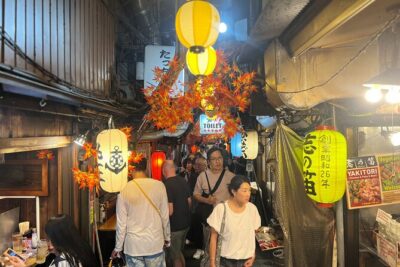
Tokyo: Shinjuku Food Tour (13 Dishes at 4 Local Eateries)
Read our review →
Sushi Making Tokyo Roll and Authentic Japanese Sushi Class
Read our review →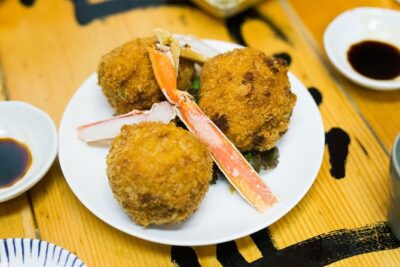
Best of Shinjuku: Izakaya Food Tour (4 Stops, 14+ Tastings)
Read our review →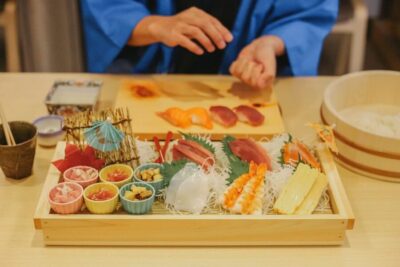
Tokyo: Sushi Making Class in a Happi Coat near a Famous Spot
Read our review →
Sushi Making Tokyo! Popular Maki Sushi & Japanese Sushi(+Recipe!)
Read our review →
Tokyo Sushi Making Class in Tsukiji with Professional Chef
Read our review →
Tokyo Night Foodie Tour in Shinjuku – Seasonal Sushi, Wagyu Beef
Read our review →
Eat and Drink Like a Local: Tokyo Ueno Food Tour-Taverns&Ramen
Read our review →Browse the lists this tour appears in