
Review · TOKYO
Shibuya: Ramen Dojo Tokyo | Make All 3 (Tonkotsu/Shoyu/Miso)
The best part of this Shibuya-area class is the three-bowl tasting. You make noodles from scratch, prepare chicken chashu, then compare tonkotsu, shoyu, and miso in one sitting. I like the professional noodle cutter and the fact that you can adjust the soup strength rather than simply follow a fixed recipe.
I also like the small English-guided format, with no more than eight people and instructors such as Kazuki, Kensei, Kai, and Arata leading the work. The main drawback is that the broths are prepared in advance, so you learn to finish and balance them rather than cook each stock from the beginning. The class also uses wheat, egg, soy, chicken, and pork, making it unsuitable for some diets and allergies.
Key points at a glance
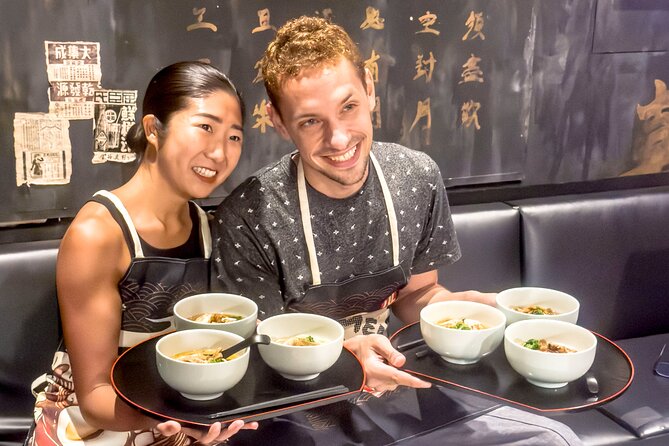
- Three ramen styles in one meal: Compare tonkotsu, shoyu, and miso as separate mini bowls.
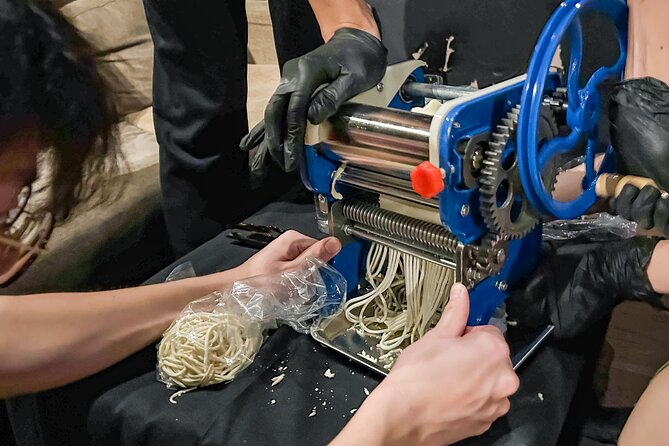
- Fresh noodles made by you: Knead dough, roll it, and cut it with a professional noodle machine.
- A practical kitchen lesson: Prepare chicken chashu and learn a method you can repeat at home.
- English-speaking instruction: Kazuki, Kensei, Kai, Arata, and other instructors guide the class step by step.
- Small group setting: The studio accepts a maximum of eight people, with hands-on help throughout.
- Convenient 90-minute plan: The class starts and ends at the same studio, about a 10-minute walk from Shibuya Station.
Three ramen bowls make this more than a noodle lesson
Many Japanese cooking classes focus on one finished dish. This one gives you three small bowls, each built around a different soup style. That makes the class useful if you are still figuring out what kind of ramen you like.
Tonkotsu brings the creamy, pork-based style many visitors associate with Hakata ramen. Shoyu gives you a darker, soy-based taste, while miso adds a fuller, savory character. You are not simply handed three bowls at the end. You prepare the noodles, help with the toppings, adjust the soup base, and plate the finished ramen.
The portions are small, but three bowls add up. Several people found the final meal filling, so I would not schedule this right after a large lunch. If you book a midday session, the class works well as both a cooking activity and a meal.
The tasting also gives you a useful lesson in balance. You can change the strength of the soup to suit your preference, which is one of the more practical parts of the class. A bowl of ramen is not just broth, noodles, and toppings. The relationship between those parts changes the whole result.
More food tours around Tokyo:
- Tokyo: Shinjuku Food Tour (13 Dishes at 4 Local Eateries)
★ 5.0 · 6,603 reviews - Sushi Making Tokyo Roll and Authentic Japanese Sushi Class
★ 5.0 · 3,971 reviews - Tokyo Tsukiji Fish Market Food and Culture Walking Tour
★ 5.0 · 3,184 reviews
What you actually make, and what is prepared ahead
It is important to set the right expectation. You do make the noodles from scratch, and you prepare the chicken chashu. The long-cooked soup bases are prepared before class, since a proper broth cannot be made from start to finish in 90 minutes.
That is not a flaw, but it does define the class. You are learning the parts that fit a short workshop: dough handling, noodle cutting, meat preparation, soup adjustment, boiling, and plating. You are not taking a full-day ramen apprenticeship or making pork stock from raw ingredients.
I think this division works well for most visitors. You get active kitchen time without spending hours waiting for broth. You also receive a digital recipe afterward, so you can try the process at home using a more realistic schedule.
The class is especially useful for home cooks who want a method they can repeat. One of the appealing details is that the style taught can be adapted without special equipment at home. The studio uses a professional cutter, but the lesson is presented in a way that does not require you to build a restaurant kitchen.
The 90-minute schedule, from dough to dinner
Check-in and briefing, 10 minutes
Doors open only 10 minutes before the start. The studio has no waiting area and does not offer early entry, so arriving five to 10 minutes before your booked time is the sensible plan.
The opening briefing covers the kitchen process, safety, and the order of work. Arrive on time. People more than five minutes late may have to join while the class is underway or be refused entry, with no refund in some cases. If you are delayed, contact the studio before the start time through the provided Instagram account or email.
Same city, a different plate:
- Tokyo: Shinjuku Food Tour (15 Dishes and 4 Eateries)
★ 4.9 · 2,033 reviews - Tokyo: Roll and Authentic Sushi Making Class in Asakusa
★ 4.9 · 1,957 reviews - Best of Shinjuku: Izakaya Food Tour (4 Stops, 14+ Tastings)
★ 5.0 · 1,863 reviews - Tokyo: Sushi Making Class in a Happi Coat near a Famous Spot
★ 4.9 · 1,377 reviews
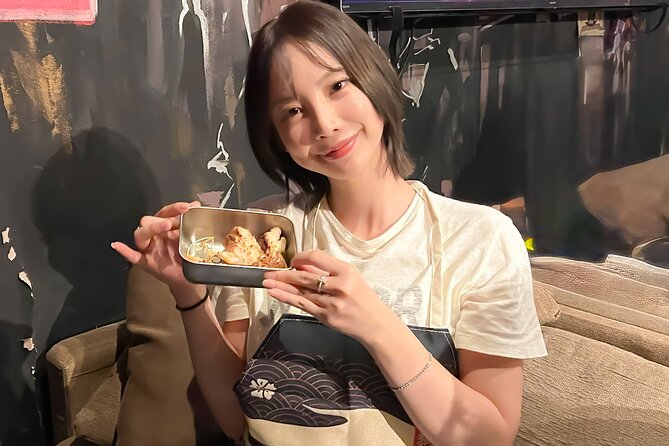
Chicken chashu preparation, 5 minutes
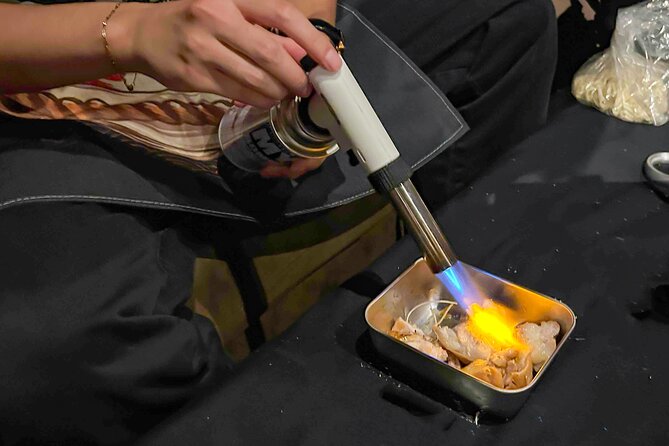
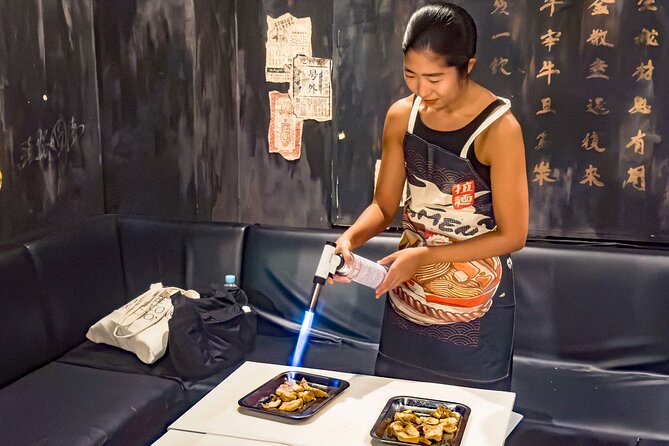
You begin with the chicken chashu. This is a short part of the class, but it gives you a hands-on role beyond noodle making.
The meat is finished and prepared for the bowls later in the session. You are not spending the whole class on butchery or a complicated marinade. Instead, this step gives you a taste of the topping work that helps turn plain noodles and soup into ramen.
Noodle making, 20 minutes
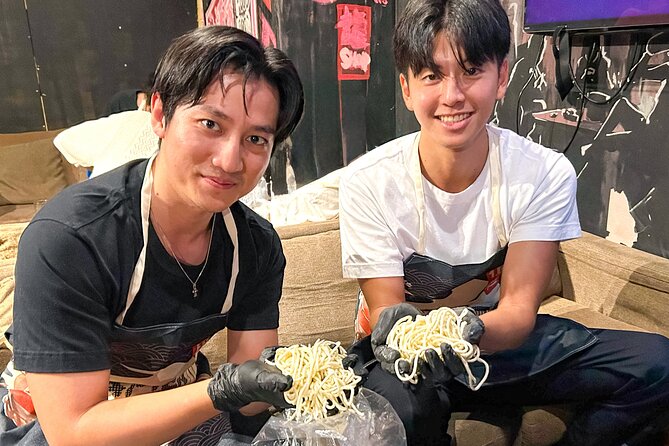
This is the main hands-on section. You knead the dough, roll it, and cut it into noodles with a professional machine.
The noodle machine makes this a good visual and practical part of the class. You can see how a dough ball becomes a smooth sheet and then strands of noodles. The process also gives you something tangible to take pride in, since the noodles in your final bowls are made by your own hands.
The instructors keep the work beginner-friendly. Kazuki has been praised for clear, precise explanations, while Kensei is known for a friendly teaching style. One class included more hand technique before using electronic equipment, which is useful if you want to understand the dough rather than simply press a button.
You may get flour on your clothes during this part. Aprons are provided, but I would still avoid wearing anything precious or difficult to clean.
Chicken chashu finishing, 10 minutes
The next stage brings the topping back into the process. You finish the chicken chashu and get it ready for plating.
This is where the class begins to feel like a complete meal rather than a single noodle demonstration. You have worked with the dough, handled the topping, and are now preparing the elements that will sit together in each bowl.
Boiling noodles and preparing soup, 10 minutes
The fresh noodles are boiled, while the three prepared soup bases are brought together and adjusted. This is a fast part of the session, so follow the instructor’s timing carefully.
Fresh noodles cook quickly. The texture can change if they sit too long, which is why the class moves from cooking to plating without much delay. You also get to adjust the strength of the soup, giving you some control over the final taste.
This is a useful lesson for home cooking. You learn that the same noodle can taste quite different depending on the base and the amount of seasoning.
Plating, 5 minutes
You assemble three mini bowls, adding noodles, soup, chicken chashu, and toppings. The portions are designed for comparison, not for producing three full restaurant-sized meals.
Plating is also the most photo-friendly part of the class. The three bowls provide a clear visual contrast, and photography is welcome. If you enjoy recording your food experiences, this is the moment to take your pictures before the noodles lose their best texture.
Tasting and photo time, 30 minutes
The final half hour is relaxed. You taste the three ramen styles, compare them, take photographs, and ask questions.
This longer tasting period matters. The class does not rush you out as soon as the bowls hit the table. You have time to notice how the broth, noodles, and toppings work together. It also gives the instructor room to explain differences between the styles and answer questions about recreating the meal at home.
The instructors make the class easy to follow
The activity is conducted in English, with Japanese also available. That makes a real difference in a class where timing and texture matter. You need to understand when to stop kneading, how to handle the dough, and when to move the noodles into the pot.
The teaching style is direct and practical. Kazuki has received repeated praise for detailed explanations and clear step-by-step guidance. Kensei is another frequently named instructor, with a warm approach that suits first-time cooks. Kai has been noted for keeping the class both informative and fun, while Arata has led welcoming sessions for small groups.
The instructor names may vary by date, so you should not book expecting one particular person unless the operator confirms it. What remains consistent is the small-group setup, with a maximum of eight participants. You are not watching a chef work from the back of a large room. You take part in the main steps and can ask questions as you go.
Some sessions may be even smaller. If only two people attend, you can expect more room for questions and individual help, though the normal maximum is eight.
Why the $64 price can make sense
At $64 per person, this is not the cheapest ramen meal in Tokyo. You can buy a bowl of ramen for far less. The value comes from combining a meal with instruction, ingredients, equipment use, a hands-on activity, and a recipe to take home.
You are also tasting three styles rather than one. That helps justify the price if you are interested in Japanese food and want more than a quick restaurant stop. The class gives you a meal, but the larger value is the process: making noodles, learning soup balance, and leaving with a way to repeat some of it at home.
The price is less attractive if you only want to eat ramen or if you already make noodles confidently. It is also not a full technical course in broth making, because the soup bases are prepared in advance. For a first cooking class in Tokyo, though, the combination of instruction and food is fair.
I would compare it to other hands-on food activities rather than to a normal lunch. At 90 minutes, it fits neatly into a day of sightseeing, and the class ends at the same studio where it begins. You can continue exploring Shibuya afterward without arranging a separate ride.
Location, timing, and what to wear
The studio is listed at 1F, 2-16-29 Ohashi, Meguro-ku, Tokyo 153-0044. The activity is described as about a 10-minute walk from Shibuya Station, but allow enough time to find the entrance and arrive five to 10 minutes before the start.
There is no hotel pickup or drop-off. You make your own way to the studio, and the same location serves as your endpoint.
Aprons are provided, but flour can land on your clothing during noodle making. Wear comfortable clothes that can handle a little mess. The studio is accessible by stairs only, so it is not suitable if you cannot manage stairs.
The class includes common ramen ingredients: wheat gluten, egg, soy, chicken, and pork. Cross-contamination cannot be fully prevented. Serious allergies, celiac disease, severe airborne flour sensitivity, and strict dietary requirements are reasons to choose another activity unless the operator confirms that your needs can be met.
Partial accommodation may be possible for guests avoiding chicken or pork, as well as some vegetarian or vegan requests. Ask in advance. Do not assume that a strict vegan or religious diet can be accommodated.
Children aged six and older are recommended for the class. Since the activity includes cooking, flour, boiling water, and kitchen equipment, children need to follow staff instructions closely.
Who will enjoy Ramen Dojo Tokyo most
I would recommend this class to you if you want a compact, hands-on food activity rather than a formal restaurant meal. It suits first-time cooks, couples, families with older children, and solo visitors who like meeting people through food.
It is also a good choice if ramen is already one of your favorite Japanese dishes. Tasting three types side by side gives you a clearer idea of what you prefer, and the recipe may help you recreate the experience after returning home.
The class is less suitable if you want to make every component from raw ingredients. You will not cook each broth for hours. It is also a poor match for severe allergies, strict dietary rules, or anyone who dislikes stairs.
The photography element is a nice extra, but I would not book this only for pictures. The main attraction is the combination of making noodles and eating the result.
Should you book this ramen class?
Book it if you want a friendly, English-guided introduction to ramen that fits into a busy Tokyo schedule. The strongest reasons are the three-style tasting, the fresh noodles, the small group, and the practical recipe you receive afterward.
Skip it if your priority is a deep lesson in broth production, a low-cost meal, or strict dietary control. For most visitors who want to cook, eat, and learn something they can attempt at home, the $64 fee offers solid value. Arrive on time, come hungry, and leave room for three mini bowls.
FAQ
How long does the Ramen Dojo Tokyo class last?
The class lasts 90 minutes. It includes check-in, chicken chashu preparation, noodle making, noodle boiling, soup preparation, plating, tasting, and photo time.
Which ramen styles will I make?
You will prepare and taste three mini bowls: tonkotsu, shoyu, and miso.
Are the soup bases made during the class?
The soup bases are prepared in advance because long cooking times do not fit within the 90-minute workshop. You adjust the soup strength and finish the bowls during the class.
Is the class taught in English?
Yes. The main class language is English, and Japanese is also available. Instructors such as Kazuki, Kensei, Kai, and Arata have led sessions.
What ingredients and allergens are used?
The class uses wheat gluten, egg, soy, chicken, and pork. Complete prevention of cross-contamination cannot be guaranteed.
Can vegetarians or vegans join?
Partial accommodation may be possible for guests avoiding chicken or pork, and for some vegetarian or vegan requests. Contact the operator in advance. Strict dietary requirements cannot be guaranteed.
How early should I arrive?
Arrive five to 10 minutes before the start time. Doors open 10 minutes before class, and there is no early-entry waiting area. Arrivals more than five minutes late may need to join in progress or be refused entry in some cases.
Fresh off the menu around Tokyo
- Shinjuku Tokyo: Authentic Japanese Home-Style Culinary Class★ 4.9 · 125 reviews
- Shinjuku: Golden Gai Food Tour★ 4.6 · 77 reviews
- Shibuya Tokyo: Sushi Making Class (Vegan/Vegetarian/Halal)★ 4.7 · 29 reviews
- Shinjuku: Food Tour – 15 Dishes at 4 local eateries★ 4.8 · 246 reviews
- Tokyo: Secret Food Walking Tour★ 4.7 · 38 reviews
- Ramen Making from Scratch +Akihabara Tour –Cooking Class★ 5.0 · 25 reviews
- Exclusive Tokyo Ramen Kitchen Experience★ 4.7 · 34 reviews
- Eat/Drink like a LOCAL-Taverns & Ramen★ 4.9 · 23 reviews
Tokyo Food Tours, compared.
Tokyo: Shinjuku Food Tour (13 Dishes at 4 Local Eateries)
Read our review →
Sushi Making Tokyo Roll and Authentic Japanese Sushi Class
Read our review →
Tokyo Tsukiji Fish Market Food and Culture Walking Tour
Read our review →
Best of Shinjuku: Izakaya Food Tour (4 Stops, 14+ Tastings)
Read our review →
Tokyo: Sushi Making Class in a Happi Coat near a Famous Spot
Read our review →
Sushi Making Tokyo! Popular Maki Sushi & Japanese Sushi(+Recipe!)
Read our review →
Tokyo Sushi Making Class in Tsukiji with Professional Chef
Read our review →
Tokyo Night Foodie Tour in Shinjuku – Seasonal Sushi, Wagyu Beef
Read our review →Browse the lists this tour appears in