
Review · KYOTO
Kyoto Night All-Inclusive Eats and Streets, Gion and Beyond
Kyoto after dark is best understood on foot, with a few small dishes along the way. This three-hour outing links Yasaka Shrine, Gion, and Ponto-cho with dinner at two local restaurants, giving you both old Kyoto atmosphere and its modern night scene.
I like the small group of no more than six and the fact that food, two drinks, and gratuities are included. Guides such as Hugo, Andres, Maya, Diogo, and Ferdinand are praised for explaining local customs, keeping conversation easy, and taking guests to eateries they might not find on their own.
The main caution is the pace and setting. You will walk narrow streets for much of the evening, and one restaurant may allow indoor smoking. This is also an adults-only experience and is not suited to people with mobility limitations.
Key points to know before you book
- Two restaurants make up one full dinner: Expect many small dishes rather than one large entrée.
- Gion gets a proper evening look: The route includes Yasaka Shrine, traditional streets, the Kamo River, Kiyamachi, and Ponto-cho.
- The group is capped at six: That gives you more time to ask questions and makes restaurant seating easier.
- Two drinks are included: You can choose alcoholic or non-alcoholic drinks, while extra drinks cost more.
- Kobe beef may be added: Request it at least 10 hours before departure.
- Smoking is possible: One stop has been reported as allowing indoor smoking, so take note if this affects you.
Why this Kyoto night tour works
Many first evenings in Kyoto end with a pleasant walk followed by a search for dinner. That sounds simple, but Gion can be confusing after dark. Restaurant signs may be hard to read, small entrances can be tucked above street level, and some places are designed for regular customers rather than casual drop-ins.
This tour solves that problem in a practical way. You meet in front of Minamiza Theatre, right beside exit 6 of Gion-Shijo Station, then follow a local guide through several of Kyoto’s best-known night districts. The meal is split between two restaurants, so you get a wider sample of local food and a better feel for how an evening out works.
The price is $101 per person. That is not cheap for three hours, but it includes a full dinner, two drinks, a guide, and gratuities. In Japan, tipping is not customary, so there is no need to budget an extra amount at the end. For a first night in Kyoto, I think the price can make sense if you value local guidance and want dinner handled without guesswork.
The small group matters more than it may seem. With six people or fewer, you can hear explanations on a narrow street, ask about unfamiliar dishes, and stay connected while crossing busy areas. Private bookings are also available if you want a more personal outing.
More Evening Food Tours in Japan
- Kyoto Night Foodie Tour in Gion (9+ dishes + 6 Sake tastings)
★ 5.0 · 1,762 reviews - Kyoto Evening Gion Food Tour
★ 4.9 · 35 reviews - Kyoto: Casual Pontocho Evening Food Tour
★ 4.8 · 31 reviews
Meeting Minamiza and entering Gion
The starting point is easy to identify: meet at street level in front of Minamiza Theatre, near Gion-Shijo Station exit 6. This is a useful place to begin because you are already at the edge of Gion’s traditional entertainment quarter.
Your guide sets the tone early. The tour is not only about food, and it is not only a historical walk. You get an explanation of how the district functions today, along with the customs surrounding geisha and the etiquette expected in traditional entertainment areas.
That balance is important. Gion is often treated as a postcard of old Kyoto, but it is also a working nightlife district. You will see signs of both sides as you move through narrow lanes, restaurants, bars, and older buildings. Your guide can explain what you are seeing without turning the walk into a long lecture.
Several guides receive especially warm praise for their personality and storytelling. Hugo is described as funny and well prepared, while Andres is noted for making groups comfortable and explaining the area clearly. Maya, Diogo, Bryan, Ferdinand, and others are also singled out for strong local explanations and an easy manner.
Guide assignments can change, so you should not book expecting a particular person. The important point is that the experience depends heavily on the guide, and the available evidence points to a strong record in this area.
Yasaka Shrine after sunset
Yasaka Shrine is the first major stop. The guided visit lasts about 15 minutes, which is enough to look around, enjoy the evening appearance, and hear why the shrine matters without turning the tour into a full temple visit.
At night, the shrine offers a different mood from the daytime sightseeing circuit. The setting is quieter in feel, and the lighting gives the gates and surrounding grounds a softer appearance. Your guide can also help explain shrine customs and the role of Yasaka in local life.
This is a short stop, not an extensive religious tour. If you want detailed architecture or a long visit inside the shrine grounds, you may need to return on your own. As part of a food-and-streets evening, though, the timing is sensible. It gives the walk a cultural anchor before the restaurant visits begin.
From here, the route continues through Gion. Your guide points out the connection between the district’s older streets and its present-day entertainment business. You may also hear about geisha traditions and the difference between seeing a district respectfully and treating it like a stage set.
Gion, Kiyamachi, and the Kamo River
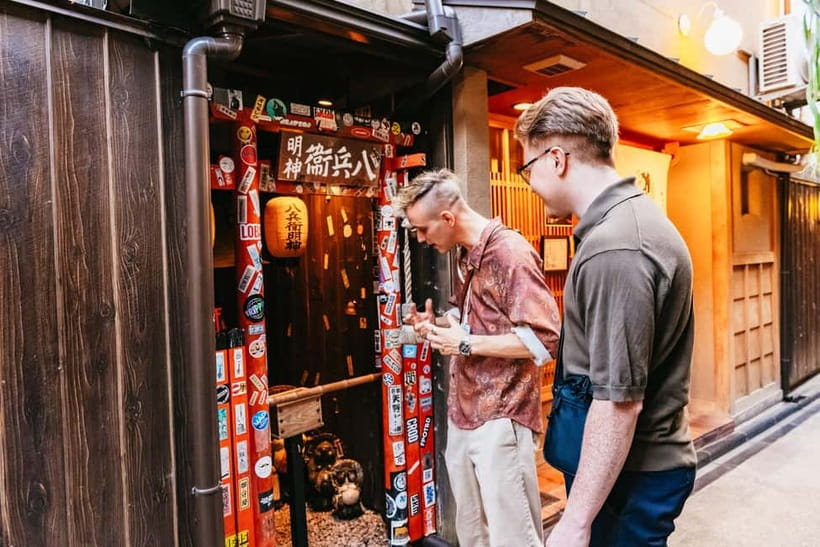
The walk through Gion is one of the strongest reasons to book this experience. You are not simply taken from a station to a restaurant. The guide connects several neighborhoods so you can understand how they fit together.
The route includes the Kamo River and Kiyamachi, along with other commercial and nightlife streets. These areas give you a broader picture of Kyoto at night. Gion provides the traditional setting, while Kiyamachi and the streets near the river show a more contemporary side of dining and evening entertainment.
The walking portions are spread through the three-hour tour. One Gion segment is listed at around 15 minutes, while the Ponto-cho portion lasts about 30 minutes. The exact route may vary, but you should expect regular walking between stops rather than a stationary dinner.
Wear comfortable shoes. The advice is simple but important, especially if you have already spent the day visiting temples. People with mobility impairments may find the narrow streets and walking pace difficult.
More Evening Food Tours in Kyoto:
- Kyoto: Foodie Night Tour in Gion with 9 dishes + 6 Sake
★ 4.4 · 26 reviews - Winner 2025 Rome Twilight Trastevere Food Tour by Eating Europe
★ 5.0 · 5,157 reviews - Winner 2025 Florence Sunset Food & Wine Tour by Eating Europe
★ 5.0 · 5,015 reviews - Saigon By Night and Street Food By Motorbike | Opt: Ao Dai Riders
★ 5.0 · 4,066 reviews
The first restaurant: small plates and a drink
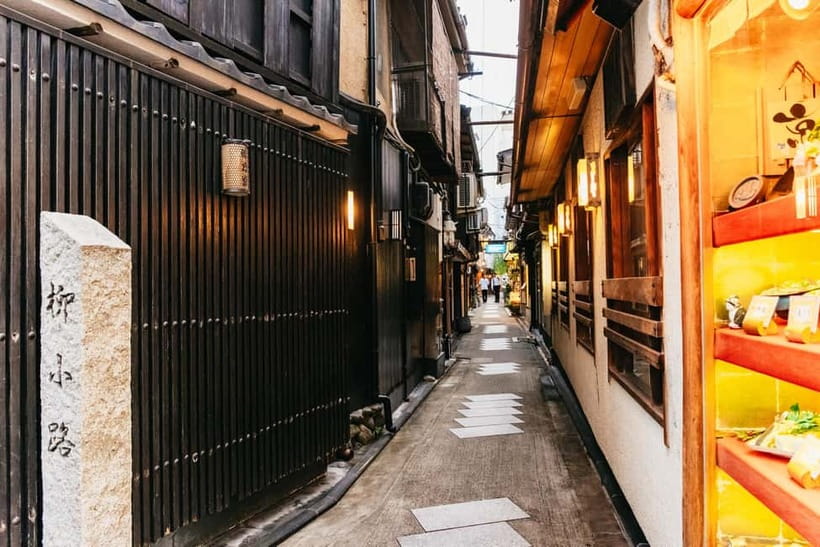
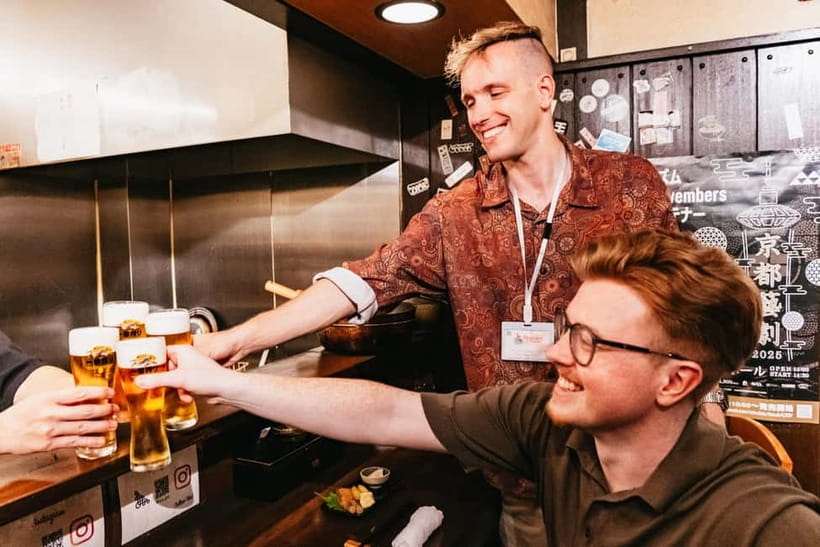
The first restaurant stop lasts about 45 minutes and includes dinner plus beer, cocktails, or spirits. The meal is built around many small dishes, similar in spirit to a Japanese tapas meal.
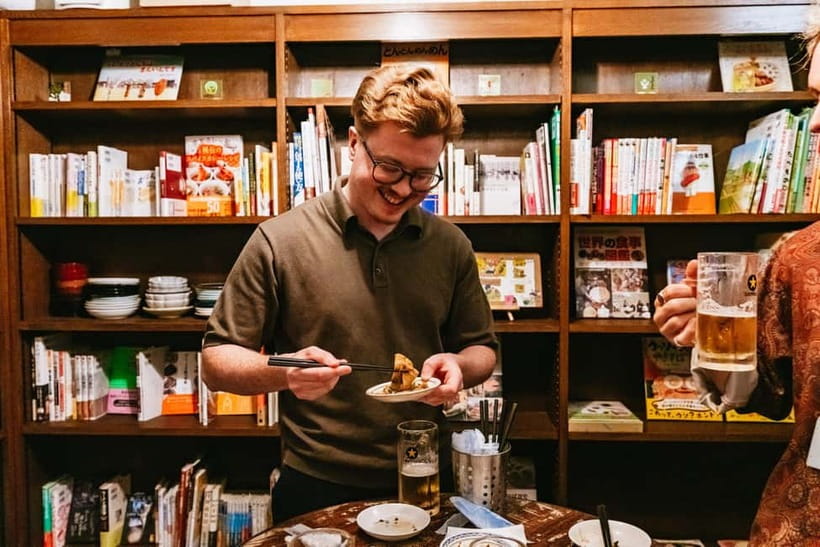
This format is useful if you want to try foods beyond the safest familiar choices. Instead of committing to one large dish, you can sample a range of flavors and textures. The guide explains what you are eating and can suggest how to approach dishes that are unfamiliar.
The amount of food is described as generous. One practical tip is not to fill up too quickly at the first restaurant. There is another substantial stop later, and the meal is designed to be spread across both locations.
Food preferences need careful handling. One guide successfully arranged alternatives for a vegetarian participant, but the supplied information does not promise a fixed vegetarian, allergy, or religious-diet menu. If you have restrictions, state them clearly when booking and confirm them with the operator.
The included drink is part of the value. You can choose an alcoholic or non-alcoholic option, making the stop workable for people who do not drink. Only two drinks are included for the entire tour, so budget for extra purchases if you want more.
Ponto-cho and Kyoto’s evening side
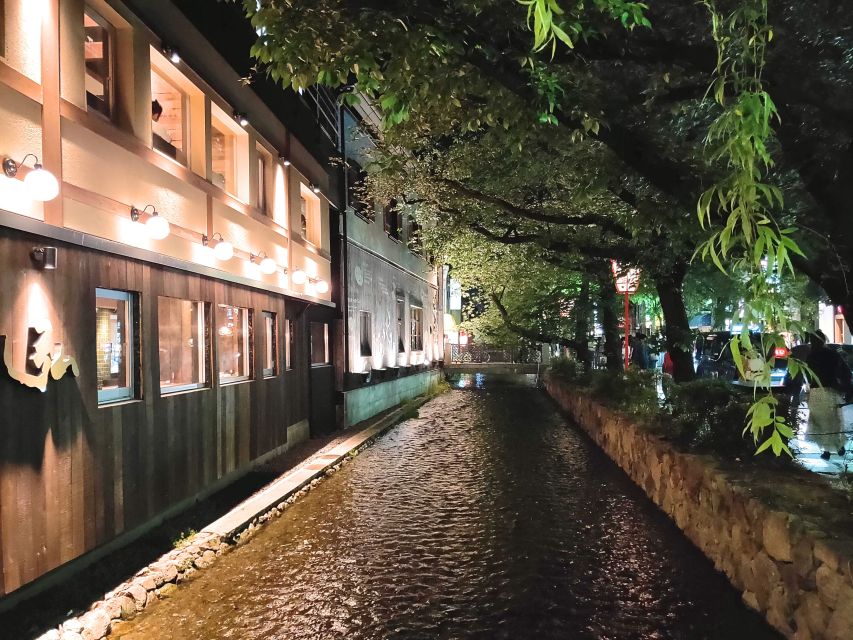
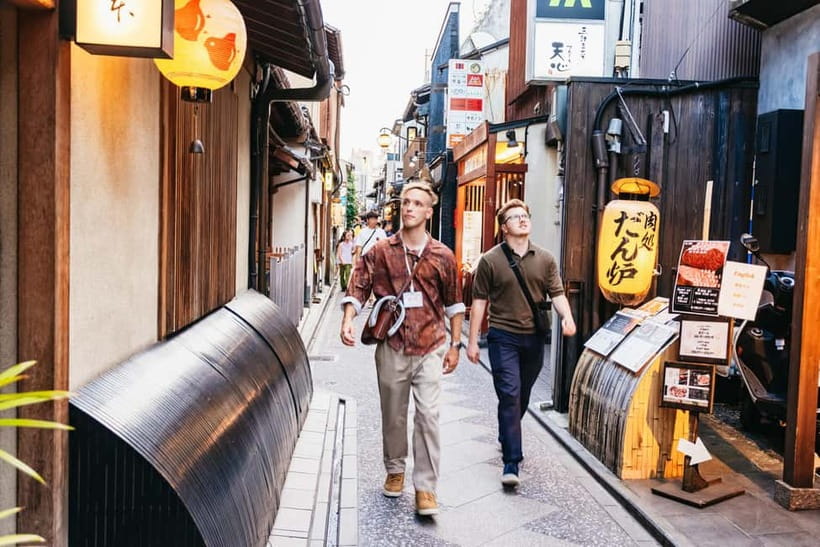
After the first meal, you continue toward Ponto-cho. This narrow dining district is one of the most atmospheric parts of the route, especially when the restaurants and bars are open for the evening.
Ponto-cho is useful here because it shows how Kyoto’s nightlife is arranged. The lanes are close together, the entrances are often small, and the area can feel hard to read if you are walking alone for the first time. A guide gives you context rather than leaving you to wander without knowing what you are looking at.
The walk also helps break up the meal. You get time to digest, ask questions, and compare the feel of Gion with the streets near the river. The guide may discuss local customs, the role of geisha districts, and the difference between historic appearance and current use.
This part is not a formal architectural tour. Think of it as an informed evening stroll between food stops. That is a strength if you want a relaxed introduction to Kyoto after dark, but it may feel too light for someone seeking detailed historical instruction at every building.
The second restaurant and the final dishes
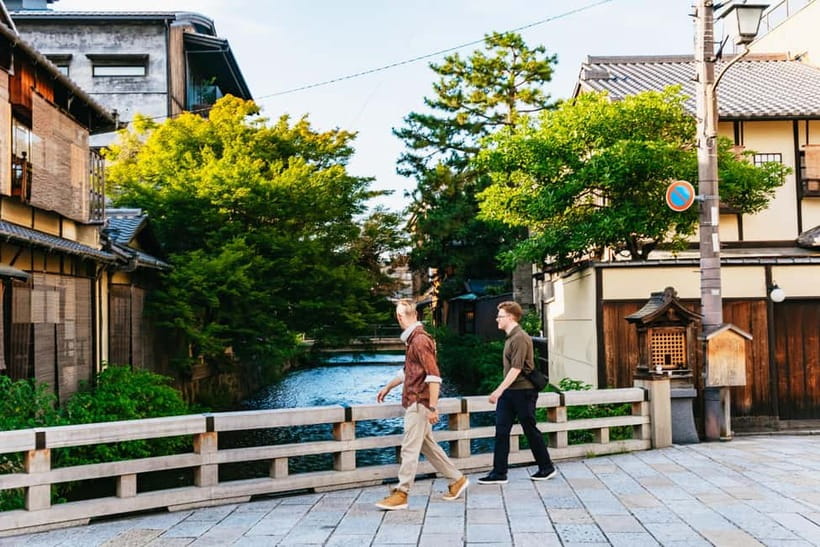
The second restaurant visit lasts about 30 minutes and includes more food and drinks. Together with the first stop, it creates a full dinner rather than a few token samples.
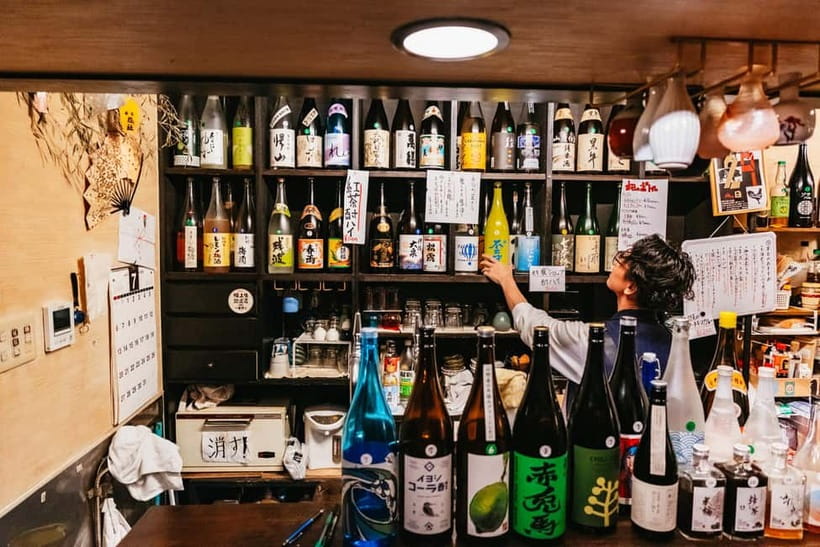
The split meal is especially useful for first-time visitors. You can try several Kyoto-style dishes, see two different restaurant settings, and ask the guide about drinks such as sake. Several guides are praised for recommending drinks and explaining how the food fits local eating habits.
There is also an optional Kobe beef or nearby-sourced beef addition. You need to request this at least 10 hours ahead of time, so it is not something to decide at the table. If beef is a priority, arrange it before the tour rather than assuming it will be available.
Not every dish will suit every palate. One guide sensibly frames the meal as a chance to try new foods, and that is the right expectation. You are paying for variety and local context, not a carefully controlled menu built around universally familiar flavors.
One important comfort issue is smoking. A restaurant or bar used on some departures permits indoor smoking. If you are pregnant, have respiratory concerns, or simply dislike smoke, ask about the current restaurant plan before booking. This is the clearest drawback mentioned in the available feedback.
What the guides add to the evening
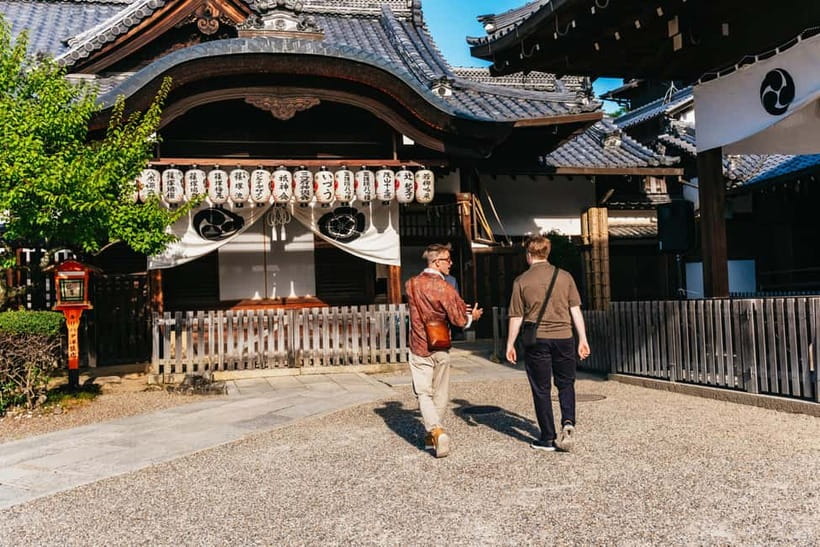
The guide is the difference between this being a useful neighborhood introduction and simply an expensive progressive dinner. The strongest guide comments focus on humor, clear explanations, cultural context, and the ability to help strangers talk with one another.
That social element suits solo visitors and couples who want an easy evening with other people. A group of six is large enough for conversation but small enough that you are not lost in a crowd. The guide can also explain menu items as they arrive, which removes much of the uncertainty from ordering.
English, Spanish, and French tours are offered. The guide is fluent in the selected language as well as Japanese. Since this is a live guided experience, you can ask about local behavior, geisha districts, food customs, and the neighborhoods as you walk.
The tone is intended to stay light. You get historical facts and local customs, but the evening is not presented as a classroom. That makes it a good choice if you want information without giving up the pleasure of a casual night out.
Price, timing, and who gets the best value
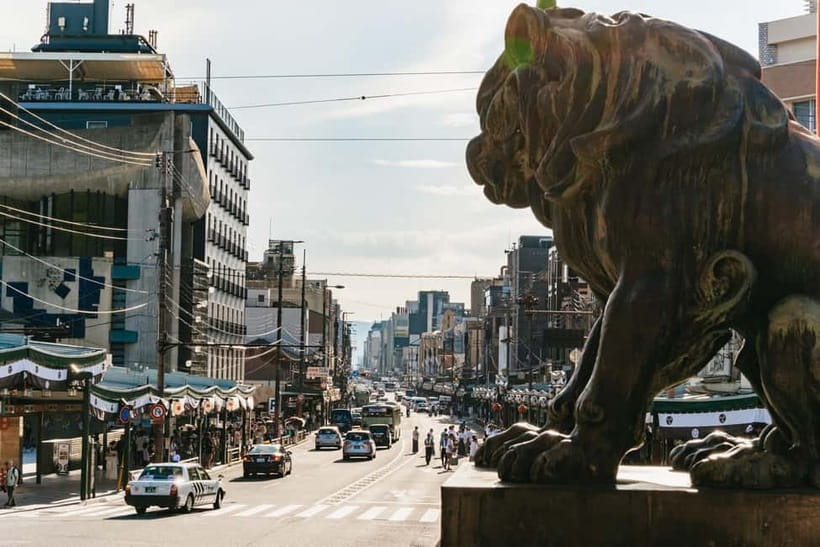
At $101, this tour offers fair value for someone who would otherwise pay separately for dinner, drinks, and a guided walk. The included meal is spread over two restaurants, and gratuities are already covered. You also avoid the time and uncertainty involved in finding suitable restaurants in Gion.
The value is weaker if you mainly want a large, formal dinner in one place. The small-plate format means variety rather than one substantial main course. It is also less useful if you already know Gion and Ponto-cho well or prefer to choose every dish yourself.
The experience lasts three hours and returns to Minamiza Theatre. Starting times vary, so check availability when you book. A scheduled evening tour can work well on your first Kyoto night, since it gives you an orientation to several central districts before you explore them alone.
Free cancellation is available up to 24 hours before the start time, and you can reserve now and pay later. The tour is for adults aged 18 and over. Comfortable shoes are essential, and the route is not suitable for people with mobility impairments.
Should you book the Kyoto night food tour?
I would book this if you want a guided first look at Kyoto nightlife, enjoy trying several small dishes, and prefer a social evening over a formal restaurant reservation. The combination of Yasaka Shrine, Gion, the Kamo River, Kiyamachi, Ponto-cho, two restaurants, and two drinks gives you a lot to do in three hours.
It is particularly well suited to solo visitors, couples, and small groups who want a local guide to handle the evening. The strongest benefit is not simply the amount of food. It is the way the guide links the neighborhoods, customs, and restaurants into one easy night.
Think twice if you cannot tolerate indoor smoke, need guaranteed dietary arrangements, dislike walking, or want a child-friendly activity. For everyone else, this is a practical and sociable way to get beyond the most obvious Kyoto sights without giving up dinner.
FAQ
Where does the tour start and finish?
You meet in front of Minamiza Theatre at street level, beside exit 6 of Gion-Shijo Station. The tour ends back at the same meeting point.
How long does the experience last?
The tour lasts three hours. Starting times vary, so check availability for the date you want.
What food and drinks are included?
You receive a full dinner spread across two local restaurants and two drinks. Drinks may be alcoholic or non-alcoholic. Extra drinks are not included.
Is Kobe beef available?
A Kobe beef or nearby-sourced beef option may be added. You must request this at least 10 hours before the tour.
Which languages are available?
Live guides are available in English, Spanish, and French.
Is the tour suitable for children or people with mobility impairments?
No. The activity is not suitable for children under 18 or people with mobility impairments. Comfortable shoes are recommended because the tour includes walking through several Kyoto districts.
Fresh off the menu around Kyoto
- Kyoto: Sushi Making Class with Sushi Chef★ 4.8 · 64 reviews
- Nishiki Market Food Tour with Cooking Class★ 4.9 · 42 reviews
- Kyoto: Small-Group Authentic Sushi Making Workshop★ 5.0 · 137 reviews
- Kyoto: Sake Brewery and Tasting Tour in Fushimi★ 4.8 · 55 reviews
- Kyoto: Ramen, Gyoza, and Onigiri Cooking Class★ 5.0 · 445 reviews
- Kyoto: Foodie Night Tour in Gion with 9 dishes + 6 Sake★ 4.4 · 26 reviews
- Kyoto: Nishiki Market Tour with a Local Foodie & Tastings★ 4.5 · 67 reviews
- Kyoto: Ramen Cooking Class at a Ramen Factory with Souvenir★ 4.9 · 532 reviews
Kyoto Food Tours, compared.
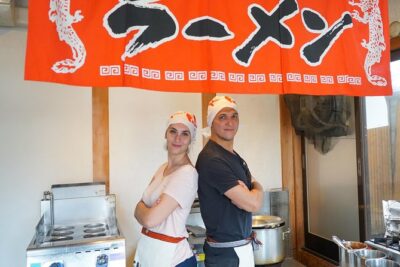
Ramen Cooking Class at Ramen Factory in Kyoto
Read our review →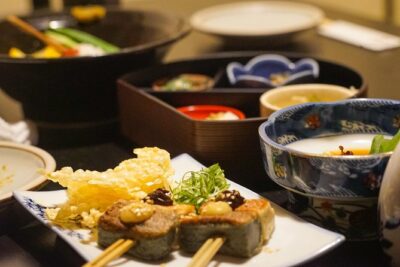
Kyoto Night Foodie Tour in Gion (9+ dishes + 6 Sake tastings)
Read our review →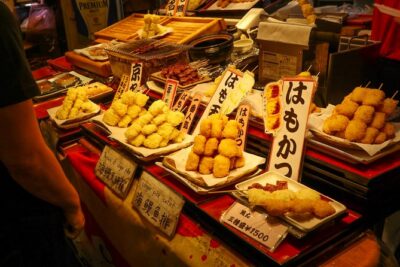
Nishiki Market Brunch Walking Tour (7 Tastings + Brunch)
Read our review →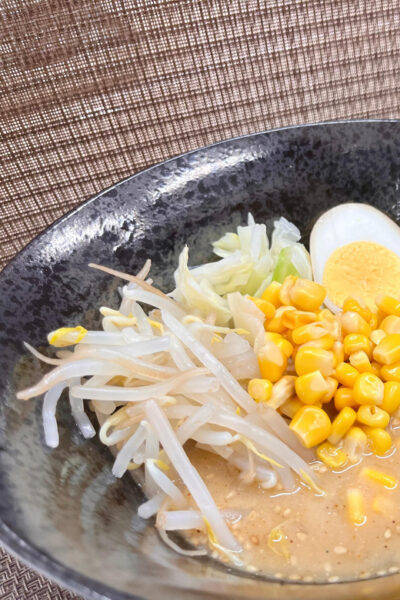
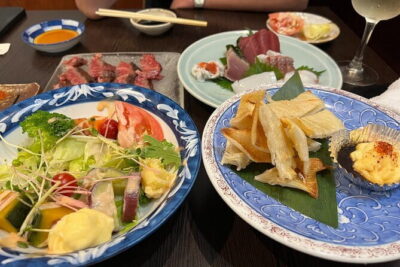
Kyoto: Gion & Pontocho Food Tour with 13 Dishes
Read our review →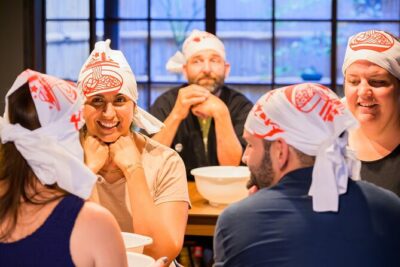
Gyoza Cooking Class in Kyoto: Traditional Japanese Dumplings
Read our review →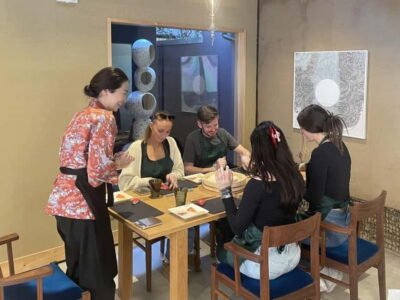
Kyoto: Small-Group Authentic Sushi Making Workshop
Read our review →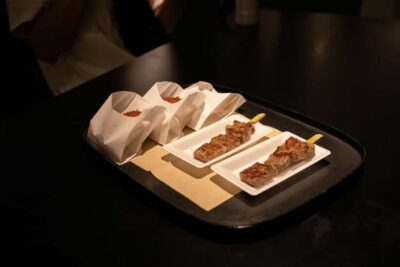
Kyoto: Local Food Tasting Tour at the Nishiki Market
Read our review →Browse the lists this tour appears in