
Review · JAPAN
Osaka: Wakayama Cat Train, Seafood market, Hot Springs Tour
Wakayama’s cat train is the charming hook here, but the day gets its real variety from the tuna market and Shirahama’s Pacific coast. At Kishi Station, you’ll hear how Tama, a calico cat, helped save a rural rail line, then meet her successor Nitama and browse a café, shop, and cat stamps.
I like the mix of local folklore and coastal scenery, and I like that the $83 price covers transport, guide, driver, fuel, tolls, parking, and the train ride. The tradeoff is time: this is a long day with several hours on the road, and the cat train ride itself lasts only about 15 minutes.
Key points to know before you book
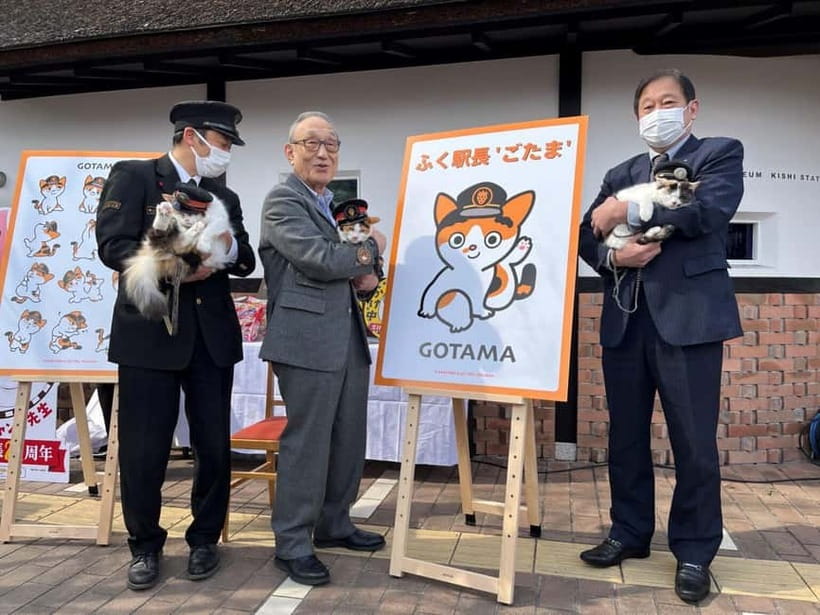
- Kishi Station tells the Tama story: The tiny, cat-faced station is the heart of the morning and includes Nitama, a cat café, souvenirs, and stamps.
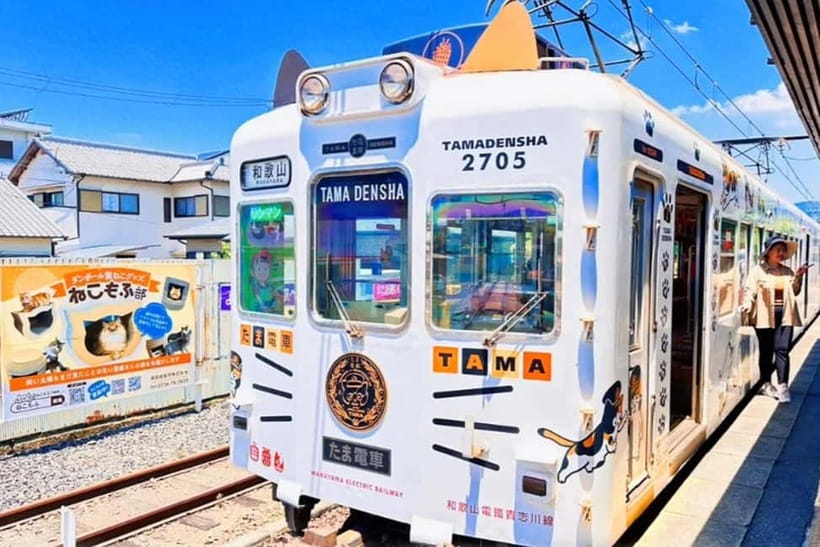
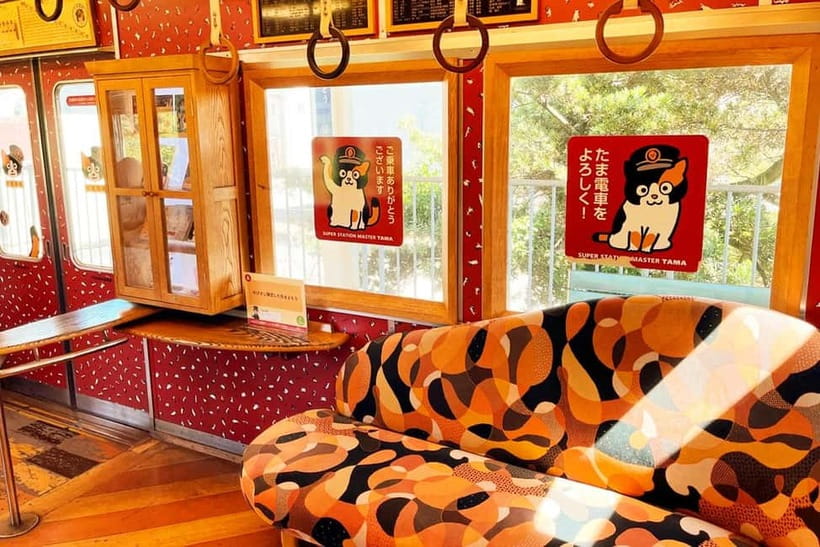
- The train design changes daily: You may ride the Tama Train, Strawberry Train, or Toy Train, depending on the operating schedule.
- Toretore Market is the best food stop: You can watch a tuna cutting show, buy seafood, and choose lunch at your own expense.
- Shirahama adds real coastal drama: Senjojiki’s layered rock platform and Sandanbeki Cave give the afternoon its strongest views.
- The hot spring is optional: The bath costs extra, and tattoo restrictions may apply.
- Guide Tiger gets special praise: His English and Chinese WhatsApp updates, clear directions, and helpful market advice can make the packed day easier.
Why this Osaka day trip works
This tour crosses from Osaka into Wakayama, a change of pace that is easy to miss if you stay around Namba, Dotonbori, and Osaka Castle. You leave the city for a rural railway stop, a seafood market, an old hot spring district, and ocean cliffs.
I see this as a good choice when you want several distinctly Japanese experiences in one day without planning a chain of trains and buses yourself. The route is ambitious, though. You’ll leave Nipponbashi at 8:30 in the morning and expect to return around 6:40, with traffic able to change the order or shorten stops.
The meeting point is at Nipponbashi Station Exit 2, near the Namba and Shinsaibashi area, at 1-chōme-3-6 Nipponbashi. Arrive at least 15 minutes early. Many groups gather here, and a late arrival or missed departure is not refunded.
The vehicle is an air-conditioned bus or coach. Its size depends on the group, and the reviews describe comfortable transport and a good driver. That matters on this route, since the final ride back to Osaka can take about two and a half hours.
More Market Food Tours in Japan
- Tokyo Tsukiji Fish Market Food and Culture Walking Tour
★ 5.0 · 3,184 reviews - Nishiki Market Brunch Walking Tour (7 Tastings + Brunch)
★ 5.0 · 1,355 reviews - Tsukiji Fish Market Guided Tour and Sushi Making with Pro Chef
★ 5.0 · 775 reviews
Kishi Station and the cat railway
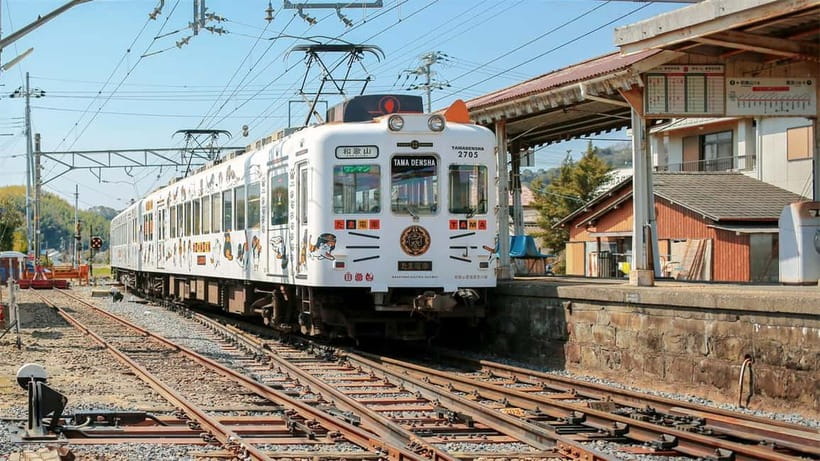
The first main stop is Kishi Station, about an hour and a half from Osaka by road. The station looks like a cat’s face, which is playful without feeling like a theme park. Its story is more interesting than the decoration.
The local rail line once faced closure. A calico cat named Tama began greeting passengers as the station’s unofficial mascot, drawing attention to the line and helping the small community around it. Tama was later treated as a stationmaster, complete with a daily role and a uniformed public image.
Today, Nitama, meaning Second Tama, continues the tradition. The cat is one reason this stop feels personal rather than merely photogenic. Your guide can explain the story, and you’ll have time to look around the station area rather than simply snap a picture and leave.
The station includes a cat-themed café, Tama Shop, collectible stamps, and souvenirs. If you like small railway memorabilia, bring a little cash. The stop is also a pleasant chance to stretch your legs after the morning drive.
The train is the day’s most whimsical moment. Three designs may operate on the line:
- Tama Train
- Strawberry Train
- Toy Train
You do not choose the design in advance. The train in service changes by schedule, so I would treat the cat theme as guaranteed but the exact carriage as a pleasant surprise.
One point needs clear expectations. The cat-themed train experience is about 15 minutes, not a full scenic railway day. The broader rail segment may appear as a longer panoramic journey in the schedule, but the special cat-carriage ride itself is short. You’re booking this for the story, design, and novelty, not for hours of train travel.
The train may feel too brief if you are a serious railway fan. On the other hand, that short ride fits the larger route and leaves time for the market and coast. Families, cat lovers, photographers, and anyone who enjoys odd little local traditions should find this stop especially appealing.
Tuna, sashimi, and lunch at Toretore Market
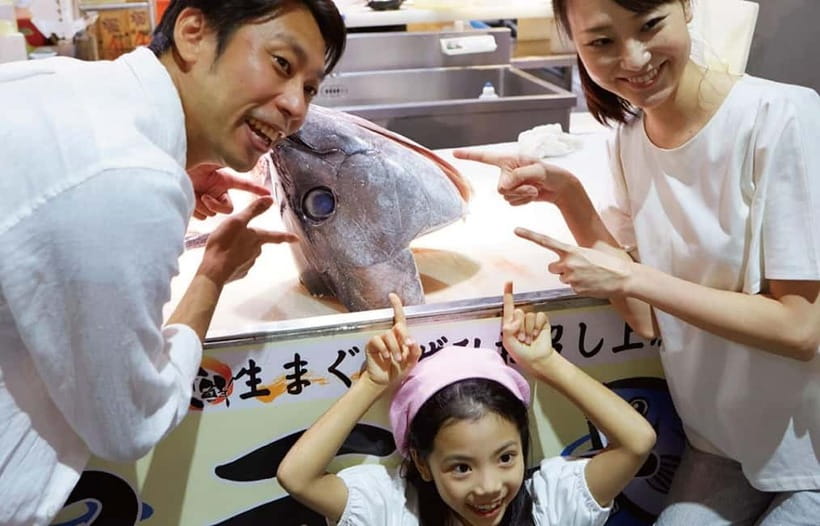
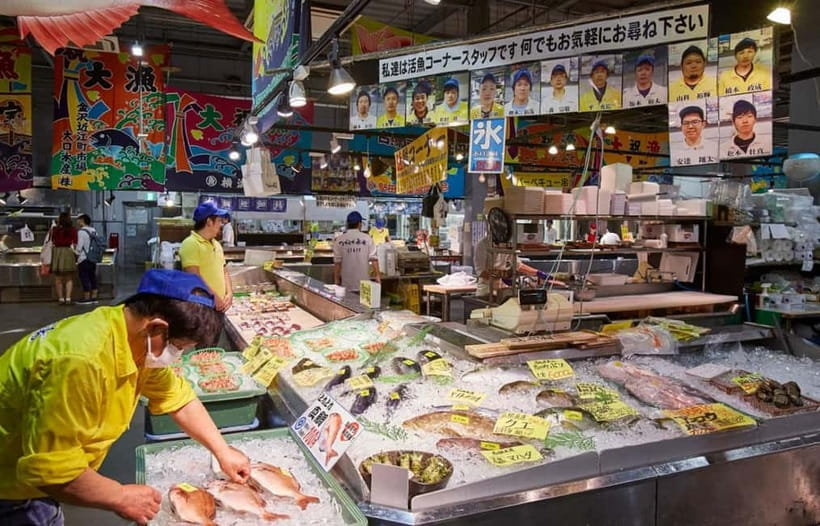
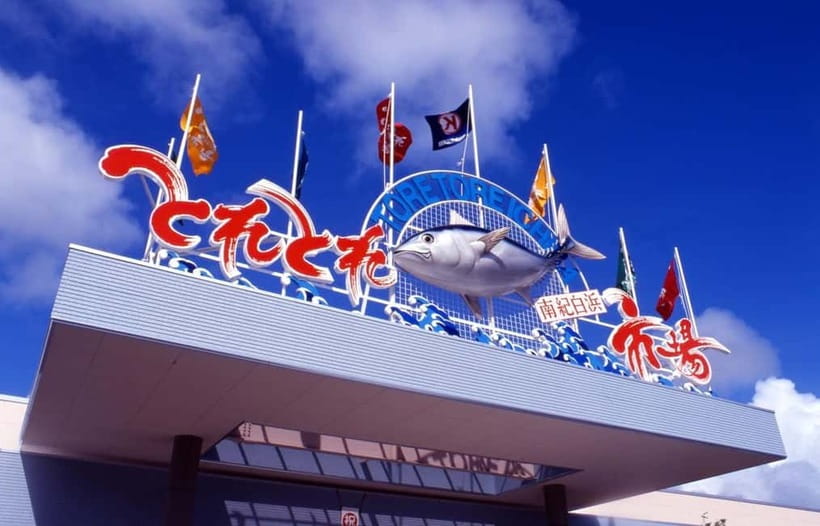
From Kishi Station, the tour continues to Toretore Ichiba, described as the largest seafood market in western Japan. You’ll have about two hours here, which is enough time to watch the tuna presentation, find lunch, browse the stalls, and buy food gifts.
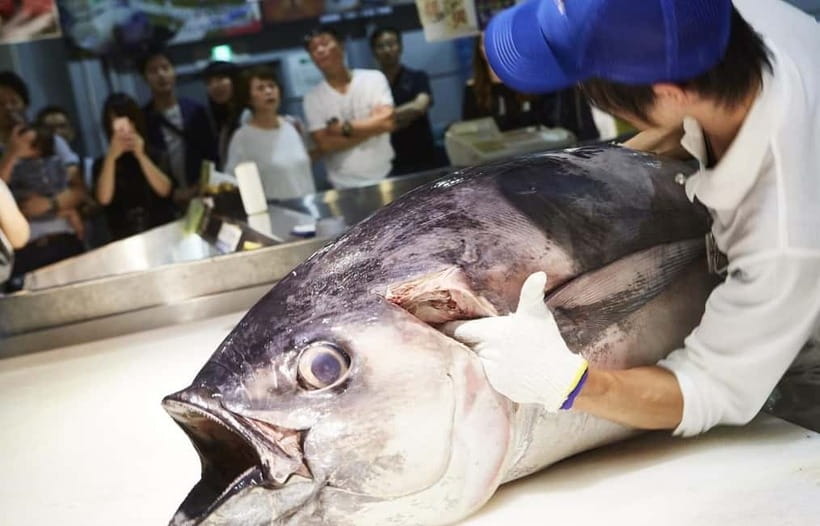
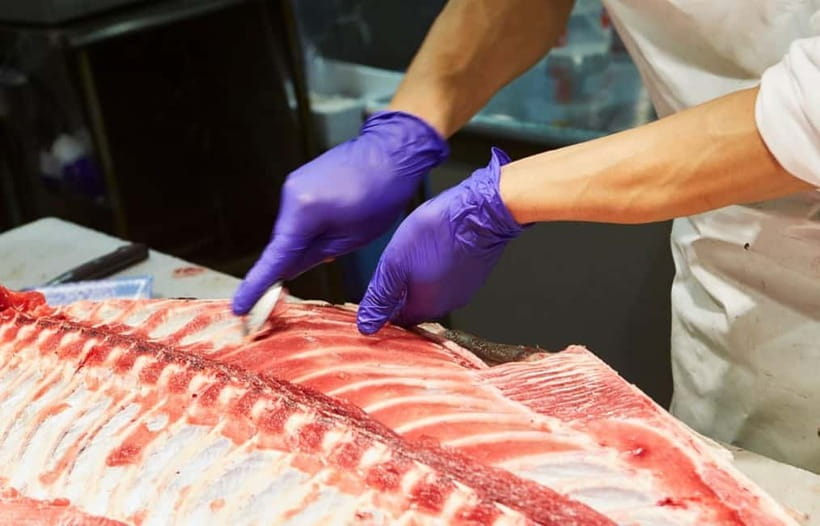
The market’s biggest set piece is the live tuna cutting show. A large tuna is broken down with fast, practiced cuts while the presenter explains the fish’s anatomy. The combination of skill and useful information makes this more than a simple demonstration.
The show runs two or three times daily, but the exact time changes. It can also be canceled because of weather or other unexpected conditions. Do not make the whole value of the stop depend on seeing it. The market itself remains the main attraction.
Lunch is not included. You can choose from seafood bowls, tuna sashimi, grilled fish, octopus rice, and other dishes. The range gives you control over both price and appetite. I’d bring cash, as the tour specifically recommends it, and keep enough aside for snacks or souvenirs.
The market is also a practical place to buy seasoned seafood and packaged local foods. If you are staying in Osaka for several more days, check whether a purchase can be carried comfortably. You may find plenty worth buying, but this is not the time to load yourself down with chilled food unless you have a clear plan.
The guide can make a difference here. Tiger is repeatedly singled out for clear explanations and hands-on help, including advice about what to buy and how to cook seafood at the market’s barbecue tables. If you are the only English speaker in your group, tell him early so he can point out the key areas and explain your choices.
I would give yourself the full time here. One criticism of the schedule is that the market stop can feel longer than necessary for people who are not eating seafood or shopping. For everyone else, two hours passes quickly.
The optional hot spring in Shirahama
The tour then reaches Shirahama, one of Japan’s old hot spring resorts. Toretore Onsen is linked with more than 1,350 years of bathing tradition and is described as a place once visited by emperors and recorded in early Japanese writings.
Entry is optional and costs extra. That is useful if you want to keep the day focused on sightseeing, but it also means you should decide in advance whether to pack for bathing. The spring water is sodium bicarbonate based and described as gentle on the skin. The site also has a salt-stone bedrock bath.
You should not assume you will have a long, leisurely spa session. This is a stop within a tightly scheduled day, and the later cliffs still need to fit into the route. If bathing is one of your main reasons for visiting Wakayama, a dedicated Shirahama overnight stay would give you more time.
Tattoo access may be restricted. Japan’s bathing rules vary by facility, so check your situation before booking rather than relying on the tour guide to solve it on the day.
For many people, the hot spring works best as an optional bonus. After a morning of driving and walking, a short soak can be welcome. If you would rather use the time for photos, food, or a slower visit at the coast, skipping it is sensible.
More Seafood Tours in Japan:
- Tokyo: Tsukiji Fish Market Food and Culture Walking Tour
★ 4.7 · 757 reviews - Tsukiji Fish Market: Street Food & Culture Walking Tour
★ 5.0 · 669 reviews - Tsukiji Fish Market: Street Food & Culture Walking Tour
★ 4.8 · 259 reviews - Seafood trail
★ 5.0 · 766 reviews
Senjojiki’s broad Pacific views
Senjojiki Rock Plateau is a short stop of about 30 minutes. The name refers to the impression of thousands of tatami mats spread across the rock, and the site consists of broad slabs facing the Pacific.
This is a place for sea air, photographs, and a little careful walking. The rock surface is uneven, so comfortable shoes matter. You’ll get the best sense of the site by looking beyond the nearest formations and watching how the rock shelves meet the water.
Sunset can be beautiful here if the timing works, though the tour cannot promise it. Traffic and the day’s operating schedule may affect the order of the stops. Even in daylight, the ocean views give the itinerary a needed open-air pause after the market and bus rides.
Thirty minutes is enough for a viewpoint visit but not for a long coastal walk. If you want to explore every rock shelf, this tour will feel rushed. The short stop is better understood as a carefully chosen photo and scenery break.
Sandanbeki Cave and the pirate stories
Nearby Sandanbeki brings you to cliffs carved by the Pacific. An elevator descends 36 meters to sea-level caves, where displays connect the site with pirates from the Heian period. Natural erosion has shaped the rock chambers, giving the stop both a geological and historical angle.
Admission is optional and not included. You can take photos around the cliffs without paying for the cave, but the elevator ride and interior displays are the main reason to buy a ticket.
The cave is a strong contrast to Senjojiki. Senjojiki opens you to the sky and ocean, while Sandanbeki takes you below the cliff edge. If you enjoy dramatic rock formations and old maritime stories, paying for the cave should be worthwhile.
Again, time is limited to roughly 30 minutes. Check the tour’s timing before buying admission, particularly if traffic has delayed the group. You want enough time to descend, see the cave, and return to the vehicle without turning the last stop into a scramble.
What the $83 price really covers
At $83 per person, this is not the cheapest possible way to see Wakayama. A self-planned trip could cost less if you are comfortable managing several rail and local transport connections, choosing inexpensive food, and skipping the hot spring and cave.
The value here is convenience. The price includes round-trip transport from Osaka, the cat train, a multilingual guide, a professional driver, expressway tolls, fuel, and parking. On a route with distant stops, those extras add up, especially when you consider the time saved.
The guide is another part of the value. Tiger is specifically praised for keeping people informed, sending WhatsApp updates in English and Chinese, explaining each stop, and helping people stay together. A guide is particularly useful at Toretore Market, where labels and food choices may be unfamiliar.
You still need to budget for lunch, personal purchases, hot spring entry, and Sandanbeki Cave admission. The tour does not include food in the vehicle, so eat before departure or wait for the market stop.
Who will enjoy this tour most
I’d recommend this day to you if you want variety and prefer an organized route to a complicated independent journey. It suits first-time visitors to the Osaka region, families, cat fans, seafood lovers, photographers, and anyone curious about smaller Japanese communities beyond the city.
The mix also works well for groups with different interests. One person can focus on the cat station, another on the market, and another on the sea cliffs. The day gives each stop enough time for a taste, though not for slow, detailed exploration.
You should think twice if you dislike long coach journeys or prefer to spend a full day in one place. The road time is substantial, and the schedule can shift on weekends, public holidays, and peak travel dates. The tour is also not suitable for wheelchair users because of the route and sites.
Wear comfortable shoes and bring a camera and cash. Keep your phone ready for the evening message with the guide, driver, vehicle, and final meeting details. The available languages are English, Japanese, and Chinese.
Should you book the Wakayama cat train tour?
Book it if the idea of combining a cat railway, a live tuna cutting show, optional bathing, and Pacific cliffs sounds better than spending another day in central Osaka. The tour packs a lot into ten hours, and the transport, guide, and train ride make the $83 fare reasonable.
Do not book it expecting a long cat train journey or a relaxed spa retreat. The special train ride is short, the sightseeing stops are timed, and several extras cost more. For the right person, though, this is a cheerful and unusual day out, with enough food, folklore, and ocean scenery to make the long ride worthwhile.
FAQ
Where does the tour meet in Osaka?
Meet at Nipponbashi Station Exit 2, near the Namba and Shinsaibashi area. The address is 1-chōme-3-6 Nipponbashi, Chuo Ward, Osaka, 542-0073. Arrive at least 15 minutes before the 8:30 am departure.
Which cat train will I ride?
The train design depends on the daily operating schedule. The three possible designs are the Tama Train, Strawberry Train, and Toy Train.
How long is the cat train ride?
The cat-themed train experience lasts about 15 minutes. The exact operating details depend on the day’s railway schedule.
Is lunch included?
No. Lunch is at your own expense at Toretore Market, where you can buy dishes such as tuna sashimi bowls, grilled seafood, and octopus rice.
Are the hot spring and Sandanbeki Cave included?
No. Hot spring entry and Sandanbeki Cave admission are optional and cost extra.
What happens if the tuna cutting show is canceled?
The show can be canceled because of weather or other unexpected circumstances. Its timing is also not fixed, since it normally takes place two or three times per day.
More food trips by train around Japan
- Montserrat & Cogwheel Train, Gourmet Wine Tasting & Tapas/Lunch
★ 5.0 · 6,290 reviews - Hanoi: Guided Food Tour with Train Street Visit
★ 4.9 · 6,239 reviews - Hanoi: Street Food Tour with Train Street & Hidden Alleyways
★ 5.0 · 2,831 reviews - Hanoi: Guided Street Food Tour with Train Street Experience
★ 4.9 · 2,479 reviews
Fresh off the menu around Japan
- Kyoto: Sushi Making Class with Sushi Chef★ 4.8 · 64 reviews
- Shinjuku Tokyo: Authentic Japanese Home-Style Culinary Class★ 4.9 · 125 reviews
- Shinjuku: Golden Gai Food Tour★ 4.6 · 77 reviews
- Shibuya Tokyo: Sushi Making Class (Vegan/Vegetarian/Halal)★ 4.7 · 29 reviews
- Shinjuku: Food Tour – 15 Dishes at 4 local eateries★ 4.8 · 246 reviews
- Hidden Osaka – Yukaku Red Light Tour & Culinary Adventure★ 4.8 · 96 reviews
- Shibuya: Ramen Dojo Tokyo | Make All 3 (Tonkotsu/Shoyu/Miso)★ 4.8 · 207 reviews
- Tokyo: Secret Food Walking Tour★ 4.7 · 38 reviews
Japan Food Tours, compared.
Tokyo: Shinjuku Food Tour (13 Dishes at 4 Local Eateries)
Read our review →
Sushi Making Tokyo Roll and Authentic Japanese Sushi Class
Read our review →
Tokyo Tsukiji Fish Market Food and Culture Walking Tour
Read our review →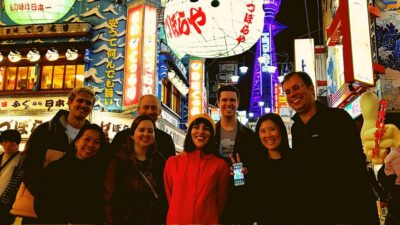
Osaka: Shinsekai Food Tour with 13-15 Dishes at 5 Eateries
Read our review →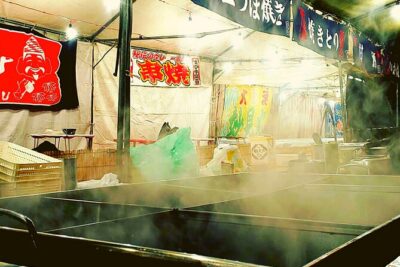
Osaka Food Tour: 13 Dishes at 5 Local Eateries
Read our review →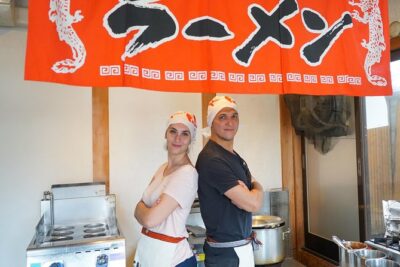
Ramen Cooking Class at Ramen Factory in Kyoto
Read our review →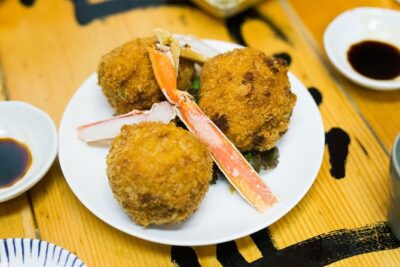
Best of Shinjuku: Izakaya Food Tour (4 Stops, 14+ Tastings)
Read our review →
Kyoto Night Foodie Tour in Gion (9+ dishes + 6 Sake tastings)
Read our review →Browse the lists this tour appears in