
Review · KYOTO
Nishiki Market Brunch Walking Tour (7 Tastings + Brunch)
Nishiki Market is easiest to enjoy when someone else handles the first round of decisions. This three-hour walk takes you from Shijo Bridge through Pontocho and Nishiki Tenmangu before settling into Kyoto’s famous food street for seven tastings and brunch.
I like the small-group format, which can give you direct help at crowded stalls, and I like the mix of food with local culture. Guides such as Yuki, Yusuke, Chie, Hikaru, and Reiki have been praised for clear English, good food advice, and lively stories. The main caution is that the food portions can vary, and some people find the brunch less exciting than the market samples.
At a glance
- Seven market tastings plus brunch: You get a structured introduction to Kyoto food rather than simply wandering from stall to stall.
- A useful route into Nishiki: The walk includes Shijo Bridge, Pontocho, and Nishiki Tenmangu before the market.
- Small-group attention: The experience is advertised for up to six people, although the booking information also lists a maximum of ten, so confirm the group size if that matters to you.
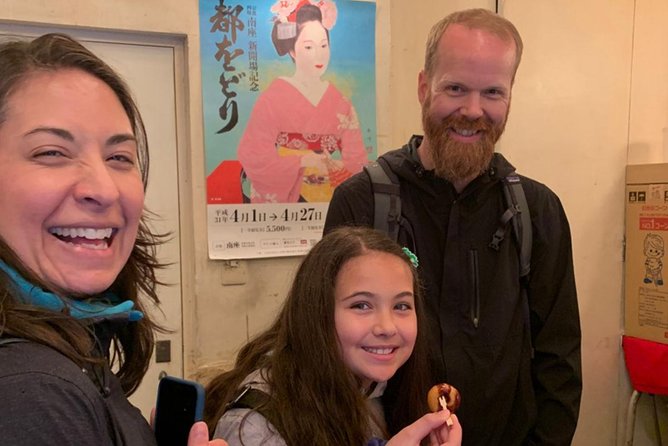
- Photos are provided: You are encouraged to put your phone away and concentrate on eating and listening.
- Guides shape the experience: Yuki, Yusuke, Takaya, Jimmy, Aki, Emi, and others have been praised for food tips, cultural explanations, and friendly conversation.
- Important food warning: Gluten-free requests cannot be accepted, and allergy-free meals or substitutions are not guaranteed.
Why Nishiki Market works best with a guide
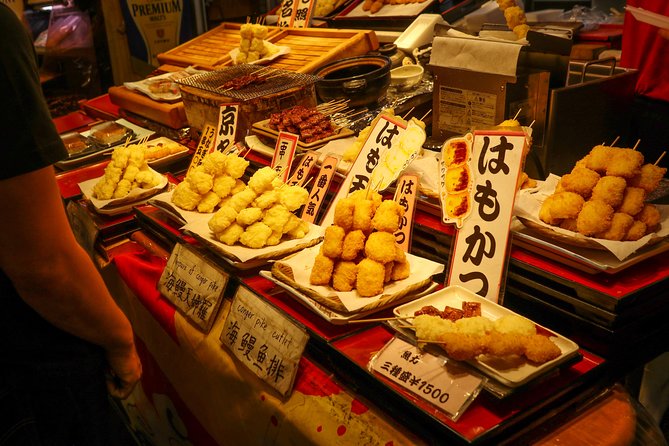
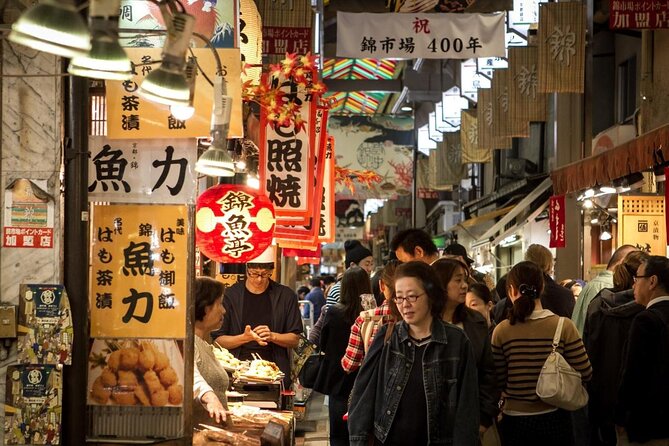
Nishiki Market is often called Kyoto’s kitchen, and the name makes sense. It is a long shopping arcade packed with food stalls, specialty shops, and small places to eat. The challenge is not finding food. The challenge is knowing what is worth trying, how much to buy, and how to eat it politely in a crowded setting.
This tour gives you a route and a purpose. Instead of spending your first hour wondering which skewer, pickle, sweet, or tea to choose, you follow a guide who selects seven tastings and explains what you are eating. That is especially useful if you have never visited Japan before or do not read Japanese menus.
I also like the cultural layer. The walk is not limited to snacks. Guides explain Kyoto customs, Shinto and Buddhist practice, geisha culture, and the role of food in daily life. The quality depends on the person leading your group, but the strongest guides, including Yutaka, Hikaru, Aki, and Chie, have been singled out for making the information clear and entertaining.
Do not mistake this for a long restaurant crawl. Some tastings are proper portions, while others may be small samples offered by market vendors. One especially useful point to understand before booking is that seven kinds of tasting does not necessarily mean seven full dishes.
More Market Food Tours in Japan
- Kyoto: Local Food Tasting Tour at the Nishiki Market
★ 4.7 · 135 reviews - Kyoto: Nishiki Market and Depachika Food Tour with a Local
★ 4.7 · 76 reviews - Kyoto: Nishiki Market Tour with a Local Foodie & Tastings
★ 4.5 · 67 reviews
Shijo Bridge and the first look at Kyoto
The meeting point is by the Statue of Izumo-no-Okuni in Kawabatacho, near Shijo Bridge. The bridge stop itself takes about five minutes and is free.
This is a quick orientation rather than a major sightseeing stop. You get a look at one of Kyoto’s well-known crossings and gather with the guide before walking toward the market. It is a sensible place to begin because it puts you near the river, the central shopping streets, and the route toward Pontocho.
If you arrive early, allow time to locate the statue and guide. The experience uses a mobile ticket, and confirmation is sent when you book. Comfortable shoes are a good idea, since the tour keeps moving and the market section alone lasts more than two hours.
Pontocho’s narrow lane
The group then spends about 15 minutes walking through Pontocho. This famous lane is known for its narrow passage and traditional dining buildings. It offers a change of mood from the open riverfront and gives the guide a chance to explain Kyoto’s evening food and entertainment districts.
The stop is brief, so set your expectations correctly. You are not getting a full Pontocho food tour or a long visit inside its restaurants. You are getting a short walk through an atmospheric part of central Kyoto on the way to Nishiki.
This first hour has been the least convincing part for some people who expected the market to begin immediately. If you have already taken a Kyoto culture tour, some of the explanations about geisha culture or local customs may repeat familiar material. If Nishiki Market is your main goal, know that the route takes its time before reaching the stalls.
Nishiki Tenmangu and a quiet pause
Nishiki Tenmangu takes about 15 minutes. This compact shrine provides a useful contrast to the market’s commercial energy. You can look at the shrine architecture and learn about the religious traditions that remain part of ordinary Kyoto life.
The stop is not simply filler. Food in Japan is tied to seasonal customs, festivals, offerings, and ideas of care and presentation. A guide can help connect those subjects to what you later see in the market.
Still, this is a short visit. You will not have time for a long independent exploration. The value comes from the explanation and the way it links the market to Kyoto culture.
More Market Food Tours in Kyoto:
- Nishiki Market Food Tour with Cooking Class
★ 4.9 · 42 reviews - Kyoto: Nishiki Market Food Tour
★ 4.9 · 21 reviews - Chef Guided Food Tour of Pike Place Market
★ 5.0 · 3,733 reviews - Tokyo Tsukiji Fish Market Food and Culture Walking Tour
★ 5.0 · 3,184 reviews
Two hours inside Nishiki Market
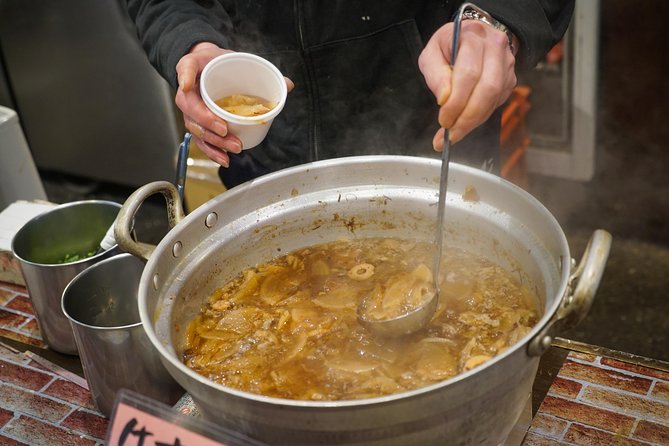
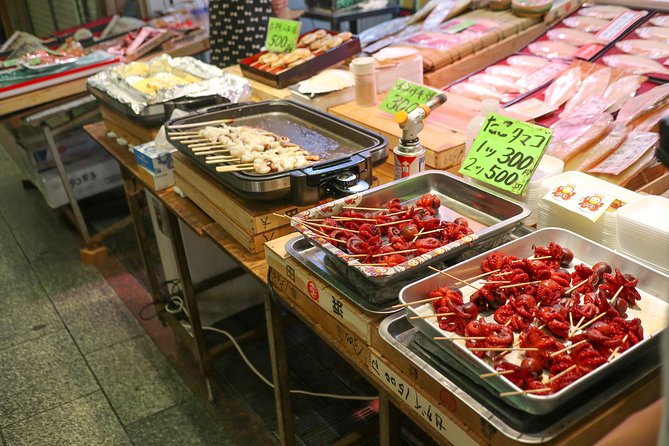
The market is the heart of the experience. The schedule allows about two hours and 15 minutes here, though the exact pace will depend on crowds, shop conditions, and the group’s appetite.
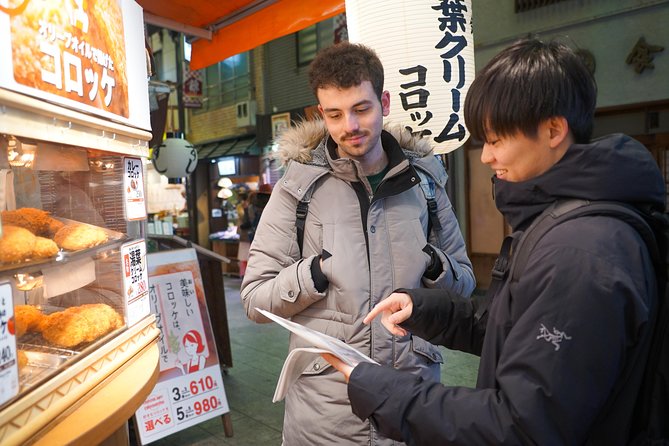
Nishiki can be tight and crowded, especially when shoppers stop in front of a stall. A guide helps by directing you to the right place and explaining how to move, sample, and eat without blocking the walkway. That alone can make a first visit less stressful.
The seven tastings are selected from the market’s range of food. The exact menu is not fixed in the information provided, so do not book expecting a particular meat skewer or dish pictured elsewhere. One person specifically noted that a meat stick shown in promotional material was not available on their tour. Menus can change with vendors and supply.
The best part of this setup is discovery. You may be offered foods you would have ignored on your own, and the guide can explain how locals use them. Takaya has been praised for answering questions and giving practical food suggestions for the rest of a Kyoto visit. That sort of advice can be worth more than a simple list of samples.
The weaker point is portion size. Some people found the tastings generous enough, while others felt that several were merely tiny vendor samples. If you arrive very hungry, you may be disappointed by the early part of the tour. Bring water, and consider a light breakfast first, particularly if your group tends to eat early.
You can also buy extra food and drinks along the way. These purchases are not included, so the market portion can cost more than the advertised tour price if you keep adding snacks.
What the brunch adds
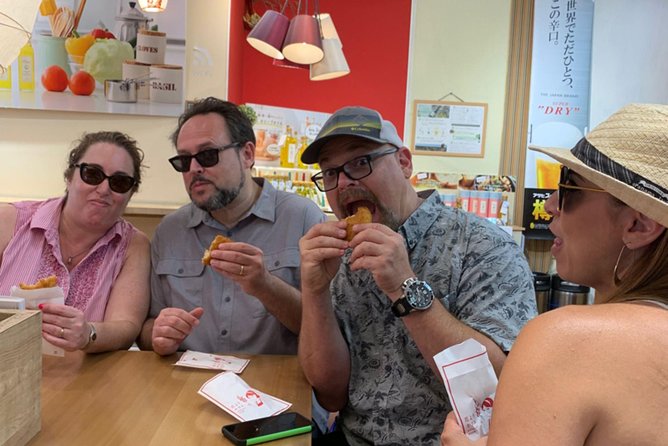
Brunch at a restaurant is included, along with the seven tastings. This gives the tour a proper sit-down finish and means you should not need to plan another meal immediately afterward.
The brunch has received mixed reactions. Some people enjoyed the quality, atmosphere, and choice of meals. One popular version included steamed dumplings, and another was described as a delicious local restaurant meal. Other people found the choices limited, with one brunch held at a bookshop cafe and offering a simple meal with water.
That variation matters. If you want a substantial restaurant lunch with several courses and a drink, this may feel modest. If you prefer a scheduled meal after walking through a crowded market, the brunch is convenient and useful.
The meal also changes the value calculation. At $68.31 per person, you are paying for a guide, the seven tastings, brunch, photos, and about three hours of structured time. You are not simply paying for the food itself. The price makes more sense if you value help choosing unfamiliar items and want cultural context. It makes less sense if you are confident exploring markets independently and would rather spend the same money on larger portions.
The guides make the largest difference
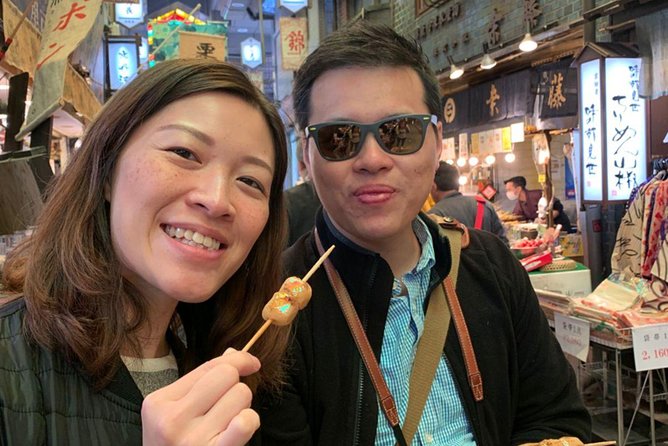
This experience is guide-led in the truest sense. The route is straightforward, but the quality of the explanations and conversation can change the whole morning.
Yusuke has been praised for combining food knowledge with Japanese cultural context. Yuki has been described as a strong guide for exploring several shops and explaining the market. Chie is known for a funny, engaging style and useful advice for the rest of a Kyoto trip.
Hikaru has been praised for making the brunch especially enjoyable, while Aki has been noted for working hard to keep the group comfortable. Reiki has been described as thorough and clear in English. Jimmy has been appreciated for mixing Kyoto stories with the food.
That does not mean every departure will feel identical. One poor experience involved a late start, unclear explanations, long pauses, and little help choosing food. The company apologized and said it would work on communication. I would treat that as a reminder to speak up during the tour if you are unsure what you are eating or where the group is going.
The small-group promise is a real advantage when it holds. The main details describe a maximum of six people, but the additional booking information says the activity can have up to ten. If personal attention is central to your decision, confirm the expected group size before paying.
Photos, phones, and the practical rhythm
Photos are provided during the tour. That is an unusual but useful touch. Nishiki is tempting to photograph, but stopping at every stall can make you miss the explanation or slow the group.
You can still enjoy the sights without spending the entire morning holding up your phone. The supplied pictures give you a record of the experience while you focus on tasting and listening.
The tour is near public transportation, and most people can participate. The route includes walking, standing, and eating in a busy market, so comfortable shoes matter. Summer in Kyoto can reach 40°C, while winter temperatures can fall to -5°C. Dress for the forecast rather than assuming a mild morning.
Weather can also affect the tour. It requires good conditions, and a cancellation caused by poor weather brings the choice of another date or a full refund.
Food restrictions need careful attention
This is not a good choice for strict dietary needs. Gluten-free requests cannot be accommodated. Allergy-free food is not guaranteed because the participating kitchens belong to outside businesses, and substitutions may not be possible at every stop.
You should tell the operator about allergies or other food requests at least one day before the tour. The company says it will try to compensate at different stops, but you should not count on a complete substitute menu.
For a flexible eater, this tour offers a broad introduction to local food. For someone who needs firm control over ingredients, the risk is too high. You may be better off arranging individual meals where each kitchen can answer detailed questions.
Who gets the most value from this morning
I would choose this experience if you want help getting started in Nishiki Market, enjoy trying unfamiliar foods, and like your meals combined with local stories. It also suits a first visit to Kyoto, especially if you want a gentle introduction to Pontocho, a shrine, and the market in one outing.
Families can benefit from the guide’s help, though younger children may not enjoy every explanation or tasting. The experience has worked well when a guide makes an effort to include teenagers, but the food is not designed around children.
I would hesitate if you have already explored Nishiki on your own, dislike small food samples, or expect brunch to be the main event. Independent visitors can walk through the market without paying a tour fee, and they may prefer choosing larger portions at their own pace.
Cancellation is free up to 24 hours before the local start time. Changes or cancellations inside that window are not accepted for a refund.
Should you book the Nishiki Market Brunch Walking Tour?
Book it if you want structure, conversation, and an easy first taste of Kyoto food. The strongest guides turn a crowded market into a lesson in local eating, and the combination of seven samples, a shrine, Pontocho, and brunch gives you more than a simple market stroll.
Skip it if your priority is a large meal, a fixed menu, or strict allergy control. The food portions and brunch setting can vary, and some people will find better value by buying food directly in Nishiki.
At $68.31, this is a fair choice for a curious eater who values guidance more than quantity. Go with a light breakfast, wear good shoes, keep an open mind about the menu, and confirm the group size and dietary limits before booking.
FAQ
How long does the Nishiki Market Brunch Walking Tour last?
The tour lasts approximately three hours. The route includes short stops at Shijo Bridge, Pontocho, and Nishiki Tenmangu, followed by about two hours and 15 minutes in Nishiki Market.
What food is included?
Seven kinds of tastings and brunch at a restaurant are included. The exact tasting menu is not fixed, and additional food and drinks cost extra.
Is brunch included in the tour price?
Yes. Brunch at a restaurant is included, along with the seven tastings.
Where does the tour begin and end?
The tour begins at the Statue of Izumo-no-Okuni in Kawabatacho, near Shijo Bridge. It ends at Nishiki Market on Higashiuoyacho.
How large is the tour group?
The experience is described as a small-group tour with a maximum of six people. Additional booking information lists a maximum of ten travelers, so confirm the expected group size when booking.
Can the tour accommodate gluten-free diets or food allergies?
Gluten-free requests cannot be accommodated. Allergy-free food and dietary substitutions are not guaranteed, although you can report allergies or requests at least one day before the tour.
Can I cancel for a refund?
You can cancel at least 24 hours before the local start time for a full refund. Cancellations or changes made less than 24 hours before the start are not refunded, except when poor weather causes the operator to cancel and offer another date or a full refund.
Fresh off the menu around Kyoto
- Kyoto: Sushi Making Class with Sushi Chef★ 4.8 · 64 reviews
- Nishiki Market Food Tour with Cooking Class★ 4.9 · 42 reviews
- Kyoto: Small-Group Authentic Sushi Making Workshop★ 5.0 · 137 reviews
- Kyoto: Ramen, Gyoza, and Onigiri Cooking Class★ 5.0 · 445 reviews
- Kyoto: Sake Brewery and Tasting Tour in Fushimi★ 4.8 · 55 reviews
- Kyoto: Foodie Night Tour in Gion with 9 dishes + 6 Sake★ 4.4 · 26 reviews
- Kyoto: Nishiki Market Tour with a Local Foodie & Tastings★ 4.5 · 67 reviews
- Kyoto: Ramen Cooking Class at a Ramen Factory with Souvenir★ 4.9 · 532 reviews
Kyoto Food Tours, compared.
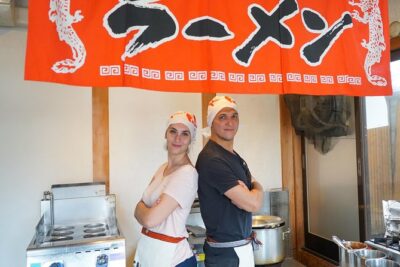
Ramen Cooking Class at Ramen Factory in Kyoto
Read our review →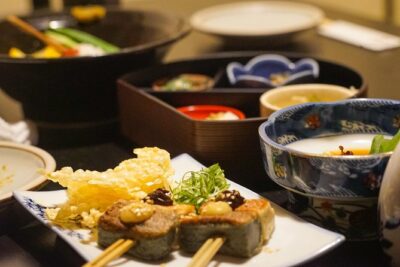
Kyoto Night Foodie Tour in Gion (9+ dishes + 6 Sake tastings)
Read our review →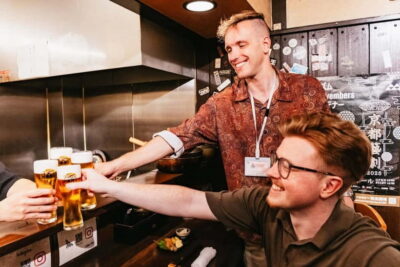
Kyoto Night All-Inclusive Eats and Streets, Gion and Beyond
Read our review →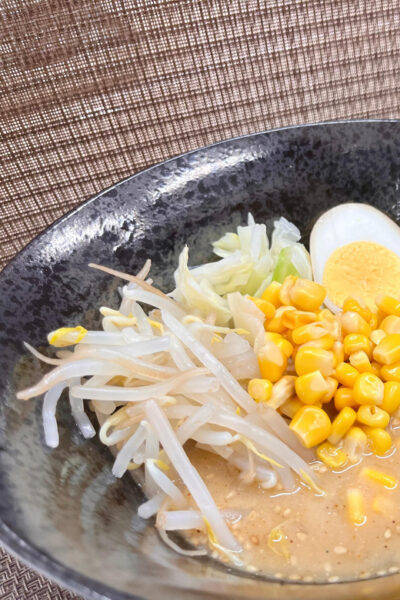
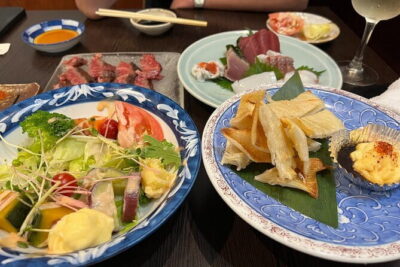
Kyoto: Gion & Pontocho Food Tour with 13 Dishes
Read our review →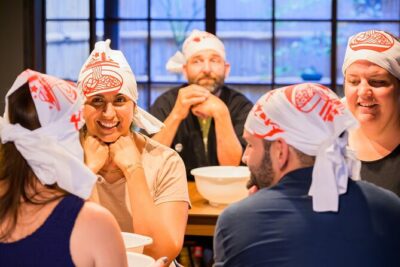
Gyoza Cooking Class in Kyoto: Traditional Japanese Dumplings
Read our review →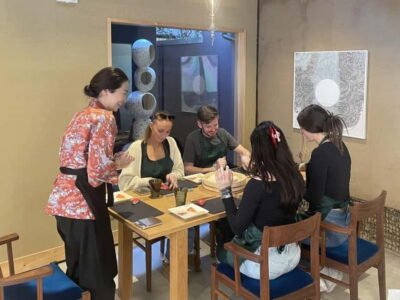
Kyoto: Small-Group Authentic Sushi Making Workshop
Read our review →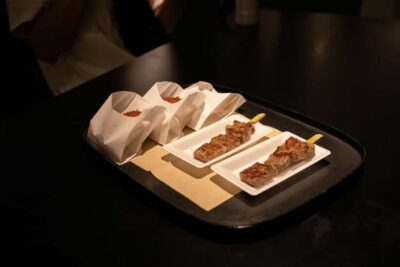
Kyoto: Local Food Tasting Tour at the Nishiki Market
Read our review →Browse the lists this tour appears in