
Review · OSAKA
Osaka Food Tour: 13 Dishes at 5 Local Eateries
Osaka’s Shinsekai district is best understood one small plate at a time. This three-hour evening food walk takes you to five local eateries, from a backstreet stall to a standing bar, for 13 dishes and two drinks. You are not simply eating Osaka classics. You are learning how the neighborhood eats, drinks, and spends its evenings.
I like the range of stops and the way a guide gets you through doors you might not find on your own. I also like the friendly, social pace. Guides such as Tommy, Mario, Mari, Nick, Brian, and Kiko have been praised for explaining local customs, answering questions, and keeping families and mixed-age groups involved.
The main caution is food balance. Several dishes are fried, and the two included drinks are not one drink at every stop. Vegans and people who need gluten-free or allergy-safe meals cannot join, so check the menu fit before booking.
Key points to know before you book
- Thirteen dishes at five eateries: The route gives you a broad taste of Shinsekai rather than one long restaurant meal.
- Two drinks are included: Alcoholic or nonalcoholic options may include sake, shochu, or other local favorites. Extra drinks cost more.
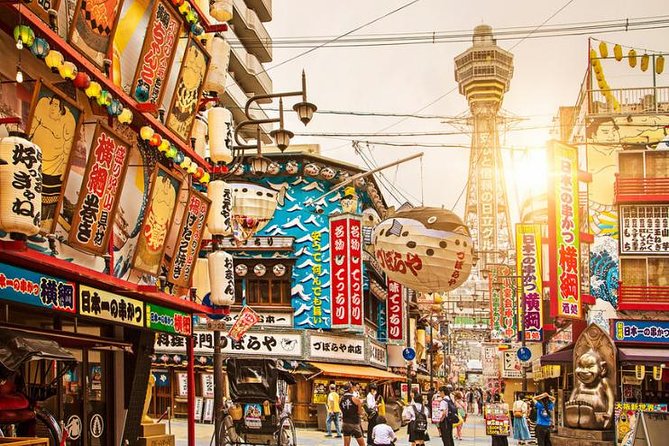
- Shinsekai is the setting: You walk through backstreets and local eating spots in one of Osaka’s distinctive old entertainment districts.
- The food adds up to a meal: Come hungry, but pace yourself because several stops may feature fried food.
- Small-group feel when numbers are low: Groups have sometimes been as small as nine, though the maximum is 30.
- Dietary limits matter: Vegans and people requiring gluten-free or allergy-safe food cannot take this tour.
Shinsekai is the real attraction between bites
Meet at DAIICHI本店 in Taishi, Nishinari Ward, then set off on foot through Shinsekai. The meeting point is near public transportation, but transportation to it is not included, so allow time to find the entrance, which is listed at basement level.
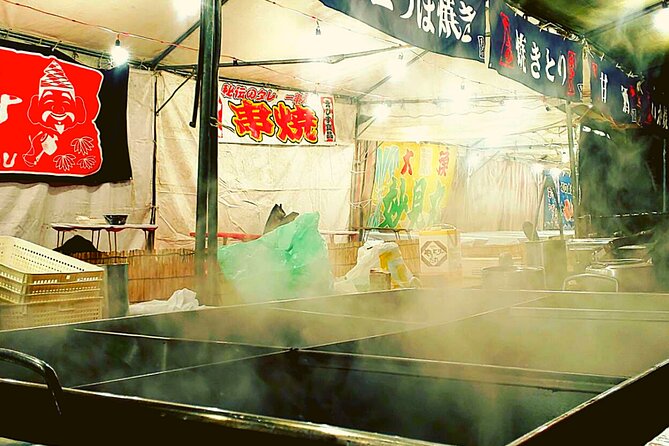
Shinsekai has a very different mood from Osaka’s polished shopping streets. Its small eateries, arcades, standing bars, and narrow lanes give the tour its character. You are not being led from one famous landmark to another. You are moving through an area where food is part of everyday life.
That matters because many Osaka specialties are easier to understand in their natural setting. A plate of kushikatsu means more when you see the casual style of eating around it. A standing bar says something about after-work culture that a formal restaurant cannot show you.
The guide adds the local frame. Guides including Mario and Suga have explained the origins of dishes and the customs around them, while Tommy has been praised for mixing food facts with humor. You can expect the guide to explain each dish, share local quirks, and answer questions as you walk.
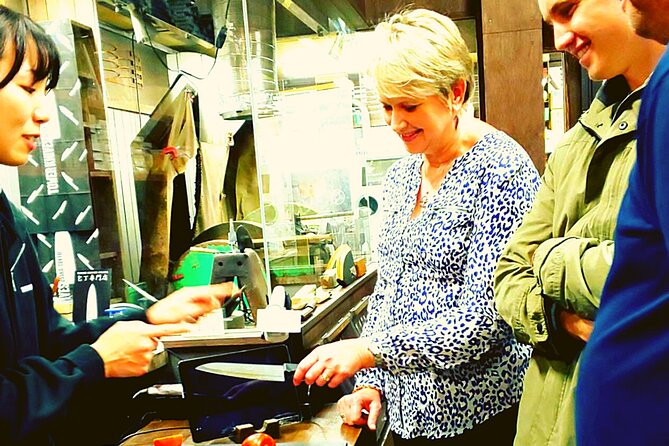
The pace is generally comfortable, with eating stops spread across nearly three hours. Some groups have added playful detours, such as arcade activities, ninja star throwing, or toy-gun target shooting. Those extras are paid separately, and they may not be part of every departure, but they can give children a break between plates.
More food tours around Osaka:
- Osaka: Shinsekai Food Tour with 13-15 Dishes at 5 Eateries
★ 4.8 · 2,204 reviews - Hungry Osaka Street Food Tour:15 Tastings & 3 Drinks with a Local
★ 5.0 · 1,727 reviews - Sushi Making Osaka Roll and Authentic Japanese Sushi Class
★ 5.0 · 1,220 reviews
Five stops, thirteen dishes, and a useful introduction to Osaka food
The route includes five local eateries and 13 traditional dishes. The exact order and selection can vary, but the food mentioned for this experience includes gyoza, takoyaki, kitsune udon, kushikatsu, fresh seafood, and other Osaka favorites.
Stop one: getting started with local classics
The first stop helps you settle into the format. You meet your group, learn how the evening will work, and begin sampling dishes rather than ordering one large entrée.
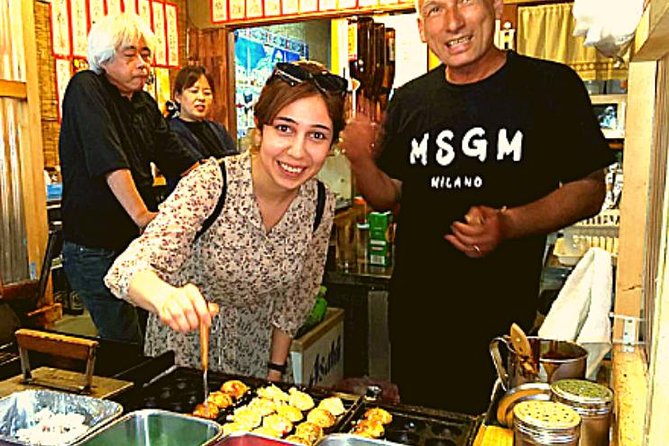
Takoyaki is an obvious Osaka introduction. These hot octopus-filled balls are cooked in a special molded pan and served with sauces and toppings. They are easy to recognize, but the guide can explain how they fit into Osaka’s street-food culture.
Gyoza gives you a familiar comparison point. You may already know dumplings from other parts of Asia, but the seasoning, texture, and dipping style can differ. Sampling rather than ordering a full plate lets you keep room for what comes next.
Stop two: noodles and the comfort-food side of Osaka
Kitsune udon brings a softer, more filling change. The dish combines thick udon noodles and broth with sweet fried tofu. After the sharper flavors and crisp textures of earlier dishes, it gives the meal a warm, comforting center.
This is one reason I prefer a food walk like this to a single restaurant visit. You get contrasts in texture, temperature, and preparation. You also avoid spending the whole evening on one dish that may not suit your taste.
The guide’s explanation is useful here. Food names often carry cultural clues, and learning what is in the bowl helps you remember it later. If you are new to Japanese cuisine, these short explanations can turn unfamiliar food into something approachable.
Same city, a different plate:
- Osaka Local Foodie Walking Tour in Dotonbori and Shinsekai
★ 5.0 · 985 reviews - Hungry Osaka Street Food Tour: 15 Dishes & 3 Drinks
★ 4.9 · 694 reviews - Osaka: Ramen and Gyoza Cooking Class in Dotonbori
★ 5.0 · 378 reviews - Osaka: Kuromon Market Food Walking Tour (6 stops, 6 tastes)
★ 4.6 · 272 reviews
Stop three: kushikatsu and Osaka’s fried-food tradition
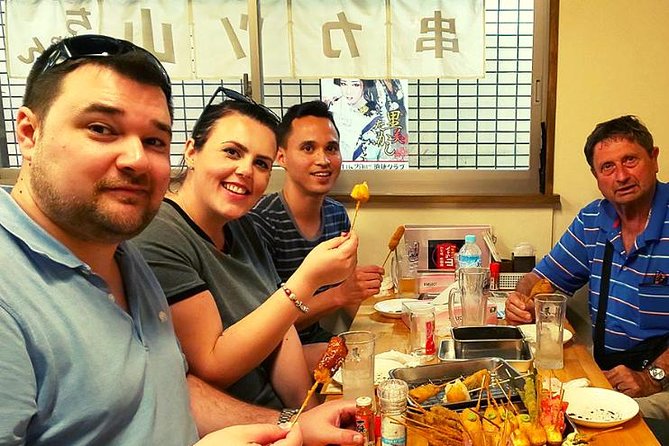
Kushikatsu is one of the Shinsekai specialties most closely tied to the district. It consists of skewered ingredients coated and fried, then served with dipping sauce.
This is likely to be a highlight if you enjoy crisp, savory food. It is also where the tour’s main food warning becomes important. One person described the menu as almost entirely fried, while another praised the variety. The fairest expectation is that the tour includes several fried items, even though the full 13-dish selection offers more than one style of food.
Come hungry, but do not arrive starving and eat too fast. Small portions can look harmless at the start, yet five stops add up quickly. If fried food is difficult for you, this is not the strongest Osaka food tour choice.
Stop four: seafood, drinks, and local eating customs
Seafood may appear as part of the later tastings, giving the meal a fresher counterpoint to kushikatsu and other fried dishes. One group particularly enjoyed trying seafood they would not normally choose.
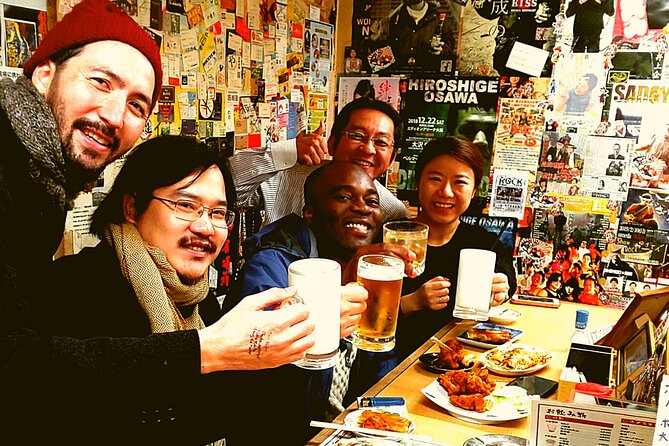
This stop can also be a chance to understand izakaya culture. An izakaya is a casual place for drinks and shared dishes, not a formal restaurant with a fixed procession of courses. The setting encourages conversation, small orders, and trying a little of many things.
Two drinks are included during the tour. Depending on the evening, these may be sake, shochu, or other local choices, and nonalcoholic drinks are available. Some past groups were told that the first two drinks were covered while drinks at later stops had to be purchased. The clearest practical advice is to treat the package as including two drinks total, then ask your guide before ordering anything beyond them.
Stop five: finishing at a specialty bar or local favorite
The final stop may be a specialty restaurant, whiskey bar, or standing bar. It often provides the evening’s strongest sense of place because the group can relax after several tastings and compare favorite dishes.
One final venue was singled out as a memorable part of the evening, while another group enjoyed a whiskey bar. The exact stop is not guaranteed, but the pattern is clear: the tour ends with a social local setting rather than a quick dessert and goodbye.
The activity returns to the original meeting point. From there, you can head back to your accommodation or continue your own evening in Osaka. The guide can also suggest late-night plans, as one group learned while discussing options for New Year’s celebrations.
Why the guide matters more than the food list
You can find takoyaki, udon, and kushikatsu throughout Osaka. The value here comes from how the guide links the dishes to the neighborhood and gets you into small places where ordering alone might feel awkward.
A guide also removes several small barriers. You do not need to decode a menu, decide which dish to share, or work out how much to order at each stop. You can ask why a food is prepared that way, how locals eat it, and what makes it particular to Osaka.
The strongest guide reports have named Tommy, Mario, Mari, Nick, Brian, Suga, Kiko, Rudy, Yuichi, and others. The important point is not that one particular guide is guaranteed. Staff assignments change. It is that the experience depends heavily on the person leading your group.
The best guides have made room for questions, kept children engaged, explained the food in clear English, and adjusted to different appetites. Tommy, in particular, has been praised for creating a relaxed atmosphere and making sure everyone could join in without pressure to eat something they disliked.
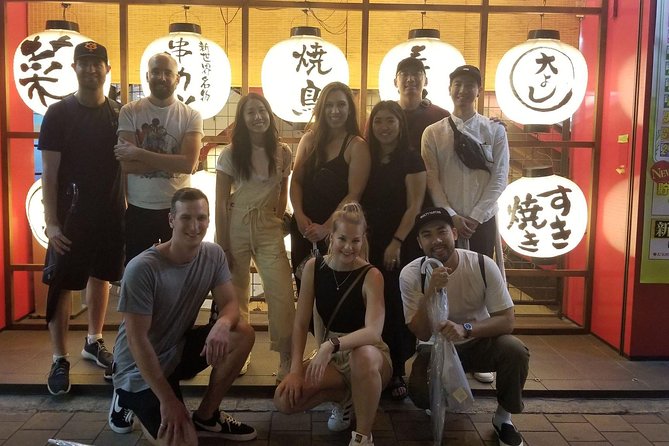
Small groups improve this part of the experience. A group of nine can fit into compact neighborhood restaurants more easily than a busload of people. The published maximum is 30, so you should not assume every departure will be intimate. If a smaller group matters to you, ask the provider about the expected group size.
Is $73.29 a fair price?
At $73.29 per person, the tour is not the cheapest way to eat in Osaka. You are paying for 13 tastings, five stops, two drinks, a local guide, and the convenience of moving between places without handling the ordering yourself.
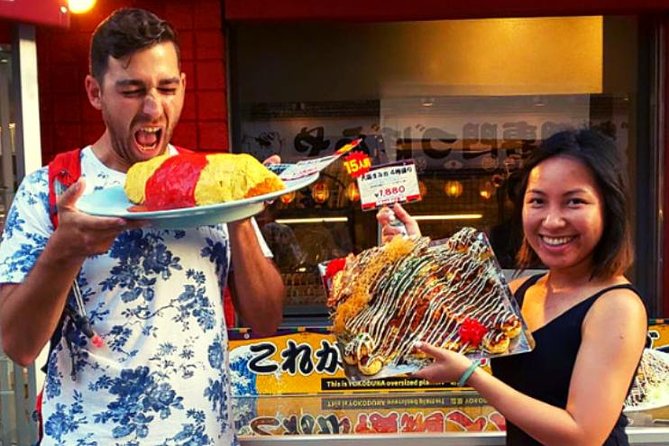
The food quantity is a real part of the value. Several people have found the servings substantial enough to make a full meal, and one guide advised the group to come hungry. You may still want extra drinks, and those are not included beyond the two provided, so budget a little more if you plan to keep drinking after the included servings.
The price makes more sense if you are new to Osaka or unsure how to approach small local eateries. It is less compelling if you already know Shinsekai, speak Japanese well enough to order confidently, and prefer choosing your own restaurants.
I see the biggest value in the access and structure. Five places in three hours would take more planning on your own, and you might skip a standing bar or a small backstreet stop because it looks difficult to enter. The guide turns that uncertainty into part of the fun.
Who should book this food walk?
This is a good first-night or early-trip choice for someone who wants a broad introduction to Osaka food. It helps you identify dishes you want to seek out again and gives you a better sense of where locals eat.
Families can also enjoy it. Groups have included children and adults ranging from 10 to 76, and some guides have added small activities to keep younger participants interested. Still, the long tasting sequence and fried food mean parents should judge their children’s appetites carefully.
It suits curious eaters who like trying unfamiliar dishes without committing to a full serving. It is also helpful for solo visitors and couples who want a social evening with a guide and a group.
I would skip it if you are vegan, need gluten-free food, or have serious food allergies. The activity specifically excludes those needs. I would also think twice if you dislike fried food, because even with seafood, noodles, and other dishes in the mix, fried items are a major part of the meal.
Practical details that affect your evening
The activity lasts about three hours and ends where it begins. Wear comfortable shoes because you will walk between five eateries and spend part of the evening on neighborhood streets.
The mobile ticket makes entry simple, and confirmation is provided at booking. Most people can participate, but you are responsible for reaching the meeting point. The experience depends on good weather, and poor conditions can lead to a different date or a full refund.
Cancellation is free up to 24 hours before the start time. After that point, the payment is not refunded, and changes are not accepted. Keep the cutoff in mind if your Osaka plans are still shifting.
The tour is listed at a maximum of 30 people. Some departures have been much smaller, which is preferable for compact eateries, but the smaller-group experience is not guaranteed. Also remember that the activity ends at the meeting point, so your return trip is your own arrangement.
Should you book the Osaka Food Tour?
Book it if you want a guided introduction to Shinsekai’s everyday food culture, prefer tasting many dishes instead of ordering one meal, and enjoy learning from a lively local guide. The 13-dish format, five stops, and included drinks make it a satisfying evening for the price, especially when you are new to Osaka.
Skip it if you need strict dietary control, want drinks included at every stop, or dislike fried food. For everyone else, this is a practical way to sample Osaka’s famous dishes while seeing a side of the city you might otherwise pass by.
FAQ
How long does the Osaka food tour last?
The tour lasts approximately three hours, with the Shinsekai walking and food portion listed at about two hours and 55 minutes.
How many dishes are included?
You receive 13 signature Osaka dishes during visits to five local eateries.
Are drinks included?
Two drinks are included. They may be alcoholic or nonalcoholic, with possible choices including sake, shochu, or other local drinks. Additional drinks are not included and must be paid for separately.
Where does the tour start and finish?
The meeting point is DAIICHI本店 in Taishi, Nishinari Ward, Osaka. The activity ends back at the same meeting point.
Can vegans or people needing gluten-free food join?
No. The activity states that vegans and people requiring gluten-free or allergy-safe food cannot participate.
What is the maximum group size?
The maximum is 30 people. Some departures may be smaller, but a small group is not guaranteed.
Can I cancel for a full refund?
Yes. You must cancel at least 24 hours before the experience start time for a full refund. Cancellations or changes made within 24 hours are not accepted for a refund.
Fresh off the menu around Osaka
- Hidden Osaka – Yukaku Red Light Tour & Culinary Adventure★ 4.8 · 96 reviews
- Eat Like a Local in Osaka – Private Custom Street Food Tour★ 4.3 · 33 reviews
- Osaka: Sushi Making in Spacious Studio (SAME-DAY OK!)★ 5.0 · 75 reviews
- Osaka: Sushi Class in Dotonbori★ 4.9 · 160 reviews
- Osaka: Ramen and Gyoza Cooking Class in Dotonbori★ 5.0 · 378 reviews
- Osaka: Roll and Authentic Sushi Making Class in Dotonbori★ 4.9 · 239 reviews
- Osaka: Kuromon Market Food Walking Tour (6 stops, 6 tastes)★ 4.6 · 272 reviews
- Osaka: Gluten-Free Ramen and Gyoza Cooking Class★ 5.0 · 42 reviews
Osaka Food Tours, compared.
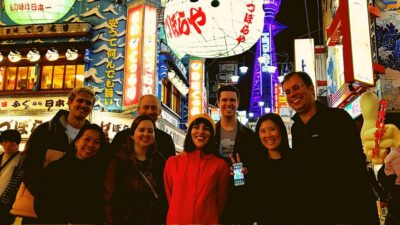
Osaka: Shinsekai Food Tour with 13-15 Dishes at 5 Eateries
Read our review →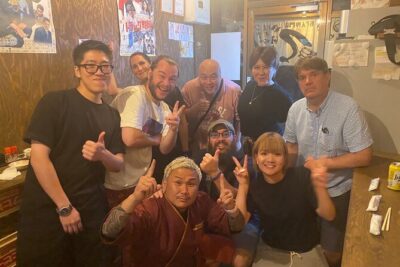
Hungry Osaka Street Food Tour:15 Tastings & 3 Drinks with a Local
Read our review →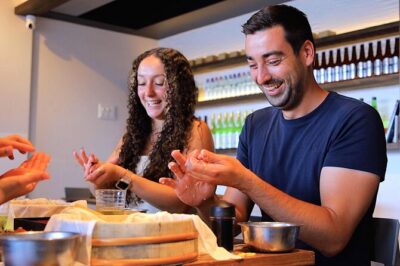
Sushi Making Osaka Roll and Authentic Japanese Sushi Class
Read our review →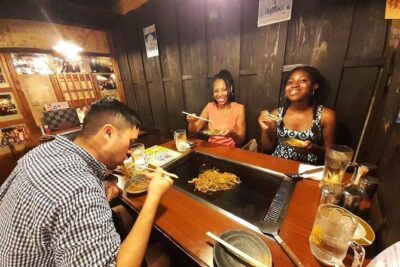
Osaka Local Foodie Walking Tour in Dotonbori and Shinsekai
Read our review →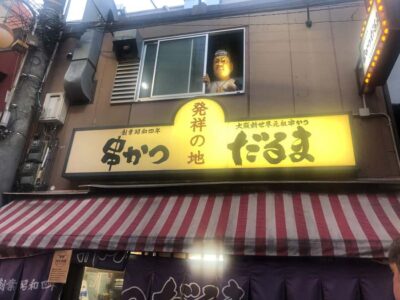
Hungry Osaka Street Food Tour: 15 Dishes & 3 Drinks
Read our review →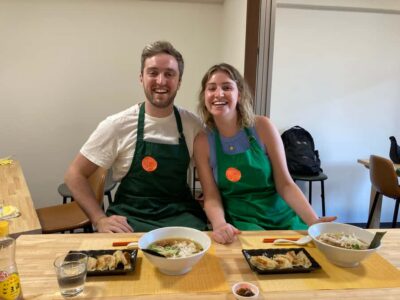
Osaka: Ramen and Gyoza Cooking Class in Dotonbori
Read our review →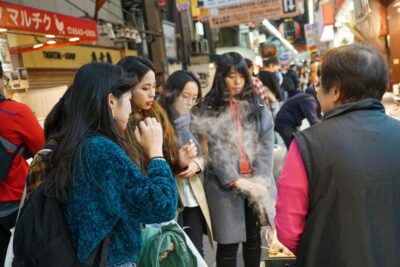
Osaka: Kuromon Market Food Walking Tour (6 stops, 6 tastes)
Read our review →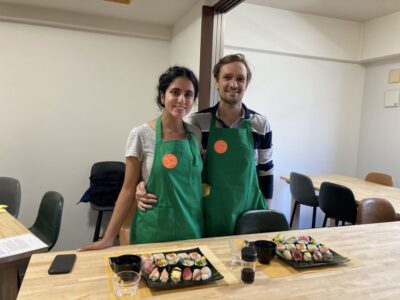
Browse the lists this tour appears in