
Review · TOKYO
Tsukiji Fish Market Guided Tour and Sushi Making with Pro Chef
Tsukiji’s best lesson is not only on the plate. This four-hour experience connects the seafood stalls, temple customs, Japanese ingredients, and the careful work behind sushi. You walk through the outer market, then make five types of nigiri and one roll with a professional chef before eating your own lunch.
I like the way the market visit gives the sushi class some context. I also like the hands-on format: the chef demonstrates each step, prepares sushi in front of you, and serves expertly prepared wasabi, dashi soup, and green tea alongside your creations. The main drawback is that this is an introduction, not a serious fish-cutting course, and the market portion includes no formal tastings.
- Tsukiji beyond the famous name: Visit the outer market and mini wholesale area, not the former inner business market, which moved to Toyosu in 2018.
- A temple-to-table route: Begin at Tsukiji Honganji Temple, learn local customs, then follow the food trail into the market.
- Sushi you actually make: Prepare five nigiri varieties and one rolled sushi under a chef’s guidance.
- A useful family activity: Children and teenagers can take part, and families with 12- and 16-year-old children have enjoyed the format.
- A small-class feel with a limit: The maximum group size is 22, but the classroom is upstairs in a traditional building with stairs only.
- Plan for food spending: Market snacks and purchases are extra, so bring cash if you want to sample stalls along the way.
What the Four Hours Really Include
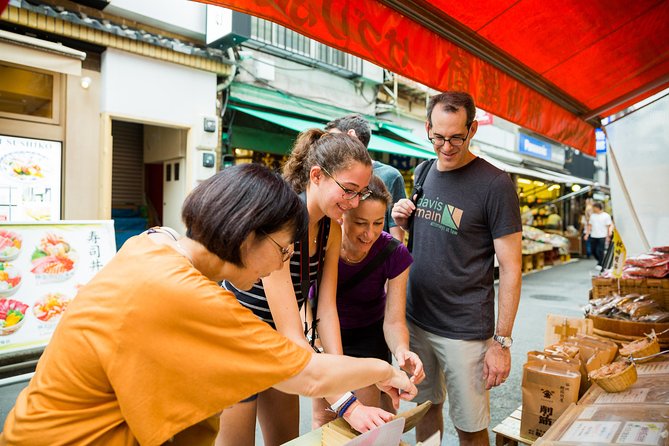
This is best understood as two connected experiences rather than one long market tour. The first section is a guided walk through the Tsukiji area. The second is a sushi lesson in a Japanese-style classroom near the market, though the venue may move to Asakusa or Yotsuya depending on availability.
The structure works well because you see ingredients and food customs before handling sushi yourself. It also explains why the experience can feel less like a traditional market tasting tour. You are paying for a guide, cultural explanation, and cooking class, but not for a series of included bites from vendors.
The advertised price is $104.13 per person. That is fair if you want an organized introduction, a professional lesson, lunch, and a local guide in one booking. It is less attractive if your main goal is simply eating your way through Tsukiji, since market food, drinks, transport, and personal purchases cost extra.
Meeting at Tsukiji Honganji Temple
The meeting point is the main gate of Tsukiji Honganji Temple, at 3-chome-15-1 Tsukiji. This detail matters. The front side is the correct location, while map applications may lead you to the back of the temple.
Look for the guide holding a Japan Wonder Travel board. The group leaves at the scheduled start time, and the guide cannot wait for late arrivals. I would arrive early enough to find the main gate without rushing, especially if this is your first morning in Tsukiji.
The temple gives the tour a useful opening. Guides such as Sachi-san have shown participants how to approach and pray properly at a Buddhist temple, while Ko and other guides have explained local customs and the area’s background. You are not just being marched toward the food stalls. You get a short introduction to the setting first.
That said, anyone expecting four straight hours of seafood should adjust plans. The temple and cultural material take a real part of the morning. That is a benefit if you want context, but a drawback if the market is your only interest.
More Market Food Tours in Japan
- Tokyo Tsukiji Fish Market Food and Culture Walking Tour
★ 5.0 · 3,184 reviews - Tokyo: Tsukiji Fish Market Food and Culture Walking Tour
★ 4.7 · 757 reviews - Tsukiji Fish Market: Street Food & Culture Walking Tour
★ 5.0 · 669 reviews
Tsukiji Honganji Temple: A Cultural Start
Tsukiji Honganji is more than a place to gather. It helps explain the blend of ritual and food culture that shapes the neighborhood. A guide may point out how to behave at the temple and explain the difference between a Buddhist temple and a Shinto shrine encountered later.
This part is especially useful for first-time visitors who want to avoid treating religious sites as photo stops. You learn simple customs before moving into the busy food district. The instructions are practical and brief, not a long lecture.
The temple stop also slows the pace at the beginning. That is welcome because the market can feel confusing at first, with narrow lanes, small shops, unfamiliar ingredients, and utensils you may not recognize. A guide gives you a framework for what you are seeing.
Walking Through the Outer Tsukiji Market
The market portion focuses on Tsukiji’s outer market, including the mini wholesale area. The former inner market, where the main wholesale fish auctions operated, moved to Toyosu on October 6, 2018. So this tour does not take you into the old inner business area.
What you see instead is the part of Tsukiji open to shopping, food stalls, specialty shops, ingredients, and cooking tools. Your guide points out the main areas and explains how seafood moves from catch to distribution and sale. You may also see Japanese foods and utensils that are unfamiliar if you do not cook Japanese food at home.
Guides including Monami, Ko, Yuki, and Tad have been praised for explaining market products clearly and pointing out places worth noticing. The quality of this section depends partly on your guide, since a good explanation makes a major difference in a market where many signs and ingredients may be hard to interpret.
The walking is not difficult in a technical sense, but the market can be crowded and the route is mainly on foot. Wear comfortable shoes. Stay close enough to hear the guide, and avoid bringing bulky luggage.
Food Stalls, Purchases, and the Missing Tastings
One point deserves clear attention: the tour does not list included market tastings. You can buy food from stalls during the walk, but those purchases are your responsibility.
This is a key value question. If you want to choose snacks, seafood, or other foods yourself, the freedom is useful. You can buy only what interests you instead of eating a fixed menu. Bring cash, since one participant found that personal street-food spending can add up quickly.
If you want a guided tasting tour, this may not be the right choice. The guide can suggest good stalls and explain what you are looking at, but the formal food portion comes later, during lunch after the sushi lesson.
The group can also limit browsing time. Tsukiji offers many tempting stops, and a group cannot stop at every stall. The tradeoff is convenience: the guide helps you cover key areas in a short period instead of leaving you to sort out the market alone.
More Seafood Tours in Tokyo:
- Tsukiji Fish Market: Street Food & Culture Walking Tour
★ 4.8 · 259 reviews - Seafood trail
★ 5.0 · 766 reviews - From Santiago: Rías Baixas Galicia Seafood & Wine Day Tour
★ 4.6 · 209 reviews - New Orleans: Food Tour with Seafood Boil in French Quarter
★ 4.6 · 146 reviews
From Market Ingredients to Sushi Class
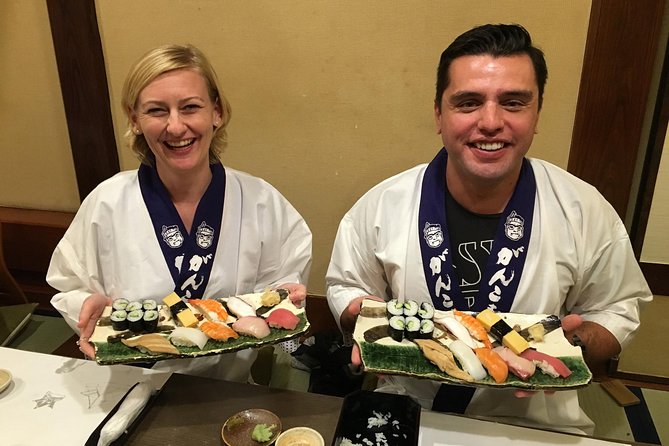
After the market walk, you move to a Japanese-style classroom in a traditional building. The standard classroom is on the third floor and has stairs only. Depending on the date and venue, the cooking session may instead take place in Asakusa or Yotsuya.
The venue may be announced only on the day, so do not build a tight schedule around ending at the market. The activity can finish in Tsukiji, Shinjuku, Asakusa, or Yotsuya depending on the date and classroom arrangement. The supplied meeting details also say the activity returns to the meeting point, so confirm the exact end location for your selected date before making onward plans.
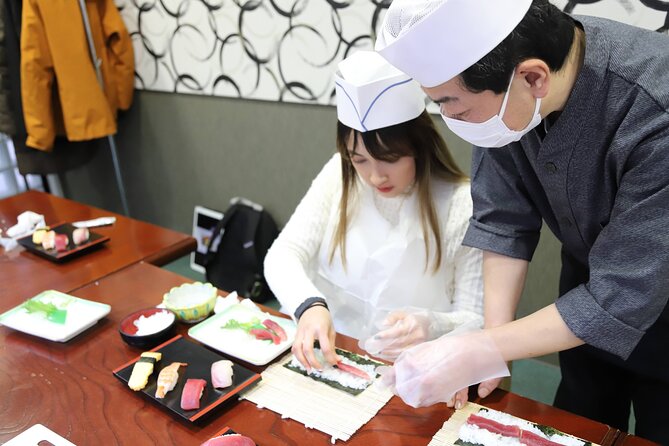
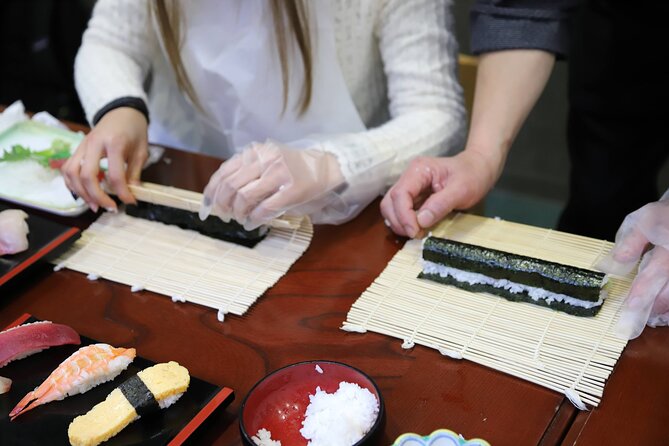
Inside, the sushi chef leads the group step by step. The class includes five types of nigiri sushi and one rolled type. You work with the ingredients provided, learn the basic shaping and assembly, and then eat what you have made for lunch.
Several useful elements make the class stronger than a simple demonstration. You do not only watch a chef prepare sushi. You handle the ingredients, follow the method, and see how small movements affect the finished piece. A presentation and demonstrations help explain the process before you begin.
What the Chef Demonstrates
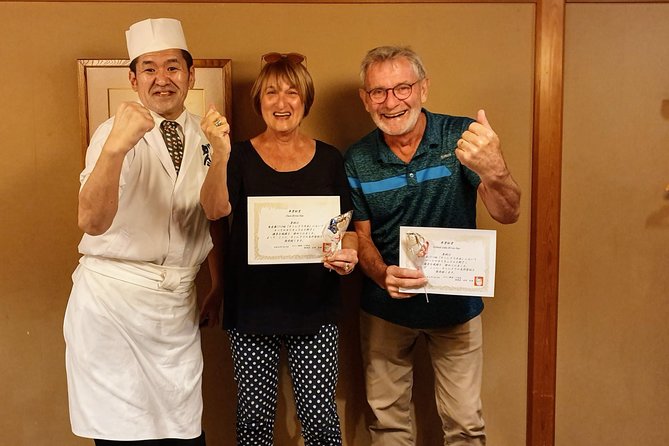
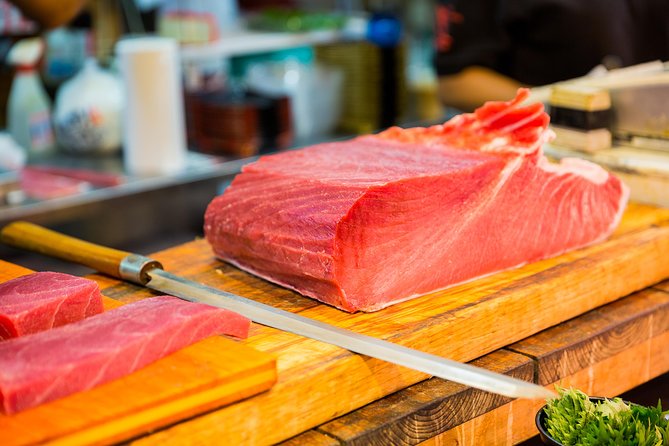
The sushi master prepares fish in front of the class, including a skilled deboning demonstration. You also receive fresh ingredients and guidance as you make the sushi yourself.
The course is aimed at beginners. You do not need previous cooking experience, and the pace is designed to be easy to follow. Families have used the class with children and teenagers, and the hands-on work gives younger participants something concrete to do instead of simply watching a chef.
Do not expect a full professional sushi apprenticeship. The class teaches fundamentals, not every stage of fish preparation. One useful improvement would be more time showing how fish is sliced for sushi. If that technical detail matters most to you, ask how much of the session covers slicing when you arrive.
Cleanup may happen quickly after the meal, so if you want to remember particular ingredients, take notes or photos at the proper time and follow the chef’s instructions. The priority is keeping the class moving for the whole group.
Lunch: Your Sushi, Dashi, and Green Tea
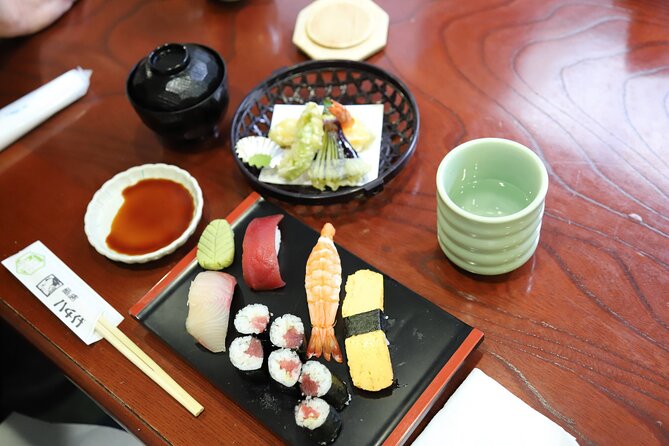
The reward comes at the table. You eat the sushi you prepared, along with a piece made by the sushi master. Fresh wasabi, traditional dashi soup, and green tea complete the meal.
This is where the market walk pays off. After seeing seafood, seasonings, and cooking tools in their market setting, you have a better sense of what goes into a simple-looking piece of sushi. The meal is not just a snack. It gives you a chance to judge your own work and compare it with the chef’s preparation.
The food is generally the strongest part of the experience for people who want to learn by doing. The seafood is described as fresh, and the classroom has been found clean and comfortable by participants who are particular about food handling.
Still, the lunch is based on your class creations, not a large restaurant meal. If you want a substantial sushi feast, plan another meal afterward. The tour is a lesson with lunch, not an all-day food crawl.
Guides Make a Noticeable Difference
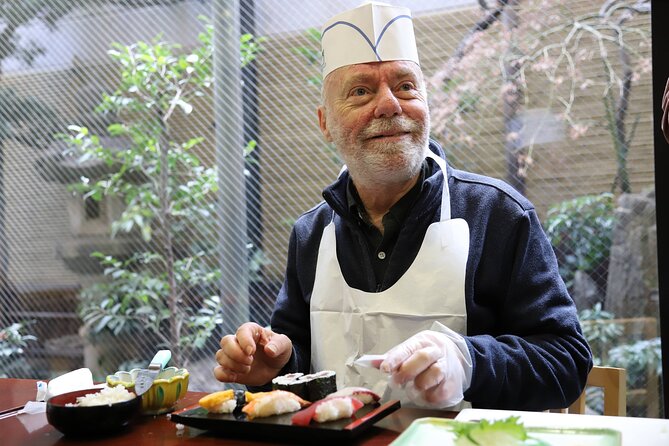
The experience uses different guides and instructors. Names associated with especially strong sessions include Monami, Sachi-san, Ko, Mari-san, Yuki, Tad, and Chef Kate.
The most useful guide qualities here are clear English, patience, and the ability to explain unfamiliar foods without rushing. Mari-san has been singled out for patient communication, while Sachi-san has made the temple customs easy to follow. Yuki has led market visits and sushi classes in a clean, well-organized setting, and Tad has worked well with families.
Guide quality matters because Tsukiji is not self-explanatory. A row of shops may look like a collection of food stalls, but the guide helps you understand the ingredients, tools, market traditions, and connections between seafood and daily Japanese cooking.
The cooking session may be taught in both Japanese and English. If the guide and chef divide duties between the market and classroom, listen carefully to the meeting instructions so you know where the group is going next.
Is the $104.13 Price Fair?
I see three ways to judge the price.
First, compare it with an ordinary self-guided visit. You can enter the outer market for free and buy food on your own, but you would need to research the area, identify ingredients, manage the route, and book a separate sushi class. The tour saves that planning time.
Second, consider the class itself. You receive instruction from a professional chef, ingredients, a hands-on lesson, and lunch with soup and tea. For someone who wants to learn basic sushi at the same time as seeing Tsukiji, that combination gives the fee a solid reason.
Third, consider what is not included. Market food, drinks beyond the included green tea, hotel pickup, transport to and from attractions, and personal spending are extra. The group can also be as large as 22 people, so this is not a private food walk.
I would call the price reasonable for first-time visitors who want structure and a cultural introduction. I would call it expensive for a confident independent eater who mainly wants market snacks or a private chef lesson.
Who Will Enjoy This Most?
This tour suits first-time Tokyo visitors who want more than a quick walk through Tsukiji. It is also a good match for families, couples, and food-focused visitors who prefer an activity with a clear beginning, middle, and end.
It works particularly well for:
- People curious about Japanese seafood and market customs
- Beginners who want to make sushi with direct instruction
- Families with older children and teenagers
- Visitors who value cultural explanation as much as eating
- Anyone who wants a planned morning near Tsukiji
You may want another option if you need a vegetarian, halal, kosher, gluten-free, or allergy-safe menu. The information is inconsistent on this point: the booking guidance says to list dietary needs, but the additional conditions say vegetarian, halal, gluten-free, kosher, and allergy-related requests may not be accommodated. Contact the provider before booking and do not assume a substitution is available.
The stairs also matter. The usual classroom is on the third floor without an elevator, and the walking portion requires comfortable shoes. Anyone who has difficulty with stairs should confirm accessibility before paying.
Timing, Cancellations, and Practical Planning
The experience lasts about four hours, but the finish can be delayed. Do not schedule a train, reservation, airport transfer, or major attraction immediately afterward. The venue may also be outside Tsukiji, which makes the end point less predictable.
The fish market’s wholesale section is closed on Wednesdays, Sundays, and other market-closure days. Check the available date carefully. If the tour operates on a market-closure day, the route and market content may differ.
You can cancel for a full refund up to 24 hours before the start time. Cancellations or changes made inside that period are not refunded or accepted, and late arrival on the day receives no refund. The tour leaves on time, so the practical advice is simple: find the temple gate early.
Should You Book This Tsukiji Experience?
Book it if you want a guided introduction to Tsukiji followed by a real sushi-making lesson. The strongest parts are the link between market ingredients and lunch, the chef’s demonstrations, and the chance to eat the sushi you prepare. It also gives families a shared activity that does not depend on everyone already understanding Japanese food.
Skip it if you want the old inner fish market, unlimited sampling, a private guide, or a polished gourmet meal. The former inner market is now in Toyosu, market purchases cost extra, and the group may include up to 22 people.
For most first-time visitors who want a practical food experience, I think the $104.13 fee is defensible. Arrive early, wear walking shoes, bring spending money for optional snacks, confirm the venue and end point, and treat the class as a beginner’s introduction rather than professional sushi training.
FAQ
Where does the tour begin?
The meeting point is the main gate of Tsukiji Honganji Temple at 3-chome-15-1 Tsukiji, Chuo City, Tokyo. Use the front side of the temple, since map applications may direct you to the back.
How long does the experience last?
The activity lasts approximately four hours, including the guided market walk and sushi-making class.
Does the tour visit the old inner Tsukiji market?
No. The former inner market moved to Toyosu in 2018. This experience visits the outer Tsukiji market and mini wholesale area.
What sushi will I make?
You will learn to make five types of nigiri sushi and one rolled type with step-by-step help from a professional sushi chef.
Is lunch included?
Yes. You eat the sushi you make, along with sushi prepared by the master. Traditional dashi soup, green tea, and expertly prepared wasabi are also provided.
Where does the sushi class take place?
The class is usually held in a Japanese-style classroom in a traditional building near the market. It may instead be held in Asakusa or Yotsuya depending on venue availability.
Can I request vegetarian, halal, gluten-free, kosher, or allergy-friendly food?
You should list dietary needs when booking and contact the provider for confirmation. The tour information states that several dietary requests may not be accommodated, so do not assume substitutions will be available.
What happens if I arrive late?
The group leaves at the scheduled start time and cannot wait. Late arrivals cannot extend the tour and are not eligible for a refund.
Is the tour suitable for people who cannot use stairs?
The usual classroom is on the third floor of a traditional building with stairs only. The activity is best for people who have no problem with stairs and comfortable walking.
More Market Food Tours in Tokyo
- Chef Guided Food Tour of Pike Place Market
★ 5.0 · 3,733 reviews - London Bridge & Borough Market Food Tour with 7 Authentic Dishes
★ 5.0 · 1,972 reviews - Pike Place Market Tasting Tour
★ 5.0 · 1,696 reviews - Small Group Cooking Class & Market Food Tour in Florence
★ 5.0 · 1,574 reviews
Fresh off the menu around Tokyo
- Shinjuku Tokyo: Authentic Japanese Home-Style Culinary Class★ 4.9 · 125 reviews
- Shinjuku: Golden Gai Food Tour★ 4.6 · 77 reviews
- Shinjuku: Food Tour – 15 Dishes at 4 local eateries★ 4.8 · 246 reviews
- Shibuya Tokyo: Sushi Making Class (Vegan/Vegetarian/Halal)★ 4.7 · 29 reviews
- Shibuya: Ramen Dojo Tokyo | Make All 3 (Tonkotsu/Shoyu/Miso)★ 4.8 · 207 reviews
- Tokyo: Secret Food Walking Tour★ 4.7 · 38 reviews
- Ramen Making from Scratch +Akihabara Tour –Cooking Class★ 5.0 · 25 reviews
- Exclusive Tokyo Ramen Kitchen Experience★ 4.7 · 34 reviews
Tokyo Food Tours, compared.
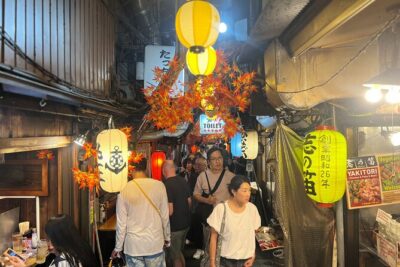
Tokyo: Shinjuku Food Tour (13 Dishes at 4 Local Eateries)
Read our review →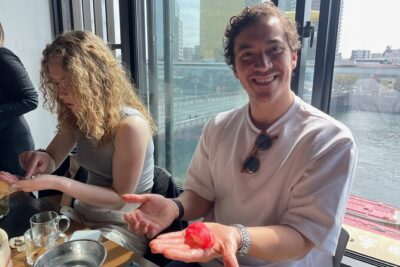
Sushi Making Tokyo Roll and Authentic Japanese Sushi Class
Read our review →
Tokyo Tsukiji Fish Market Food and Culture Walking Tour
Read our review →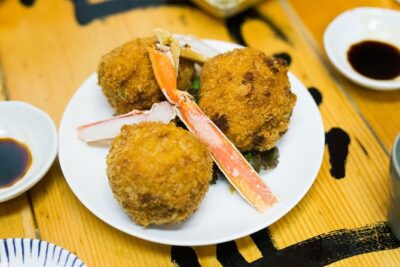
Best of Shinjuku: Izakaya Food Tour (4 Stops, 14+ Tastings)
Read our review →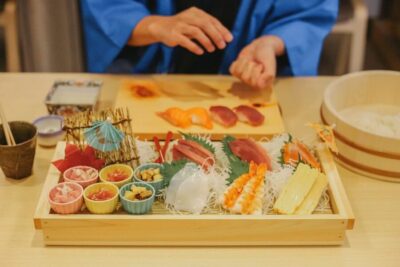
Tokyo: Sushi Making Class in a Happi Coat near a Famous Spot
Read our review →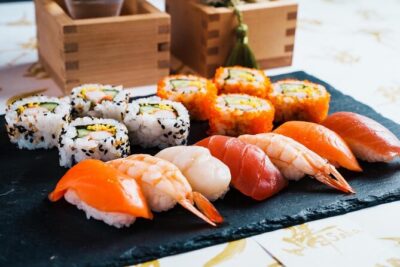
Sushi Making Tokyo! Popular Maki Sushi & Japanese Sushi(+Recipe!)
Read our review →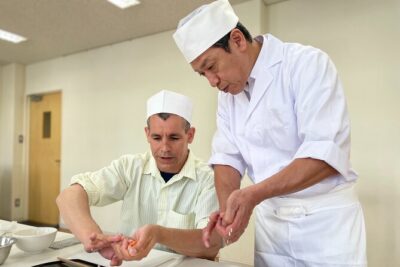
Tokyo Sushi Making Class in Tsukiji with Professional Chef
Read our review →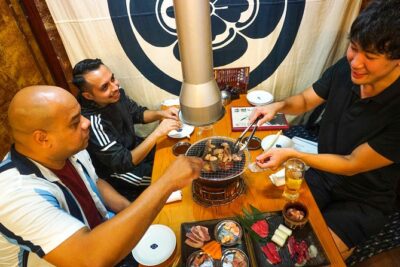
Tokyo Night Foodie Tour in Shinjuku – Seasonal Sushi, Wagyu Beef
Read our review →Browse the lists this tour appears in