
Review · TOKYO
Tsukiji Fish Market: Street Food & Culture Walking Tour
Tsukiji is best understood with your appetite switched on. This two-hour walk takes you through food stalls, a fish-cutting demonstration, a seafood bowl, the professional market area, and Tsukiji Hongwanji Temple. It is less a formal museum tour than a guided introduction to Tokyo’s food culture.
I like the chance to try several market foods without having to guess what each stall sells. I also like the fish-cutting demonstration, which gives the market some craft and theater beyond simple snacking. The main concern is crowd control: at busy times, some people have found the pace uneven, the guide hard to hear, or the stops less useful than expected.
Key points at a glance
- A food-first look at Tsukiji: Spend much of the tour sampling Japanese ingredients and street food with local guidance.
- Traditional fish cutting: Watch a chef fillet a whole fish, then enjoy a fresh seafood bowl.
- A short temple visit: Tsukiji Hongwanji adds a Buddhist and cultural note before or during the market walk.
- Small-group format, with a 30-person limit: The guide is meant to give more attention than a large coach tour, but the maximum group size is not tiny.
- Accessible meeting point: Start at Tsukiji Hongwanji Temple, near public transport. The activity is wheelchair and stroller accessible.
- Good but not perfect value: At $33.16 per person, the tour can pay off if you want guided food choices and explanations, but less so if you prefer to browse independently.
What this Tsukiji tour is really about
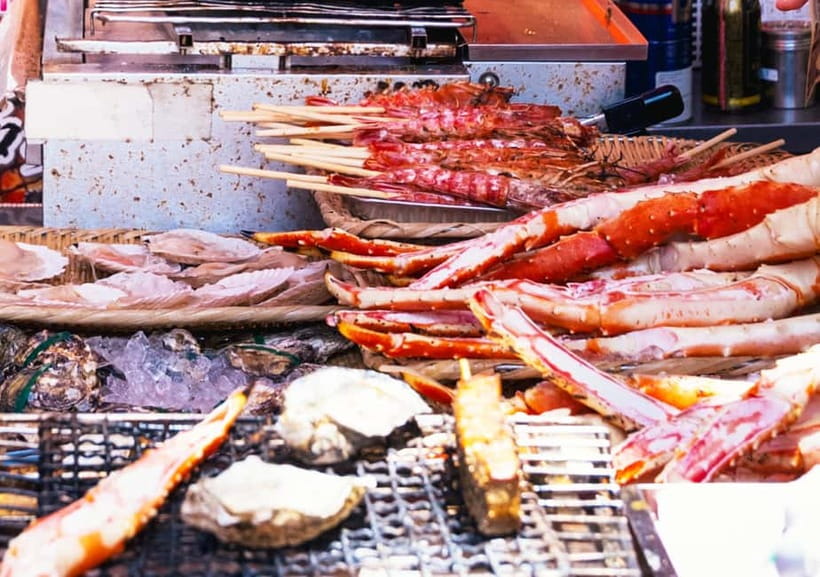
Tsukiji Fish Market is no longer the site of Tokyo’s main wholesale fish market, but its outer market remains a major food stop. Here, narrow lanes and market counters focus on seafood, Japanese cooking ingredients, prepared foods, and quick bites.
This tour gives you a way into that setting without asking you to arrive with a shopping list or a working knowledge of Japanese food terms. Your guide points out places to eat, explains ingredients, and adds background about Tokyo and Japanese food customs.
The experience lasts about two hours. That is enough time for an introduction, but not enough to inspect every lane or turn the market into a full history lesson. You should think of it as a guided sampler.
The emphasis is clearly food. If you want to eat your way through Tsukiji and have someone explain what you are seeing, this makes sense. If you want a quiet, detailed study of market history, architecture, or the old wholesale auction system, the tour may feel light.
More Market Food Tours in Japan
- Tokyo Tsukiji Fish Market Food and Culture Walking Tour
★ 5.0 · 3,184 reviews - Tsukiji Fish Market Guided Tour and Sushi Making with Pro Chef
★ 5.0 · 775 reviews - Tokyo: Tsukiji Fish Market Food and Culture Walking Tour
★ 4.7 · 757 reviews
Starting at Tsukiji Hongwanji Temple
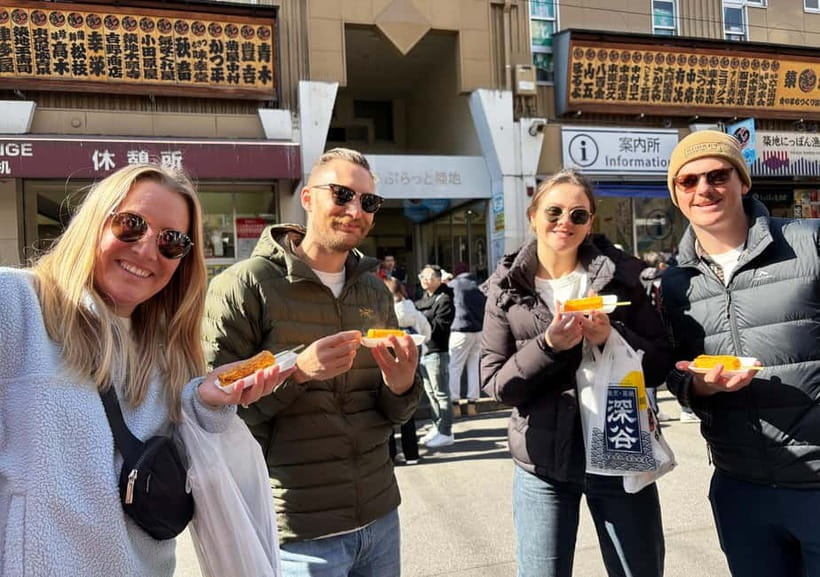
The meeting point is the main hall of Tsukiji Hongwanji Temple at 3-chōme-15-1 Tsukiji. The temple visit is listed as the final stop, but the route can begin there in practice, as one guide-led experience did.
Tsukiji Hongwanji is a useful place to start because it gives the food market a cultural frame. Your guide explains aspects of Buddhism, the temple’s appeal, and its place in Tokyo. The visit lasts about 15 minutes, so do not expect an extended religious tour.
I like the contrast. You begin with a place of worship and then move toward stalls, seafood, cooking tools, and quick meals. That shift helps show that food in Japan is not just fuel. It connects to ceremony, craft, season, and daily life.
Still, the temple is not the main reason to book this activity. Some people find the short stop adds little, especially if they are mainly interested in food. If temple visits are not a priority for you, treat it as a brief cultural extra rather than a central attraction.
The first 45 minutes: eating your way through Tsukiji Jogai Market
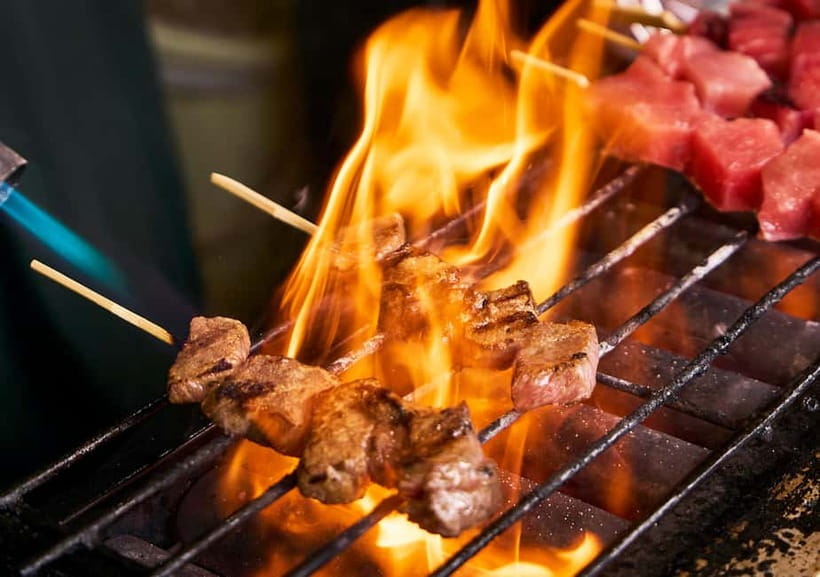
The longest scheduled portion takes place in Tsukiji Jogai Market, the outer market area. You walk with a local guide and stop at food stalls and small eateries. The guide’s role is practical: point out good places, explain ingredients, and help you decide what is worth trying.
This is where the tour earns its price, if it works well. Tsukiji can feel like a maze of choices. You might see grilled seafood, fresh ingredients, sweets, and other Japanese foods without knowing how they are normally eaten or which stalls suit your budget.
The supplied information does not specify a fixed tasting menu, so do not assume every food sample is covered. Meals are listed as not included. Budget extra money for anything you want to eat, and ask the guide early what is included in the planned stops.
That distinction matters. At $33.16, the fee pays for the guided walk and market interpretation, not an all-you-can-eat morning. Your final cost depends on how much you buy.
The strongest food experiences appear to come from guides who know how to steer the group. George is specifically praised for taking people to good places for the foods they wanted to try. Tomo is praised for explaining culture and history while leading the group through the market.
Those names are useful, but they are not a guarantee that either guide will lead your departure. The provider is Local Guide Stars, and the guide assigned to you can vary.
The tour can also become stop-and-go. In a market, the guide may pause while people order, eat, gather, or wait for a counter to clear. Some people enjoy this relaxed rhythm. Others find the waiting frustrating, especially when the group is large or the market is crowded.
The 30-minute fish-cutting demonstration
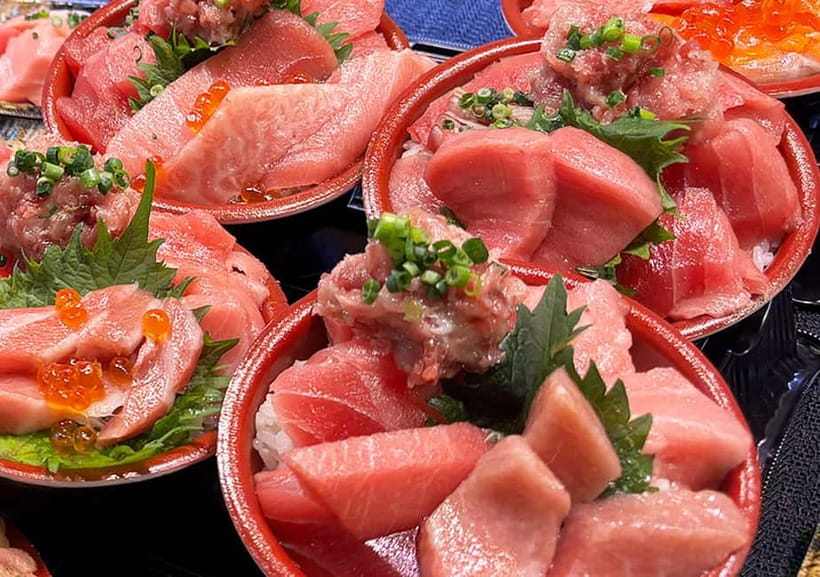
The fish-cutting show is the most distinctive part of the route. A skilled chef fillets a whole fish using traditional techniques, then you enjoy a fresh seafood bowl afterward.
This is more than a quick food sample. Fish preparation in Japan depends on careful cuts, clean handling, and respect for the ingredient. Watching the process gives you a glimpse of the work behind the seafood served in restaurants and market stalls.
The seafood bowl helps connect the demonstration to the meal. You are not just watching technique from a distance. You get to taste the result.
The description identifies the seafood bowl as included, while the wider tour notes that meals are not included. That wording can be confusing. I would confirm with the operator what the included bowl covers and which other food purchases require payment. Do not plan your entire breakfast around the assumption that every tasting is included.
This section may also be affected by crowding. The demonstration is only 30 minutes, and a group of up to 30 people can make it hard for everyone to see or hear. Stay close to the guide and keep track of the group as the demonstration ends.
More Street Food Tours in Japan
- Tsukiji Fish Market: Street Food & Culture Walking Tour
★ 4.8 · 259 reviews - Hungry Osaka Street Food Tour:15 Tastings & 3 Drinks with a Local
★ 5.0 · 1,727 reviews - Hungry Osaka Street Food Tour: 15 Dishes & 3 Drinks
★ 4.9 · 694 reviews - Osaka: 2-Hour Local Street Food Tour – Dotonbori & Namba
★ 4.6 · 95 reviews
The professional market area and its working rhythm
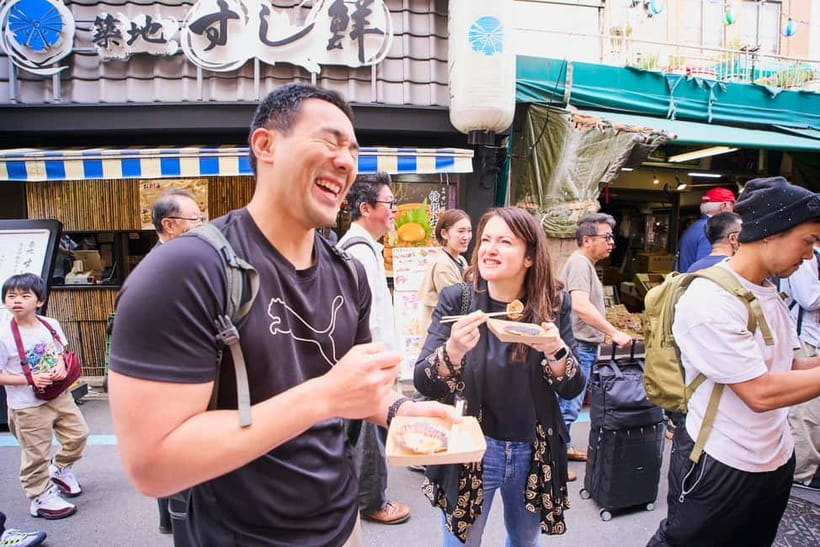
Another 30-minute section takes you through Tsukiji Fish Market, where professional traders operate. This is meant to show the market as a place of work, not only as a sightseeing zone.
That difference is important. The outer market is designed for visitors and shoppers, while the professional area reflects the business side of seafood. Your guide can help explain what you are seeing and how the market functions.
You should not expect a long lecture. The experience focuses on moving through the market and giving you context along the way. One weakness reported in the feedback is that the history explanation can feel thin, with more time spent encouraging food purchases than discussing the city or the market.
That makes this a better choice for food-minded visitors than for serious market historians. If you want a focused lesson, ask questions as you walk. A small-group format is most useful when you use the guide rather than simply follow behind.
Group size, sound, and crowd control
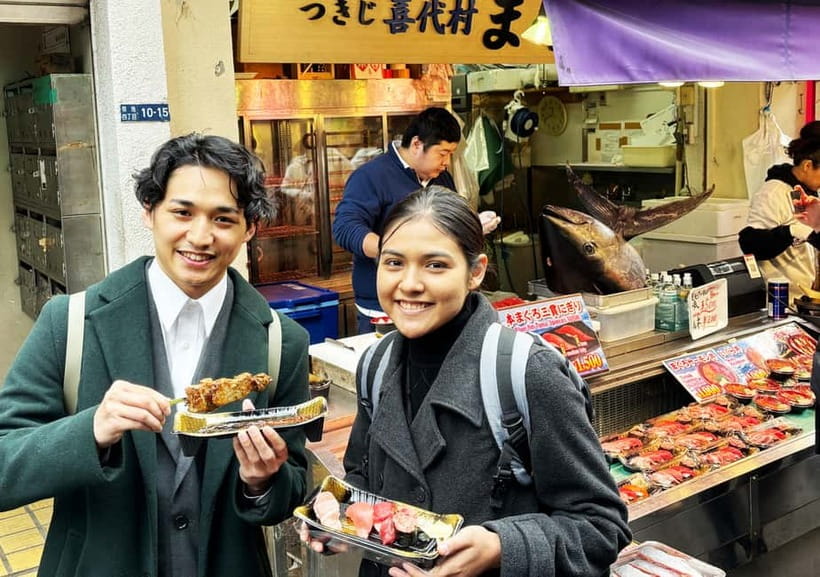
The tour is described as small-group, with a maximum of 30 people. That is smaller than a full-size bus tour, but 30 is still a substantial crowd in narrow market lanes.
The guide may give more attention than on a large group excursion, especially when attendance is modest. But the benefits shrink when people spread out, stop at different stalls, or gather around the fish-cutting demonstration.
Several practical issues deserve attention:
- Stay near the guide: One person found that the guide did not always wait for the group during a busy New Year period.
- Expect market noise: A quiet speaking voice can be difficult to hear among crowds and food stalls.
- Allow for pauses: Ordering food and gathering the group can create stretches of waiting.
- Consider the calendar: The market can be especially crowded close to New Year, making the route feel hectic.
- Ask questions directly: If you want more history, say so. The tour can otherwise become mostly a food crawl.
These are not automatic problems on every departure. They are the main risks to weigh before booking. The tour is strongest when the guide is easy to hear, keeps the group together, and balances food stops with useful explanation.
Accessibility and practical comfort
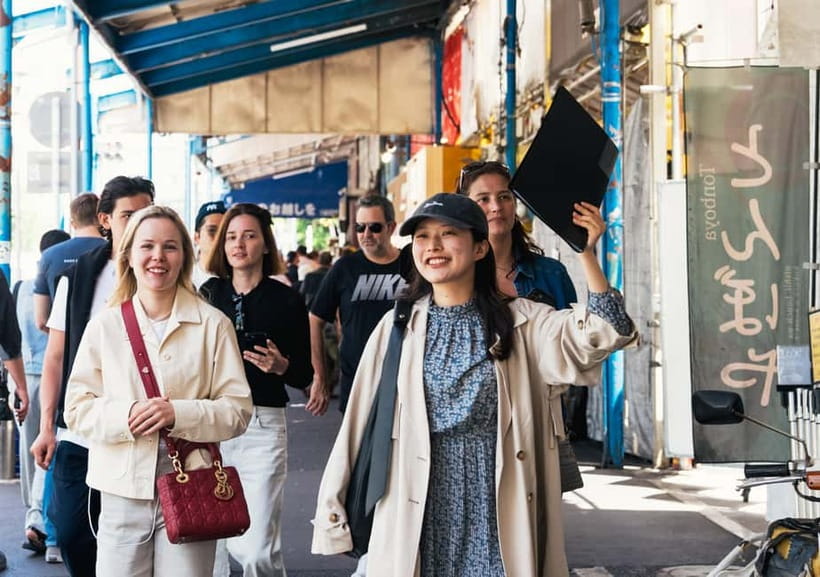
The activity is wheelchair and stroller accessible, and most people can participate. It starts near public transportation at Tsukiji Hongwanji Temple and ends back at the meeting point.
Market routes can still feel crowded and active, even when an activity is formally accessible. If you use a wheelchair or stroller, the accessibility statement is encouraging, but you may want to confirm the exact route and any stall access with the provider before booking.
Sun exposure is another practical point. One person specifically needed protection from the sun and felt the guide did not adapt the stops well. If you are sensitive to heat or direct sunlight, bring suitable protection and tell the guide at the beginning. The route includes outdoor market walking, so weather can affect comfort.
The tour requires good weather. If poor weather forces cancellation, you are offered another date or a full refund.
Is $33.16 a fair price?
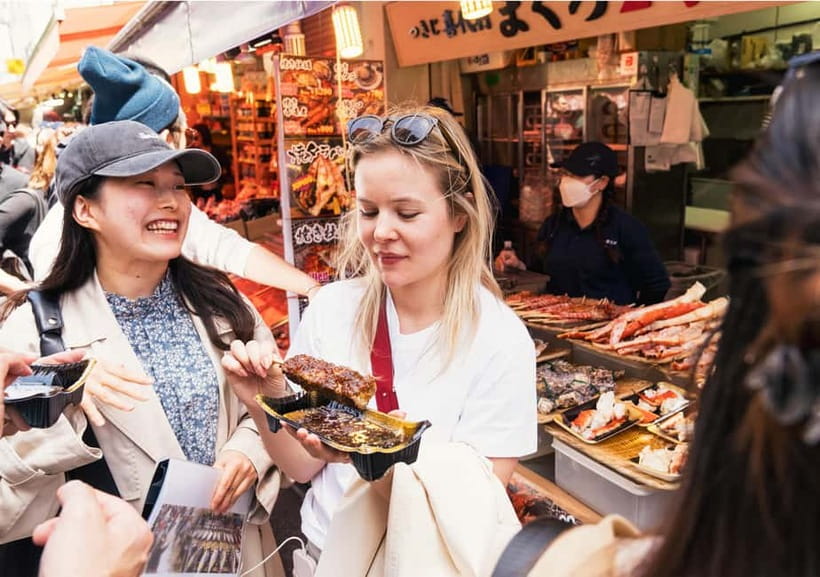
At $33.16 per person, this is a moderate-priced guided walk in central Tokyo. The value depends on what you want help with.
You are paying for a local guide, market orientation, food explanations, the fish-cutting presentation, and the structure of moving between several parts of Tsukiji. For a first visit, that structure can save you from wandering past stalls without knowing what to try.
The price is less attractive if you are comfortable exploring alone. Tsukiji’s outer market can be visited without a tour, and you can choose your own food, pause when you like, and avoid the pace of a group.
I would see the tour as good value for three types of people:
- You want a simple introduction to Japanese ingredients and market food.
- You are nervous about choosing stalls or understanding what you are eating.
- You value a guide who can add cultural context while you sample food.
I would be more cautious if you want an in-depth history lesson, a very small private group, or a full meal included in the booking price.
Who should book this experience?
This tour suits first-time visitors to Tokyo who want to pair food with a little culture. Families may appreciate the short format, the stroller access, and the clear sequence of stops. Anyone who enjoys seafood and hands-on food preparation will probably find the fish-cutting segment the most rewarding.
It can also suit solo visitors who want company while exploring the market. A guide removes some of the uncertainty, and the set route makes it easier to see several sides of Tsukiji in a short morning.
You may want to skip it if you dislike group pacing or prefer to make every food choice yourself. It is also not ideal if you need constant shade, quiet explanations, or a detailed account of Tokyo’s market history.
The high overall rating and 99 percent recommendation indicate that the basic idea works well for many bookings, but the uneven individual experiences point to guide quality and crowd levels as the deciding factors.
My booking advice
Book this tour if you want a guided food introduction rather than a formal sightseeing lecture. Go in expecting several tasting opportunities, a seafood bowl after the fish-cutting show, a short temple visit, and a market walk with practical explanations.
Before you go, budget extra for food beyond anything specifically included. Arrive ready to stay close to the guide, and avoid assuming that a maximum group of 30 will feel intimate. If you visit near New Year, expect heavier crowds and a less relaxed route.
My call: a worthwhile first taste of Tsukiji at a reasonable price, especially with a strong guide such as George or Tomo. It is not the best choice for independent market browsers or anyone seeking a deep cultural study.
FAQ
How long does the Tsukiji Fish Market tour last?
The tour lasts approximately two hours.
Where does the tour start?
It starts at Tsukiji Hongwanji Temple, at 3-chōme-15-1 Tsukiji, Chuo City, Tokyo 104-0045, Japan.
Where does the tour end?
The activity ends back at the meeting point.
Is the tour wheelchair accessible?
Yes. The activity is described as wheelchair accessible.
Can I bring a stroller?
Yes. The activity is described as stroller accessible.
Is food included in the tour price?
Meals are listed as not included. The fish-cutting section includes a fresh seafood bowl, but you should confirm which food items are covered and budget for additional purchases.
Is the fish-cutting demonstration included?
Yes. The itinerary includes an exclusive fish-cutting show using traditional techniques.
How many people can join the tour?
The activity has a maximum of 30 people.
Does the tour run in bad weather?
The experience requires good weather. If it is canceled because of poor weather, you are offered a different date or a full refund.
Can I cancel for a full refund?
Yes. You can cancel at least 24 hours before the experience start time for a full refund. Changes or cancellations made less than 24 hours in advance are not accepted for a refund.
More Street Food Tours in Tokyo
- Dubai: Old Town, Creek, Museums, Souks, & Street Food Tour
★ 4.8 · 10,816 reviews - Ho Chi Minh City Street Food Tour & Sightseeing By Motorbike
★ 5.0 · 9,413 reviews - Medellin: Comuna 13 Graffiti Tour, Cable Car & Street Food
★ 4.8 · 9,046 reviews - Dubai: Old Town, Souks, Street Food, Guided Tour & Abra Ride
★ 4.9 · 7,170 reviews
More Seafood Tours in Tokyo
- Seafood trail
★ 5.0 · 766 reviews - From Santiago: Rías Baixas Galicia Seafood & Wine Day Tour
★ 4.6 · 209 reviews - New Orleans: Food Tour with Seafood Boil in French Quarter
★ 4.6 · 146 reviews - Catania Street Food Tour: Fish Market & City Centre
★ 4.9 · 104 reviews
Fresh off the menu around Tokyo
- Shinjuku Tokyo: Authentic Japanese Home-Style Culinary Class★ 4.9 · 125 reviews
- Shinjuku: Golden Gai Food Tour★ 4.6 · 77 reviews
- Shibuya Tokyo: Sushi Making Class (Vegan/Vegetarian/Halal)★ 4.7 · 29 reviews
- Shinjuku: Food Tour – 15 Dishes at 4 local eateries★ 4.8 · 246 reviews
- Shibuya: Ramen Dojo Tokyo | Make All 3 (Tonkotsu/Shoyu/Miso)★ 4.8 · 207 reviews
- Tokyo: Secret Food Walking Tour★ 4.7 · 38 reviews
- Ramen Making from Scratch +Akihabara Tour –Cooking Class★ 5.0 · 25 reviews
- Exclusive Tokyo Ramen Kitchen Experience★ 4.7 · 34 reviews
Tokyo Food Tours, compared.
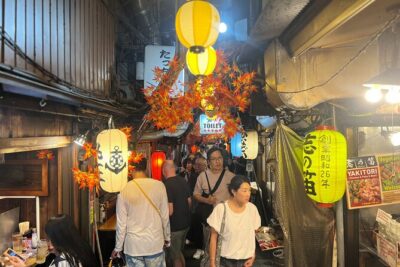
Tokyo: Shinjuku Food Tour (13 Dishes at 4 Local Eateries)
Read our review →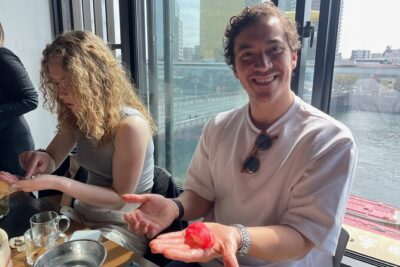
Sushi Making Tokyo Roll and Authentic Japanese Sushi Class
Read our review →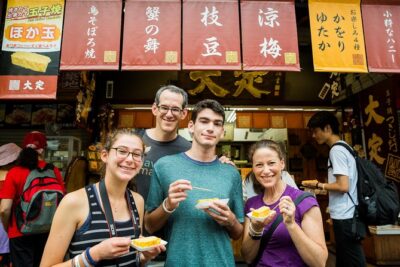
Tokyo Tsukiji Fish Market Food and Culture Walking Tour
Read our review →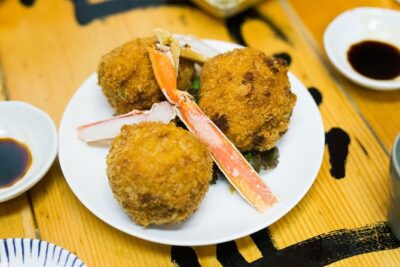
Best of Shinjuku: Izakaya Food Tour (4 Stops, 14+ Tastings)
Read our review →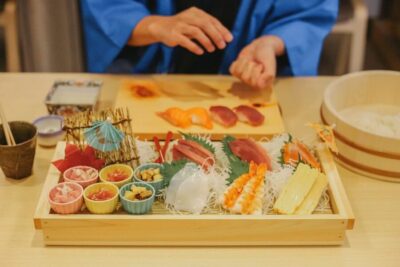
Tokyo: Sushi Making Class in a Happi Coat near a Famous Spot
Read our review →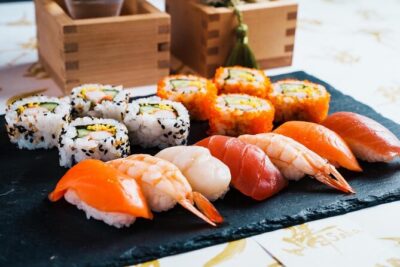
Sushi Making Tokyo! Popular Maki Sushi & Japanese Sushi(+Recipe!)
Read our review →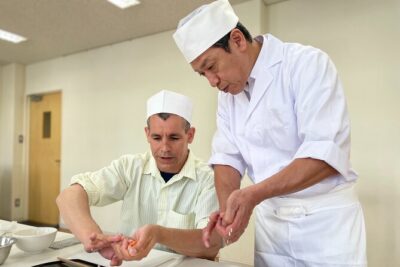
Tokyo Sushi Making Class in Tsukiji with Professional Chef
Read our review →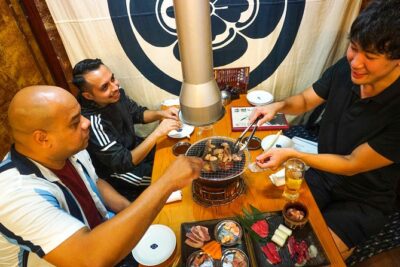
Tokyo Night Foodie Tour in Shinjuku – Seasonal Sushi, Wagyu Beef
Read our review →Browse the lists this tour appears in