
Review · TOKYO
Sushi Making Tokyo Roll and Authentic Japanese Sushi Class
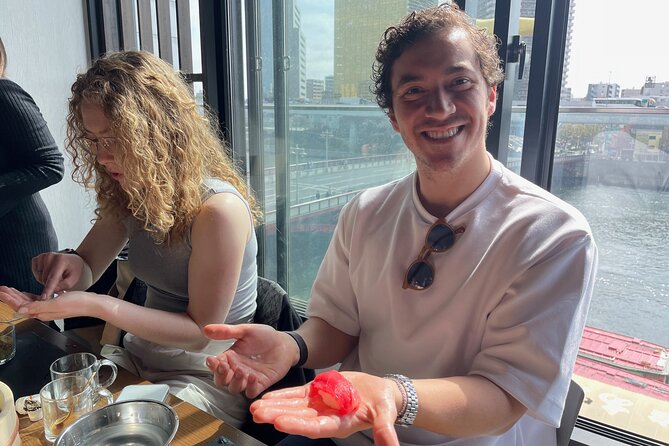
Tokyo’s sushi scene is easy to enjoy but harder to understand. This hands-on Asakusa class lets you move beyond the restaurant counter and learn how rice, fish, fillings, and careful shaping come together. You make both rolls and nigiri, then eat your own work for lunch.
I like the clear English instruction and the generous amount of food included. I also like the setting, just steps from Senso-ji Temple, so you can pair the class with one of Tokyo’s most traditional neighborhoods. The main consideration is that this is a friendly class for visitors, not a serious apprenticeship for aspiring sushi chefs. It gives you useful home skills and cultural background, but in a short, tourist-friendly format.
Key points to know before booking
- Sushi-making and lunch in about 1 hour 40 minutes: You prepare maki rolls and nigiri, then sit down to eat what you made.
- Near Senso-ji Temple: The class begins and ends at 2-chōme-17-9 Kaminarimon in Asakusa.
- English-speaking instruction: Guides such as Moe, Kazu, Ken, Jun, and Arisa have led sessions, with step-by-step demonstrations and table-side help.
- Good for families: Children and teenagers have taken part successfully, with no cooking experience required.
- Maximum group size of 30: Some sessions may feel more intimate, but you should not assume a tiny private class.
- $59.69 per person: Ingredients, instruction, and the meal are included, making the price reasonable for a central Tokyo activity.
Why make sushi in Asakusa?
Asakusa is one of the best parts of Tokyo for a traditional first impression. Senso-ji Temple, the Kaminarimon gate, and the surrounding streets give the neighborhood a strong sense of place, even though the area can be busy and highly visited.
The sushi class is located at 2-chōme-17-9 Kaminarimon, Taito City. That matters because you can build the activity into a larger morning or afternoon rather than spend valuable sightseeing time crossing the city. The class ends where it begins, leaving you free to continue around Senso-ji, browse nearby shops, or find another meal later.
I suggest arriving early. One participant found the location a little tricky to locate and recommended allowing about 15 minutes. That is sensible advice in Asakusa, where small streets, signs, and crowds can slow you down. Keep your meeting address handy on your phone, and do not plan to arrive at the last second.
More food workshops around Tokyo:
- Tokyo: Roll and Authentic Sushi Making Class in Asakusa
★ 4.9 · 1,957 reviews - Tokyo: Sushi Making Class in a Happi Coat near a Famous Spot
★ 4.9 · 1,377 reviews - Tokyo Sushi Making Class in Tsukiji with Professional Chef
★ 5.0 · 1,177 reviews
The welcome and sushi background
The class begins with an introduction to sushi and its place in Japanese food culture. The history section is not designed as a long lecture. It gives you enough context to understand the food before you start handling it.
That short introduction adds value. You learn that sushi is not simply raw fish placed on rice. Rice preparation, seasoning, shape, proportions, and presentation all matter. The instructors also share useful Japanese words, which can make ordering and eating sushi during the rest of your trip less intimidating.
The teaching style appears light and social. Instructors use clear demonstrations, visual examples, and direct guidance. One session included a presentation or video along with hands-on instruction. That combination helps because sushi techniques can look simple when demonstrated quickly, but are less obvious when you try them yourself.
Names of instructors have included Moe, Kazu, Ken, Jun, Arisa, Ellie, Kyuto, Kaori, and others. The exact teacher depends on the session, but the repeated strength of the class is its friendly, energetic approach. Some instructors add personal touches, such as regional food knowledge or playful calls of hoi, hoi, hoi while shaping the sushi.
Making maki rolls step by step
The first practical part focuses on sushi rolls, usually called maki. You work with prepared ingredients and learn how to place them, control the amount of rice, and roll the ingredients into a firm shape.
This is where the class earns its keep for home cooks. The difficult part is rarely the ingredient list. It is learning how much rice to use, how to distribute it, and how to apply enough pressure without crushing the filling. A guide can show you these small movements more clearly than a recipe or online video.
You do not need previous cooking experience. The process is broken into simple steps, and the instructor demonstrates each stage before you try it. Staff circulate to help, so you are not left staring at a sheet of seaweed wondering why your roll has collapsed.
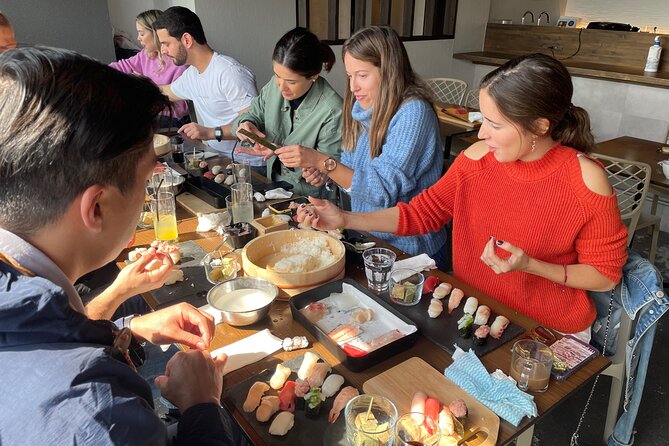
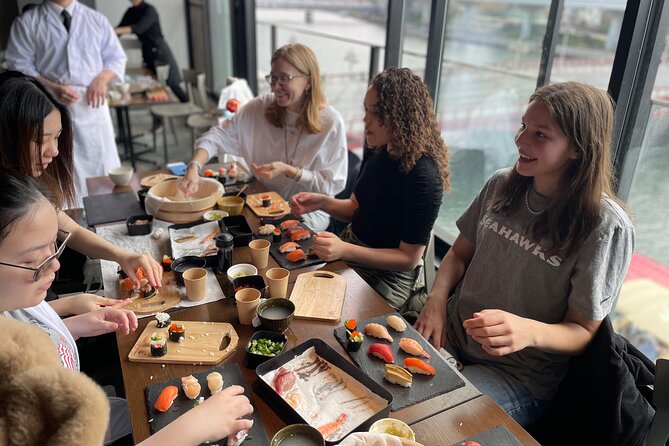
The setting is social rather than formal. You work alongside other people, compare results, and share the occasional imperfect roll. That is part of the appeal. Sushi is often presented as precise and intimidating, but this class makes the process approachable without pretending every first attempt will look restaurant-perfect.
You should also expect a large enough serving to function as a real meal. Several participants found the amount of food generous, with enough ingredients to make a full lunch. That is important when comparing this experience with a short demonstration where you prepare one small sample and leave hungry.
Shaping authentic nigiri
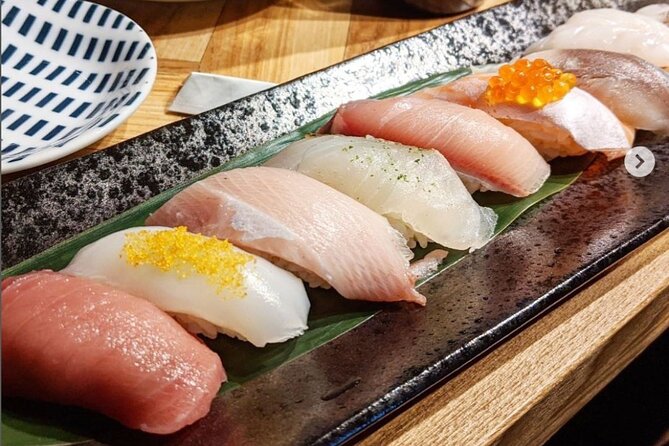
The second main technique is nigiri, the hand-shaped sushi made with rice and a topping. This is a different skill from rolling maki. You learn to form the rice, place the fish, and handle the pieces with care.
Nigiri looks minimal, which can make it more demanding. There is nowhere to hide uneven rice or a poorly placed topping. The instructor’s demonstration gives you a practical sense of the correct size and shape, while one-to-one help lets you adjust your technique.
The class uses fish and rice that participants repeatedly describe as fresh and high quality. The provided information does not give a detailed ingredient menu, so you should not book expecting a specific fish unless the operator confirms it in advance. Still, the meal is part of the experience, not an optional add-on.
This section also helps you appreciate sushi restaurants later in your trip. Once you have tried to shape nigiri yourself, you notice the balance between rice and fish, the neatness of the form, and the care behind a small plate. You may not become a sushi master in 100 minutes, but you will understand more of what you are eating.
More food tours around Tokyo:
- Tokyo: Shinjuku Food Tour (13 Dishes at 4 Local Eateries)
★ 5.0 · 6,603 reviews - Tokyo Tsukiji Fish Market Food and Culture Walking Tour
★ 5.0 · 3,184 reviews - Tokyo: Shinjuku Food Tour (15 Dishes and 4 Eateries)
★ 4.9 · 2,033 reviews - Best of Shinjuku: Izakaya Food Tour (4 Stops, 14+ Tastings)
★ 5.0 · 1,863 reviews
Eating your own sushi for lunch
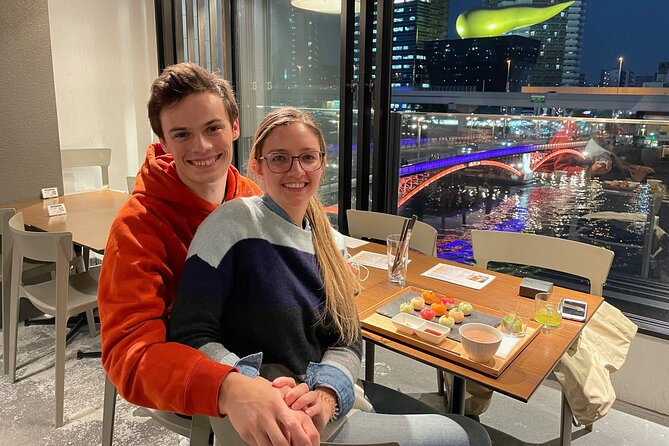
After the preparation, you sit down and eat the sushi you made. That simple finish is one of the best parts of the activity. It turns a cooking lesson into a complete outing, and it gives children a clear reward for paying attention.
The food is not just a token taste. The class includes ingredients and the resulting meal, and the amount has been described as enough to leave people full. That makes the $59.69 price easier to assess. You are paying for a central Tokyo activity, an English-speaking instructor, hands-on teaching, ingredients, and lunch.
Some sessions also offer a sake pairing as an addition. Treat that as optional, since it is not included in the stated price. Families and anyone avoiding alcohol can enjoy the class without it.
The meal also gives you time to talk with the people in your group. This can be a good choice for couples, families, and friends who want an activity with more interaction than simply sitting at a restaurant. The food provides an easy shared focus, even if you arrive knowing nobody else.
How good is the instruction?
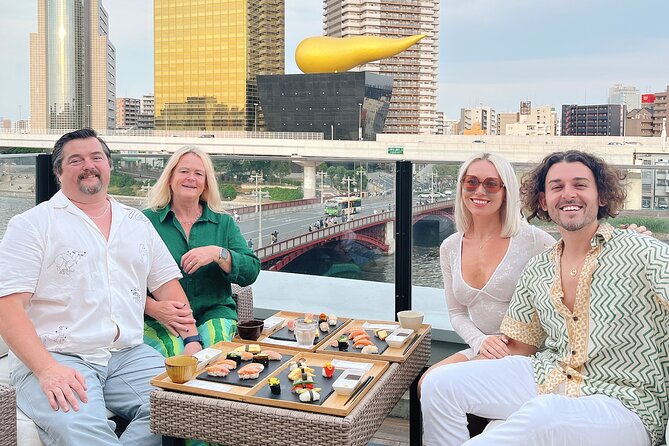
The strongest part of this experience is its teaching style. Instructions are broken into manageable steps, and the demonstrations are supported by visual examples. That matters for sushi because the movements are physical and precise. You need to see how the rice is handled, not only hear an explanation.
The instructors are English-speaking, which removes a major barrier for international visitors. They also explain some history and food culture rather than rushing straight to the ingredients. You get a useful introduction without having to follow a technical culinary lecture.
The class has received a 99 percent recommendation rate and a rating of 5 from 3,971 reviews, and it has received TripAdvisor’s Best of the Best recognition twice. Those figures indicate strong and consistent satisfaction, though they do not mean every person will want the same kind of class.
The tone is energetic. That works well for families and groups who want a lively activity. If you prefer a quiet, highly formal lesson with detailed knife work, advanced fish preparation, or professional-level culinary theory, this may feel basic.
A good choice for children and families
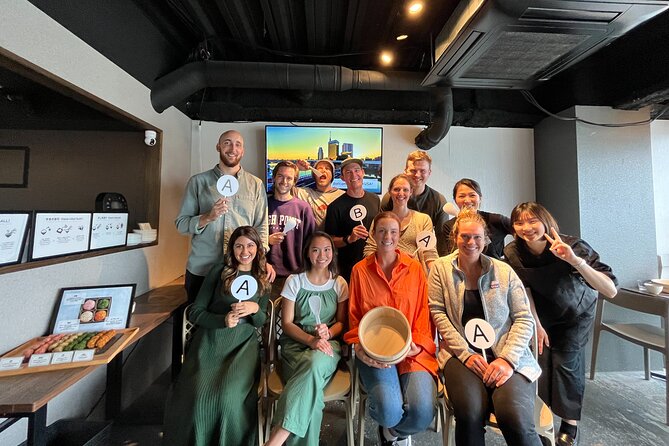
Families are a particularly good fit. Children as young as 6 have taken part, and older children and teenagers have also enjoyed the activity. The work is tactile, the instructions are short, and eating the finished food keeps the lesson moving.
Parents should still consider each child’s interest in sushi and willingness to follow food-handling instructions. The class is not described as a private children’s program, so young children may be working alongside couples and adult groups. The instructors can adjust their pace, but the experience remains a shared class.
It also works well for families with mixed interests. Someone who is curious about Japanese food can learn practical techniques, while someone less interested in cooking still gets a meal and a cultural activity near Senso-ji.
Couples, solo visitors, and group atmosphere
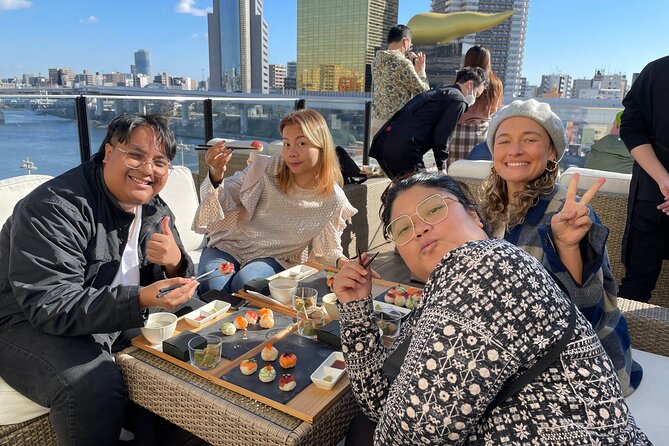
Couples can treat this as a light date activity, especially if you want something more memorable than another restaurant meal. Honeymooners have paired the class with sake, though again, the sake is an extra rather than part of the basic booking.
Solo visitors can also fit in comfortably because the class is designed around shared participation. You will be working near other people, and the cooking provides a natural way to interact without forced conversation.
The advertised maximum is 30 people. That is not a small private workshop, so group size should be part of your decision. In practice, some sessions may feel smaller, and the instructors provide personal help, but you should be prepared for a group setting rather than individual chef training.
What the price includes, and what it does not
At $59.69 per person, this is a fair value if you want both an activity and a meal in central Tokyo. The ingredients, cooking class, English-speaking instructor, and sushi lunch are included.
The price does not include hotel pickup or drop-off. That is not a serious drawback in Asakusa, since the location is near public transportation, but you are responsible for getting to the meeting point. The central location is useful because it fits naturally with Senso-ji sightseeing.
The cost is less compelling if you only want to eat sushi. Tokyo offers many restaurants, and a class takes more time than ordering a plate. You are paying for participation, instruction, and the memory of making the food yourself. If that sounds worthwhile, the meal included in the price adds solid value.
Practical points before you reserve
You receive confirmation at booking, and the experience uses a mobile ticket. The activity lasts about 1 hour and 40 minutes, with both the class and meal taking place at the same location.
The tour is listed as accessible to service animals and close to public transportation. The supplied information does not provide a full accessibility assessment of the room or work surfaces, so contact the operator directly if you need specific arrangements.
Free cancellation is available up to 24 hours before the local start time for a full refund. Cancellations or changes made less than 24 hours before the start are not accepted for a refund.
Because the class meets near a major sightseeing area, I would avoid scheduling it too tightly against another reservation. Give yourself time to find the address, especially if this is your first visit to Asakusa.
Is this the right Tokyo food experience for you?
I would book this class if you want to do more than eat sushi and you enjoy practical activities. It is especially suitable for families, couples, first-time visitors, and anyone who wants an English-language introduction to maki and nigiri.
You should skip it if you are looking for advanced sushi training, a private chef lesson, or a detailed tour of the fish market. The class is short, social, and designed for beginners. Its success comes from clear teaching, plenty of food, an easy location, and a fun shared result.
For $59.69, you get a meal you helped prepare, a useful lesson, and a convenient stop near Senso-ji. That is a strong addition to a Tokyo itinerary, as long as you arrive expecting an enjoyable introduction rather than professional certification.
FAQ
How long does the sushi class last?
The experience lasts approximately 1 hour and 40 minutes, including the sushi-making lesson and the meal afterward.
Where does the class meet?
The meeting point is 2-chōme-17-9 Kaminarimon, Taito City, Tokyo 111-0034, Japan. The activity ends back at the same location.
Is the class taught in English?
Yes. An English-speaking instructor leads the class and explains the sushi techniques and cultural background.
Do I need cooking experience?
No. The class is designed for beginners, and the instructions are given step by step. No previous cooking experience is required.
Is lunch included?
Yes. The ingredients for the class and the sushi meal you make are included in the price.
Can I cancel for a full refund?
Yes. You can cancel at least 24 hours before the experience start time for a full refund. Cancellations or changes made less than 24 hours before the start time are not accepted for a refund.
Fresh off the menu around Tokyo
- Shinjuku: Golden Gai Food Tour★ 4.6 · 77 reviews
- Shinjuku Tokyo: Authentic Japanese Home-Style Culinary Class★ 4.9 · 125 reviews
- Shibuya Tokyo: Sushi Making Class (Vegan/Vegetarian/Halal)★ 4.7 · 29 reviews
- Shinjuku: Food Tour – 15 Dishes at 4 local eateries★ 4.8 · 246 reviews
- Shibuya: Ramen Dojo Tokyo | Make All 3 (Tonkotsu/Shoyu/Miso)★ 4.8 · 207 reviews
- Tokyo: Secret Food Walking Tour★ 4.7 · 38 reviews
- Ramen Making from Scratch +Akihabara Tour –Cooking Class★ 5.0 · 25 reviews
- Exclusive Tokyo Ramen Kitchen Experience★ 4.7 · 34 reviews
Tokyo Food Tours, compared.
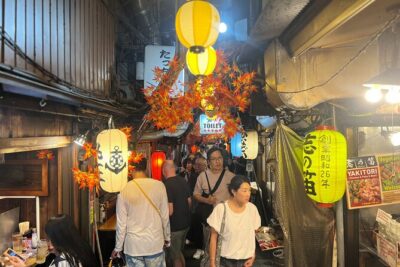
Tokyo: Shinjuku Food Tour (13 Dishes at 4 Local Eateries)
Read our review →
Tokyo Tsukiji Fish Market Food and Culture Walking Tour
Read our review →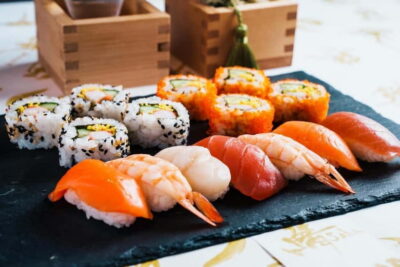
Tokyo: Roll and Authentic Sushi Making Class in Asakusa
Read our review →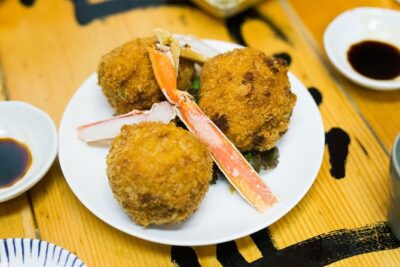
Best of Shinjuku: Izakaya Food Tour (4 Stops, 14+ Tastings)
Read our review →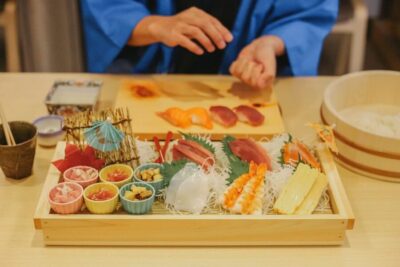
Tokyo: Sushi Making Class in a Happi Coat near a Famous Spot
Read our review →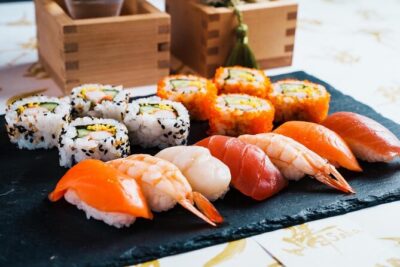
Sushi Making Tokyo! Popular Maki Sushi & Japanese Sushi(+Recipe!)
Read our review →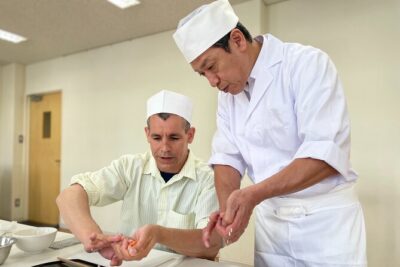
Tokyo Sushi Making Class in Tsukiji with Professional Chef
Read our review →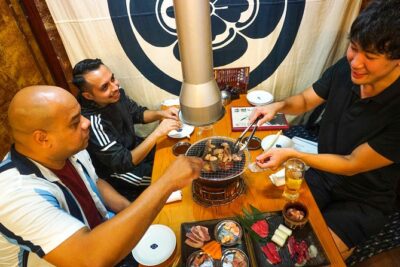
Tokyo Night Foodie Tour in Shinjuku – Seasonal Sushi, Wagyu Beef
Read our review →Browse the lists this tour appears in