
Review · TOKYO
Tokyo Sushi Making Class in Tsukiji with Professional Chef
Making sushi in Tsukiji is less about becoming a sushi chef in 90 minutes and more about understanding why good sushi looks simple. You watch a professional prepare fish, learn the right way to shape rice, then make five nigiri and one rolled sushi before eating lunch.
I like the class’s hands-on format and its setting near the Tsukiji Outer Market. I also like that the English-speaking host translates the chef’s instructions, with past sessions led by hosts such as Yuko, Yoko, Yugo, Emma, Kanon, and Eri, and chefs including Tanaka and Kate. The main catch is practical: the classroom is on the third floor with no elevator, and allergy requests may not always be possible.
Key points at a glance
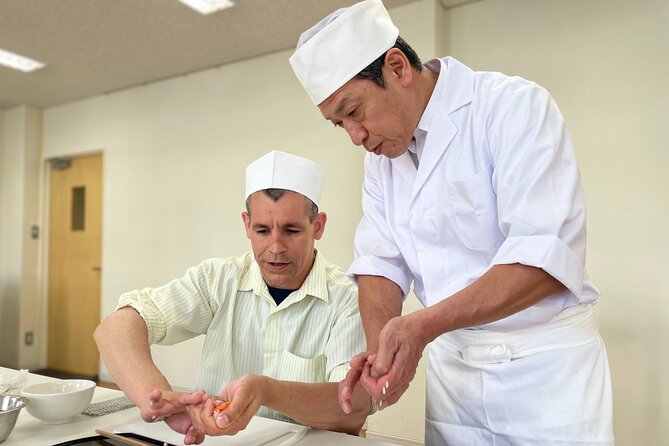
- Watch a fish-cutting demonstration: The sushi chef explains how fish is prepared and introduces the Japanese knives used for the job.
- Make two classic styles: You prepare five pieces of nigiri and one rolled sushi, with step-by-step help.
- Eat what you make: Your handmade sushi serves as lunch, with extra expertly prepared sushi and fresh wasabi.
- Stay near Tsukiji’s food district: The class takes place in a traditional building close to the Tsukiji Outer Market, the Nippon Fish Port Market, and Tsukiji Fish Market.
- Fit it into a busy day: The session lasts about 90 minutes and begins and ends at the same meeting point.
- Good for families and beginners: Children and first-time sushi makers can take part, though everyone must manage stairs to the third floor.
What this Tsukiji sushi class is really like
The class begins at 千社額棟, 4-chōme-16-2 Tsukiji, in Chuo City. You make your own way there, so allow time to find the building and arrive ready to start. The meeting point is near public transportation, but the class does not include hotel pickup, drop-off, or transport to other Tokyo sights.
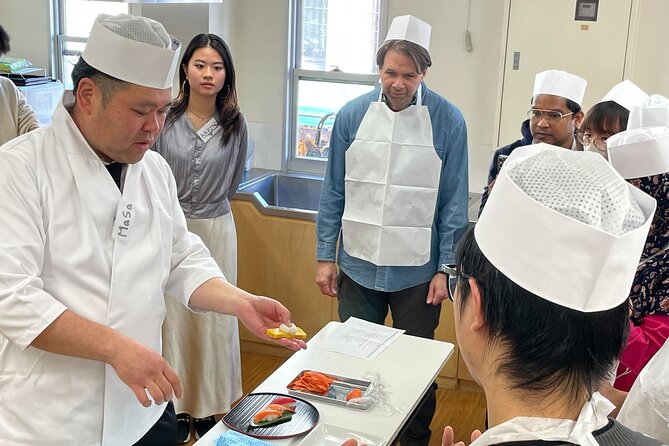
Inside, you enter a traditional Japanese-style building tucked into the Tsukiji area. The classroom is on the third floor and reached only by stairs. It is not a large restaurant dining room. The setting feels more like a compact teaching space, with sushi tools, tableware, ingredients, and a chef’s work area arranged for instruction.
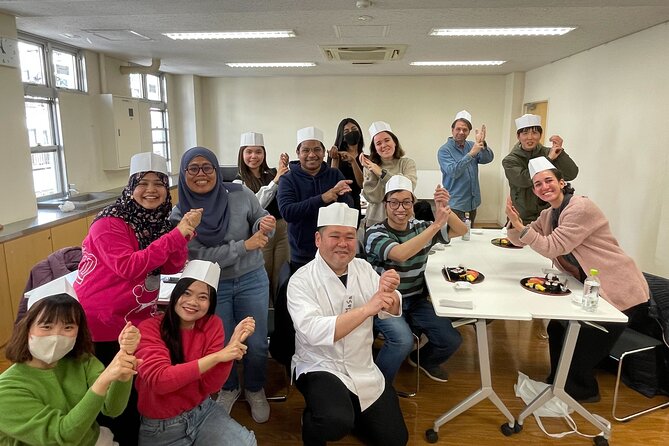
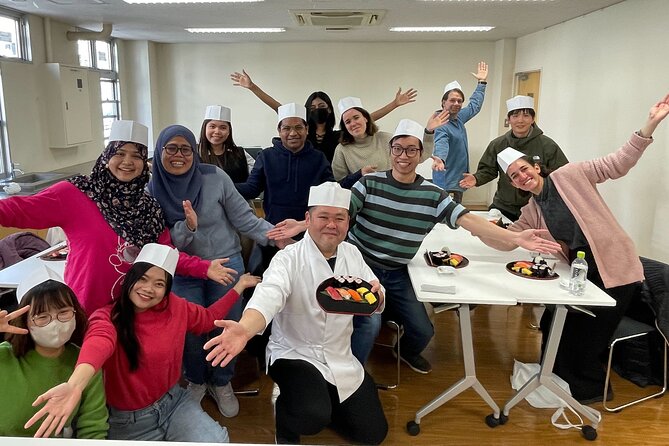
The group can reach 20 people. That is small enough for a guided activity, but it is not a private lesson. If you want personal help, pay attention during the demonstrations and ask the host when you need a hand. The teaching team is used to beginners, including children and people who have never shaped sushi before.
The English-speaking host handles communication while the sushi master demonstrates the technique. Different sessions use different staff, but names praised in past sessions include Yuko, Yoko, Yugo, Kanon, Eri, Emma, and AJ. Chef Tanaka and Chef Kate are among the professionals who have led classes. The exact team depends on your date, so treat the names as examples rather than a promise.
More food workshops around Tokyo:
- Sushi Making Tokyo Roll and Authentic Japanese Sushi Class
★ 5.0 · 3,971 reviews - Tokyo: Roll and Authentic Sushi Making Class in Asakusa
★ 4.9 · 1,957 reviews - Tokyo: Sushi Making Class in a Happi Coat near a Famous Spot
★ 4.9 · 1,377 reviews
Fish preparation comes before your first piece
The first major lesson is a fish disassembly demonstration. The chef shows how a whole piece of fish is prepared for sushi and explains the stages involved. This gives you a useful look at the work hidden behind a tidy plate of nigiri.
You also learn about Japanese knives. That detail matters. Sushi preparation depends on clean, controlled cuts, and the knife is not just a kitchen tool in this setting. The chef’s demonstration helps you see why the fish must be handled with care before it ever reaches the rice.
This is also where the class gains value beyond a simple cooking activity. You are not just handed ingredients and told to copy a picture. You see the professional process first, then try a small part of it under supervision. You should not expect to break down fish yourself, but you do get a clear view of how the preparation works.
The food comes from the market, and the class supplies proper utensils and tableware. The experience is tied to Tsukiji’s food trade rather than presented as a generic cooking lesson in an ordinary tourist district.
Learning the difference between nigiri and rolled sushi
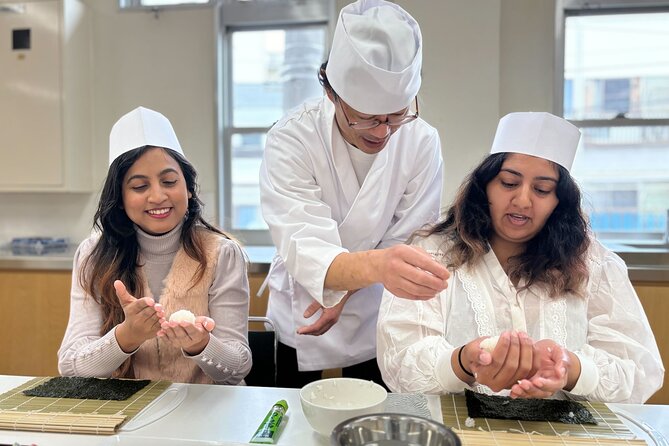
After the demonstration, the chef explains what sushi is and shows the proper steps for making two types. The first is nigiri, the familiar hand-shaped rice topped with fish or another ingredient. The second is rolled sushi, or maki.
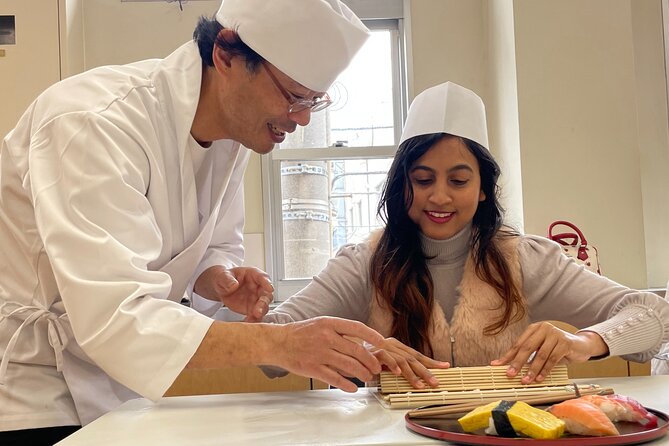
You make five different nigiri pieces and one roll. That is enough variety to practice the basic movements without turning the class into a long technical course. The host and chef guide you through the process, correcting your technique when needed and helping you produce a plate that looks presentable.
For a beginner, this balance works well. You get several attempts at nigiri rather than making one piece and moving on. At the same time, the 90-minute schedule keeps the lesson manageable for families, busy sightseeing days, and visitors who want a food activity without giving up half a day.
Do not expect restaurant-level precision on your first try. Sushi chefs spend years refining their cuts, rice handling, and presentation. The point here is to learn the basic order of steps, understand how the ingredients fit together, and gain enough confidence to try making sushi at home.
The class also works for people who are new to sushi. You learn about different kinds of sushi and its place in Japanese food culture before handling the ingredients. Some children who had not tried much sushi before found that making their own rolls encouraged them to taste it. That makes this a useful family activity, especially for children aged roughly 7 to 12 who can follow instructions and manage the stairs.
Your handmade sushi becomes lunch
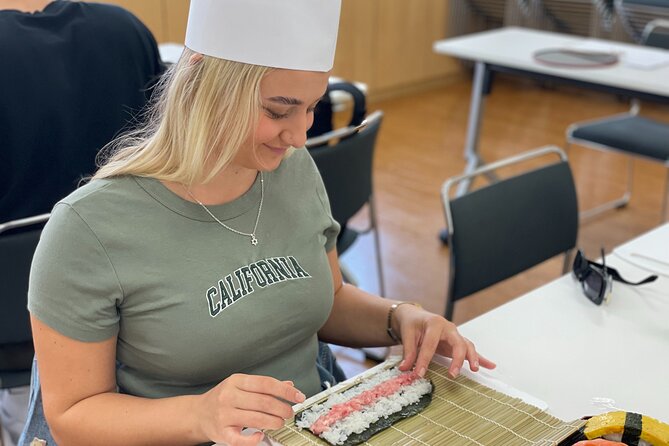
The best part comes after the work. You eat the sushi you made, including the five nigiri and one roll. It is lunch, not just a sample to take home.
The sushi master also prepares another piece for you, using freshly prepared wasabi. That comparison is useful. You can see the difference between your beginner’s work and the chef’s polished technique, then taste both in the same setting.
The ingredients are fresh and sourced from the market area. Exact fish selections can vary, so you should not book expecting a particular species. The important point is that the class uses fresh sushi ingredients and gives you a meal that is part of the activity.
Arrive with some appetite. The class includes food, but it is still a short workshop rather than a long, multi-course lunch. You may also want to leave room if you plan to continue eating around Tsukiji afterward. The nearby market area offers plenty of food stops, though those purchases are separate from the class.
The staff may take photos during the activity or help you photograph your finished sushi. Several participants valued having pictures of their completed plates, especially families. If you like recording small trip moments, keep your phone handy, but do not let photos distract you from the chef’s demonstrations.
More food tours around Tokyo:
- Tokyo: Shinjuku Food Tour (13 Dishes at 4 Local Eateries)
★ 5.0 · 6,603 reviews - Tokyo Tsukiji Fish Market Food and Culture Walking Tour
★ 5.0 · 3,184 reviews - Tokyo: Shinjuku Food Tour (15 Dishes and 4 Eateries)
★ 4.9 · 2,033 reviews - Best of Shinjuku: Izakaya Food Tour (4 Stops, 14+ Tastings)
★ 5.0 · 1,863 reviews
Why the Tsukiji setting adds value
Tsukiji remains one of Tokyo’s most useful food neighborhoods for visitors. The former inner wholesale market moved to Toyosu, but the Tsukiji Outer Market continues to operate as a dense food district with shops, stalls, and restaurants. This class puts you close to that atmosphere without asking you to spend the whole morning wandering through it.
The listed route names three nearby areas: Tsukiji Fish Market, Tsukiji Jogai Market, and Tsukiji Nippon Fish Port Market. The class itself takes place in the Tsukiji area, and the meeting point is also the ending point. Do not read this as a separate guided market tour with a long walking itinerary. The main event is the sushi workshop, with the market surroundings providing context and a convenient place to continue exploring.
I like this arrangement because you can pair the class with other Tsukiji plans. You might visit the outer market before the lesson, take the class, then continue looking at food shops afterward. Or you can make the workshop your main Tsukiji stop and keep the rest of the day open for Ginza, Hamarikyu Gardens, or another Tokyo neighborhood. Those added visits are not included, so plan them yourself.
The location is also practical on a rainy day. Most of the class takes place indoors, and the 90-minute length gives you a useful break from wet streets. You still need to get to the meeting point, so bring suitable clothing and allow extra time in poor weather.
Is $49.74 a fair price?
At $49.74 per person, the class offers a solid value if you want instruction, food, and a short cultural activity in one booking. You receive an English-supported lesson, a professional chef’s demonstration, fresh ingredients, utensils, five nigiri, one rolled sushi, and additional chef-prepared sushi with wasabi.
You are also paying for the setting and the staff who make the lesson understandable. A plate of sushi alone can cost less, but restaurant sushi does not teach you how the rice is shaped, how the fish is prepared, or why the knife work matters. A private cooking lesson would cost more, while this gives you a structured introduction at a moderate price.
The value is strongest for three kinds of visitors:
- You love sushi and want more than another meal at a restaurant.
- You are traveling with children and need a short activity that keeps everyone involved.
- You want a Tokyo food experience that fits around other sightseeing.
The value is weaker if you already make sushi regularly or want a serious professional course. This is an introduction, not chef training. It also may not satisfy you if you need a fully private experience, a long market walk, or a large meal.
Timing, group size, and small practical matters
The experience lasts about one hour and 30 minutes. That is long enough for a demonstration, instruction, preparation, and lunch, but short enough to place between other Tokyo plans. The advertised ending is back at the meeting point, though the activity can run beyond the scheduled time. If you have a train, reservation, or timed admission afterward, leave a cushion.
The class welcomes beginners, and the staff provide step-by-step help. English support is part of the experience, but the chef and host may work through translation rather than having every instruction delivered directly by the chef in English. That setup has worked well for past sessions with hosts such as Yugo and Yoko, who translated the chef’s explanations and helped keep the class moving.
Tell the operator about food allergies when you book. The team will try to accommodate allergy-related requests, but it may not be possible. Halal and kosher requests are not accommodated, and kosher meals are not available. If your diet is strict, this is a point to settle before paying rather than hoping it can be fixed on the day.
The class is not suitable for anyone who cannot manage stairs. The traditional building has the classroom on the third floor and no elevator is mentioned. Strollers, mobility limits, and heavy bags may make the climb awkward, so consider that before booking.
Cancellation is free up to 24 hours before the start time. Canceling or changing within 24 hours does not qualify for a refund, and the cut-off follows Tokyo local time.
Who should book this activity?
I would choose this class for a first visit to Tokyo when sushi is high on your list. It gives you a meal, a lesson, and a reason to spend time in Tsukiji without consuming an entire day.
Families should also give it serious consideration. The work is simple enough for beginners, the chefs and hosts offer help, and children can be more willing to try unfamiliar food after making it themselves. The class does require patience, attention, and the ability to use stairs, so very young children or anyone needing step-free access may find it less comfortable.
Couples, friends, and small groups can enjoy it too. The activity has enough structure to prevent awkward downtime, but it still leaves room for photos and conversation. A group of 20 is possible, so do not book expecting a quiet private table for two.
If you have little interest in seafood, sushi, or food preparation, choose another Tokyo activity. The class is focused from start to finish. That focus is its strength, but it also means there is no broad sightseeing program to distract you.
Should you book the Tsukiji sushi class?
Book it if you want to understand sushi by making it, not just ordering it. The fish-cutting demonstration, English support, fresh market ingredients, and chance to eat five nigiri plus one roll make the $49.74 price reasonable.
I would book early if your schedule is tight, since the activity has been booked several times in a day and group size can reach 20. Before confirming, check three things: you can climb to the third floor, your dietary needs fit the available menu, and you have spare time after the 90-minute estimate.
For sushi fans, families, and curious beginners, this is a practical Tsukiji experience with real food at the end. It will not turn you into a sushi master, but it can give you a better eye for the craft and a skill you may try again at home.
FAQ
Where does the sushi-making class begin?
It begins at 千社額棟, 4-chōme-16-2 Tsukiji, Chuo City, Tokyo 104-0045, Japan. You make your own way to the meeting point.
Where does the activity end?
The class ends back at the meeting point.
How long does the sushi class last?
The scheduled duration is approximately one hour and 30 minutes. The activity may run beyond the scheduled ending time.
What sushi will I make?
You will make five different nigiri sushi pieces and one rolled sushi.
Is lunch included?
Yes. You eat the sushi you make as part of the experience. The sushi master also prepares additional sushi with fresh wasabi.
Is the class held in English?
An English-speaking host leads the communication and translates or explains the professional chef’s instruction.
Can the class accommodate allergies, halal diets, or kosher requests?
You should report allergies when making the reservation. Allergy-related requests may be possible but are not guaranteed. Halal and kosher requests are not accommodated.
Is the classroom accessible without stairs?
No. The classroom is on the third floor of a traditional Japanese building and can only be reached by stairs.
What is the cancellation policy?
You can cancel up to 24 hours before the start time for a full refund. Cancellations or changes made less than 24 hours before the start time are not accepted for a refund.
Fresh off the menu around Tokyo
- Shinjuku Tokyo: Authentic Japanese Home-Style Culinary Class★ 4.9 · 125 reviews
- Shinjuku: Golden Gai Food Tour★ 4.6 · 77 reviews
- Shibuya Tokyo: Sushi Making Class (Vegan/Vegetarian/Halal)★ 4.7 · 29 reviews
- Shinjuku: Food Tour – 15 Dishes at 4 local eateries★ 4.8 · 246 reviews
- Shibuya: Ramen Dojo Tokyo | Make All 3 (Tonkotsu/Shoyu/Miso)★ 4.8 · 207 reviews
- Tokyo: Secret Food Walking Tour★ 4.7 · 38 reviews
- Ramen Making from Scratch +Akihabara Tour –Cooking Class★ 5.0 · 25 reviews
- Exclusive Tokyo Ramen Kitchen Experience★ 4.7 · 34 reviews
Tokyo Food Tours, compared.
Tokyo: Shinjuku Food Tour (13 Dishes at 4 Local Eateries)
Read our review →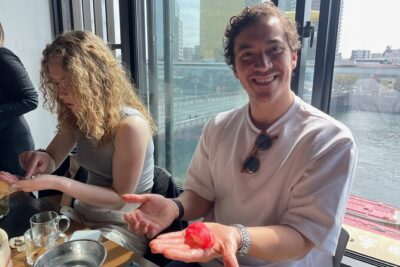
Sushi Making Tokyo Roll and Authentic Japanese Sushi Class
Read our review →
Tokyo Tsukiji Fish Market Food and Culture Walking Tour
Read our review →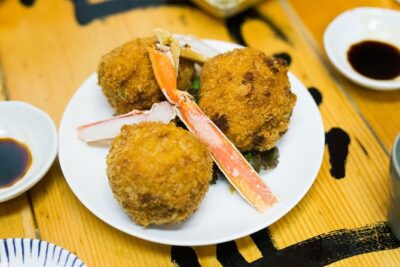
Best of Shinjuku: Izakaya Food Tour (4 Stops, 14+ Tastings)
Read our review →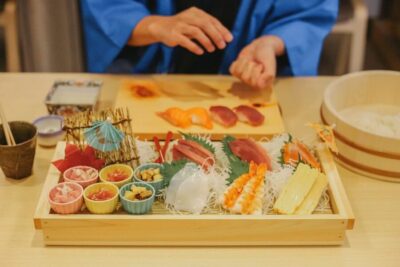
Tokyo: Sushi Making Class in a Happi Coat near a Famous Spot
Read our review →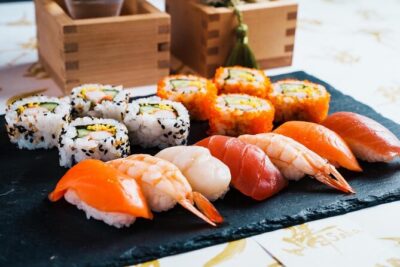
Sushi Making Tokyo! Popular Maki Sushi & Japanese Sushi(+Recipe!)
Read our review →
Tokyo Night Foodie Tour in Shinjuku – Seasonal Sushi, Wagyu Beef
Read our review →
Eat and Drink Like a Local: Tokyo Ueno Food Tour-Taverns&Ramen
Read our review →Browse the lists this tour appears in