
Review · TOKYO
Sushi Making Tokyo! Popular Maki Sushi & Japanese Sushi(+Recipe!)
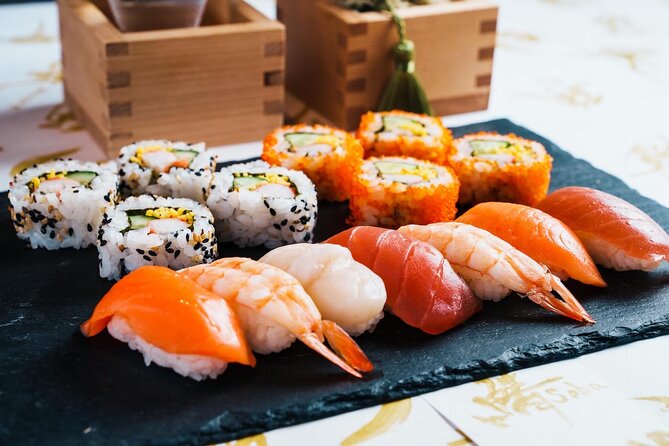
The most useful part of this Asakusa class is that you make both maki sushi and nigiri sushi, rather than practicing only the easy roll. You get a feel for the tidy, controlled hand movements behind nigiri, then sit down to eat what you prepared.
I like the fresh ingredients and the generous meal, which turns a short class into a proper lunch or dinner. I also like the friendly teaching style, with instructors such as Ken, Sato, Momo, Yuto, Kento, and Matti praised for keeping the lesson lively and easy to follow. The main consideration is pace: one participant found that Ken sometimes spoke a little quickly, so ask for a slower explanation if needed.
Key points to know
- You make two classic sushi styles: Learn rolled maki sushi and hand-shaped nigiri sushi in one session.
- The class lasts about 1 hour and 50 minutes: It fits neatly into an Asakusa sightseeing day without taking half your afternoon.
- Your finished sushi becomes the meal: Ingredients and the food you make are included in the price.
- Families have useful choices: Non-raw fish options are available, and gluten-free adjustments were made for at least one child.
- The class is held in central Asakusa: The meeting point is 2-chōme-1-13 Kaminarimon, close to public transportation.
- Book ahead for popular dates: The average booking time is 36 days before the class, and groups can reach 40 people.
Making sushi in Asakusa, not just eating it
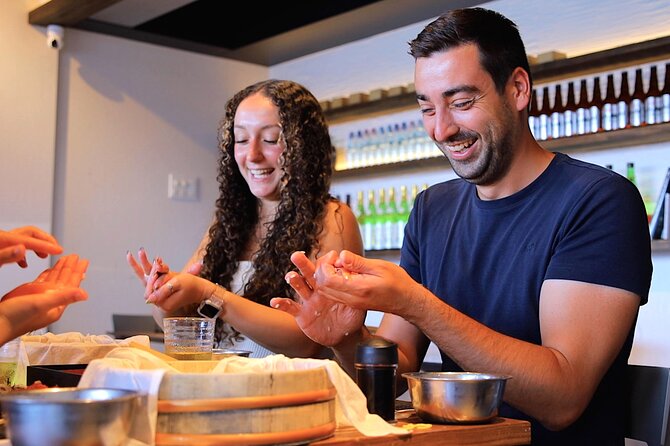
Tokyo has no shortage of sushi counters, but a cooking class gives you something a restaurant cannot: a working sense of how sushi is put together. You are not simply handed a beautiful plate. You handle the rice, shape the food, and discover why nigiri looks simple but takes practice.
This class focuses on two forms that help you understand Japanese sushi. Maki sushi is the familiar rolled style, with ingredients enclosed by rice and nori. It is approachable, colorful, and easy to recognize from sushi restaurants around the world.
Nigiri is the more revealing lesson. A small portion of rice is shaped by hand and paired with a topping. The form looks modest, but the size, pressure, and shape matter. One ten-year-old participant reportedly enjoyed making it, while an adult found nigiri much harder than expected. That is useful information: the class is family-friendly, but the technique is not entirely foolproof.
The instructors break the work into clear steps. You can expect practical demonstrations, time to copy the method, and help when your first pieces look more like rice snacks than restaurant sushi. That is part of the fun. Sushi-making is precise, but it is also forgiving when you are learning.
More food tours around Tokyo:
- Tokyo: Shinjuku Food Tour (13 Dishes at 4 Local Eateries)
★ 5.0 · 6,603 reviews - Sushi Making Tokyo Roll and Authentic Japanese Sushi Class
★ 5.0 · 3,971 reviews - Tokyo Tsukiji Fish Market Food and Culture Walking Tour
★ 5.0 · 3,184 reviews
What happens during the 1-hour-50-minute class
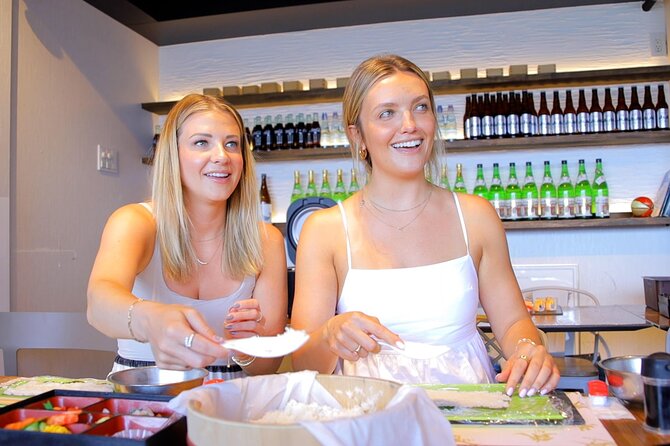
The class is short enough to fit around sightseeing, yet long enough to include instruction, preparation, and a meal. The exact order of each activity can vary, but the main focus is consistent: learn about Japanese food culture, make maki sushi, make nigiri sushi, and eat the results.
The session begins with guidance from an English-speaking instructor. The class theme is Japanese food and Japanese food culture, so you receive more than a list of hand movements. You also get context about sushi and the place of nigiri as a standard style in Japan.
The hands-on section then moves into sushi preparation. Ingredients for the class are included, so you do not need to shop or bring supplies. That keeps the activity focused on learning instead of kitchen setup.
Maki sushi is likely to be the more immediately comfortable part. Rolling takes coordination, but you can see how the ingredients are arranged and how the rice supports the filling. The finished roll can be sliced into pieces, giving you a satisfying result even if your technique is still developing.
Nigiri asks for more control. You shape the rice into a compact form and work with the topping in a way that demands a lighter touch. This is where asking questions helps. If the instructor is moving quickly, say so. One participant specifically suggested that Ken slow down slightly while speaking, a small but practical point for anyone who is not fully comfortable with spoken English.
At the end, you eat the sushi you made. The portion has been described as filling, which matters because some short cooking classes offer only a taste. Here, the food is both your practice material and your meal.
Fresh ingredients and a meal that feels worthwhile
At $63.28 per person, the price is not the cheapest way to eat sushi in Tokyo. That comparison misses the point, though. You are paying for an English-speaking instructor, ingredients, instruction, and a meal, not just for a plate of finished sushi.
The value is strongest if you want an activity rather than another restaurant stop. You receive nearly two hours of guided time in a central Tokyo district, and you leave with a practical skill you can try again at home. One participant already owned a sushi-making kit but had never known where to begin, and found the class useful for building confidence. That makes the recipe and instruction especially helpful for home cooks.
The fresh ingredients also matter. Sushi depends on texture and balance, so tired or poorly prepared ingredients would make the lesson disappointing. The class is designed around pre-planned ingredients, which keeps the work moving and gives you more time to make sushi.
You should still keep expectations realistic. You will not become a professional sushi chef in 110 minutes. You will learn the basic forms, practice the movements, and gain a better understanding of why the finished pieces look the way they do. For many people, that is exactly the right level for a holiday activity.
Why learning both maki and nigiri is useful
A class that teaches only maki sushi would be easier, but less complete. Maki is familiar to many people outside Japan, and rolling it can produce a good result fairly quickly. Nigiri shows you a different side of the craft.
The contrast between the two styles gives the class a clear rhythm. With maki, you work with a roll and later divide it into portions. With nigiri, you create individual pieces one at a time. The difference helps you see that sushi is not one single technique.
Nigiri also gives you a better appreciation for the work involved at a sushi counter. A chef may serve a small number of ingredients, but the shape and handling of each piece affect how it feels to eat. After attempting it yourself, you will understand why a neat piece takes more control than its size suggests.
The class also presents sushi as part of Japanese food culture, not only as a famous export. That context is brief rather than academic, but it adds meaning to the meal. You learn the names and forms, then put them into practice with your own hands.
Same city, a different plate:
- Tokyo: Shinjuku Food Tour (15 Dishes and 4 Eateries)
★ 4.9 · 2,033 reviews - Tokyo: Roll and Authentic Sushi Making Class in Asakusa
★ 4.9 · 1,957 reviews - Best of Shinjuku: Izakaya Food Tour (4 Stops, 14+ Tastings)
★ 5.0 · 1,863 reviews - Tokyo: Sushi Making Class in a Happi Coat near a Famous Spot
★ 4.9 · 1,377 reviews
A friendly class for families and mixed groups
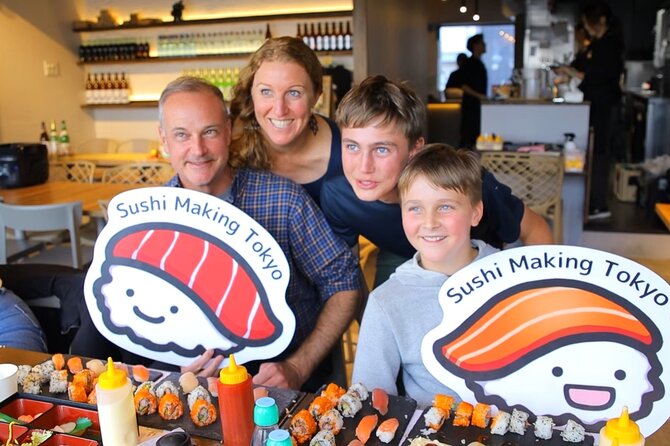
This is a good choice for families because the activity gives children something active to do. A ten-year-old enjoyed making sushi, and the format lets adults and children work on the same task without requiring advanced cooking skills.
The class can also suit mixed groups with different food preferences. Non-raw options are available, so someone who does not eat raw fish does not have to sit out while everyone else works. Gluten-free accommodation was also made for a daughter in one family, though you should raise dietary needs when booking or before the class rather than assume every request can be handled on the day.
The instructors are part of the appeal. Ken, Sato, Momo, Yuto, Kento, and Matti are among the staff associated with sessions, and the teaching style is described as energetic, kind, and entertaining. That matters in a hands-on class. You want correction without embarrassment and enough help to keep the activity moving.
The maximum group size is 40 people, which is worth noting. A class of that size could feel less personal than a tiny workshop, even though the available feedback describes groups as manageable and well organized. If individual attention is your top priority, arrive ready to ask for help rather than waiting quietly.
Using the Kaminarimon meeting point well
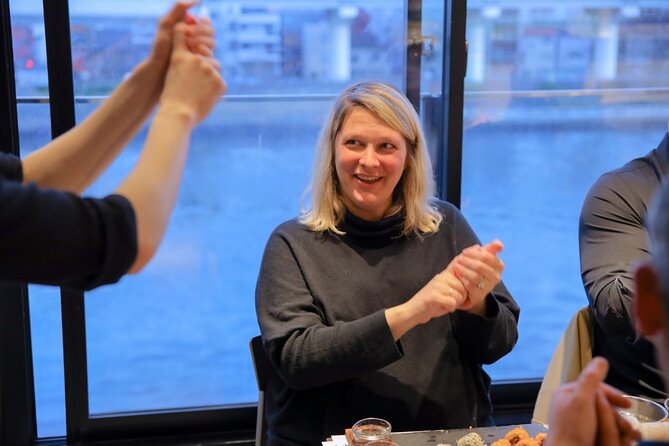
The class meets at Sushi Making Tokyo No1 Cooking Class in Japan, at 2-chōme-1-13 Kaminarimon, Taito City, Tokyo 111-0034. The location is in Asakusa, one of Tokyo’s best-known sightseeing areas, and it is near public transportation.
That setting makes the class easy to combine with other plans in Asakusa. You can place it before or after sightseeing in the district, but leave enough time to find the meeting point and settle in. The class does not include hotel pickup or drop-off, so you are responsible for getting there.
The central location is also useful if your group wants a food activity without crossing the city. Tokyo travel can eat up time, especially when you are moving between districts. A cooking class in Asakusa lets you pair a local food lesson with one of the city’s major cultural areas.
Do not treat the meeting point as a reason to arrive late. One couple arrived a few minutes behind schedule and felt uncomfortable about it. Even if the staff are kind, a hands-on lesson is harder to join once the demonstrations have started. A mobile ticket is provided, so keep the booking accessible on your phone.
Who gets the best value from this class
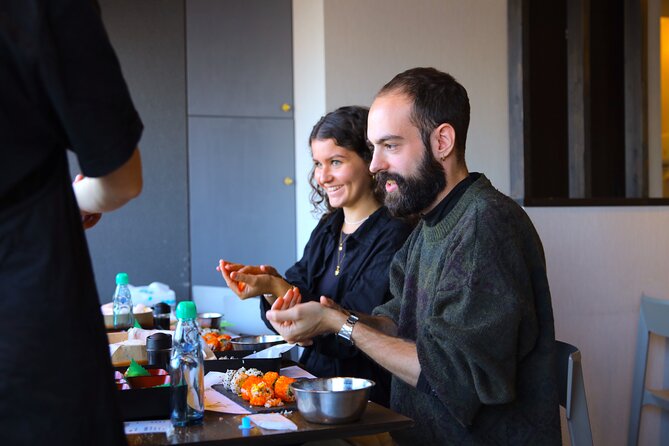
I would recommend this activity to you if you want more than a meal and prefer a short, social lesson. It works particularly well for:
- Families with children old enough to follow simple instructions
- First-time visitors who want a Japanese food activity in Asakusa
- Couples and small groups looking for a shared memory
- Home cooks who want basic sushi-making confidence
- People who need non-raw choices or may need a gluten-free adjustment
- Visitors who want an English-speaking class rather than a lesson conducted only in Japanese
It may be less suitable if you want an intimate chef-led workshop with extensive knife work or advanced sushi training. The format is built for enjoyment and basic technique. It introduces the craft without pretending to turn a beginner into a specialist.
You should also consider your comfort with a group activity. The maximum is 40 people, and the class has an energetic, social feel. That is a benefit if you like meeting people and learning in a cheerful room. It may feel busy if you prefer quiet, individual instruction.
Booking ahead, cancellation, and practical details
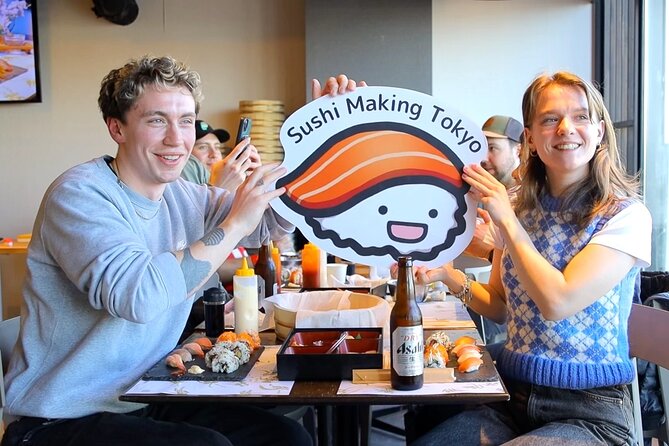
The class is often reserved about 36 days in advance, so I would not leave it until the last day of your Tokyo planning. Popular travel dates can fill earlier, especially if your group needs a particular time or dietary adjustment.
Your booking confirmation is issued at the time of reservation, and the experience uses a mobile ticket. Public transportation is nearby, but hotel transfers are not included. Service animals are allowed.
The cancellation policy is friendly if your plans are still changing. You can cancel for a full refund up to 24 hours before the start time. Cancellations or changes made less than 24 hours before the local start time are not accepted for a refund. If the minimum number of participants is not reached and the operator cancels, you are offered another date or experience, or a full refund.
Is Sushi Making Tokyo worth booking?
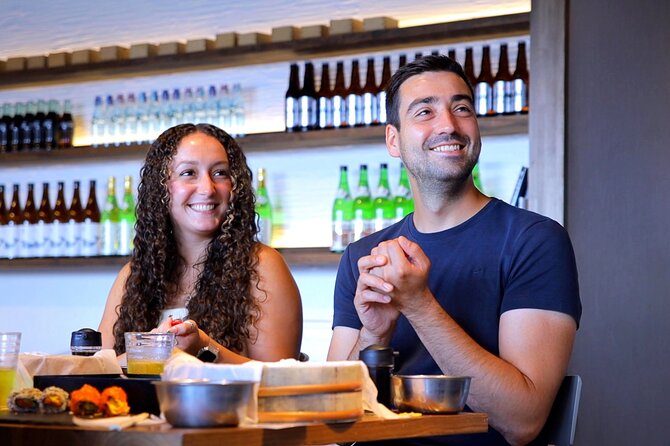
I would book this class if you want a hands-on introduction to Japanese sushi with a real meal at the end. The combination of maki and nigiri gives you more substance than a simple rolling demonstration, and the 1-hour-50-minute length fits neatly into an Asakusa day.
The price is fair when you count the ingredients, English instruction, and filling meal. Families get useful flexibility through non-raw choices, and gluten-free requests may be accommodated when arranged in advance.
Skip it if you want a small, advanced culinary workshop or if you dislike group activities. For everyone else, especially first-time visitors, families, and curious home cooks, this is a practical way to turn sushi from something you order into something you understand.
FAQ
Where does the sushi-making class take place?
The class meets at Sushi Making Tokyo No1 Cooking Class in Japan, 2-chōme-1-13 Kaminarimon, Taito City, Tokyo 111-0034, Japan.
How long does the class last?
The activity lasts approximately 1 hour and 50 minutes.
What types of sushi will I learn to make?
You will learn to make maki sushi, also called roll sushi, and nigiri sushi.
Is the class taught in English?
Yes. An English-speaking instructor is included.
Are ingredients and the meal included?
Yes. The cooking-class ingredients and the meal are included in the price.
Are non-raw or gluten-free options available?
Non-raw options are available. Gluten-free accommodations have also been made, so you should communicate that need in advance.
Is transportation from my hotel included?
No. Hotel pickup and drop-off are not included, though the meeting point is near public transportation.
What is the cancellation policy?
You can receive a full refund if you cancel at least 24 hours before the experience start time. Changes or cancellations made less than 24 hours before the start time are not accepted for a refund.
Fresh off the menu around Tokyo
- Shinjuku Tokyo: Authentic Japanese Home-Style Culinary Class★ 4.9 · 125 reviews
- Shinjuku: Golden Gai Food Tour★ 4.6 · 77 reviews
- Shibuya Tokyo: Sushi Making Class (Vegan/Vegetarian/Halal)★ 4.7 · 29 reviews
- Shinjuku: Food Tour – 15 Dishes at 4 local eateries★ 4.8 · 246 reviews
- Shibuya: Ramen Dojo Tokyo | Make All 3 (Tonkotsu/Shoyu/Miso)★ 4.8 · 207 reviews
- Tokyo: Secret Food Walking Tour★ 4.7 · 38 reviews
- Ramen Making from Scratch +Akihabara Tour –Cooking Class★ 5.0 · 25 reviews
- Exclusive Tokyo Ramen Kitchen Experience★ 4.7 · 34 reviews
Tokyo Food Tours, compared.
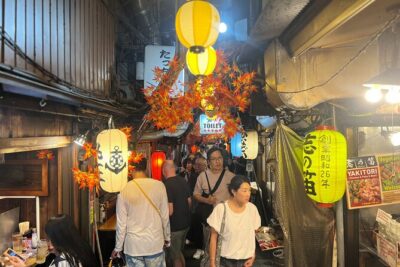
Tokyo: Shinjuku Food Tour (13 Dishes at 4 Local Eateries)
Read our review →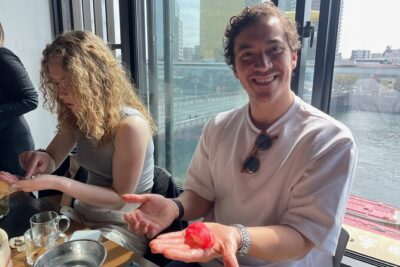
Sushi Making Tokyo Roll and Authentic Japanese Sushi Class
Read our review →
Tokyo Tsukiji Fish Market Food and Culture Walking Tour
Read our review →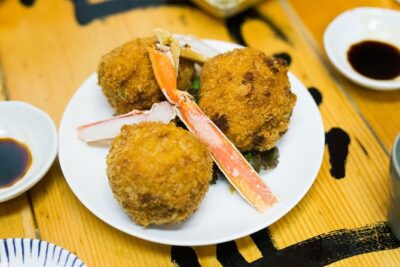
Best of Shinjuku: Izakaya Food Tour (4 Stops, 14+ Tastings)
Read our review →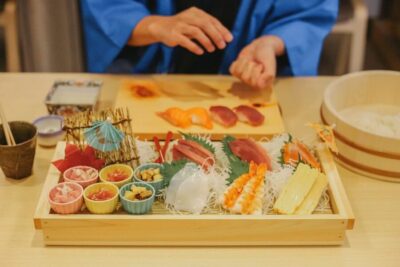
Tokyo: Sushi Making Class in a Happi Coat near a Famous Spot
Read our review →
Tokyo Sushi Making Class in Tsukiji with Professional Chef
Read our review →
Tokyo Night Foodie Tour in Shinjuku – Seasonal Sushi, Wagyu Beef
Read our review →
Eat and Drink Like a Local: Tokyo Ueno Food Tour-Taverns&Ramen
Read our review →Browse the lists this tour appears in