
Review · JAPAN
Hiroshima: Food and Culture Guided Walking Tour with Dinner
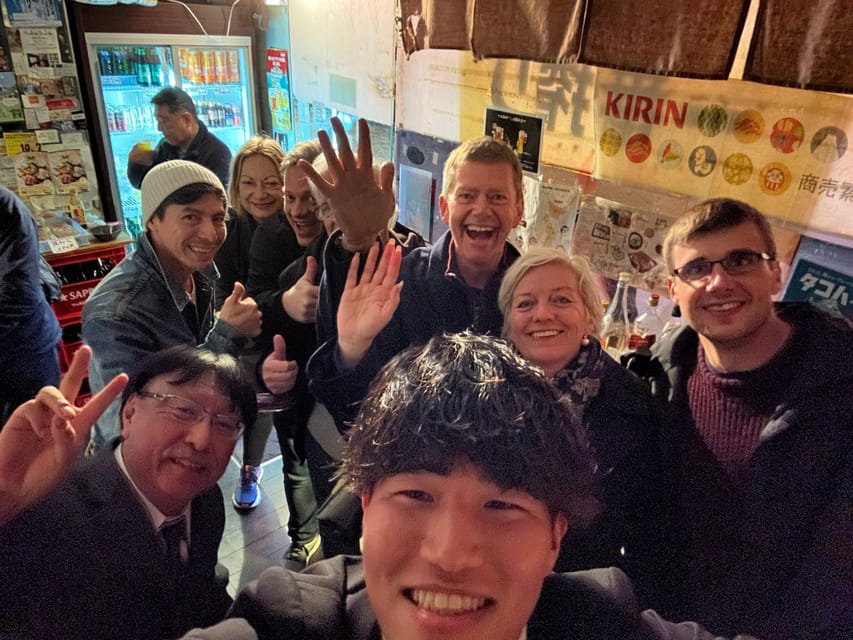
Hiroshima’s best food experience here is not one grand meal, but a three-stop evening of small plates, local drinks, and backstreet restaurants you might never enter alone. You move from Hondori Shopping Street toward Nagarekawa Dori, eating a little at each stop and seeing how the city handles a night out.
I like the wide range of food, from seafood and tempura to grilled, steamed, slow-cooked dishes, and Hiroshima-style okonomiyaki. I also like the friendly personal guiding, especially with guides such as Ken, Kensuke, and Alex, who explain customs, answer questions, and help you order with confidence.
The main consideration is the format. Some restaurants are tachinomi, where you stand at a counter or table, and the exact stops and dishes can change. Three hours also passes quickly, so this is best for curious eaters who enjoy variety rather than a long, leisurely dinner in one place.
Key points to know before booking
- Three restaurants in one evening: You get a full dinner spread across three local places, not a single sit-down meal.
- At least 10 different dishes: Expect a changing mix of seafood, meat, vegetables, fried food, grilled items, and local specialties.
- Three included drinks: Choose one alcoholic or non-alcoholic drink at each restaurant, with extras usually costing about 500 yen.
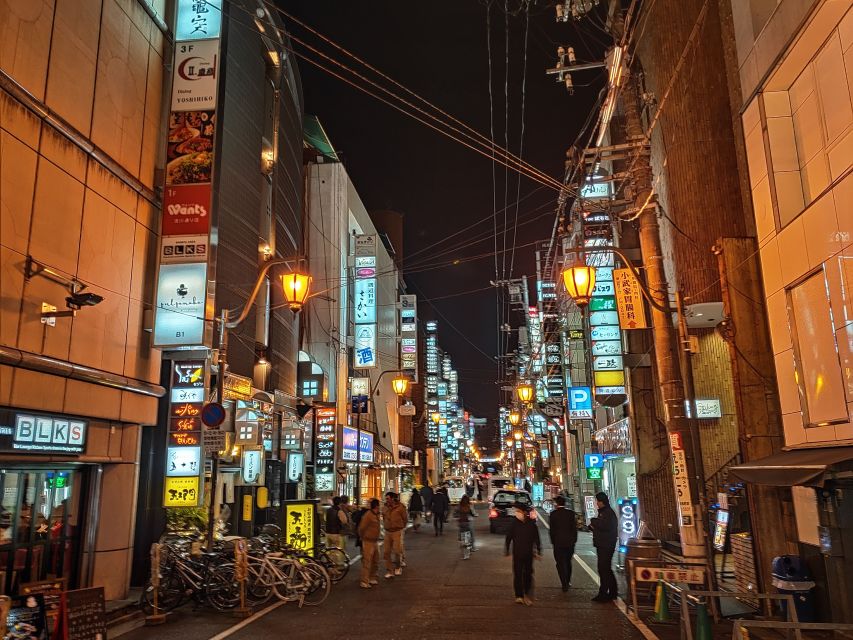
- Hiroshima after dark: The route links Hondori Shopping Street and Nagarekawa Dori, giving you a look at local nightlife and shopping areas.
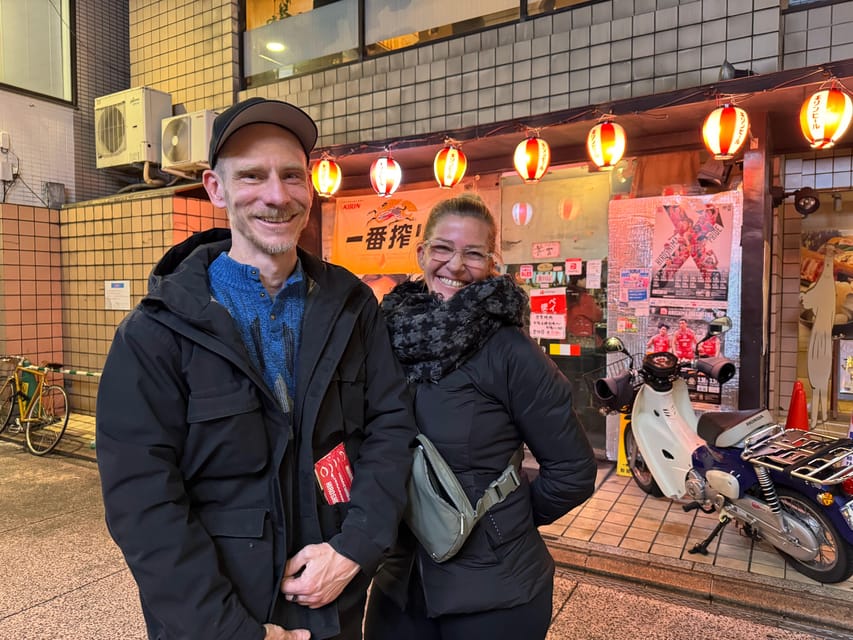
- Casual tachinomi dining: Some stops use standing counters, though at least one stop is usually seated.
- Small-group feel: Private or small-group bookings are available, and the guide helps bridge the gap between visitors and local restaurants.
Why three small restaurants work better than one big dinner
The clever part of this Hiroshima food tour is the pace. Instead of asking you to commit to one menu, it gives you three short restaurant visits of roughly 30 minutes each. You taste one style of food, take a short walk, then reset your appetite at the next stop.
This is close to how many casual Japanese nights out work. A group may order several small plates, share them, have a drink, and move on to another place. The tour lets you take part without having to decode a Japanese menu or wonder how much food to order.
You should expect at least 10 dishes over the evening, and sometimes around 15 depending on the group and the night. The food can include fresh seafood, tempura, grilled items, steamed dishes, slow-simmered food, chicken, fish, and other small plates. The exact menu changes with the season and restaurant availability, so do not book this expecting a fixed list.
That flexibility is a strength, but it also means you should arrive with an open mind. You may receive dishes you would not choose from a picture menu. The point is to try food that sits outside your usual order, with the guide explaining what you are eating and how it fits into local food culture.
More food tours that end at dinner around Japan:
- Bateaux Parisiens Seine River Gourmet Dinner & Sightseeing Cruise
★ 4.5 · 6,930 reviews - Rome: Gourmet Food Tour with Dinner & Barolo Wine
★ 4.9 · 2,347 reviews - Porto Food & Wine Tasting Tour with Lunch or Dinner Option
★ 5.0 · 2,303 reviews
Starting at Don Quijote in Hiroshima’s Hatchobori area
The meeting point is on the street in front of Don Quijote Hiroshima Hatchobori. This is a practical central starting point, but give yourself enough time to identify the guide and group in the busy evening area.
From here, the tour moves into Hiroshima Hondori Shopping Street. The walk takes about 30 minutes and provides an easy introduction to the city center before dinner begins. You are not being rushed from one attraction to another. Instead, the guide uses the walk to point out the surrounding entertainment and shopping districts and explain how the evening areas fit into daily life.
This first section matters because the restaurants are not presented as isolated food stops. You get a sense of the streets people pass through before meeting friends for dinner, drinks, and conversation. If you have only seen Hiroshima during the day, the evening route gives you a different view of the center.
Hondori Shopping Street and the first taste of local life
Hondori is a natural place to begin because it links shopping, dining, and nightlife. The tour does not promise a formal history walk, but the guide shares information about Hiroshima, local habits, and nearby attractions as you go.
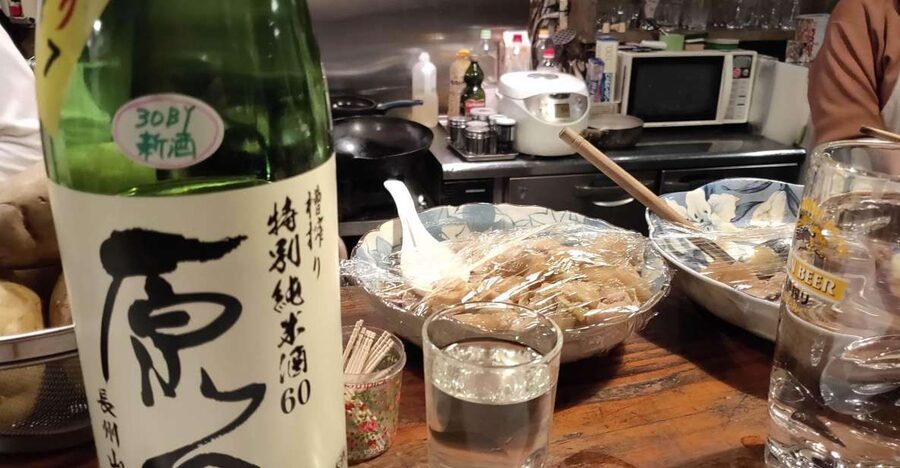
The first restaurant stop usually lasts about 30 minutes. One drink is included here, and you can choose an alcoholic or non-alcoholic option. Beer, sake, cocktails, spirits, and soft drinks may be available, though the exact choices depend on the restaurant.
The food arrives as small plates rather than a single main course. That is useful if you want to try widely. It also keeps the first stop from filling you up too soon, since two more restaurants are still ahead.
This is where a guide earns the tour fee. Entering a small Japanese restaurant can feel awkward if you cannot read the menu or do not know the house rules. With an English-speaking guide, you can concentrate on tasting instead of guessing. Guides named Ken, Kensuke, and Alex have been singled out for being friendly, clear, and good at keeping the whole group involved.
The first restaurant: small plates, one drink, and a quick rhythm
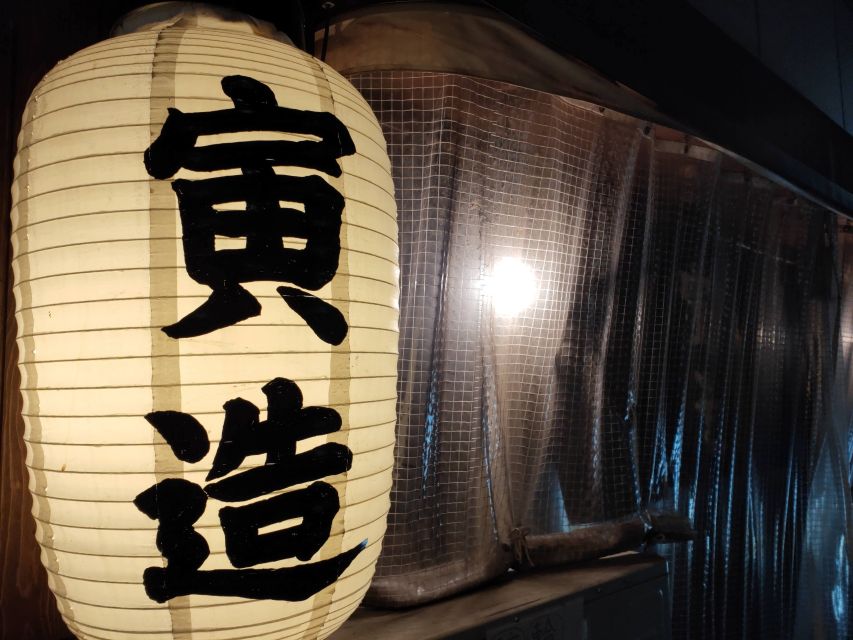
The three restaurant stops are not described as fixed venues, and that is important. The local partner chooses places according to availability, group size, and the conditions of the evening. You may visit a restaurant with standing counters or tables, and at least one stop is usually seated.
Tachinomi means a casual place where people stand while eating and socializing. The arrangement is often less formal than a conventional dinner, and the short stay keeps the evening moving. If standing for part of the night is uncomfortable, this format deserves some thought before you book.
On the other hand, tachinomi dining is exactly what makes the experience feel different from a standard restaurant meal. You are not simply consuming a planned menu. You are seeing a style of eating built around quick conversation, shared plates, and another stop afterward.
The first restaurant may include familiar choices alongside more unusual dishes. You do not need to like everything. A food tour works well when you treat each small plate as a sample, not a test of your personal taste.
More sit-down food experiences around Japan:
- Sorrento Farm and Food Experience including Olive Oil, Limoncello, Wine tasting
★ 5.0 · 2,524 reviews - Lisbon: Baixa District Food Tour with Dinner and Drinks
★ 4.9 · 1,997 reviews - Paris 3-Courses Gourmet Dinner Seine River Cruise with Champagne
★ 4.0 · 1,659 reviews - Paris Gourmet Dinner Seine River Cruise with Singer and DJ Set
★ 4.5 · 1,563 reviews
Nagarekawa Dori and Hiroshima’s evening entertainment district
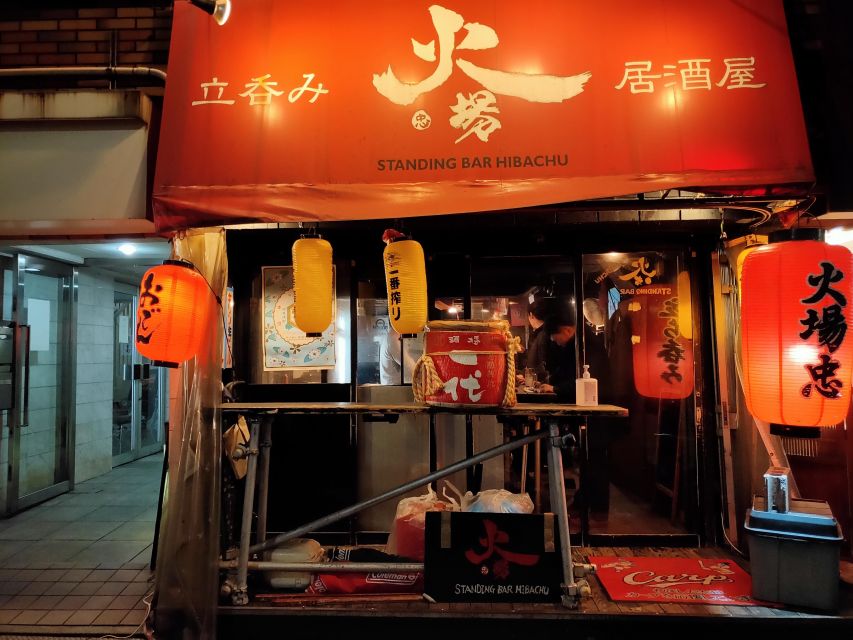
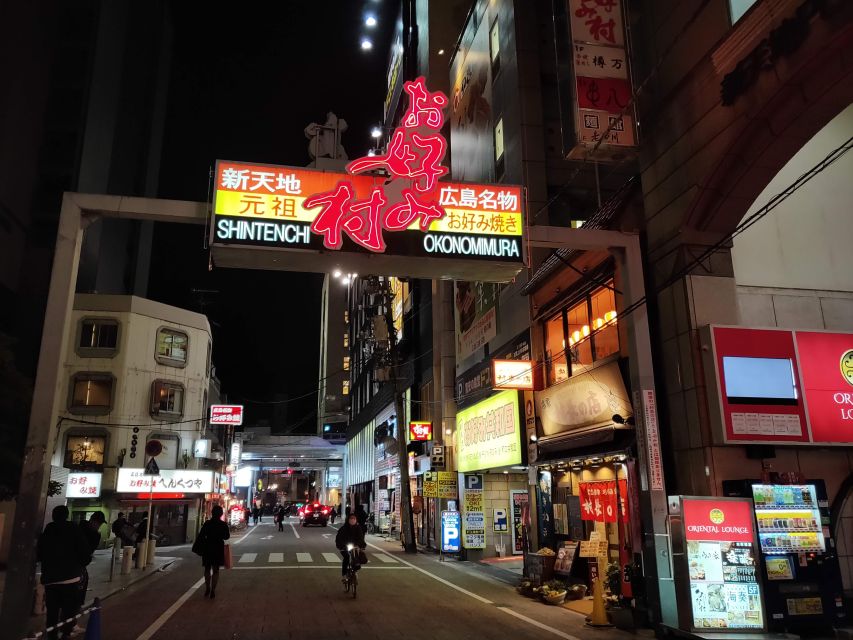
After the first two restaurant visits, the route includes a walk through Nagarekawa Dori. This is one of Hiroshima’s main evening entertainment areas, and the guide helps you read the scene rather than simply walk past it.
The route gives you a look at the signs, restaurants, bars, and local nightlife without asking you to spend the night in one large tourist-focused venue. The walk also creates a useful pause between dishes. You can talk with the guide and other people in the group, ask about food you have just tried, and make room for the next stop.
Several people who enjoyed this experience particularly valued being taken to small backstreet places they would not have found, or felt comfortable entering, alone. That is a real benefit in Hiroshima, where a tiny counter restaurant may look unpromising from the street but offer a memorable meal once you are inside.
The guide’s role is social as much as practical. Ken and Kensuke are described as easygoing hosts who make the evening feel like going out with a well-informed local friend. Alex has also led groups and helped people feel included. Your guide may vary, but the tour is designed around direct conversation rather than a scripted lecture.
The second and third restaurants: variety without a giant meal
The second restaurant gives you another chance to try food prepared in a different way. The menu can include fried, grilled, steamed, or simmered dishes, with seafood and meat appearing alongside vegetables. Because the portions are spread across several stops, you can sample more without ordering full servings at every place.
The third restaurant completes the dinner and often includes a local specialty. Hiroshima-style okonomiyaki is a major highlight for many people who take this tour. It is a useful inclusion because it gives you a dish strongly tied to the city rather than only general Japanese pub food.
The final stop also comes with your third included drink. Sake, Japanese beer, plum wine, cocktails, spirits, or non-alcoholic drinks may feature during the evening, depending on the venue. If you want more than one drink at a stop, extra drinks are not included and generally cost around 500 yen each, paid directly to the restaurant.
Do not assume the evening is built around drinking. Three drinks are included, but you can choose non-alcoholic options. The food remains the main event, and the tour is suitable for people who want the social side of a Japanese night out without consuming alcohol.
What the food is like for curious eaters
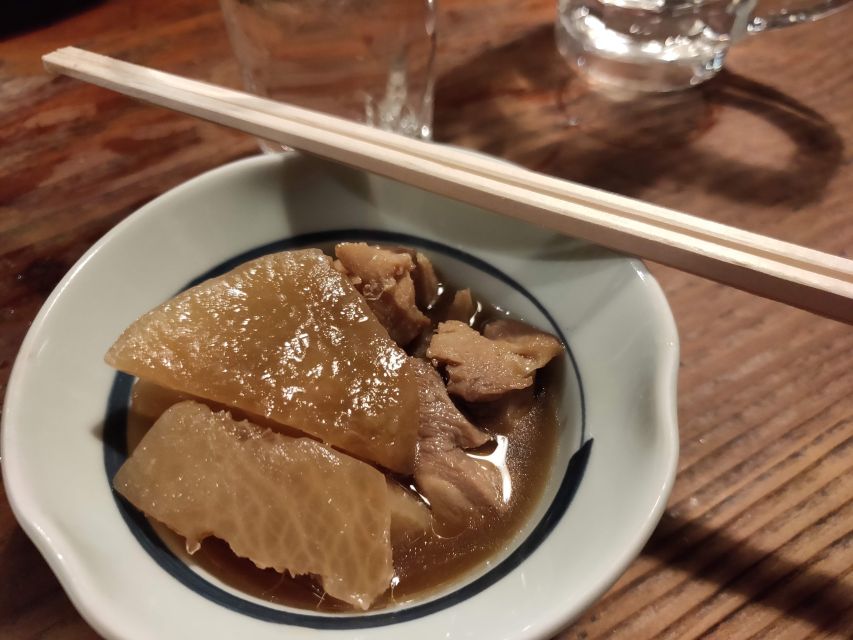
The menu is intentionally broad. You might try seafood, tempura, chicken, grilled items, steamed dishes, simmered dishes, and local specialties in one evening. The selection is based on what the restaurants serve, what is seasonal, and what is available that night.
I like this approach because it removes the pressure to pick the perfect dish. You can try something unfamiliar in a small portion, then decide what you would order again. Several food-focused participants found that some dishes they would have skipped turned out to be among the most enjoyable.
At the same time, this is not the right tour for someone who wants complete control over every ingredient. If you have allergies, restrictions, or strong preferences, tell the local partner in advance. The guide will do their best to arrange suitable dishes, and one person with allergies was able to enjoy a substantial selection, but the promise is accommodation where possible, not a guaranteed specialist menu.
A light lunch is a sensible idea. The tour provides a full dinner, but the meal arrives in stages, and the total amount can be generous. You want enough appetite for the third stop without arriving distracted by hunger.
The guide makes the difference
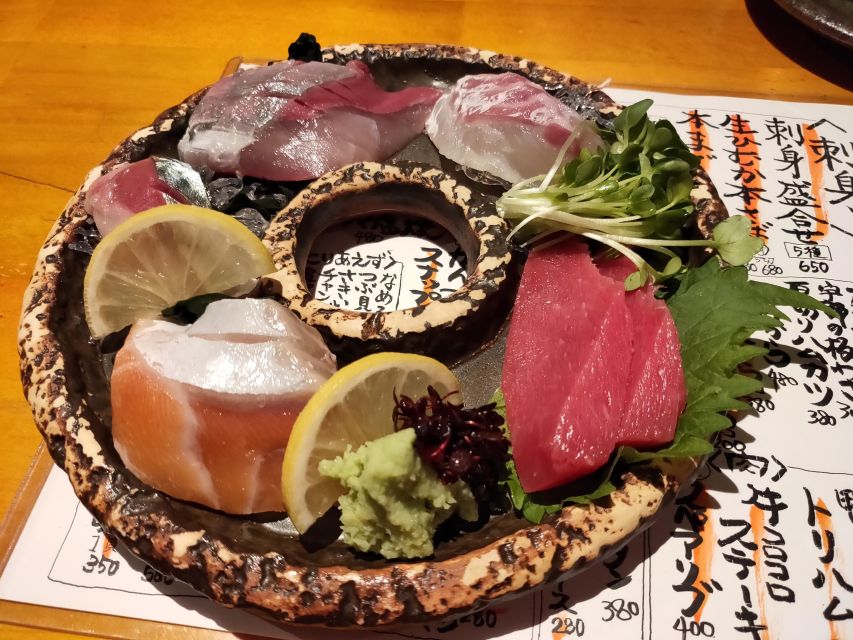
The food is the reason to book, but the guide determines how easy the night feels. Ken is frequently associated with this experience, while Kensuke and Alex also lead some departures. Their work goes beyond translating menus.
A good guide explains how to approach unfamiliar dishes, gives context about Japanese customs, and keeps conversation flowing during the walks. You can ask about Hiroshima food, everyday life, nearby sights, and what to eat for the rest of your visit. One guide even helped with restaurant suggestions for later in Japan.
The small-group setting is especially valuable for solo visitors and couples. Solo participants have sometimes had a very personal evening when no larger group was booked. The operator aims not to charge extra for solo travelers, but if fewer than two people join, you may be offered another date, a 3,000 yen solo supplement, or a full refund.
Group size can affect the mood. A small group allows more questions and easier conversation. A larger small group may feel more social, especially at a standing counter. Either way, the format is more personal than a large bus-style food outing.
Is the 94 dollar price good value?
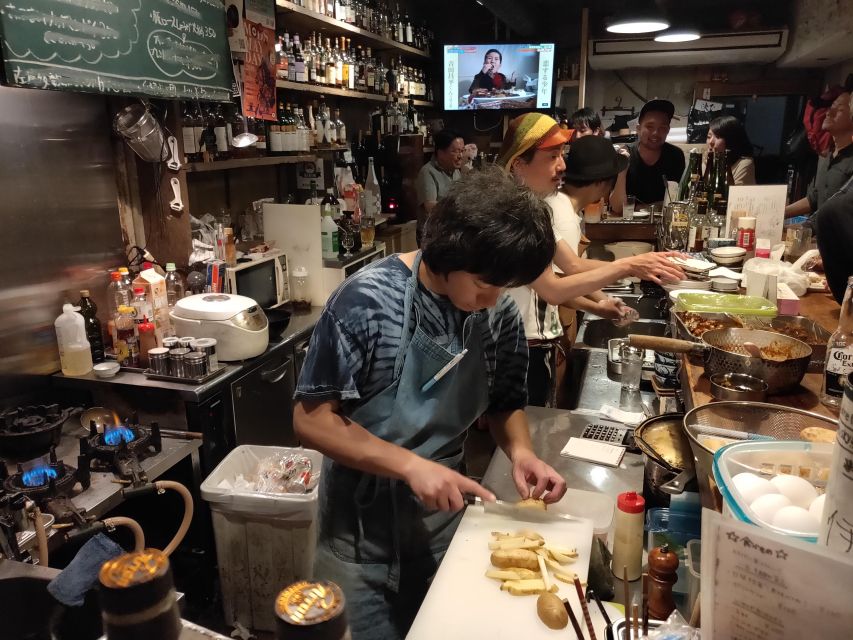
At $94 per person, this is not the cheapest way to eat in Hiroshima. You could order individual meals for less if you already know where to go and what to choose.
The value comes from combining dinner, three drinks, a guide, restaurant access, and a night walk through two central districts. You are paying to avoid the guesswork. The guide handles the menu, the social entry into small restaurants, the route, and the pacing between stops.
You also receive much more than one signature dish. At least 10 dishes across three venues gives you a broad sample of Hiroshima’s casual food scene. If you tried to reproduce that evening alone, you would need to find three suitable places, understand the ordering system, manage portions, and make sure the restaurants had room.
I consider the price reasonable for food-focused visitors who value access and explanation. It is less attractive if you dislike shared plates, want a polished fine-dining meal, or prefer to spend the evening in one seated restaurant.
Practical details that affect your choice
The tour lasts three hours and returns to the Don Quijote meeting point. Hotel pickup and drop-off are not included, so plan your own way to and from the central area.
All participants must be at least 13 years old, and children under 13 cannot join. Japan’s legal drinking age is 20, but non-alcoholic drinks are available for younger participants who meet the minimum tour age.
The experience is offered with an English-speaking guide, and English and Japanese may be used during the evening. Free cancellation is available up to 24 hours before the start time, and you can reserve now and pay later if that option is offered for your booking.
Restaurant stops, timing, and the route can change. This is normal for a live food tour, but it is worth remembering if you need a strict schedule afterward. I would avoid booking it immediately before a train departure or another timed attraction.
Who should book this Hiroshima food tour?
I would choose this tour if you want to eat like a local but do not feel ready to navigate small Japanese restaurants alone. It is a strong fit for first-time visitors, solo diners, couples, and food lovers who enjoy trying many things rather than ordering one safe dish.
It also works well if you have only one evening in Hiroshima. You see the central shopping and nightlife areas, sample local food, and finish with a better sense of where you might return on your own.
You may want to skip it if you need guaranteed seating, dislike standing, have strict dietary requirements, or prefer a quiet dinner with plenty of time at each course. The short stops are part of the appeal, but they can feel hurried if you want a slow meal.
Should you book it?
Book this experience if your ideal Hiroshima evening includes small restaurants, friendly conversation, local drinks, and food you would not confidently order alone. The combination of three venues, at least 10 dishes, three included drinks, and a guide such as Ken, Kensuke, or Alex offers strong value for a curious eater.
Go in with a light appetite, comfortable shoes, and a willingness to try something unfamiliar. If you want a fixed menu and a guaranteed chair, choose a conventional restaurant instead. For an informal introduction to Hiroshima’s food and nightlife, this is a smart, sociable choice.
FAQ
How long does the Hiroshima food tour last?
The experience lasts three hours, including the walks between the shopping and entertainment districts and the three restaurant visits.
Where does the tour meet?
The meeting point is on the street directly in front of Don Quijote Hiroshima Hatchobori, written in Japanese as ドン・キホーテ広島八丁堀店.
Where does the tour finish?
The tour returns to the Don Quijote Hiroshima Hatchobori meeting point.
How many restaurants do you visit?
You visit three local restaurants during the evening. The route and specific venues may change depending on restaurant availability and other circumstances.
How many dishes are included?
At least 10 different dishes are served across the three stops. The exact selection can change with the season and the restaurants used.
Are drinks included?
Yes. Three drinks are included, with one drink at each restaurant. You may choose alcoholic or non-alcoholic options. Additional drinks are not included and generally cost around 500 yen each.
Can I join if I do not drink alcohol?
Yes. Non-alcoholic drinks are available, so you do not need to drink alcohol to take part.
What age do you need to be?
All participants must be at least 13 years old. The minimum drinking age in Japan is 20.
Can the tour accommodate food allergies or restrictions?
The local partner will do their best to accommodate allergies, restrictions, and preferences. Tell them in advance so suitable arrangements can be considered, but the exact menu cannot be guaranteed because dishes and restaurants may change.
Fresh off the menu around Japan
- Kyoto: Sushi Making Class with Sushi Chef★ 4.8 · 64 reviews
- Shinjuku Tokyo: Authentic Japanese Home-Style Culinary Class★ 4.9 · 125 reviews
- Shinjuku: Golden Gai Food Tour★ 4.6 · 77 reviews
- Shibuya Tokyo: Sushi Making Class (Vegan/Vegetarian/Halal)★ 4.7 · 29 reviews
- Shinjuku: Food Tour – 15 Dishes at 4 local eateries★ 4.8 · 246 reviews
- Hidden Osaka – Yukaku Red Light Tour & Culinary Adventure★ 4.8 · 96 reviews
- Shibuya: Ramen Dojo Tokyo | Make All 3 (Tonkotsu/Shoyu/Miso)★ 4.8 · 207 reviews
- Tokyo: Secret Food Walking Tour★ 4.7 · 38 reviews
Japan Food Tours, compared.
Tokyo: Shinjuku Food Tour (13 Dishes at 4 Local Eateries)
Read our review →
Sushi Making Tokyo Roll and Authentic Japanese Sushi Class
Read our review →
Tokyo Tsukiji Fish Market Food and Culture Walking Tour
Read our review →
Osaka: Shinsekai Food Tour with 13-15 Dishes at 5 Eateries
Read our review →
Osaka Food Tour: 13 Dishes at 5 Local Eateries
Read our review →
Ramen Cooking Class at Ramen Factory in Kyoto
Read our review →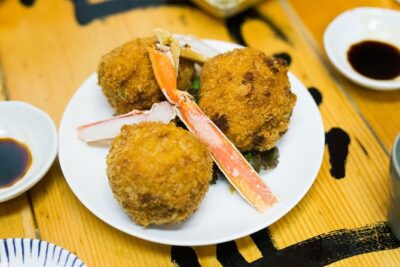
Best of Shinjuku: Izakaya Food Tour (4 Stops, 14+ Tastings)
Read our review →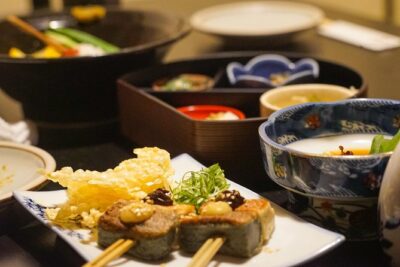
Kyoto Night Foodie Tour in Gion (9+ dishes + 6 Sake tastings)
Read our review →Browse the lists this tour appears in