
Review · KYOTO
Gyoza Cooking Class in Kyoto: Traditional Japanese Dumplings
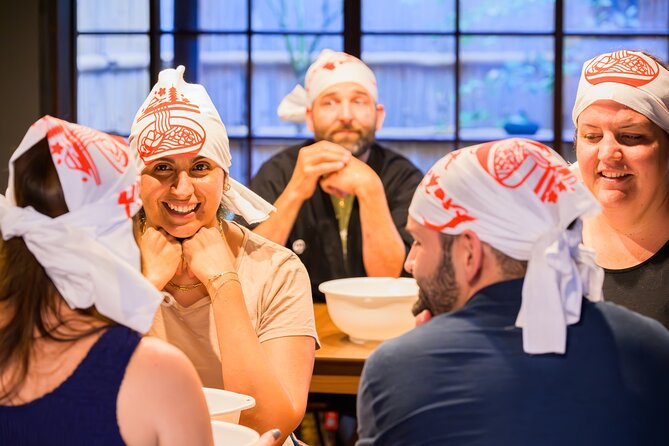
Making gyoza from flour, filling, and a few careful folds is the heart of this Kyoto activity. You work in a traditional townhouse, learn a little about Japanese history and samurai culture, then cook the dumplings with a professional baking machine. It is a hands-on class, not a demonstration where you simply watch someone else do the work.
I like the choice of filling and the fact that you make the wrappers yourself. I also like the friendly teaching style reported for Hama, Maya, Ryo, and YO, plus the useful apron souvenir. The optional samurai armor photos add a playful Kyoto memory without taking over the cooking lesson.
The main consideration is price: at $118.19 per person, this is not a cheap meal or a basic food workshop. The class is also listed at about 90 minutes, though some sessions may run closer to two hours, so leave a little breathing room in your schedule.
Key points at a glance
- Make 10 to 12 gyoza per person: You do the filling, wrapper, folding, and cooking yourself.
- Roll wrappers from scratch: This gives the class more substance than a simple dumpling-folding demonstration.
- Choose your filling: You have some control over what goes into your meal.
- Learn with English-speaking instructors: Hama, Maya, Ryo, and YO are among the instructors named for recent classes.
- Try samurai armor after cooking: The optional dress-up session gives you a fun photo opportunity.
- Finish where you started: The class begins and ends at 230-1 Kamimyōkakujichō in Nakagyo Ward.
Why making gyoza in Kyoto works so well
Gyoza began in China, but Japan developed its own versions of the dumpling. That makes this class a useful food lesson: you are not only learning a recipe, but also seeing how a dish can travel across borders and become part of another country’s everyday cooking.
The format is especially good for people who want to take home a skill rather than another souvenir. You can repeat the basic method with friends or family after your trip. The steps are simple enough for beginners, but rolling dough and sealing dumplings still gives you something to practice.
I also like the balance between cooking and culture. The history lesson is part of the class rather than a separate lecture. While your hands are busy with wrappers and filling, the instructor brings in stories about gyoza, Japan, and samurai culture.
This is not a full-day food tour through Kyoto. You do not visit markets, restaurants, or several neighborhoods. Instead, you spend a focused period learning one dish in one setting. That makes it easier to fit around sightseeing.
More Dim Sum and Dumpling Tours in Kyoto:
- Hong Kong: Street Food Tour with Locals – Dim Sum and Wonton
★ 4.8 · 673 reviews - Warsaw’s No 1 cooking class-Polish dumplings with liqueur tasting
★ 5.0 · 576 reviews - Hong Kong Day Tour: Priority Peak Tram, City Walk & Dim Sum
★ 4.5 · 266 reviews
Inside the traditional Kyoto townhouse
The class takes place at 230-1 Kamimyōkakujichō, in Kyoto’s Nakagyo Ward. The setting is a traditional townhouse, which gives the activity a stronger sense of place than a generic cooking studio might provide.
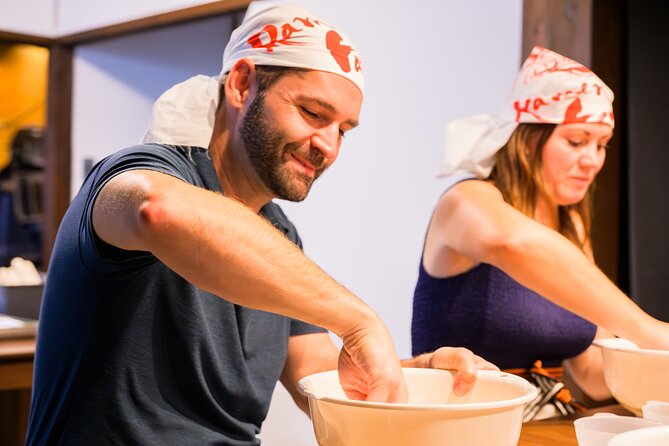
You should expect a practical teaching space with cooking tools supplied for the class. Personal workstations are available according to the experience shared by one family, so you can take part directly instead of waiting for one person in your group to finish each step.
The group can include up to 20 people. That is a moderate size for a workshop, though your exact class may feel smaller. One person who attended the 6:00 pm session had a private class, and another group of three described having personal working stations. A small turnout can give you more time with the instructor, but you should not book on the assumption that the class will be private.
The townhouse setting and hands-on layout are useful for families, couples, and groups of friends. Older children and teenagers can take part, too. One family with a 10-year-old enjoyed the activity, and the folding work gives children something clear to do with their hands.
Choosing a filling and making the dough
The class begins with the basic building blocks of gyoza. You choose a favorite filling, then learn how to prepare the dumpling wrapper from scratch.
That wrapper step matters. Many short food activities hand you prepared skins and focus only on folding. Here, you get to see the dough become part of the finished dumpling. You should not expect a professional cooking-school course, but you will gain a better sense of the texture and thickness needed for gyoza.
The instructors explain the steps in English. Hama, Maya, Ryo, and YO are all named as teachers in the supplied information, and the teaching style appears to be friendly and easy to follow. Maya is described as clear in English, while Hama is praised for making the process simple and fun. Ryo is noted as personable, which may help younger participants stay engaged.
You may also receive paper practice or take-home instructions, depending on the session. One useful tip is to ask for the recipe before leaving. A participant forgot to request it, though the provider later offered to send it. Do not rely on memory alone if you want to recreate the dish at home.
Folding 10 to 12 dumplings by hand
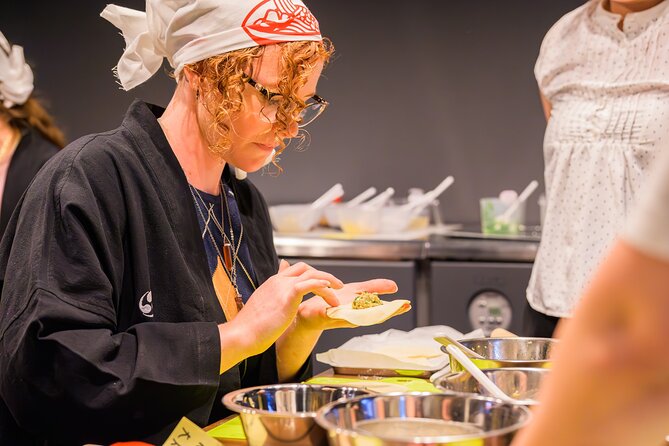
The folding stage is where the class becomes more than a meal. You shape the wrappers, add filling, and learn how to seal each dumpling. The first few may look uneven. That is part of the fun, and the instructor can show you how to improve the folds.
The reported portion is about 10 to 12 gyoza per person. That is enough to make the cooking feel substantial and should leave you with a satisfying meal, especially if you arrive hungry. The class is not simply a tasting of one dumpling made by the teacher.
I like this part for families because every person can work at their own station. Adults can help younger children, but the child still gets to handle the dough and make decisions. Older children and teens are likely to enjoy the small challenge of creating neat, sealed dumplings.
Your results may not look uniform, and that is worth accepting. The value is in learning the method, not producing restaurant-perfect folds on your first try. You will probably remember the lopsided dumpling more fondly than the perfect one.
More cooking classes around Kyoto:
- Ramen Cooking Class at Ramen Factory in Kyoto
★ 5.0 · 1,937 reviews - Kyoto: Ramen Cooking Class at a Ramen Factory with Souvenir
★ 4.9 · 532 reviews - Kyoto: Ramen, Gyoza, and Onigiri Cooking Class
★ 5.0 · 445 reviews - Nishiki Market Food Tour with Cooking Class
★ 4.9 · 42 reviews
Cooking with the professional baking machine
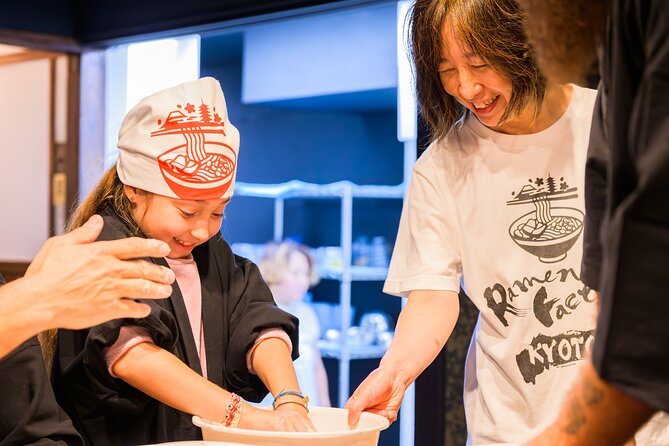
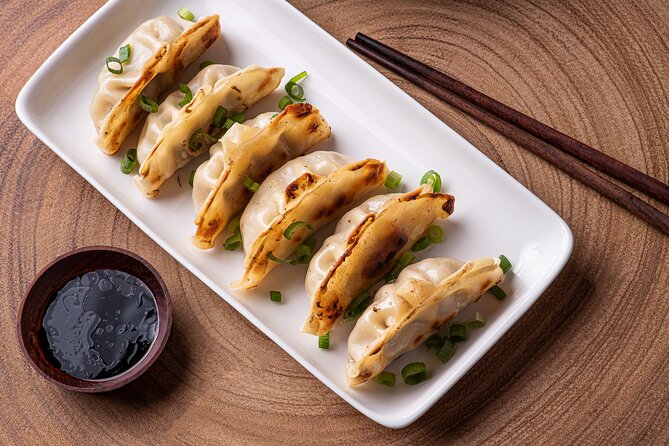
After folding, you cook the gyoza using a professional baking machine. This helps the class avoid the uncertainty of trying to manage a hot pan in a crowded room, and it gives you a dependable way to finish the dumplings.
The cooking stage is important because gyoza need the right balance of browned bottoms, cooked filling, and tender wrappers. The machine lets the instructor guide the process while you see how the dumplings change from raw dough to a finished dish.
This is also the point when your work pays off. You have selected the filling, made the wrappers, and folded each dumpling. Sitting down to eat them gives the class a clear finish rather than ending with a recipe card and no meal.
The experience is designed for people who want to eat what they make. Arrive hungry, especially if you are treating this as an early dinner or substantial snack. The timing can be useful for an evening in Kyoto, since one 6:00 pm class became a private cooking session and another family described it as a special evening activity.
A little samurai culture after the meal
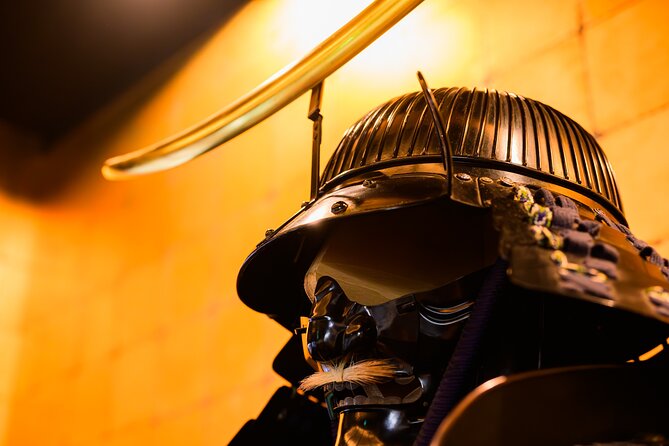
Once the cooking is finished, you have the option to dress in samurai armor and take photos. This part is optional, so you can choose the cooking lesson alone if the costume element does not appeal to you.
For families and first-time visitors to Japan, the armor adds a light, memorable finish. It gives children a clear photo opportunity and brings the history theme into the room. The activity does not present itself as a serious martial arts or museum program, so keep your expectations in the right place: this is a fun dress-up add-on.
The history discussion also includes Japanese culture and gyoza, rather than focusing only on food technique. That extra context is one reason the class offers more than a standard cooking lesson. You leave knowing a little about the dish and the setting in which you made it.
Some participants kept an apron and headband after the class. Another person specifically appreciated the apron souvenir. The supplied details do not formally list the apron as an included item, so treat it as a possible souvenir rather than a guaranteed feature.
How good is the $118.19 value?
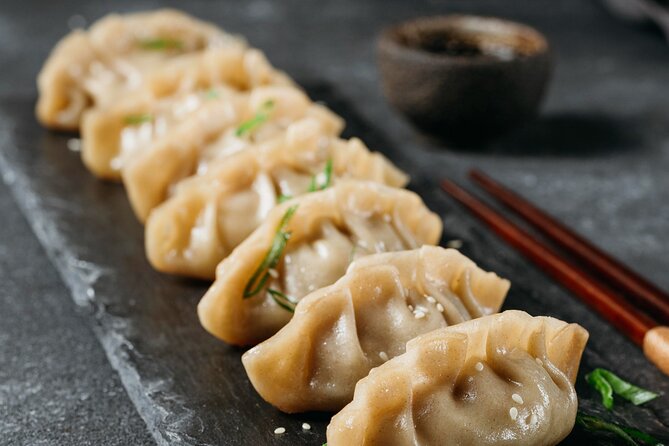
At $118.19 per person, the class costs much more than buying a plate of gyoza in Kyoto. You are paying for instruction, a traditional townhouse setting, cooking tools, the ingredients used in the lesson, and a guided cultural activity.
The price makes the most sense if you value participation. You are making your own wrappers and dumplings, not simply eating lunch. The optional samurai photos and the chance to take home a practical skill add to the experience.
I would be more cautious if your main goal is a low-cost meal. Kyoto has cheaper ways to eat gyoza, and this class will not replace a full food tour. It is also not the right choice if you want advanced culinary training or a long lesson on regional Japanese cuisine.
For a family, the value improves because everyone can take part. For a couple or solo visitor, the decision depends on how much you enjoy cooking. A solo participant had a private session when attendance was low, which can make the cost feel better, but that kind of arrangement is not guaranteed.
The class has received a five-star average from 210 ratings and is recommended by 100 percent of the supplied rating data. The strongest praise centers on friendly instructors, simple teaching, delicious results, family enjoyment, and the ability to repeat the recipe at home. Those are the areas where the price seems easiest to justify.
Who should book this Kyoto cooking class?
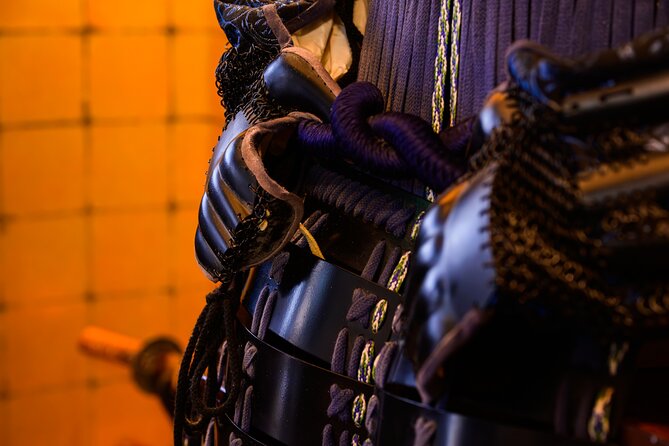
I would recommend it to you if you want a short, social activity with a clear result. It suits first-time cooks because the instructors break the work into manageable stages. You do not need to arrive with special culinary skills.
Families with older children and teens are a particularly good fit. Each person can help make the dumplings, and the optional samurai armor gives children an extra reason to stay interested. The 90-minute format also avoids the strain of a much longer cooking course.
Couples and solo visitors can enjoy it as an evening activity. A solo class may become more personal if attendance is low, though the normal maximum is 20 participants. If you are alone, the instructor interaction can become a larger part of the experience.
You should think twice if you have a strict schedule. The official duration is about 1 hour 30 minutes, while one participant described a session lasting about two hours. Add time for finding the meeting point and getting settled.
You should also check the food details that matter to you before booking. The supplied information confirms that you choose a favorite filling, but it does not list every filling or address dietary restrictions. If allergies or special dietary needs are important, ask the provider before paying.
Meeting point, timing, and cancellation
You meet at 230-1 Kamimyōkakujichō, Nakagyo Ward, Kyoto, 604-0025, Japan. The activity ends back at the same meeting point, so you do not need to arrange a separate ride afterward.
The location is near public transportation, but private transportation is not included. Plan your route before class and allow a little extra time, since the activity begins at a specific meeting point rather than picking you up at your hotel.
A mobile ticket is provided, and confirmation comes at booking. The class can take up to 20 people. The listed duration is approximately 90 minutes, but an extra half-hour may be wise if you have a dinner reservation or a timed attraction afterward.
You can cancel for a full refund if you do so at least 24 hours before the local start time. Cancellations or changes made less than 24 hours before the activity are not refunded or accepted. The provider is Japan food entertainment Ltd.
Should you book it?
Book this class if you want to make a Japanese dish with your own hands, eat the results, and take home a skill you can share. The strongest reasons are the from-scratch wrappers, flexible filling choice, small cultural lesson, and instructors such as Hama, Maya, Ryo, and YO who keep the process approachable.
I would skip it if you only want a cheap meal, a serious culinary course, or a broad tour of Kyoto food. At $118.19, the price calls for active participation. For families, food-minded couples, and solo visitors who enjoy friendly instruction, the gyoza, apron souvenir, and optional samurai photos make this a memorable use of a Kyoto evening.
FAQ
How long does the gyoza cooking class last?
The listed duration is approximately 1 hour 30 minutes. Some sessions may take closer to two hours, so allow extra time if you have plans afterward.
How much does the class cost?
The price is $118.19 per person.
Where does the activity begin?
The meeting point is 230-1 Kamimyōkakujichō, Nakagyo Ward, Kyoto, 604-0025, Japan.
Where does the activity end?
The class ends back at the meeting point.
Is an English-speaking instructor provided?
Yes. An English-speaking instructor is included. Instructors named in the supplied information include Hama, Maya, Ryo, and YO.
What is included in the class?
Cooking tools and an English-speaking instructor are included.
Is transportation included?
No. Private transportation is not included. The meeting point is near public transportation.
How many people can join the class?
The maximum group size is 20 participants.
Can I cancel for a full refund?
Yes. You can receive a full refund if you cancel at least 24 hours before the experience start time. Cancellations or changes made less than 24 hours before the start time are not accepted or refunded.
More food workshops around Kyoto
- Kyoto: Small-Group Authentic Sushi Making Workshop
★ 5.0 · 137 reviews - Kyoto Michelin Ramen Workshop or Painting Ramen Essentials
★ 4.9 · 100 reviews - Kyoto: Sushi Making Class with Sushi Chef
★ 4.8 · 64 reviews - Sushi Making Tokyo Roll and Authentic Japanese Sushi Class
★ 5.0 · 3,971 reviews
Fresh off the menu around Kyoto
- Kyoto: Sushi Making Class with Sushi Chef★ 4.8 · 64 reviews
- Nishiki Market Food Tour with Cooking Class★ 4.9 · 42 reviews
- Kyoto: Small-Group Authentic Sushi Making Workshop★ 5.0 · 137 reviews
- Kyoto: Ramen, Gyoza, and Onigiri Cooking Class★ 5.0 · 445 reviews
- Kyoto: Sake Brewery and Tasting Tour in Fushimi★ 4.8 · 55 reviews
- Kyoto: Foodie Night Tour in Gion with 9 dishes + 6 Sake★ 4.4 · 26 reviews
- Kyoto: Nishiki Market Tour with a Local Foodie & Tastings★ 4.5 · 67 reviews
- Kyoto: Ramen Cooking Class at a Ramen Factory with Souvenir★ 4.9 · 532 reviews
Kyoto Food Tours, compared.
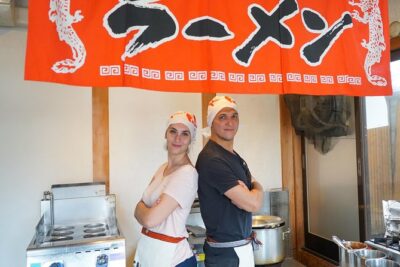
Ramen Cooking Class at Ramen Factory in Kyoto
Read our review →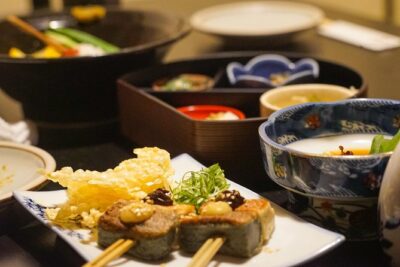
Kyoto Night Foodie Tour in Gion (9+ dishes + 6 Sake tastings)
Read our review →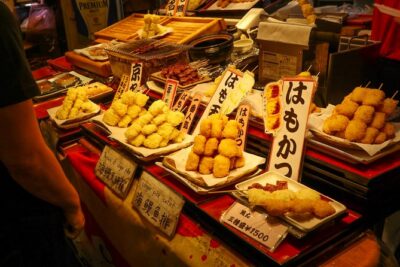
Nishiki Market Brunch Walking Tour (7 Tastings + Brunch)
Read our review →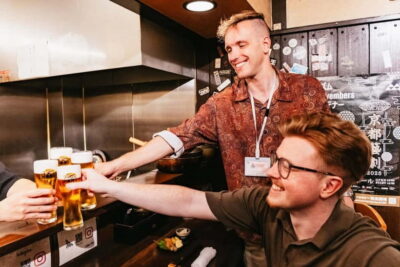
Kyoto Night All-Inclusive Eats and Streets, Gion and Beyond
Read our review →
Kyoto: Gion & Pontocho Food Tour with 13 Dishes
Read our review →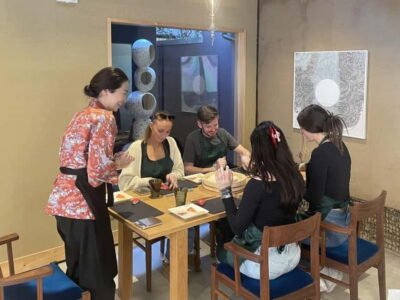
Kyoto: Small-Group Authentic Sushi Making Workshop
Read our review →
Kyoto: Local Food Tasting Tour at the Nishiki Market
Read our review →Browse the lists this tour appears in