
Review · KYOTO
Kyoto: Small-Group Authentic Sushi Making Workshop
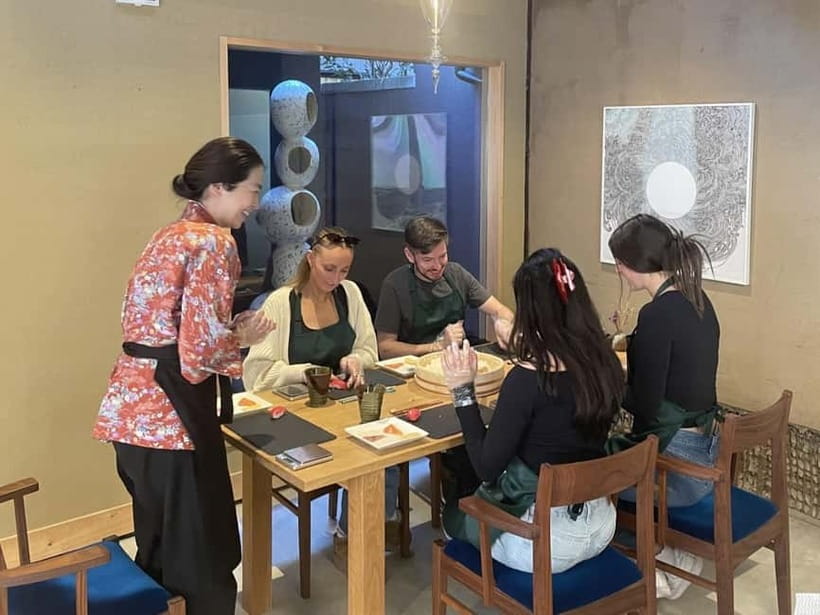
Kyoto’s original small-group sushi workshop turns lunch into a hands-on lesson. In a restored townhouse near Kiyomizu-Gojō Station, you season rice, shape nigiri and maki, and eat the results with miso soup. Kana leads the class in clear English, with help from her husband Karim and other assistants when needed.
I like the small class size, capped at eight, and the warm, unhurried teaching style. I also like that the fish comes fresh from Kyoto markets and that you leave with a rolling mat, chopsticks, and recipe card. The main consideration is food choice: this class is not suitable for vegetarians or wheelchair users, and some fish preparation is done for you.
Key points at a glance
- A true hands-on class: Season rice, shape nigiri, fill gunkan, and roll maki yourself.
- A calm Kyoto setting: The workshop takes place in the Kyoto Wand building, near Kiyomizu-Gojō Station.
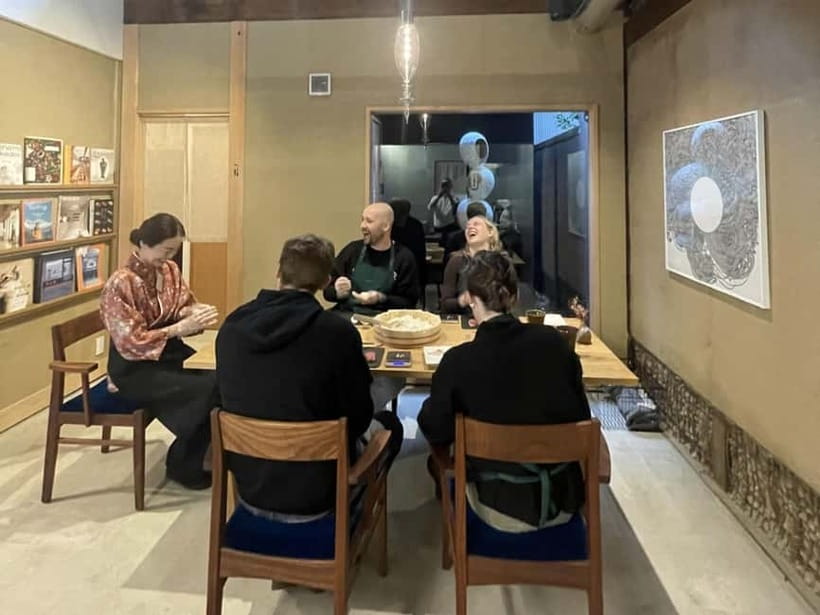
- Personal teaching: Groups are limited to eight, with English instruction and plenty of time for questions.
- Fresh local ingredients: Fish is sourced from Kyoto markets, with rice and other ingredients carefully prepared.
- A generous lunch: Eat the sushi you make, along with miso soup, soy sauce, wasabi, and ginger.
- Useful take-home gifts: Keep the sushi mat, chopsticks, and recipe card for making sushi at home.
A small Kyoto class with real hands-on work
Many food classes let you watch a chef and then try one simple task. This one puts you at the table from the start. You work with sushi rice, toppings, and fillings, then shape several kinds of sushi under close guidance.
The group limit matters. With no more than eight people, the instructor can see what your hands are doing and correct small mistakes before they become frustrating. That personal attention is especially useful with nigiri, where rice pressure and finger position make a surprising difference.
The 90-minute format also has a practical advantage. It is long enough to feel like a proper activity, but short enough to fit between sightseeing plans. After a morning at Kiyomizu-dera or around Gion, this is a quieter change of pace. You sit down, focus on one task, and enjoy lunch at the end.
Kana is the main instructor named in the experience. Her teaching combines careful demonstrations with conversation about Japanese food, Kyoto, local history, and daily life. Her husband Karim has helped with classes, while assistants including Aya, Ayumi, and Kenneth have also supported sessions. The exact teaching team can vary, but English instruction is provided.
More food workshops around Kyoto:
- Ramen Cooking Class at Ramen Factory in Kyoto
★ 5.0 · 1,937 reviews - Kyoto: Ramen Cooking Class at a Ramen Factory with Souvenir
★ 4.9 · 532 reviews - Kyoto: Ramen, Gyoza, and Onigiri Cooking Class
★ 5.0 · 445 reviews
Entering the Kyoto Wand townhouse
The workshop takes place in the Kyoto Wand building, a short walk from Kiyomizu-Gojō Station on the Keihan Main Line. The address puts you within walking distance of well-known areas such as Gion and Kiyomizu-dera, so the class can fit naturally into a sightseeing day.
The setting is part of the appeal. You are not in a large cooking school with rows of stations and a busy restaurant dining room. The activity takes place in a beautiful traditional-style Kyoto townhouse, giving the lesson a more personal feel.
The location is centrally placed, but you should still allow time to find the entrance. The supplied directions identify the Google Plus Code as XQVC+J7 Kyoto. Hotel pickup and drop-off are not included, so you make your own way there.
Once inside, expect a clean, calm room set up for instruction and eating. The atmosphere is relaxed rather than formal. That makes it easier to ask simple questions, including the ones you might hesitate to ask in a more advanced cooking class.
The first lesson: rice before raw fish
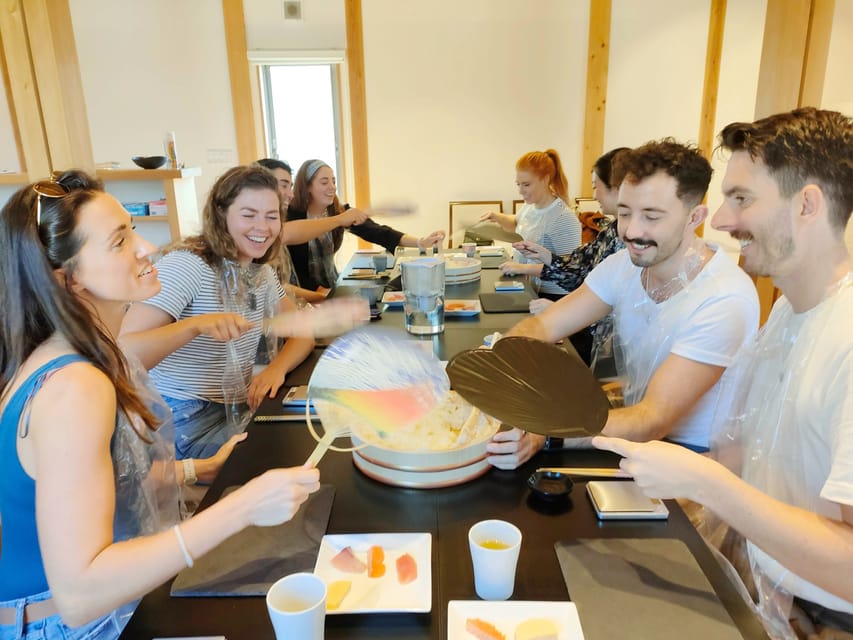
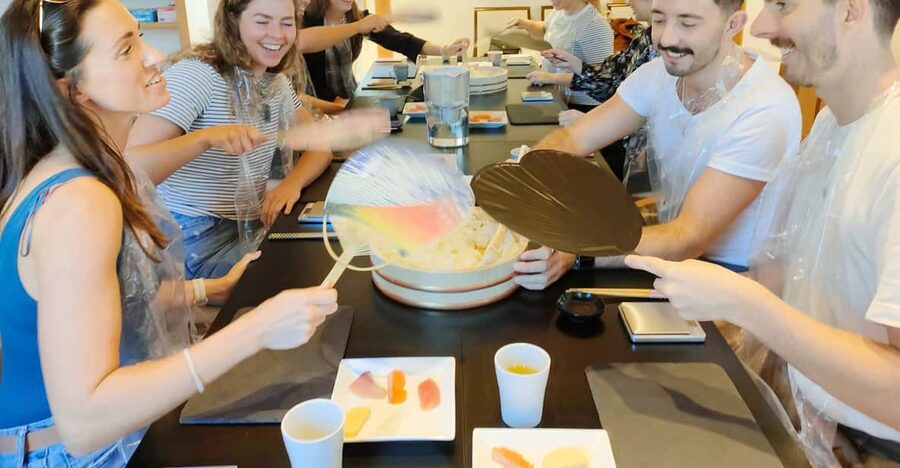
Sushi begins with rice, and the class treats that step seriously. You learn how to season properly cooked rice before using it to form sushi. This is one of the most useful skills to take home, since the rice controls the taste and texture of every piece.
The demonstrations are designed for beginners. Kana explains each step slowly, then gives you time to repeat it. You are not expected to arrive with sushi-making experience, and the class can still be useful if you already make sushi at home and want to improve your technique.
The rice has a local connection, too. One family class was told that the rice came from Kana’s own family. That detail gives the meal a stronger sense of place than a generic cooking lesson using anonymous ingredients.
You also receive disposable gloves and an apron. These are simple touches, but they help keep the work tidy and make the class easier for families with children. A 10-year-old participant was able to take part successfully, and the activity has also suited multigenerational groups.
Making nigiri, gunkan, and maki
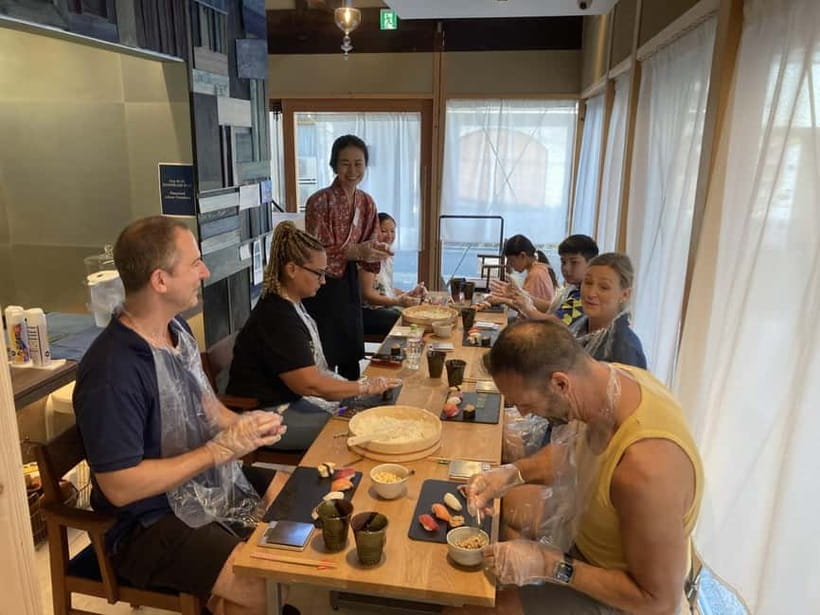
Once the rice is ready, you move on to shaping sushi. Nigiri is the piece most people want to master, but it is also the form that can feel awkward at first. You learn to handle the rice without crushing it and place the topping neatly on top.
The exact fish selection can vary, but examples used in the class have included salmon, tuna, squid, yellowtail, and egg omelette. Gunkan sushi, which has a seaweed band around a mound of rice, has been made with fillings such as corn and tuna salad.
Maki rolls add a different challenge. You spread rice, arrange fillings, and use the bamboo mat to form a firm roll. Salmon and avocado have been used in one session. The gift bag includes a sushi rolling mat, so this is a skill you can repeat at home rather than a one-time trick.
The fish is prepared for the class before you begin. One participant specifically noted that they would have liked to cut the fish themselves, but also understood why the preparation was handled in advance. That is worth knowing if you are seeking a full fish-cutting lesson. This workshop focuses on rice, shaping, rolling, and food culture, not knife skills or whole-fish preparation.
The best part is the steady rhythm of demonstration, practice, and correction. You do not simply watch Kana make perfect sushi while trying to copy her from a distance. You make your own pieces, and the instructors help as you go.
More food tours around Kyoto:
- Kyoto Night Foodie Tour in Gion (9+ dishes + 6 Sake tastings)
★ 5.0 · 1,762 reviews - Nishiki Market Brunch Walking Tour (7 Tastings + Brunch)
★ 5.0 · 1,355 reviews - Kyoto Night All-Inclusive Eats and Streets, Gion and Beyond
★ 4.6 · 576 reviews - Kyoto: Gion & Pontocho Food Tour with 13 Dishes
★ 4.9 · 235 reviews
A lunch you make yourself
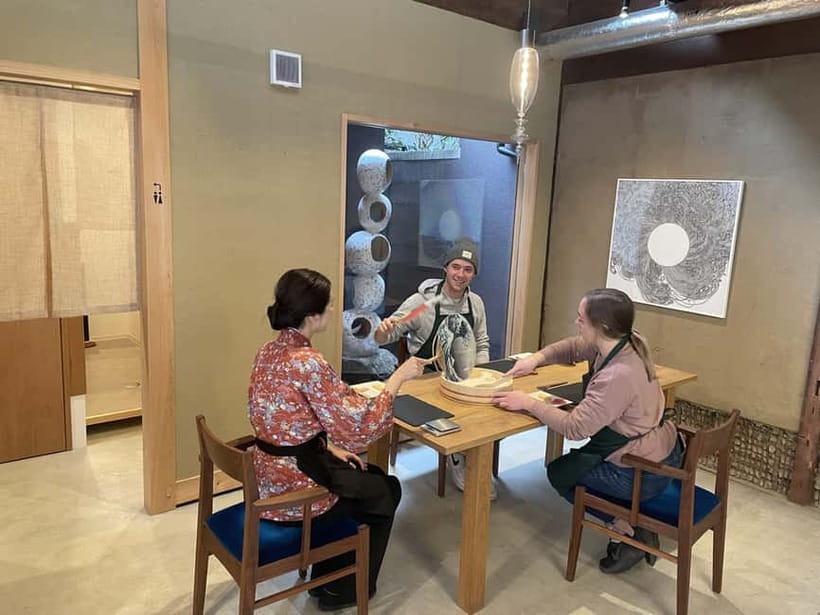
At the end, you eat the sushi you prepared. Miso soup is included, along with the usual accompaniments such as soy sauce, wasabi, and ginger. The portions are generous. Several sessions produced enough sushi to leave people comfortably full, so do not plan this as a tiny tasting.
This meal has a different satisfaction from ordering sushi at a restaurant. The pieces may not look perfect, but you know exactly how they were shaped, and you can see the progress from the first piece to the last. For many people, that is the real payoff.
The quality of the ingredients is another strong point. Fish sourced from Nishiki Market has been used, and the ingredients are described as fresh and carefully prepared. The class is not just a craft activity with food as an afterthought. You eat a proper lunch made from the work you have just done.
Raw fish is central to the experience, so think about your comfort level before booking. The class can include cooked items such as egg omelette and tuna salad, but it is not designed as a vegetarian or fish-free session.
The conversation is part of the lesson
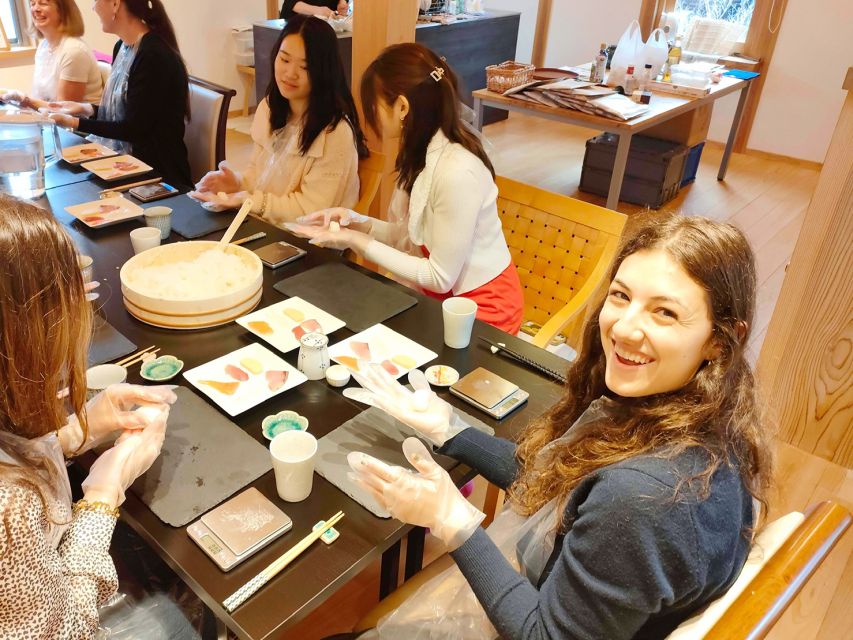
The class does more than teach hand movements. Kana has talked about growing up in Osaka, moving to Kyoto, Japanese history, local customs, and food culture. The English instruction allows you to ask questions as you work, rather than receiving a memorized talk and then moving on.
That informal conversation is valuable because sushi makes more sense when you understand it as part of Japanese food culture. You get a chance to ask why certain ingredients are used, how sushi differs from other Japanese dishes, or where to eat after class.
The hosts also share local restaurant and sightseeing suggestions. This can be especially useful early in your Kyoto stay, when you are still sorting out where to eat and which districts suit your schedule.
The tone is friendly without being theatrical. The class feels closer to being welcomed into someone’s home than attending a large commercial demonstration. In one particularly small session, the couple stayed to chat after the planned activity, but you should treat that as a welcome extra rather than part of the guaranteed 90-minute schedule.
What the $60 price gets you
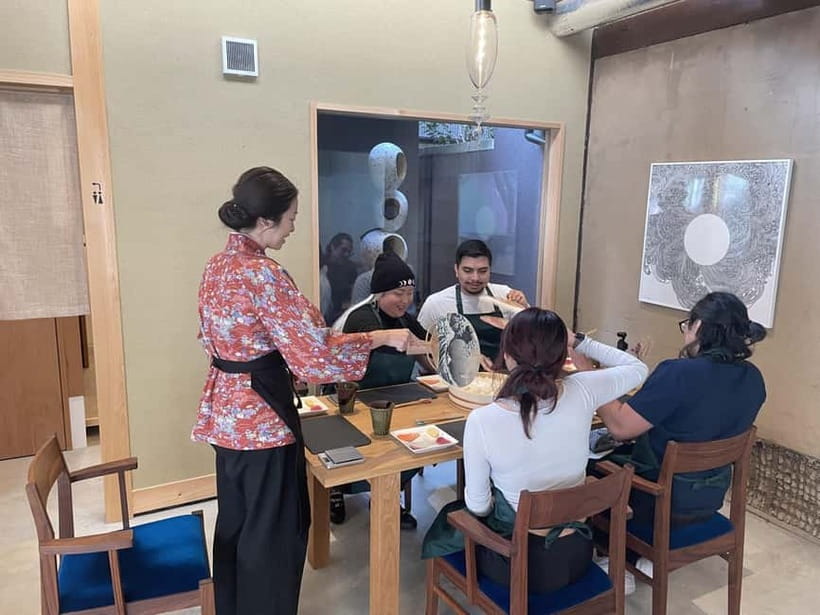
At $60 per person, the experience is not the cheapest way to eat sushi in Kyoto. A restaurant meal may cost less, especially if you choose a casual conveyor-belt restaurant. But this price covers much more than lunch.
You receive 90 minutes of instruction, fresh fish, prepared rice, several sushi styles, miso soup, gloves, an apron, and a take-home bag with a rolling mat, chopsticks, and recipe card. You also get a small class with a maximum of eight people, rather than a crowded demonstration.
I see the strongest value for people who will use the skills again. The rolling mat and recipe card turn the class into something you can repeat at home. It is also good value for families, since several people can share the same activity while each person makes and eats their own food.
The price makes less sense if you only want to sample high-end sushi or watch a professional chef. This is a participation experience. You are paying for instruction, a meal, conversation, and the chance to make something yourself.
Who will enjoy this most
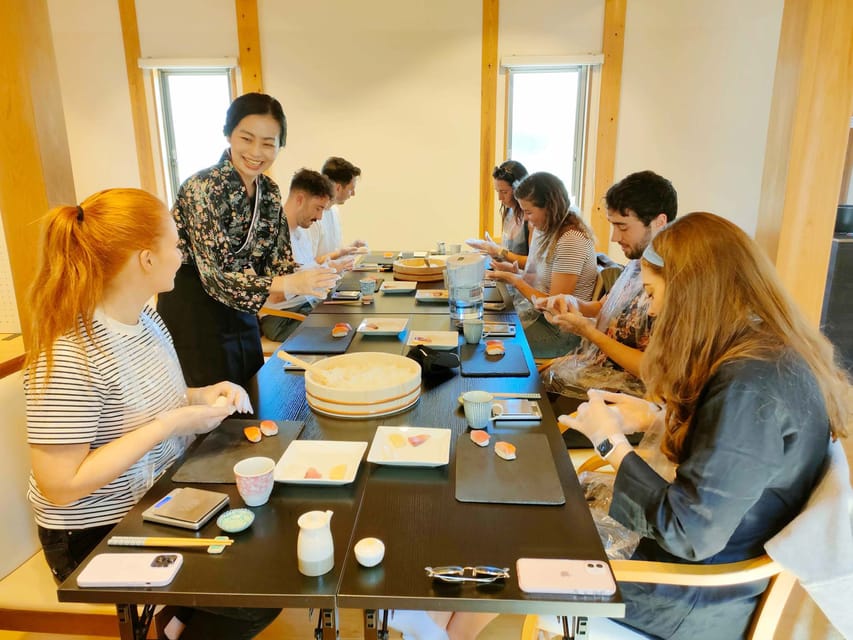
This class is a strong choice for first-time sushi makers. The instructions are clear, the pace is gentle, and the instructors offer hands-on help. You do not need to know Japanese cooking terms or arrive with special skills.
Families can also make good use of the session. A family of seven, ranging from a grandmother to young children, took part together, and a parent and 10-year-old child were able to complete the class successfully. The small group format gives children something real to do instead of asking them to sit through a demonstration.
Food lovers who already make sushi at home may appreciate the focus on traditional local technique and the chance to ask questions. Just keep your expectations realistic. The class improves your shaping and rolling skills, but it does not appear to be a professional chef-training course.
It is less suitable for vegetarians because the activity is built around fish and seafood. It is also not suitable for wheelchair users. If you have dietary restrictions, tell the operator when booking so they can advise you before the class.
Planning the class around your Kyoto day
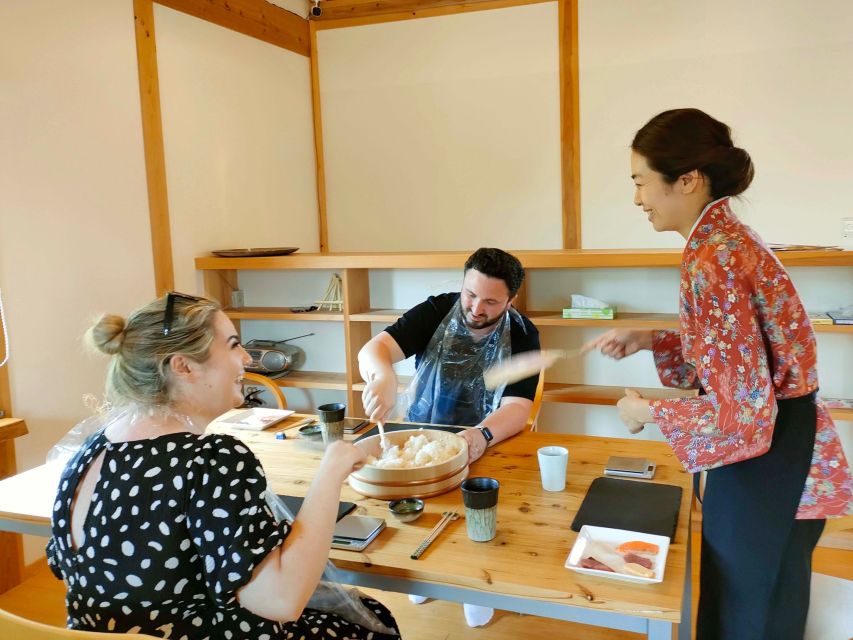
The workshop lasts 90 minutes, with starting times depending on availability. Its location near Kiyomizu-Gojō Station makes it easy to combine with the Keihan Main Line and with sightseeing in eastern Kyoto.
A natural plan is to visit Kiyomizu-dera or walk through Gion before or after the class. The area is well placed for a half-day, but avoid booking the workshop too tightly against another timed activity. You need time to reach the townhouse, find the correct building, and settle in.
The class includes lunch, and the amount of sushi can be substantial. I would not schedule a major meal immediately afterward. If you are using the workshop as a break from sightseeing, it can replace lunch rather than sit on top of it.
Cancellation is free up to 24 hours before the start time, and you can reserve now and pay later. That is useful when your Kyoto plan is still changing, though you should still check the available start time before committing it to your day.
The take-home bag is more useful than a souvenir
The gift bag is a thoughtful finish. You receive a sushi rolling mat, chopsticks, and a recipe card, along with the skills practiced during the class.
The mat is the most practical item. Rolling maki at home is difficult without one, and having the tool immediately removes a common obstacle. The recipe card gives you a reference after the details of the lesson have faded.
This also helps the experience last beyond your Kyoto visit. You can shop for ingredients at home, repeat the rice seasoning, and practice the roll without needing special equipment. Your first homemade pieces may look uneven, but that is part of the fun.
Should you book this sushi workshop?
Book it if you want a personal, food-focused activity that gives you something to do, eat, and remember. The combination of a traditional Kyoto setting, fresh local fish, English teaching, and a group limited to eight creates a strong experience for couples, families, and curious beginners.
I would especially recommend it as a rest stop during a busy Kyoto itinerary. You get off your feet, learn a useful skill, talk with local hosts, and finish with a filling lunch.
Skip it if you want to cut fish, study advanced sushi technique, or avoid raw seafood. For everyone else, the $60 price is fair because it covers a substantial meal, patient instruction, cultural conversation, and equipment you can use again. Check the dietary and wheelchair restrictions before booking, then arrive ready to make a slightly imperfect but very satisfying lunch.
FAQ
How long does the sushi-making workshop last?
The workshop lasts 90 minutes. Starting times vary, so check availability when booking.
How many people can join the class?
The class is limited to eight participants, keeping the instruction personal and allowing time for questions.
Is the workshop taught in English?
Yes. The instructor and host provide the workshop in English.
What types of sushi will I make?
You can make several styles, including nigiri and maki rolls. Gunkan sushi has also been included in some sessions.
Is lunch included?
Yes. You eat the sushi you make, and miso soup is included.
Are ingredients and fish provided?
Yes. The class provides the sushi ingredients, including fresh fish and prepared rice. Fish has been sourced from Kyoto markets, including Nishiki Market.
What do I take home?
You receive a gift bag containing a sushi rolling mat, chopsticks, and a recipe card.
Can vegetarians join the class?
No. The activity is listed as unsuitable for vegetarians.
Is the workshop wheelchair accessible?
No. The activity is listed as not suitable for wheelchair users.
Fresh off the menu around Kyoto
- Kyoto: Sushi Making Class with Sushi Chef★ 4.8 · 64 reviews
- Nishiki Market Food Tour with Cooking Class★ 4.9 · 42 reviews
- Kyoto: Ramen, Gyoza, and Onigiri Cooking Class★ 5.0 · 445 reviews
- Kyoto: Sake Brewery and Tasting Tour in Fushimi★ 4.8 · 55 reviews
- Kyoto: Foodie Night Tour in Gion with 9 dishes + 6 Sake★ 4.4 · 26 reviews
- Kyoto: Nishiki Market Tour with a Local Foodie & Tastings★ 4.5 · 67 reviews
- Kyoto: Ramen Cooking Class at a Ramen Factory with Souvenir★ 4.9 · 532 reviews
- Kyoto Michelin Ramen Workshop or Painting Ramen Essentials★ 4.9 · 100 reviews
Kyoto Food Tours, compared.
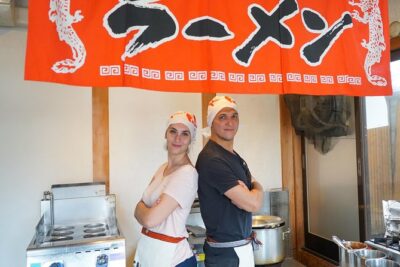
Ramen Cooking Class at Ramen Factory in Kyoto
Read our review →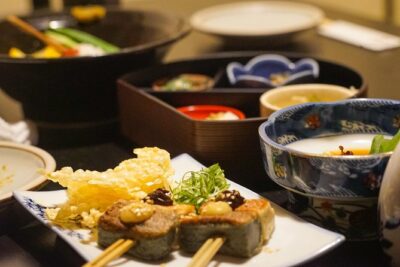
Kyoto Night Foodie Tour in Gion (9+ dishes + 6 Sake tastings)
Read our review →
Nishiki Market Brunch Walking Tour (7 Tastings + Brunch)
Read our review →
Kyoto Night All-Inclusive Eats and Streets, Gion and Beyond
Read our review →
Kyoto: Gion & Pontocho Food Tour with 13 Dishes
Read our review →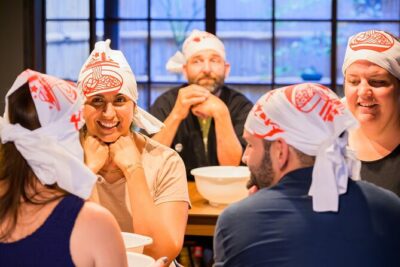
Gyoza Cooking Class in Kyoto: Traditional Japanese Dumplings
Read our review →
Kyoto: Local Food Tasting Tour at the Nishiki Market
Read our review →Browse the lists this tour appears in