
Review · KYOTO
Kyoto: Local Food Tasting Tour at the Nishiki Market
Kyoto’s best food experience may be less about finding one perfect meal and more about learning what to try. This small-group walk takes you through Nishiki Market, a 400-year-old arcade packed with about 130 food stalls, then adds shrines and shopping streets for a fuller picture of central Kyoto.
I like two things here: the guide removes the guesswork from a crowded market, and the tasting list reaches beyond familiar sushi and ramen. You may try yuba, local obanzai cooking, hamo tempura, wagyu steak skewers, Kyoto seasonings, crackers, and flavored honey. Guides such as Ayu, Toshi, Takuma, and Miho have also helped people choose foods and plan the rest of their Kyoto days.
The main drawback is dietary flexibility. Vegetarian, halal, kosher, gluten-free, and allergy-related requests cannot be accommodated, and the walking route is not suitable for wheelchair users or people with mobility limitations. Also, this is a series of tastings, not a full sit-down lunch.
Key points to know before booking
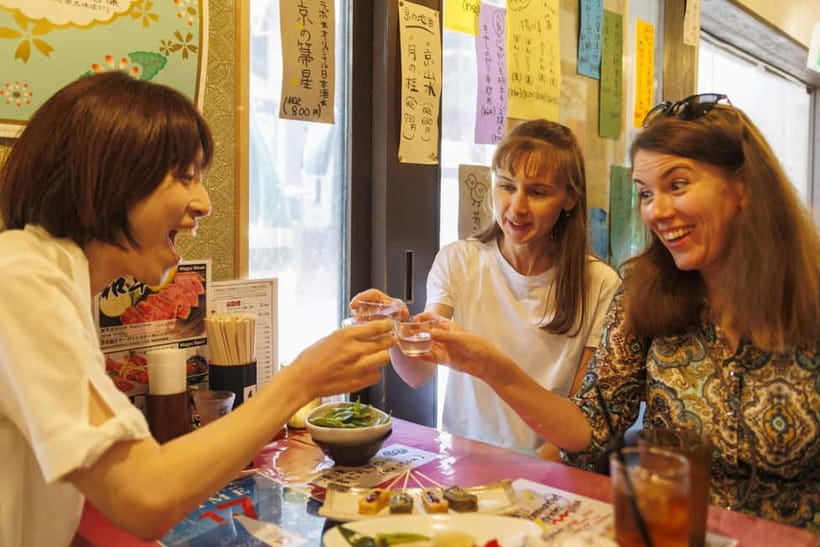
- Five substantial local tastings: Expect yuba, obanzai, hamo tempura, wagyu steak skewers, and other seasonal or shop-selected bites.
- Nishiki Market with a local guide: The guide helps you handle the crowds, choose unfamiliar foods, and understand how the market fits Kyoto life.
- A small group capped at six: The size leaves room for questions and gives the guide a chance to adjust the pace.
- Food, shrines, and shopping in one walk: The route continues to Nishiki-Tenmangu Shrine, Shinkyogoku, Teramachi, and another small stop.
- Optional tea ceremony: Add a 90-minute session with kimono dressing and instruction from a tea master after the market walk.
- Come hungry, but not stuffed: Past tours have included enough sampling to make a large lunch unnecessary.
Why Nishiki Market works so well for a food tour
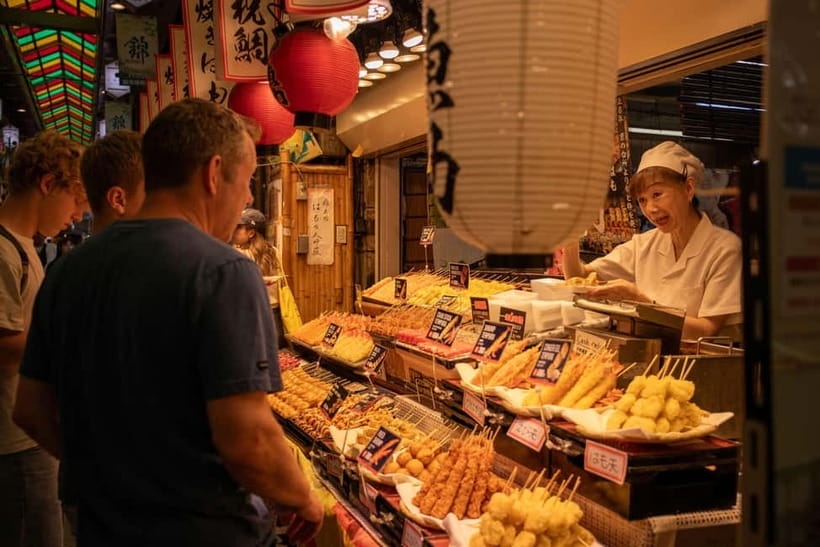
Nishiki Market is often called Kyoto’s Kitchen, and the nickname makes sense once you enter the long covered shopping street. The market has served Kyoto for roughly four centuries, with food stalls selling ingredients, prepared bites, sweets, seasonings, and regional specialties.
That variety is useful, but it can also be a problem. You may see something interesting, fail to understand the menu, wonder how to eat it, and then move on. A guide gives you a way into the market. Instead of stopping at random, you follow a food trail built around small portions and explanations.
The group is limited to six people. That matters here because the market can become tight, noisy, and slow-moving. A small group is easier to keep together, and you can ask questions without turning the outing into a lecture for twenty people.
The guides are one of the strongest parts of the experience. Ayu, Toshi, Takuma, Yume, Hide, Saki, Miho, Annie, and others have led this walk. The best guides do more than name each food. They explain how it is eaten, why it belongs in Kyoto cuisine, and what makes one stall or preparation different from another.
Several guides have also helped people with the rest of their trip. That is a practical bonus. If you are doing this early in your Kyoto stay, you can ask about other neighborhoods, shrines, or afternoon plans while the advice is fresh and personal.
More Market Food Tours in Japan
- Nishiki Market Brunch Walking Tour (7 Tastings + Brunch)
★ 5.0 · 1,355 reviews - Kyoto: Nishiki Market and Depachika Food Tour with a Local
★ 4.7 · 76 reviews - Kyoto: Nishiki Market Tour with a Local Foodie & Tastings
★ 4.5 · 67 reviews
The five tastings: a useful introduction to Kyoto food
The exact shop stops may vary, but the included food is built around five specialities and additional small samples. You are not simply handed five generic snacks. The point is to try foods that can be hard to identify or order without help.
Yuba is tofu skin, a Kyoto specialty made from the thin layer that forms during tofu production. Its texture may surprise you, especially if your experience with tofu has been limited to soft cubes in soup. This is precisely the sort of food that a guide can make easier to appreciate by explaining how it is made and how it is used.
Obanzai refers to home-style Kyoto cooking. It is less a single dish than a way of thinking about everyday food, often centered on vegetables and simple preparations. A small taste gives you a better sense of ordinary Kyoto cooking than another restaurant meal built around a single famous dish.
Hamo tempura is one of the more distinctive stops. Hamo, often translated as conger eel, is associated with Kyoto cuisine and requires careful preparation because of its fine bones. Tempura gives it a crisp coating and a familiar entry point. If you are hesitant about unfamiliar seafood, this is a useful chance to try it in a guided setting.
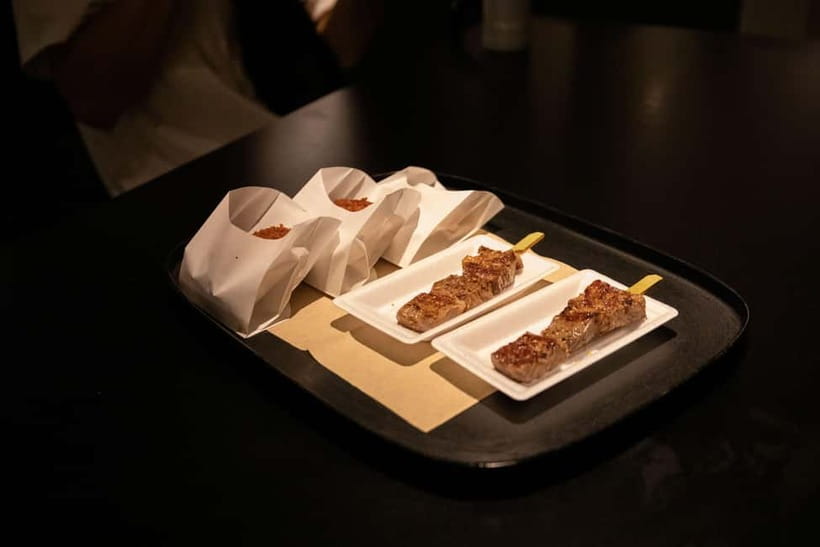
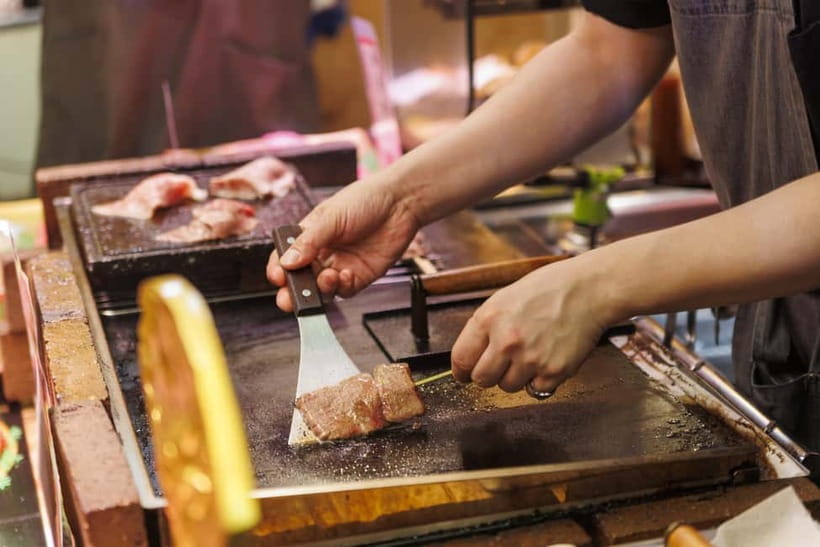
Wagyu steak skewers provide a more immediately recognizable bite. The skewer format makes it easy to eat while walking, though you should still follow the guide’s instructions about where to pause and eat. This is one of the richer samples, so pace yourself if you want to enjoy all five.
Additional tastings may include Kyoto seasonings, crackers, and Japanese-flavored honey. The smaller samples add variety without requiring you to buy a full package of something you may not like. You may also find other foods that catch your eye and decide to purchase them separately.
The tour is designed for discovery, not control. If you have a long list of foods you already know you love, this may feel less targeted than a private restaurant crawl. If you want someone to steer you toward unfamiliar local tastes, it does that well.
Walking through the market without losing the thread
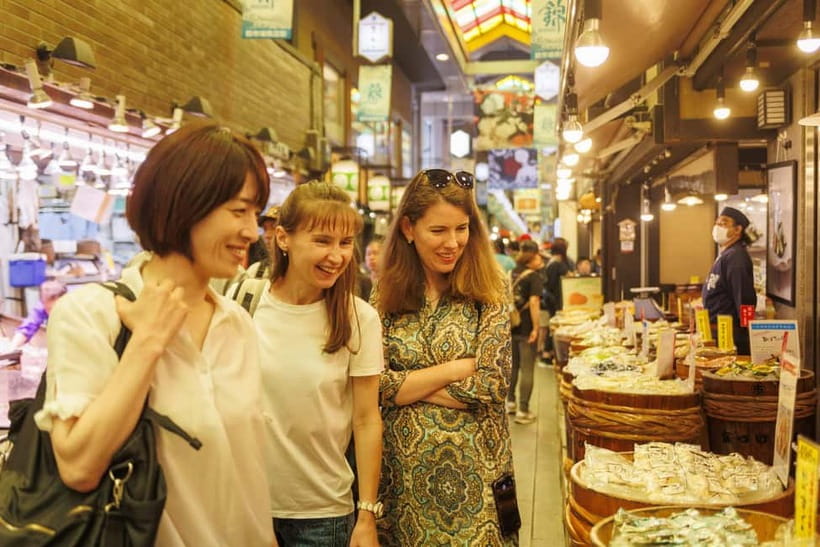
The food portion at Nishiki Market takes about 90 minutes. That sounds generous, but the time passes quickly once you account for stops, questions, crowds, and eating.
Wear comfortable shoes. The route is on foot, and it continues beyond the market. Rain gear is sensible because the weather can affect the walk even though the market itself is covered.
Large bags and luggage are not allowed on the tour. That is worth taking seriously if you are arriving with hotel bags or planning to go straight to a train station. Keep your belongings light so you can move with the group and stand comfortably at food stops.
Market etiquette matters. Follow the guide’s instructions about where to eat, since some shops and narrow sections are not suited to walking and snacking at the same time. A calm pace makes the experience better for you and for the people shopping around you.
The tour is conducted in English. Guide quality will naturally vary from one person to another, but the consistently useful feature is the chance to ask questions as you go. Past guests have particularly valued guides who explain customs clearly, pause for questions, and adjust the pace when the group wants to look more closely at a shop.
Nishiki-Tenmangu Shrine adds a quieter pause
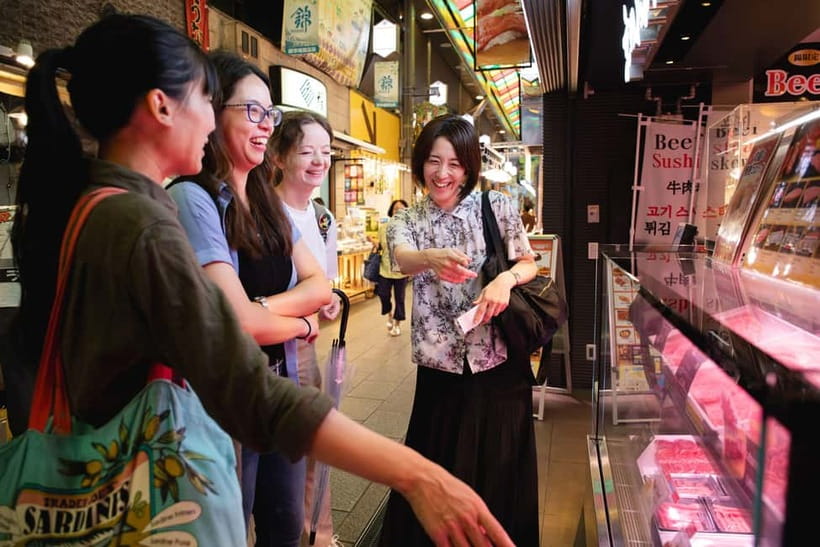
After the market, the route includes about 10 minutes at Nishiki-Tenmangu Shrine. This is a welcome change of rhythm after the food stalls and narrow shopping arcade.
The guide explains the shrine and its place in the neighborhood rather than treating it as a quick photo stop. That makes the transition from food to culture feel natural. Japanese markets are not isolated attractions, and this stop helps you see how shopping streets, religious sites, and daily life fit together in central Kyoto.
Ten minutes is not enough for a long shrine visit. You should think of it as an introduction, not a full temple or shrine tour. If the site interests you, ask your guide what to notice or plan to return on your own.
More Market Food Tours in Kyoto:
- Nishiki Market Food Tour with Cooking Class
★ 4.9 · 42 reviews - Kyoto: Nishiki Market Food Tour
★ 4.9 · 21 reviews - Chef Guided Food Tour of Pike Place Market
★ 5.0 · 3,733 reviews - Tokyo Tsukiji Fish Market Food and Culture Walking Tour
★ 5.0 · 3,184 reviews
Shinkyogoku and Teramachi show Kyoto’s shopping side
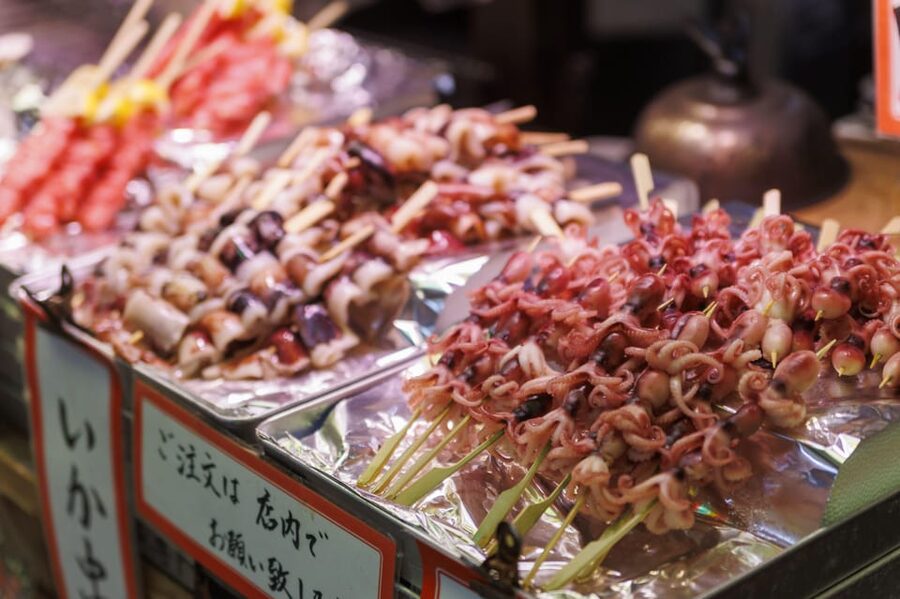
The walk continues through Shinkyogoku Shopping Arcade, with about 45 minutes for guided sightseeing and shopping. This section gives you time to browse beyond food. You might find that the group naturally spreads out while people look at shops, but stay aware of the agreed meeting point and pace.
Shinkyogoku is a different experience from Nishiki. The focus shifts from ingredients and prepared bites to a wider shopping scene. That makes the tour more useful than a market-only outing if you want an introduction to the central shopping area.
The final named district is Teramachi Street, where you spend roughly 30 minutes. The covered arcade setting makes this a practical part of the route in uncertain weather, and it gives you another chance to browse or return to a shop you noticed earlier.
There is also a short guided stop at an additional small site. The supplied details do not identify it, so do not book this walk expecting a specific famous attraction there. The value lies in the guide’s local explanation and the way the stops connect the market to the surrounding streets.
The walk ends at one of three drop-off points, including the Shijo Higashinotoin area, Nishiki Orizuruya, or Kyoto Takashimaya S.C. The exact meeting and finishing points depend on the option you book, so check your confirmation carefully.
What $78 buys you
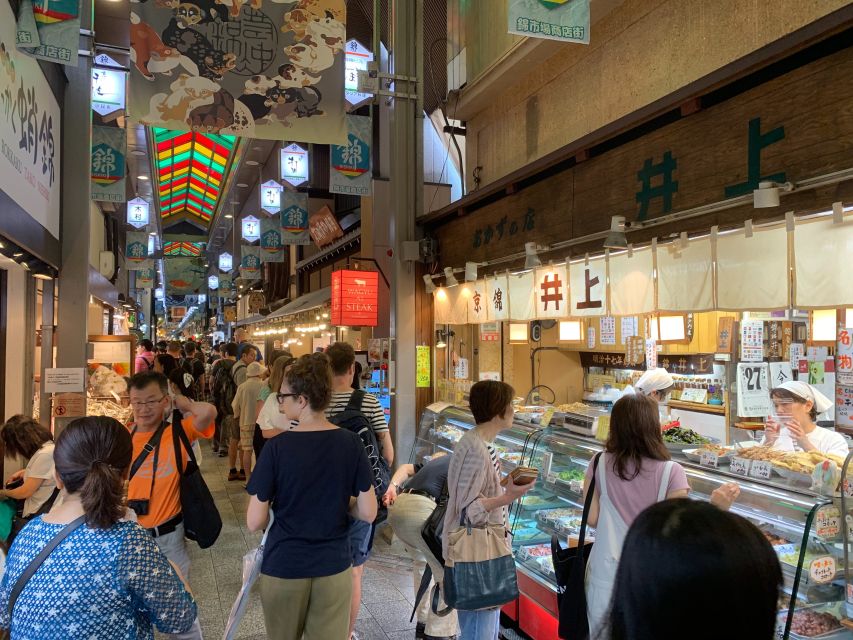
At $78 per person, this is not the cheapest way to wander through Nishiki Market. You can enter the market without paying an admission fee, and you can buy individual snacks as you go.
The price makes more sense if you value selection and interpretation. Five included tastings can add up quickly, especially if you would otherwise order the wrong item, buy too much of one food, or skip specialties because the signs are unclear. You are also paying for a local English-speaking guide, a small group, and a route that combines food with shrines and shopping districts.
This is better value for a first visit than for someone who already knows Nishiki well and reads Japanese menus with ease. One four-star assessment made the fair point that the route could be done independently. That is true. The question is how much time and confidence you want to spend figuring it out.
The tour also has value for solo visitors and couples. With a maximum of six people, solo travelers can meet a few others without being lost in a large crowd. Couples and families can ask questions and receive some attention from the guide. One family with tweens enjoyed the food, the shrine, and the guide’s patience when they wanted to stop and try extra items.
Do not treat the $78 as the cost of a complete lunch. Treat it as the cost of a guided tasting session with cultural context. You may still want another meal later, but some past participants found the samples filling enough to skip a large lunch.
The optional tea ceremony
You can add a tea ceremony after the food tour. The ceremony begins at 2:00 PM, and you must make your own way to the venue near Nishiki Market.
The tea experience lasts 90 minutes. It begins with professional kimono dressing, followed by a traditional ceremony led by a tea master. You learn the meaning behind the movements and gestures, then have time for commemorative photographs in a traditional setting.
This is a good add-on if you want a structured cultural activity and enjoy dress-up photography. It is less convenient if you need a break after the walking tour or have a tight afternoon schedule. Since you make your own way from the market to the venue, leave enough time to find it.
The food tour and tea ceremony work as two separate experiences rather than one continuous guided route. Choose the tea option when booking if you want it included. It is not an automatic part of the basic market walk.
Who should book this Kyoto food walk
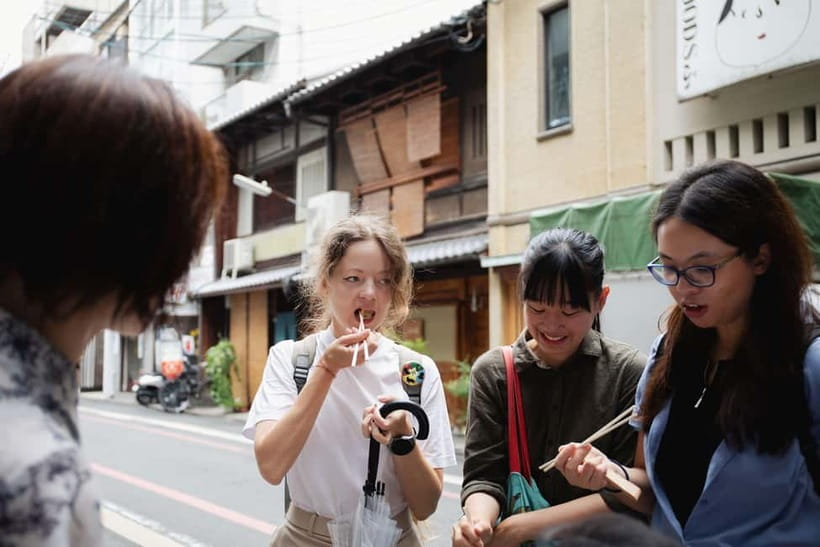
I would recommend it most strongly to first-time Kyoto visitors who want help making sense of Japanese food. You will get the most from the tour if you are curious, willing to try small portions, and interested in the stories behind what you eat.
It also suits solo visitors. The small group keeps the social side manageable, and a guide can make a crowded market feel less confusing when you are on your own.
Families can do well here if children are comfortable walking and sampling new foods. An 11-year-old enjoyed the experience, and another family with three tweens found the guide patient and flexible. Still, the food is not designed around children, so picky eaters may need backup plans.
This is not a good choice if you need strict control over ingredients. The provider cannot accommodate vegetarian, halal, kosher, gluten-free, or allergy-related requests. It is also unsuitable for wheelchair users and people with mobility impairments.
You should also reconsider it if your priority is a long, relaxed lunch at one restaurant. The pace alternates between walking, listening, shopping, and eating. That variety is the appeal, but it is not a substitute for a sit-down meal.
Practical advice for getting the most from it
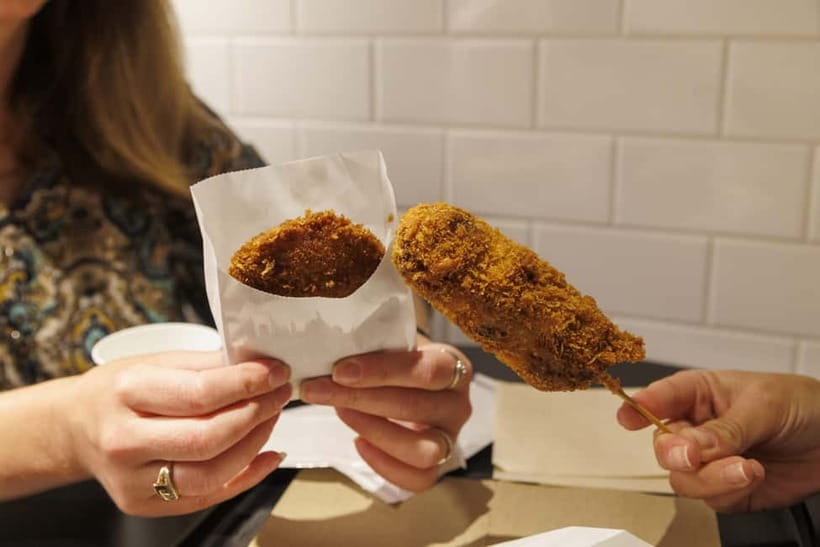
Book this near the beginning of your Kyoto stay if possible. Guides have often offered useful suggestions for later sightseeing, and the market itself becomes easier to revisit once you understand what you saw.
Eat a light breakfast. The five main tastings, plus the smaller samples, can be more filling than the description suggests. You do not need to arrive hungry enough to feel uncomfortable, but a full morning meal may leave you unable to try everything.
Bring water, comfortable shoes, and rain gear. Leave large bags and luggage behind. Keep your schedule flexible after the tour, especially if you select the tea ceremony and need to reach the venue by 2:00 PM.
Do not expect identical guides or identical conversation every time. Names such as Ayu, Toshi, Takuma, Yume, Hide, Saki, and Miho appear among the guides who have led the experience, and each person will bring a different personality. The common thread is local food knowledge, English guidance, and the chance to ask questions.
The overall score is 4.7 from 135 ratings, with especially strong praise for the guides’ warmth, clear explanations, food choices, and ability to make the market less overwhelming. One practical complaint was confusion over the meeting point, so read the meeting instructions closely and allow time to find the correct starting location.
Should you book it?
Book this tour if you want an easy, guided introduction to Kyoto food and would rather sample five specialties than gamble on unfamiliar stalls. The small group, included tastings, shrine visits, and shopping streets give you more than a simple snack crawl.
Skip it if you have strict dietary restrictions, limited mobility, or enough market experience to choose confidently on your own. At $78, it is a fair buy for guidance and variety, not a bargain meal.
For most first-time visitors who eat broadly, I would choose an early booking date, arrive hungry but not overfed, and use the guide’s suggestions to plan the rest of the day. Add the tea ceremony only if you want a second, more formal cultural activity and can manage the 2:00 PM start.
FAQ
How long does the Nishiki Market food tour last?
The activity is described as lasting three hours, with the listed duration also shown as up to 270 minutes. The route includes about 90 minutes of food tasting, plus stops at the shrine, shopping arcades, and other sites.
What food is included?
The tour includes five special foods, including yuba, obanzai local home cooking, hamo tempura, and wagyu steak skewers. Additional tastings can include Kyoto seasonings, crackers, and Japanese-flavored honey.
Is this a full lunch?
No. It is a walking tasting tour rather than a sit-down meal. The included samples may be filling, but the experience is built around trying different foods and learning about them.
Is the tour conducted in English?
Yes. The tour has a live English-speaking guide.
How large is the group?
The group is limited to six participants.
Can the tour accommodate dietary restrictions?
No. The provider cannot accommodate vegetarian, halal, kosher, gluten-free, or allergy-related requests.
What is included with the tea ceremony option?
The optional tea ceremony lasts 90 minutes and includes professional kimono dressing, instruction from a tea master, an authentic tea ceremony, and time for commemorative photos. It begins at 2:00 PM, and you must make your own way to the venue near Nishiki Market.
Fresh off the menu around Kyoto
- Kyoto: Sushi Making Class with Sushi Chef★ 4.8 · 64 reviews
- Nishiki Market Food Tour with Cooking Class★ 4.9 · 42 reviews
- Kyoto: Small-Group Authentic Sushi Making Workshop★ 5.0 · 137 reviews
- Kyoto: Ramen, Gyoza, and Onigiri Cooking Class★ 5.0 · 445 reviews
- Kyoto: Sake Brewery and Tasting Tour in Fushimi★ 4.8 · 55 reviews
- Kyoto: Foodie Night Tour in Gion with 9 dishes + 6 Sake★ 4.4 · 26 reviews
- Kyoto: Nishiki Market Tour with a Local Foodie & Tastings★ 4.5 · 67 reviews
- Kyoto: Ramen Cooking Class at a Ramen Factory with Souvenir★ 4.9 · 532 reviews
Kyoto Food Tours, compared.
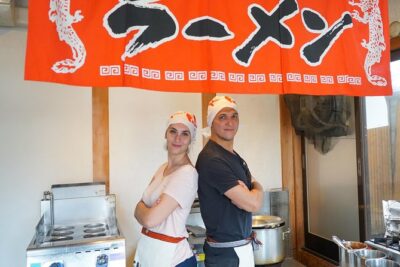
Ramen Cooking Class at Ramen Factory in Kyoto
Read our review →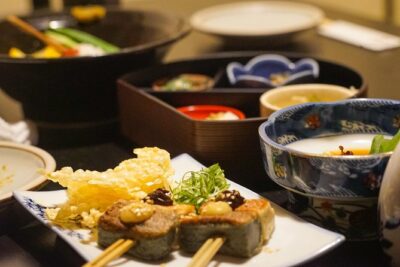
Kyoto Night Foodie Tour in Gion (9+ dishes + 6 Sake tastings)
Read our review →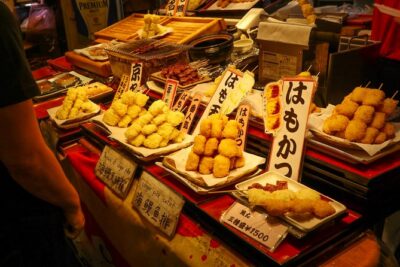
Nishiki Market Brunch Walking Tour (7 Tastings + Brunch)
Read our review →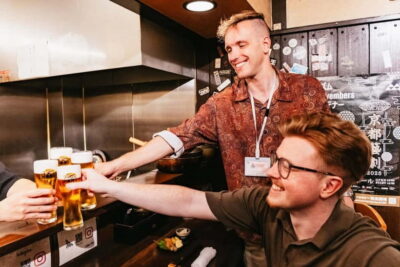
Kyoto Night All-Inclusive Eats and Streets, Gion and Beyond
Read our review →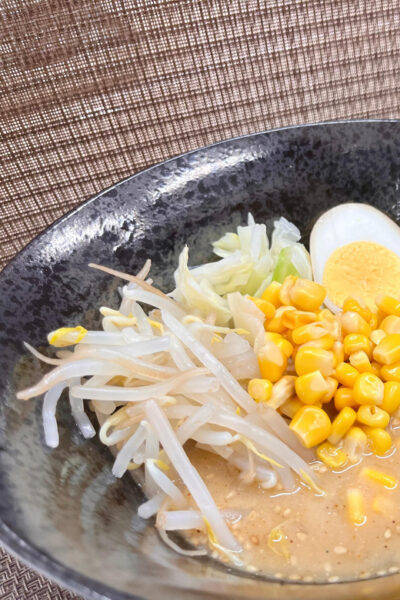
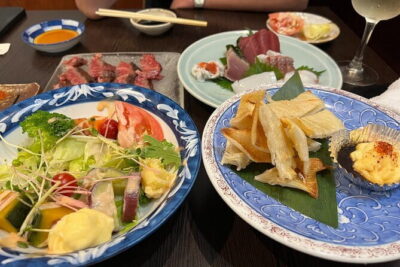
Kyoto: Gion & Pontocho Food Tour with 13 Dishes
Read our review →
Gyoza Cooking Class in Kyoto: Traditional Japanese Dumplings
Read our review →
Kyoto: Small-Group Authentic Sushi Making Workshop
Read our review →Browse the lists this tour appears in