
Review · KYOTO
Kyoto Michelin Ramen Workshop or Painting Ramen Essentials
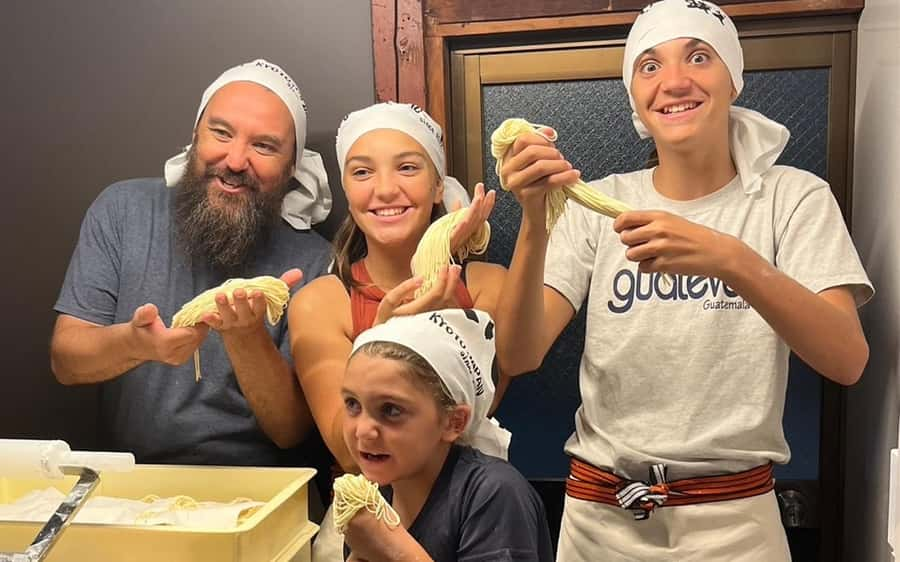
Musoshin’s Kyoto workshop gives you more than a cooking demonstration. You work the dough, feed it through the noodle machine, learn how the ingredients fit together, and then sit down to a bowl of ramen at the restaurant. The class is led by friendly instructors, sometimes including owner Shin, Koki, Makoto, Momo, Shima, Patti, Yaya, or Rose.
I like two things right away: you take part in nearly every step of the noodle-making process, and the meal afterward is included. You also get a useful look at the work behind a bowl of ramen, from overnight noodles to broth cooked for 12 hours. The main drawback is the compact workspace. A group of six can feel cramped, especially if another small group joins.
Key points at a glance
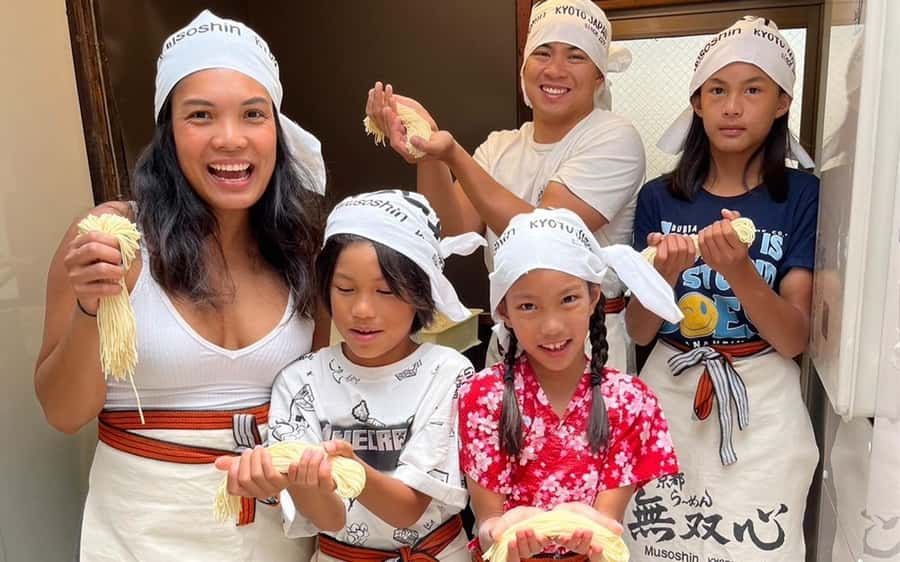
- Hands-on noodle making: Mix ingredients, work the dough, roll it, and shape it with a noodle machine.
- Michelin-linked restaurant meal: Musoshin’s Toronto branch has been nominated for Michelin recognition for three consecutive years, and the recipe is the same in Kyoto.
- Painting options: Depending on the booking, you can decorate a bowl or spoon. A custom bowl can be kiln-fired for free and collected the next day.
- A good family activity: Children as young as four have taken part, with patient instructors helping them at the machine and worktable.
- Vegetarian and vegan choices: The restaurant can provide ramen options without meat or animal products.
- Practical value: At $54 per person, you receive instruction, a drink, workshop materials, and a restaurant meal, with some souvenir items included only in selected options.
What makes Musoshin’s ramen class different
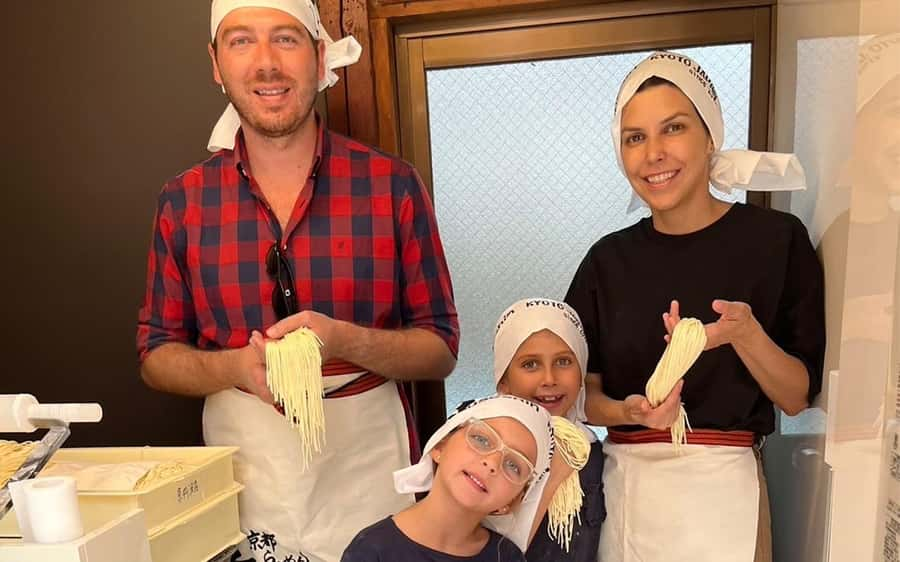
Many food classes show you a dish and let you assemble it. This one focuses on the noodles, the part of ramen that is easy to overlook once a steaming bowl arrives at the table.
Musoshin began in Kyoto in 2022 and now has six restaurants in Kyoto and Toronto. The Toronto branch has been nominated for Michelin recognition three years in a row. That does not turn the class into a formal fine-dining lesson, but it does give the workshop a direct link to a working ramen business.
The restaurant makes its ingredients in-house. Noodles are made each morning, then rested overnight for use the following day. The soup cooks for 12 hours, while the soy sauce and roast pork are also prepared by the restaurant. You get a clearer sense of why good ramen takes planning long before it reaches your table.
That is the real value here. You are not simply copying a recipe in a tourist classroom. You are learning from a restaurant that makes and serves ramen every day.
More food workshops around Kyoto:
- Ramen Cooking Class at Ramen Factory in Kyoto
★ 5.0 · 1,937 reviews - Kyoto: Ramen Cooking Class at a Ramen Factory with Souvenir
★ 4.9 · 532 reviews - Kyoto: Ramen, Gyoza, and Onigiri Cooking Class
★ 5.0 · 445 reviews
The first hour: from flour to fresh noodles
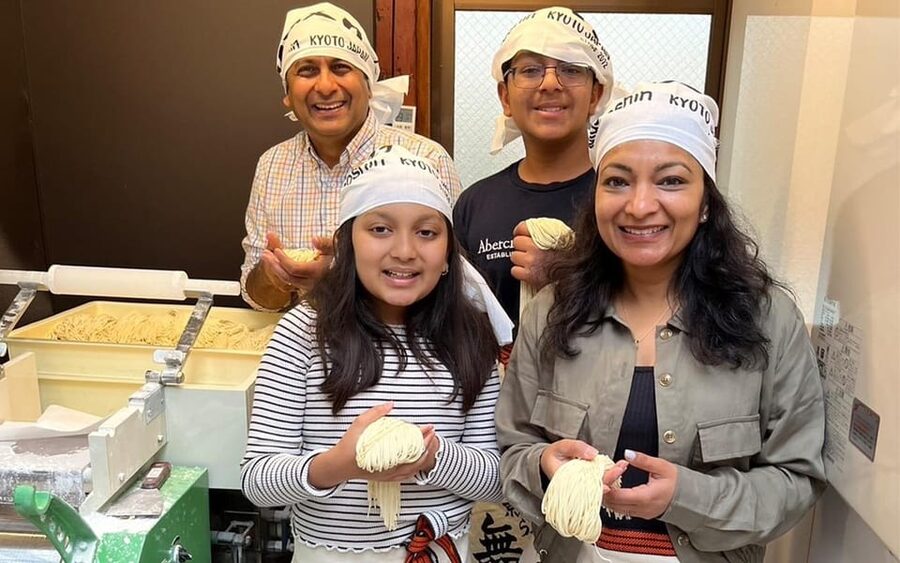
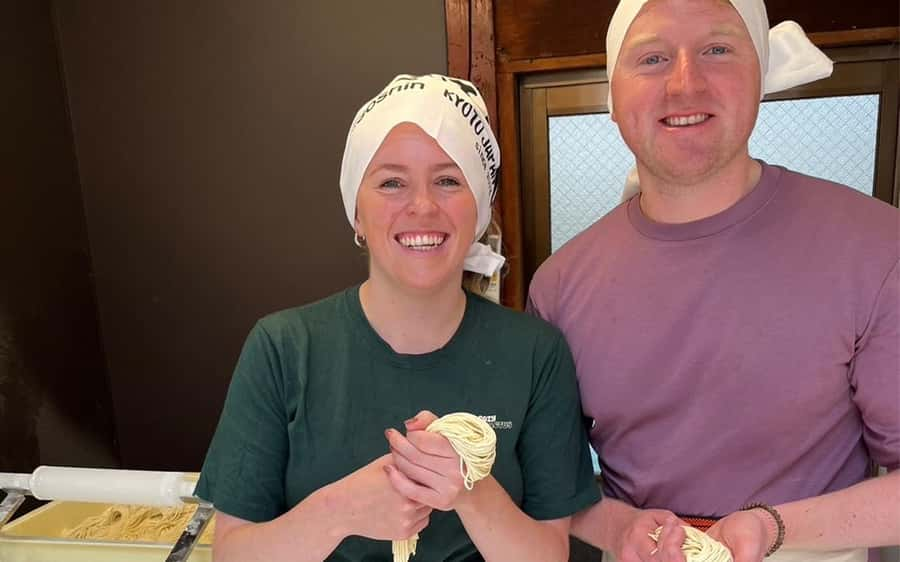
The workshop runs for roughly an hour of noodle making, with the instructors guiding you through the process at an easy pace. You receive the basic Musoshin recipe and take part in mixing the ingredients, working the dough, and rolling it through several stages.
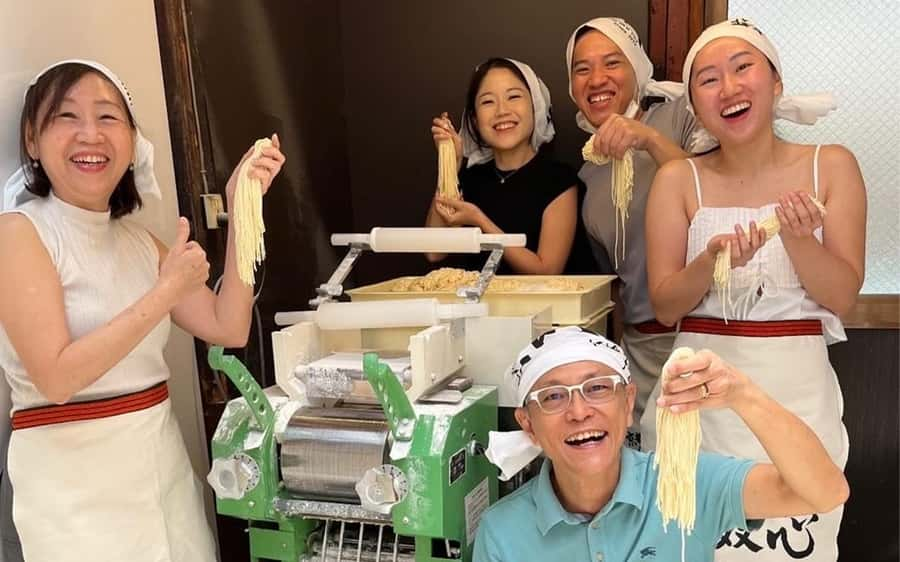
The noodle machine is the star for children and adults alike. Younger participants can use their hands and help with the process, while the instructors manage the more exact parts of the equipment. The guides explain what is happening rather than rushing you through a set of motions.
English and Japanese are offered. The English-speaking instructors are used to explaining the process clearly, and several class members have singled out the friendly teaching style of people such as Shin, Patti, Yaya, Koki, and Makoto. The exact instructor is not guaranteed, but the pattern is clear: expect a relaxed class with plenty of help.
You can take photos and videos during the preparation. At the end, the instructor can take a picture of you with the finished product. The class feels hands-on without demanding professional cooking skills.
One detail matters: the noodles you make need to rest overnight before they are ready for the restaurant’s normal service. So you do not usually eat your own noodles that same moment. Instead, the included restaurant meal uses Musoshin’s prepared ramen, giving you the chance to taste the finished product without waiting until the next day.
Painting a bowl or spoon before dinner
The creative portion varies by booking option. Some sessions include painting a ramen spoon, while others offer a ramen bowl or the chance to design your own bowl.
Painting adds a quieter change of pace after the noodle work. You can make a personal design rather than buying a generic souvenir, and the activity works well for children who enjoy drawing more than cooking. One useful tip from the class is to apply pale colors, especially pink, thickly enough for them to show after firing.
If you design a bowl, Musoshin can bake it in a kiln for free. You pick it up the following day. This is a valuable extra, but it affects your Kyoto schedule. You need to remain in the city long enough to return for collection, and the meeting point may vary according to the option you choose.
The spoon and bowl are not automatically part of every booking. The same applies to the apron. Check the selected package carefully before paying, especially if you want to take home a particular piece of workshop equipment or pottery.
The Musoshin bandana is used in the workshop. A ramen spoon, bowl, and apron may be included or offered as options, depending on the package. An apron can also be purchased separately for 3,000 yen.
The meal at Musoshin Ramen
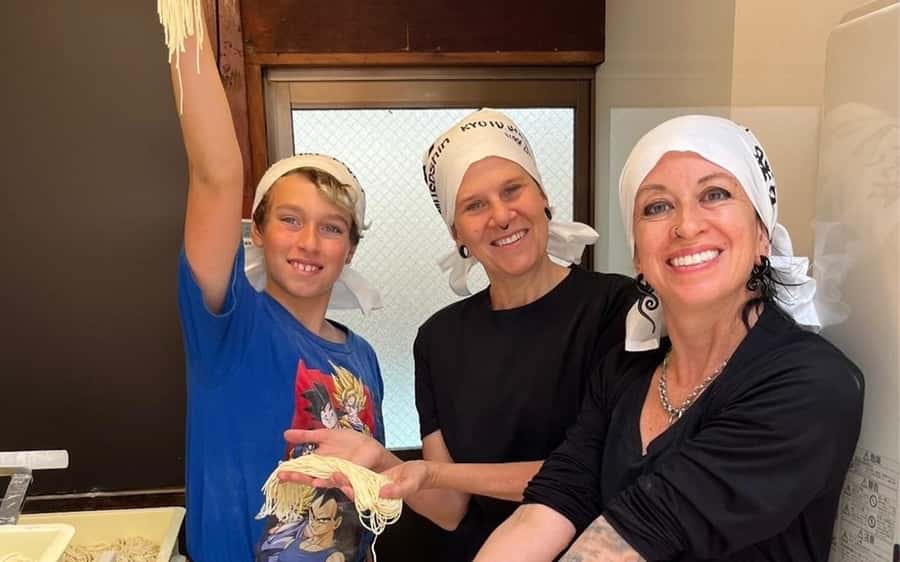
After the class, you walk to the Musoshin ramen restaurant, where a drink and a bowl of ramen are included. This arrangement works well because you finish the practical lesson with a proper meal rather than a small sample.
The restaurant is an important part of the experience. The workshop is presented as the only ramen workshop in Kyoto connected directly to an operating ramen restaurant. You can taste the style you have just been learning about, including the restaurant’s broth, handmade soy sauce, noodles, and toppings.
The meal has been a highlight for me because it puts the class in context. You learn that the broth takes 12 hours, then you taste why that time matters. You hear about handmade ingredients, then you sit down to a bowl assembled by the restaurant team.
The choice of ramen depends on the available menu and your booking details. Vegetarian and vegan ramen options are available. If you have celiac disease or need gluten-free food, contact the provider before the class. One family was able to arrange special gluten-free noodles and a separate soup, but this should be treated as an advance request, not a guaranteed standard inclusion.
Some diners also add side dishes such as fried chicken. Those extras are not part of the stated $54 package, so plan to pay separately if you order beyond the included meal.
More food tours around Kyoto:
- Kyoto Night Foodie Tour in Gion (9+ dishes + 6 Sake tastings)
★ 5.0 · 1,762 reviews - Nishiki Market Brunch Walking Tour (7 Tastings + Brunch)
★ 5.0 · 1,355 reviews - Kyoto Night All-Inclusive Eats and Streets, Gion and Beyond
★ 4.6 · 576 reviews - Kyoto: Gion & Pontocho Food Tour with 13 Dishes
★ 4.9 · 235 reviews
Is the $54 price good value?
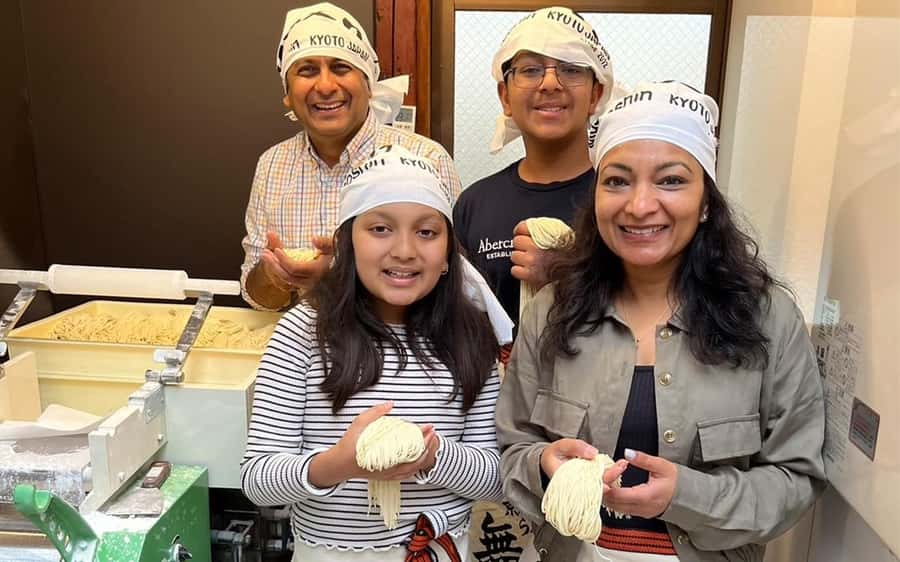
At $54 per person, this is not the cheapest bowl of ramen in Kyoto. You are paying for instruction, time with the noodle-making equipment, a drink, the restaurant meal, and selected workshop materials.
The value improves if you want a planned activity rather than only a meal. A typical restaurant visit may introduce you to Musoshin’s ramen, but it will not show you how the dough is mixed, rolled, and shaped. A pottery studio may offer painting, but it will not finish with a meal tied to your work.
The strongest value comes from the combination of food and activity. You get about an hour of guided participation, then a restaurant dinner or lunch. Families can treat the session as a shared project, while couples and friends get a souvenir that has a personal mark on it.
Still, read the option details carefully. A bowl, spoon, and apron may be optional rather than included. The free kiln service is attractive, but you need to collect the bowl the next day. If you have only one night in Kyoto, the pottery option may not fit your schedule.
Why families tend to enjoy this class
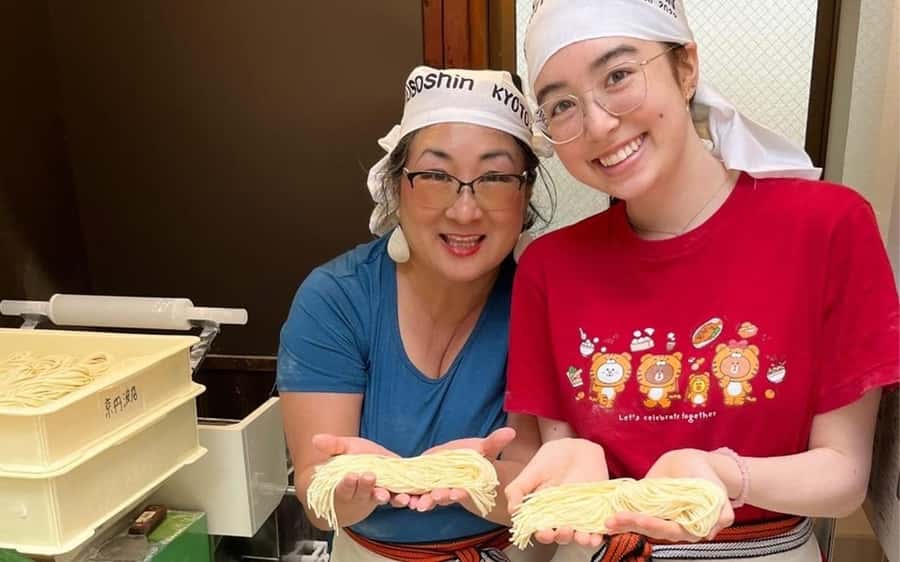
This is one of the better Kyoto food activities for mixed-age groups. A four-year-old can join in with help, and older children can handle more of the noodle-making steps. Teenagers have a real task to complete, not just a short demonstration followed by a snack.
The class also avoids a common family problem: one child cooks while everyone else waits. The instructors make room for hands-on participation, and children can work at the machine, help with the dough, and decorate a bowl or spoon.
Patience matters here. The workspace is small, and the class is not designed for children to run around. Parents should expect a focused hour with everyone gathered close to the work surface.
One family found that six people plus another pair made the room feel cramped. That is the clearest practical limitation in the available information. If you prefer more elbow room, ask about the group size when booking, and consider a private option if one is offered for your date.
What couples and solo visitors can expect
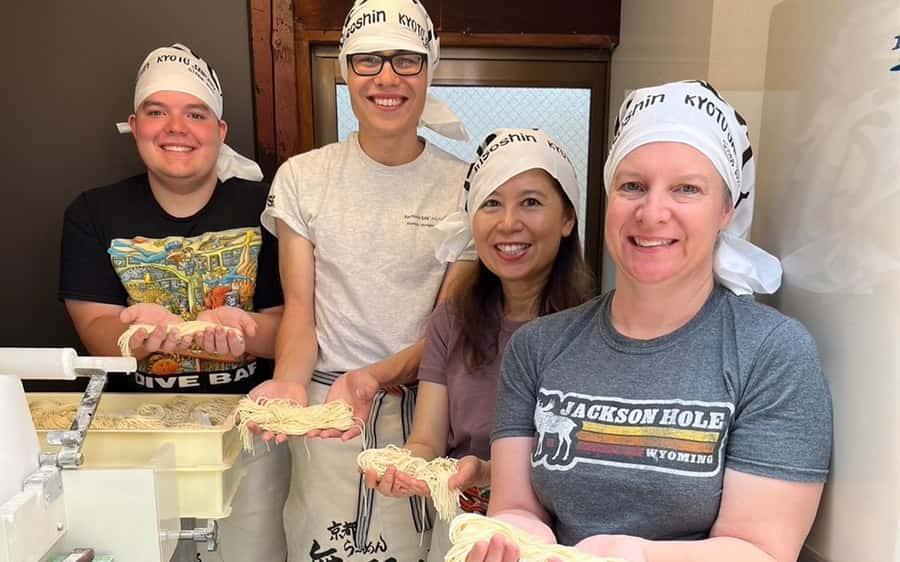
You do not need to arrive with a large family to enjoy this. The class suits couples, friends, and solo participants who want a social food activity with a clear beginning and end.
The guides keep the tone light and conversational. Instructors such as Patti and Yaya have been praised for humor and energy, while Shin is known for explaining the craft and joining in with the teaching. The session gives you plenty to talk about without forcing you into a formal cultural lecture.
For solo visitors, the workshop provides an easy way to meet others through a shared task. For couples, painting a spoon or bowl creates a calmer counterpoint to the physical noodle work. The included meal means you do not need to search for a restaurant afterward.
Vegetarian, vegan, and special dietary needs
Vegetarian and vegan ramen are available, so this class is not limited to meat eaters. Tell the provider about your needs when booking or before the class so the restaurant can prepare the appropriate option.
Gluten-free arrangements may be possible, but the class information does not promise them as a standard choice. One child received special gluten-free noodles and a separate soup after the family discovered the allergy shortly before the activity. That was a kind accommodation, but anyone with celiac disease should contact Musoshin in advance and confirm what can be provided.
The class includes food preparation in a small workspace. If you have a serious allergy, ask about both the ingredients and the equipment used before attending.
Timing, meeting point, and planning details
The start point can vary based on the option you book. Check the exact meeting instructions attached to your reservation rather than assuming every session begins at the same place. The activity ends back at the meeting point.
Languages are English and Japanese. The instructors have experience working with international visitors, and the English explanations are intended to carry you through the full noodle process.
You can reserve now and pay later, which helps if your Kyoto plans are still shifting. Cancellation is allowed up to 24 hours before the activity for a full refund.
Build in time for the meal after the class. The cooking lesson may be listed as an hour, but the restaurant portion means you should not schedule a temple visit or train departure immediately afterward. If you choose the custom bowl, also leave room in your itinerary to collect it the following day.
What you take home
The most useful souvenir is the recipe. You receive the basic ramen recipe, giving you something practical to use after Japan. The class will not turn a home kitchen into a 12-hour ramen shop, but it does explain the steps and ingredients in a way that makes the dish less mysterious.
You may also take home a painted spoon, bowl, or apron, depending on the option. A custom bowl has more personal value than a shop-bought souvenir, though the next-day collection requirement is important.
The workshop bandana is part of the Musoshin identity and is used during the class. Some participants also buy an apron or restaurant T-shirt separately.
Should you book the Musoshin ramen workshop?
Book it if you want a hands-on Kyoto food activity with a real restaurant meal at the end. It is especially good for families, couples, food-minded friends, and anyone who wants more than a quick bowl at a ramen counter.
The class is also a smart choice if your group includes vegetarians or vegans, since suitable ramen options are available. It works best when you have enough time to enjoy the lesson, eat afterward, and return the next day if you select the kiln-fired bowl.
Skip it if you dislike compact group activities, want a quiet restaurant meal only, or have a tight Kyoto schedule that cannot accommodate the class and possible bowl collection. At $54, the experience makes sense because it combines teaching, food, and creative work. Just confirm which option includes the bowl, spoon, and apron before booking.
FAQ
How long does the noodle-making workshop last?
The noodle-making portion lasts about one hour. The full experience also includes painting or design work, depending on the option, followed by a meal at the Musoshin ramen restaurant.
Is the ramen meal included?
Yes. The experience includes a drink and ramen at the Musoshin restaurant after the workshop.
Can children join the workshop?
Yes. The class is family-friendly, and children as young as four have taken part. Instructors help children with the noodle machine and other hands-on steps.
Are vegetarian and vegan ramen available?
Yes. Vegetarian and vegan ramen options are available.
Can I design a ramen bowl?
Depending on the option booked, you can design a bowl and have it baked in a kiln for free. You can collect it the next day.
What languages are offered?
The workshop is offered in English and Japanese.
Fresh off the menu around Kyoto
- Kyoto: Sushi Making Class with Sushi Chef★ 4.8 · 64 reviews
- Nishiki Market Food Tour with Cooking Class★ 4.9 · 42 reviews
- Kyoto: Small-Group Authentic Sushi Making Workshop★ 5.0 · 137 reviews
- Kyoto: Ramen, Gyoza, and Onigiri Cooking Class★ 5.0 · 445 reviews
- Kyoto: Sake Brewery and Tasting Tour in Fushimi★ 4.8 · 55 reviews
- Kyoto: Foodie Night Tour in Gion with 9 dishes + 6 Sake★ 4.4 · 26 reviews
- Kyoto: Nishiki Market Tour with a Local Foodie & Tastings★ 4.5 · 67 reviews
- Kyoto: Ramen Cooking Class at a Ramen Factory with Souvenir★ 4.9 · 532 reviews
Kyoto Food Tours, compared.
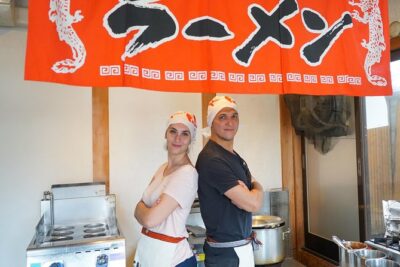
Ramen Cooking Class at Ramen Factory in Kyoto
Read our review →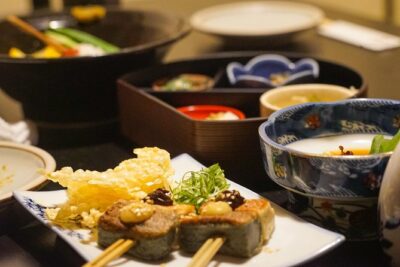
Kyoto Night Foodie Tour in Gion (9+ dishes + 6 Sake tastings)
Read our review →
Nishiki Market Brunch Walking Tour (7 Tastings + Brunch)
Read our review →
Kyoto Night All-Inclusive Eats and Streets, Gion and Beyond
Read our review →
Kyoto: Gion & Pontocho Food Tour with 13 Dishes
Read our review →
Gyoza Cooking Class in Kyoto: Traditional Japanese Dumplings
Read our review →
Kyoto: Small-Group Authentic Sushi Making Workshop
Read our review →Browse the lists this tour appears in