
Review · KYOTO
Kyoto: Gion & Pontocho Food Tour with 13 Dishes
Kyoto’s best evening food experience here is not a single famous dish. It is the combination of quiet Gion lanes, shrine stories, and a generous parade of food, from sashimi and tempura to karaage, tofu skin, tonkatsu, and regional specialties. You walk, listen, eat, and drink your way through two of Kyoto’s most atmospheric districts.
I especially like the small group of no more than eight and the fact that your guide handles the hard part: choosing dishes and explaining what is on the table. I also like the balance between sightseeing and dinner, with Yasaka Shrine and Shirakawa Lane before the meal, then a second stop in Pontocho for more food and sake.
The main consideration is quantity. This is not a light sampling walk with one bite at every stop. Several people found the food surprisingly plentiful, and the three-hour route spends much of its time seated in restaurants. If you want many small stops and lots of walking, this may feel more like a food-focused dinner with sightseeing attached.
Key points to know before booking
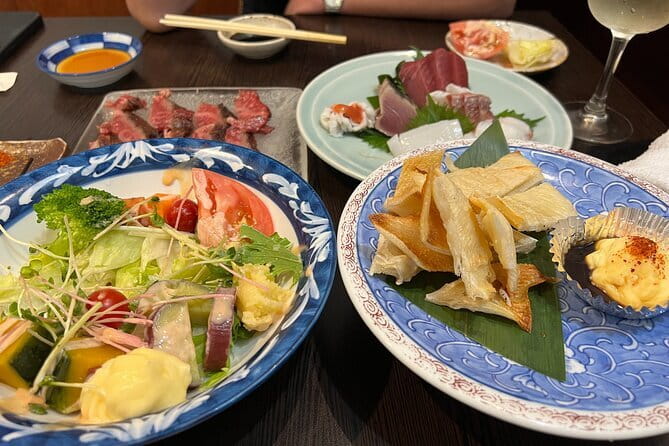
- Up to 13 dishes: Expect a filling spread that may include sashimi, tempura, karaage, tonkatsu, tofu skin, sting ray, and other Japanese specialties.
- Two different dining settings: The evening includes one restaurant and one izakaya, with the second stop in Pontocho offering a different mood.
- English-speaking local guides: Guides including Tomoko, Takuma, Mia, Kohtaro, Minori, and Haruka are praised for clear explanations and warm hosting.
- Gion after dark: The route includes Yasaka Shrine, Shirakawa Lane, a shrine linked with geisha culture, and traditional streets in Gion.
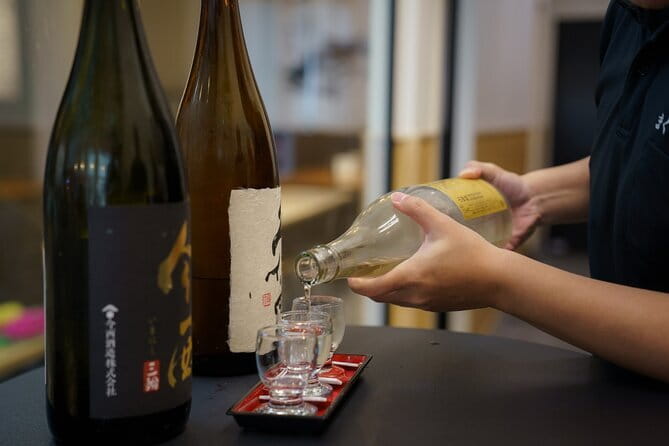
- Sake is part of the experience: Two drinks are included, and some evenings feature a sake flight with explanations of different varieties.
- Easy social format: With eight people or fewer, solo visitors and couples can talk with the group without feeling lost in a crowd.
Starting at Yasaka Shrine after sunset
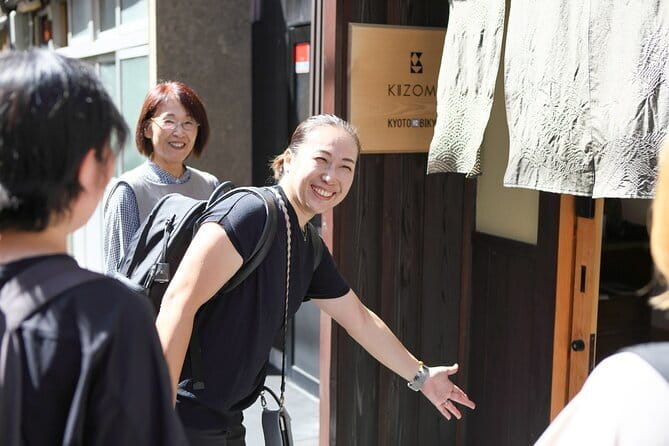
Meet in front of the main entrance of FamilyMart Gion, facing the main street. The location is practical, but Gion has many lanes and landmarks, so give yourself enough time to find the correct FamilyMart rather than relying on a last-minute dash from the station.
The evening begins near Yasaka Shrine, one of Kyoto’s best-known religious sites. At night, its illuminated buildings create a fitting introduction to Gion. Your guide explains the shrine’s role and its place in local life before leading you into the surrounding streets.
This opening matters because Gion can otherwise feel like a pretty backdrop with little explanation. A guide such as Tomoko or Takuma can connect the buildings, customs, and neighborhood to the food you will eat later. The cultural context gives the meal more meaning than simply arriving at a restaurant and ordering unfamiliar dishes from a menu.
The tour is conducted in English. Several guides have received praise for answering questions about Japan in general as well as Kyoto, food, and local customs. Guides vary from evening to evening, but names that appear often include Tomoko, Takuma, Mia, Kohtaro, Minori, Haruka, Taiga, Yuna, and Ruko.
More food tours around Kyoto:
- Ramen Cooking Class at Ramen Factory in Kyoto
★ 5.0 · 1,937 reviews - Kyoto Night Foodie Tour in Gion (9+ dishes + 6 Sake tastings)
★ 5.0 · 1,762 reviews - Nishiki Market Brunch Walking Tour (7 Tastings + Brunch)
★ 5.0 · 1,355 reviews
Shirakawa Lane and Gion’s geisha traditions
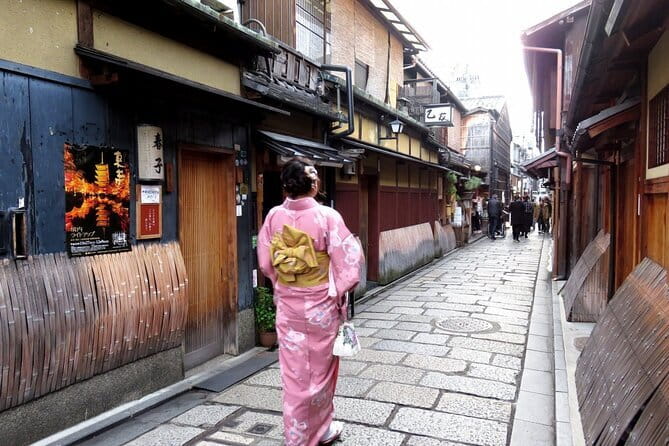
The walk through Shirakawa Lane lasts about 30 minutes. This is one of the most attractive parts of the experience, especially if you enjoy old streets, waterways, and traditional architecture more than major monuments.
Your guide discusses Gion’s geiko and maiko traditions, the respectful way to behave in the district, and the difference between seeing a historic entertainment quarter and treating it like a stage set. The tour includes a shrine frequented by geishas, adding a specific cultural stop to the walk.
A useful point here is that the experience offers information without promising access to geisha performances or private establishments. You are learning about the district and its traditions while walking through public areas. A geisha sighting can happen, but it is never something you should count on or chase.
This part also gives you a chance to ask questions before the dining begins. Ruko, for example, has been praised for explaining food etiquette and geiko culture in clear English. Tomoko has also been singled out for taking questions seriously and even writing down useful answers about dishes and drinks for later reference.
The route is a walking tour, so wear shoes that are comfortable on streets and lanes. The distance is not presented as strenuous, but you will move between the meeting point, Gion, Shirakawa Lane, and Pontocho. The tour is listed as wheelchair accessible, though it is sensible to confirm the route details when booking if you have specific mobility needs.
The first meal: an izakaya in Gion
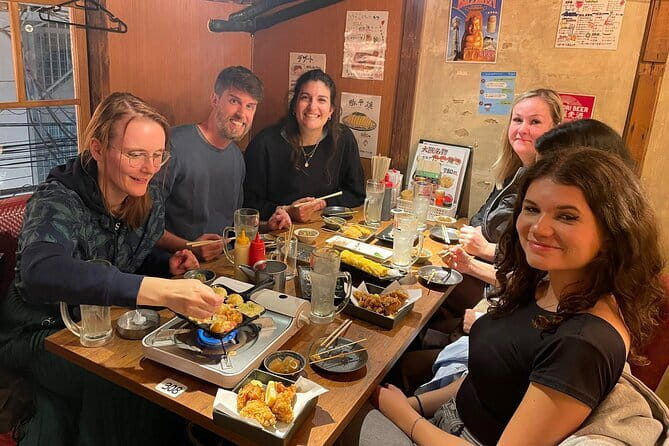
After the opening walk, you stop at an izakaya in Gion. An izakaya is a casual Japanese dining place where small dishes arrive alongside drinks. It is a useful setting for a food tour because you can sample several preparations instead of committing to one large entrée.
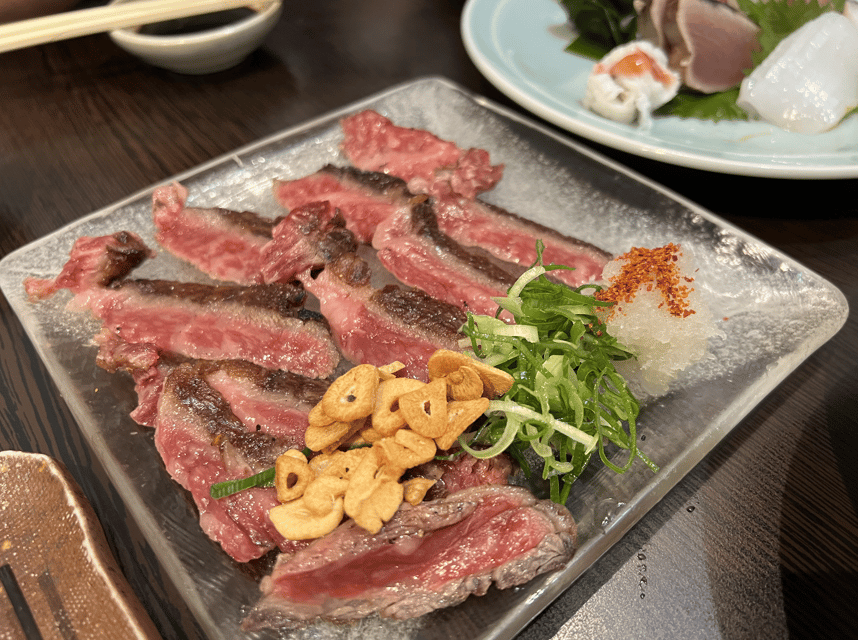
The included dishes can include karaage, tempura, and sashimi. Other foods mentioned by diners include tonkatsu, tofu skin, and sting ray. The exact selection can change, so do not treat the 13 dishes as a fixed printed menu. Think of it as a broad tasting of Japanese food, with your guide helping you understand what you are eating.
This is where the tour earns much of its value. Many visitors can recognize sushi or tempura, but fewer know how to choose less familiar dishes or how to approach a menu filled with Japanese writing. A local guide removes that uncertainty and gives you a chance to try something you might otherwise skip.
The food is not just decorative. Guides explain ingredients, preparation, local connections, and dining manners. The evening can also be adjusted for allergies, but you should provide that information when booking and remind the guide at the start. One group specifically appreciated the care taken with allergies, which is encouraging, though no food tour can promise that every dish will suit every diet.
The portions appear to be substantial. Reports of eating far too much are not unusual in this setting, and the food is intended to function as dinner rather than a few token samples. If you have a small appetite, pace yourself and tell the guide early. If you are arriving hungry, this is likely to feel generous.
Pontocho brings a different evening mood
The route then moves toward Pontocho, with about 15 minutes of guided walking. Pontocho is another historic dining district, but it has a distinct feel from Gion. The change of setting helps keep the evening from becoming one long restaurant stop.
Your guide continues explaining the streets and local customs before bringing you to the second dining spot. This final stop lasts about an hour and includes dinner, drinks, and food tasting. It is described as a hidden dining place, but the useful point is not the label. The important difference is that you experience two establishments rather than staying in one room all evening.
The second restaurant is also where sake receives more attention. Two drinks are included in the tour price, and some groups receive a proper tasting of several sake varieties. Guides explain how the drinks differ, rather than simply pouring a glass and moving on.
Sake can be confusing if you are unfamiliar with it. The tour gives you a starting point: taste different styles, notice the differences, and ask what you might look for elsewhere in Japan. Extra drinks cost more, so heavy drinkers should budget for that. The included drinks are enough to participate, but not designed for an all-night bar crawl.
Pontocho’s narrow lanes and evening lighting make a good end to the tour. Still, the emphasis remains food. One useful criticism from a satisfied participant was that the evening could have included one or two additional stops with smaller portions. That is a fair tradeoff to understand: you get a proper dinner and generous tastings, but less constant movement than on a classic crawl.
Same city, a different plate:
- Kyoto Night All-Inclusive Eats and Streets, Gion and Beyond
★ 4.6 · 576 reviews - Kyoto: Ramen Cooking Class at a Ramen Factory with Souvenir
★ 4.9 · 532 reviews - Kyoto: Ramen, Gyoza, and Onigiri Cooking Class
★ 5.0 · 445 reviews - Gyoza Cooking Class in Kyoto: Traditional Japanese Dumplings
★ 5.0 · 210 reviews
What the 13 dishes really mean
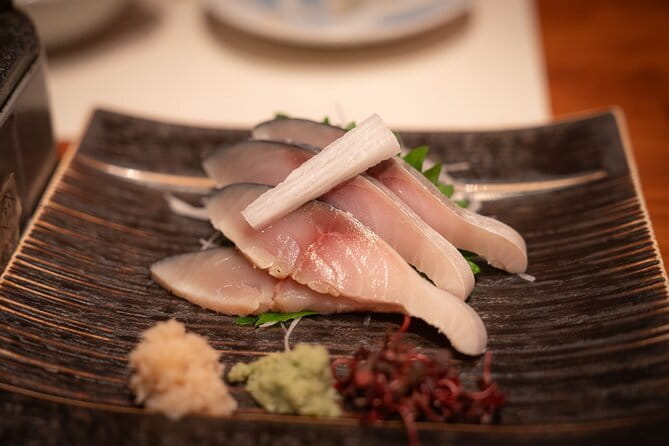
The number sounds impressive, but you should understand how it works. Thirteen dishes does not mean thirteen full restaurant meals. It means a series of shared or tasting-sized preparations served across two dining stops, with enough food to leave many people very full.
The range is the strength. You might move from sashimi to fried food, from familiar karaage to tofu skin or sting ray. This gives you a better picture of Japanese dining than a meal built around only sushi or ramen.
The tour is particularly useful for first-time visitors who want a safe way to try unfamiliar dishes. You can ask about texture, ingredients, and etiquette before taking a bite. If you already know Japanese food well, the cultural explanations and sake tasting may matter more to you than the basic menu.
The exact dish selection is not guaranteed in the supplied details. Seasonal availability, restaurant menus, dietary needs, and the guide’s choices can affect what appears. Book this for variety and local interpretation, not for one specific dish.
The guides shape the evening
The strongest part of this experience is its human element. Tomoko is repeatedly described as warm, attentive, and full of useful information. Takuma receives praise for being sociable, well prepared, and careful with allergies. Mia is noted for keeping the mood welcoming, even during snow or heavy rain.
Kohtaro is a good match for people who want more food and drink explanation. He has guided groups through Gion and Pontocho, explained sake differences, and discussed dishes ranging from sashimi to sting ray. Ruko and Minori are also praised for clear explanations and friendly conversation.
You should not expect identical commentary every evening. A small-group tour changes with the person leading it, the people in the group, and the restaurants used that night. That is usually a strength here. The guides appear comfortable answering questions and adapting the pace, rather than delivering a rigid speech.
The group limit of eight makes a real difference. You can hear the guide in narrow streets and around a restaurant table. Solo visitors can also meet people from other countries without having to push into a large crowd. For couples or families, the format offers company without the scale of a bus tour.
Is $82 good value for Kyoto?
At $82 per person, this is not a bargain dinner. But the price includes up to 13 dishes, two drinks, a local guide, and three hours of walking and conversation. You are paying for dinner plus interpretation, restaurant access, neighborhood orientation, and the confidence to order foods you might not recognize.
The value is strongest if you would otherwise spend money on dinner and want help choosing where and what to eat. It is also a sensible choice for a first evening in Kyoto, since the guide can point out local customs and offer food suggestions for the rest of your visit.
The value is weaker if you mainly want a cheap meal, already know Gion and Pontocho well, or prefer to choose every dish yourself. Extra drinks are not included, and the included two beverages may not satisfy someone hoping for a long sake session.
I would also compare it with the cost of a normal restaurant meal in Kyoto. The tour costs more because the food is accompanied by an English-speaking guide and a planned route. If you measure value only by calories, it may seem expensive. If you value context, variety, and an easy evening with no menu stress, the price is reasonable.
Who should book this evening?
I would recommend it to first-time Kyoto visitors, solo visitors, couples, and small groups who want food and culture in one outing. It is especially useful if you are curious about geisha traditions but understand that the tour provides context, not a private geisha experience.
It also suits adventurous eaters. The broad selection lets you try dishes you may not order alone, while the guide explains what is happening at the table. Families can join, and one group with two young children found the guide accommodating, but parents should note that the meal is adult-oriented in its variety and timing.
You may want to skip it if you dislike seafood, have highly restrictive dietary needs, or want a rapid street-food crawl. You may also prefer another format if you want many different venues with small bites instead of two main dining stops.
The tour lasts three hours and begins in the evening, with starting times depending on availability. Free cancellation is available up to 24 hours ahead, and you can reserve without paying immediately. Those policies help if your Kyoto schedule is still shifting, but the main decision is simpler: do you want a substantial, guided dinner in Gion and Pontocho?
FAQ
Where does the Kyoto food tour meet?
Meet in front of the main entrance of FamilyMart Gion, facing the main street.
How long does the experience last?
The tour lasts three hours.
How many people are in the group?
The group is limited to eight participants.
How many dishes and drinks are included?
The experience includes food at one restaurant and one izakaya, with up to 13 dishes and two alcoholic or non-alcoholic drinks.
Is the tour conducted in English?
Yes. The tour has a live English-speaking guide.
Can I cancel or pay later?
You can cancel up to 24 hours in advance for a full refund. Reserve now and pay later is also available.
Fresh off the menu around Kyoto
- Kyoto: Sushi Making Class with Sushi Chef★ 4.8 · 64 reviews
- Nishiki Market Food Tour with Cooking Class★ 4.9 · 42 reviews
- Kyoto: Small-Group Authentic Sushi Making Workshop★ 5.0 · 137 reviews
- Kyoto: Ramen, Gyoza, and Onigiri Cooking Class★ 5.0 · 445 reviews
- Kyoto: Sake Brewery and Tasting Tour in Fushimi★ 4.8 · 55 reviews
- Kyoto: Foodie Night Tour in Gion with 9 dishes + 6 Sake★ 4.4 · 26 reviews
- Kyoto: Nishiki Market Tour with a Local Foodie & Tastings★ 4.5 · 67 reviews
- Kyoto: Ramen Cooking Class at a Ramen Factory with Souvenir★ 4.9 · 532 reviews
Kyoto Food Tours, compared.
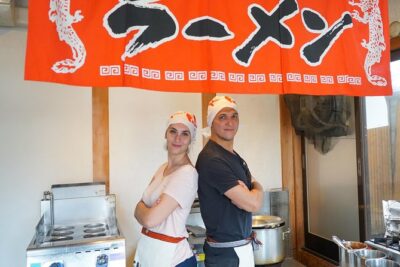
Ramen Cooking Class at Ramen Factory in Kyoto
Read our review →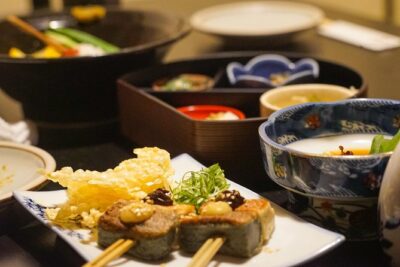
Kyoto Night Foodie Tour in Gion (9+ dishes + 6 Sake tastings)
Read our review →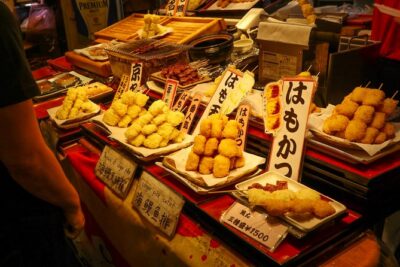
Nishiki Market Brunch Walking Tour (7 Tastings + Brunch)
Read our review →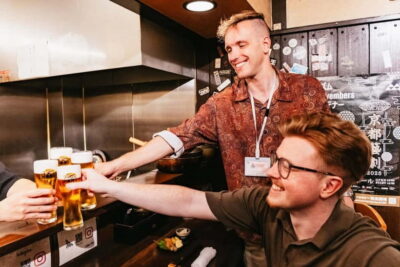
Kyoto Night All-Inclusive Eats and Streets, Gion and Beyond
Read our review →
Gyoza Cooking Class in Kyoto: Traditional Japanese Dumplings
Read our review →
Kyoto: Small-Group Authentic Sushi Making Workshop
Read our review →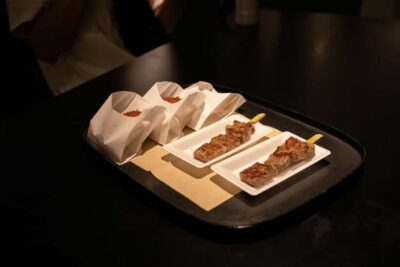
Kyoto: Local Food Tasting Tour at the Nishiki Market
Read our review →Browse the lists this tour appears in