
Review · KYOTO
Kyoto: Ramen, Gyoza, and Onigiri Cooking Class
The clever part of this Kyoto cooking class is its focus on ramen broth, not noodles. You learn how to turn easy-to-find ingredients into miso and shoyu soup, then build a full meal with gyoza and onigiri. I like the practical recipes and the small groups, which make it easier to ask questions and get help with tricky dumpling folds.
I also like that you eat what you prepare, so this is both a lesson and a generous lunch or dinner. Nori and the other English-speaking instructors keep the pace lively, but the class is fast, and the current food policy is strict: no vegan, pescatarian, gluten-free, or other special diets.
Key points at a glance
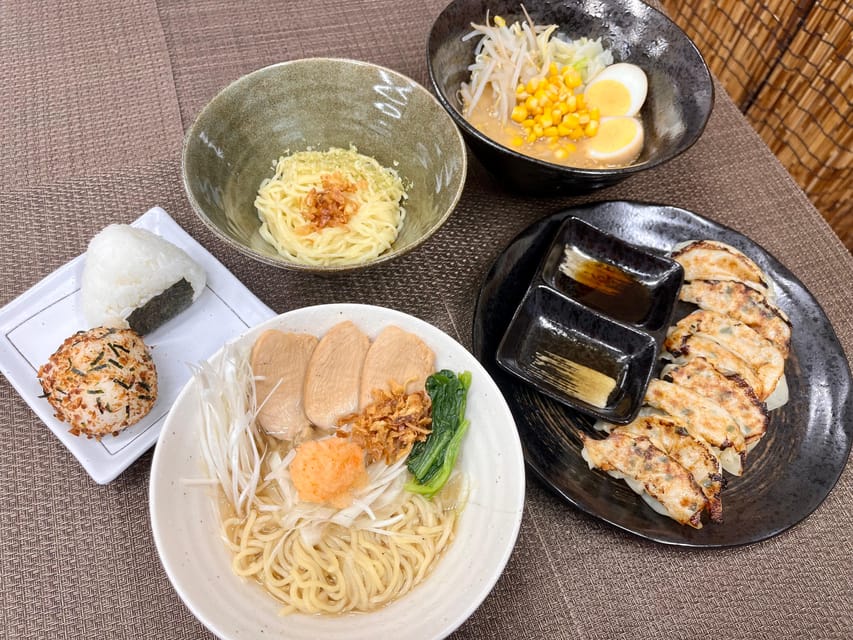
- Two ramen styles: Prepare miso and shoyu broths with simple seasonings, vegetables, and toppings.
- Hands-on gyoza practice: Mix the filling, learn the fold, and pan-fry the dumplings yourself.
- Onigiri with proper shape: Turn seasoned rice into neat Japanese rice balls for a snack or packed lunch.
- Small class format: Groups are limited to eight, with instructors available at the workstations.
- A full meal in 90 minutes: You cook, sit down, and eat ramen, gyoza, and onigiri before leaving.
- Useful for home cooks: Recipes for ramen and gyoza are provided, along with techniques you can repeat at home.
Why the broth makes this Kyoto class different
Many ramen activities focus on assembling noodles and toppings. Here, the real lesson is the soup. You can buy ramen noodles in many places, but a good broth is harder to reproduce, so the class concentrates on seasonings and balance.
You work with ingredients such as soy sauce, miso, mirin, sesame oil, garlic, ginger, chicken stock powder, fish powder, oyster sauce, lard, and chili oil. These are not obscure restaurant-only products. The idea is to show you how a home cook can build a convincing bowl without spending hours making a traditional stock from bones.
The menu includes two broths:
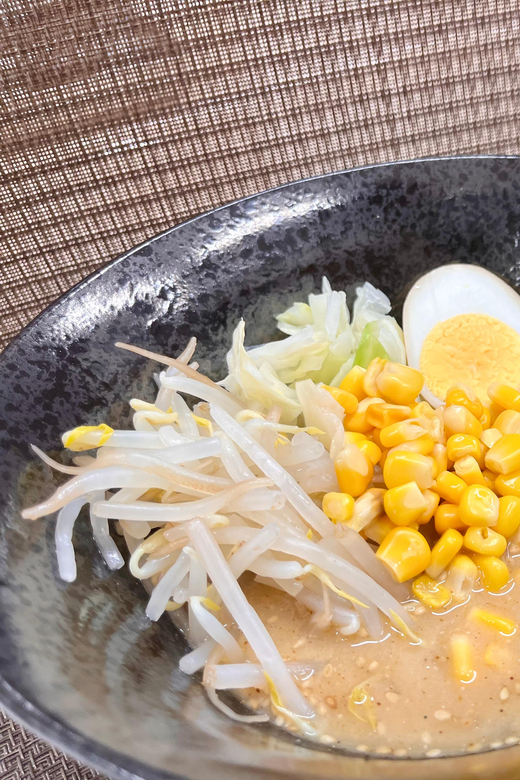
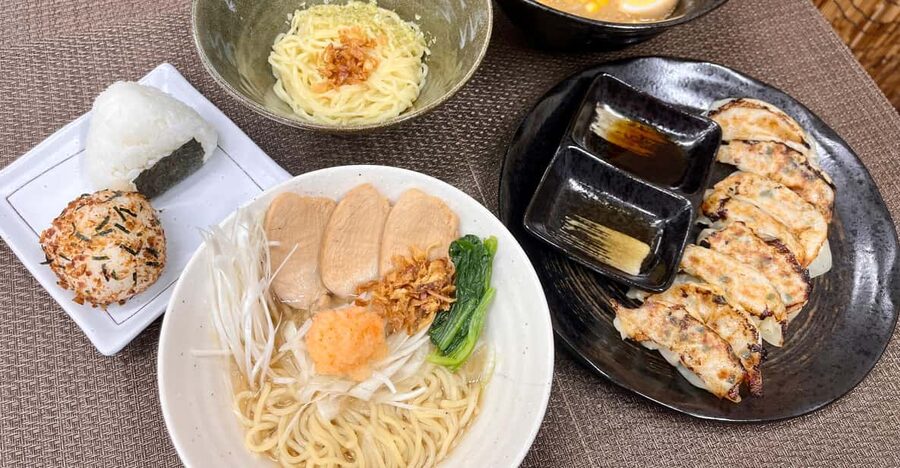
- Miso ramen: Served with boiled egg, bean sprouts, green onions, and sweet corn.
- Shoyu ramen: Served with chicken, bamboo shoots, and green vegetables.
The toppings are deliberately mild. That matters. A good ramen bowl is not a pile of strongly seasoned extras competing with the soup. The broth does the heavy work, while the vegetables and other toppings add color, texture, and freshness.
You do not make noodles in this class. That is an important detail for anyone expecting a full noodle-making workshop. You use prepared noodles and spend your time on the part that is easier to carry into your own kitchen: the broth.
More cooking classes around Kyoto:
- Ramen Cooking Class at Ramen Factory in Kyoto
★ 5.0 · 1,937 reviews - Kyoto: Ramen Cooking Class at a Ramen Factory with Souvenir
★ 4.9 · 532 reviews - Gyoza Cooking Class in Kyoto: Traditional Japanese Dumplings
★ 5.0 · 210 reviews
What happens during the 90 minutes
The exact order can vary as instructors organize the kitchen, but you should expect a tightly planned sequence rather than a slow, leisurely lesson. Ingredients are portioned and equipment is prepared before you start. That setup is why the class can cover four dishes in a short time.
First, the instructors explain the basic ingredients and give some background on the dishes. Several instructors have been praised for clear English and a friendly teaching style. Nori is often mentioned by name, along with Kairi, Aoi, Minori, Ayuna, and Riho on different sessions.
You then work through the ramen components. The emphasis is on measuring seasonings, combining them in the right balance, and understanding how the broth changes as ingredients come together. This is not a demonstration where you simply watch a chef work. You take part at your own station.
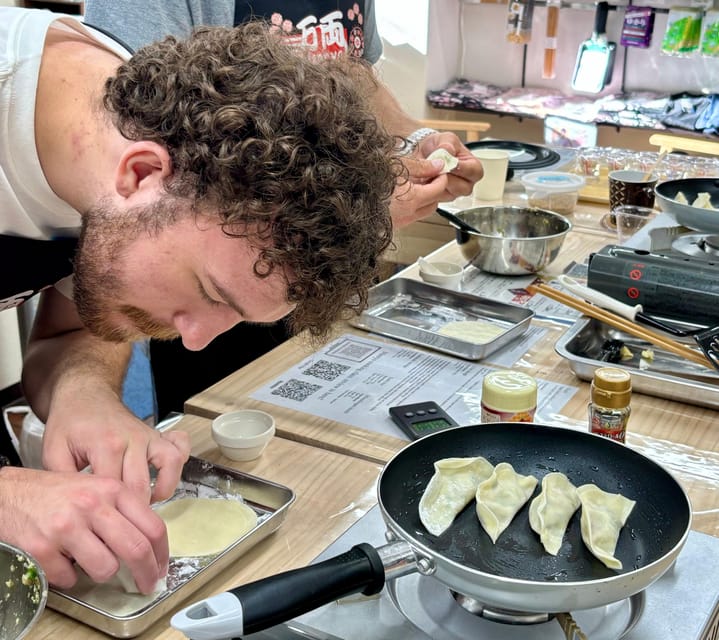
The gyoza section is likely to be the most tactile. You prepare the filling from ground pork, cabbage, onion, chives, garlic, ginger, and seasonings, then learn how to place the mixture in the wrapper and seal the edges. The class aims to teach both the filling and the shape, so you can repeat the process at home.
Pan-frying gyoza also teaches a useful bit of timing. The dumplings need a browned base and enough steam to cook the filling. The instructors guide you through the steps, which is helpful if you have never cooked dumplings before.
Onigiri is the simplest dish, but shaping it neatly takes practice. You form the rice into compact balls or other traditional shapes and season or fill them according to the class preparation. Onigiri makes sense as part of this menu because it is a practical Japanese snack, not just a decorative side dish.
The final stage is the reward: you eat the ramen, gyoza, and onigiri you made. You also receive free coffee and tea. Several people have found the quantity surprisingly generous, so I would not plan a large meal immediately before class.
The ramen lesson is practical, not a noodle workshop
I think the broth focus is the strongest reason to book this activity. Making noodles from scratch would be interesting, but it would also take time away from the sauces, seasoning, and cooking methods you can use more easily at home.
You learn to work with two familiar Japanese flavor profiles. Miso gives the soup a fuller, savory taste, while shoyu brings soy sauce into sharper focus. The class also shows how toppings should support rather than overpower the broth.
The ingredient list includes lard, oyster sauce, and fish powder. Those details matter if you have dietary restrictions or avoid animal products. Even the vegetarian menu replaces only pork with tofu, while other ingredients remain the same. You should not assume that the vegetarian option is vegan, pescatarian, gluten-free, or free of fish-based seasonings.
The recipes are designed for home cooks. You are not expected to source unusual equipment or make a restaurant-sized stockpot. That makes the $90 price easier to justify for someone who wants a skill to take home, not just a meal eaten once.
Gyoza gives you the most useful hands-on skill
Ramen can seem difficult because of the broth, but gyoza is where many people gain the most confidence. The ingredients are familiar, the filling is easy to understand, and the folding technique is something you can practice with family or friends later.
The instructors show you how much filling to use and how to seal the wrapper. Too much filling makes the dumpling hard to close. Too little leaves you with a flat, disappointing parcel. The class is built around repetition, so you can make several dumplings rather than folding only one under supervision.
The small group limit of eight helps here. If the room is full, you will still be sharing the experience with other cooks, but the format allows for direct assistance. When the group is smaller, the attention can be more personal. One session had only two people and became a private-style lesson, though you should not book expecting that every time.
A useful detail: the printed recipes cover ramen and gyoza. The class description does not promise a separate onigiri recipe, so you should think of the rice ball lesson mainly as a technique you learn during the session.
More food workshops around Kyoto:
- Kyoto: Small-Group Authentic Sushi Making Workshop
★ 5.0 · 137 reviews - Kyoto Michelin Ramen Workshop or Painting Ramen Essentials
★ 4.9 · 100 reviews - Kyoto: Sushi Making Class with Sushi Chef
★ 4.8 · 64 reviews - Nishiki Market Food Tour with Cooking Class
★ 4.9 · 42 reviews
Onigiri adds an everyday side of Japanese food
Onigiri is often overshadowed by ramen, but it gives the class a useful change of pace. These rice balls are portable, filling, and easy to adapt. They work as a quick snack or a simple lunch in place of a sandwich.
The key lesson is shape and handling. Rice that is too loose will fall apart, while rice that is packed too firmly can become dense. The instructors help you produce a neat form, and you get to eat the result alongside the ramen and gyoza.
This part is especially useful if you want more than restaurant-style food. Ramen is a treat, while onigiri is an everyday food you can make regularly. Together, the dishes show both sides of Japanese cooking: a warm bowl built around broth and a portable rice dish built around convenience.
The pace is fast, but the organization helps
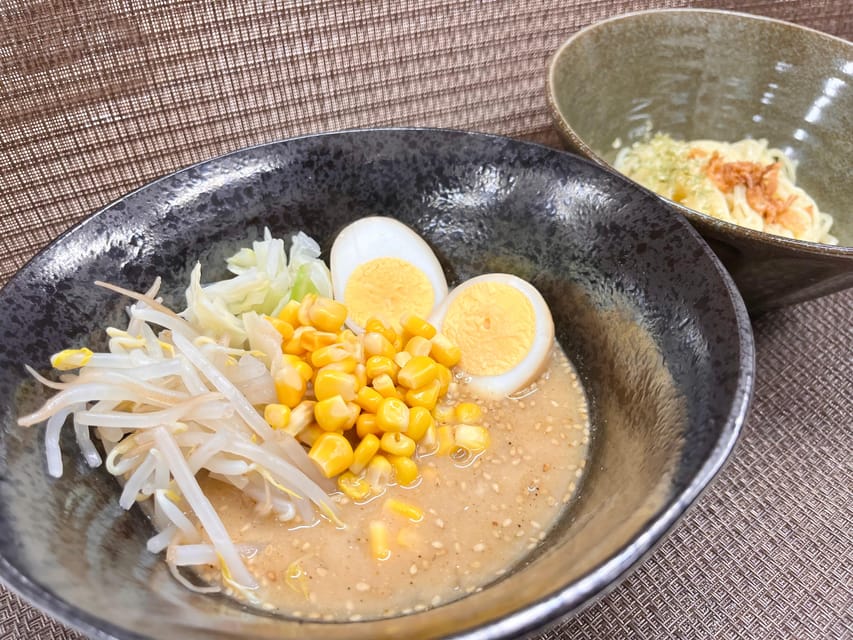
Ninety minutes is not long for two ramen broths, gyoza, and onigiri. You should expect a busy class with little idle time. One person described making both ramen styles, gyoza, and onigiri in about an hour, which gives you a sense of the brisk pace.
The upside is impressive variety. You do not spend the whole session on one recipe. The downside is that you will not get a long, detailed lecture on every ingredient or technique.
Premeasured ingredients help keep things moving. You may do more assembling and combining than measuring from scratch. That is good for a first cooking class and for families, but experienced cooks looking for advanced technique may find the process fairly guided.
Wear comfortable clothes and shoes. You will be moving between preparation and cooking, and the class is hands-on from start to finish. Arrive about 10 minutes early, particularly because the classroom is not obvious from the main street.
Finding the classroom near Sanjo Keihan
The classroom is in the basement level, B1, of the Life Building. It is one street away from the main road, so do not rely on spotting a large sign from a busy street.
Search for Manryo cooking class on Google Maps before you leave. If you take a taxi, the suggested drop-off point is in front of the Family Mart at Sanjo Keihan. From there, it is about a two-minute walk.
This is a small but important planning point. A taxi driver may know the Family Mart more easily than the classroom name, and arriving late could be stressful in a tightly timed class. Save the map location and allow a few extra minutes.
There is no hotel pickup or drop-off. You make your own way to the kitchen.
Is $90 a fair price?
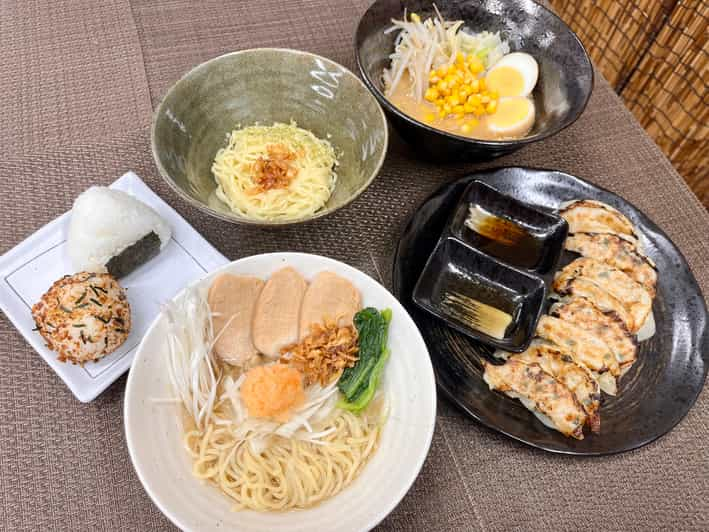
At $90 per person, this is not a cheap lunch. But the price includes all ingredients, cooking equipment, instruction in English, the meal you prepare, coffee and tea, and recipes for ramen and gyoza.
The value depends on what you want. If you only want to eat ramen, a restaurant will cost less. If you want a guided activity, a substantial meal, and recipes you can use later, the price is more reasonable. You are also learning three kinds of food in one session, rather than paying for a narrow workshop.
The strongest value is the amount of food and the practical focus. Several people have found the meal filling enough that arriving hungry is wise. You can also purchase beer after the meal, although beer is not included.
Free cancellation is available up to 24 hours before the activity, and you can reserve now and pay later. Make only one reservation per group. Duplicate bookings under the same name may be cancelled, since they hold seats other people could use.
Who should book this experience?
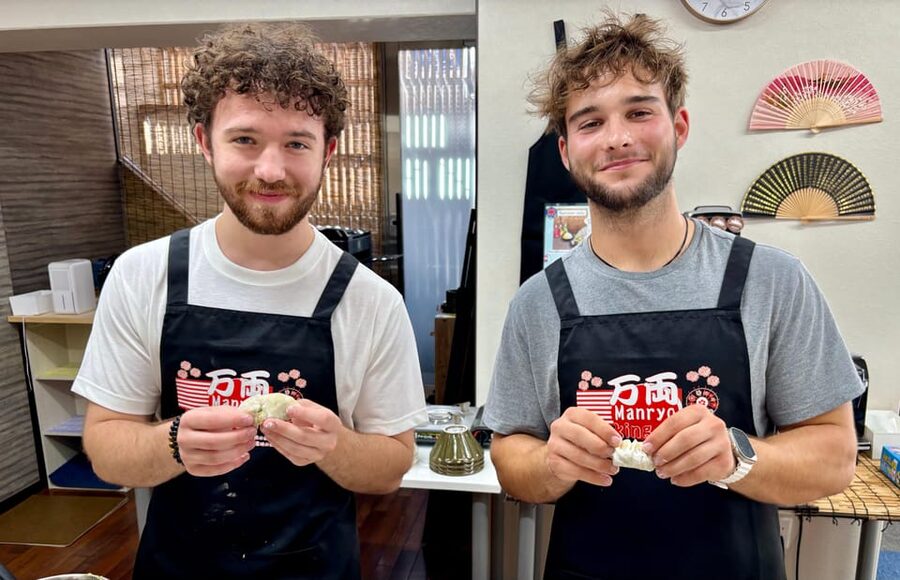
I would recommend it to first-time visitors who want a food activity with a clear result. You cook, eat, and leave with techniques you can repeat. It also suits couples, families with older teenagers, and friends who enjoy working together.
The official minimum age is 13, and participants must be able to cook independently without constant help. Some past sessions included younger children, but you should follow the current stated rule rather than rely on those exceptions.
This class is also a good fit if you want English instruction. The instructors explain the ingredients, cooking steps, and some background about the dishes and Japanese food culture. You should not expect a formal history lecture, but the cultural notes add useful context.
It is less suitable for an advanced cook who wants to make noodles, prepare a long stock, or study fine knife work. The class is designed to be accessible and efficient, not technical or chef-training focused.
Dietary rules deserve careful attention
The regular menu uses pork, chicken, fish-based ingredients, oyster sauce, lard, and other seasonings. The advertised vegetarian menu replaces pork with tofu, but other ingredients remain unchanged.
The class cannot accommodate vegan, pescatarian, gluten-free, or other special diets. One past participant described receiving extra accommodation, but you should not count on that. If your diet is medically important or strict, this is not a safe activity to book unless the provider confirms otherwise in writing.
The experience is also not suitable for wheelchair users or people with recent surgeries. The basement location and hands-on cooking format may create practical problems for anyone who needs step-free access or cannot stand and work comfortably.
My verdict on the Kyoto ramen cooking class
Book this class if you want a friendly, compact food lesson that ends with a generous meal. The best features are the two broth styles, the repeated gyoza practice, the useful onigiri technique, and the small group size. You get much more than a cooking demonstration.
Skip it if you need strict dietary accommodation, dislike a fast pace, or specifically want to make ramen noodles from flour. The class teaches broth rather than noodles, and its food policy leaves little room for special requests.
For most eligible visitors, I think the $90 is justified by the hands-on format and the recipes you can use after Japan. Arrive early, come hungry, check the ingredients carefully, and keep the rest of your schedule light enough to enjoy the meal without rushing away.
FAQ
How long is the Kyoto ramen, gyoza, and onigiri cooking class?
The class lasts 90 minutes. You prepare the dishes during that time and eat the food you make.
What dishes will I prepare?
You will prepare miso ramen, shoyu ramen, gyoza, and onigiri. The ramen portion focuses on broth, toppings, and assembly rather than making noodles.
Do I make ramen noodles from scratch?
No. The class uses ramen noodles and teaches you how to prepare flavorful broth with ingredients and seasonings that are easier to find for home cooking.
Is the class taught in English?
Yes. English-speaking instructors lead the class and explain the ingredients and cooking methods in English.
How many people can join the class?
The class is limited to eight participants, making it a small-group activity.
What is included in the $90 price?
The price includes English instruction, all cooking ingredients and equipment, the food you prepare, recipes for ramen and gyoza, and free coffee and tea.
Is there a vegetarian option?
There are two menu options: regular and vegetarian. The vegetarian menu replaces pork with tofu, but other ingredients remain the same.
Can the class accommodate vegan, pescatarian, or gluten-free diets?
No. The class cannot accommodate vegan, pescatarian, gluten-free, or other special diets.
Where is the cooking classroom?
The classroom is in B1 of the Life Building, one street away from the main street. Search for Manryo cooking class on Google Maps. From the Family Mart at Sanjo Keihan, it is about a two-minute walk.
What is the minimum age?
Participants must be at least 13 and able to cook independently without constant assistance.
Fresh off the menu around Kyoto
- Kyoto: Sushi Making Class with Sushi Chef★ 4.8 · 64 reviews
- Nishiki Market Food Tour with Cooking Class★ 4.9 · 42 reviews
- Kyoto: Small-Group Authentic Sushi Making Workshop★ 5.0 · 137 reviews
- Kyoto: Sake Brewery and Tasting Tour in Fushimi★ 4.8 · 55 reviews
- Kyoto: Nishiki Market Tour with a Local Foodie & Tastings★ 4.5 · 67 reviews
- Kyoto: Ramen Cooking Class at a Ramen Factory with Souvenir★ 4.9 · 532 reviews
- Kyoto: Foodie Night Tour in Gion with 9 dishes + 6 Sake★ 4.4 · 26 reviews
- Kyoto Michelin Ramen Workshop or Painting Ramen Essentials★ 4.9 · 100 reviews
Kyoto Food Tours, compared.
Ramen Cooking Class at Ramen Factory in Kyoto
Read our review →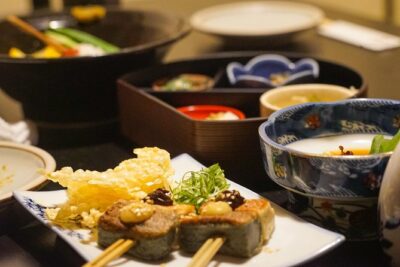
Kyoto Night Foodie Tour in Gion (9+ dishes + 6 Sake tastings)
Read our review →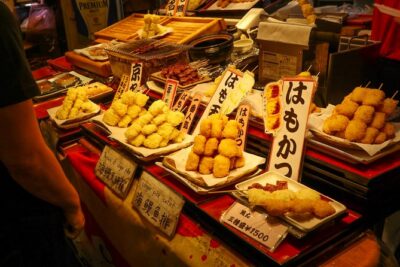
Nishiki Market Brunch Walking Tour (7 Tastings + Brunch)
Read our review →
Kyoto Night All-Inclusive Eats and Streets, Gion and Beyond
Read our review →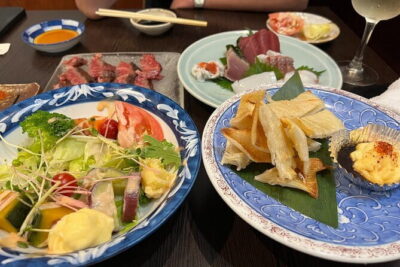
Kyoto: Gion & Pontocho Food Tour with 13 Dishes
Read our review →
Gyoza Cooking Class in Kyoto: Traditional Japanese Dumplings
Read our review →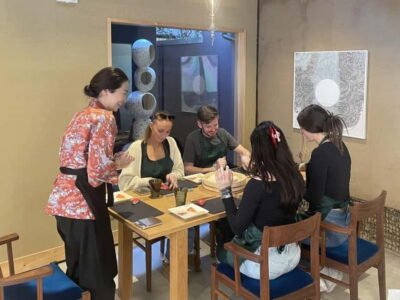
Kyoto: Small-Group Authentic Sushi Making Workshop
Read our review →
Kyoto: Local Food Tasting Tour at the Nishiki Market
Read our review →Browse the lists this tour appears in