
Review · TOKYO
Tokyo: 2-Hour Vegan and Vegetarian Ramen Guided Walking Tour
Ramen is usually a problem for vegetarians in Japan, since the broth often contains pork, chicken, or fish. This two-hour tour solves that neatly with four mini bowls of vegan ramen at two respected shops in Shibuya and Shinjuku. You also get a useful lesson in how Hokkaido and Tokyo helped shape modern ramen.
I like the mix of tasting and place-based food history, and I like that you can request gluten-free noodles or non-vegan broth to match your diet. The main consideration is the price, $96 per person, which is a serious spend for two hours, plus the train fare between Shibuya and Shinjuku.
Key points
- Four mini bowls, two ramen neighborhoods: Compare Hokkaido-style ramen with classic Tokyo tsukemen rather than eating one large bowl.
- A strong option for plant-based diners: Every included ramen is vegan, with other broth and noodle choices available.
- The train ride is part of the plan: You travel from Shibuya to Shinjuku and pay that fare separately.
- Food history has a practical purpose: The guide explains regional ramen styles while you taste them.
- English-speaking guides add local context: Guides including Brian, Bunga, Frank, Makayla, and Sahori have led the experience.
- Best for small appetites and curious eaters: The portions let you compare several styles without committing to four full bowls.
Four bowls that make vegetarian ramen easier to understand
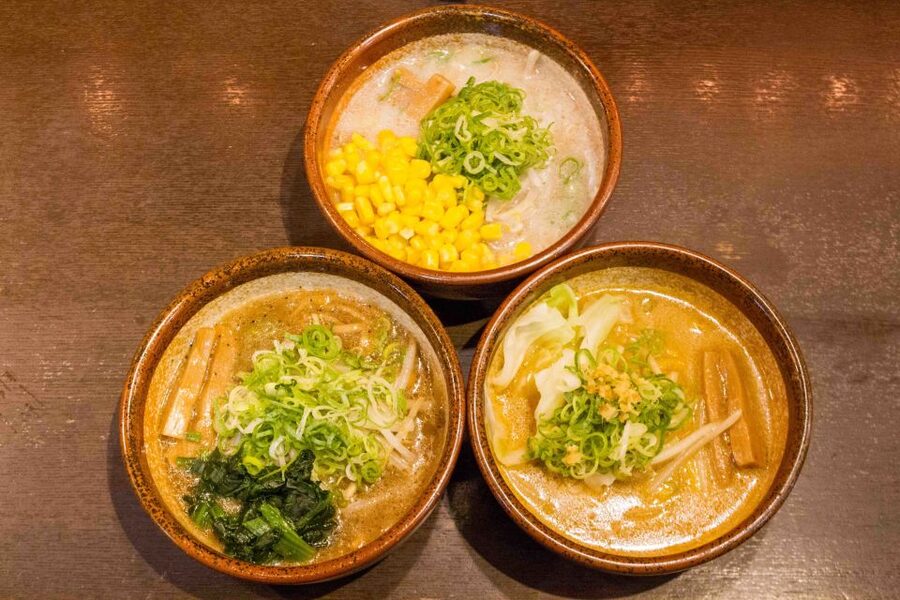
The clever idea here is portion size. Instead of asking you to choose one bowl from a long Japanese menu, the tour gives you four small servings. That lets you compare broth, noodles, toppings, and texture without ending the afternoon uncomfortably full.
This matters because ramen changes greatly from shop to shop. One bowl may taste rich and rounded, while another puts more emphasis on noodles or dipping broth. Four samples give you a better sense of those differences than one standard restaurant meal.
All four included bowls are vegan. That is the core reason to book this tour, especially if you have spent time in Tokyo searching for ramen without pork, chicken, or fish stock. You can also request gluten-free noodles, and non-vegan broth options are available for each ramen if your group includes people with different diets.
You should explain your dietary needs when booking or before the tour begins. The experience is designed to be flexible, but clear communication is still the smart approach.
More vegetarian and vegan food tours around Tokyo:
- Shibuya Tokyo: Sushi Making Class (Vegan/Vegetarian/Halal)
★ 4.7 · 29 reviews - Ha Noi Walking Food Tour, Non Vegetarian,Vegan, vegetarian Option
★ 5.0 · 846 reviews - Hanoi Vegan Street Food & Train Street Tour
★ 4.8 · 143 reviews
Meeting beside Hachiko in Shibuya
The tour begins in front of Shibu Hachi Box, across from the famous Hachiko statue. The guide waits farther to the left, under the word Shibu, holding a Tokyo Ramen Tours sign.
This is a busy meeting area, so allow a little time to locate the exact spot. Hachiko is one of Tokyo’s easiest landmarks, but the area around the statue can be crowded and confusing if you arrive at the last moment. Look for the sign rather than assuming the guide will be directly beside the statue.
Starting in Shibuya gives the tour an energetic beginning. You are in one of Tokyo’s best-known districts, but the purpose here is not a broad sightseeing walk. The streets provide the setting for the first food stop and for the guide’s explanation of ramen as a Japanese dish with regional styles.
The guides speak English. Names attached to recent tours include Brian, Bunga, Frank, Makayla, and Sahori. You cannot choose a particular guide from the information provided, but the repeated pattern is clear: the guide is expected to explain ramen, answer questions, and help you navigate the food stops.
The Hokkaido-style stop in Shibuya
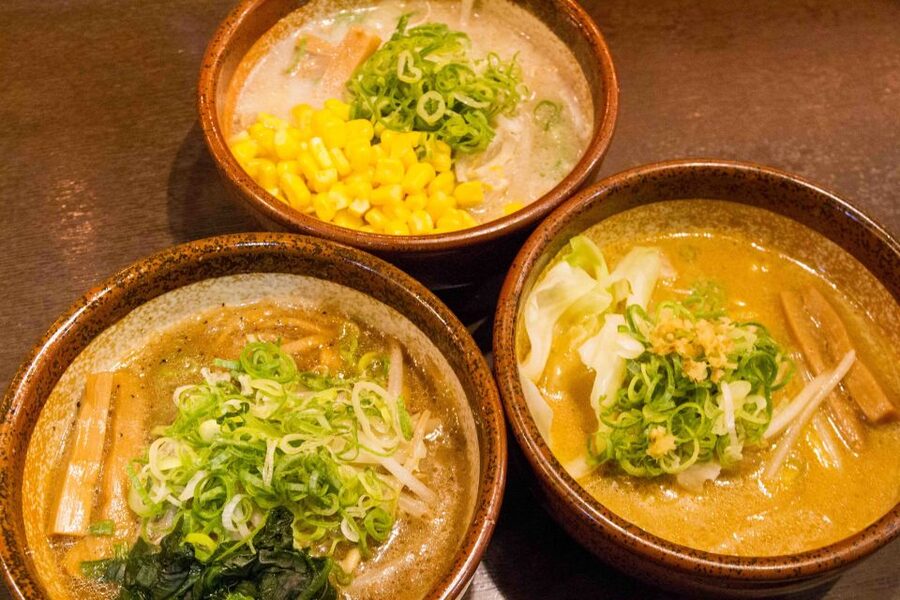
The first ramen shop specializes in authentic Hokkaido-style ramen. Hokkaido is important in ramen culture, and the guide explains its place in the wider story of the dish while you taste.
For you, the value of this stop is that the history is tied to an actual bowl. Rather than hearing a long lecture before eating, you can notice how the ramen tastes and then connect those qualities to the regional style being discussed.
The tour does not specify the exact flavor of the vegan bowls, toppings, or noodle shape on a given day. That is useful to remember if you are expecting a fixed menu. The exact samples may depend on the restaurant and available ingredients, but the format promises four carefully prepared mini bowls.
The first shop also gives you a chance to ask questions about what makes ramen different from one region to another. If you are interested in Japanese food beyond the meal itself, this is where the tour begins to feel like more than a restaurant crawl.
Taking the train from Shibuya to Shinjuku
After the first stop, you ride the train to Shinjuku. The fare is not included, so bring a transport card or cash for the ticket.
This short transfer is practical rather than scenic. It connects two major Tokyo districts and lets the tour compare two different ramen settings in one outing. You also get a small taste of how Tokyo food tours work in real life: you meet at a landmark, use the train, and move between neighborhoods rather than staying inside one restaurant area.
The train fare is a minor extra cost, but you should plan for it. If you already use a Tokyo transportation card, the trip is simple. If not, keep cash available for the ticket.
The transfer also means you should wear comfortable shoes and avoid bringing bulky luggage. The tour lasts two hours, so the schedule is fairly compact. Arriving on time matters more than it would on a casual meal.
More two-hour food walks around Tokyo:
- Osaka: 2-Hour Local Street Food Tour – Dotonbori & Namba
★ 4.6 · 95 reviews - Dublin: 2-Hour Premium Whiskey and Food Tasting Tour
★ 4.7 · 54 reviews - Palermo: 2-Hour Sicilian Cheese and Wine Tasting Tour
★ 4.8 · 52 reviews - Strasbourg: 2-Hour Gourmet Walking Tour
★ 4.1 · 39 reviews
Tokyo tsukemen in Shinjuku
The second restaurant specializes in classic Tokyo tsukemen, or dipping ramen. This style changes the eating method: the noodles and dipping broth are served separately, and you dip each portion of noodles into the sauce before eating.
For many people, tsukemen is the most useful discovery of the tour. It has a different rhythm from standard ramen, and the separation of noodles and broth makes texture easier to notice. You can pay attention to the noodles themselves instead of treating them as part of one combined soup.
Again, the tour serves a mini portion rather than a full bowl. That is a real advantage here. You get to try a second regional approach after already eating in Shibuya, without turning the final stop into a food endurance test.
The Shinjuku stop also reinforces the central lesson of the tour: ramen is not one fixed dish. Regional traditions, broth choices, noodles, and serving styles all affect the result. By the end, you should have a clearer idea of which style you would order again in a full-size bowl.
What the guide adds beyond the food
The food is the main event, but the guide gives the tasting its shape. You learn about ramen’s regional roots, why Hokkaido matters, and how Tokyo became important in the ramen world.
That context helps you make sense of the meal. Without it, four small bowls might simply blur together. With it, you have a framework for comparing them: Which bowl had the strongest broth? Which noodles had the best texture? Did you prefer soup ramen or dipping ramen?
Past guides have included Brian, Bunga, Frank, Makayla, and Sahori. The tour format allows plenty of room for questions, and the experience can be private or arranged for a small group. A private setting is especially useful if you have detailed dietary questions or want to ask about other places to eat in Tokyo.
Frank, for example, has been praised for answering broad questions about what to eat, see, and do around Tokyo. That kind of conversation can make the tour more useful at the start of your stay, when you are still deciding how to spend the rest of your visit.
Book early in your trip if you want practical food ideas. You may discover a favorite style and return later for a full bowl. The tour is not designed to replace a full ramen meal at each shop, but it can help you choose where to go next.
Is $96 a fair price for two hours?
At $96 per person, this is not a budget meal. You are paying for four tastings, one drink, the English-speaking guide, the food research behind the route, and access to specialist vegan ramen that can be difficult to locate on your own.
The value is strongest for visitors who would otherwise spend a lot of time searching for vegetarian ramen. Tokyo has many ramen shops, but finding several suitable bowls across different styles is not always easy, especially if you also need gluten-free noodles.
The value is weaker if you already know Tokyo’s vegan ramen scene well or mainly want one large, inexpensive bowl. In that case, a regular meal may suit you better.
For mixed groups, the flexibility improves the calculation. Vegan diners can eat vegan ramen, while others can request non-vegan broth options. You are not forced to split up for separate meals, though you should confirm your preferences in advance.
One drink is included. The train fare from Shibuya to Shinjuku is extra. The tour takes two hours, so you are buying a focused tasting and lesson rather than an entire afternoon of food and sightseeing.
Who will enjoy this tour most
This tour suits you best if you are vegan, vegetarian, or traveling with someone who is. It is also a good fit if you want to understand Japanese food culture through one dish instead of rushing through a general city tour.
You will probably enjoy it if:
- You want to compare several ramen styles without eating four full bowls.
- You need vegan ramen and find restaurant research tiring.
- You want gluten-free noodles.
- You enjoy asking questions about Japanese food and regional cooking.
- You are staying near Shibuya or Shinjuku.
- You like small-group or private experiences.
It may not suit you if you use a wheelchair, since the activity is specifically listed as unsuitable for wheelchair users. It is also less appealing if you dislike moving between restaurants or want a slow, sit-down meal at one place.
The tour is available as a private or small-group experience. Group size can affect how personal the conversation feels, but the exact arrangement depends on the booking option and availability.
Timing, meeting details, and useful planning tips
The duration is two hours, with starting times available according to the booking calendar. An 11 a.m. Monday departure worked well for one recent participant because the group was alone at the time, but you should not assume every departure will be quiet.
Morning timing can also work well if you want to use the rest of the day for Shibuya and Shinjuku. Since the tour begins at Hachiko and ends after the train transfer and second tasting, it fits neatly into a day focused on central Tokyo.
Wear shoes that are easy to walk in. The tour includes a neighborhood stroll and a train ride, and you will be moving between busy urban areas.
Bring your transportation card or cash for the Shibuya to Shinjuku train fare. Your meeting point is not at a restaurant, so do not go straight to the first shop without checking in with the guide.
The activity offers free cancellation up to 24 hours before the start time, and you can reserve now and pay later. Those terms are helpful if your Tokyo schedule is still changing.
Dietary flexibility, including gluten-free and halal questions
The strongest feature for plant-based diners is simple: the four included ramen bowls are vegan. Gluten-free noodles are available, and non-vegan broth options can be arranged for each ramen.
You should still communicate your needs clearly. Vegan and vegetarian are not always treated as identical categories in Japan, and broth ingredients matter as much as the visible toppings.
Halal diners should ask before booking. A guide has indicated that a halal-focused tour could be offered if there were enough demand, and halal ramen options exist, but this specific experience is presented as vegan and vegetarian rather than as a dedicated halal tour.
That distinction is important. Do not assume the standard tour automatically meets every halal requirement. Ask the provider directly about ingredients and preparation.
The best reason to book early in your Tokyo stay
I would place this tour near the beginning of a Tokyo visit, particularly if ramen is one of your priorities. You can use the guide’s advice for later meals, return to the shop whose flavor you preferred, and approach other ramen menus with a better eye.
It also helps you get oriented to two major neighborhoods. You begin near Shibuya’s Hachiko meeting point, then travel to Shinjuku by train. The tour is not a full sightseeing program, but it gives you a practical introduction to moving between these areas.
The experience also works well on the day after arrival if you are ready to eat and walk. One participant took it after an overnight flight and found it a good way to get familiar with the area, though your own energy level may differ.
Should you book Tokyo’s vegan ramen tour?
Book it if you want a guided comparison of four vegan ramen bowls, need help finding suitable food, or enjoy learning the story behind what you eat. The combination of Hokkaido-style ramen, Tokyo tsukemen, an English-speaking guide, and two major neighborhoods gives the experience more substance than a single restaurant reservation.
Think twice if $96 feels high for a two-hour tasting, if you want a full-size meal, or if you need wheelchair access. The train fare is also separate, though it is a small addition.
For most vegan and vegetarian visitors who love ramen, the cost is easier to justify because the tour removes the guesswork. You get several tastes, a guide who can explain the differences, and a clear idea of which bowl deserves a return visit.
FAQ
How long does the Tokyo vegan ramen tour last?
The tour lasts two hours.
Where does the tour meet?
Meet in front of Shibu Hachi Box, across from the Hachiko statue in Shibuya. The guide waits more to the left under the word Shibu with a Tokyo Ramen Tours sign.
How many ramen bowls are included?
You receive four mini bowls of ramen.
Are the ramen bowls vegan?
Yes. All four included ramen bowls are vegan.
Are gluten-free noodles available?
Yes. Gluten-free noodles are available.
Can I request non-vegan broth?
Yes. Non-vegan broth options are available for each ramen.
Does the tour include a train ticket?
No. The train fare from Shibuya to Shinjuku is not included. Bring a transportation card or cash for the ticket.
Is a drink included?
Yes. One drink is included.
Is the tour suitable for wheelchair users?
No. The activity is listed as unsuitable for wheelchair users.
Fresh off the menu around Tokyo
- Tokyo: Private Personalized Local Food Tour★ 4.5 · 101 reviews
- Tokyo: Kichijoji Gourmet Tour with Lunch★ 4.5 · 40 reviews
- Tokyo: Locals´ Secret Food Tour // Eat like a Japanese★ 5.0 · 35 reviews
- Tokyo: 3-Hour Food Tour of Shinbashi at Night★ 4.9 · 45 reviews
- Tokyo: Authentic Food Tour in Ginza and Shimbashi★ 4.9 · 33 reviews
- Tokyo: Easy Ramen Cooking Experience in Kabukicho, Shinjuku★ 4.6 · 321 reviews
- Shinjuku Tokyo: Authentic Japanese Home-Style Culinary Class★ 4.9 · 125 reviews
- Shinjuku: Golden Gai Food Tour★ 4.6 · 77 reviews
Tokyo Food Tours, compared.
Tokyo: Shinjuku Food Tour (13 Dishes at 4 Local Eateries)
Read our review →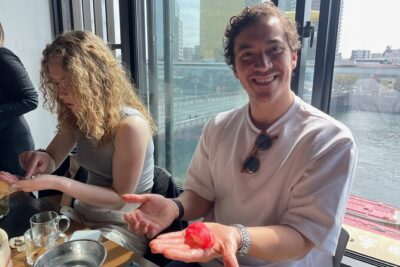
Sushi Making Tokyo Roll and Authentic Japanese Sushi Class
Read our review →
Tokyo Tsukiji Fish Market Food and Culture Walking Tour
Read our review →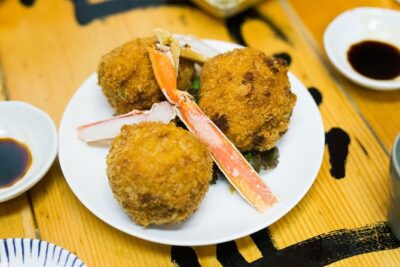
Best of Shinjuku: Izakaya Food Tour (4 Stops, 14+ Tastings)
Read our review →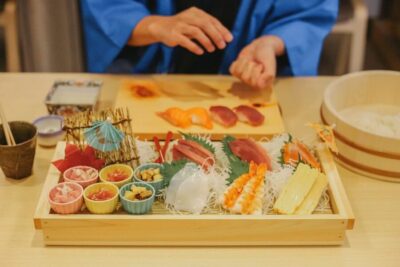
Tokyo: Sushi Making Class in a Happi Coat near a Famous Spot
Read our review →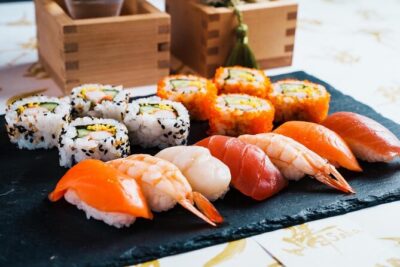
Sushi Making Tokyo! Popular Maki Sushi & Japanese Sushi(+Recipe!)
Read our review →
Tokyo Sushi Making Class in Tsukiji with Professional Chef
Read our review →
Tokyo Night Foodie Tour in Shinjuku – Seasonal Sushi, Wagyu Beef
Read our review →Browse the lists this tour appears in