
Review · HONG KONG
Small-Group Hong Kong Island Food Tour
Hong Kong’s best food often comes in plain rooms with plastic menus, crowded tables, and no English sign to reassure you. This four-hour walk takes you into those places, from an old trolley-service tea house to family-run noodle and roast-meat shops. You get a useful meal, a city orientation, and a lesson in how Cantonese food met British rule.
I like the small group of no more than nine people, which makes it easier to ask questions and share dishes. I also like the route: dim sum in Sheung Wan, traditional shops and markets, a Ding Ding tram ride, then roast pork and an egg tart in Wan Chai. The main drawback is that this is not a pick-and-choose food tour. Seafood, wheat, and meat are central, so vegetarians, people with gluten restrictions, and anyone with seafood allergies should skip it.
Key points at a glance
- Start with trolley-served dim sum: Begin around 9:30 a.m. in Sheung Wan, at a tea house with almost a century of history.
- Eat where language can be a barrier: Your English-speaking guide handles ordering and explains how local dishes are served.
- Cover several classic flavors: The included tastings are dim sum, wonton noodle soup, Hong Kong milk tea, roast meat with rice, egg tart, and dried fruit sweets.
- Ride the Ding Ding tram: The tram trip links the western part of Hong Kong Island with Wan Chai and adds a classic local transport experience.
- Expect a full morning: Do not eat breakfast first. The portions are intended to add up to a proper meal.
- Meet local guides with different strengths: Ivy, Andy, Mel, Alex, Sinclair, and Jane are among the guides associated with the experience, and food history is a major part of the commentary.
Why this food tour works as a first morning in Hong Kong
The tour begins at 9:30 a.m. in Sheung Wan and ends in Wan Chai, so you spend the morning moving through several distinct parts of Hong Kong Island. You are not simply driven between restaurants. You walk through old commercial streets, pass shops selling dried seafood and Chinese medicines, use the Mid-Levels Escalator, and ride a double-decker tram.
That mix matters. Hong Kong food makes more sense when you see the streets and businesses around it. Dried seafood is not just a souvenir-shop oddity. It is used in cooking and traditional tonics. Milk tea is not just a sweet drink. It reflects the city’s years under British rule. Egg tarts show how a British custard pastry was reshaped for local tastes.
Your guide also helps with the practical side of eating in older local restaurants. Menus may be limited in English, tables can be shared, and dishes may arrive for the group rather than one person at a time. Guides such as Ivy, Andy, Mel, Alex, and Sinclair have been praised for explaining dishes clearly, answering questions, and helping people keep up with the meal.
The group limit is nine. That is small enough for a guide to notice dietary concerns, explain ingredients, and keep the walking pace together. It is also large enough that solo bookers and couples have a chance to meet other people without joining a large bus group.
More food tours around China:
- Authentic Local Food Tour in Central Shanghai
★ 5.0 · 1,382 reviews - Shanghai: 3-Hour Local Food Tasting Tour
★ 4.9 · 806 reviews - Eat Like A Local: Shanghai Night Food Tour
★ 5.0 · 616 reviews
Sheung Wan starts with dim sum by trolley
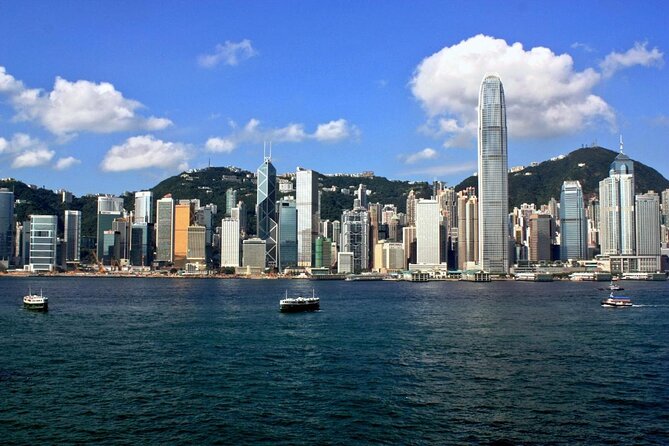
The first stop is in Sheung Wan, one of Hong Kong Island’s older neighborhoods. Its streets bring together traditional Chinese businesses, steep lanes, old apartment blocks, medicine shops, and newer cafes. It is a good setting for an introduction because the area shows the city’s ability to change without fully shedding its older trades.
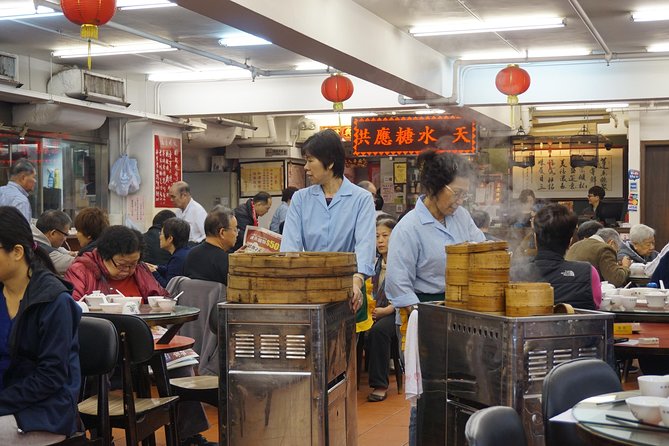
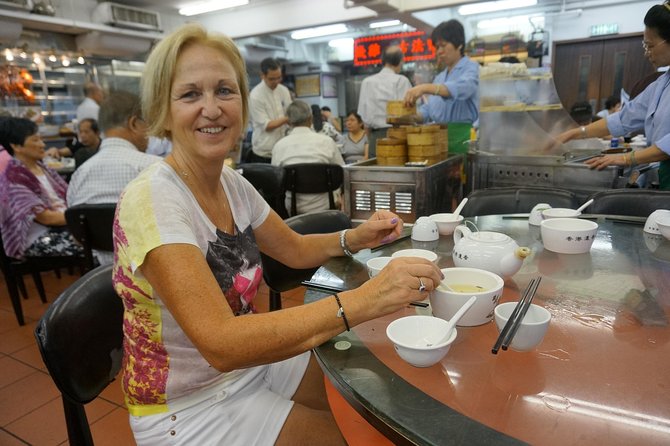
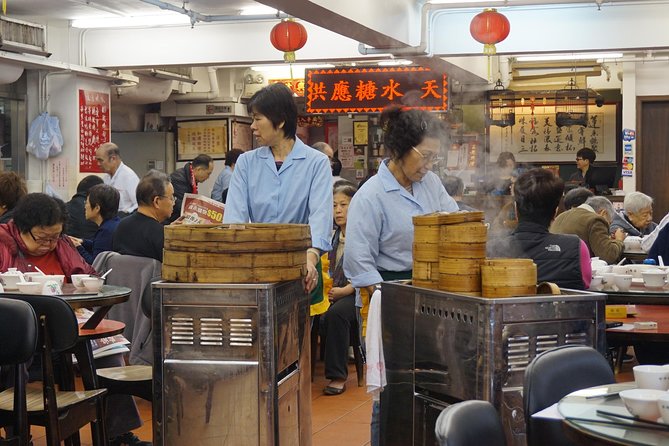
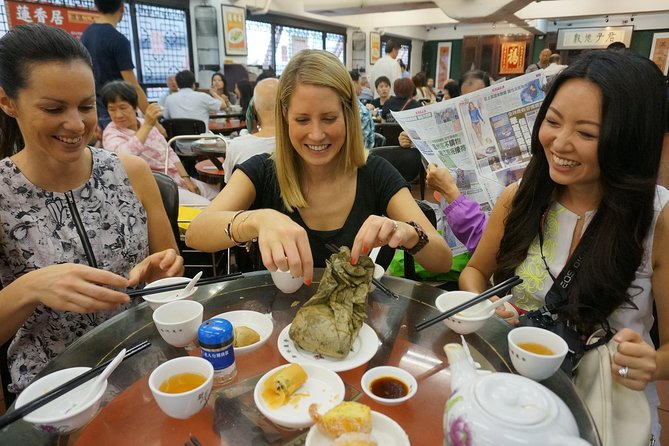
Breakfast begins at an old tea house where dim sum, or yum cha, is served by trolley. The room is lively and crowded, and the restaurant’s history reaches back almost 100 years. Trolley service gives the meal a particular rhythm: dishes move through the room, and you choose from what is available rather than ordering an elaborate meal from a long menu.
This is a useful first stop for anyone unfamiliar with Cantonese dining. Your guide can explain what you are eating and how the shared meal works. Do not expect a quiet tasting room. The noise, close tables, and quick service are part of the setting.
The tour information recommends arriving hungry, and that advice is serious. Dim sum is only the first substantial stop. If you eat a full breakfast beforehand, the rest of the morning may become a struggle rather than a pleasure.
Sheung Wan’s dried seafood and traditional shops
After dim sum, the route spends time around Seafood Street, the section of Des Voeux Road West associated with Hong Kong’s dried seafood trade. You will see ingredients used in Chinese cooking and traditional tonics. The short stop is less about eating a dish and more about understanding the supplies behind Cantonese cuisine.
A guide is particularly useful here because the products can look unfamiliar, and their purpose is not always obvious. This is also one of the places where the tour moves beyond the usual visitor circuit. You are seeing a working trade that helps explain local cooking rather than simply photographing finished food.
The tour also visits a family-run tea shop called Kai Fat Tea. It has been in business for more than 30 years and sells tea, assorted candies, and preserved fruit sweets. Sampling the dried fruit gives the morning a break from savory dishes and introduces a flavor common in traditional Chinese shops.
You also pass a family-run soy sauce producer, a Chinese medicine shop dating from the 1940s, and Hong Kong’s oldest wet market. The supplied schedule gives some of these stops only a short amount of time, so think of them as guided glimpses rather than extended shopping visits. The value comes from the explanations and the chance to notice businesses you might otherwise walk past.
Graham Street Market and the older Central streets
Graham Street Market has more than a century of history and offers a direct look at daily food shopping. Stalls sell fresh vegetables and live seafood, and the sloping street gives the stop a distinctly local feel. It is not a polished market designed only for sightseeing. That means the experience can feel more genuine, but it also means the surroundings may be crowded and active.
From there, the walk reaches streets around Gough Street and the Central and Western District. This part of Hong Kong mixes older Chinese and European influences with boutiques and restaurants. The route helps explain the city’s social history without turning the morning into a formal museum visit.
The Mid-Levels Escalator is another practical landmark along the way. It runs about 800 meters and rises 135 meters toward Conduit Road. The ride is short, but it gives your legs a rest and offers a different way to move through the city’s steep terrain.
The route may also pass Tai Kwun, the restored former Central Police Station compound. Tai Kwun now includes heritage, art, performances, and lifestyle spaces. The schedule does not promise a full visit inside, so treat it as part of the surrounding walk rather than a separate attraction with time for a museum tour.
Same city, a different plate:
- Eat Like a Local Through Shanghai’s French Concession
★ 5.0 · 353 reviews - Hong Kong’s Tin Hau Hidden Eats Food Tour with 7+ Local Tastings
★ 5.0 · 352 reviews - Beijing: Hidden Gems Guided Food Tour with Beer and Tastings
★ 4.9 · 306 reviews - Beijing Private Hutong Food Walking Tour
★ 5.0 · 299 reviews
The Ding Ding tram links the food stops
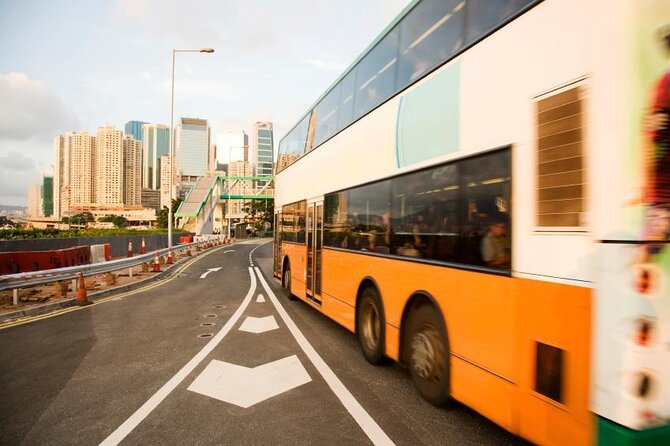
One of the most enjoyable parts of the morning is the ride on Hong Kong’s electric tramway, commonly called the Ding Ding. The tram began operating in 1904 under British rule and uses double-decker cars. The ride is included, although the tour details also note that the tram is at your own expense, so confirm the current arrangement when booking.
This is not a sightseeing cruise with a running commentary. It is local transport, and that is precisely why it fits the tour. You move from the older streets of western Hong Kong Island toward Wan Chai while seeing the city at street level.
The tram can be crowded, and the ride is brief, but it provides a welcome change from walking. Keep your belongings close and follow your guide’s instructions about boarding and meeting up. If you have limited mobility, ask about the walking and tram arrangements before booking, since the experience includes streets, markets, escalators, and public transport.
Wan Chai brings roast meat and rice
The food focus shifts in Wan Chai to a family-run restaurant associated with the Qing dynasty period and known for English char siu. Here you taste traditional roasted meats with rice and homemade sauces. Char siu is one of Hong Kong’s most recognizable foods, but the quality depends on details such as the balance of sweetness, the texture of the meat, and the sauce.
The restaurant is Michelin Guide recommended, but this is not a fine-dining stop. Expect a local eatery where the food carries more weight than the decor. Your guide helps the group order and explains the difference between the roast meats, which is helpful if you have never encountered the range of Cantonese barbecue.
This stop is also a good example of why the tour costs more than buying one dish on your own. You are paying for several tastings, but also for access to places that can feel intimidating when you cannot read the menu or do not know the local ordering habits.
The portions across the morning are intended to fill you. Still, the tour is designed around sampling rather than giving every person an individual restaurant meal at each stop. Shared dishes may be placed in the center of the table, so ask the guide if you need clarification about what is included.
Finish with milk tea and a Hong Kong egg tart
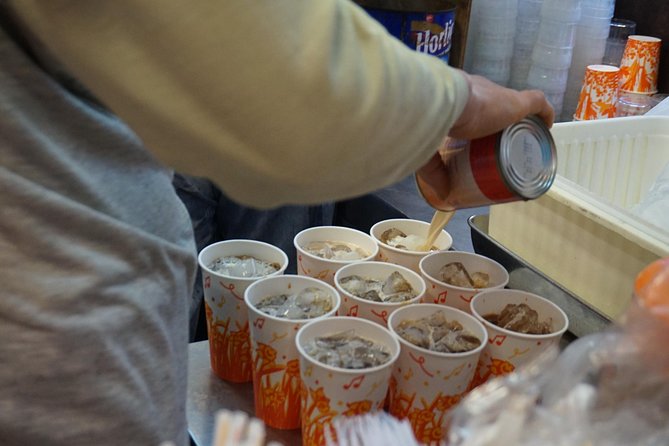
Hong Kong milk tea is included as its own tasting. The drink reflects British influence, but the local version has its own strong identity. It is commonly associated with a smooth, concentrated texture and is part of everyday Hong Kong food culture.
The final food stop is a bakery on Hennessy Road with about 60 years of history. It is known for dan tat, the Cantonese egg tart, and has been a favorite of a former Hong Kong governor. The tart is a local take on an English custard pastry, with a crisp shell and soft egg filling.
Ending with an egg tart makes sense. After dim sum, noodles, sweets, milk tea, and roast meat, the pastry provides a simple final bite. It is also easy to remember and easy to seek out again during the rest of your stay.
The route ends near Southorn Playground in Wan Chai. The playground is used by office workers, sports players, spectators, and people taking a short break. You finish in a useful part of the city, with Wan Chai transport and dining options nearby.
What you eat, and what you do not
The included food and drink are:
- Dim sum or yum cha
- Wonton noodle soup
- Hong Kong milk tea
- Char siu and other roasted meat with rice
- Egg tart
- Traditional dried fruit sweets
- Ding Ding tram ride
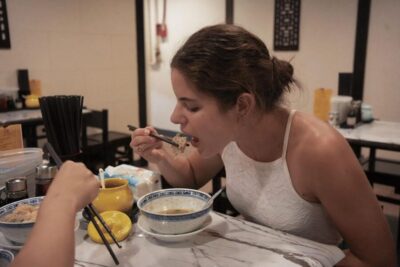
Wonton noodle soup deserves special attention. The dish looks simple, but the tour presents it at a family-run business dating from the 1960s and recommended by the Michelin Guide. Thin noodles, broth, and wontons leave little room for poor technique, so this is a useful dish for understanding why Hong Kong places such value on specialized local cooks.
The tour is not suitable for vegetarians, people following a gluten-free diet, or people with seafood allergies. The supplied information does not promise substitutions, so do not assume that a guide can redesign the meal. Children aged five and under are also not accepted on the group tour, with a private food tour suggested instead.
Price, group size, and overall value
At $115.52 per person, this is not the cheapest way to eat breakfast in Hong Kong. You could buy individual dishes for less. The value comes from the number of tastings, the English-language guidance, the transport between neighborhoods, and the confidence of entering older restaurants and shops with someone who knows how they work.
The tour lasts about four hours and includes a professional guide, food tastings, and the tram experience. Hotel pickup and drop-off are not included. You meet at 28 Des Voeux Road West in Sheung Wan and finish in Wan Chai, so plan your morning around two different points rather than expecting a return to your hotel.
The experience carries a 5 out of 5 rating from 343 reviews, with a 100 percent recommendation figure. The most consistent praise centers on the guides’ warmth, clear explanations, and ability to introduce local places. Ivy is often singled out for combining food information with recent Hong Kong history. Andy is praised for making sure the group had enough to eat and for helping with practical details. Mel is noted for food history and flexibility, while Alex and Sinclair receive praise for being friendly, clear, and attentive.
Those individual guides may not be available on your date, so book the experience rather than a specific guide unless the operator confirms otherwise. The important point is the guide-led format, not a guarantee of one particular person.
Free cancellation is available if you cancel at least 24 hours before the start time. If the minimum number is not reached and the tour is canceled, you are offered another date or experience, or a full refund.
Who should book this Hong Kong food walk?
I would choose this tour for a first visit to Hong Kong, especially if you want a quick introduction to Cantonese food without spending days decoding menus. It also suits solo visitors, couples, and small groups who prefer eating with a local guide rather than joining a large coach tour.
It is a good fit if you enjoy walking through working neighborhoods, asking questions, and trying dishes that may not be familiar. The food comes with useful context, so you learn why roast meat, milk tea, dried seafood, and egg tarts belong to Hong Kong’s story.
I would not book it if you want a relaxed restaurant lunch, a vegetarian menu, or a carefully controlled tasting for allergies. The morning has several stops and a fair amount of walking. You should also be comfortable with busy local eateries, shared dishes, public transport, and a fixed route.
Should you book the Small-Group Hong Kong Island Food Tour?
Book it if you want a filling, guided introduction to Hong Kong Island that combines food with streets, markets, old businesses, and the Ding Ding tram. The strongest reason to go is not one single dish. It is the way the morning connects what you eat with the neighborhoods that produce, sell, and enjoy it.
Come hungry, wear comfortable shoes, and leave room for dim sum, noodles, roast meat, milk tea, sweets, and an egg tart. If those foods work for your diet, the $115.52 price is fair for a small group and four hours of guidance. If they do not, choose another food experience rather than hoping substitutions will turn this one into a different tour.
FAQ
How long is the Hong Kong Island food tour?
The tour lasts approximately four hours. It starts at 9:30 a.m. and ends in Wan Chai.
Where does the tour begin and end?
The meeting point is 28 Des Voeux Road West in Sheung Wan, Hong Kong. The tour ends in Wan Chai.
What food is included?
Included tastings are dim sum, wonton noodle soup, Hong Kong milk tea, char siu or other roast meat with rice, egg tart, and traditional dried fruit sweets.
Is the Ding Ding tram ride included?
The tour includes a Ding Ding tram experience. The information also notes that the tram is at your own expense, so confirm the current fare arrangement when booking.
Is the tour suitable for vegetarians or people with food allergies?
No. The tour is not suitable for vegetarians, people following a gluten-free diet, or people with seafood allergies.
How many people are in the group?
The maximum is nine travelers per booking.
Can children join the tour?
The group tour is not suitable for children aged five and under. A private food tour is suggested for younger children.
Fresh off the menu around China
- Shanghai Must-See and Foodie Test Bike Tour( Day & Night)★ 4.7 · 70 reviews
- Shanghai-Cooking Dumpling & Meal in Local Family-w/Vegan★ 4.9 · 36 reviews
- Shanghai: Evening Walking Food Tour★ 4.9 · 115 reviews
- Shanghai: Half-Day Biking and Local Food Tour★ 4.9 · 170 reviews
- Late night food tour in Shanghai’s French Concession★ 4.9 · 31 reviews
- Beijing Hutong Food Crawl Delights: Peking duck, Hotpot&More★ 4.9 · 32 reviews
- Beijing: Dumpling Making Workshop with Meal and Tea★ 4.7 · 69 reviews
- Beijing: Hutong Breakfast Food Tour★ 5.0 · 22 reviews
Hong Kong Food Tours, compared.
Hong Kong: Street Food Tour with Locals – Dim Sum and Wonton
Read our review →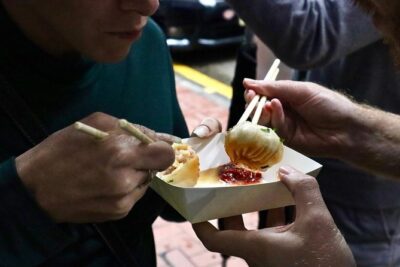
Hong Kong’s Tin Hau Hidden Eats Food Tour with 7+ Local Tastings
Read our review →
Hong Kong Day Tour: Priority Peak Tram, City Walk & Dim Sum
Read our review →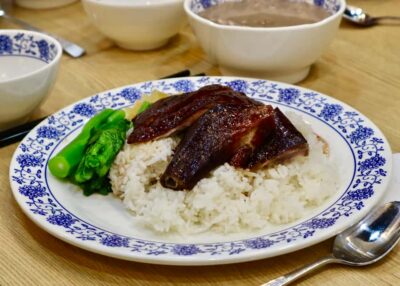
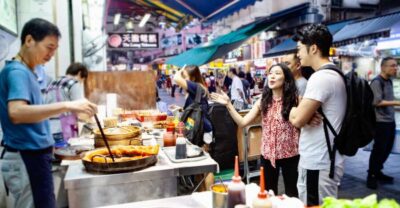
Hong Kong: Private Street Food Tour with a Local Insider
Read our review →Browse the lists this tour appears in