
Review · OSAKA
Osaka: Guided Food Tour with 12 Dishes at 4 Local Eateries
Osaka’s food culture makes the most sense one small plate at a time. This 150-minute walk takes you from the bright Dotonbori streets into local restaurants, a bar, and street-food stops, with 12 Japanese dishes spread across the evening. You might try fresh fish, grilled skewers, fried chicken, takoyaki, okonomiyaki, and traditional sweets, though the exact menu changes by day.
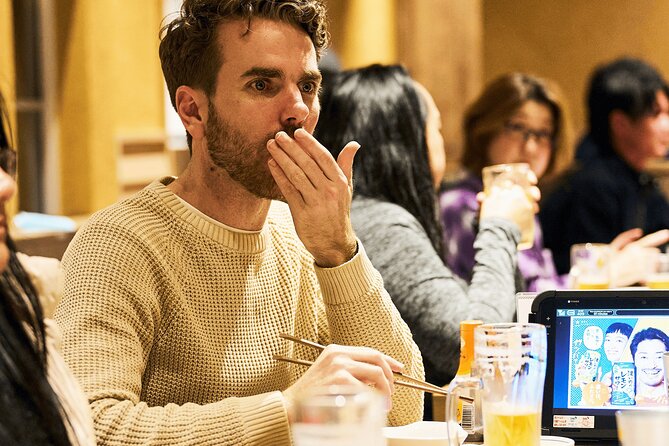
I like the wide range of food and the way a local guide explains how each dish fits into Japanese eating habits. I also like the social side: guides such as Mao, Ukyo, Spike, Nao, and Kenta have helped solo visitors and couples feel at ease, while the small groups make it easy to meet people from around the world.
The main consideration is that this is a generous amount of food in a short time. The restaurants and dishes change, and some stops may be busy, so you should arrive hungry, wear comfortable shoes, and bring cash for anything beyond the included food and two drinks.
Key points to know before booking
- Twelve dishes in 150 minutes: You get a broad first taste of Osaka rather than one long meal at a single restaurant.
- Three types of stops: The route includes local restaurants, a bar or sake stop, and street food, with the exact pattern changing by day.
- Dotonbori with local context: Your guide helps you make sense of one of Osaka’s busiest food districts instead of leaving you to guess where to eat.
- Two drinks included: Beer, sake, cocktails, wine, tea, coffee, and other drinks may be available, but extra orders require cash.
- Guides shape the experience: Mao, Spike, Ukyo, Nao, Nako, Momo, and Kenta are among the hosts named in recent bookings.
- Useful for first-time Japanese food explorers: The guide can explain unfamiliar dishes, eating methods, local customs, and places to try later.
Why this works as an Osaka introduction
Osaka is often called Japan’s kitchen, and this tour gives you a practical reason for that nickname. Instead of ordering one safe dish and hoping for the best, you move through several styles of eating in one evening.
That variety matters if this is your first visit to Japan. Fresh fish tastes different from grilled food. A hot snack from a street stall has a different rhythm from sitting down at an izakaya. A sweet at the end gives you another piece of the food picture.
I like that the tour is not built around one fixed signature menu. The restaurants and dishes vary by day, so you are not promised a narrow set of items that may not suit you. The tradeoff is that you cannot plan your meal in detail ahead of time.
Your English-speaking guide is the bridge between the food and the setting. Mao, for example, has been praised for explaining dishes, local life, and places to visit later. Spike has been singled out for energy and humor, while Ukyo, Nao, Nako, Momo, and Kenta have each led enjoyable food walks on different dates.
That range of guides means the tone can vary. Some hosts focus on history and customs, while others bring more humor and conversation. The useful constant is the local connection. You are not simply being handed plates. You are being shown how to approach foods that may be unfamiliar.
More guided tastings around Osaka:
- Dubai: Old Town, Souks, Street Food, Guided Tour & Abra Ride
★ 4.9 · 7,170 reviews - Hanoi: Guided Food Tour with Train Street Visit
★ 4.9 · 6,239 reviews - Naples: Street Food Walking Tour with Local Guide
★ 4.9 · 4,976 reviews
Meeting at Don Quijote in Dotonbori
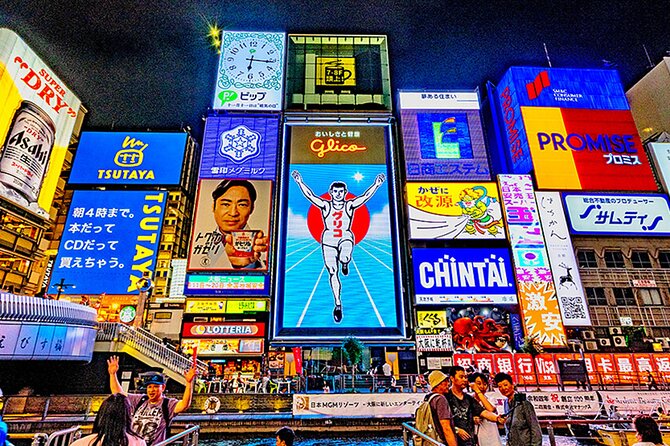
The meeting point is in front of the Don Quijote Dotonbori Midosuji Store. Look for the Local Guide Stars sign. This is an important detail because Dotonbori is packed with signs, crowds, shops, and people meeting friends, and a large store is easier to locate than a small restaurant doorway.
Give yourself enough time to find the exact frontage of the store. The tour ends at the same place, which keeps the route simple if you want to continue exploring Dotonbori afterward.
The area is a strong starting point for a food tour because it shows you Osaka at full volume. Giant signs, restaurant fronts, pedestrian traffic, and street vendors all compete for attention. Your guide helps turn that visual overload into a usable map of the district.
Bring your camera if you want photographs, but do not let it slow you down. This is a walking and eating experience, so comfortable shoes matter more than a carefully planned outfit.
The first restaurant: start with variety
The first local restaurant is where the tour begins to feel like more than a walk through restaurant streets. The format allows for an aperitif, beer, cocktail, tea, coffee, wine, spirits, dinner dishes, local snacks, and regional food, although the exact selection depends on the day.
You can expect several small portions rather than one large plate. That is the right approach for a tour promising 12 dishes. It lets you compare flavors and textures without spending the entire evening on a single specialty.
Fresh fish has been part of the food served on this experience, and one group especially enjoyed sashimi at an izakaya. Fried chicken has also appeared, giving the meal a familiar starting point before moving into less familiar Japanese dishes.
The guide can explain how to eat each item and why it matters locally. That advice is useful because some foods are best shared, some are eaten immediately while hot, and some come with sauces or toppings that you might not recognize.
The restaurant setting also gives you a chance to slow down. Dotonbori can feel intense outside, but sitting with a small group creates room for conversation. If you are traveling alone, this is often the point where the group starts to feel comfortable.
The local bar and sake stop
The next stop is a local bar or sake-oriented venue. The point is not just to drink. It is to show you the kind of small-scale evening eating that can be hard to enter when you do not speak Japanese or know the neighborhood.
Sake may be offered, but the drink selection can include beer, cocktails, wine, tea, coffee, or spirits. The included allowance is two drinks, so check with your guide before ordering more. Bring cash because extras must be paid for in cash.
I like this part of the route because the drink gives you a natural way to try another dish. Japanese bars often work through small shared plates, and the tour uses that format to add more variety. You might find another fish dish, a grilled item, or a local snack rather than another full meal.
One useful point is that the experience is social without requiring you to be outgoing from the start. The guides make conversation easier, and the group usually includes people with different travel plans and food interests.
The group size is not fixed in the information provided. Some bookings have been small, including a couple with only their guide, while other groups included several visitors. A small group can feel almost like dinner with a local friend. A larger one may offer more chances to meet people, but you will have less one-to-one time with the guide.
More food tours around Osaka:
- Osaka: Shinsekai Food Tour with 13-15 Dishes at 5 Eateries
★ 4.8 · 2,204 reviews - Osaka Food Tour: 13 Dishes at 5 Local Eateries
★ 5.0 · 2,149 reviews - Hungry Osaka Street Food Tour:15 Tastings & 3 Drinks with a Local
★ 5.0 · 1,727 reviews - Sushi Making Osaka Roll and Authentic Japanese Sushi Class
★ 5.0 · 1,220 reviews
Street food with a Michelin Guide connection
Street food is part of the tour, and at least one route has included takoyaki. This octopus-filled snack is one of Osaka’s best-known foods, but the value here is not just eating it from a stall. You get a local explanation and a chance to try it as part of a wider meal.
The street-food stop is also where the route connects food with the city around you. You are not sitting indoors for the entire 150 minutes. You walk through Dotonbori, pause at food vendors, and see how eating spills into the public streets.
The activity describes street food featured in the Michelin Guide. That does not mean every stop is a formal Michelin restaurant. It points to the quality and local importance of Osaka’s casual food culture, where a small stall can be part of the city’s serious food story.
Crowds are a factor here. One booking took place on a Friday night, when the walk included plenty of people in the streets. If you dislike crowded sidewalks, this may feel tiring. If you want to see Dotonbori at its most active, the same conditions add atmosphere.
Rain is another practical issue. One group had heavy rain during the walk and waited under cover before continuing. The tour can carry on, but you should dress for the weather and avoid shoes that become uncomfortable when wet.
The final restaurant and Osaka-style okonomiyaki
The route finishes at another local food stop or a final restaurant, with okonomiyaki appearing on several versions of the experience. Osaka-style okonomiyaki is a savory pancake cooked with a mixture of ingredients, then finished with toppings and sauce.
For many people, this is the most recognizable Osaka dish on the route. It also makes a satisfying ending because it is warm, filling, and strongly tied to the city. One booking specifically praised the okonomiyaki, while another described finishing with Osaka-style okonomiyaki after an izakaya and street-food stop.
Do not assume that every departure includes the same final dish. The tour provider says restaurants and dishes change depending on the day. That flexibility gives you a broader range across different visits, but it also means you should treat the menu as a tasting plan rather than a guarantee of particular dishes.
Traditional sweets may also be included, especially at the later part of the route. A dessert stop rounds out the progression from fish and savory snacks to something sweet. If you have a serious allergy or dietary restriction, tell the provider before booking and confirm what can be changed.
A gluten-free participant was accommodated on one booking, which is encouraging, but it is not a promise that every dish can be adapted. The changing restaurant schedule makes advance communication especially important.
What the price includes at $73
At $73 per person, the value depends on how much you would otherwise spend on separate meals, drinks, and guidance in Dotonbori. You receive 12 recommended Japanese dishes, two drinks, an English-speaking guide, and a route through several food settings.
I see the strongest value in the variety. Ordering 12 different dishes independently would take planning, language confidence, and a good appetite. You would also risk choosing restaurants that look convenient but do not match your interests.
The tour saves you that guesswork. It gets you into places you might pass without entering and gives you a local person to explain what is in front of you. The food portion is described as generous, so you should not plan another full dinner immediately afterward.
The price is less compelling if you only want one famous dish, prefer to choose every ingredient yourself, or do not drink. Two drinks are included, but the experience still includes bar time and social eating. Under-20 participants may join, but they cannot consume alcohol.
The included food is substantial enough that you should think of this as dinner, not a light snack walk. Extra dishes or drinks require cash, so bring some even if you expect the included amount to be enough.
The guide makes the difference
The most praised part of this experience is the guide. Food is the hook, but the host determines how much you learn and how comfortable the evening feels.
Mao has led several departures and is described through her food explanations, personal attention, local anecdotes, and recommendations for the rest of an Osaka visit. She has also helped with dietary needs and made smaller groups feel personal.
Spike has been appreciated for humor and energy. Ukyo has been praised for keeping a good pace and sharing local information. Nao has explained Japanese history, traditions, and the dishes served along the route.
Other named guides include Kenta, Nako, Momo, Diego, Nammi, Ken, and Mary. You cannot choose a particular guide from the information provided, but the repeated pattern is clear: the host is expected to do more than lead you between restaurants.
Ask questions. If you want restaurant suggestions for later, say so. If you are unsure how to eat something, ask before trying it. The tour is most useful when you treat the guide as a local food adviser rather than a person who simply delivers a schedule.
Who should book this food walk
I would recommend it most strongly to first-time visitors to Osaka, solo travelers, couples, and anyone who feels uncertain about ordering Japanese food. You get a low-pressure way to sample many items and learn enough to make better choices later.
It also suits people who enjoy conversation. The group has included visitors from several countries, and the food gives everyone an easy subject to discuss. Solo travelers in particular can find the format more welcoming than eating alone in a small Japanese bar.
This may be less suitable if you need a quiet, slow meal. Twelve dishes across several stops means movement, conversation, and a steady pace. It is also not ideal if you have strict dietary limits that cannot be handled across changing restaurants.
The route is wheelchair accessible, but food tours can still involve crowded streets and movement between stops. Confirm any specific mobility needs before booking, especially if you need detailed information about the individual venues.
Free cancellation is available up to 24 hours in advance, and you can reserve now and pay later. Check the available starting times because the 150-minute schedule may fit better at one part of your Osaka itinerary than another.
Should you book it?
Book this tour if you want a broad, guided first taste of Osaka and would rather follow a local than select restaurants at random. The combination of 12 dishes, two drinks, street food, a bar, and neighborhood restaurants gives you useful variety for the price.
I would be especially happy to recommend it for a first evening in Osaka. You can learn what you like, ask for food suggestions, and return to the city later with a better sense of what to order.
Skip it if you want a fixed menu, a private fine-dining meal, or complete control over every stop. For most curious eaters, though, this is a practical and friendly way to get oriented in Dotonbori while eating very well.
FAQ
How long does the Osaka food tour last?
The tour lasts 150 minutes, or two and a half hours.
Where does the tour begin?
Meet in front of the Don Quijote Dotonbori Midosuji Store. Look for the Local Guide Stars sign.
Where does the tour end?
The tour returns to the Don Quijote Dotonbori Midosuji Store.
How many dishes are included?
The experience includes 12 recommended Japanese dishes. The exact dishes can differ depending on the day.
How many drinks are included?
Two drinks are included. Extra food or drinks must be paid for in cash.
Is the tour conducted in English?
Yes. The tour has a live English-speaking guide.
Can people under 20 join?
Yes, participants under 20 may join, but they are not allowed to consume alcohol.
Is the tour wheelchair accessible?
Yes, the activity is listed as wheelchair accessible.
Fresh off the menu around Osaka
- Hidden Osaka – Yukaku Red Light Tour & Culinary Adventure★ 4.8 · 96 reviews
- Eat Like a Local in Osaka – Private Custom Street Food Tour★ 4.3 · 33 reviews
- Osaka: Sushi Making in Spacious Studio (SAME-DAY OK!)★ 5.0 · 75 reviews
- Osaka: Sushi Class in Dotonbori★ 4.9 · 160 reviews
- Osaka: Ramen and Gyoza Cooking Class in Dotonbori★ 5.0 · 378 reviews
- Osaka: Roll and Authentic Sushi Making Class in Dotonbori★ 4.9 · 239 reviews
- Osaka: Kuromon Market Food Walking Tour (6 stops, 6 tastes)★ 4.6 · 272 reviews
- Osaka: Gluten-Free Ramen and Gyoza Cooking Class★ 5.0 · 42 reviews
Osaka Food Tours, compared.
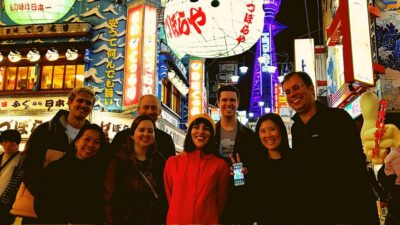
Osaka: Shinsekai Food Tour with 13-15 Dishes at 5 Eateries
Read our review →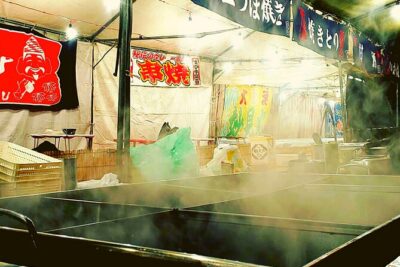
Osaka Food Tour: 13 Dishes at 5 Local Eateries
Read our review →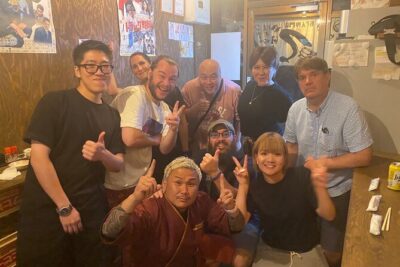
Hungry Osaka Street Food Tour:15 Tastings & 3 Drinks with a Local
Read our review →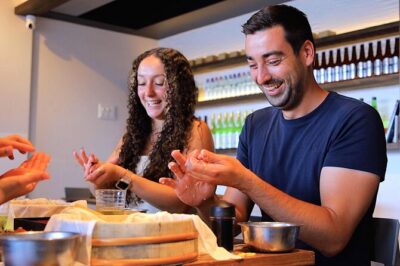
Sushi Making Osaka Roll and Authentic Japanese Sushi Class
Read our review →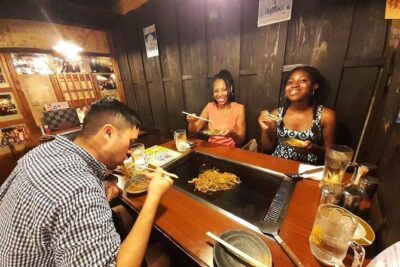
Osaka Local Foodie Walking Tour in Dotonbori and Shinsekai
Read our review →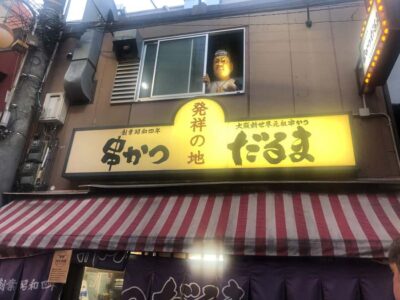
Hungry Osaka Street Food Tour: 15 Dishes & 3 Drinks
Read our review →
Osaka: Ramen and Gyoza Cooking Class in Dotonbori
Read our review →
Osaka: Kuromon Market Food Walking Tour (6 stops, 6 tastes)
Read our review →Browse the lists this tour appears in