
Review · OSAKA
Osaka Local Foodie Walking Tour in Dotonbori and Shinsekai
Osaka’s best introduction may be a walk between two very different food districts, with kushikatsu, okonomiyaki, and takoyaki doing the heavy lifting. This three-hour small-group tour starts in old Shinsekai, passes through alleys and shrines, and ends beneath Dotonbori’s famous Glico sign.
I like the small maximum of seven people and the chance to explore with guides such as Aika, Yuma, Michiko, or Emi, who have been praised for making food and local customs easy to understand. I also like that the tour includes six skewers, okonomiyaki, takoyaki, and three drinks. The main caution is value: at $111.42, this is better for a guided introduction than for serious food sampling, since some stops serve full portions and the food range can feel narrow.
Quick takeaways for your Osaka food walk
- You eat Osaka’s three headline dishes: Six kushikatsu skewers, one portion of okonomiyaki, and one box of takoyaki are included.
- The group stays small: The maximum is seven people, so you get more room to ask questions and keep track of the guide.
- The route links two famous districts: Shinsekai supplies old Osaka atmosphere, while Dotonbori brings shopping, signs, and nightlife.
- Guides can shape the experience: Aika, Yuma, Michiko, Emi, Kent, and others have been praised for food advice, local stories, and help with subway directions.
- Dietary limits need care: Gluten-free and vegan meals cannot be accommodated. Vegetarian arrangements must be requested by the day before.
- The finish is practical: You end at the Glico sign in Dotonbori, already positioned for more food, shopping, or an evening walk.
Starting beneath Tsutenkaku in Shinsekai
The tour begins at a FamilyMart in Nishinari Ward, near Shinsekai. This meeting point is close to public transportation, though it can feel less obvious than a station exit in central Namba. Give yourself extra time to find the exact spot. Missing the start means no refund or rescheduling, so this is not the morning for a last-minute sprint through Osaka.
Shinsekai is one of the most useful places in Osaka for seeing how the city mixes old working-class character with tourist appeal. Tsutenkaku Tower watches over the district, and Jan-Jan Yokocho provides a narrow passage lined with food shops and small businesses.
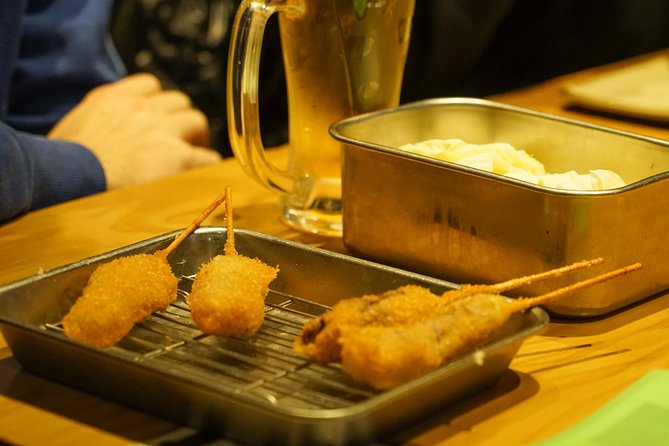
The first major tasting is kushikatsu, deep-fried meat and vegetables on skewers. The included serving is six pieces, enough to make this more than a token bite but not enough to replace lunch for a large appetite. You also receive drinks here, with alcohol and non-alcohol choices available.
Kushikatsu is a good first dish because it introduces a very Osaka style of eating: simple ingredients, hot oil, crisp coating, and a social setting. It is also one of the tour’s more local-feeling food moments. If fried food is not your thing, take note. This tour leans toward familiar Osaka comfort food, and several dishes are fried or cooked on a griddle.
More Food Walking Tours in Osaka:
- Osaka: Kuromon Market Food Walking Tour (6 stops, 6 tastes)
★ 4.6 · 272 reviews - Reykjavik Food Walk – Local Foodie Adventure in Iceland
★ 5.0 · 18,952 reviews - New Orleans Food Walking Tour of the French Quarter with Small-Group Option
★ 5.0 · 6,118 reviews
Jan-Jan Yokocho and the old Shinsekai story
After eating, you walk through the Shinsekai area, including Shinsekai Market, Tsutenkaku Tower, and the Billiken Statue. Jan-Jan Yokocho is described as something like a living museum of central Osaka from more than 80 years ago, and the narrow passage gives the walk its strongest sense of place.
This part is not a museum visit with formal exhibits. Its value comes from seeing the streets, signs, shops, and small details while your guide explains how the area fits into Osaka life. A strong guide can turn a short walk into useful context about food customs, local neighborhoods, and daily routines.
That guide quality matters here. Aika has been praised for linking local dishes with Osaka culture and for suggesting additional places to eat after the tour. Yuma has received similar praise for explaining how the dishes are made and for stopping at shrines and temples along the way. Emi has been singled out for connecting restaurants and common food habits to everyday life.
The experience can vary with the guide. Some participants have found the walking pace quick, while others felt the tour moved too slowly or included more walking before the next meal. If you have limited mobility, are tired, or simply want to sit down quickly, tell the guide early in the walk.
Doguyasuji and the tools behind Osaka’s food culture
The route moves toward Sennichimae Doguyasuji Shopping Street, also known as Dōgu-ya-suji. Depending on the time of day, you may explore souvenir shops near Namba Grand Kagetsu or visit the area in daylight for a closer look at the shopping street.
A notable stop is Hōchō-ya, a knife shop. This is a useful detour because Osaka food culture is not only about eating. Knives, kitchen tools, plastic food displays, pans, and restaurant supplies help explain the city’s long connection with cooking and food businesses.
The timing changes the feel of this section. Daytime visitors may have more opportunity for souvenir shopping and photos. At night, the explanation near Namba Grand Kagetsu and the surrounding shops becomes more of a walking orientation. If you are hoping to buy a knife, check how much time the group actually has before making that your main plan.
This is also one reason I see the experience as a food and neighborhood tour rather than a pure tasting crawl. You spend time looking at streets and shops, not only sitting down to eat. That is useful for a first visit, but dedicated food hunters may want a tour with more small portions at more stops.
Hozen-ji Temple and Ukiyo Alley
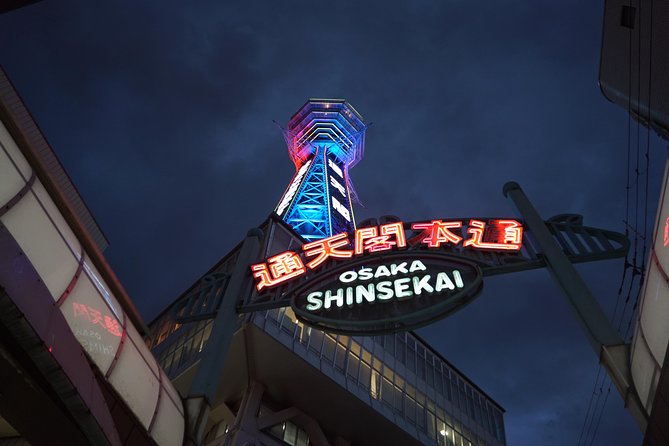
Hozen-ji Temple is a quiet pause in the middle of a crowded entertainment district. The route takes you through the temple area and Ukiyo-koji, a narrow alley with an older feel than the main Dotonbori streets.
The temple stop adds welcome contrast. You move from fried food and shopping into a place where the pace should slow and the setting becomes more reflective. Guides may also explain local customs and the role of shrines and temples in Osaka life.
There is a practical limitation: if your tour runs after dark, some details around the temple can be hard to see. This stop is more about atmosphere and a short cultural break than a full temple visit. Keep your expectations in check, especially if you are hoping for a long historical explanation.
The tour may also include a snack purchase around this stage, with takoyaki, sweets, and other food listed at approximately ¥500. The included takoyaki is part of the tour’s food allowance, but the schedule and appetite can matter. One portion of okonomiyaki before the takoyaki may leave you too full to enjoy the final dish, so pace yourself.
More food tours around Osaka:
- Osaka: Shinsekai Food Tour with 13-15 Dishes at 5 Eateries
★ 4.8 · 2,204 reviews - Osaka Food Tour: 13 Dishes at 5 Local Eateries
★ 5.0 · 2,149 reviews - Hungry Osaka Street Food Tour:15 Tastings & 3 Drinks with a Local
★ 5.0 · 1,727 reviews - Sushi Making Osaka Roll and Authentic Japanese Sushi Class
★ 5.0 · 1,220 reviews
Dotonbori, takoyaki, and the Glico sign
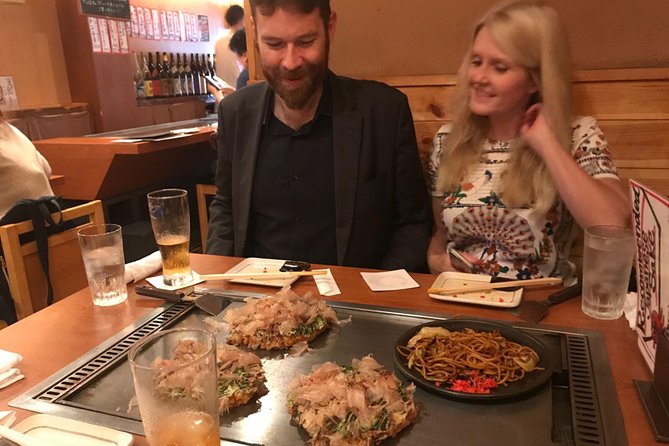
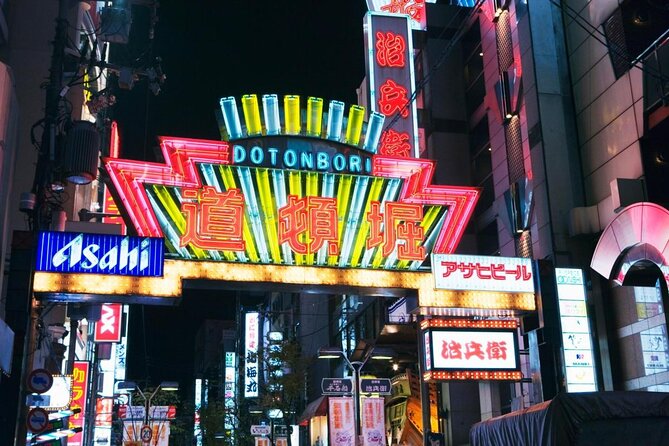
Dotonbori is Osaka’s most recognizable food-and-neon district. The Glico running man sign is the required photo stop, and the guide can take pictures for you. Guides such as Aika have been praised for sending photos after the tour, though this should be treated as a guide-by-guide kindness rather than a guaranteed service.
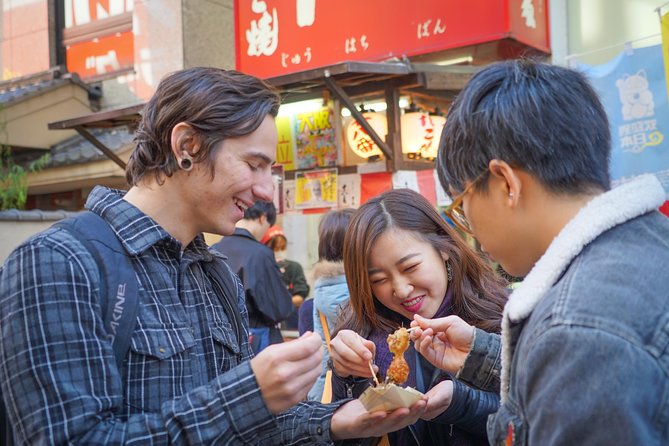
Takoyaki is the classic Dotonbori snack: round batter-based pieces with tender octopus and other ingredients. The tour includes one box. You may already know the dish from Japanese restaurants elsewhere, but eating it in Osaka gives the stop a sense of place.
The Glico sign marks the end of the experience. This is convenient. You are not left at an unfamiliar suburb after dinner, but in the middle of one of Osaka’s easiest areas for a second meal, shopping, or a walk beside the canal. The end point is listed at the Glico sign, near 1-chōme-10-3 Dōtonbori.
Dotonbori can be crowded, and keeping a group together requires attention. Stay close to your guide, especially near photo stops and busy crossings. The small group helps, but it does not remove the need to watch where you are going.
Okonomiyaki as the main sit-down meal
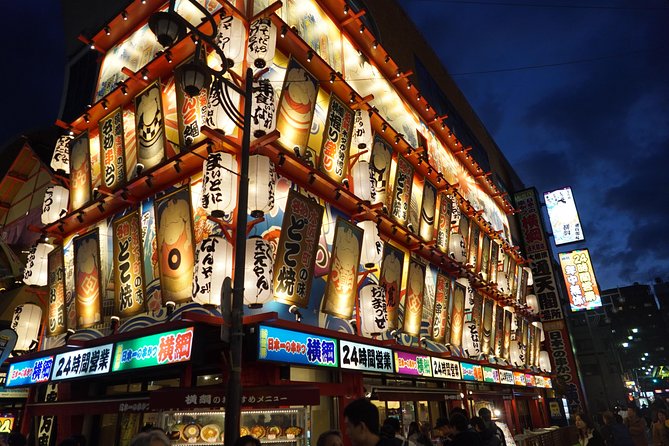
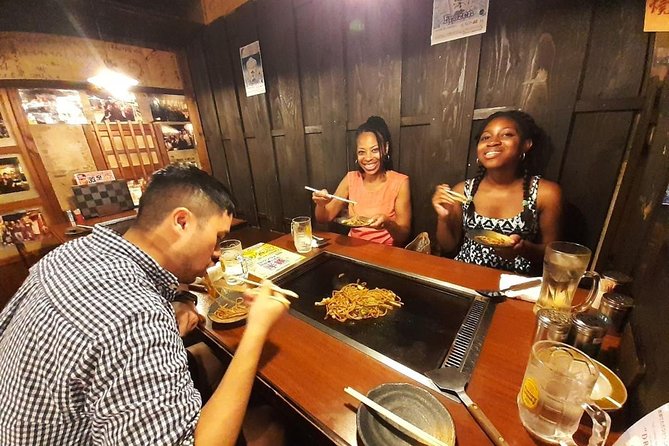
Okonomiyaki is Osaka’s savory pancake, made with ingredients chosen to taste and cooked on a hot griddle. The tour includes one piece, and some guides have arranged for participants to grill their own. That hands-on element can be a pleasant surprise, especially if you have never cooked the dish yourself.
The dish also explains an important part of Osaka’s food identity. Okonomiyaki is flexible rather than formal. You choose or receive a mix of batter, cabbage, meat or other toppings, then eat it hot with sauce and toppings.
The portion is more substantial than a sample. This is where the tour can feel generous to someone who wants a proper meal, but less satisfying to someone who wants a long string of small tastes. One sit-down dish takes time and fills you up, leaving less appetite for takoyaki later.
Food quality can also depend on the particular venue and guide. Several guides, including Michiko, have been praised for choosing good places and explaining the dishes. Other experiences have felt more like standard tourist dining than a special local discovery. I would book this expecting familiar Osaka classics, not a chef-led tour of obscure restaurants.
What the $111.42 price really buys
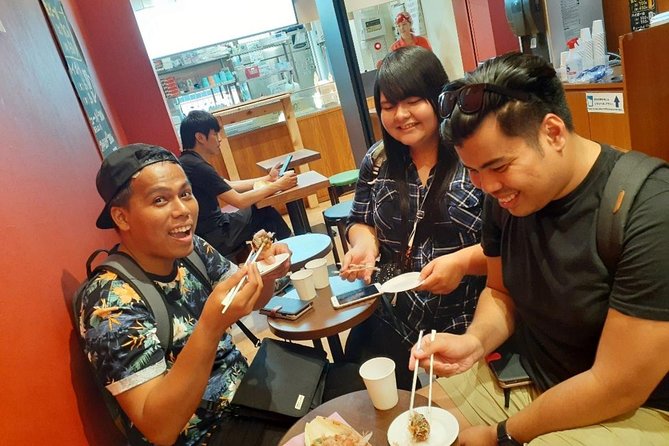
At $111.42 per person, the price is high if you measure it only by the amount of food. You receive six kushikatsu pieces, one okonomiyaki, one box of takoyaki, and three drinks. Those inclusions have real value, but they are not a long series of tiny tastings.
The better way to judge the price is as a package of food, guiding, local orientation, and group convenience. You do not need to work out which Shinsekai restaurant to choose, how to order kushikatsu, or how to connect the district with Dotonbori. A good guide can also help with later meal choices and subway directions. Justin, for example, has been praised for helping participants navigate Osaka’s subway system after the tour.
The small maximum of seven helps justify some of the cost. You can ask about ingredients, customs, or places you pass without shouting across a large group. A family of six may even find itself with a private-feeling outing if no one else books.
Still, I would compare this price with your goals. If you want several dishes in small portions from many stalls, this may disappoint. If you want to get your bearings, eat the dishes most associated with Osaka, and have a guide handle the route, the price makes more sense.
Guides make the biggest difference
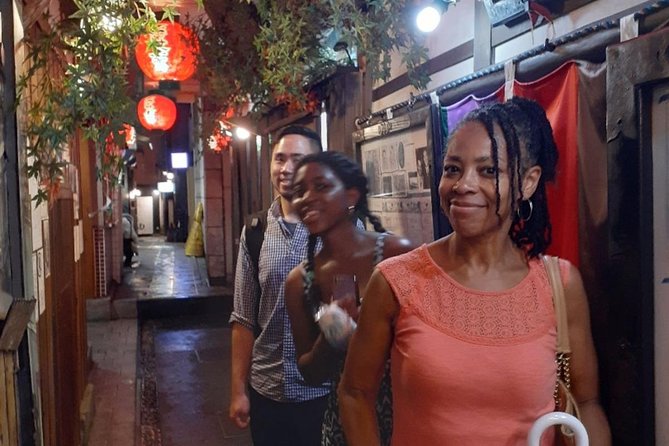
The strongest part of this experience is the human element. Aika has been praised for her energy, local food advice, and willingness to take photos. Yuma has been praised for his English, warmth, and ability to explain both dishes and neighborhood details. Michiko has been recognized for pairing food with historical context, while Emi has been praised for making connections between restaurants and everyday Osaka life.
Kent has been described as friendly and useful for learning about local culture, and Justin has helped participants find their way through the subway afterward. These details show what the tour can do at its best: give you a friendly local point of contact during your first night in Osaka.
But the guide experience is not identical every time. One guide may offer a steady stream of explanation during the walks. Another may answer questions well but provide less narration without prompting. If you want more detail, ask direct questions about the district, the ingredients, and why the restaurant was chosen.
The walking pace is another variable. Some people have found it fast, while others found the overall outing slower than expected. Tell the guide if you need a slower pace, but remember that the tour must stay on schedule.
Food limits, weather, and practical details
This is not a good choice for a gluten-free or vegan diet. Those needs cannot be accommodated. Vegetarian food is possible only if you select the vegetarian option when booking or request it by the day before.
Vegetarian guests should ask specifically about dashi, since pork broth is used in the kushikatsu venue even for vegetarian skewers. If you cannot consume dashi, the operator may prepare other vegetarian dishes, but you must give advance notice. Allergy requests also need to be made at least one day before, and allergy-free preparation cannot be guaranteed.
Osaka weather can be severe. Summer temperatures may reach 40°C, while winter lows can fall to -5°C. Wear shoes you can walk in, dress for the forecast, and bring water in hot weather. The tour includes some standing and walking between food stops, even though the total distance is not provided.
You pay an additional 190 yen for transportation. Drinks include both alcoholic and non-alcoholic choices, and you do not pay for the guide’s food or drinks. Smoking may be allowed at some venues, and the route cannot always be changed to avoid those locations.
Cancellation is free up to 24 hours before the start time. Changes or cancellations inside that window are not refunded, and late arrival means you cannot join or reschedule.
Who should book this Osaka food tour?
I would recommend it to a first-time Osaka visitor who wants an organized introduction to Shinsekai and Dotonbori. It also suits families and small groups who value a friendly guide, photos, and a fixed menu over making every restaurant choice themselves.
It is a good fit if you want the city’s famous dishes without having to decode menus or navigate crowded streets alone. The route also works well early in a trip, since the final stop leaves you in Dotonbori with plenty of options for the rest of the evening.
I would be cautious if you are a serious food enthusiast. You may find too much fried food, too few venues, or too many full portions compared with a tasting crawl. The tour also does not promise a completely offbeat route. Shinsekai, Hozen-ji, Doguyasuji, and the Glico sign are famous places, not secret corners known only to locals.
Should you book it?
Book this tour if your priority is a friendly Osaka orientation with classic food, a small group, and a guide who can explain local customs. The best guides turn three hours into a useful first look at Osaka, and the included dishes make ordering simple.
Skip it if you want maximum food variety, specialist restaurant knowledge, or the lowest possible cost per bite. For the best chance of a strong experience, arrive early, request any dietary adjustment by the day before, and tell the guide at the start if you prefer more food explanation or a slower walking pace.
FAQ
How long does the Osaka Local Foodie Walking Tour last?
The tour lasts approximately three hours.
What food is included?
You receive six kushikatsu skewers, one piece of okonomiyaki, one box of takoyaki, and three drinks. Alcoholic and non-alcoholic drinks are available.
Where does the tour start and finish?
The tour starts at a FamilyMart in Shinsekai, at 1-chōme-17-6 Sannō, Nishinari Ward. It ends at the Glico Sign in Dotonbori.
How many people can join the tour?
The maximum group size is seven travelers.
Can vegetarian, vegan, or gluten-free meals be provided?
Gluten-free and vegan meals cannot be accommodated. A vegetarian course must be selected when booking or requested by the day before. Vegetarian guests who cannot eat dashi should notify the operator in advance.
Is transportation included?
Transportation fees are not included. An additional transportation cost of 190 yen is listed.
What happens if I arrive late or need to cancel?
The tour starts on time, and late arrivals cannot join, reschedule, or receive a refund. You can cancel up to 24 hours before the start time for a full refund.
Fresh off the menu around Osaka
- Hidden Osaka – Yukaku Red Light Tour & Culinary Adventure★ 4.8 · 96 reviews
- Eat Like a Local in Osaka – Private Custom Street Food Tour★ 4.3 · 33 reviews
- Osaka: Sushi Making in Spacious Studio (SAME-DAY OK!)★ 5.0 · 75 reviews
- Osaka: Ramen and Gyoza Cooking Class in Dotonbori★ 5.0 · 378 reviews
- Osaka: Roll and Authentic Sushi Making Class in Dotonbori★ 4.9 · 239 reviews
- Osaka: Sushi Class in Dotonbori★ 4.9 · 160 reviews
- Osaka: Kuromon Market Food Walking Tour (6 stops, 6 tastes)★ 4.6 · 272 reviews
- Osaka: Gluten-Free Ramen and Gyoza Cooking Class★ 5.0 · 42 reviews
Osaka Food Tours, compared.
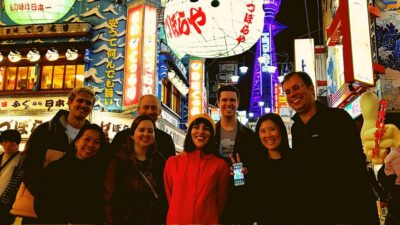
Osaka: Shinsekai Food Tour with 13-15 Dishes at 5 Eateries
Read our review →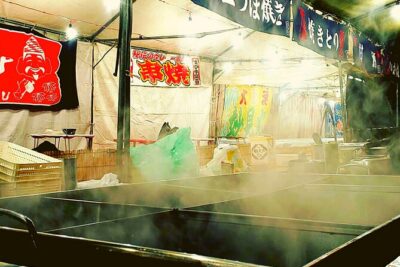
Osaka Food Tour: 13 Dishes at 5 Local Eateries
Read our review →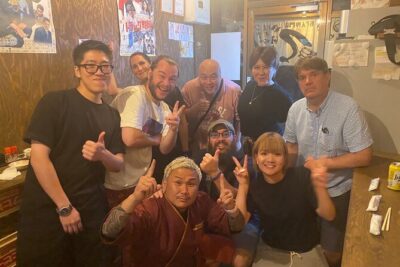
Hungry Osaka Street Food Tour:15 Tastings & 3 Drinks with a Local
Read our review →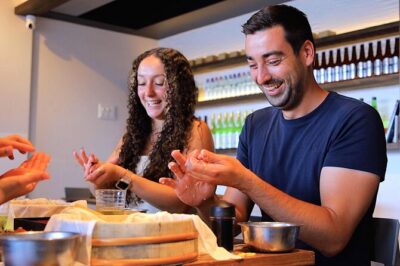
Sushi Making Osaka Roll and Authentic Japanese Sushi Class
Read our review →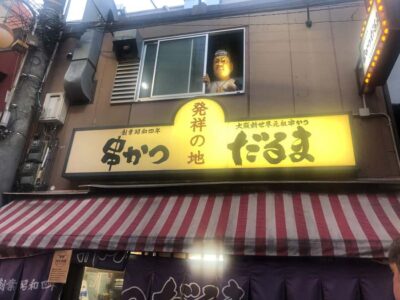
Hungry Osaka Street Food Tour: 15 Dishes & 3 Drinks
Read our review →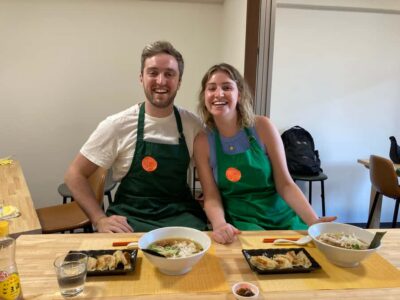
Osaka: Ramen and Gyoza Cooking Class in Dotonbori
Read our review →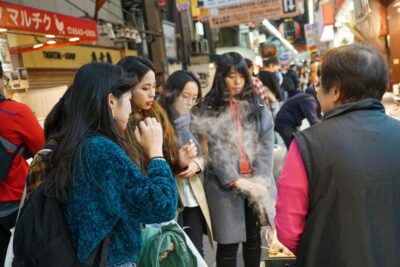
Osaka: Kuromon Market Food Walking Tour (6 stops, 6 tastes)
Read our review →
Browse the lists this tour appears in