
Review · MUNICH
Munich: Viktualienmarkt & Altstadt Food Tour
Munich’s best food stories are found at the market counter, not just on a restaurant menu. This private two-hour walk takes you from Isartor through the old town to Viktualienmarkt, with stops for a pretzel, leberkäse sandwich, a famous sour gherkin, and freshly fried Schmalznudel.
I like the mix of local food and city history, and I like that the tour keeps moving through real Munich streets rather than parking you in one dining room. The main drawback is the price: at $671 for up to five people, it makes the most sense for a small private group, not a solo visitor.
Key points at a glance
- Eight tasting stops: Sample Bavarian favorites and international market foods during the walk.
- A proper old-town route: See Isartor, Hofbräuhaus, the Alte Münze, Marienplatz, Rindermarkt, and Jakobsplatz.
- Classic Munich bites: Try a leberkäse sandwich, fresh pretzel, sour gherkin, market specialties, and Schmalznudel.
- Private group format: Your party of up to five gets a guide without sharing the experience with a larger group.
- English or German guiding: Choose a tour in either language, with a live professional guide.
- A short, food-focused outing: The two-hour length fits neatly into a morning or afternoon in Munich.
Starting at Isartor with a curious local drink
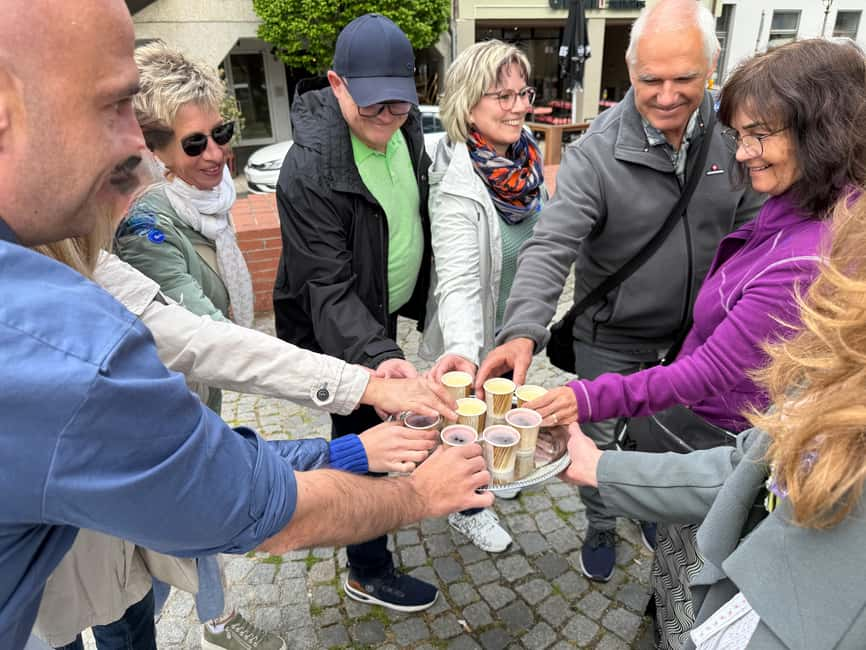
The tour begins at Isartor, one of Munich’s old city gates. You receive a cosmobiological welcome drink before setting off. The name may sound more mysterious than the drink itself, and the supplied details do not specify its ingredients, but it gives the tour an unusual opening and a small taste before the main food stops begin.
From here, the route heads through Munich’s old town on foot. This is not a market visit where you simply arrive, eat, and leave. The walking portion connects the food with the city around it, so you get a useful orientation to central Munich along the way.
You should expect a steady city walk rather than a long-distance hike. The route lasts about two hours in total, and the experience is wheelchair accessible. Since the tour includes several historic streets and market stops, wear comfortable shoes and keep your appetite available for the later tastings.
More food tours around Germany:
- Hamburg: Schanzenviertel Culinary Tour
★ 4.6 · 2,051 reviews - Hamburg: Elbphilharmonie Plaza and HafenCity Food Tour
★ 4.7 · 1,711 reviews - Berlin Center Food Tour with 8+ Authentic Local Tastings
★ 5.0 · 1,227 reviews
Walking past Hofbräuhaus and the Alte Münze
The first part of the route brings you through several of Munich’s most familiar central sights. At the Platzl, you pass the famous Hofbräuhaus, a name closely tied to Munich’s beer culture. The tour does not list a beer tasting or a meal inside the building, so think of this as a street-level look at one of the city’s best-known addresses.
You also pass the Alte Münze, the Alte Hof, and Marienplatz. Each stop helps place modern Munich in its older city center. A guide can explain what you are seeing as you walk, which is useful if this is your first visit and you want more than isolated snapshots of famous buildings.
Marienplatz is an especially practical orientation point. It is one of the central places in Munich, and seeing it as part of a route to the market helps you understand how the old town fits together. The tour then continues toward the Rindermarkt and the synagogue on Jakobsplatz.
The route has a good balance of sights and food. You are not spending two hours inside a market stall, but you are also not waiting until the final minutes for something to eat. That makes it a sensible first-day activity for someone who wants a quick introduction to Munich’s center with a local-food angle.
Reaching Viktualienmarkt, Munich’s open-air pantry
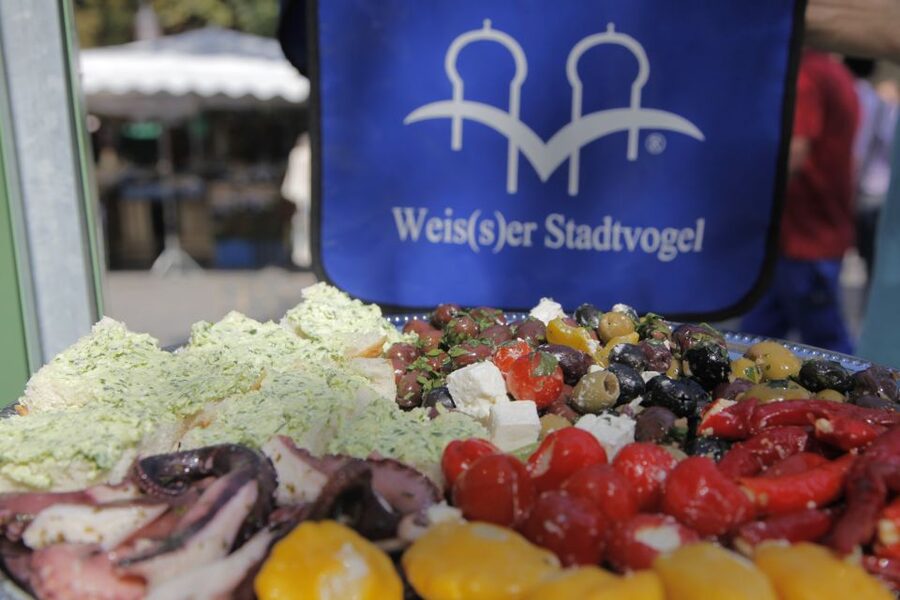
Viktualienmarkt is the heart of the food portion. The market sits in central Munich and brings together stalls selling produce, prepared food, baked goods, meat, pickled items, and other specialties. The tour focuses on its history and its role today, so you get both the old market story and a look at how it functions now.
The market is best understood as a place where Munich shops, eats, and meets. You can admire the stalls, watch the movement around the counters, and see the range of foods available beyond the standard sausage-and-beer image of Bavaria.
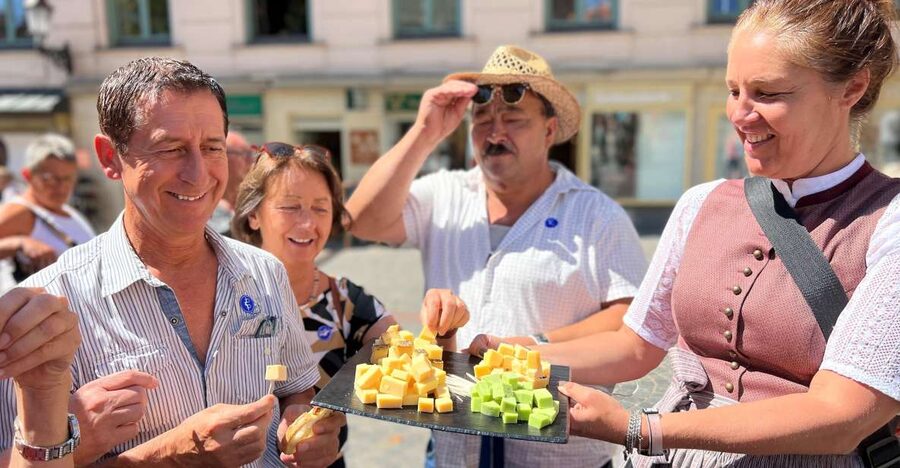
The private format matters here. Markets can be visually busy, and a private guide can keep the group together while explaining what each stop means. You are also less likely to feel rushed by the needs of a large mixed group. For a family or group of friends, this can make the two hours feel more personal and easier to manage.
The tour promises eight market stalls featuring regional and international delicacies. The supplied menu names several specific tastings, but it does not identify every one of the eight stalls. That is worth noting if you need a full menu in advance because of dietary restrictions.
The essential Munich trio: pretzel, leberkäse, and gherkin
The first substantial food stop includes a hearty specialty from the market butchers. The named item is a Leberkässemmel, a bread roll filled with a thick slice of leberkäse. Despite the name, leberkäse is generally understood as a baked meatloaf-style specialty, not a liver-and-cheese sandwich in the everyday sense.
This is an excellent choice for a market tour because it is simple, filling, and strongly linked to everyday Bavarian eating. It is not delicate food, and that is part of the point. You get a warm, practical snack from a butcher rather than a polished restaurant plate.
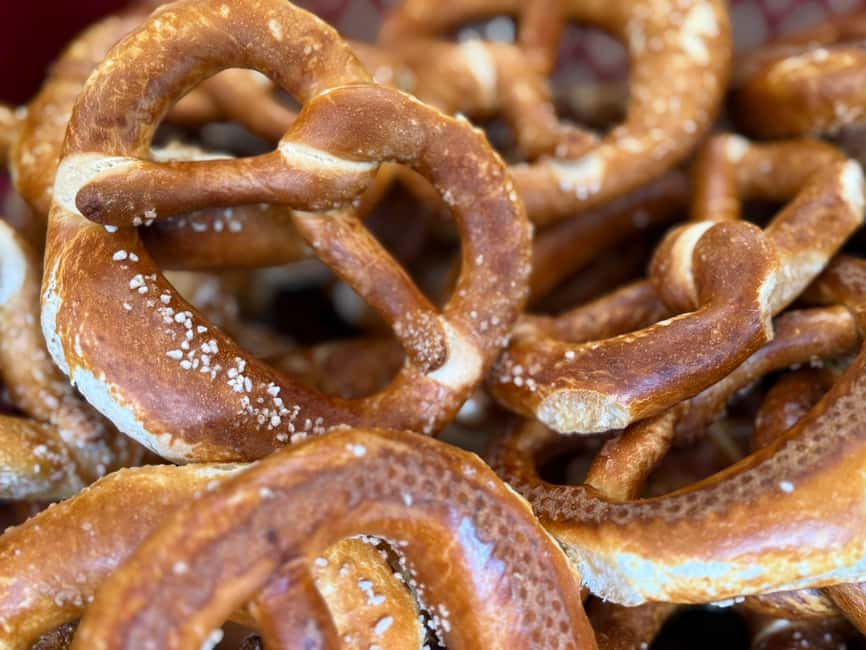
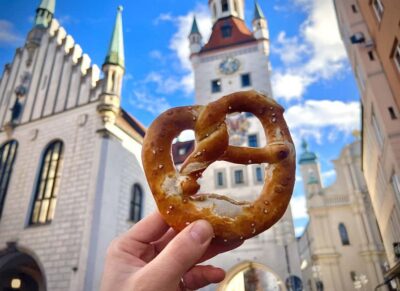
You also receive a freshly baked pretzel. Munich pretzels are made for eating on the move, and the salty crust gives you a clear contrast to the softer leberkäse. If you are pacing yourself, take small bites. The food arrives in several stages, and the final pastry stop is still ahead.
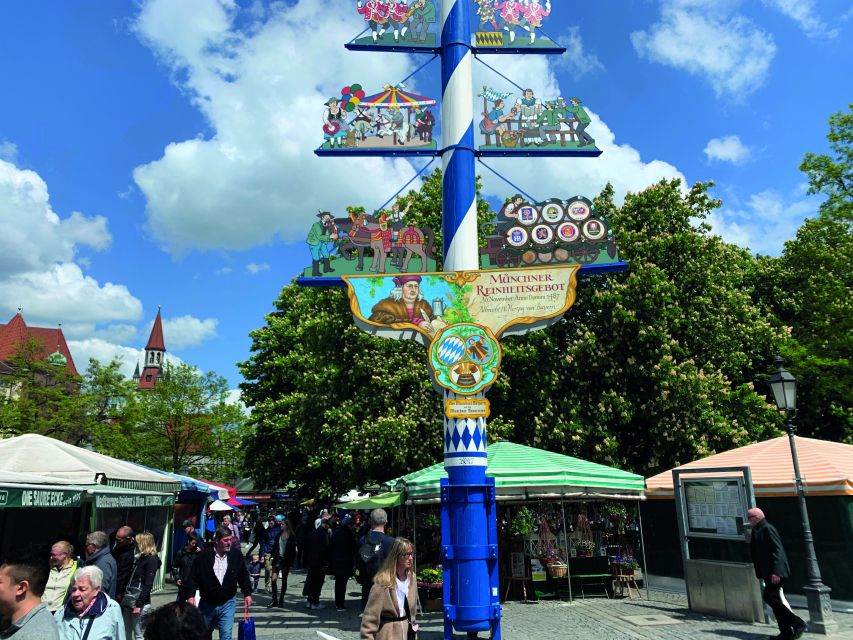
The third classic is a pickled gherkin from the Sauren Ecke at the Maibaum. This is a small tasting, but it adds a sharp, sour note to a menu that could otherwise lean heavily toward bread and meat. It is also a good example of how a market tour can introduce everyday local habits, not just headline dishes.
The Sauren Ecke name refers to the sour-pickle counter, and the stop gives the tour a bit of character. You are not simply tasting the most famous Bavarian foods. You are also sampling the kind of quick market item that refreshes the palate between heavier bites.
Same city, a different plate:
- Munich: Viktualienmarkt Food Tour
★ 4.5 · 1,127 reviews - Munich: Beer and Food Tour with Dinner & Oktoberfest Museum
★ 4.7 · 1,086 reviews - Kreuzberg: Culinary Food Tour
★ 4.5 · 770 reviews - Cologne: Südstadt Guided Foodie Walking Tour
★ 4.6 · 624 reviews
Finishing at Café Frischhut with hot fried dough
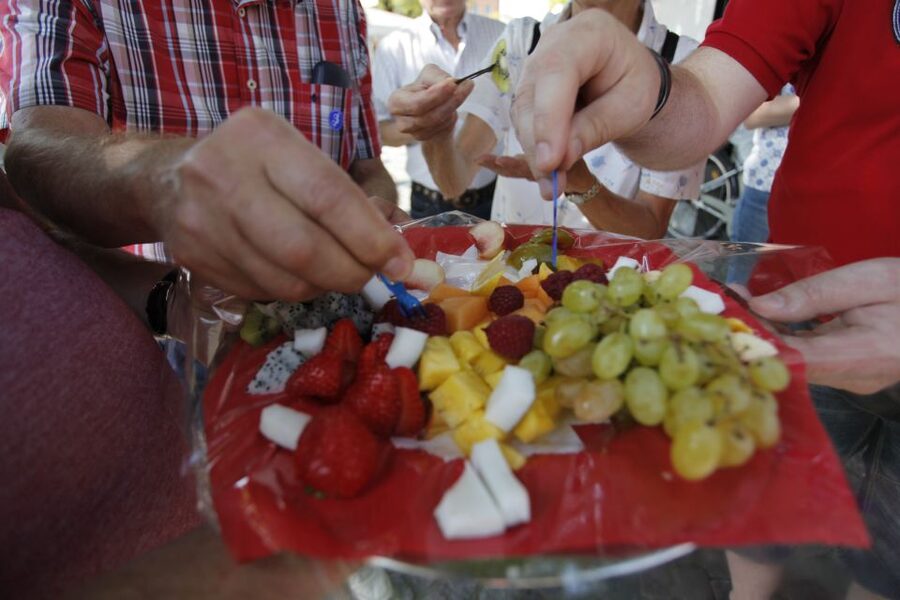
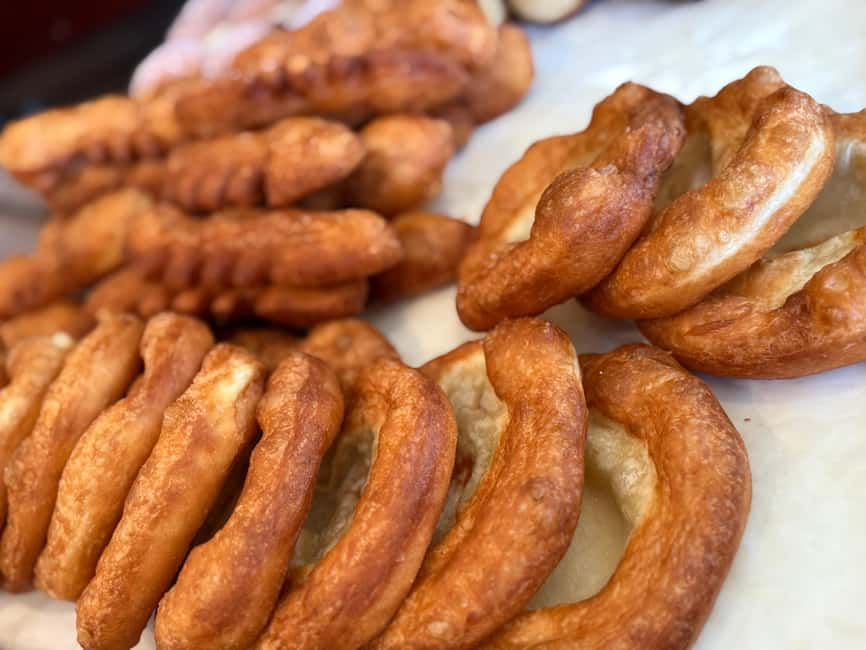
The sweet finish comes at Café Frischhut, described here as an institution of Bavarian baking. This is where you see Auszog’ne, Strizerl, and Schmalznudeln being prepared fresh. The tour includes a Schmalznudel, a round piece of fried dough that is crisp on the outside and soft within.
Watching the dough being prepared adds something that a pastry picked from a display case cannot. You see the connection between the product and the bakery, then taste it while it is part of the place’s daily rhythm.
The names of the pastries may be unfamiliar, and that is useful rather than a problem. A good guide can explain how they differ and which one you are tasting. The included item is the Schmalznudel, while the other Bavarian pastries are part of the baking demonstration.
This final stop also changes the pace of the tour. The meat and pickle tastings are direct and savory. The fried dough gives you a warmer, sweeter ending. It is a fitting close, though visitors who prefer a light food tour should know that the combination of leberkäse, pretzel, and fried dough can add up quickly.
What the guide adds to the food
The food is the hook, but the guide is what turns the outing into a tour. You receive a professional walking tour in English or German, with explanations of Munich’s old town, the market’s past, and its current role.
The strongest praise in the available feedback focuses on the guiding style. The guide is described as friendly, engaging, humorous, and able to present selected information without making it dry. That tells me this experience is aimed at people who want stories and context, not only a list of ingredients.
There is no guide name provided, so you cannot request a particular host from the information available. Still, the comments point to a warm presentation style and strong subject knowledge. The guide’s job is especially important during the walk between food stops, when the quality of the storytelling determines whether the route feels useful or like simple transport from one snack to the next.
The tour also gives you a chance to ask questions because the group is private. A shared group may move at a fixed pace, while a private booking lets your party focus on the foods, buildings, or parts of Munich that interest you most, within the two-hour limit.
Is $671 good value for up to five people?
The price is $671 per group of up to five people. That is a steep headline price, especially when the tour lasts only two hours and includes a limited set of food samples rather than a full meal.
The value improves if you fill the group. Divided among five people, the cost is about $134 per person. For two people, it becomes about $336 each, and for one person it is difficult to justify unless privacy and a dedicated guide are your top priorities.
You are paying for more than the food. The fee covers a private professional guide, a structured route through the old town, the welcome drink, the named tastings, and the convenience of a guide who handles the market stops. It is best compared with a private city walk that happens to include food, not with buying a pretzel, sandwich, and pastry on your own.
I would consider it reasonable for a family or small group celebrating a special occasion, especially if everyone wants the same language and pace. I would be more cautious if you are a couple on a tight budget or already plan to explore Viktualienmarkt independently. The market is easy to visit without a tour, and the price premium is mainly for interpretation, organization, and privacy.
Additional food and drinks are not included. Water from the drinking fountains at Viktualienmarkt is included, but anything else you order or buy costs extra. Since the route includes several tastings, you may not need a separate meal immediately afterward, but the tour does not promise lunch.
Who should book this two-hour food walk?
I would recommend it most to first-time visitors who want a fast introduction to Munich’s center. You see several important places, learn how the old town connects to the market, and sample foods that are hard to understand from a menu alone.
It also suits families and small groups who prefer private touring. The two-hour length is manageable, and the food stops give younger visitors a reason to keep walking between historic sights. The private format can also help if your party needs a slower pace or wants to ask more questions.
Food-focused visitors will appreciate the direct market access and the range from savory butcher food to pickled vegetables and fried pastry. The tour is less suitable if you want a long sit-down meal, a beer tasting, or an exhaustive culinary survey of Munich. Those are not part of this experience.
The tour is wheelchair accessible, which is an important practical advantage. Specific route details are not provided, so anyone with particular mobility needs should confirm the exact path and market access before booking, but the experience is listed as accessible.
You can cancel up to 24 hours before the start for a full refund, and you can reserve now and pay later. Those terms are useful if your Munich schedule is still changing.
The food and history balance
The most successful feature is the balance between landmarks and bites. You pass the Hofbräuhaus, Alte Münze, Alte Hof, Marienplatz, Rindermarkt, and Jakobsplatz, but the tour never loses sight of its main purpose: eating your way through central Munich.
The food choices are also sensibly local. Leberkäse, pretzel, gherkin, and Schmalznudel give you a better feel for ordinary Bavarian tastes than a generic international menu would. The international stalls add variety, though the supplied details do not name those dishes.
The experience is short enough to fit around a museum visit or an afternoon of sightseeing. That is helpful, but it also limits how much history or market detail the guide can cover. You receive an enjoyable introduction, not a full study of Munich’s food culture.
Should you book the Viktualienmarkt food tour?
Book it if you are traveling with up to four companions, want a private guide, and would like Munich’s old town explained through local food. The friendly, engaging guiding style and the mix of market classics make this more useful than simply stopping for a snack on your own.
Think twice if you are alone, watching your budget, or mainly seeking a large meal. At $671 per group, the experience earns its price through privacy and guidance, not the quantity of food. For a small group that values a well-organized introduction to Munich, it is a strong choice. For everyone else, visit Viktualienmarkt independently and spend the savings on several stalls.
FAQ
How long does the Munich food tour last?
The tour lasts two hours.
Where does the tour begin?
The tour begins at Isartor with a cosmobiological welcome drink.
Where does the tour finish?
The food portion finishes at Café Frischhut, where Schmalznudeln and other Bavarian pastries are freshly prepared.
What food is included?
Included tastings are a freshly baked pretzel, a Leberkässemmel from the market butchers, a pickled gherkin from the Sauren Ecke, and a freshly prepared Schmalznudel. The tour also includes additional samples from a total of eight market stalls.
Is a drink included?
A welcome drink at Isartor and water from the drinking fountains at Viktualienmarkt are included. Additional food and drinks are not included.
What sights are included on the walking route?
The route passes the Platzl and Hofbräuhaus, the Alte Münze, the Alte Hof, Marienplatz, the Rindermarkt, and the synagogue on Jakobsplatz before reaching Viktualienmarkt.
Is the tour private?
Yes. It is a private group experience for up to five people.
What languages are available?
The live tour guide is available in English or German.
Is the tour wheelchair accessible?
Yes, the activity is listed as wheelchair accessible.
Fresh off the menu around Germany
- Stuttgart: Culinary Excursion through Bad Cannstatt★ 4.7 · 82 reviews
- “Rotes Bier” and “Blaue Zipfel”. A historical-culinary walk★ 4.4 · 190 reviews
- Nuremberg: Christmas City Culinary Tour★ 4.6 · 40 reviews
- Berlin: Guided Street Food Tour with Tastings★ 4.8 · 310 reviews
- Munich: Old Town Food Tour with 10+ Tastings, Beer & Pretzel★ 4.9 · 70 reviews
- Munich: Christmas Markets Food & Drink Tour★ 4.6 · 50 reviews
- Munich: Guided Food Walking Tour with Beer Tasting★ 4.7 · 183 reviews
- Munich: 3-Hour Culinary Nightwatch Tour★ 4.3 · 87 reviews
Munich Food Tours, compared.
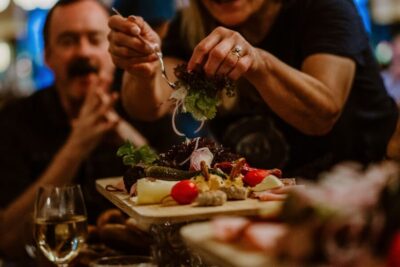
Munich: Beer and Food Tour with Dinner & Oktoberfest Museum
Read our review →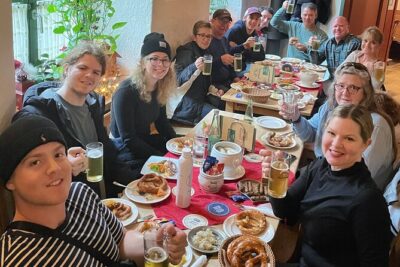
Lunch Like a Local: Munich’s ORIGINAL Viktualienmarkt Food Tour
Read our review →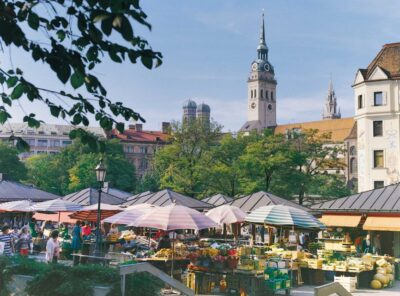
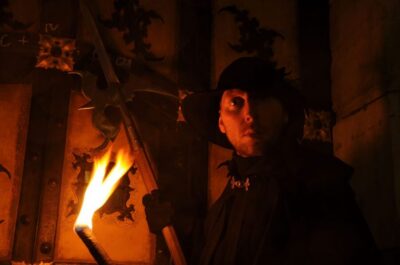
Munich: Old Town Food Tour with 10+ Tastings, Beer & Pretzel
Read our review →
Munich: 3-Hour Food Tour Through Haidhausen in GERMAN
Read our review →Browse the lists this tour appears in