
Review · GERMANY
“Rotes Bier” and “Blaue Zipfel”. A historical-culinary walk
Nuremberg’s food story comes in small, tasty portions: tiny bratwurst, local red beer, gingerbread, and snacks served along a two-hour walk through the old town. The tour links everyday dishes to questions about medieval cooks, city life, and the odd habits behind famous recipes.
I like the way the food gives the history a practical hook, and I like that the route stays compact, moving between the Rathaus, Hauptmarkt, St. Sebaldus Church, and Altstadthof Brewery. The main drawback is clear: the tour is held in German, and the snacks may feel modest if you expect a full meal.
The guide uses humor and gives you time to ask questions. Sonja has been praised for her clear, witty explanations, while the tour’s overall rating is 4.4 from 190 bookings. You should also plan for the weather, since the walk goes ahead rain or shine.
Key points to know before booking

- Tiny bratwurst with a real local reason: Learn why Nuremberg sausage is small rather than simply eating another large German sausage.
- Red beer at its source: The walk finishes at Altstadthof Brewery, where beer is part of the setting rather than an afterthought.
- Food and old-town sights together: The route connects Rathaus, Hauptmarkt, Unschlitthaus, and St. Sebaldus Church.
- History you can taste: Snacks help explain questions about gingerbread, ravioli, meat consumption, and old cooking traditions.
- A German-language experience: You need enough German to follow the guide’s stories and ask questions.
- A short, walkable route: The tour lasts two hours, with walks of about three to ten minutes between stops.
Why this Nuremberg food walk works
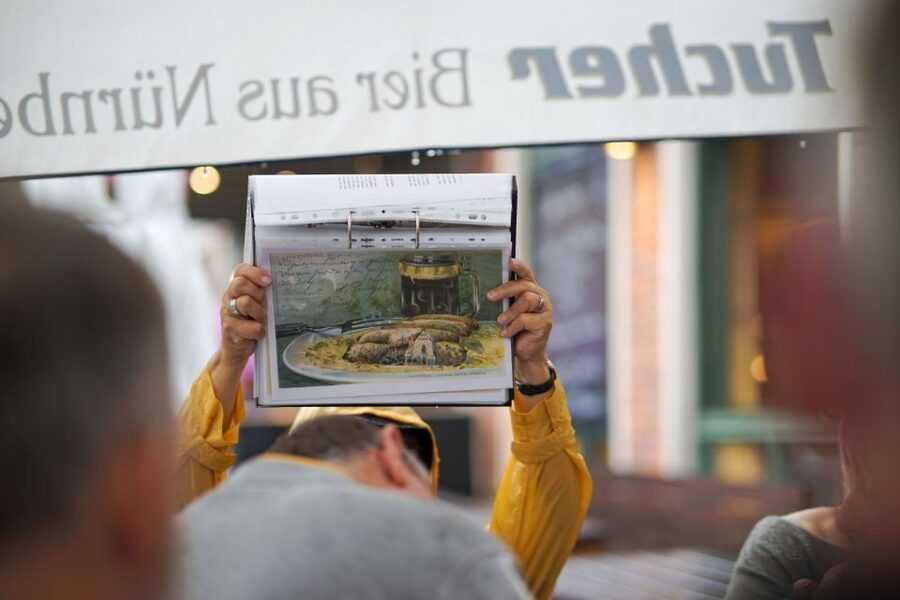
This is not just a list of tastings. Its appeal comes from the link between what you eat and where you are standing. A bratwurst becomes a clue about Nuremberg customs. Gingerbread opens a door to the city’s baking traditions. Beer gives you a reason to think about local brewing rather than simply ordering another drink.
I like that the route does not keep you inside one restaurant. You move through the old town, stop at food sites, and hear stories in the places where the city’s daily life unfolded. That keeps the two hours active without turning the experience into a long sightseeing march.
The food portions are described as snacks, not a sit-down lunch. That matters. You should arrive ready to taste several items, but you may still want another meal later, especially if you have a hearty appetite.
The guide also leaves room for questions. That small detail makes a difference on a history tour. You can ask about a dish, a building, or a strange term such as Devil’s Kitchen instead of simply listening until the next stop.
More food history walks around Germany:
- Bamberg: Guided Historical Culinary Tour
★ 4.6 · 461 reviews - Barcelona: Tapas Walking Tour with Food, Wine, and History
★ 4.8 · 4,261 reviews - Sevilla Food Tour: Tapas, Wine, History & Traditions
★ 5.0 · 3,468 reviews
Meeting the guide at Altes Rathaus
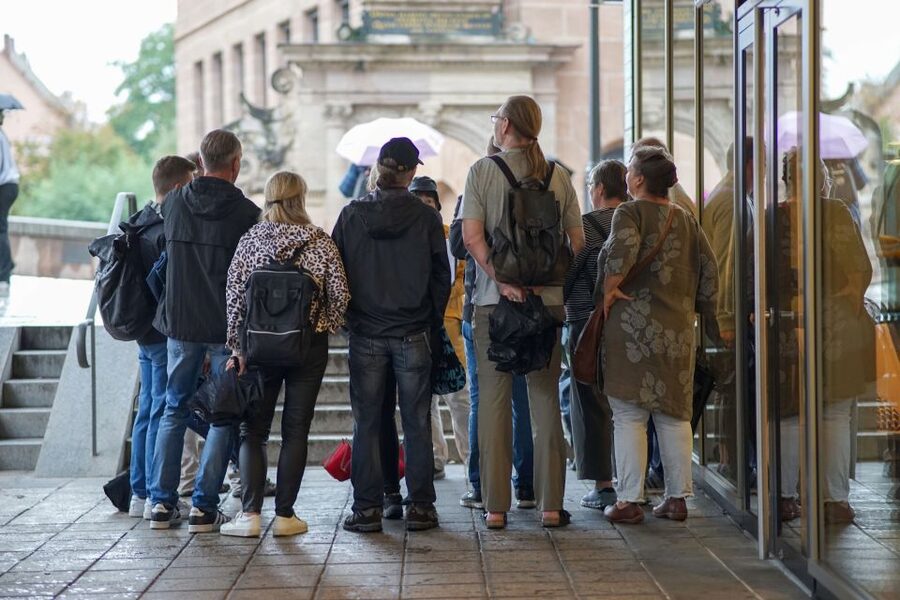
The tour begins in front of the main entrance of the Old Town Hall, or Altes Rathaus. Look for a guide holding a picture folder and wearing the green logo of Geschichte Für Alle e.V. This is a useful meeting point in central Nuremberg, and the walk begins with the old town around you rather than with a ride to a distant food venue.
The opening stop sets up the main theme: how food reflects city life. You will hear questions about the name bratwurst, the small size of Nuremberg sausages, the city’s gingerbread, and how much meat people once ate.
The format suits you if you enjoy context with your meal. It is less suitable if you want a quiet tasting with little talking. Here, the guide’s explanations are the main event, and the snacks support them.
Bratwurst Röslein and the small Nuremberg sausage
After the opening, you walk about five minutes to Bratwurst Röslein. This is the first major food stop and one of the most useful for understanding local identity.
Nuremberg bratwurst is famous for its small size, and the tour explains why. You are not just handed a sausage and told that it is traditional. The guide connects its size to the story of Nuremberg cooks and the city’s food customs.
This is also a good place to pay attention to the wording of the tour’s central question: why is bratwurst called bratwurst? The answer is part of the historical food lesson, so you will get more from the tasting if you listen closely rather than treating it as a quick bite.
The stop is likely to please anyone who wants a clear local specialty without a long detour. It may feel brief if you hoped for a full plate, but that is part of the design. Several small tastings are spread across the route.
Hauptmarkt, gingerbread, and the city’s best-known flavors
The walk continues for about three minutes to Hauptmarkt, Nuremberg’s main market square. Here, the food and the setting work together. The square gives the guide an open place to explain how local cooking developed and why certain products became linked with Nuremberg.
Gingerbread receives special attention. The tour asks what makes Nuremberg gingerbread special and presents it as the best gingerbread in the world. You get to taste the subject rather than simply hearing a claim about it.
I like this part because gingerbread is easy to dismiss as a souvenir sweet. The tour treats it as a piece of local food culture with a story behind it. If you already know Nuremberg for its Christmas market, this stop adds another layer to that familiar flavor.
There is also a second Hauptmarkt address on the route, with another guided food stop. The supplied schedule does not spell out the exact sample at each location, so expect a series of small tastings rather than a fixed menu you can choose in advance.
More food tours around Germany:
- Hamburg: Schanzenviertel Culinary Tour
★ 4.6 · 2,051 reviews - Hamburg: Elbphilharmonie Plaza and HafenCity Food Tour
★ 4.7 · 1,711 reviews - Berlin Center Food Tour with 8+ Authentic Local Tastings
★ 5.0 · 1,227 reviews - Munich: Viktualienmarkt Food Tour
★ 4.5 · 1,127 reviews
From Trödelmarkt to Unschlitthaus
After Hauptmarkt, you walk about five minutes to Trödelmarkt, then another five minutes to Trödelmarkt 13. These short sections keep the pace comfortable and give the guide room to connect food customs with the old streets around you.
The tour raises broader questions here, including how much meat Nuremberg citizens ate. That is a useful change of scale. You move from the familiar bratwurst in your hand to the larger question of how food was produced, sold, and consumed in city life.
Next comes Unschlitthaus, reached after another short walk. The building is part of the route’s historical setting, while the tasting keeps the subject grounded in something you can see and eat. The schedule labels this stop for both guiding and food sampling.
This section will appeal to you if you enjoy unusual details more than a standard list of famous sights. It may be less satisfying if you want a detailed architectural tour of each building, since the focus remains culinary history.
St. Sebaldus Church and stories beyond the plate
The route then takes about ten minutes to St. Sebaldus Church. This is the longest walk between stops, though still a manageable distance in the context of a two-hour tour.
The church stop adds variety. You are not moving from restaurant to restaurant, and the old town is not just background scenery. Buildings and public spaces help frame the stories about Nuremberg’s food traditions.
The guide also addresses the curious subject of Devil’s Kitchen. The tour information does not give the answer in advance, which is a good reason to listen for the explanation on site. It is one of several odd, memorable questions that make the walk feel more like a guided story than a standard tasting crawl.
You will also hear about the connection between Nuremberg food and the planner of the English Garden. That surprising link shows the tour’s wider reach. It is not limited to bratwurst, beer, and sweets. It follows people, ideas, and cooking habits beyond the city’s most obvious dishes.
Finishing with red beer at Altstadthof Brewery
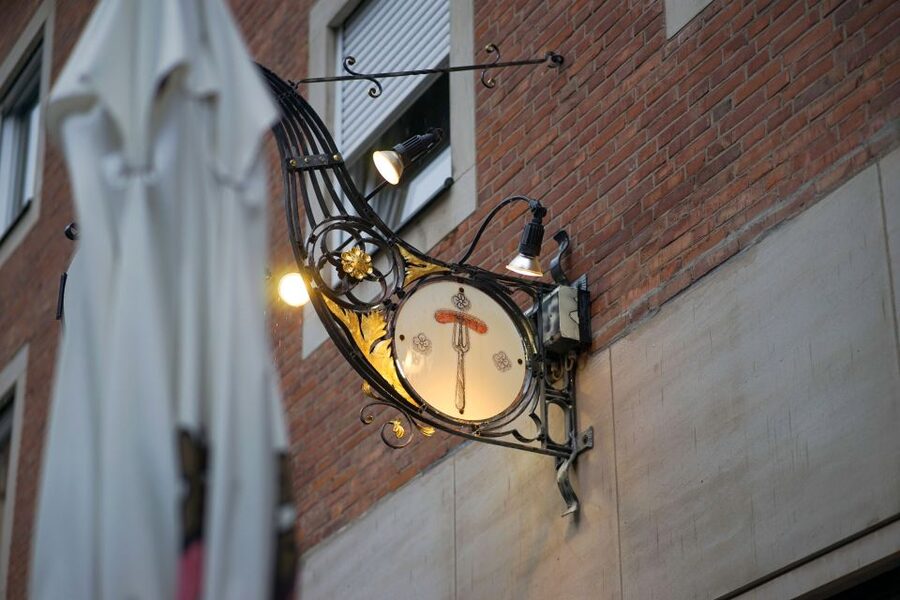
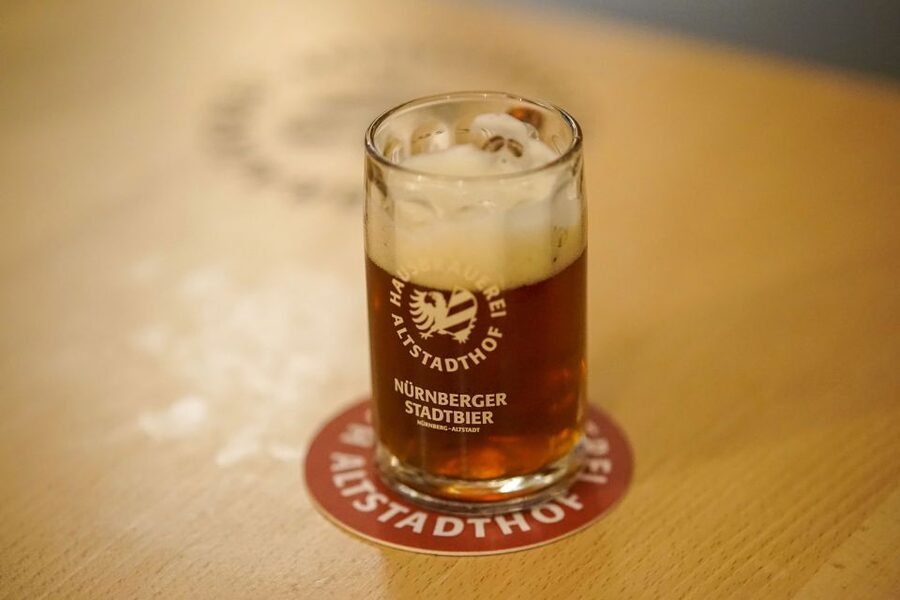
The final walk takes about five minutes to Altstadthof Brewery, also listed as Hausbrauerei Altstadthof, Rotbierstüberl, Brewery and Whisky Distillery. This is where the tour’s red beer theme comes into focus.
The beer is included, along with snacks, and the brewery provides a fitting end to a walk about Nuremberg’s food and drink. You get to taste a local style in a brewing setting rather than discussing it only in theory.
The route’s title pairs Rotes Bier with Blaue Zipfel, though the supplied details do not specify every tasting or confirm precisely when each named dish appears. You should expect the guide to use the food samples to explain local customs, with bratwurst, gingerbread, and beer clearly central to the experience.
I like ending at the brewery because it gives the tour a natural final stop. The experience does not simply end in a random square after the last story. Instead, you finish with the drink that anchors its title and can continue your own food plans from there.
What the two-hour format means for you
Two hours is enough time for a focused introduction without taking over your day. The walking sections are short, ranging from about three to ten minutes, and the route stays within Nuremberg’s old town.
You should wear comfortable shoes. The tour is on foot, and it runs in all weather, so bring clothing suited to the forecast. Rain does not cancel the experience automatically.
The timing also means that the guide must keep things moving. You will get several samples and a steady stream of stories, but not long breaks at each location. That suits you if you want a lively overview. It may feel rushed if you prefer to linger over each bite or building.
The tour is wheelchair accessible, which makes the short urban route more useful for many visitors. You still need to plan for outdoor conditions and the walking pace, but the activity is designed to remain on foot rather than requiring transport between stops.
Is $29 a fair price?
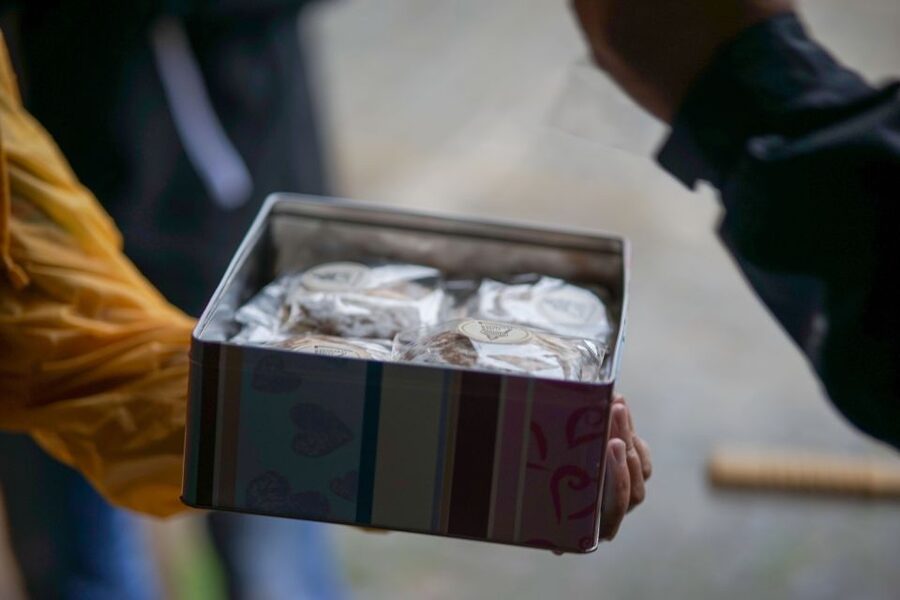
At $29 per person, the value depends on what you want from a food tour. You are paying for a guide, a two-hour walking route, historical explanations, snacks, and beer. You are not paying for a large meal or a private culinary class.
For a first visit to Nuremberg, the price is reasonable if you want your food tasting tied to the city itself. The route covers several central places, and the guide adds the background that you would miss by sampling sausage and gingerbread on your own.
The value is weaker if your main goal is quantity. One direct criticism of the food side is that the snacks could be more substantial or more carefully selected. The bratwurst, gingerbread, and beer are the strongest named highlights, while the smaller samples may feel less impressive.
I would treat this as a history walk with food, not as lunch. Have a meal before or after if you need more than tastings. That approach keeps your expectations in the right place.
Who should book this tour?
I would recommend it to you if you:
- Want a guided introduction to Nuremberg’s old town and local dishes
- Understand enough German to follow a live guide
- Enjoy stories about why food traditions developed
- Prefer several small samples to one long restaurant meal
- Have two hours available and want to keep the rest of your day flexible
- Like asking questions during a guided walk
It is especially useful for visitors who know very little about Nuremberg food. You will leave with a better sense of why bratwurst is small, why gingerbread matters, and how beer fits into the city’s identity.
I would hesitate if you need an English-language tour, want a full meal, or dislike walking in poor weather. The German-only format is the biggest practical limitation, and the rain-or-shine policy means you need to dress for the day.
You can cancel up to 24 hours before the start for a full refund, and the reserve-now-pay-later option gives you some flexibility. No separate invoice is issued for bookings made through GetYourGuide, so the booking confirmation serves as your proof of payment.
Final call: a good match for curious eaters
Book this tour if you want Nuremberg’s food explained as part of the city’s story. The strongest points are the guide’s clear, witty presentation, the chance to ask questions, the small but recognizable local tastings, and the finish at Altstadthof Brewery.
Skip it if you want an English tour or a filling food crawl. For German-speaking visitors who enjoy both old-town history and local flavor, $29 buys a compact, useful introduction to Nuremberg’s culinary character.
FAQ
Where does the tour begin?
Meet the guide in front of the main entrance of Altes Rathaus at Rathausplatz 5. Look for the picture folder and the green Geschichte Für Alle e.V. logo.
Where does the tour finish?
The tour finishes at Hausbrauerei Altstadthof, also called Rotbierstüberl, Brewery and Whisky Distillery.
How long does the experience last?
The walking tour lasts two hours.
What language is the tour in?
The live tour guide speaks German. The activity does not list an English-language option.
Is food included?
Yes. Snacks are included, along with tastings connected to local foods such as Nuremberg bratwurst and gingerbread.
Is beer included?
Yes. Beer is included, with red beer forming a central part of the experience.
Is the tour wheelchair accessible?
Yes. The activity is listed as wheelchair accessible.
What should I bring?
Bring comfortable shoes and clothing suited to the weather. The tour takes place rain or shine.
Fresh off the menu around Germany
- Stuttgart: Culinary Excursion through Bad Cannstatt★ 4.7 · 82 reviews
- Nuremberg: Christmas City Culinary Tour★ 4.6 · 40 reviews
- Berlin: Guided Street Food Tour with Tastings★ 4.8 · 310 reviews
- Munich: Old Town Food Tour with 10+ Tastings, Beer & Pretzel★ 4.9 · 70 reviews
- Munich: Christmas Markets Food & Drink Tour★ 4.6 · 50 reviews
- Munich: Guided Food Walking Tour with Beer Tasting★ 4.7 · 183 reviews
- Munich: 3-Hour Culinary Nightwatch Tour★ 4.3 · 87 reviews
- Munich: 3-Hour Food Tour Through Haidhausen in GERMAN★ 4.7 · 21 reviews
Germany Food Tours, compared.

Hamburg: Elbphilharmonie Plaza and HafenCity Food Tour
Read our review →
Berlin Center Food Tour with 8+ Authentic Local Tastings
Read our review →
Munich: Beer and Food Tour with Dinner & Oktoberfest Museum
Read our review →

Browse the lists this tour appears in