
Review · BERLIN
Berlin: Downtown Food Tour with 8 Authentic Local Tastings
Berlin’s food story is best understood one bite at a time, and this three-hour walk starts with one of the city’s biggest claims to fame: a döner kebab from Mustafa’s. From there, you move through courtyards, street art, old neighborhoods, and places marked by the Battle for Berlin and the Soviet era. It is a food tour with a history walk built in.
I like the wide range of food, from Turkish-German street food to cheese-filled Käsespätzle and a jam-filled Berliner doughnut. I also like the guides’ role in shaping the day. Francesco, Fotini, Felix, Danya, and others are repeatedly praised for making the group feel at ease while adding useful tips about Berlin.
The main consideration is the amount of food. You may leave very full, and one stop can feel harder to appreciate if you have already eaten generously. The menu and route can also change, so the exact number and order of tastings are not fixed.
Key points at a glance
- Mustafa’s döner begins the food story: Start with Berlin’s famous kebab, including a vegan option at the Gemüse Kebap location when available.
- Eight tasting moments are promised: The menu includes currywurst, pastry, Berliner doughnut, Flammkuchen, Käsespätzle, beer, Riesling, and a secret dish, though the exact selection can change.
- Food and Berlin history share the route: Look for wartime scars, plaques, bullet holes, missing buildings, Cold War reminders, and Soviet-era stories.
- The walk uses less obvious city streets: Courtyards, passageways, street art, neighborhood businesses, and a brewery give the tour more local character than a simple restaurant crawl.
- Guides make a real difference: Francesco, Fotini, Felix, Danya, Vincenzo, and Danny are among the guides praised for warmth, humor, food knowledge, and strong Berlin storytelling.
- Come hungry and wear good shoes: The portions add up, and the route involves a fair amount of walking.
Starting with Mustafa’s famous Berlin döner
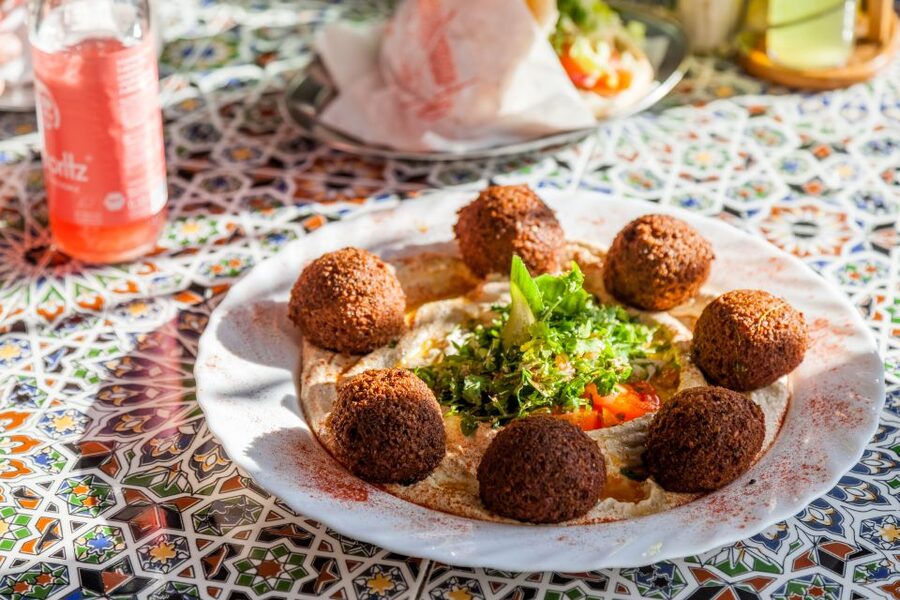
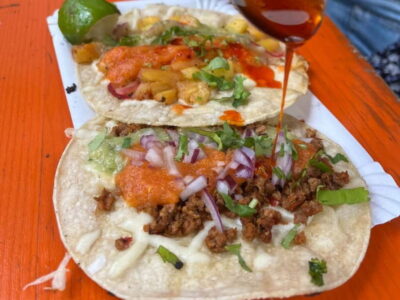
The first major stop is Mustafa’s, where the tour introduces you to Berlin’s most famous street food. A döner kebab is more than meat, bread, and sauce here. It reflects the city’s Turkish influence and the way Berlin has made food from many cultures part of its everyday identity.
The experience may include Mustafa Demir’s Gemüse Kebap, with a vegan option available. That makes this opening stop useful for mixed groups, though you should still report dietary needs when booking so the provider can plan properly.
The kebab is also a smart first course. It gives you an immediate taste of Berlin’s modern food culture before the tour shifts toward older German dishes. The one catch is that Mustafa’s is famous, and availability can affect the route. The operator specifically notes that locations and menu items may change.
You should not treat the kebab as a light snack. Several tastings follow, and this first portion helps explain why the tour works best when you have skipped a large meal beforehand.
More food tours around Germany:
- Hamburg: Schanzenviertel Culinary Tour
★ 4.6 · 2,051 reviews - Hamburg: Elbphilharmonie Plaza and HafenCity Food Tour
★ 4.7 · 1,711 reviews - Berlin Center Food Tour with 8+ Authentic Local Tastings
★ 5.0 · 1,227 reviews
Pastries, Berliner doughnuts, and Berlin’s sweet side
A pastry shop stop brings in Berlin’s baking traditions. The tour includes a traditional local baked pastry and a Berliner doughnut, the jam-filled treat with roots stretching back centuries.
The Berliner is one of the most warmly praised tastes on the route. One guidebook-style tip from the experience is simple: save room for it. It is easy to think of a filled doughnut as a small extra, but after several savory stops, the sweetness can feel like a proper course.
This part of the tour also breaks up the heavier food. You walk between stops, hear about the streets around you, and let the previous tasting settle before eating again. Some people enjoy that rhythm; others may prefer more time at each food stop. The tour is designed around several tastings rather than long meals, so you should expect movement and short visits.
Currywurst and the taste of Cold War Berlin
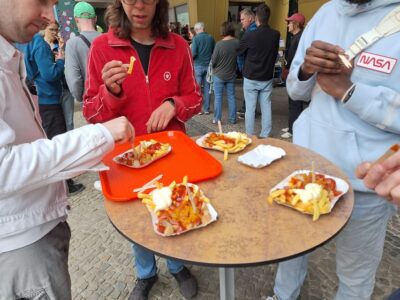
Currywurst is the dish most closely tied to Berlin’s postwar street-food identity. The tour serves an original Berlin currywurst at one of the city’s better-known spots, placing a familiar sausage dish into the wider story of a divided city.
This is where the food and history pairing makes sense. Currywurst is casual, inexpensive, and made for a quick meal, yet it carries a strong connection to Berlin’s everyday life after the war. Your guide may explain how the dish became part of the city’s food culture while you examine the streets around you.
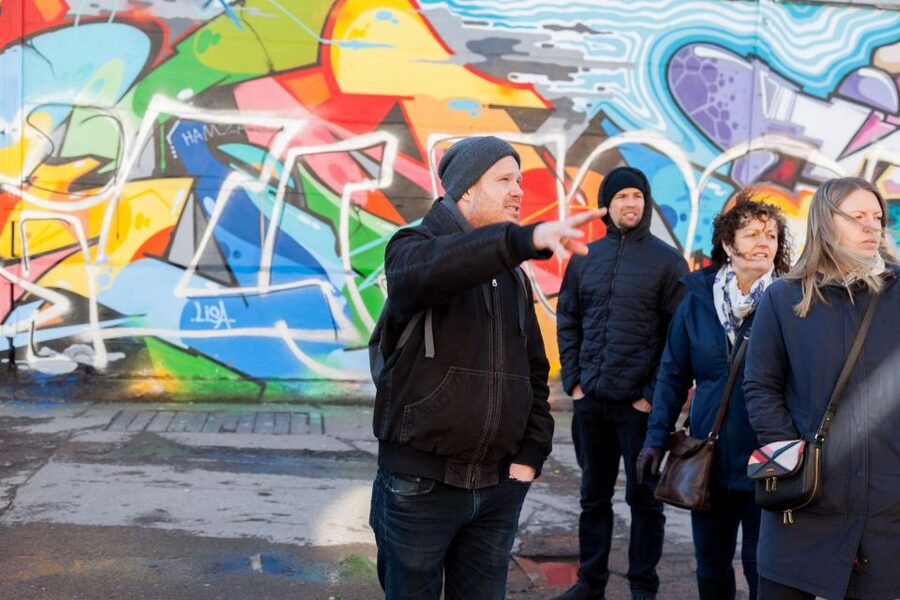
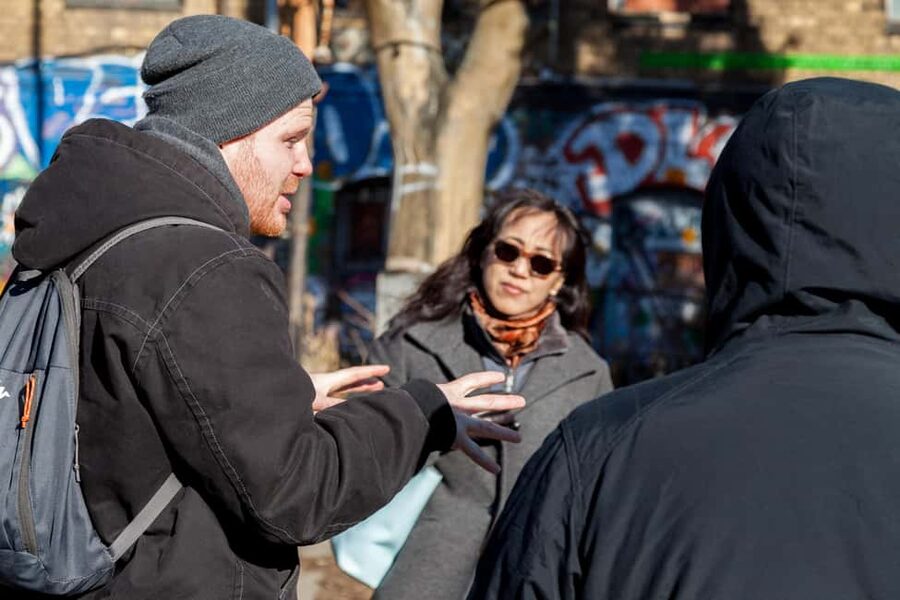
The route is not only about famous dishes. Guides have pointed out plaques, bullet holes, missing buildings, wartime damage, and evidence connected with the Battle for Berlin. Stories also touch on the Soviet era. You get context while walking, rather than stopping for a long lecture in a museum.
I like this format because Berlin’s past can otherwise feel scattered. A damaged facade, a courtyard, or an ordinary street corner may mean little without explanation. A good guide connects those details to the food and neighborhood, making the walk easier to remember.
Flammkuchen and Käsespätzle at a historic restaurant
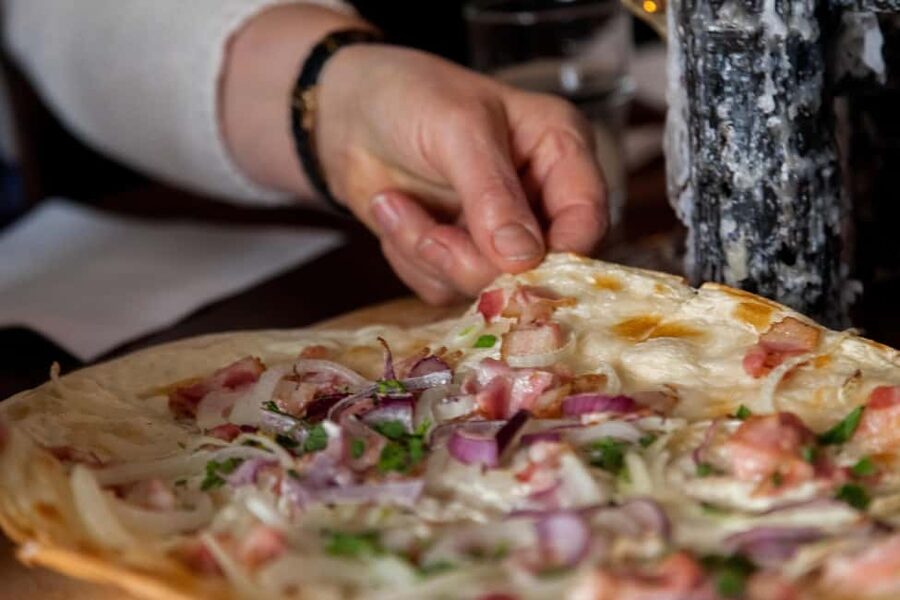
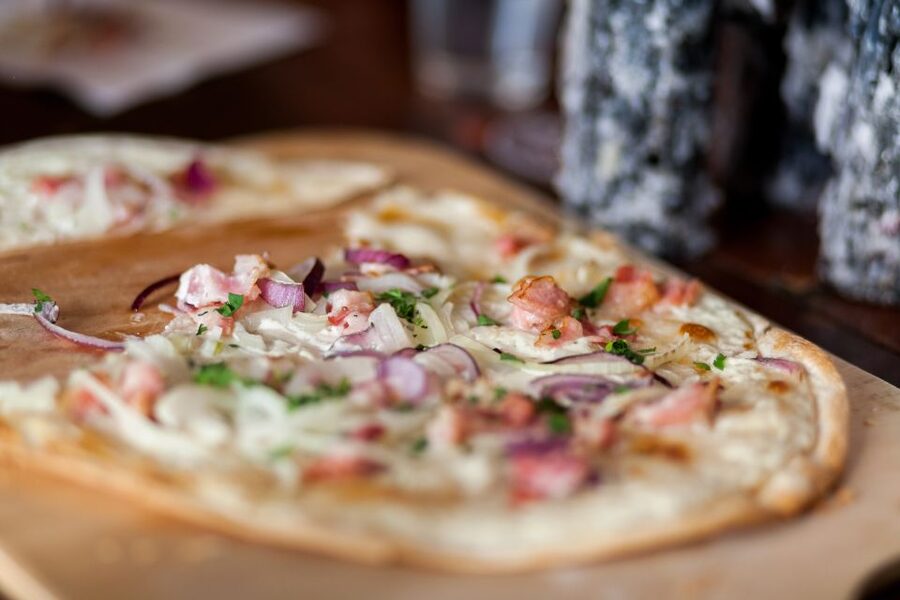
The tour then moves toward heartier German food. At a historic restaurant, you taste Flammkuchen, a thin, crisp flatbread topped with cream and onions, along with Käsespätzle, soft egg noodles covered with cheese.
Flammkuchen is lighter than a thick pizza, though the cream topping still gives it plenty of weight. Käsespätzle is Germany’s comforting answer to macaroni and cheese, and it shows a different side of the country’s cooking than currywurst or döner.
This is one of the most useful parts for anyone trying to understand Berlin’s food beyond street stalls. The city is often sold through kebabs and sausages, but the tour also gives you regional comfort food and baked dishes. The menu may not represent only old-fashioned German cuisine, and that is part of the point. Berlin’s table has been shaped by migration, division, reinvention, and modern neighborhood life.
Portion size is worth keeping in mind here. You may receive several shared tastes rather than full restaurant servings, but the total amount is still substantial. One person found the final stop difficult to enjoy after eating so much earlier. If you are a small eater, go slowly and do not feel obliged to finish every bite.
Same city, a different plate:
- Munich: Viktualienmarkt Food Tour
★ 4.5 · 1,127 reviews - Munich: Beer and Food Tour with Dinner & Oktoberfest Museum
★ 4.7 · 1,086 reviews - Kreuzberg: Culinary Food Tour
★ 4.5 · 770 reviews - Cologne: Südstadt Guided Foodie Walking Tour
★ 4.6 · 624 reviews
A local beer and a final secret dish
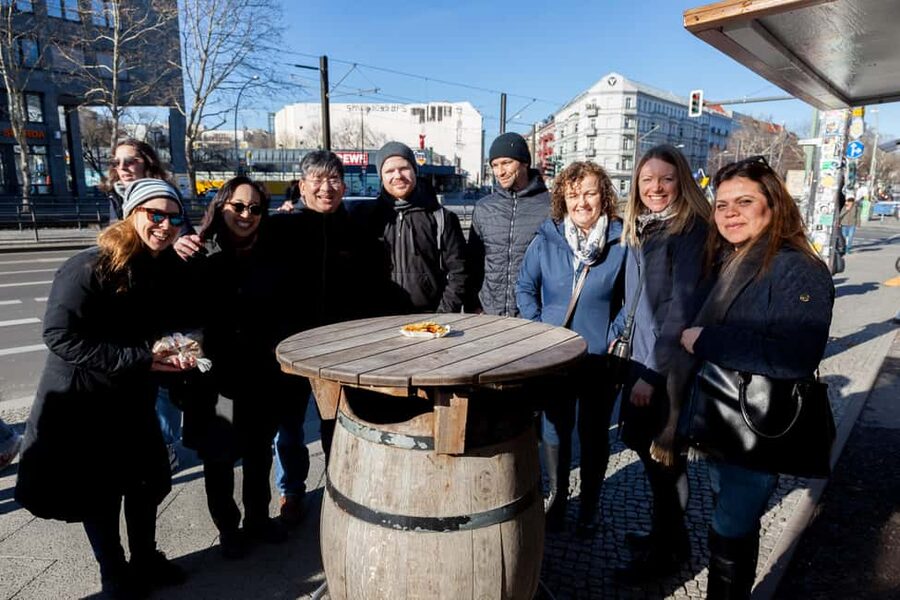
Beer arrives at an authentic neighborhood brewery, with a fresh pint of local tap beer included. The route also includes a glass of German Riesling alongside the secret dish, with non-alcoholic drinks available for those who do not drink alcohol.
The brewery stop gives the tour a relaxed ending. Instead of rushing through one more snack, you can raise a glass, talk with the group, and compare the food you have tried. A beer garden-style food stop is also included in the stated menu, though the exact venue and order can change.
The secret dish is revealed only during the tour. That gives the guide room to respond to local availability, and it adds a small surprise to an itinerary that already covers plenty of familiar Berlin foods. I would not book this expecting a precise restaurant list. Book it for the mix of tastes and let the final course remain unknown.
The published information describes seven carefully selected tastings in one place and eight authentic dishes in another. The included food list names more than seven items when drinks and the secret dish are counted. In practice, you should expect a generous series of food and drink samples, but not rely on a fixed count or fixed order.
Courtyards, street art, and the city between meals
The walking is what turns this from a standard food tour into a wider introduction to Berlin. You move through the bohemian center, using narrow streets, hidden courtyards, passageways, and areas marked by street art.
The tour does not focus only on major sights. Guides have taken groups through less touristy parts of the city and pointed out details that are easy to miss on your own. That can include wartime traces, old plaques, unusual buildings, and signs of how the neighborhood changed over time.
The walking pace appears moderate, but the official information warns that there is a fair amount of walking. Comfortable shoes matter. The tour is not suitable for wheelchair users or people with mobility impairments, and the route may be affected by weather.
I like the pauses between tastings. They keep the experience from feeling like a conveyor belt of plates, and they give you time to ask about Berlin, German food, nightlife, language, and places to visit later. Francesco in particular is praised for offering suggestions for the rest of a Berlin stay, while other guides have helped people with German phrases and local food ideas.
What the guides add to the experience
The guide is central here. Food tours can easily become a list of stops with little connection between them. This one works best when the person leading it can link a dish to a neighborhood, a historical event, or a cultural change.
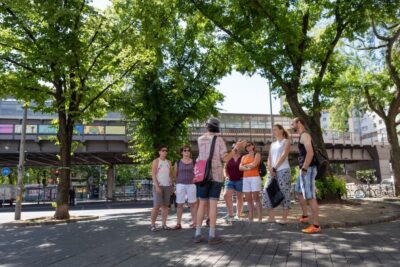
The named guides include Francesco, Fotini, Felix, Danya, Vincenzo, Danny, and Varusa. The strongest comments about them focus on warmth, humor, clear explanations, and the ability to bring a small group together. Francesco receives especially strong praise for mixing food with World War II and Berlin history, while Fotini and Felix are often noted for their friendly style and useful cultural explanations.
That does not mean every tour will feel identical. Guide personalities vary, and the route changes with weather and venue availability. Still, the consistent pattern is clear: you are getting more than food delivered at several addresses.
Small groups also help. You have a better chance to ask questions, hear the guide, and talk with the people around you. Several people found the group atmosphere comfortable and social. If you prefer to eat alone or set your own pace, a guided tasting walk may feel more structured than an independent food crawl.
Is $89 a fair price?
At $89 per person, this is not the cheapest way to sample Berlin. You could buy currywurst, a doughnut, a beer, and a kebab on your own for less. The price makes more sense when you count the guide, the route planning, the multiple food stops, the included beer and Riesling, and the historical commentary.
I see the value in the combination. You are not paying only for food. You are paying to find specific places, avoid planning several stops, learn what you are eating, and get a practical introduction to Berlin’s neighborhoods. If the tour runs closer to four hours, as one person experienced, the value improves, though you should plan your day around a possible longer finish.
It is particularly useful early in a Berlin visit. You can collect restaurant ideas, learn which foods to seek out again, and ask the guide for advice about other areas. It also helps you understand the city before spending the rest of your trip visiting its museums, memorials, and major sights.
The value is weaker if you have strict expectations about exact venues or want a formal sit-down meal. The route and menu can change, hotel pickup is not included, and the tour is designed around tasting several foods rather than choosing your own dishes.
Dietary needs, timing, and practical planning
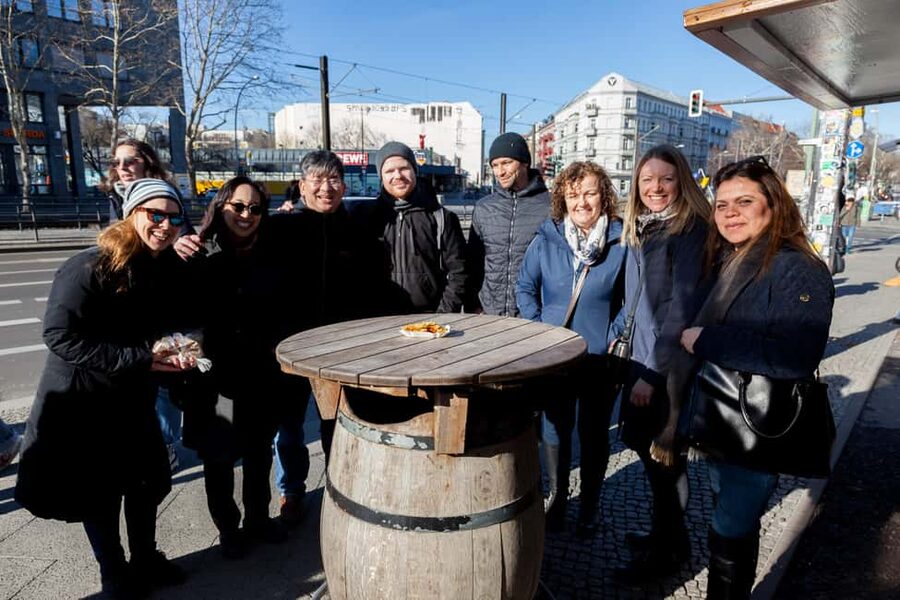
Vegetarian options are available, and other dietary needs can be supported, but you must contact the provider in advance. Do not wait until the meeting point. The menu depends on the places visited, so advance notice gives the operator a better chance to adjust the tastings.
The meeting point is Friedrichsbrücke, at Burgstraße 19, 10178 Berlin. Hotel pickup and drop-off are not included, so allow time to reach the bridge before the start.
The tour lasts about three hours, though the exact starting time depends on availability. Weather and venue conditions can alter the route. Bring comfortable shoes, a layer for cool weather, and an appetite.
You can cancel up to 24 hours ahead for a full refund, and the reserve-now, pay-later option keeps your plans flexible. That is useful in Berlin, where a museum visit, train delay, or sudden change in weather can affect your schedule.
Who should book this Berlin food walk?
I would choose this tour for a first visit to Berlin, especially if you want food and city orientation in the same afternoon. It suits curious eaters who like trying several small dishes, hearing stories, and walking through areas they might not find alone.
It is also a good fit for couples, friends, and solo visitors who enjoy meeting a small group. The food is varied enough for someone who wants German classics but also wants to try Berlin’s Turkish-influenced street food.
You may want a different plan if you have limited mobility, dislike walking, need a fully fixed menu, or want to spend a long time at each restaurant. The route is active, the menu may change, and the total food intake is considerable.
Should you book it?
I would book this tour if you want an easy, tasty introduction to Berlin that goes beyond currywurst alone. Mustafa’s döner, the Berliner doughnut, Käsespätzle, Flammkuchen, beer, and the secret dish give you a broad first look at the city’s food culture, while the courtyards and wartime traces give the walk some weight.
Book it near the start of your stay, come hungry, and tell the provider about dietary needs early. If you prefer exact restaurant reservations or a quiet meal, skip it. For most visitors who want food, local streets, and Berlin stories in one outing, $89 is a fair price for the amount of planning and guidance included.
FAQ
How long does the Berlin food tour last?
The stated duration is three hours. The route and timing can change, and one experience ran closer to four hours, so avoid scheduling another fixed activity immediately afterward.
Where does the tour meet?
The meeting point is Friedrichsbrücke, at Burgstraße 19, 10178 Berlin, Germany.
What food is included?
The stated selections include a Berlin döner kebab, a traditional baked pastry, currywurst, beer garden food, Käsespätzle, a Berliner doughnut, a secret dish, and drinks including local beer and German Riesling. The menu may change.
Is a vegetarian option available?
Yes. Vegetarian options are available, and other dietary requirements may be supported. Contact the activity provider in advance with your needs.
Is alcohol included?
Yes. The tour includes a fresh pint of local tap beer and a glass of German Riesling with the secret dish. Non-alcoholic drinks are also available.
Is hotel pickup included?
No. You must make your own way to the meeting point, as hotel pickup and drop-off are not included.
Is the tour suitable for wheelchair users?
No. The activity is not suitable for wheelchair users or people with mobility impairments. It involves a fair amount of walking, so comfortable shoes are recommended.
Fresh off the menu around Germany
- Stuttgart: Culinary Excursion through Bad Cannstatt★ 4.7 · 82 reviews
- “Rotes Bier” and “Blaue Zipfel”. A historical-culinary walk★ 4.4 · 190 reviews
- Nuremberg: Christmas City Culinary Tour★ 4.6 · 40 reviews
- Berlin: Guided Street Food Tour with Tastings★ 4.8 · 310 reviews
- Munich: Old Town Food Tour with 10+ Tastings, Beer & Pretzel★ 4.9 · 70 reviews
- Munich: Christmas Markets Food & Drink Tour★ 4.6 · 50 reviews
- Munich: Guided Food Walking Tour with Beer Tasting★ 4.7 · 183 reviews
- Munich: 3-Hour Culinary Nightwatch Tour★ 4.3 · 87 reviews
Berlin Food Tours, compared.

Berlin Center Food Tour with 8+ Authentic Local Tastings
Read our review →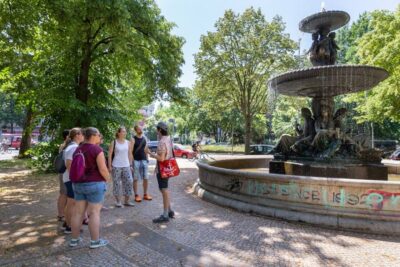
Browse the lists this tour appears in