
Review · BEIJING
Beijing Hutong Breakfast Food Tour
Beijing’s best breakfast lesson may happen away from the grand sights. This three-hour walk leads you through a quieter hutong area, a local market, and several modest eateries where you can taste more than 10 dishes and drinks before most of the city has fully started its day. Douzhi, a sour fermented mung bean soup, is the boldest bite, while zongzi, tofu pudding, yogurt, pancakes, and beef-filled flatbread offer a gentler introduction to local food.
I like two things especially. First, the tour turns breakfast into a look at ordinary Beijing life, with stops at a market and clues about stone door pillars, colored street signs, and the number of families living behind a doorway. Second, the maximum group size of 10 gives guides such as Lynn, Lin, and Winnie room to explain dishes and answer questions. The main consideration is simple: you need to arrive hungry, and adventurous eaters will get more from the meal than cautious ones.
Key points to know before booking
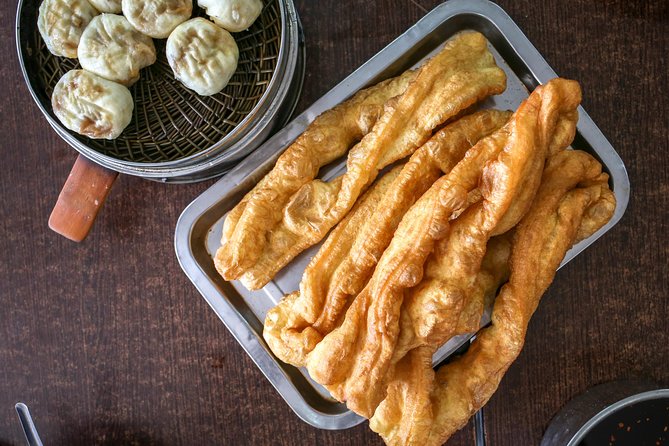
- More than 10 tastings across four or five eateries: You sample a broad range of breakfast foods instead of sitting down for one large meal.
- Douzhi is the daring stop: The fermented mung bean soup has a sharp, sour flavor that can be memorable even if it is not your favorite.
- The market adds local context: You see fresh vegetables, spices, neatly cut meat, and seasonal ingredients in a former factory space.
- The walk focuses on daily life: Hutong doors, street signs, household layouts, and neighborhood habits are part of the experience.
- Small groups matter: Fewer than 10 people make it easier to hear the guide and keep the food stops moving.
- Plan for a 9:00 am start: The tour lasts about three hours and returns to the starting point near the National Art Museum of China.
Why this breakfast walk feels different

Many Beijing food experiences focus on famous dishes or polished restaurants. This one is built around the food people eat in the morning, served in working neighborhood shops. That changes the tone. You are not only tasting dishes. You are seeing where people shop, how small food businesses operate, and what a traditional lane looks like before the sightseeing crowds arrive.
The route begins near the National Art Museum of China and continues through the area around Longfusi Street and Dongsi North Street. Those names matter mainly as orientation points. The real subject is the hutong neighborhood itself, where narrow lanes and old residential entrances sit close to markets, breakfast counters, and small family-run food businesses.
I like this format because the walking gives your stomach a break between tastings. It also keeps the food from feeling like a checklist. You eat, move, look around, and hear an explanation. Then you eat again. In a city as large as Beijing, that rhythm can help you understand how the pieces fit together.
The tour is limited to fewer than 10 people. That is a useful size for a market visit, where a large group can block aisles and make it hard to hear. It also gives you a better chance to ask about ingredients, preparation, or local customs. Guides named Lynn, Lin, and Winnie have received especially warm praise for their friendly manner and strong grasp of Beijing food and history.
More food tours around China:
- Authentic Local Food Tour in Central Shanghai
★ 5.0 · 1,382 reviews - Shanghai: 3-Hour Local Food Tasting Tour
★ 4.9 · 806 reviews - Eat Like A Local: Shanghai Night Food Tour
★ 5.0 · 616 reviews
Stop one: a market inside a former factory
The first stop takes you to a local market near the National Art Museum of China. It is described as a former factory converted into a food market, filled with fresh vegetables, spices, and neatly sliced meat. This is a useful opening because you see ingredients before they appear on your plate.
You can expect about 30 minutes here. The market visit is not just a shopping detour. It gives you a sense of what local cooks buy and what is in season. You may see the working side of breakfast preparation, rather than only the finished dish presented to visitors.
A featured bite is zongzi from Aunt Jie’s stall. These glutinous rice dumplings are wrapped and filled, with the exact filling details depending on the version served. Zongzi are dense and filling, so this early taste is one reason to avoid eating a large breakfast before meeting the group.
The market can also be one of the more visually interesting parts of the walk. Fresh produce, seasonings, and cut meat tell you more about everyday cooking than a formal explanation alone. Your guide can connect those ingredients to the dishes you try later.
Stop two: deciding what you think of douzhi
At Longfusi Street, the tour takes a sharper turn with douzhi. This fermented mung bean soup is a Beijing specialty with a tangy, sour character. It is the kind of food that divides people, and the point is not to pretend that every traditional dish will suit every palate.
You may love it, or you may decide that one taste is enough. Either result is useful. Food traditions are not designed to please every first-time visitor, and douzhi gives you a direct encounter with a flavor that has a long place in Beijing breakfast culture.
This stop is linked with a popular shop that has received a Michelin mention. That does not make the dish more familiar, but it does show that local breakfast food can receive serious attention without becoming fancy or expensive.
The guide’s explanation matters here. Without context, fermented mung bean soup can seem like a dare. With context, it becomes a chance to understand a regional preference and a food that many locals recognize immediately. I would treat it as an experiment, not a test of bravery.
Stop three: beef flatbread and tofu pudding
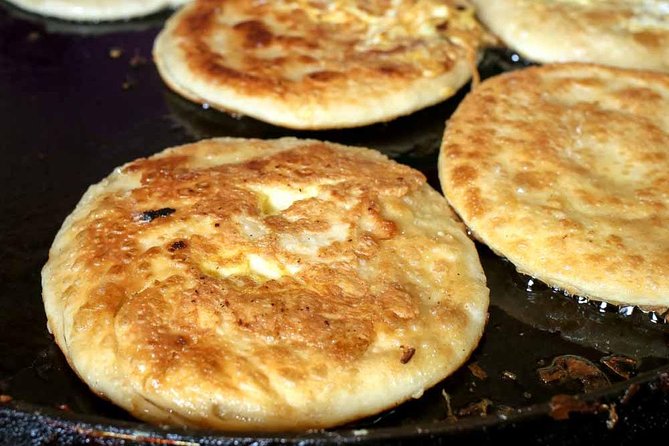
The next Longfusi Street stop moves toward more approachable comfort food. You try a crisp sesame flatbread filled with cured beef, along with a warm bowl of tofu pudding. The combination gives you contrasting textures: a crunchy, savory pastry and a soft, smooth dish.
This is the sort of stop that can win over people who feel uncertain after douzhi. The flatbread is familiar in structure, yet still tied to Beijing’s own food traditions. The tofu pudding offers a warm, simple counterpoint and shows how soybeans appear in different forms across Chinese breakfast cooking.
The portioning is important. You are not ordering one full meal at each place. You are tasting several foods in sequence, which lets you sample more without committing to a single large serving. Even so, the total amount adds up quickly. Come hungry, but do not assume the meal will feel light just because it is served in small portions.
The route includes yogurt and pancakes as well as the dishes named above. Coffee with a view is also part of the breakfast experience. The exact order may vary, but the spread covers sweet, savory, warm, cool, soft, and crisp tastes.
Same city, a different plate:
- Eat Like a Local Through Shanghai’s French Concession
★ 5.0 · 353 reviews - Hong Kong’s Tin Hau Hidden Eats Food Tour with 7+ Local Tastings
★ 5.0 · 352 reviews - Small-Group Hong Kong Island Food Tour
★ 5.0 · 343 reviews - Beijing: Hidden Gems Guided Food Tour with Beer and Tastings
★ 4.9 · 306 reviews
Stop four: reading the hutong through its doorways
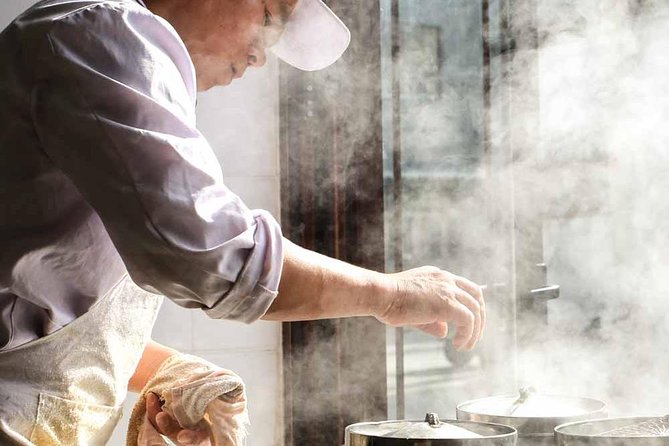
Between food stops, the walk turns to the hutong lanes around Dongsi North Street. This is where the experience becomes more than a breakfast crawl. The guide points out details that are easy to miss when you walk through old neighborhoods on your own.
Stone pillars around doorways can reveal something about a building’s past and status. Colored street signs carry meaning. The arrangement of entrances can help explain how many families live inside a shared residential space. These small details make the lanes easier to read.
I like this part because it connects architecture to people. A hutong is not only a photogenic lane. It is also a place where homes, businesses, neighbors, and shared spaces fit together in a tight urban pattern. A guide can point out those relationships while you are still looking at the actual doors and walls.
The neighborhood is described as rarely visited, which is useful if you have already seen Beijing’s major palace and temple sights. You get a quieter look at the city, though you should not expect a preserved museum quarter. Hutongs are living areas, and that means the setting may feel ordinary, active, or uneven rather than perfectly arranged for sightseeing.
More than 10 dishes, but not a race
The tour includes over five food stops in total, with tastings at four or five separate eateries. Across the morning, you sample more than 10 delicacies and drinks. The variety is the main value: you can compare different flavors and learn the names and role of foods you might otherwise pass without noticing.
The included food and drinks are unlimited according to the tour details. That wording suggests you will not need to pay separately at each stop, which makes the morning easier to manage. It also helps justify the $45 price, especially when you add the guide, market visit, neighborhood walk, and small-group format.
Still, value depends on how you travel. If you only want one famous Beijing dish, this is not the most efficient choice. If you want many tastes, food explanations, and a neighborhood walk in one morning, the price is reasonable. You are paying for access, interpretation, and variety as much as for the food itself.
The meal works best when you pace yourself. Take smaller bites, ask what is coming next, and remember that breakfast may include several dense items. The walk between stops helps, but you will still want room for the final tastings.
What the guide adds to the morning
The English-speaking guide is central to the experience. Food without explanation can be enjoyable, but the guide helps you understand why a dish belongs in a Beijing breakfast and how it fits into the neighborhood around you.
Lynn has been praised for explaining Beijing food and Chinese history clearly, as well as for offering useful restaurant advice. A recommendation for Peking duck was especially appreciated. Lin has also been singled out for making the morning informative and pleasant, while Winnie was praised for making the entire experience memorable.
The names matter because guide quality can shape a small food tour. With fewer than 10 people, you are not lost in a crowd, and the guide can respond to individual questions. Families can ask about milder foods. Curious eaters can ask about fermentation. People interested in neighborhood life can spend more time on the hutong details.
A good guide also helps with the unfamiliar parts of the meal. Douzhi may need encouragement. Tofu pudding may need a description. A market stall may need explanation. That personal connection is one of the stronger reasons to choose this tour instead of simply ordering breakfast alone.
Timing, meeting point, and practical details
The start time is 9:00 am, and the activity lasts about three hours. It begins at the ticket office of Yin Yan Aviation Service Company on Meishuguan East Street, near the National Art Museum of China, and ends back at the same meeting point.
Check the meeting location carefully before setting out. The supplied information gives a street address in Chinese, and one poor experience was linked to an incorrect phone number and an unclear meeting point. Confirm the exact location and contact details when you book, especially if you do not read Chinese or are relying on a taxi driver.
The tour is near public transportation. You should dress for the weather because it operates in rain, cold, heat, or other conditions. This is a walking activity, so comfortable shoes are the sensible choice, although the supplied details do not list a specific distance.
A mobile ticket is provided, and confirmation arrives when you book. Advance signup and payment are required. Vegetarian food is available if you request it at booking, and you should also report other dietary requirements in advance.
Free cancellation is available up to 24 hours before the start time. Changes or cancellations inside that window are not accepted for a refund. The activity also requires a minimum number of people, so an operator cancellation could result in another date, another experience, or a full refund.
Who will enjoy this tour most
I would choose this tour for a first or second morning in Beijing, especially if you want food to guide your introduction to the city. It suits curious eaters, families with older children, and anyone who prefers local shops to formal dining rooms.
It also works well for people who want a compact experience. Three hours gives you a clear morning plan without using the entire day. You can eat, walk, learn about the neighborhood, and still have time for another sight afterward.
Families should know that the food includes unfamiliar flavors. Children may enjoy the pancakes, yogurt, flatbread, and sweet or mild items, but douzhi is less predictable. One family found that children who initially resisted getting up were glad they came, which suggests the range of food can work well for younger visitors.
I would be more cautious if you have strict dietary limits. Vegetarian options are available, but the supplied details do not explain how ingredients are handled or whether every stop can be adjusted. Ask before booking rather than assuming.
Should you book the Beijing Hutong Breakfast Food Tour?
Book it if you want a generous tasting menu, a local market, and a guided look at Beijing’s old residential lanes in one morning. The strongest reasons are the small group, the broad range of food, and the chance to learn details about hutong life that are easy to miss alone.
Skip it if you dislike fermented flavors, do not want to walk between several eateries, or prefer a single polished restaurant breakfast. For everyone else, $45 is a fair price for more than 10 tastings, unlimited included food and drinks, a guide, and a three-hour neighborhood experience.
Arrive at the correct meeting point, bring an appetite, and request vegetarian or other dietary arrangements ahead of time. If you do that, this is a practical and flavorful way to start a Beijing day.
FAQ
How long does the Beijing Hutong Breakfast Food Tour last?
The tour lasts approximately three hours and starts at 9:00 am.
Where does the tour begin and end?
It begins at the Yin Yan Aviation Service Company ticket office on Meishuguan East Street, near the National Art Museum of China. The activity ends back at the meeting point.
How many people are in the group?
The tour has fewer than 10 participants.
How much food is included?
You sample more than 10 delicacies and drinks at four or five separate eateries. Breakfast, food, drinks, and bottled water are included.
Is there a vegetarian option?
Yes. You must advise the tour provider about vegetarian needs when booking. You should also provide details about any other dietary requirements at that time.
Does the tour operate in bad weather?
Yes. It operates in all weather conditions, so you should dress appropriately.
Can I cancel for a full refund?
Yes, if you cancel at least 24 hours before the experience start time. Cancellations or changes made less than 24 hours in advance are not eligible for a refund.
Fresh off the menu around China
- Shanghai Must-See and Foodie Test Bike Tour( Day & Night)★ 4.7 · 70 reviews
- Shanghai-Cooking Dumpling & Meal in Local Family-w/Vegan★ 4.9 · 36 reviews
- Shanghai: Evening Walking Food Tour★ 4.9 · 115 reviews
- Shanghai: Half-Day Biking and Local Food Tour★ 4.9 · 170 reviews
- Late night food tour in Shanghai’s French Concession★ 4.9 · 31 reviews
- Beijing Hutong Food Crawl Delights: Peking duck, Hotpot&More★ 4.9 · 32 reviews
- Beijing: Dumpling Making Workshop with Meal and Tea★ 4.7 · 69 reviews
- Beijing: Hutong Breakfast Food Tour★ 5.0 · 22 reviews
Beijing Food Tours, compared.
Beijing: Hidden Gems Guided Food Tour with Beer and Tastings
Read our review →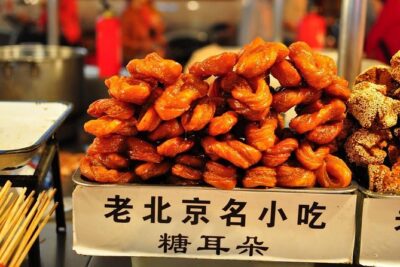
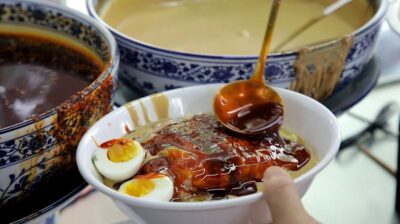
Beijing: Hutong Culinary Walking Tour with 15+ Tastings
Read our review →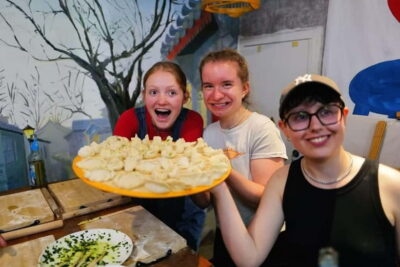
Beijing: Dumpling Making Workshop with Meal and Tea
Read our review →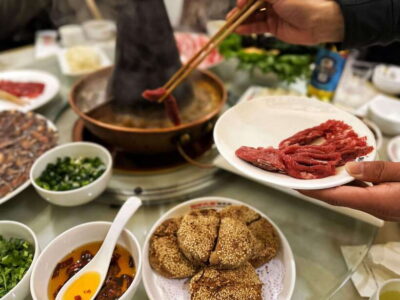
Beijing Hutong Food Crawl Delights: Peking duck, Hotpot&More
Read our review →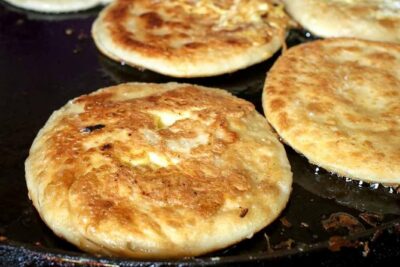
Browse the lists this tour appears in