
Review · OSAKA
Osaka: Sushi Class in Dotonbori
Osaka’s local sushi specialty is not the familiar hand-formed nigiri. It is oshizushi, sushi pressed into a square wooden mold and cut into neat pieces. This three-hour class lets you make that Kansai classic alongside nigiri and a colorful salad roll, so you learn three different techniques in one sitting.
I like the small groups of up to eight and the patient English instruction. I also like the generous meal at the end, which makes the $67 price feel fair. The main thing to consider is that you assemble prepared ingredients rather than learn to slice a whole fish, so serious sushi hobbyists may want a more advanced class.
Key points at a glance
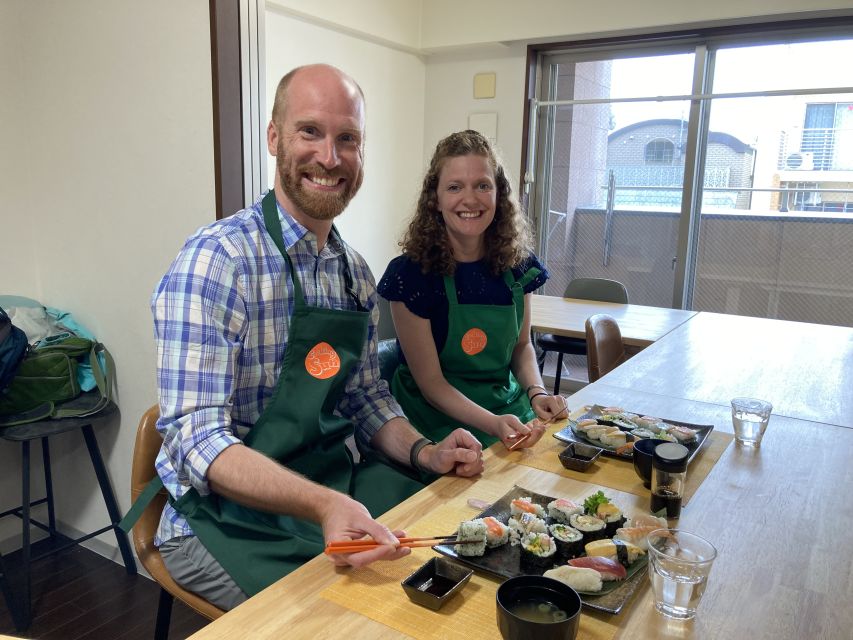
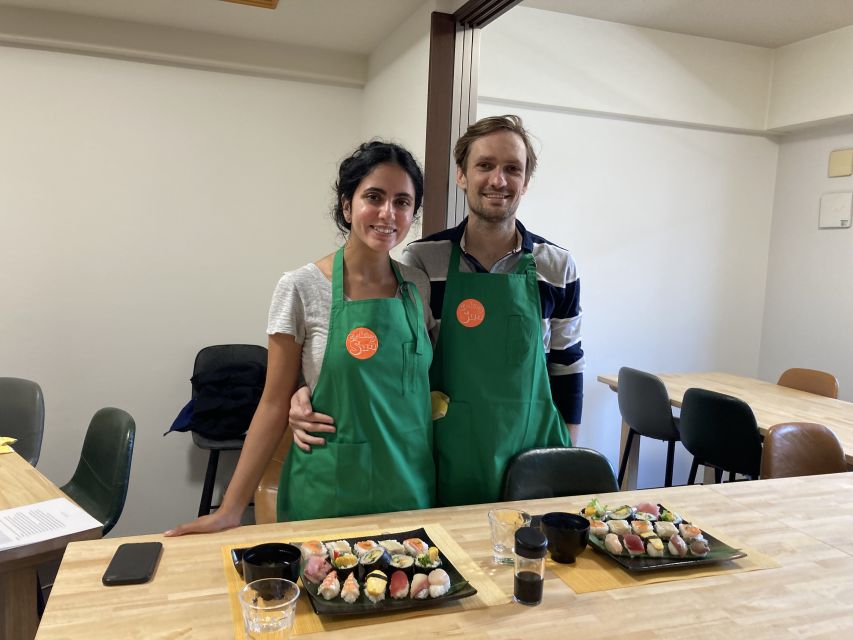
- Three sushi styles: Make a salad roll, hand-shaped nigiri, and Osaka-style pressed sushi.
- A real Osaka specialty: Oshizushi gives you a taste of local Kansai food culture beyond standard restaurant sushi.
- Friendly English instruction: Teachers including Yoshi, Yoko, Ami, Naomi, and Eriko explain each step clearly.
- A small, social class: With no more than eight participants, it is easy to ask questions and get help.
- Plenty to eat: The finished sushi is your lunch, and several people found the portions substantial.
- Plan ahead for dietary needs: Request vegetarian or gluten-free ingredients when you book.
Three sushi techniques in one Osaka class
This is a hands-on food lesson, not a demonstration where you sit and watch a chef do all the work. You prepare three distinct forms of sushi, each with its own shape, texture, and method.
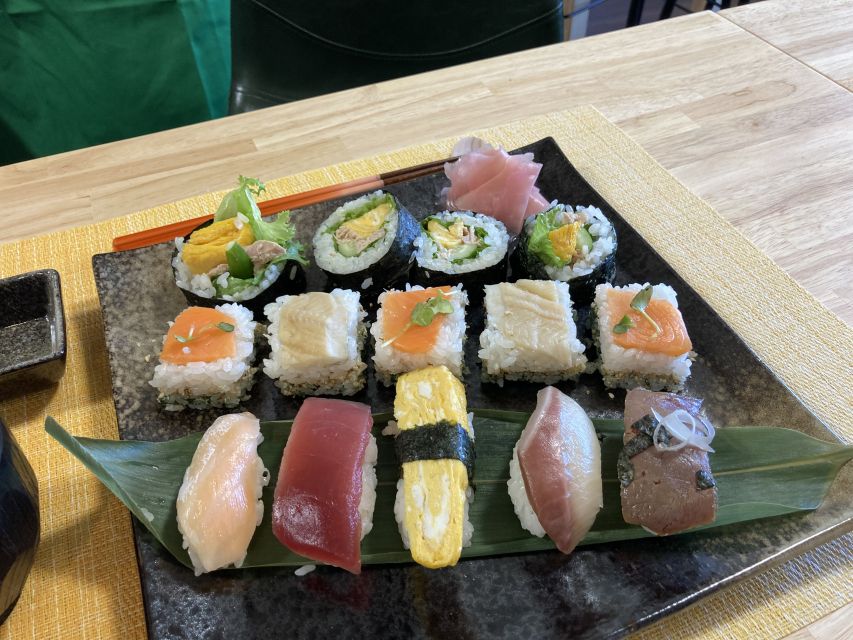
The first is a salad roll, a maki-style roll wrapped in nori seaweed. Its filling combines crab-flavored kamaboko, lettuce, cucumber, and tuna mixed with mayonnaise. A core of tamagoyaki, or Japanese rolled omelet, adds a soft, slightly sweet center.
This is likely the most forgiving item for a first attempt. The fillings are familiar, and the rolling process gives you a useful lesson in how nori, rice, and ingredients must be balanced. Too much filling makes the roll difficult to close, while too little leaves you with a thin, disappointing slice. The class gives you a chance to find that balance without having to guess.
Next comes nigiri, the sushi form most people recognize. You shape bite-sized portions of vinegared rice, then place fish, shellfish, or omelet on top. The shape looks simple, but getting rice to hold together without crushing it takes a light touch.
The instructors explain the method step by step, then let you try it yourself. That makes the lesson useful even if your first piece looks a little lopsided. You leave with a better feel for portion size, hand pressure, and the relationship between rice and topping.
The third style is oshizushi, also called box sushi. It has particular importance in Osaka and the wider Kansai region. Sushi rice and toppings are packed into a square wooden frame, then pressed so the rice binds to the ingredients. The finished block is cut into pieces just before eating.
Oshizushi is a good reason to choose this class over a standard sushi-rolling lesson. It connects your meal to Osaka rather than treating the city as just another stop for generic Japanese food. The square shape also makes the finished sushi easy to portion and share.
More food workshops around Osaka:
- Sushi Making Osaka Roll and Authentic Japanese Sushi Class
★ 5.0 · 1,220 reviews - Osaka: Ramen and Gyoza Cooking Class in Dotonbori
★ 5.0 · 378 reviews - Osaka: Roll and Authentic Sushi Making Class in Dotonbori
★ 4.9 · 239 reviews
Why oshizushi matters in Osaka
Sushi is often associated with the hand-formed nigiri of Tokyo, but Japan has many local sushi traditions. Osaka’s pressed sushi developed as a practical style in the Kansai region, where rice and toppings were compressed into a box and sliced for serving.
You will not simply hear that explanation and move on. You will make the sushi yourself, which gives the cultural detail a physical meaning. Pressing the rice, releasing the block, and cutting it into pieces makes the technique easier to remember than a short talk during a sightseeing walk.
The class also places Osaka’s food culture in a wider setting. The instructors have discussed Japanese cooking methods, preservation, pickling, dashi, and the role of food in local traditions. The exact amount of cultural discussion may depend on the instructor and the pace of your group, but the lesson goes beyond assembling ingredients.
That is especially useful if you have already eaten sushi in Japan but want to understand what you are seeing. A restaurant menu may tell you the name of a dish. This class shows you how the dish is built.
A typical three-hour flow
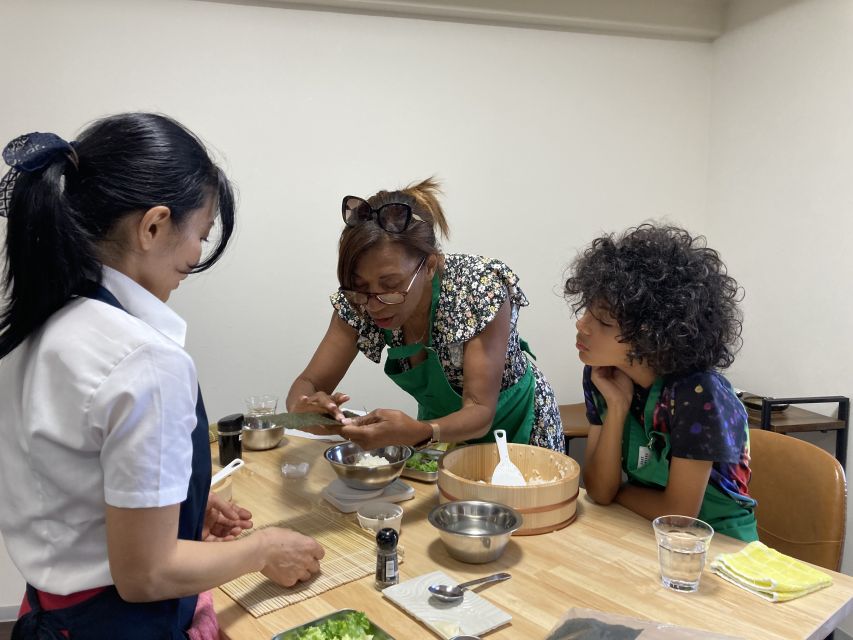
The full class lasts about three hours. Starting times vary, so check availability when you choose your date. The structure is practical: instruction, preparation, shaping, and a meal made from your own work.
You begin by getting oriented in the cooking room and meeting your instructor and fellow participants. English is the teaching language, and the class size is limited to eight. Some sessions have been even smaller, with only four people, which gives the instructor more time to watch your technique.
The cooking starts with preparation. You work with the ingredients used in the three sushi styles, including the salad roll fillings, sushi rice, nori, omelet, and toppings for the nigiri and pressed sushi. The available information does not specify every fish or topping used in every session, so you should think of the menu as the three techniques rather than a fixed list of seafood.
Your instructor demonstrates each stage before you try it. Several teachers have been singled out for clear explanations and close attention, including Yoshi, Yoko, Ami, Naomi, and Eriko. The staff also take time to answer questions about Japanese food and suggest other dishes or places to try in Osaka.
The practical work is broken into manageable steps. You roll the salad sushi, shape the rice for nigiri, and use the wooden mold for oshizushi. The class is designed for beginners, and you do not need previous sushi-making experience.
At the end, you eat what you made. The meal is more than a token taste. People with healthy appetites have found the amount of food substantial, and earlier classes have also included dashi and miso soup. Those extras are not clearly listed as guaranteed parts of every session, so do not book on the assumption that every class includes the same side dishes.
What the instructors do well
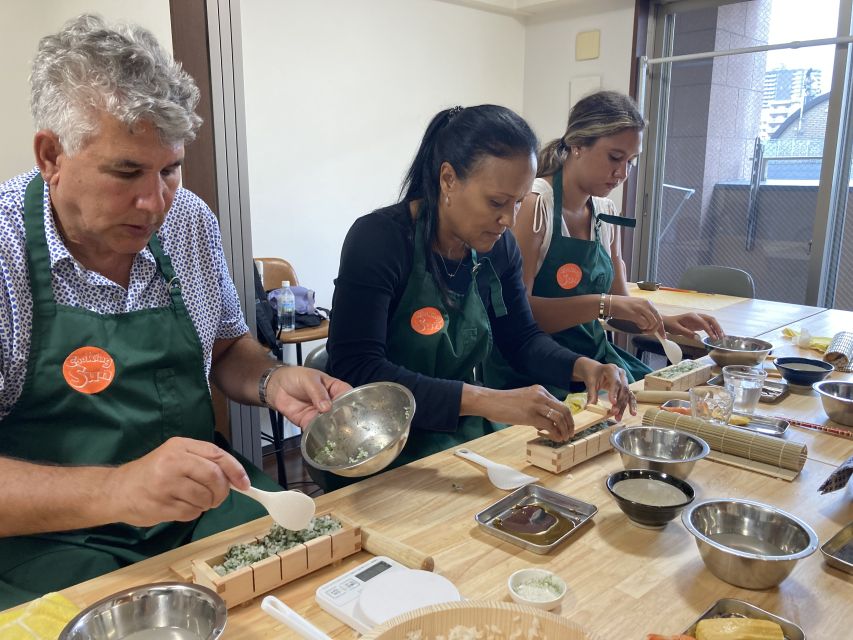
The strongest feature here is the teaching. A good sushi class must explain small movements clearly, then let you try them without making you feel clumsy. The instructors are described as patient, friendly, and attentive, with strong English skills.
Yoshi has been praised for combining food instruction with practical Osaka advice, including suggestions about what to eat and where to go during the rest of your trip. Other instructors, such as Yoko and Ami, have been noted for giving clear demonstrations and helping participants through each stage.
That personal contact changes the feel of the class. You can ask why the rice is handled a certain way, how ingredients are used at home, or what a particular food means in Japanese cooking. It is not a formal lecture. It is a small cooking lesson with room for conversation.
I also appreciate that the teaching appears to suit people with different levels of confidence. Beginners can follow the demonstrations, while people who have made sushi before can pay attention to shape, pressure, and presentation. The class does not promise professional chef training, and it should not be judged by that standard.
One small limitation is worth noting. You do not appear to slice the fish yourself. If your main goal is fish preparation, knife skills, or learning how to break down a whole fillet, this is not the right class. It focuses on forming and pressing sushi, which is a sensible choice for a three-hour introduction.
More food tours around Osaka:
- Osaka: Shinsekai Food Tour with 13-15 Dishes at 5 Eateries
★ 4.8 · 2,204 reviews - Osaka Food Tour: 13 Dishes at 5 Local Eateries
★ 5.0 · 2,149 reviews - Hungry Osaka Street Food Tour:15 Tastings & 3 Drinks with a Local
★ 5.0 · 1,727 reviews - Osaka Local Foodie Walking Tour in Dotonbori and Shinsekai
★ 5.0 · 985 reviews
How much food do you get for $67?
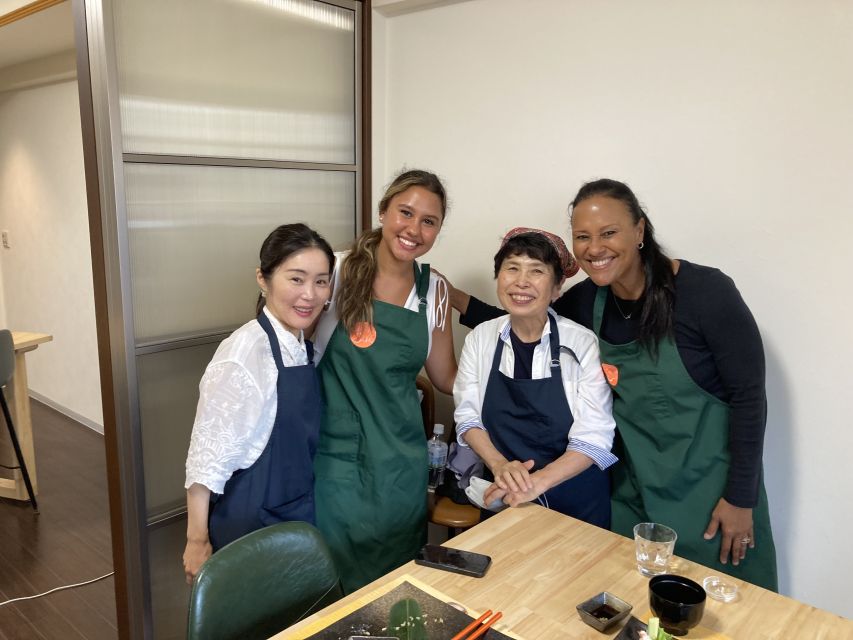
At $67 per person, this class sits above the cost of simply buying a sushi lunch. The value comes from the combination of a full meal, instruction, a small group, and a local Osaka specialty.
You are not paying only for ingredients. You receive guided practice in three techniques, an English-speaking instructor, and an activity that takes up half a day without requiring complicated travel outside central Osaka. The food is also prepared by you, which gives the meal a stronger sense of purpose.
The portions are another point in its favor. Several people have found there was plenty to eat after the preparation, including enough for participants with large appetites. That makes the price easier to justify, especially in a city where a good meal can quickly become expensive.
Still, value depends on what you want. If you only want to taste excellent sushi, a restaurant may be a better use of your money. If you want to learn, ask questions, and eat a generous meal at the end, this is a well-priced activity.
The free cancellation up to 24 hours before the class and the reserve-now, pay-later option also reduce the risk of fitting it into a changing Osaka schedule. These are useful booking terms, but the main value remains the hands-on lesson.
Finding Cooking Sun Osaka near Dotonbori
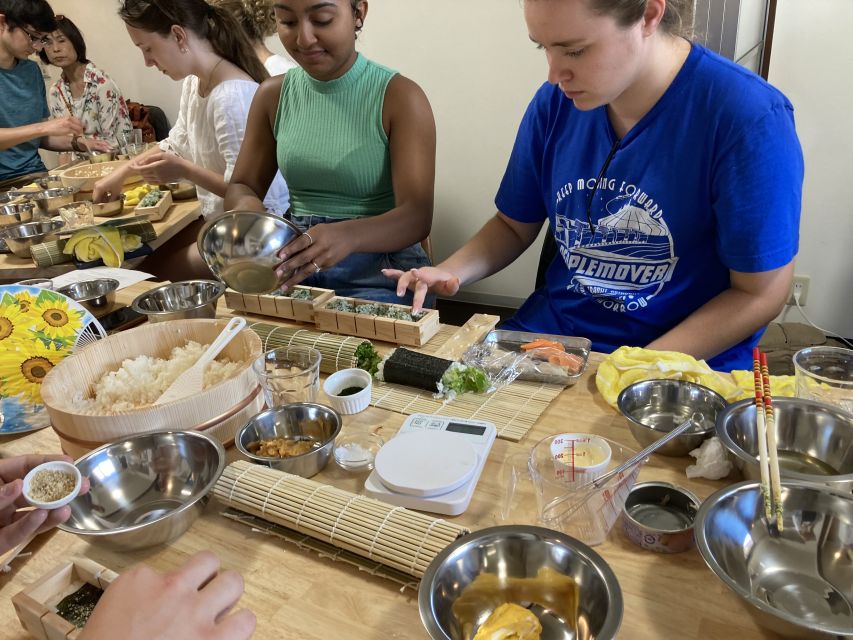
The meeting point is Cooking Sun Osaka, room 202. At the entrance, press 202 and then press the button marked 呼出, which means call.
Give yourself extra time to find the entrance. One participant reported that even a taxi driver had trouble locating the place, and the street-side tree was easier to recognize than the address alone. That is a practical warning, especially if you are arriving for a morning or early afternoon start.
The location near Dotonbori works well with a food-focused day. You can schedule the class alongside a walk through the area, though you should leave enough time to arrive calmly rather than racing from a restaurant or shopping stop. The supplied details do not specify the nearest station or exact walking time, so use the meeting instructions you receive after booking.
The room itself has been described as clean and modern, with the cooking equipment needed for the lesson. Wheelchair access is available. If you have a mobility concern beyond basic accessibility, contact the provider before booking so you can confirm the setup for your needs.
Dietary requests and what to tell the provider
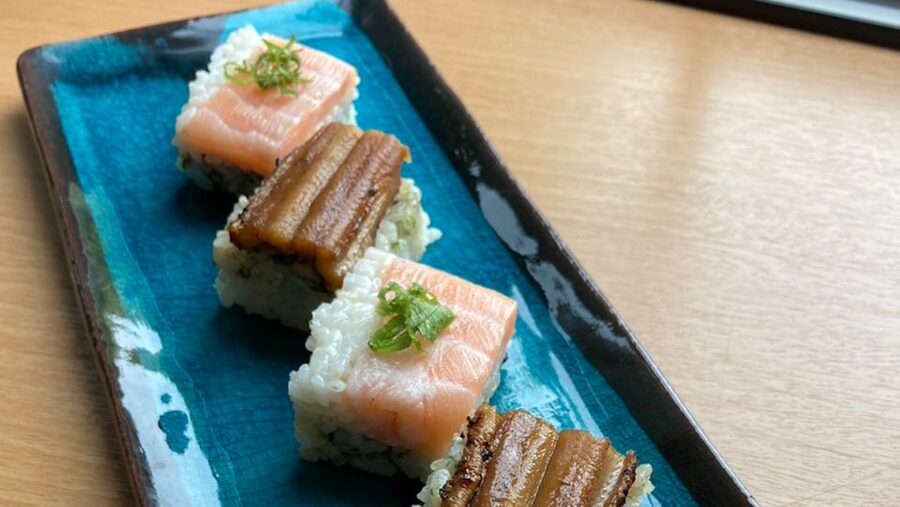
Vegetarian and gluten-free options are available by request, but you must leave a note when booking. Do not wait until you arrive. Sushi ingredients can include fish, shellfish, mayonnaise, soy-based products, and other items that matter for dietary planning.
Food allergies also deserve advance notice. The class team has handled allergy concerns attentively, but the safest approach is to provide clear details before the day of the activity. The available information does not list every substitute ingredient, so ask what can be changed if your diet is strict.
The standard salad roll includes crab-flavored kamaboko, tuna mixed with mayonnaise, vegetables, nori, and tamagoyaki. The usual nigiri and oshizushi also use toppings that may not suit every diet. A note at booking gives the instructors time to prepare an appropriate alternative.
Who will enjoy this sushi class most?
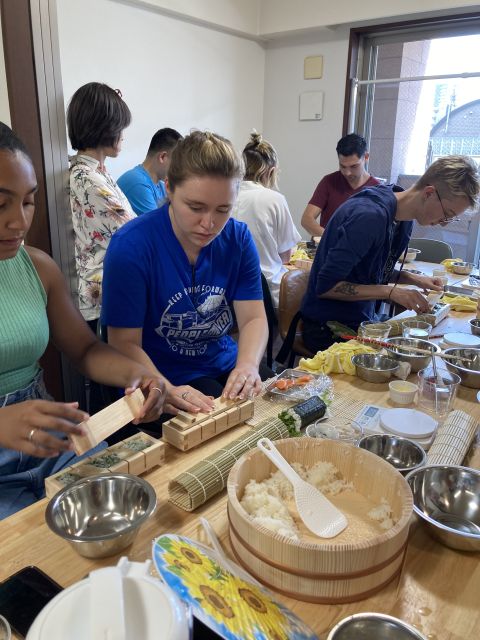
This is a strong pick for first-time sushi makers. The instructions are broken into clear stages, and the class gives you three different ways to handle rice and toppings. You get enough variety to stay interested without turning the session into a rushed cooking marathon.
It also suits couples and families looking for a shared activity. You work side by side, compare shapes, and finish with a meal you made together. The small group creates a friendly setting without the scale of a large food tour.
Sushi lovers will appreciate the chance to learn oshizushi, especially if they have already tried nigiri and maki in restaurants. The pressed style adds a specifically Osaka connection to the lesson.
It may be less suitable for an advanced cook who wants detailed fish butchery, restaurant-level knife work, or a long technical study of sushi rice. You also may prefer a restaurant if you do not want to spend three hours cooking.
For a honeymoon or a special trip, the class can work well because it creates a shared memory and leaves you with a meal. Just remember that the mood is informal and educational, not a luxury dining event.
Booking advice for a smoother visit
Choose a starting time that leaves room around the class. Three hours is long enough that you should not schedule a tight museum reservation or train departure immediately afterward.
Arrive early enough to identify the entrance and room 202. Press 202 and 呼出 at the entrance, and keep the provider’s contact details available in case you have trouble finding the building.
When you book, include any vegetarian, gluten-free, or allergy request in the notes. If someone in your group has no sushi-making experience, that is not a concern. The lesson is built for beginners.
Bring an appetite. The class includes all ingredients, and the finished sushi forms your meal. You will probably want to photograph the plates before eating, but do not let presentation anxiety spoil the fun. Handmade nigiri does not need to look restaurant-perfect to taste good.
Should you book it?
Book this class if you want more than a quick sushi lunch in Osaka. The combination of three techniques, a Kansai specialty, clear English instruction, and a generous meal gives you a useful food experience for $67.
I would especially recommend it to beginners, couples, families, and anyone curious about the difference between nigiri, rolls, and pressed sushi. The class is friendly, well paced, and small enough for personal help.
Skip it if your priority is slicing fish, studying advanced sushi craft, or simply eating without cooking. For most visitors who want an approachable cultural activity near Dotonbori, though, this is a sound choice. Leave extra time to find the entrance, note your dietary needs in advance, and come hungry.
FAQ
How long does the Osaka sushi class last?
The class lasts three hours. Starting times vary, so check availability for your preferred date.
What types of sushi will I make?
You will make a salad roll, nigiri, and oshizushi, also called pressed or box sushi.
What is oshizushi?
Oshizushi is a traditional Kansai-style sushi. Sushi rice and toppings are placed in a square wooden frame, pressed together, and cut into pieces before eating.
Is the class taught in English?
Yes. English is the teaching language.
How many people are in the group?
The class is limited to eight participants. Some sessions may be smaller.
Are vegetarian or gluten-free options available?
Yes, but you must leave a vegetarian or gluten-free request when booking.
Where is the meeting point?
Meet at Cooking Sun Osaka, room 202. At the entrance, press 202 and then the 呼出 call button.
Fresh off the menu around Osaka
- Hidden Osaka – Yukaku Red Light Tour & Culinary Adventure★ 4.8 · 96 reviews
- Eat Like a Local in Osaka – Private Custom Street Food Tour★ 4.3 · 33 reviews
- Osaka: Sushi Making in Spacious Studio (SAME-DAY OK!)★ 5.0 · 75 reviews
- Osaka: Ramen and Gyoza Cooking Class in Dotonbori★ 5.0 · 378 reviews
- Osaka: Roll and Authentic Sushi Making Class in Dotonbori★ 4.9 · 239 reviews
- Osaka: Kuromon Market Food Walking Tour (6 stops, 6 tastes)★ 4.6 · 272 reviews
- Osaka: Gluten-Free Ramen and Gyoza Cooking Class★ 5.0 · 42 reviews
- Osaka: Local Foodie Tour in Dotonbori and Shinsekai★ 4.7 · 95 reviews
Osaka Food Tours, compared.
Osaka: Shinsekai Food Tour with 13-15 Dishes at 5 Eateries
Read our review →
Osaka Food Tour: 13 Dishes at 5 Local Eateries
Read our review →
Hungry Osaka Street Food Tour:15 Tastings & 3 Drinks with a Local
Read our review →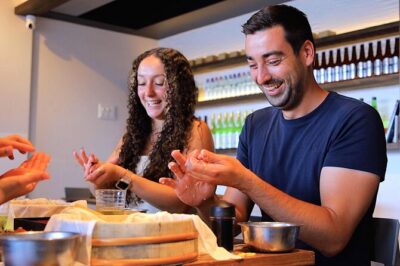
Sushi Making Osaka Roll and Authentic Japanese Sushi Class
Read our review →
Osaka Local Foodie Walking Tour in Dotonbori and Shinsekai
Read our review →
Hungry Osaka Street Food Tour: 15 Dishes & 3 Drinks
Read our review →
Osaka: Ramen and Gyoza Cooking Class in Dotonbori
Read our review →
Osaka: Kuromon Market Food Walking Tour (6 stops, 6 tastes)
Read our review →Browse the lists this tour appears in