
Review · OSAKA
Osaka Dotonbori: Sushi Making Experience
Osaka’s Dotonbori is known for eating, but this class lets you make your lunch before you enjoy it. In 90 minutes, you season sushi rice, shape the rice and toppings, make 12 pieces, and learn a little about Japanese food culture from English-speaking instructors such as Mako, Mika, Saki, and Yumiko.
I like two things here. First, the class is hands-on without being intimidating, so beginners can follow each step. Second, the sake tasting, sushi cosplay, photos, certificate, and small gift give the lesson more character than a simple cooking demonstration. The main consideration is that the seafood may not always seem perfect: one recent participant found it good but not especially fresh.
Key points at a glance
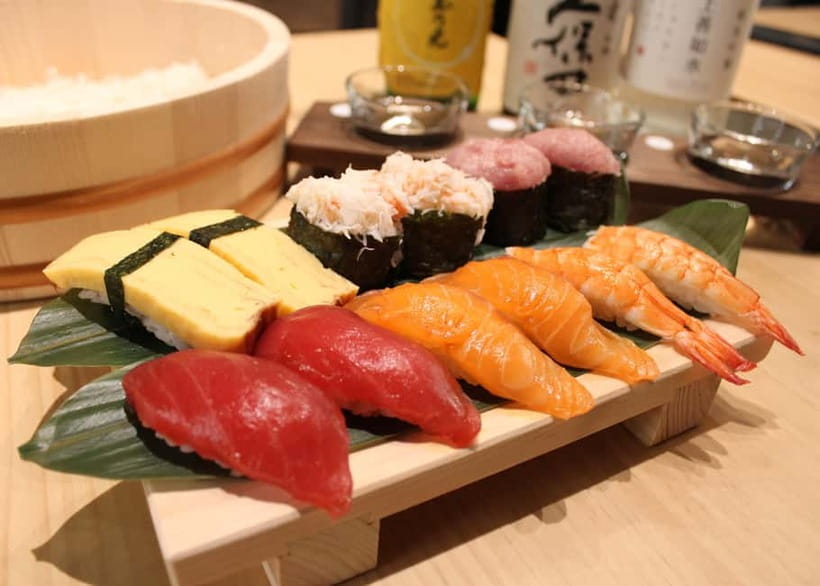
- Make 12 pieces yourself: You season the rice, shape it, add wasabi and toppings, then eat what you prepare.
- Friendly English instruction: Guides explain sushi technique, ingredients, Japanese customs, and sometimes local Osaka tips.
- A lively extra or two: Sake, sushi cosplay, photos, a certificate, and a special gift are part of the experience.
- Flexible food choices: Vegan and Halal sushi are available, and gluten-free soy sauce has been provided for a guest with an allergy.
- Good for families and beginners: A 15-year-old joined one family group, and the simple teaching style suits first-timers.
- Easy to fit into Dotonbori: The class lasts 90 minutes and costs $45 per person, with cancellation allowed up to 24 hours before the start time.
What your 90 minutes in Dotonbori looks like
The class follows a clear four-part process. That matters because sushi can look effortless when a trained chef makes it, yet the rice, topping, pressure, and shape all require some care.
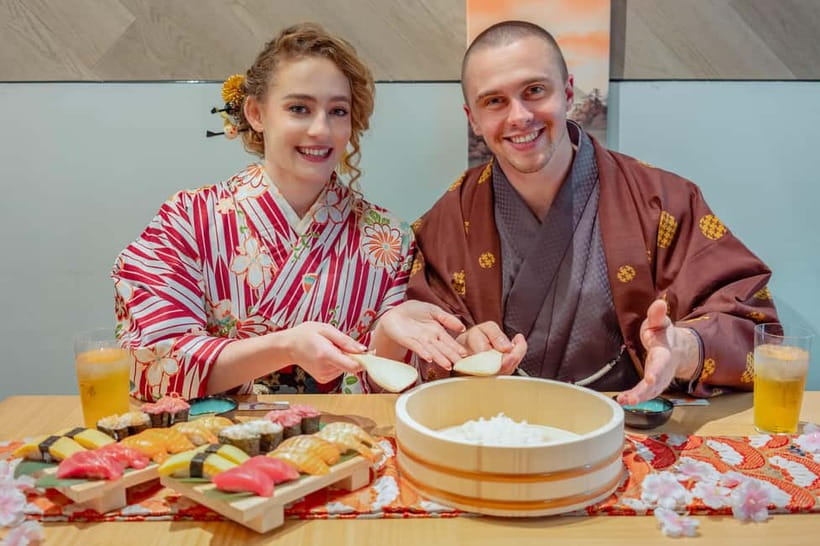
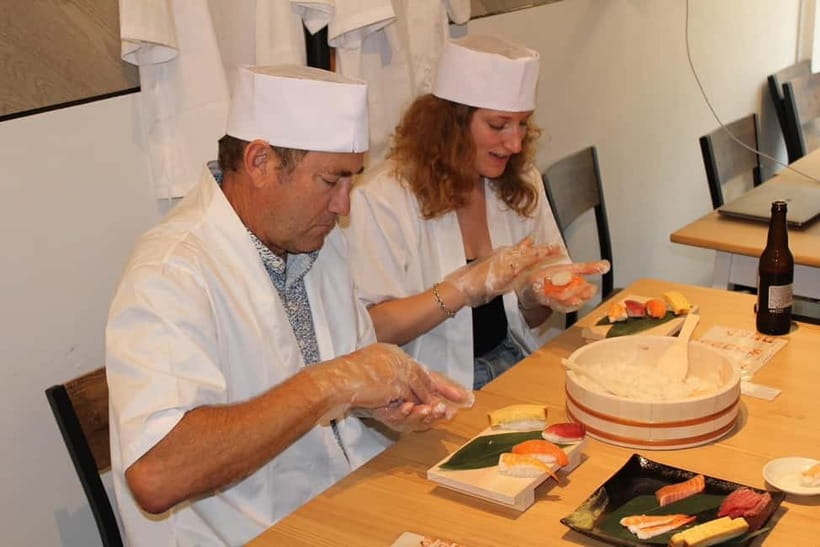
First, you work with shari, the seasoned sushi rice. The instruction begins by pouring sushi vinegar over the rice. This is a small step, but it gives you a useful sense of how sushi gets its flavor before any fish or other topping is added.
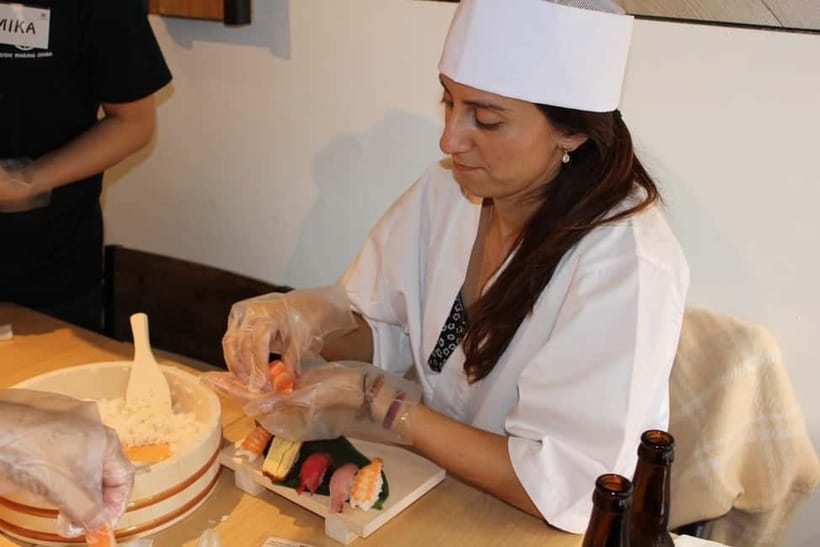
Next comes shaping the rice. You form a rice ball and learn how to give it the right shape. The goal is not to produce restaurant-perfect pieces on your first attempt. The useful part is learning how much pressure to use and how the rice should hold together without becoming a hard lump.
You then put the neta, or sushi topping, together with the rice. Wasabi goes on the topping, followed by the rice, and the instructor guides you through bringing the parts into one piece. Finally, you shape the sushi with your fingers.
The staff is there to explain each move, demonstrate the technique, and keep the process moving. One participant did wish for closer correction of individual mistakes, so you should speak up if you want a guide to watch your hands carefully. In a small session, you might receive plenty of personal help. In a fuller class, you may need to ask for it.
More food tours around Osaka:
- Osaka: Shinsekai Food Tour with 13-15 Dishes at 5 Eateries
★ 4.8 · 2,204 reviews - Osaka Food Tour: 13 Dishes at 5 Local Eateries
★ 5.0 · 2,149 reviews - Hungry Osaka Street Food Tour:15 Tastings & 3 Drinks with a Local
★ 5.0 · 1,727 reviews
Why the food lesson is more useful than a photo stop
Many cooking activities give you a recipe and send you home. This one gives you a short lesson in a food you are already likely to eat in Japan. You learn the names of the main parts, how rice and toppings are combined, and why the final shape matters.
The instructors also explain what sushi is, discuss ingredients, and share some Japanese culture. Some sessions include facts about the history of sushi, where sushi names came from, how it was first eaten, and who it was originally made for. The amount of cultural explanation may vary by instructor and group, but the class is more than finger food with a camera pointed at it.
I especially like the way the activity connects technique with eating. You do not make a display piece and then watch someone else prepare the meal. Your 12 pieces are the end result, which gives the lesson a clear reward.
The sushi selection can suit people who are unsure about raw fish. One participant who does not like fish still enjoyed the meal, and another particularly liked the Japanese omelette sushi. The exact toppings are not listed, so you should not book expecting a particular fish or a fixed menu. Ask ahead if a specific ingredient matters to you.
The instructors make or break the mood
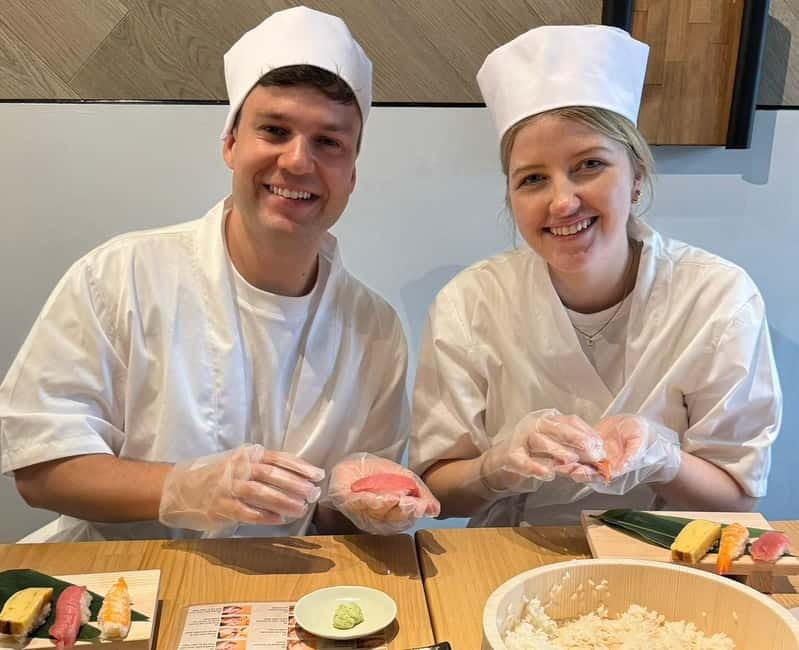
The strongest part of this activity is the teaching style. Names appearing across the sessions include Mako, Mika, Saki, Yumiko, Anri, Kosei, Toshiki, Makoto, Yui, and Maho. The team changes, but the pattern is clear: the class depends heavily on cheerful guides who explain the steps in easy English and keep the mood relaxed.
Mako is described as leading some sessions and sharing facts about sushi, Japan, and Osaka. Mika and Yumiko have been praised for clear English and patient instruction. Kosei has focused on proper technique and how to tell if the sushi is shaped correctly. These details suggest that the class is not built around a single scripted performance. Your experience may vary with the instructor and the number of people booked.
That variation is worth keeping in mind. Some sessions have been nearly private because no other people were booked in the time slot. A quiet class can give you more attention and more conversation. A fuller group may feel more social, but there may be less time for one-to-one correction.
The tone is informal and friendly. Several sessions included conversation, jokes, help with chopsticks, and advice about Osaka. That makes this a good choice if you want an activity where you can talk with the instructors rather than silently copy a demonstration.
Sake, cosplay, and the playful extras
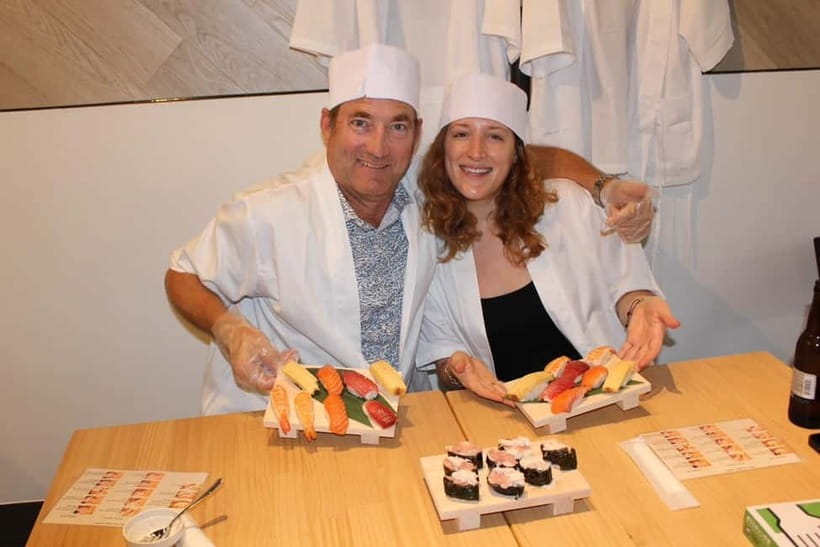
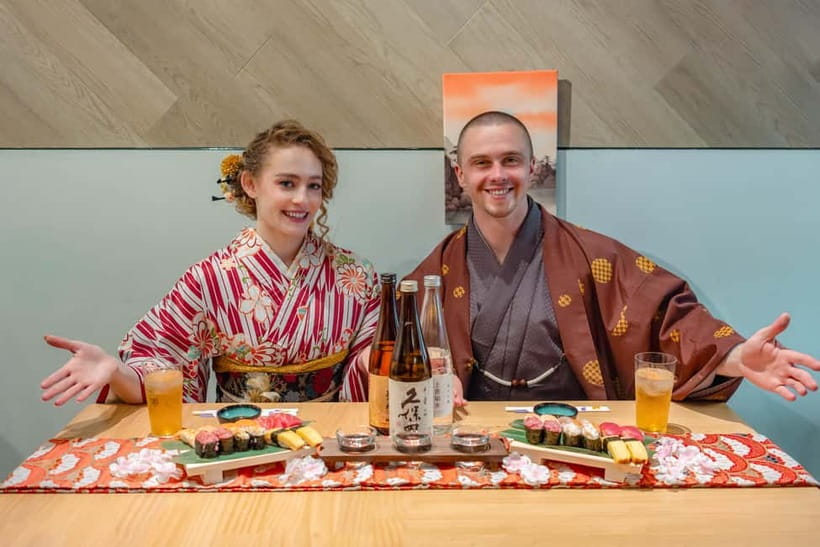
Japanese sake is part of the appeal. You can enjoy it with the sushi, and some sessions include a sake tasting while you work. The sake adds a cultural touch, since the class gives the instructors a chance to explain traditional Japanese sake as well as sushi.
Do not treat the sake as a full tasting tour. The experience is primarily a sushi-making class, and the supplied details do not list the number of sake samples or specific varieties. If you want a serious lesson in sake, this is not the right activity. If you like a small drink with a practical food class, it adds value.
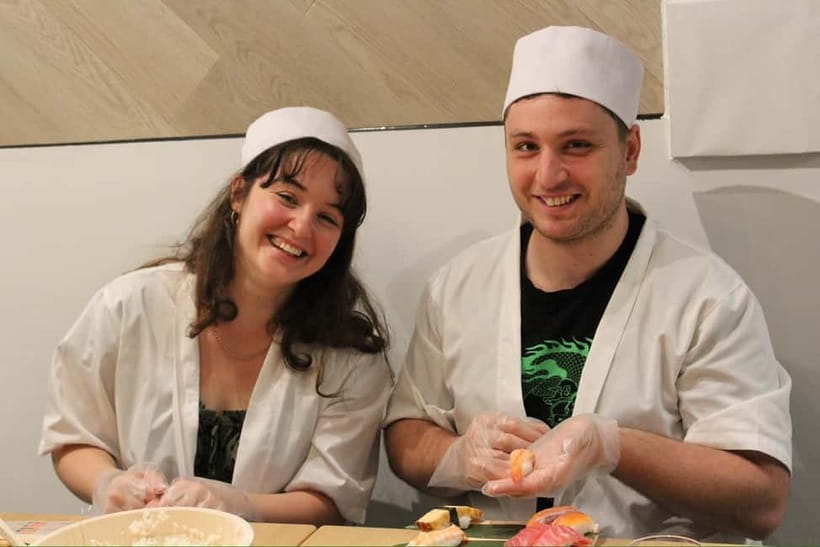
Sushi cosplay is another unusual feature. You can dress up, take photos, and enjoy a more playful version of the lesson. This will appeal to families, couples, and anyone who wants a memorable picture from Osaka. If dressing up is not your thing, it does not appear to be the main purpose of the class, so you can focus on the food.
At the end, you receive a certificate identifying you as a sushi master. It is a fun souvenir rather than a professional qualification, but it gives children and first-time cooks a clear finish line. A special gift is also included, though the details of that gift are not specified.
Same city, a different plate:
- Sushi Making Osaka Roll and Authentic Japanese Sushi Class
★ 5.0 · 1,220 reviews - Osaka Local Foodie Walking Tour in Dotonbori and Shinsekai
★ 5.0 · 985 reviews - Hungry Osaka Street Food Tour: 15 Dishes & 3 Drinks
★ 4.9 · 694 reviews - Osaka: Ramen and Gyoza Cooking Class in Dotonbori
★ 5.0 · 378 reviews
Is $45 per person good value?
At $45 per person, this is not the cheapest way to eat sushi in Osaka. You can buy sushi for less, especially if your only aim is lunch. The value comes from combining food with instruction, sake, costumes, photos, a certificate, and a 90-minute activity in Dotonbori.
The basic food portion is 12 pieces. That is enough for a light meal and lets you taste the result of your work, but it may not satisfy a very hungry adult on its own. Plan on treating the class as both an activity and a meal, not as an all-you-can-eat sushi stop.
I think the price makes the most sense for three kinds of people. First, beginners who want a structured introduction to sushi. Second, families who want an activity everyone can do together. Third, visitors who have already spent time eating around Dotonbori and want something more active.
It is less compelling if you are a serious sushi expert, want a long professional lesson, or only care about getting the most food for your money. You are paying for the experience around the sushi as much as for the 12 pieces themselves.
Dietary needs and special requests
Vegan and Halal sushi are available, which makes this class more useful for groups with different diets. You should state your needs when booking or before the class, rather than waiting until the food is in front of you.
A guest with a gluten allergy received gluten-free soy sauce. That is encouraging, but it is not a promise that every allergy can be handled in exactly the same way. If cross-contact or a particular ingredient is a concern, contact the provider in advance and explain the restriction clearly.
The available food options are an important part of the value. A sushi class is not much fun if one person has to sit out while everyone else eats. Still, do not assume that vegan, Halal, or allergy-friendly choices mean every ingredient and preparation surface is fully separate unless the provider confirms it.
Finding the class and planning around it
The Dotonbori location is convenient for a day centered on Osaka’s main food and entertainment area. The class itself takes 90 minutes, so you can place it between sightseeing, shopping, or another meal.
Allow extra time to find the exact entrance. A few people have found the location difficult to navigate, and one person specifically asked for the Google Maps position to be corrected. The experience is wheelchair accessible, but you should still confirm the meeting point and route if step-free access is important to you.
The class is offered in English. That removes the main worry for many international visitors, since the steps involve hands-on work and are easier to follow when the instructor can watch and correct you.
You can cancel up to 24 hours before the start time for a full refund, and the reserve-now, pay-later option keeps your plans flexible. Starting times vary, so check availability for your chosen date. These details are useful in Osaka, where weather, transport, and changing plans can affect a busy schedule.
What families, couples, and solo visitors should know
For families, this is one of the stronger uses of 90 minutes in Dotonbori. A family with a 15-year-old enjoyed the class together, and the mix of making, eating, dressing up, and photos gives different ages something to do. Younger children may need help with finger shaping and food handling, but the activity is designed for beginners.
Couples can treat it as a shared lunch with a small challenge built in. You can compare your sushi shapes, take photos in costume, and leave with a certificate instead of only another restaurant receipt.
Solo visitors should not assume they will feel out of place. The guides make an effort to talk with participants, and smaller bookings can feel almost private. The activity also offers a natural way to meet other people without the pressure of a formal group tour.
For a person who dislikes fish, the class is still possible, but ask what toppings are available. The positive experience with omelette sushi and the comment from someone who does not like fish suggest there can be alternatives, but the full menu is not specified.
A fair look at the drawbacks
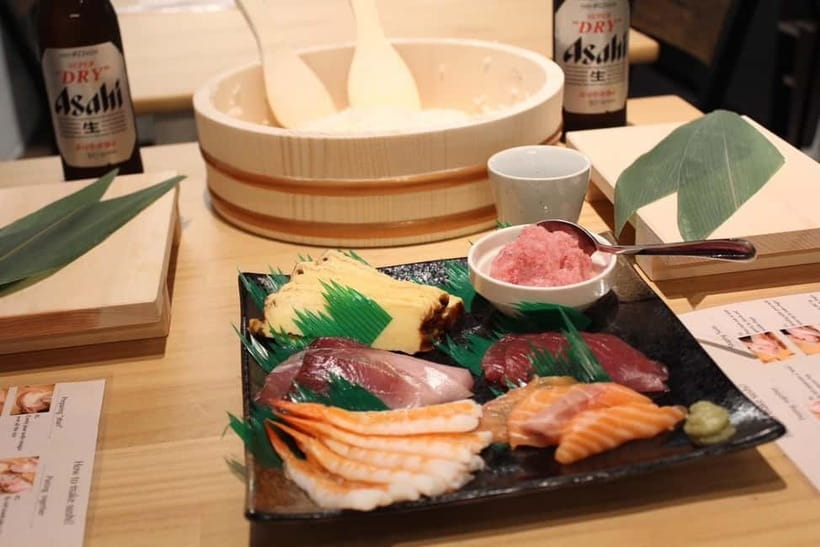
The main weakness is consistency in the food. One participant found the seafood good but not extremely fresh. That is a single negative detail in a very strong set of ratings, but it is worth noting because seafood quality is central to a sushi experience.
The class also may not go as far into sushi culture as you hope. One participant wanted more interesting facts about sushi. The instructors do explain technique and culture, and some sessions include history, but the depth depends on the guide and the time available.
Directions could be clearer. Give yourself time to locate the class, and double-check the map information before setting off. Once inside, the teaching appears straightforward, but finding the building may be the more awkward part.
Finally, the lesson is aimed at beginners. If you already make sushi at home or want training in professional knife work, fish cutting, or advanced presentation, this 90-minute format will probably feel basic. Its strength is approachability, not specialist depth.
Should you book the Osaka Dotonbori sushi class?
I would book this if you want an easy, social introduction to sushi and you like the idea of eating what you make. The instructors receive almost universal praise for warmth, clear English, humor, and practical help, and the extras give the class more personality than a standard cooking lesson.
The $45 price is fair when you count the 12 pieces, sake, cosplay, photos, certificate, gift, and instruction. Just keep your expectations sensible: this is a fun beginner class, not a chef-training course or a full sushi tasting.
Book it especially if you are visiting with a family, a partner, or friends, or if you need vegan or Halal options. If seafood freshness, exact toppings, or detailed sushi history are your top priorities, ask questions before reserving. For most visitors who want to do something hands-on in Dotonbori, this is a friendly and memorable choice.
FAQ
How long does the sushi-making class last?
The activity lasts 90 minutes.
How many pieces of sushi do you make?
You make 12 pieces of sushi using the ingredients provided for the class.
Is the class taught in English?
Yes. The instructor language is English.
Is sake included?
Japanese sake is part of the experience, and the class includes a sake tasting or the chance to enjoy sake with the sushi.
Are vegan and Halal sushi options available?
Yes. Vegan and Halal sushi are available.
Can I cancel for a refund?
Yes. You can cancel up to 24 hours in advance for a full refund.
Fresh off the menu around Osaka
- Hidden Osaka – Yukaku Red Light Tour & Culinary Adventure★ 4.8 · 96 reviews
- Eat Like a Local in Osaka – Private Custom Street Food Tour★ 4.3 · 33 reviews
- Osaka: Sushi Making in Spacious Studio (SAME-DAY OK!)★ 5.0 · 75 reviews
- Osaka: Ramen and Gyoza Cooking Class in Dotonbori★ 5.0 · 378 reviews
- Osaka: Roll and Authentic Sushi Making Class in Dotonbori★ 4.9 · 239 reviews
- Osaka: Sushi Class in Dotonbori★ 4.9 · 160 reviews
- Osaka: Kuromon Market Food Walking Tour (6 stops, 6 tastes)★ 4.6 · 272 reviews
- Osaka: Gluten-Free Ramen and Gyoza Cooking Class★ 5.0 · 42 reviews
Osaka Food Tours, compared.

Osaka: Shinsekai Food Tour with 13-15 Dishes at 5 Eateries
Read our review →
Osaka Food Tour: 13 Dishes at 5 Local Eateries
Read our review →
Hungry Osaka Street Food Tour:15 Tastings & 3 Drinks with a Local
Read our review →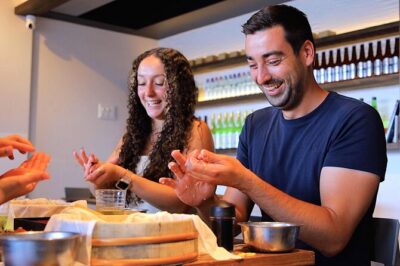
Sushi Making Osaka Roll and Authentic Japanese Sushi Class
Read our review →
Osaka Local Foodie Walking Tour in Dotonbori and Shinsekai
Read our review →
Hungry Osaka Street Food Tour: 15 Dishes & 3 Drinks
Read our review →
Osaka: Ramen and Gyoza Cooking Class in Dotonbori
Read our review →
Osaka: Kuromon Market Food Walking Tour (6 stops, 6 tastes)
Read our review →Browse the lists this tour appears in