
Review · OSAKA
Osaka: 2-Hour Local Street Food Tour – Dotonbori & Namba
Osaka’s best introduction may be eaten one small serving at a time. This two-hour walk through Dotonbori and Namba pairs famous bites with quieter lanes, a temple visit, and enough local guidance to make the neon-heavy center feel less confusing.
I like the personal food choices and the way guides such as Kaito, Hina, Fuka, and Hiro help with ordering, Japanese phrases, and local customs. I also like the gentle contrast between the Glico Man sign and peaceful Hozenji Temple. The main catch is that the $51 price does not include food or drinks, and the official policy says vegan and gluten-free requests cannot be accommodated.
Key points at a glance
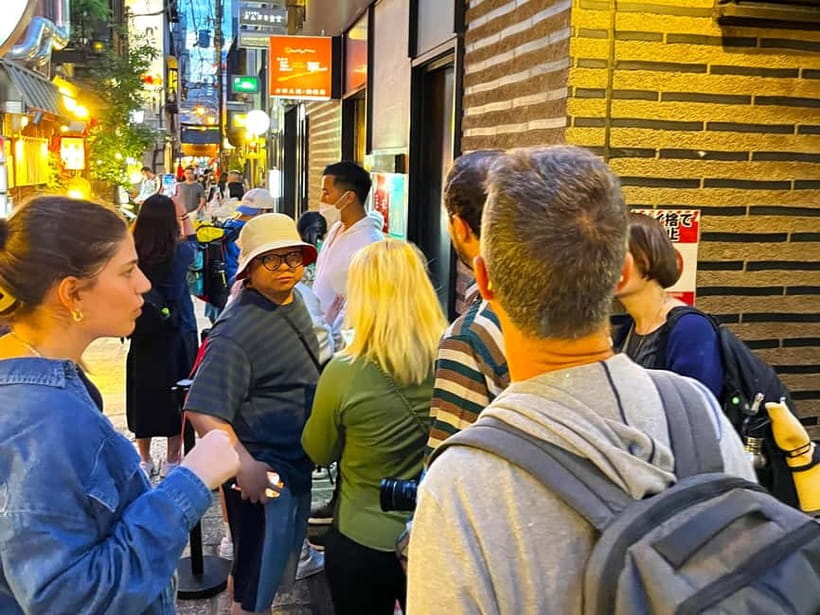
- Takoyaki, takosen, and taiyaki: Try several Osaka favorites while walking through Dotonbori and Namba.
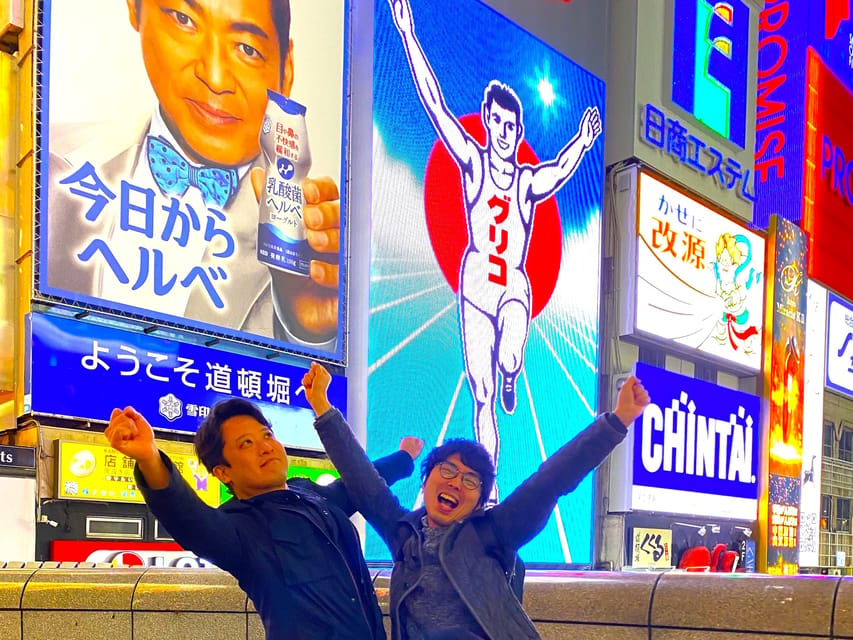
- Glico Man photo stop: Begin with Osaka’s famous running-man sign, an easy landmark and classic first picture.
- Hozenji Temple: Step from crowded shopping streets into a small, quiet place of worship.
- Flexible guiding: Private and small-group options are available, with guides adjusting food choices and pace where possible.
- Useful local help: Guides may assist with ordering, explain food customs, and teach simple Japanese phrases.
- Food costs extra: Bring room in your budget for each snack, meal, and drink you choose.
Starting under the Glico Man sign
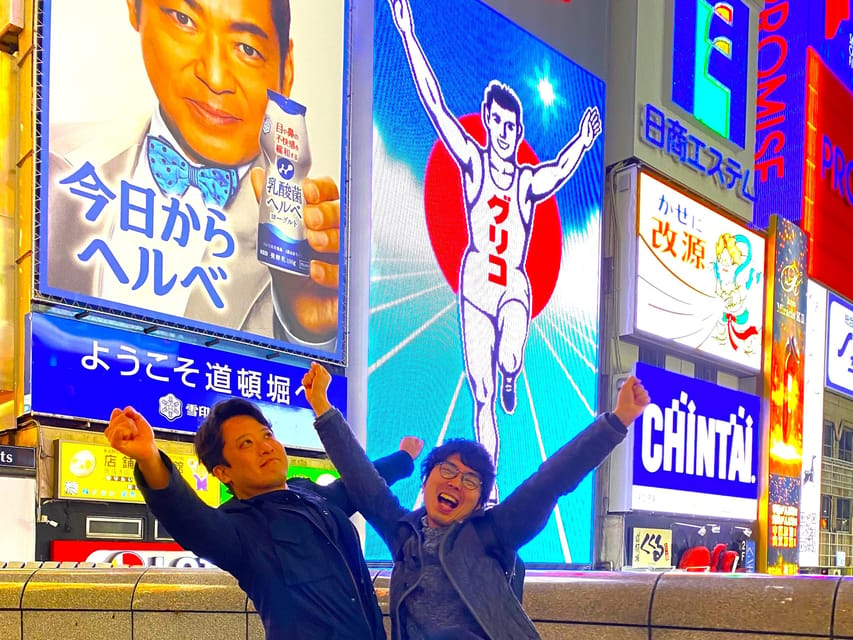
The meeting point is in front of Starbucks TSUTAYA EBISUBASHI, outside the building. Look for a guide holding a yellow DeepExperience sign. This is a useful arrangement because the store is easy to identify, and the Glico Man sign is only part of the opening walk.
The first stop is Dotonbori’s famous running-man sign. You get about 20 minutes for a photograph, a short introduction, and a look at the canal-side district. The sign is not a food stop, but it gives you an immediate sense of Osaka’s pop-culture side and provides a simple orientation point before the tasting begins.
I would arrive early. Dotonbori can be loud, crowded, and visually busy, especially around the main pedestrian routes. Meeting your guide outside the store is clearer than trying to locate someone inside a station or restaurant.
More Street Food Tours in Japan
- Hungry Osaka Street Food Tour:15 Tastings & 3 Drinks with a Local
★ 5.0 · 1,727 reviews - Hungry Osaka Street Food Tour: 15 Dishes & 3 Drinks
★ 4.9 · 694 reviews - Eat Like a Local in Osaka – Private Custom Street Food Tour
★ 4.3 · 33 reviews
Tasting Osaka classics in Dotonbori
The first food section lasts about 30 minutes. You may try familiar Osaka staples such as takoyaki, the hot octopus-filled batter balls found throughout the city. Takosen, a combination of takoyaki and crackers, gives you another version of the same street-food tradition. Taiyaki, shaped like a fish and often filled with sweet custard, is a useful change of pace.
The stated food list also includes apple candy, pork buns, okonomiyaki, kushikatsu, and doteyaki. Not every tour will necessarily include every item. Your guide may steer the selection toward what you want to try, what is available that day, and how much you can eat in two hours.
That flexibility is one of the strongest reasons to book with a guide instead of simply following the biggest signs. Kaito has helped people choose local dishes, explained food customs, and taught useful Japanese phrases. Hina, Hiro, and Fuka have also been praised for adjusting the pace and food choices to the group.
You should expect small tastings rather than a formal, sit-down meal at every stop. That is good for variety, but it means you need to keep track of your own spending. Since food and drinks are not included, ask your guide about the price before ordering if your budget is tight.
Ukiyo-Koji and the quiet side of Hozenji
After the first food stops, the route turns toward Ukiyo-Koji and Hozenji Temple. This is where the experience gains some depth. Dotonbori is known for giant signs, restaurants, shopping, and crowds. Hozenji gives you a brief pause from all that noise.
The temple visit lasts about 15 minutes. It is not a grand, sprawling temple complex. Its value is the sharp contrast: you move from commercial streets into a small religious space tucked into the center of Namba. Your guide can explain what you are seeing and place the temple within the surrounding neighborhood.
I especially like this part for first-time visitors. Food tours can become a string of snacks with no sense of place. The walk through Ukiyo-Koji and the stop at Hozenji connect the food to Osaka’s older street pattern and everyday religious life.
The visit is short, so do not expect a long cultural lecture. If you want detailed temple history, this is not a specialist temple tour. If you want a quiet pause and a little context between food stops, it does the job well.
Namba food stops and local ordering help
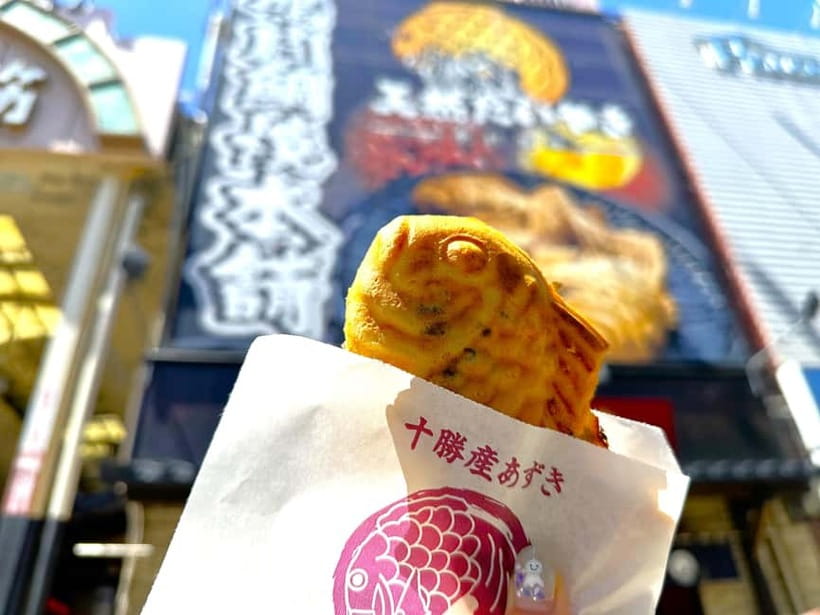
The route then continues through Namba for about 30 minutes of tasting. Depending on the choices made with your guide, you might encounter dumplings, tempura, sushi, udon, ramen, beef, onigiri, or a Japanese barbecue restaurant. Some groups have also visited small places that they would not have felt comfortable finding or ordering at alone.
This part shows the value of an English-speaking local guide. Menus and ordering systems can be easy once you know the routine, but the first attempt may feel uncertain. A guide can explain what a dish is, help you say what you want, and answer questions about ingredients and customs.
Several guides have also helped people with Japanese phrases. Kaito is particularly associated with teaching practical words and expressions, while other guides have offered advice about places to eat later in the trip. These small lessons can keep paying off after the tour ends.
The experience is not limited to one fixed food style. You may be offered a mix of street snacks, casual restaurant dishes, and neighborhood specialties. That variety is useful if you are still working out what you like in Japanese cooking. It is less useful if you want a tightly defined tour devoted only to takoyaki or only to market food.
More Street Food Tours in Osaka:
- Dubai: Old Town, Creek, Museums, Souks, & Street Food Tour
★ 4.8 · 10,816 reviews - Ho Chi Minh City Street Food Tour & Sightseeing By Motorbike
★ 5.0 · 9,413 reviews - Medellin: Comuna 13 Graffiti Tour, Cable Car & Street Food
★ 4.8 · 9,046 reviews - Dubai: Old Town, Souks, Street Food, Guided Tour & Abra Ride
★ 4.9 · 7,170 reviews
A final walk through Dotonbori
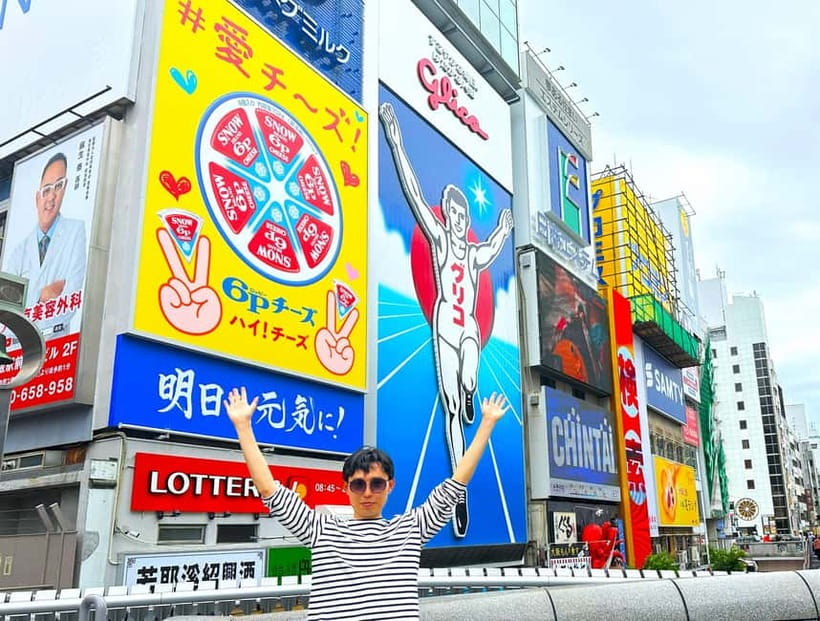
The final 30-minute section returns to Dotonbori for more local snacks and food tasting. You may have room for another savory bite, or your guide may suggest something sweet such as apple candy or taiyaki.
A last 10-minute photo and guided stop completes the route before you return to Starbucks TSUTAYA EBISUBASHI. The published plan does not specify exactly what the final photo stop will be, so do not book this expecting a second named landmark. Think of it as a closing look at the district and a chance to take any final pictures.
The full route is listed as two hours. That makes it easy to fit into an evening or place near the start of your Osaka stay. It also means the tour moves at a useful pace. One participant felt the time passed quickly and wished there had been more time for cultural discussion, which is a fair point. Two hours is enough for an introduction, not a complete study of Osaka food culture.
What the $51 price really buys you
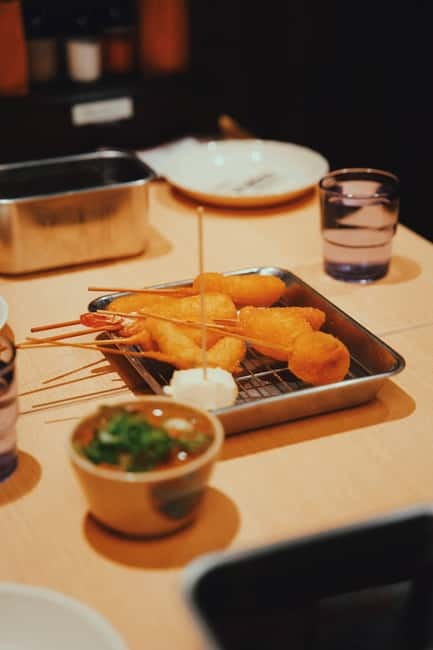
At $51 per person, the main thing you are buying is access to a guide who can connect food, streets, and local habits. You are not paying for an all-inclusive food package. Every snack, dish, and drink is extra.
That difference matters. If you plan to taste only a few inexpensive items, your total may remain reasonable. If you accept several restaurant dishes, drinks, and larger portions, the final cost will rise. Ask about each stop before ordering, especially if you are traveling on a set daily budget.
The value is strongest for first-time visitors who want help getting started. A guide can reduce the guesswork, point out streets you might pass without noticing, and recommend places for later meals. Repeat visitors can also benefit if they want a more personal look at Dotonbori and Namba rather than another quick walk through the main shopping lanes.
Private and small-group options make the price easier to justify for families or friends who want control over the pace. A private format may also make it simpler to discuss food preferences. The experience is wheelchair accessible, which is useful, although the route passes through busy commercial streets and food venues, so you should still confirm the exact needs of your group when booking.
Dietary restrictions need careful attention
The official information says vegan and gluten-free requests cannot be accommodated. Treat that as the rule when deciding if this tour fits you.
Some guides have made strong efforts for vegetarians and people avoiding gluten. Hina researched gluten-free food for one group, and other guides have adjusted choices around personal restrictions. Those examples are encouraging, but they do not replace the stated policy. You should contact the provider before booking if food safety or strict dietary control is important.
The tour is built around local foods that may use wheat, seafood, meat, eggs, or shared cooking surfaces. Do not assume that a guide can guarantee an alternative. If you have a serious allergy, this may not be the right food experience unless the provider confirms suitable options in advance.
The guides make the biggest difference
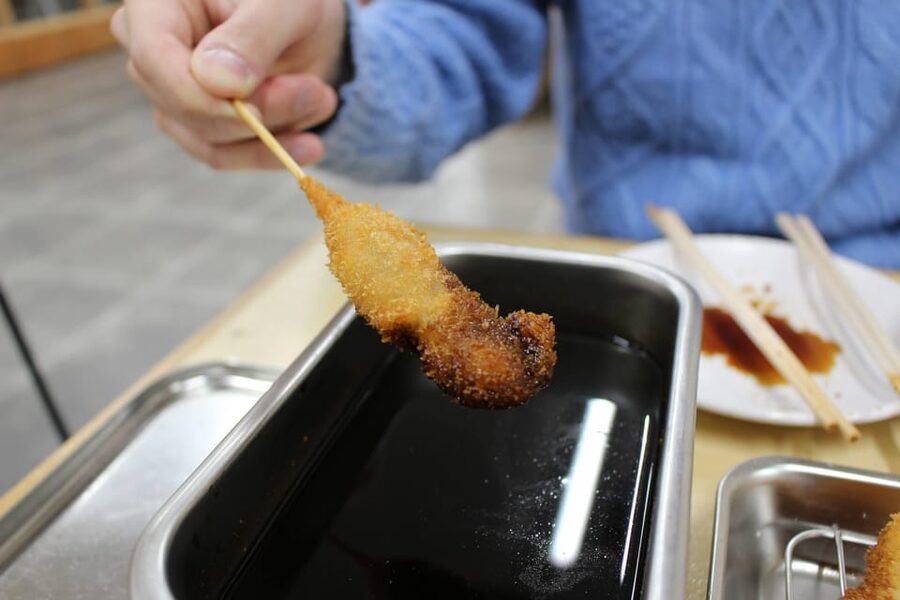
The format is simple. The guide is what can turn it into something memorable. Names that appear often in the feedback include Kaito, Hina, Hiro, Fuka, Aki, Benoit, Maru, Naoko, Kanako, and Kai.
Kaito has helped groups find small local eateries, speak with restaurant staff, learn Japanese phrases, and choose food based on previous meals. Hina has been praised for good English, current area advice, and attention to dietary needs. Fuka has led a slower food-focused walk with less distance between stops. Hiro has adjusted the pace and menu around what people could and could not eat.
You cannot assume you will receive a particular guide unless the booking allows you to request one. Still, the pattern is clear: the best part of the experience is the human help. You get more than directions from one sign to the next. You get assistance making choices in a city where the food options can feel endless.
Guide quality can also shape how much history and culture you receive. One participant wanted more time to discuss culture, while others valued the food and conversation above all else. Tell your guide at the start if you want more explanation, more tasting, more photography, or less walking.
Who should book this Osaka food walk?
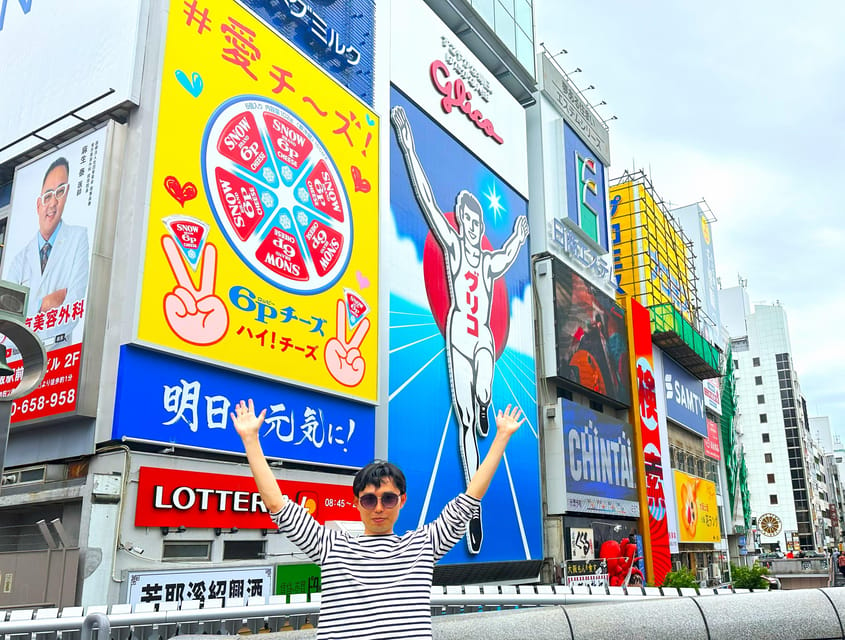
I would recommend it to a first-time Osaka visitor who wants an easy introduction to Dotonbori and Namba without spending an evening guessing what to order. It also suits couples, families with older children, and small groups who want a social food outing with local help.
It is a good fit if you want:
- A mix of street snacks and casual restaurant food
- Help ordering in English or Japanese
- A short route with several stops
- A photo at the Glico Man sign
- A quick visit to Hozenji Temple
- Suggestions for food and places to visit later
You may want something else if you need a fully included food package, a long historical walk, or guaranteed vegan and gluten-free meals. You should also consider the busy setting. Dotonbori is energetic and crowded, and the tour is built around active commercial streets rather than quiet countryside or a formal cooking class.
Practical details before you go
The tour runs for two hours, with starting times depending on availability. It is offered with live guides in English or Japanese. The meeting point is outside Starbucks TSUTAYA EBISUBASHI, and the guide holds a yellow sign with the DeepExperience logo.
Food and drinks are extra, so carry a payment method and leave room in your budget. Wear comfortable shoes, even though one guide-led version involved relatively little walking. You will be moving between food stops, narrow lanes, photo points, and the temple.
You can cancel up to 24 hours before the activity for a full refund. Reserve-now, pay-later booking is available, which helps if your Osaka schedule is still shifting.
Should you book it?
Book this tour if you want local guidance more than an all-inclusive meal. The strongest parts are the personal food choices, help with ordering, useful Japanese phrases, and the change of mood from neon Dotonbori to quiet Hozenji Temple.
At $51 before food, it is not the cheapest way to eat in Osaka. But for a first evening, the cost can be worthwhile if a guide helps you find dishes and small eateries you would otherwise skip. I would book it early in your Osaka stay, then use the guide’s suggestions for the rest of your visit.
If you have strict vegan or gluten-free needs, ask for written confirmation before paying. For everyone else, this is a lively, practical introduction to two of Osaka’s most famous food districts, with enough local character to make the walk more than a photo stop and snack crawl.
FAQ
How long does the Osaka street food tour last?
The tour lasts two hours and returns to Starbucks TSUTAYA EBISUBASHI, the starting point.
Where do I meet the guide?
Meet outside the Starbucks Coffee TSUTAYA EBISUBASHI store. Your guide will hold a yellow sign with the DeepExperience logo.
What food can I try?
Possible foods include takoyaki, takosen, taiyaki, apple candy, pork buns, okonomiyaki, kushikatsu, doteyaki, dumplings, tempura, sushi, udon, ramen, beef, onigiri, and Japanese barbecue. The exact choices can vary.
Are food and drinks included in the price?
No. The $51 activity price covers the English-speaking guide, while food and drinks are paid for separately.
Is the tour available in English?
Yes. Live guiding is available in English and Japanese.
Can I book a private or small-group tour?
Yes. Private and small-group options are available, and the activity is wheelchair accessible.
More two-hour food walks around Osaka
- Dublin: 2-Hour Premium Whiskey and Food Tasting Tour
★ 4.7 · 54 reviews - Palermo: 2-Hour Sicilian Cheese and Wine Tasting Tour
★ 4.8 · 52 reviews - Strasbourg: 2-Hour Gourmet Walking Tour
★ 4.1 · 39 reviews - Cabo San Lucas: 2 Hour Sunset Cruise with Food and Wine
★ 4.8 · 32 reviews
Fresh off the menu around Osaka
- Hidden Osaka – Yukaku Red Light Tour & Culinary Adventure★ 4.8 · 96 reviews
- Eat Like a Local in Osaka – Private Custom Street Food Tour★ 4.3 · 33 reviews
- Osaka: Sushi Making in Spacious Studio (SAME-DAY OK!)★ 5.0 · 75 reviews
- Osaka: Ramen and Gyoza Cooking Class in Dotonbori★ 5.0 · 378 reviews
- Osaka: Roll and Authentic Sushi Making Class in Dotonbori★ 4.9 · 239 reviews
- Osaka: Sushi Class in Dotonbori★ 4.9 · 160 reviews
- Osaka: Kuromon Market Food Walking Tour (6 stops, 6 tastes)★ 4.6 · 272 reviews
- Osaka: Gluten-Free Ramen and Gyoza Cooking Class★ 5.0 · 42 reviews
Osaka Food Tours, compared.
Osaka: Shinsekai Food Tour with 13-15 Dishes at 5 Eateries
Read our review →
Osaka Food Tour: 13 Dishes at 5 Local Eateries
Read our review →
Hungry Osaka Street Food Tour:15 Tastings & 3 Drinks with a Local
Read our review →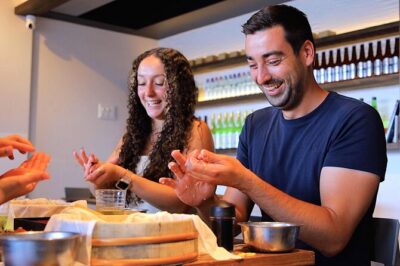
Sushi Making Osaka Roll and Authentic Japanese Sushi Class
Read our review →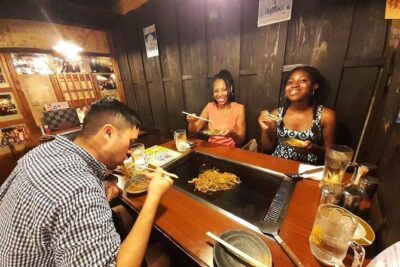
Osaka Local Foodie Walking Tour in Dotonbori and Shinsekai
Read our review →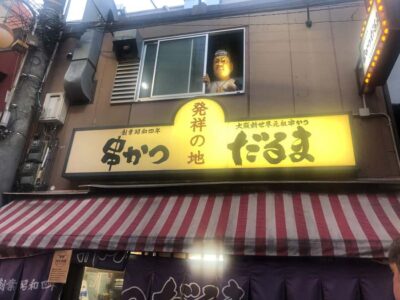
Hungry Osaka Street Food Tour: 15 Dishes & 3 Drinks
Read our review →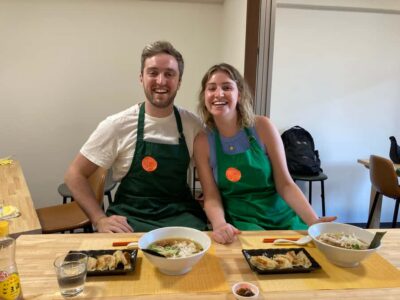
Osaka: Ramen and Gyoza Cooking Class in Dotonbori
Read our review →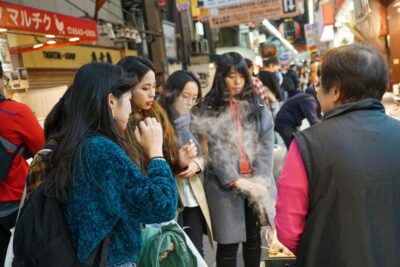
Osaka: Kuromon Market Food Walking Tour (6 stops, 6 tastes)
Read our review →Browse the lists this tour appears in