
Review · DUBAI
Dubai.Discover Old town,Markets,street food,Abra &Museums
Dubai’s glass towers tell only half the story. This $19 Old Dubai tour takes you through Al Seef, historic homes, Dubai Creek, the spice souq, and the gold market, with an abra crossing tying the route together. It is a good way to see the older face of the city without spending much.
I like the mix of food and culture, especially the Arabic coffee, camel milk chocolate, selected street-food samples, and the chance to smell and test spices. I also like how much the guides add: Hichem, Abdulla, Abdul, Tarek, and others are repeatedly praised for clear explanations, humor, and help with souq shopping.
The main consideration is simple: this is a walking tour through busy market streets, not a private luxury outing. Hotel pickup is optional, there is no drop-off, and the experience is not suitable for wheelchair users or people over 209 pounds, or 95 kilograms.
Key points to know before you book
- Al Seef and Old Dubai open the tour: Begin among narrow lanes and historic-style buildings while your guide explains how Dubai developed.
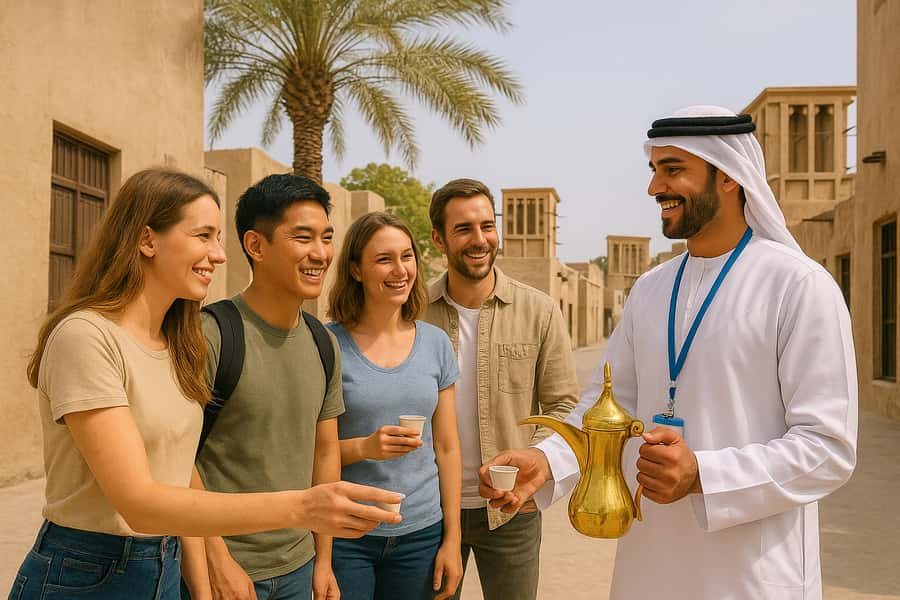
- Arabic coffee and local tastes add context: You can sample coffee, camel milk chocolate, and street food depending on the option you select.
- The abra ride is short but memorable: Cross Dubai Creek on a traditional wooden boat before entering the spice market.
- Shopping advice is part of the experience: Guides can explain products, answer questions, and help you approach bargaining with more confidence.
- The gold and spice souqs are genuine shopping stops: You get free time to browse, but purchases are not included.
- Transport needs careful planning: Pickup is available only with the selected option, and you arrange your own way back after the tour.
Why Old Dubai makes a better first stop than another skyline view
Dubai is famous for shiny towers, huge malls, and polished attractions. Those are easy to find. The older districts require a little more orientation, which is where this tour earns its modest price.
You start at Wokyo Noodle Bar in Al Seef, beside the Al Fahidi Marine Transportation Station. From there, the route moves through narrow alleyways and older quarters, giving you a look at the city before its modern building boom. Your guide supplies the thread that links the streets, houses, markets, food, and creek together.
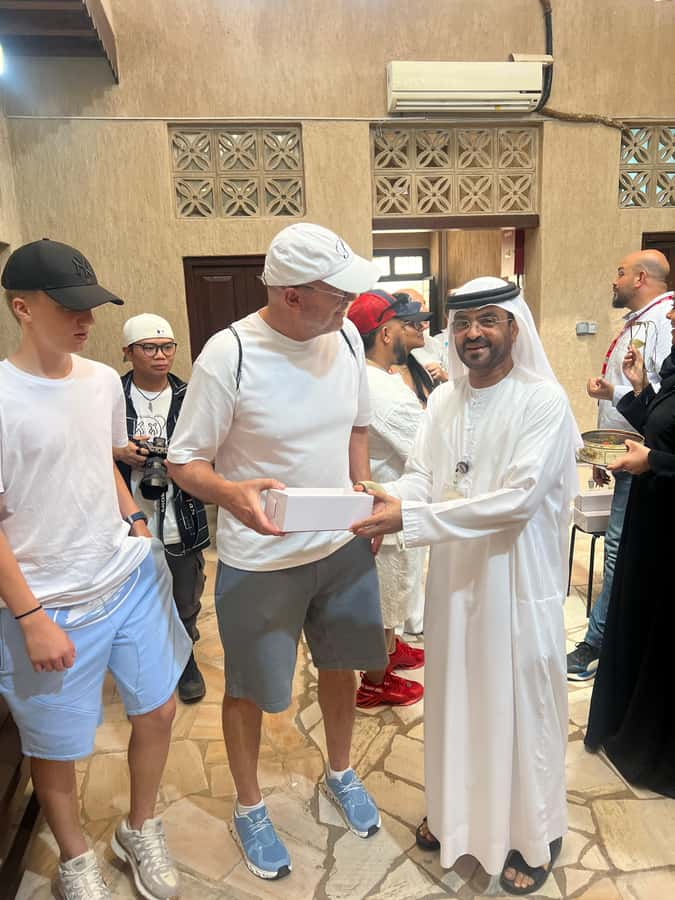
I like this approach because you are not simply taken from one photo stop to another. You hear about Dubai’s past, local customs, religion, food, and different cultures while walking through the places being discussed. Guides such as Hichem and Abdulla have been praised for answering questions patiently, while Abdul and Tarek are noted for making the historical material easy to follow.
At $19 per person, the tour is priced more like a useful introduction than a major day out. The value comes from combining a guide, historical-site entry, an abra ride, tastings, and visits to the spice and gold markets. You will still need money for shopping and your return transport, but the core sightseeing is covered.
More Street Food Tours in Dubai:
- Dubai: Old Town, Creek, Museums, Souks, & Street Food Tour
★ 4.8 · 10,816 reviews - Dubai: Old Town, Souks, Street Food, Guided Tour & Abra Ride
★ 4.9 · 7,170 reviews - Dubai: Old Town, Souks, Street Food, Guided Tour & Abra Ride
★ 5.0 · 1,664 reviews
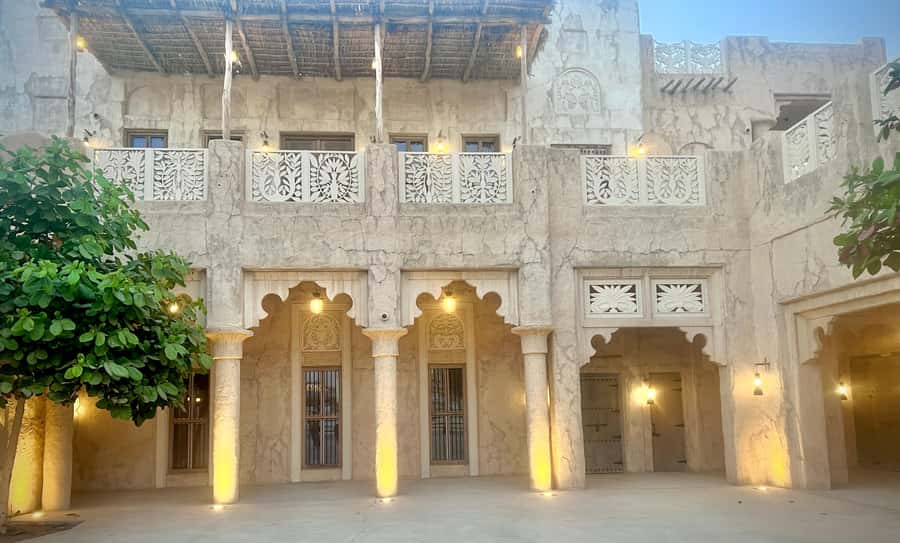
Al Seef and the narrow lanes of the old quarter
Al Seef is the opening chapter. The tour leads you through narrow passages while your guide explains Dubai’s early development and introduces the older side of the city.
The area gives you a gentler start than jumping straight into a crowded souq. You can get used to the pace of the walk, listen to the commentary, and begin noticing details in the architecture and alleyways. The guide’s role matters here. Without context, old buildings can blur into a pleasant backdrop. With context, you begin to understand why this part of town matters.
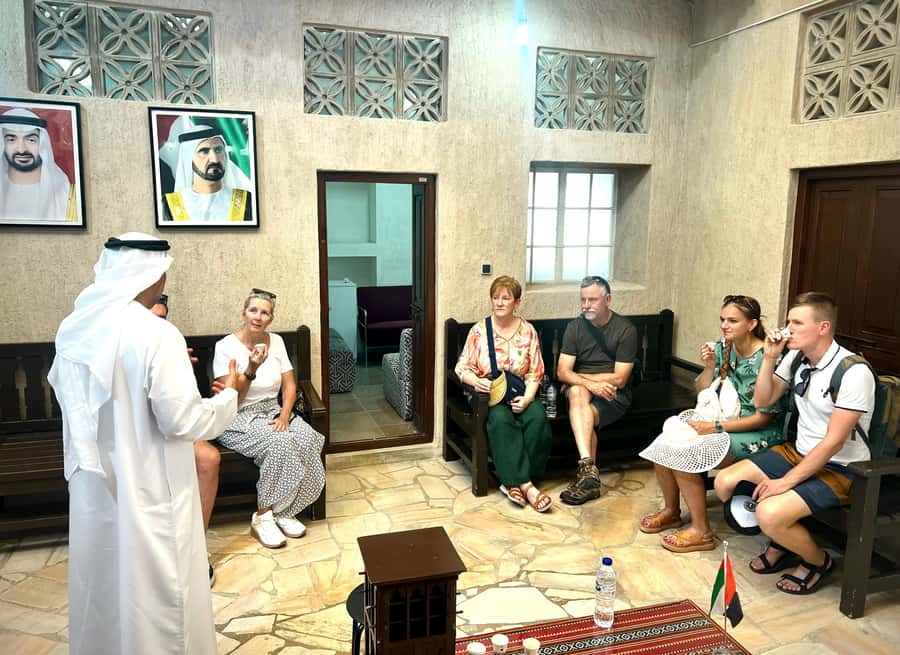
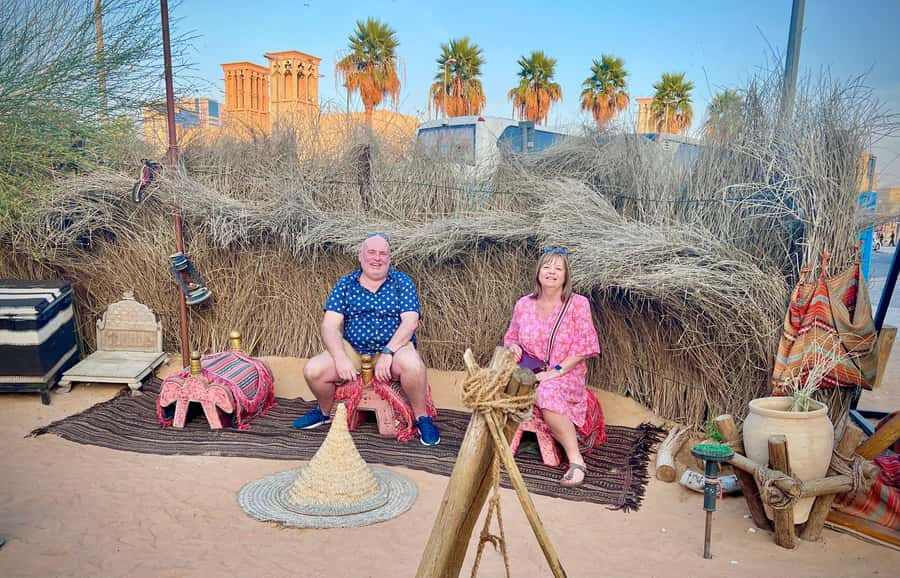
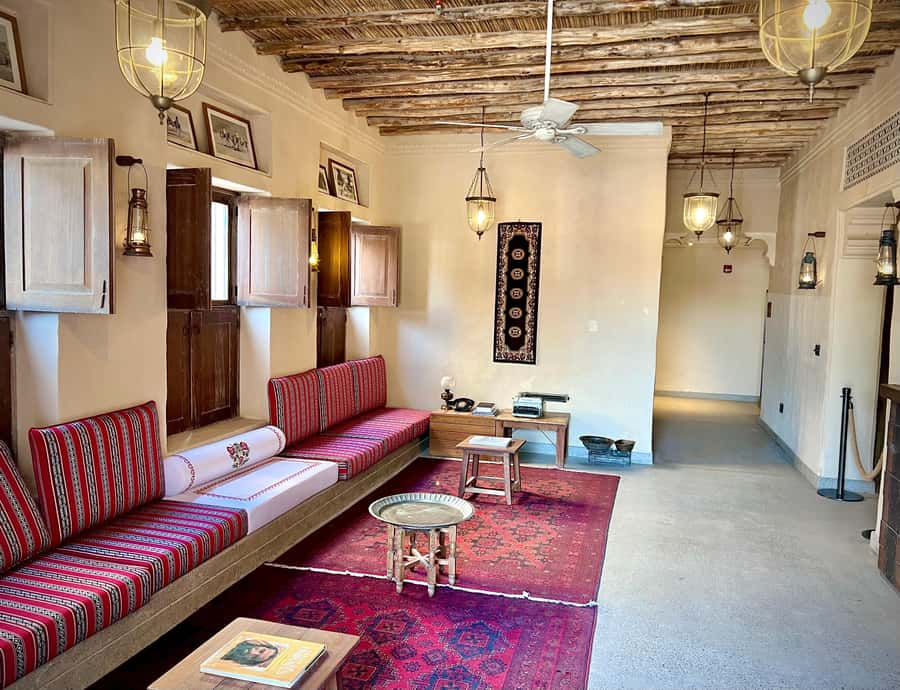
The route then moves toward a historic neighborhood with old local houses. You stop for Arabic coffee and hear more about local customs and heritage. This is one of the strongest parts of the experience because the coffee is not treated as just a free drink. It becomes a small introduction to hospitality and daily life in the UAE.
You may also visit local art galleries. The exact balance of time between the houses, galleries, and lanes can vary, so do not expect a museum-style visit with long indoor stops. This is a walking introduction, built around conversation and seeing the district in context.
Wear comfortable shoes. The tour involves walking through old streets and market areas, and the most rewarding parts are found on foot.
Coffee, chocolate, and the local food stops
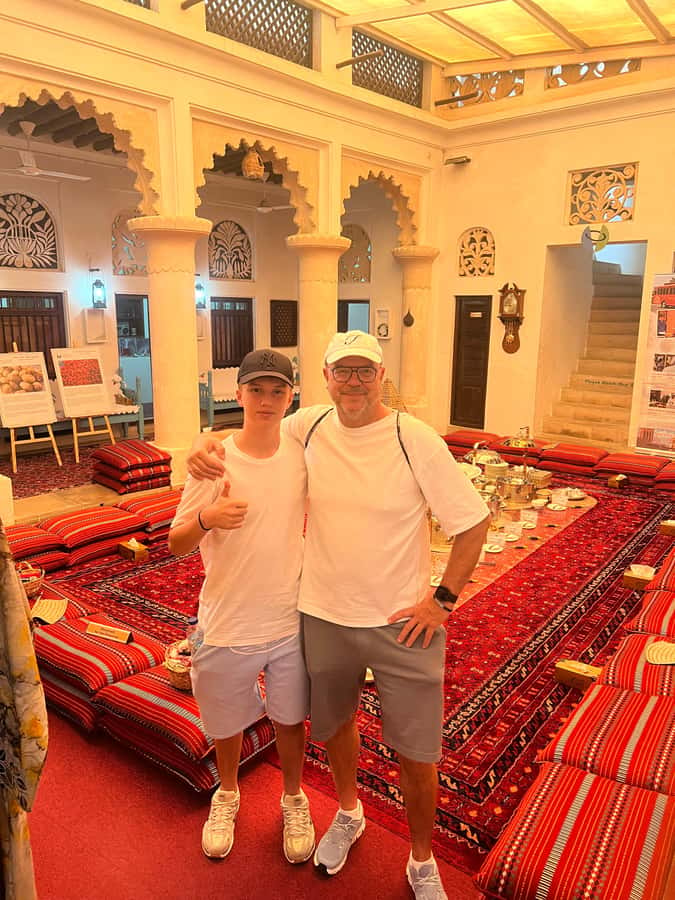
Food is used here as a way into the culture, not as a grand meal. Depending on the option booked, you can try local street food, Arabic coffee, and camel milk chocolate. Tea and coffee, along with bottled water, are also included.
The street-food portion can be useful if you want a first taste of local flavors without committing to a full restaurant meal. Keep your expectations sensible: this is a tasting stop, not a food tour built around a long list of dishes. The selection depends on the option you choose.
The camel milk chocolate sample is a fun local detail. It is small, but it gives you something distinctive to try and a natural opening for questions about food in the region. Guides can explain the items as you go, which makes the tasting more useful than simply receiving an unidentified snack.
If you have dietary restrictions, the supplied information does not specify alternatives, so ask before booking or at the start of the tour. Also bring cash. You may want to buy food, spices, gifts, or other goods later in the route.
Dubai Creek and the old grand market
After the historic neighborhood, the walk reaches Dubai Creek. You get shopping tips and make a quick visit to the old grand market before taking a break for food and free time.
The creek is important because it explains why this area became a trading center. The waterway connects the older neighborhoods on opposite banks and gives the tour a clear sense of place. You are not only looking at markets in isolation. You are seeing them as part of a district shaped by movement, trade, and boats.
The free time is useful, but it changes the feel of the tour. The guide may explain what to look for and how to approach shopping, then let you browse on your own. That is good for independent shoppers, though you should not expect the guide to manage every purchase or stay beside you at each stall.
Several people specifically praised guides for shopping help, including advice on negotiating prices. Hichem is noted for helping with bargaining, and other guides are praised for answering questions about items in the souqs. Take that as practical support, not a promise that every purchase will be cheaper.
More Market Food Tours in Dubai:
- Chef Guided Food Tour of Pike Place Market
★ 5.0 · 3,733 reviews - Tokyo Tsukiji Fish Market Food and Culture Walking Tour
★ 5.0 · 3,184 reviews - London Bridge & Borough Market Food Tour with 7 Authentic Dishes
★ 5.0 · 1,972 reviews - Pike Place Market Tasting Tour
★ 5.0 · 1,696 reviews
Crossing the creek by traditional abra
The abra ride is the tour’s most distinctive piece of transport. Instead of moving between districts by road, you cross Dubai Creek on a traditional boat.
It is a short ride, but it changes the rhythm. After walking through lanes and markets, you get a view back across the water and arrive directly near the spice market. The boat makes the geography easy to understand: Old Dubai is not one single block, but a group of historic areas linked by the creek.
Do not treat the abra as a sightseeing cruise. The point is the crossing, not a long ride with a narrated route. Still, it is exactly the kind of simple local transport that makes the tour feel connected to the area rather than built around a coach.
The ride is included. Hotel transportation, by contrast, is only included if you select the pickup option. Depending on the number of people, pickup uses a small car or van.
Smelling the spices at the souq
After the abra crossing, you enter the spice market. Your guide explains different spices and gives you a chance to smell and test some of them.
This is a better way to approach a souq than wandering in without a plan. You learn what you are looking at before deciding if you want to buy anything. Saffron is one product you might find, and the souq is a practical place to compare spices and ask questions.
You are given free time for shopping and exploring. That freedom is welcome, but market sellers may approach you. Listen to the guide’s advice, compare prices, and do not feel pressured to purchase. The tour gives you orientation and support, not a shopping guarantee.
The spice stop suits curious shoppers and first-time visitors especially well. If you have no interest in buying anything, it still offers sensory variety and a clear look at the trading side of Old Dubai. If you do want saffron or other spices, bring cash and leave room in your bag.
The gold souq and the final stop
The final stop is Dubai’s largest gold market. Displays can be dramatic, even if you never plan to buy jewelry.
The guide can help you understand how to approach the shops and may offer assistance with shopping questions. That is useful in a market where prices, workmanship, and negotiation can be difficult for a first-time visitor to judge.
You do not need to buy anything. Treat the gold souq as both a shopping area and a cultural stop. The scale of the displays gives you a sense of the market’s importance, while the guide helps explain how to browse without rushing into a decision.
Because this is the last stop, plan your energy and money accordingly. The tour ends back at the meeting point according to the supplied details, but no hotel drop-off is provided. Bus, taxi, metro, and Uber are available from the area, so check your route before setting off.
The guides make the difference
The strongest part of this experience is the guiding. Names that appear repeatedly in the tour’s feedback include Hichem, Abdulla or Abdullah, Abdul, Tarek, and Saafi.
Hichem is praised for his clear explanations of Arab culture, his humor, and his help during shopping. He also speaks several languages, including English, Italian, French, and some Japanese, according to the information provided. Abdulla and Abdullah are described as friendly, funny, attentive, and good at handling questions from families and mixed-age groups.
Abdul is praised for making culture and history interesting, while Tarek is noted for presenting Dubai’s past in a lively way. Individual guides can vary, of course, but the pattern is clear: this tour depends heavily on the person leading it.
That is not a weakness, but it is worth understanding. The route itself is straightforward. The guide turns it into a useful experience by explaining local customs, connecting the sites, and helping you navigate the souqs.
Price, pickup, and practical limits
At $19, the price is excellent if you want a compact introduction to Old Dubai. You receive a local guide, historical-site entry, the abra crossing, water, tea and coffee, a camel milk chocolate sample, visits to the spice and gold markets, and street-food tasting if included in your selected option.
The price does not cover shopping, and the food tasting depends on the booking choice. Read the option carefully before paying so you know if street food is part of your package.
You can choose hotel pickup, but it is not automatic. Pickup uses a small car or van depending on group size. There is no drop-off, so plan your onward transport from the ending area.
The tour is not suitable for wheelchair users, and electric wheelchairs are not allowed. It is also listed as unsuitable for people over 209 pounds, or 95 kilograms. Comfortable shoes and cash are the two most useful things to bring. Alcohol, drugs, and chewing gum are not allowed.
The activity is offered in English, Italian, French, Spanish, German, Arabic, and Portuguese. You can reserve and pay later, and cancellation is allowed up to 24 hours in advance for a full refund.
Who will get the most from this tour?
I would choose this for a first visit to Dubai, especially if you have already seen the modern center or want a counterweight to it. Families can benefit from the varied route, since the tour changes pace between walking, tasting, markets, and the abra ride.
It also suits solo visitors who want local orientation before exploring the souqs alone. The shopping advice is useful, and the guide gives you enough background to make sense of what you see.
You may want something else if you dislike walking, avoid market sellers, or prefer a private tour with a fixed pace. The free time and market visits are part of the appeal, but they also mean the experience includes commercial areas and some bustle.
Should you book it?
Book this tour if you want Old Dubai in one affordable route, with food samples, historic homes, a creek crossing, and practical souq guidance. It gives you much more cultural context than a quick market visit on your own.
Skip it if you need full hotel-to-hotel transport, wheelchair access, or a quiet private experience. For most visitors who want to understand Dubai beyond the skyscrapers, the combination of price, route, and strong guide-led storytelling makes this a smart early stop in the city.
FAQ
Where does the tour start?
The meeting point is Wokyo Noodle Bar in Al Seef, next to Al Fahidi Marine Transportation Station.
Does the tour include hotel pickup?
Hotel pickup is included only when you select the option with pickup. Transportation uses a small car or van depending on the number of people.
Is hotel drop-off included?
No. Drop-off is not provided. From the ending area, you can use a bus, taxi, metro, or Uber.
Is the abra boat ride included?
Yes. The traditional abra ride is included in the tour.
Is street food included?
Street-food tasting depends on the option selected when you book. Camel milk chocolate, bottled water, tea, and coffee are included.
Is the tour suitable for wheelchair users?
No. The tour is not suitable for wheelchair users, and electric wheelchairs are not allowed. It is also not suitable for people over 209 pounds, or 95 kilograms.
More food museums around Dubai
- Dubai: Discover Dubai Old Town, Souks, Museum & Street Food
★ 4.9 · 25 reviews - Munich: Beer and Food Tour with Dinner & Oktoberfest Museum
★ 4.7 · 1,086 reviews - Takua Pa: Food Market, Tsunami Museum, Temple, & Old Town
★ 4.9 · 165 reviews - Olive Oil Museum: Extravirgin school – Food & wine tasting
★ 5.0 · 39 reviews
Fresh off the menu around Dubai
- Old Dubai Guided Tour With Photographer: Souks & Street Food★ 4.9 · 74 reviews
- Old Dubai: Premium Guided Tour with Street Food & Abra Ride★ 4.9 · 416 reviews
- Old Dubai Historic Guided Tour: Creek, Street Food & Souks★ 4.9 · 156 reviews
- Dubai Private Top Attractions, Premium Vehicle & Street Food★ 5.0 · 24 reviews
- Dubai Top Highlights: Frame Entry, Souks, Abra & Street Food★ 4.8 · 344 reviews
- Dubai: Discover Dubai Old Town, Souks, Museum & Street Food★ 4.9 · 25 reviews
- Dubai: Private Food Tour – 10 Tastings with Locals★ 4.8 · 61 reviews
- Dubai: Old Town Walking Tour with Abra Cruise & Street Food★ 4.9 · 71 reviews
Dubai Food Tours, compared.
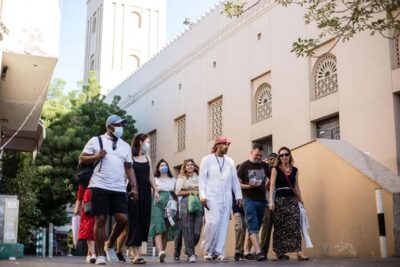
Dubai: Old Town, Creek, Museums, Souks, & Street Food Tour
Read our review →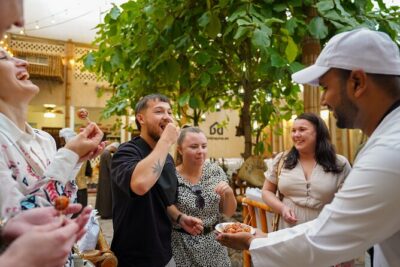
Dubai: Old Town, Souks, Street Food, Guided Tour & Abra Ride
Read our review →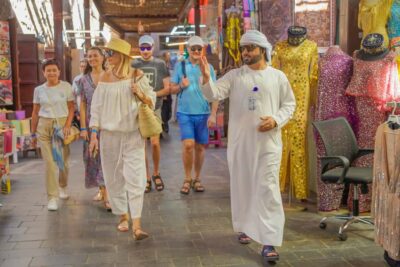
Dubai: Old Town, Street Food, Creek, Souks, & Emirati House
Read our review →
Dubai: Luxury Dinner Buffet at Gastronomy Atlantis The Royal
Read our review →
Dubai Harbour Super Yacht Experience with gourmet & Drinks
Read our review →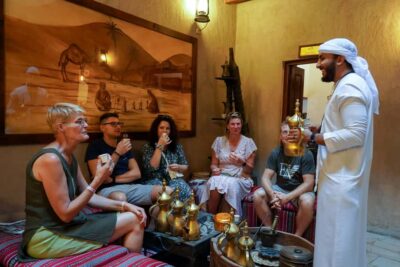
Old Dubai: Premium Guided Tour with Street Food & Abra Ride
Read our review →
Dubai: Luxury Balloon Flight with Michelin-Curated Breakfast
Read our review →
Dubai Top Highlights: Frame Entry, Souks, Abra & Street Food
Read our review →Browse the lists this tour appears in