
Review · DUBAI
Old Dubai Historic Guided Tour: Creek, Street Food & Souks
Dubai’s glass towers can make the city’s older story easy to miss. This 3 to 4-hour walking tour brings you into Al Fahidi, across Dubai Creek, and through the Spice and Gold Souks, with food and an abra ride woven into the route.
I like the welcome at the Emirati heritage house, where you start with Arabic coffee and dates rather than a rushed photo stop. I also like the price: at $10 per person, the guided walking, snacks, heritage entry, and creek crossing offer unusually good value. The main catch is that this is a walking tour over uneven streets, with heat, crowds, and limited seating along the way.
Key points
- Start with Emirati coffee and dates inside a traditional heritage house.
- Walk through Al Fahidi and Al Seef, where old-style buildings meet modern Dubai.
- Taste karak tea, samosas, dates, and other local treats during the route.
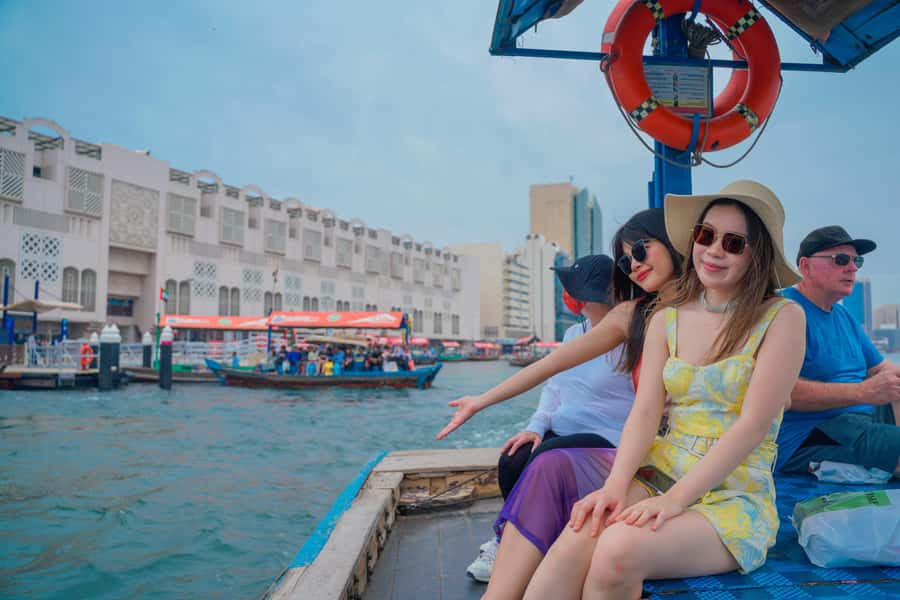
- Cross Dubai Creek by traditional abra, with views of trading ships and the skyline.
- Finish in the Spice and Gold Souks, where bargaining is part of the experience.
- Guides such as Ahmed Hussein, Nasser, Ibrahim, Khan, and Hossam are praised for clear explanations, humor, and help with shopping.
Why Old Dubai Makes a Better First Walk Than Another Skyscraper
If your picture of Dubai is all polished malls, high towers, and grand hotels, this tour gives you a useful correction. The old districts are more modest in scale, but they explain how the city worked before oil money and rapid construction changed its shape.
You begin at Al Khayma Heritage Restaurant, near Sharaf DG Metro Station if you are making your own way there. Depending on the option you choose, hotel pickup and drop-off from central Dubai hotels may also be available. The meeting point matters because Old Dubai is easier to reach by metro than by car during busy periods.
The route links several places that are close enough to visit on foot but different enough to keep the morning or afternoon moving. You see a heritage house, old lanes, a mosque, souks, the creek, and the working side of Dubai’s historic trade in a single outing.
The tour also gives you small tastes rather than one large meal. That is a smart choice for a walking route. Arabic coffee, dates, karak tea, samosas, and other local snacks keep you interested without leaving you heavy and sleepy.
More Street Food Tours in Dubai:
- Dubai: Old Town, Creek, Museums, Souks, & Street Food Tour
★ 4.8 · 10,816 reviews - Dubai: Old Town, Souks, Street Food, Guided Tour & Abra Ride
★ 4.9 · 7,170 reviews - Dubai: Old Town, Souks, Street Food, Guided Tour & Abra Ride
★ 5.0 · 1,664 reviews
Inside the Emirati House, Coffee Comes First
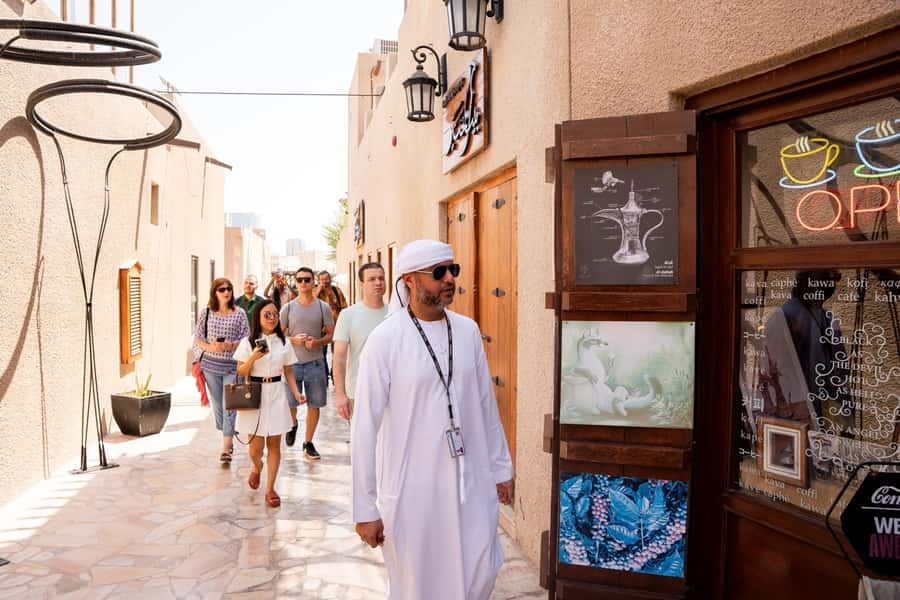
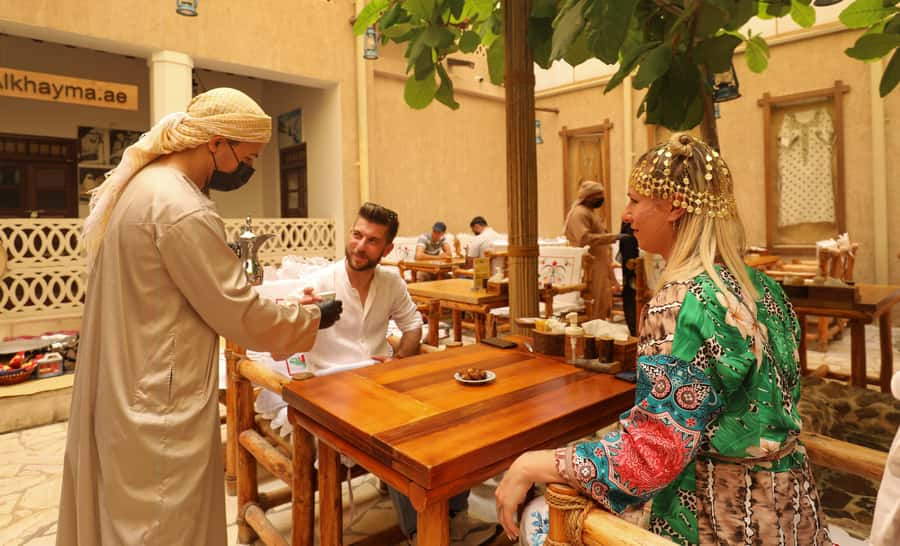
The first substantial stop is Al Khayma Heritage Restaurant, where the tour begins with Arabic coffee and dates. You then enter a traditional Emirati house and look at photographs that explain the UAE’s earlier years.
This is one of the most useful parts of the experience because it gives the rest of the walk a frame. Without some background, an old courtyard or wind tower can become just another attractive backdrop. A good guide connects those details to daily life, local customs, and the growth of the UAE.
The food welcome is simple but meaningful. Arabic coffee is usually served in small amounts, so do not expect a full mug. The point is the ritual and the chance to ask your guide about local hospitality. Some tours also include more than one kind of Arabic coffee, along with dates and luqaimat, a small sweet treat.
Your guide makes a big difference here. Ahmed Hussein is praised for checking on everyone and explaining Dubai’s culture in a clear way. Nasser is described as cheerful and helpful, while Ibrahim has led Spanish-speaking groups with ease. Khan, Hossam, Maaz, and Iqbal are also noted for their explanations, humor, and ability to answer questions.
Guide quality can vary from one departure to another, but the repeated strength of this tour is its human side. You are not simply pointed toward a doorway and sent on. The guide is expected to explain what you are seeing and help the group move together.
Al Seef and Al Fahidi Show Two Versions of Old Dubai
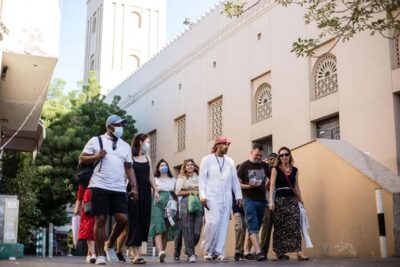
Next comes Al Seef, a waterfront area designed with traditional-looking buildings and narrow lanes. It is a pleasant place for photographs, especially around the mosque, but you should understand what it is: parts of Al Seef are a modern recreation of an old Arabian setting.
That does not make it worthless. It provides an easy introduction to the visual language of Old Dubai, with shaded walkways, low buildings, and views toward the creek. It is also more comfortable for photographs than some of the tighter streets farther inland.
From there, the walk continues toward Al Fahidi. Here, the contrast becomes more interesting. Traditional buildings sit beside newer structures, and the narrow lanes give you a sense of how different Dubai feels away from its wide roads and giant developments.
The stop at Al Fahidi Fort is brief, around 15 minutes, and functions mainly as a photo stop and orientation point. You should not expect a long museum visit there. Instead, use the time to listen to the guide’s explanation and notice how close the fort is to the old commercial districts.
The pace is generally manageable, but it is still a walking tour in a warm city. Wear shoes with proper support, bring sunglasses and a hat, and choose loose, comfortable clothing. People with mobility impairments and wheelchair users should not book this route, and it is not recommended for children under two.
Karak, Samosas, and the Flavor of a Short Stop
Food is not an extra tacked onto the end of this tour. It appears along the way, which makes the walk feel more connected to everyday Dubai.
You can expect karak tea and samosas, with Arabic tea, dates, and sometimes camel’s milk tea included among the tastings. Karak is a strong, sweet tea that works well during a short break. The samosas add a savory bite, and the small portions let you keep moving.
I like this format better than a long restaurant meal on a half-day sightseeing route. You get a few recognizable local tastes and can ask what you are eating. Still, do not book the tour expecting a full lunch. The food is a series of snacks, not a replacement for a substantial meal.
The food stops also help break up the history talk. Guides such as Maaz are praised for speaking clearly and slowly for groups made up of several nationalities. That matters on a walking tour, since it is easy to miss information when people are moving, taking photographs, and sampling food at the same time.
More food history walks around Dubai:
- Barcelona: Tapas Walking Tour with Food, Wine, and History
★ 4.8 · 4,261 reviews - Sevilla Food Tour: Tapas, Wine, History & Traditions
★ 5.0 · 3,468 reviews - Madrid Tapas & Taverns Small Group Food & History Tour
★ 5.0 · 2,664 reviews - Historic Ybor City Food Walking Tour
★ 5.0 · 2,210 reviews
Bur Dubai Souk Leads You Toward the Creek
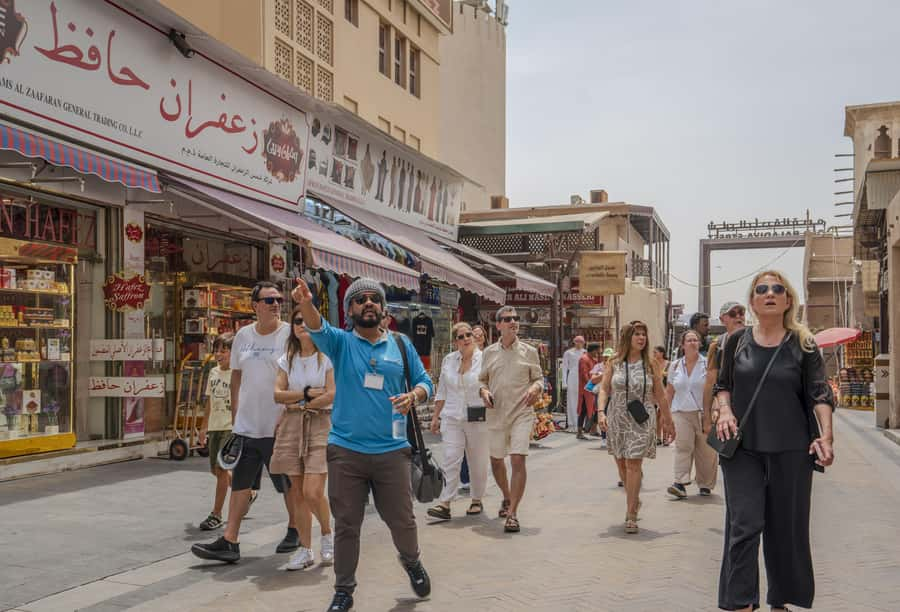
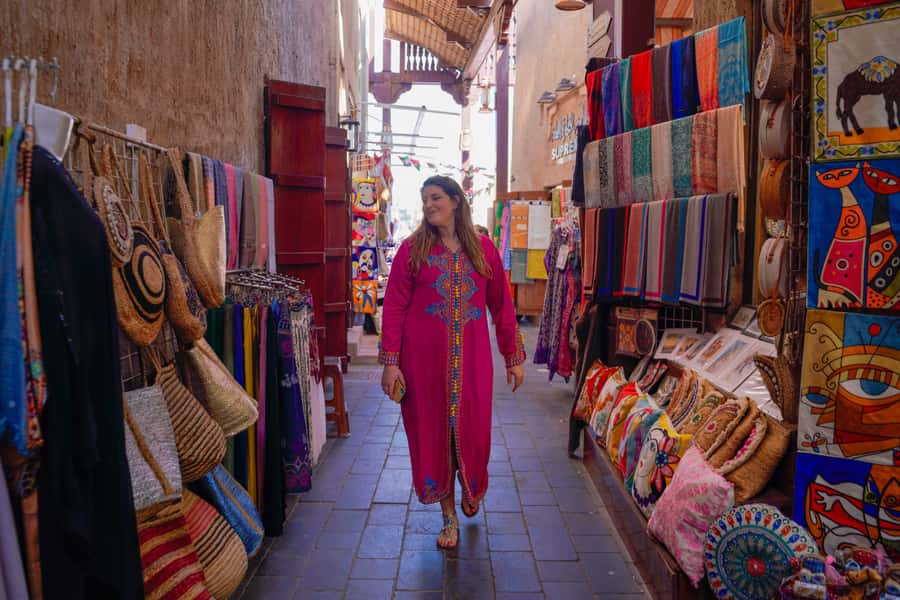
The Bur Dubai Souk area brings you closer to the trade story of the city. You walk through the market lanes, pause for photographs, and hear more about the role of Dubai Creek.
This is not a polished shopping mall with fixed prices and air conditioning. It is a market setting, and merchants may approach you. That can be part of the fun, but you should keep your judgment switched on and avoid buying anything simply because the sales pitch is friendly.
The short visit works best as an introduction. You get a feel for the layout and the atmosphere before reaching the water. If you want to shop seriously, you may need to return later with more time and a clear idea of what you want.
The route is compact enough to keep the experience focused. You are not spending half the day in one market before racing through the rest. That said, short stops mean you will not see every corner or spend much time browsing.
The Abra Ride Is the Tour’s Most Memorable Link
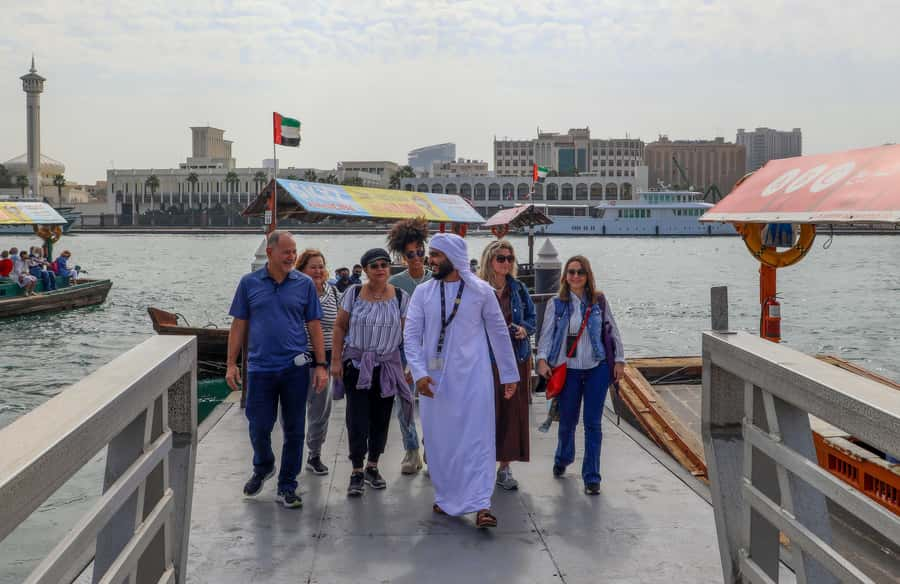
At Bur Dubai Abra Dock, you board a traditional abra for a short ride across Dubai Creek. This is not a luxury cruise. It is a practical local boat ride, and that is precisely why it works.
From the water, you see the creek from a different angle, including large trading ships and the Dubai skyline. The contrast is striking: older boats and waterfront commerce sit in front of a city known for its modern towers.
The ride is listed at around 15 minutes, so keep your camera ready. It is a transfer as well as a sightseeing moment. Depending on the timing and the group, you may have limited space and a short wait before boarding.
For me, this is the clearest link between Dubai’s past and present. The creek was central to trade and movement, and the abra still provides a simple way to cross it. You do not need a long explanation to understand why the water matters once you are sitting on it.
The tour may finish in the Gold Souk rather than return you directly to the starting restaurant. One useful detail from the route is that you may make your own way back by abra and metro afterward. Check your selected pickup and return arrangement before booking, especially if you have a flight or another appointment.
Spice Souk: Smell First, Shop Second
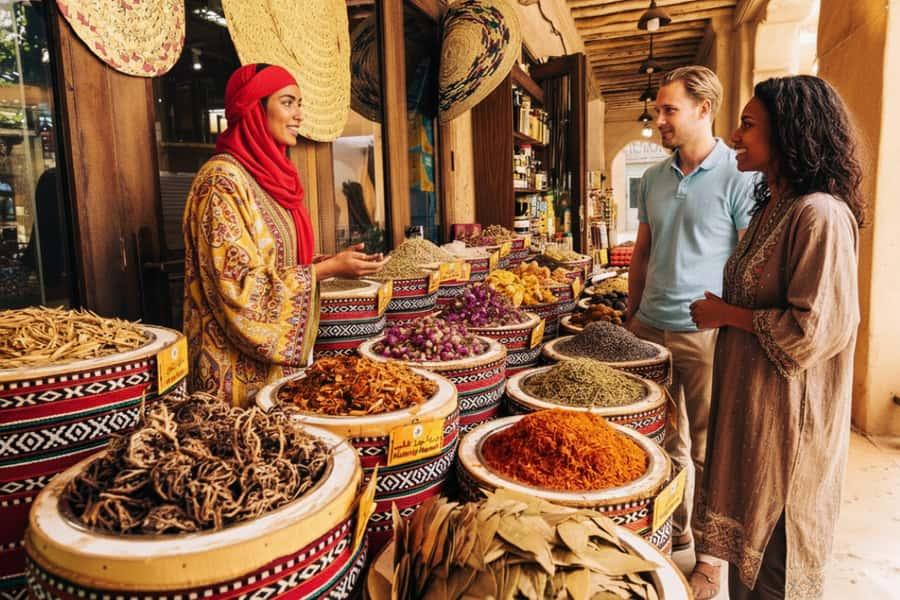
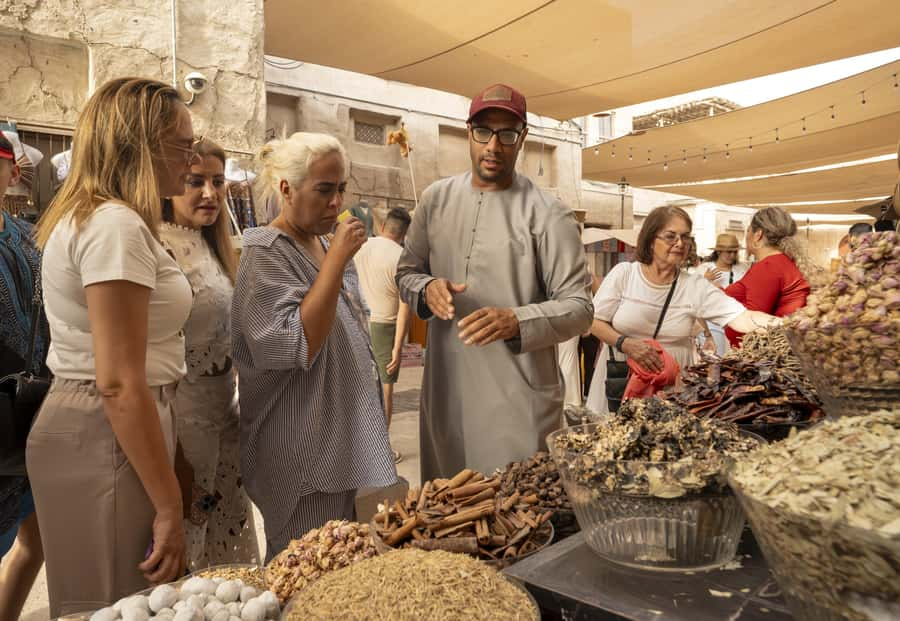
On the Deira side, the Spice Souk gives you a sensory change from the quieter heritage lanes. You will see colorful displays and smell spices as you move through the market.
The best approach is to slow down for a few minutes and notice the differences between the stalls. Your guide can explain what is being sold and may help you understand how to bargain. I would treat the first price as an opening point, not a final answer, while staying polite and realistic.
This is a good place to buy a small food gift if you actually want one. Still, inspect what you are buying, ask about the price and quantity, and do not feel pressured to purchase. The market visit is included, but shopping is optional.
Because the stop lasts around 30 minutes, you have enough time to look around without turning the tour into a long retail session. If you love markets, you may wish you had more time. If you find aggressive selling tiring, stay close to the guide and treat the stop as a cultural visit rather than a shopping mission.
Gold Souk: Bright Displays and a Practical Ending
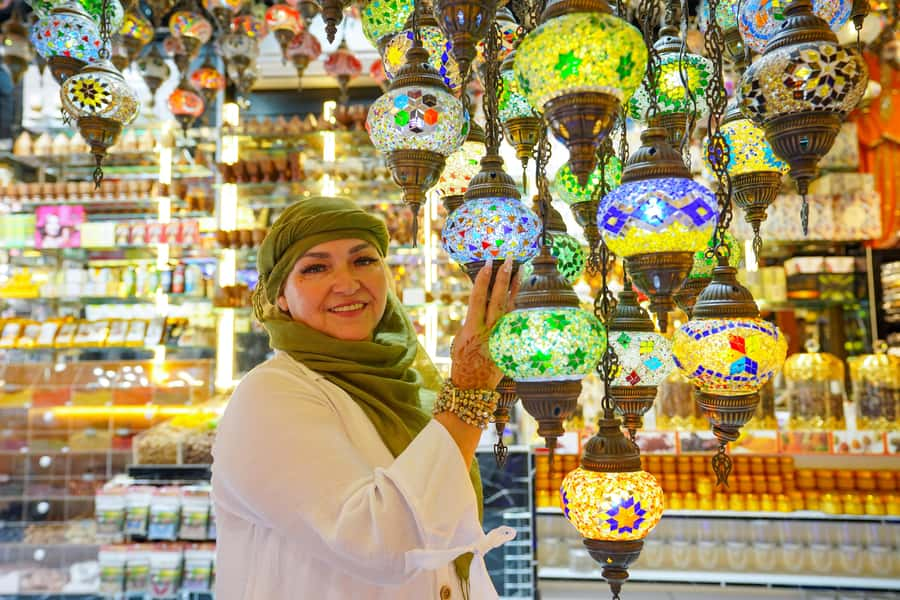
The Gold Souk is the final major stop. The jewelry displays are the visual payoff, with gold pieces and precious stones arranged to catch the eye.
You can browse without buying, and the guide may offer advice during bargaining. Do not assume that every item is a bargain simply because it is in a traditional market. Compare prices, ask about weight and workmanship, and buy only if you understand what you are paying for.
The souk is a fitting end because it shows Dubai’s long connection with trade in a very direct way. After the heritage house, creek, and spice stalls, you finish among high-value goods and energetic sales conversations.
The 30-minute visit is enough to see the main area and take photographs. It is not enough for a careful jewelry purchase unless you already know what you want. If shopping is your main goal, plan a separate return visit.
Is $10 Good Value for Three to Four Hours?
At $10, this is one of the stronger value options for seeing Old Dubai. The price includes a live guide, heritage sites and museums, Emirati heritage house entry, Arabic tea or coffee, dates, street food, water, the abra ride, and visits to both the Spice and Gold Souks.
You are also paying for structure. You could walk through some of these districts alone, but you would likely miss context and spend time figuring out how the creek crossing fits into the route. The guide turns separate sights into one connected story.
The low price does come with limits. Do not expect a private tour, a long museum program, air-conditioned transport between every stop, or a full meal. Pickup is optional only on selected arrangements, and the walking sections take place outdoors.
Free cancellation up to 24 hours before the tour and a reserve-now, pay-later option make it easier to fit into a changing Dubai schedule. Starting times vary, and the 5:00 PM evening option does not include a visit to the Coffee Museum.
Who Should Book This Old Dubai Walk?
I would recommend it to first-time visitors who want context before spending more time in malls, towers, or beach districts. It also suits repeat visitors who have seen modern Dubai but never made time for the creek and older neighborhoods.
The tour works well for couples, small family groups with older children, and friends who enjoy food samples and market browsing. It is also useful for solo visitors who prefer a guide while navigating the souks.
You should think twice if you dislike walking, outdoor heat, crowded market lanes, or bargaining. Baby strollers, luggage, and large bags are not allowed, and the route is not suitable for infants, wheelchair users, or people with mobility impairments.
Language choice is another strength. Live guides may be available in English, German, Spanish, Italian, or French. If your language is important, confirm it at booking rather than assuming every departure offers all five.
Final Verdict: A Smart, Low-Cost Way to Meet Old Dubai
Book this tour if you want a clear introduction to Dubai’s older districts, a few local snacks, and a traditional creek crossing without spending much. The combination of heritage house, Al Fahidi lanes, Al Seef, souks, and abra ride gives you a useful first look at the city beyond its famous skyline.
Skip it if you want a slow, private shopping trip or a full historical museum experience. For most people, though, the price is hard to fault. Choose comfortable shoes, bring sun protection, listen closely to the guide, and save serious shopping for after the tour.
FAQ
How long does the Old Dubai Historic Guided Tour last?
The tour lasts about 3 to 4 hours. Starting times vary, so check availability for your chosen date.
Where does the tour meet?
The meeting point is Al Khayma Heritage Restaurant. The nearest metro station is Sharaf DG Metro Station. Hotel pickup and drop-off may be available from central Dubai hotels with selected options.
What food and drinks are included?
The tour includes Arabic tea or coffee, dates, karak tea, samosas, and local snacks. Some departures may include additional tastings such as luqaimat or camel’s milk tea.
Is the abra ride included?
Yes. A traditional abra boat ride along Dubai Creek is included. The route includes views of trading ships and the Dubai skyline.
Can I book a late afternoon tour?
Yes, but the Coffee Museum cannot be visited if you choose the 5:00 PM evening tour.
Is the tour suitable for wheelchair users or young children?
The tour is not suitable for wheelchair users, people with mobility impairments, or children under two. Baby strollers, luggage, and large bags are not allowed.
Fresh off the menu around Dubai
- Old Dubai Guided Tour With Photographer: Souks & Street Food★ 4.9 · 74 reviews
- Old Dubai: Premium Guided Tour with Street Food & Abra Ride★ 4.9 · 416 reviews
- Dubai Private Top Attractions, Premium Vehicle & Street Food★ 5.0 · 24 reviews
- Dubai Top Highlights: Frame Entry, Souks, Abra & Street Food★ 4.8 · 344 reviews
- Dubai.Discover Old town,Markets,street food,Abra &Museums★ 4.9 · 181 reviews
- Dubai: Old Town Walking Tour with Abra Cruise & Street Food★ 4.9 · 71 reviews
- Dubai: Discover Dubai Old Town, Souks, Museum & Street Food★ 4.9 · 25 reviews
- Dubai: Private Food Tour – 10 Tastings with Locals★ 4.8 · 61 reviews
Dubai Food Tours, compared.
Dubai: Old Town, Creek, Museums, Souks, & Street Food Tour
Read our review →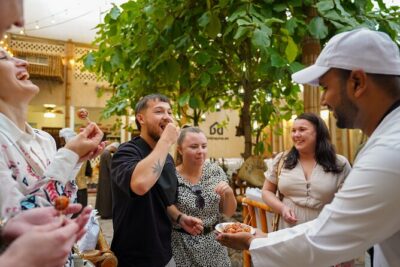
Dubai: Old Town, Souks, Street Food, Guided Tour & Abra Ride
Read our review →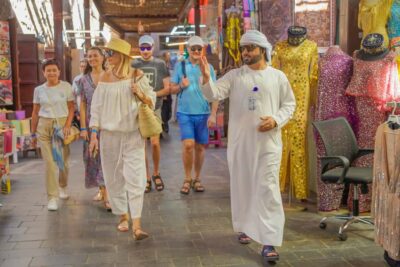
Dubai: Old Town, Street Food, Creek, Souks, & Emirati House
Read our review →
Dubai: Luxury Dinner Buffet at Gastronomy Atlantis The Royal
Read our review →
Dubai Harbour Super Yacht Experience with gourmet & Drinks
Read our review →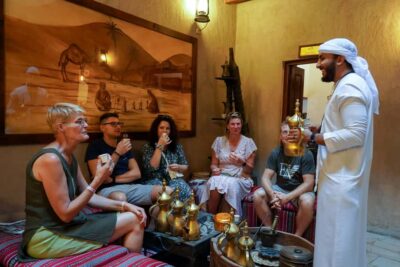
Old Dubai: Premium Guided Tour with Street Food & Abra Ride
Read our review →
Dubai: Luxury Balloon Flight with Michelin-Curated Breakfast
Read our review →
Dubai Top Highlights: Frame Entry, Souks, Abra & Street Food
Read our review →Browse the lists this tour appears in