
Review · SEOUL
Seoul: Palace, Temple and Market Guided Foodie Tour at Night
Seoul’s best evening surprise may be the contrast between a lantern-lit Joseon palace and the noisy food stalls of Gwangjang Market. This four-hour walking tour links both with Jogyesa Temple, Ikseon-dong, and Jongno streets, giving you history, local food, and night scenery in one outing.
I like the route for two reasons: the palace is far more atmospheric after dark, and the food stops let you try several Korean specialties without guessing what to order. Guides such as Mia, Kim, Jay, Inha, and Thomas have been praised for clear explanations, local stories, and keeping the group together.
The catch is simple: this is a walking tour, not a gentle bus ride. Expect about four hours on foot, a drop in temperature at night, and strong flavors at the market. Live octopus is offered, but you can easily decline it.
Key points to know before booking
- Changgyeonggung at night: Spend about an hour exploring a Joseon-era palace with illuminated buildings and gardens.
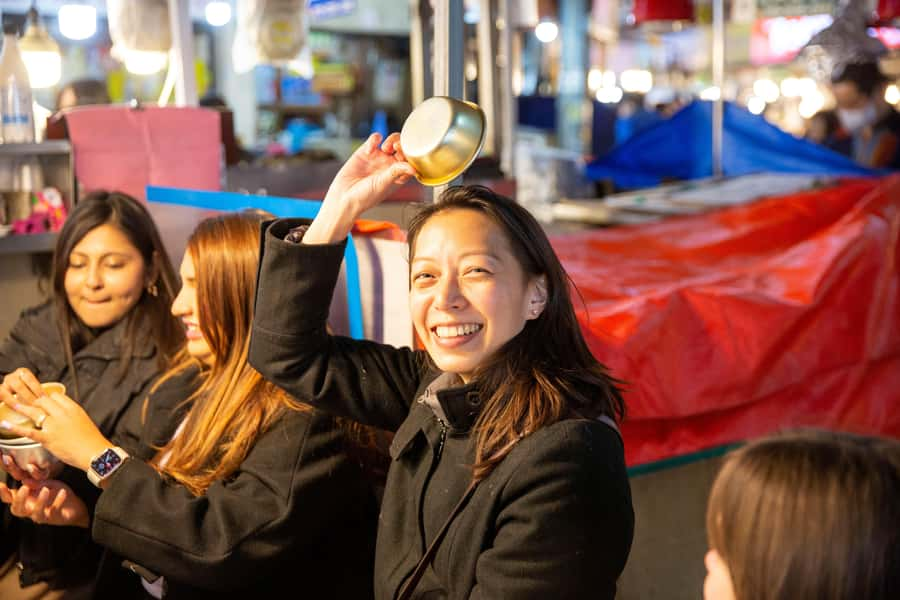
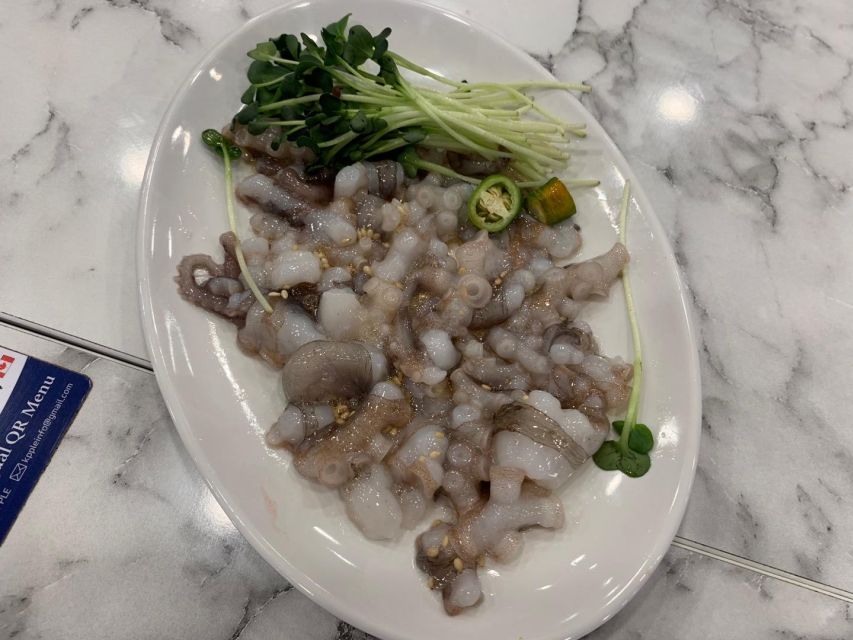
- Gwangjang Market tasting: Try makgeolli, several kinds of jeon, chopped live octopus, and local snacks.
- A useful Jongno route: Connect Hyehwa, Gwangjang Market, Jongro 3-ga, Ikseon-dong, and Jogyesa Temple in one evening.
- Guides make the difference: Mia, Kim, Jay, Inha, Thomas, Mindi, and J have all led tours, with strong praise for their warmth and storytelling.
- Moderate walking required: The route includes ten- to fifteen-minute walks between major stops and finishes back at Hyehwa Station.
- Good dietary flexibility: Vegetarian and halal choices are available if you request them when booking.
Why this Seoul night tour works
This experience is built around a smart idea: Seoul’s history and food make more sense when you encounter them close together. You begin among royal buildings, move through traditional neighborhoods, and finish with Buddhist lanterns and market food.
The route covers several parts of Jongno rather than staying in one small area. You pass Daehak-ro, Seoul’s arts district, then walk toward Changgyeonggung Palace. From there, the evening shifts from formal royal architecture to food stalls, drinking streets, preserved hanok houses, and a temple courtyard.
I like this format for a first Seoul visit. You get an introduction to Korean architecture, religion, nightlife, and everyday eating in one evening. It will not give you a full history lesson on every site, but it gives you enough context to make later visits more rewarding.
The activity costs $60 per person. That is fair value if you plan to sample several dishes, want entrance fees handled, and prefer a guide to explain what you are seeing. The price includes palace admission, a history guide, market street food, makgeolli, assorted jeon, and chopped live octopus.
You are also paying for local judgment. Gwangjang Market can be confusing when you first arrive, especially if you do not read Korean or know which foods are worth trying. A guide helps you order, explains the dishes, and keeps the route moving.
More Market Food Tours in the world:
- Chef Guided Food Tour of Pike Place Market
★ 5.0 · 3,733 reviews - Tokyo Tsukiji Fish Market Food and Culture Walking Tour
★ 5.0 · 3,184 reviews - London Bridge & Borough Market Food Tour with 7 Authentic Dishes
★ 5.0 · 1,972 reviews
Starting at Hyehwa Station and Daehak-ro
Meet outside Exit 4 of Hyehwa Station. The guide carries a sign marked Tripper, and the tour ends back at the same meeting point.
Hyehwa is a useful starting place because it puts you near Daehak-ro, an arts area known for theaters and performances. The tour passes through this district rather than treating it as a major stop, so you should think of it as a scene-setting walk into Jongno.
This opening section also gives your guide time to introduce the evening and explain the route. English and Korean are available. Guides including Mia, Kim, Jay, Inha, and J have been singled out for clear English, friendly manners, and an ability to answer questions.
Do not arrive expecting hotel pickup. You make your own way to Hyehwa Station, and the tour returns there at the end. That return is useful because you do not need to work out a new route home after eating and walking for four hours.
Changgyeonggung Palace under night lighting
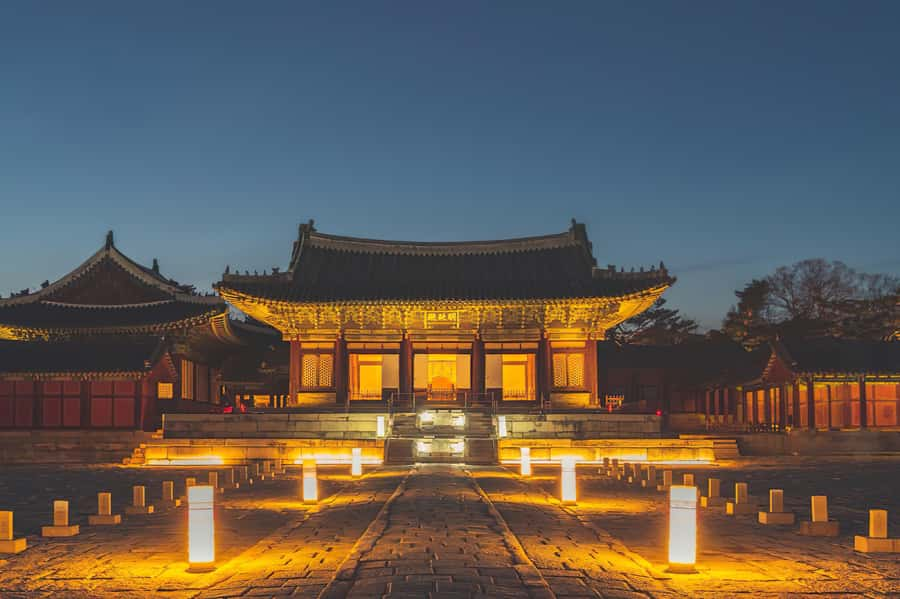
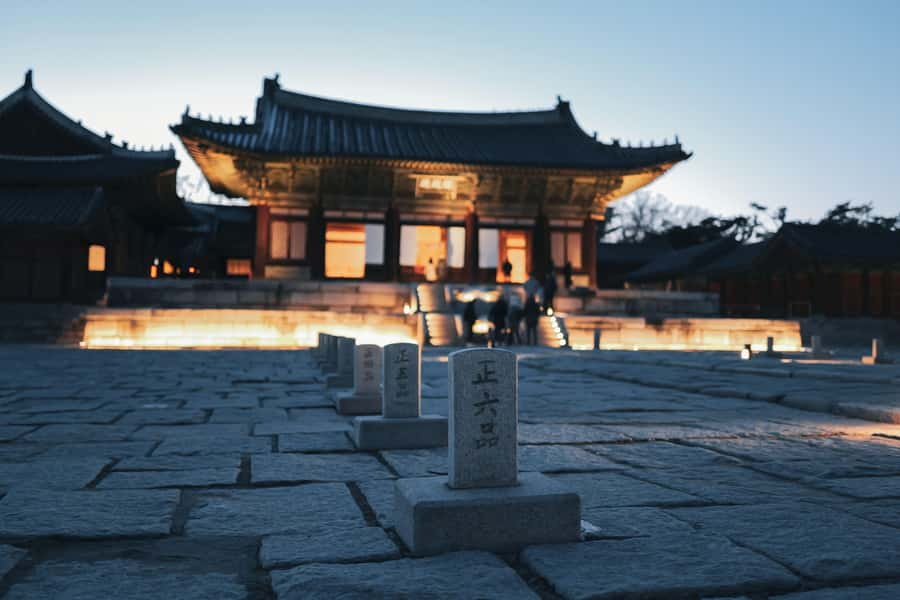
The palace is the first major stop, with about an hour for a visit and guided explanation. Changgyeonggung was built during the Joseon Dynasty, and its royal buildings take on a different mood after sunset. Artificial lighting picks out the architecture while the gardens and open spaces become quieter than they usually feel during the day.
This is the visual heart of the tour. You can take photographs, but the guide adds the value that a quick photo stop cannot. Expect explanations about the palace, its role in Seoul, and details that help you understand why the grounds were arranged as they were.
The night setting matters. You are not simply checking another palace off a list in bright daylight. The illuminated buildings, dark sky, and calmer garden paths create a more reflective visit. One guide, Mindi, was praised for making the nighttime palace visit especially memorable, while Mia was noted for telling engaging stories and giving extra context.
The palace visit lasts roughly one hour, which is enough for an introduction but not a complete study of every corner. If you want to examine every building slowly or photograph the grounds in detail, plan a separate daytime visit.
After the palace, you walk for about ten minutes toward Gwangjang Market. Wear comfortable shoes. The route is manageable for many people, but the tour’s own guidance is right to call it moderately active.
Eating your way through Gwangjang Market
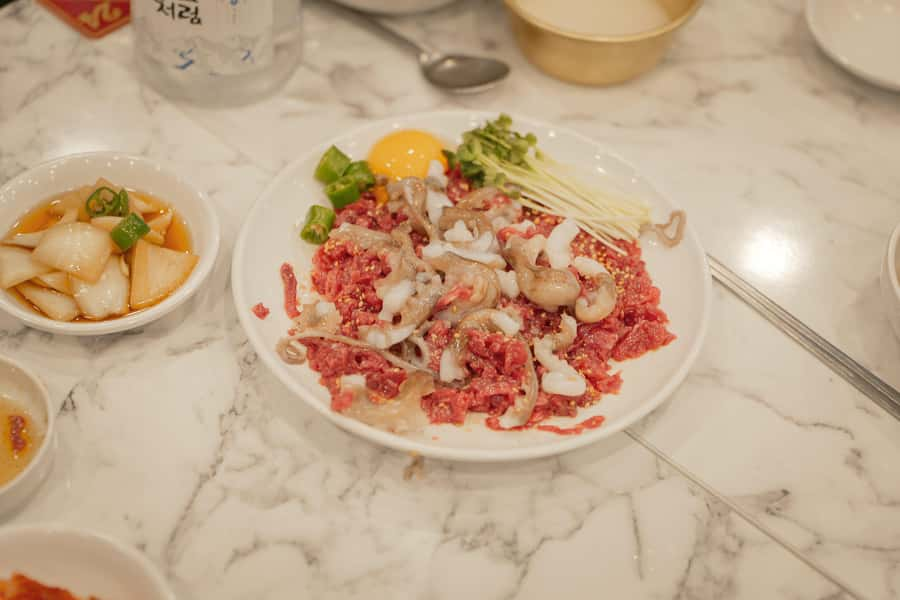
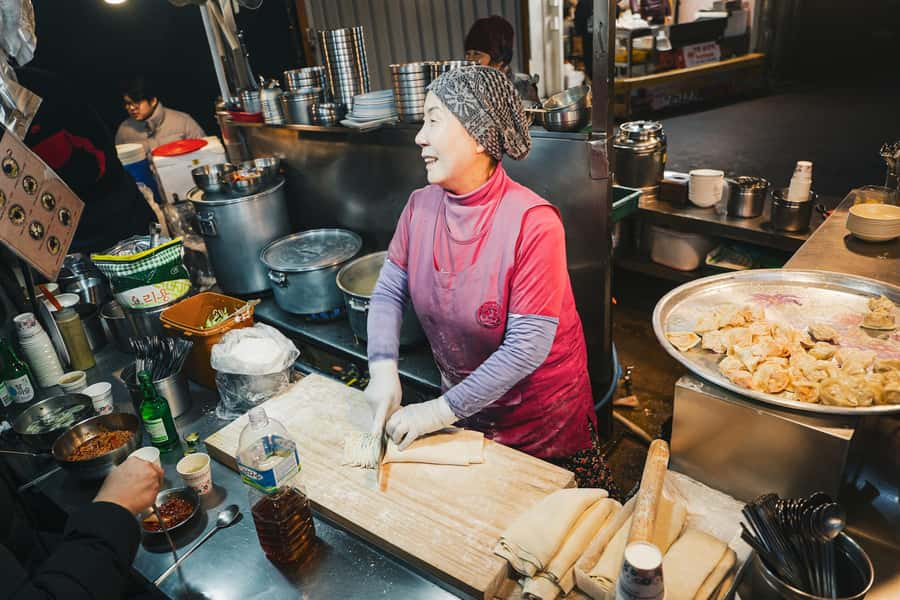
Gwangjang Market is where the tour becomes hands-on. You get about an hour for dinner, food tasting, and a guided look at the market’s regional snacks and street food.
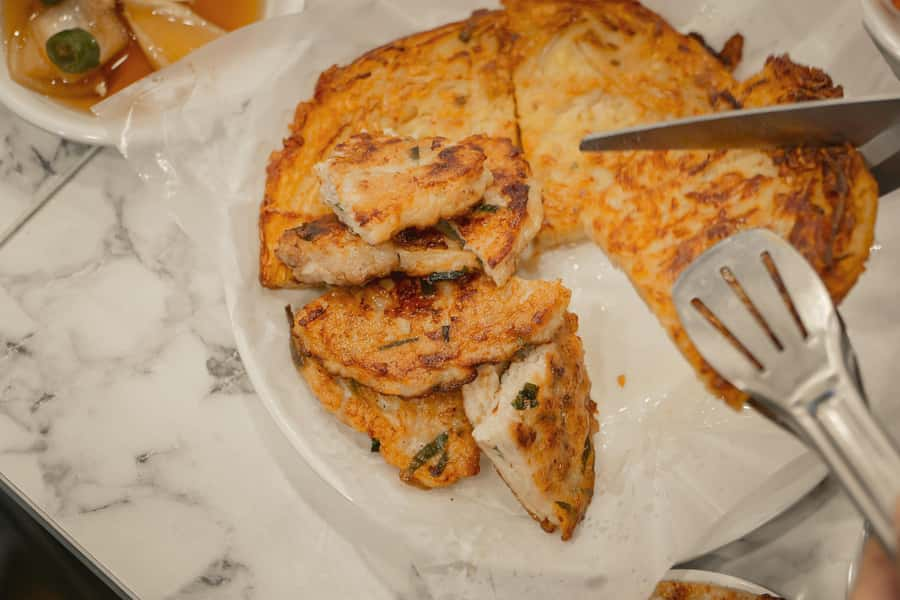
The included food is the main reason to book this experience. You try makgeolli, Korea’s traditional rice wine, along with assorted jeon. Jeon are savory pancakes or fritters, and the selection may include kimchi jeon, tofu jeon, and meat jeon.
These dishes give you a useful introduction to Korean flavors. Kimchi jeon brings spice and sourness, tofu jeon is milder, and meat jeon offers a more familiar savory bite. Sampling several types is better than ordering one large dish without knowing what you prefer.
The tour also includes chopped live octopus. This is an optional tasting, not a requirement. You can try it if you are curious, or simply pass. That choice matters because the texture can be unfamiliar, and there is no reason to force yourself into a food experience you do not want.
You also get a market favorite, kkwabaegi, a twisted Korean doughnut. The guide helps you find it without waiting in the long line, according to the tour details. This is a small but useful benefit: market sweets are easy to spot, but knowing where to go can save time during a short visit.
The food portion is generous in variety rather than designed as a formal restaurant meal. You should expect shared tastings and street food, not a quiet table with a fixed multi-course menu. That makes it social and flexible, but diners seeking a large conventional dinner may want to eat lightly beforehand or plan another meal afterward.
Food allergies and preferences deserve attention. Vegetarian and halal options are available, but you need to specify your needs when booking. Do not wait until the market stop to explain them.
More Evening Food Tours in the world:
- Winner 2025 Rome Twilight Trastevere Food Tour by Eating Europe
★ 5.0 · 5,157 reviews - Winner 2025 Florence Sunset Food & Wine Tour by Eating Europe
★ 5.0 · 5,015 reviews - Saigon By Night and Street Food By Motorbike | Opt: Ao Dai Riders
★ 5.0 · 4,066 reviews - Private Street Food Evening Walking Tour in Ho Chi Minh City
★ 5.0 · 3,175 reviews
Jongro 3-ga Pocha Street after dinner
After Gwangjang Market, the route continues on foot for about fifteen minutes to Jongro 3-ga Pocha Street. You spend around fifteen minutes here with a guided look at the area.
A pocha is a Korean street tent or casual drinking spot. This brief stop gives you a glimpse of Seoul’s evening social life and helps connect the market meal with the city’s wider food-and-drink culture.
The stop is short, so do not expect a full meal or a long sit-down. Its value is atmosphere and context. Your guide can point out how the area fits into Jongno’s nighttime rhythm, while you enjoy a change of scene after the market.
If you are mainly interested in food, this is an extra layer rather than the tour’s main event. If you like seeing how a city spends its evenings, it is a worthwhile part of the route.
Ikseon-dong’s hanok lanes
Next comes Ikseon-dong Hanok Village, with about fifteen minutes for a photo stop, guided explanation, and walk-through. The area is known for preserved traditional Korean houses, called hanok, now set among modern shops and cafés.
The appeal is the contrast. Low traditional roofs and narrow lanes sit within central Seoul, while the surrounding district has a younger arts and dining feel. The tour does not give you a long free period here, so treat it as an introduction and a chance to note places you may want to revisit.
This is another stop where the guide’s local knowledge helps. You get more than a quick pass through attractive lanes because the guide can explain what makes the neighborhood distinct and how it connects with nearby Insadong and Jongno.
Photography is easy here, but be mindful that these streets are part of a living neighborhood, not only a backdrop. The short stop keeps the group moving, but it also means you will not have time to browse every shop.
Jogyesa Temple and its lanterns
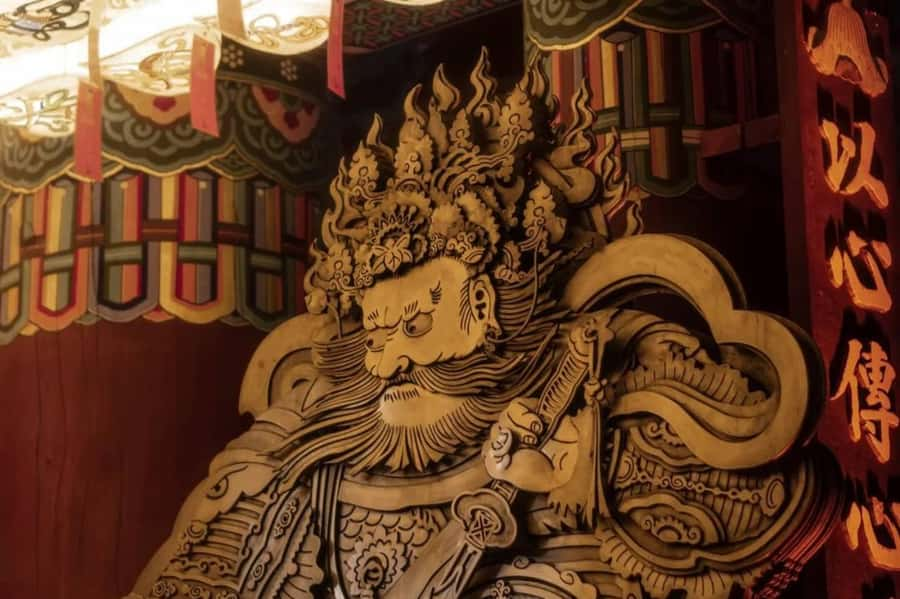
The final major stop is Jogyesa Temple, where you spend about thirty minutes on a guided visit and photo stop. Lanterns give the temple grounds a peaceful look after dark, and the atmosphere is a strong counterpoint to the market and drinking streets earlier in the evening.
Jogyesa offers the religious and spiritual side of the route. The guide can explain Buddhist ideas, temple customs, and the role of the site in Korean life. One guide, Mia, was particularly praised for taking extra time to explain Buddhism, which is useful if this is your first visit to a Korean temple.
You should approach this stop with respect. It is not simply another illuminated photo location. Keep your voice low, follow the guide’s instructions, and remember that people may be visiting for worship.
The temple visit lasts thirty minutes, enough to see the grounds and ask questions. It will not replace a dedicated temple tour, but it gives the evening a thoughtful finish before you return toward the starting point.
Walking, weather, and the pace of the evening
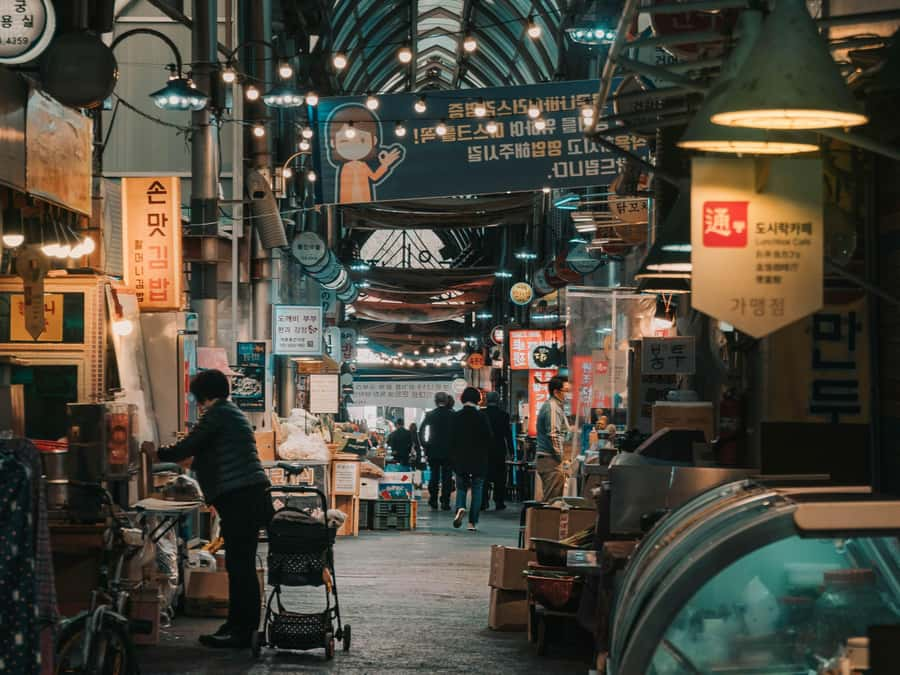
The tour lasts four hours and includes several stretches on foot. The listed transfers include a ten-minute walk after the palace and a fifteen-minute walk between the market and Pocha Street. The full route covers more ground than those two transfers suggest, so comfortable shoes are essential.
Night temperatures can drop, especially after leaving the warmer market. Bring an extra layer. One tour took place in cold rain, yet the guide kept the group engaged, but poor weather will still affect your comfort and photographs.
The tour is wheelchair accessible, though you should still consider the route’s walking demands and market conditions. Ask about any mobility needs when booking if you need more detail about the exact path.
Starting times vary, so check availability for the evening you want. The tour does not include hotel pickup or drop-off. You meet at Hyehwa Station and finish there.
Free cancellation is available up to 24 hours in advance for a full refund, and you can reserve now and pay later. Those policies are helpful if your Seoul schedule is still changing, but the more important planning point is to leave enough room in your evening for four hours.
The guides are a major part of the value
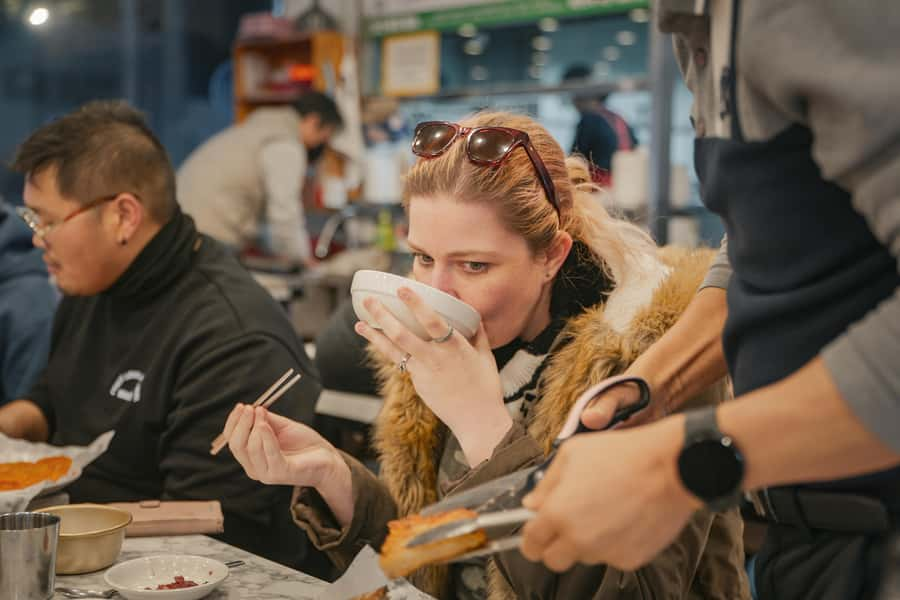
The route has a lot of moving pieces. You need someone who can explain royal history, guide you through food stalls, manage dietary requests, and keep a group together on city streets.
Past guides have included Mia, Kim, Jay, Inha, Thomas, Mindi, and J. Mia has been praised for patience, humor, and detailed explanations. Kim has been noted for local stories and a strong command of English. Jay helped a late-arriving participant join the group and also pointed out food connected with a Netflix street-food documentary.
That does not mean you can request a particular guide unless the operator confirms it. It does show the kind of guiding this activity aims for: informal, attentive, and focused on making unfamiliar places easier to understand.
I would book this tour if you like asking questions. The experience gains much of its value from the explanations at the palace, market, and temple. If you prefer exploring independently with headphones and a food map, you may find the fixed route restrictive.
Who should book this experience?
This tour suits a first-time visitor who wants a compact introduction to central Seoul after dark. It is also a good choice if you want to taste Korean food but feel unsure about ordering at a crowded market.
Food lovers will appreciate the range: makgeolli, jeon, kkwabaegi, and optional live octopus. History fans get a proper palace visit rather than a drive-by photograph. Anyone interested in Buddhism gets a short but useful introduction at Jogyesa Temple.
Families with older children may enjoy the mix of palace, lanterns, and snacks, though the walking and late timing may not suit young children. Vegetarians and halal diners can join if they state their needs in advance.
This is less suitable for someone who wants a slow, private palace visit, a full restaurant dinner, or an in-depth tour of every neighborhood. The route is broad by design. You see many places, but some visits are brief.
Is the $60 price worth it?
For $60, you receive a four-hour guided route, palace admission, a substantial set of market tastings, makgeolli, and help navigating several Seoul districts. Paying separately for each food item and entrance would not necessarily save much, especially if you would otherwise order dishes without knowing what they are.
The best value comes from the combination. You are not paying only for a meal or only for a palace ticket. You are getting a structured evening with cultural explanations and enough food to make the market portion feel like dinner.
The price is less compelling if you already know Jongno well or plan to spend a full evening at Gwangjang Market on your own. Independent visitors can eat more slowly and choose exactly what they want. The tour earns its cost through convenience, interpretation, and variety.
Should you book this Seoul night tour?
Book it if you want one well-packed evening that combines Changgyeonggung Palace, Korean street food, hanok lanes, nightlife, and Jogyesa Temple. The night lighting, market tastings, and guides’ personal explanations give the route more character than a standard sightseeing loop.
Skip it if you dislike walking, need a long seated dinner, or want to avoid unfamiliar textures entirely. You can decline the live octopus, but the tour still involves market food and a fairly active route.
For most first visits, I would choose this on an evening when I wanted orientation rather than depth. It gives you enough Seoul history to set the scene, enough food to expand your menu, and enough neighborhood atmosphere to point you toward places worth revisiting.
FAQ
Where does the tour start?
The tour starts outside Exit 4 of Hyehwa Station in Hyehwa-dong, Seoul. Look for the guide holding a Tripper sign.
Where does the tour end?
The activity ends back at the Hyehwa Station meeting point.
How long does the tour last?
The tour lasts four hours. Starting times vary, so check availability for your chosen date.
What languages are available?
The tour is available with a live guide in Korean or English.
Is the palace entrance included?
Yes. All entrance fees, including the Changgyeonggung Palace visit, are included.
What food and drink are included?
The included tastings are Gwangjang Market street food, makgeolli, assorted jeon fritters, and chopped live octopus.
Do I have to eat the live octopus?
No. Tasting the chopped live octopus is your choice, and you can decline it.
Are vegetarian and halal options available?
Yes. Vegetarian and halal options are available, but you should specify your dietary needs when booking.
Is the tour wheelchair accessible?
Yes, the activity is listed as wheelchair accessible. The route also involves a moderate amount of walking, so consider your comfort and physical fitness.
Fresh off the menu around the world
- Vienna: The Ultimate Full Meal Austrian Food Tour★ 4.8 · 112 reviews
- Taste of Chiang Mai: Michelin Guide & Street Food Tour★ 4.9 · 159 reviews
- Eat Porto Like a Local: The Ultimate Full-Meal Food Tour★ 5.0 · 97 reviews
- Jerez: Traditional Tapas Tour★ 4.6 · 138 reviews
- Taste my Fribourg Self-Guided Food Tour★ 4.5 · 29 reviews
- Taste of Albania: Tirana Food Tour★ 5.0 · 26 reviews
- Taormina Pizza making class★ 4.8 · 140 reviews
- Taormina: Pizza Making Class with Lunch and Wine Tasting★ 4.8 · 145 reviews
Seoul Food Tours, compared.
Downtown Seoul Guided Food & Market Tour with 8+ Local Tastings
Read our review →
Seoul: The Biggest Sea-food Noryangjin Market Tour
Read our review →
Seoul: Temple & Starfield COEX Mall Gourmet Tour in Gangnam
Read our review →Browse the lists this tour appears in