
Review · BEIJING
Beijing: Hidden Gems Guided Food Tour with Beer and Tastings
Beijing’s best food experiences often happen behind an unmarked door, down a narrow lane, or in a small neighborhood restaurant with no English sign. This evening tour takes you to four such places, linking old hutong lanes with a filling meal that includes noodles, hotpot, spring pancakes, and a rare Muslim specialty.
I like two things right away: you get a useful introduction to Beijing food without spending days guessing at menus, and the 2.5-kilometer walk gives the meal a strong sense of place. Guides such as Janice, Tony, Winnie, Yoyo, and Haitao are praised for clear English, local stories, and practical food advice.
The main consideration is pace and mobility. You will walk for about 3.5 hours, often through narrow lanes, and the tour is not suitable for people with mobility impairments. It also begins at 6:30 PM, so it works best as a first-night dinner rather than a quick daytime snack.
Key points at a glance
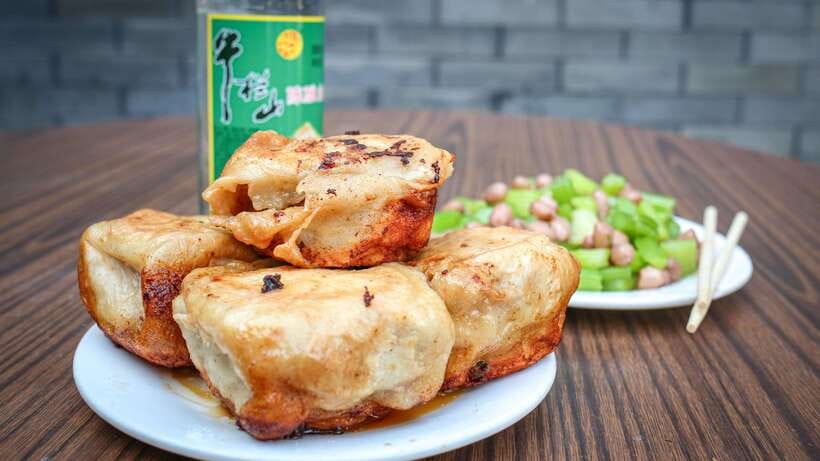
- Four local food stops: Expect a dinner-sized progression through neighborhood restaurants rather than a few token samples.
- Copper-pot hotpot with a view: Thin mutton and beef are cooked in clear broth and dipped in sesame sauce, with a pint of local craft beer.
- A serious noodle stop: Visit a small hutong noodle shop serving Beijing-style noodles made from a house recipe.
- A rare Muslim specialty: Try a fading Beijing dish linked with Empress Cixi and still served at a neighborhood Muslim eatery.
- A walk through historic hutongs: Cover about 2.5 kilometers while learning how these lanes formed around courtyard homes.
- Good value for a full evening: At $75 per person, the price includes food at four stops, a beer, soft drinks, the guide, and the walking tour.
Why this food walk works so well in Beijing
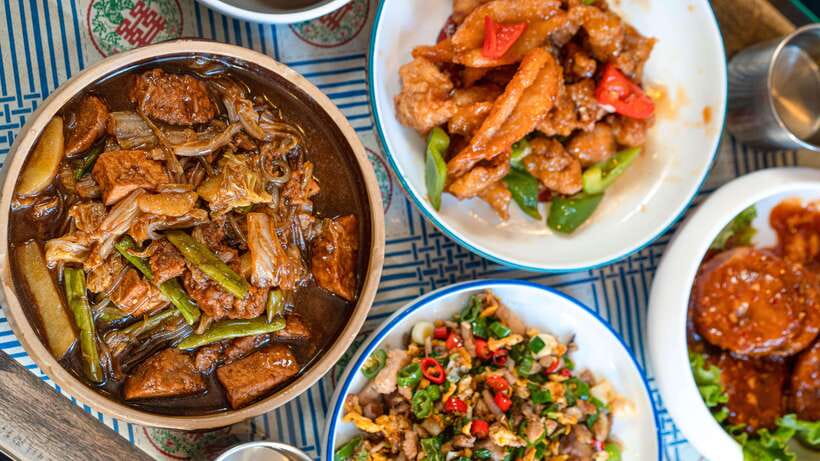
Beijing food can be hard to read from the outside. A dish may have a familiar-looking name but arrive in a form you did not expect. Small local restaurants may have no translated menu, and the best places can be easy to miss from a main road.
This tour solves that problem with a simple plan: walk, eat, and ask questions. You are not just taken to one restaurant for a fixed meal. Instead, you move through the Shichahai area and stop at different places, each chosen for a particular Beijing specialty.
That variety matters. Hotpot shows you how northern Chinese diners cook and share food at the table. Noodles offer a basic everyday meal with strong local identity. The Muslim dish adds a less familiar piece of Beijing’s food culture, while spring pancakes connect eating with the family traditions of the Spring Festival.
I also like the timing. Starting at 6:30 PM lets you see the hutongs after the day’s heat has eased, and the evening setting suits a meal built around beer, shared dishes, and conversation. You should arrive hungry. The portions add up to dinner, and several people found the food so filling that they had little room left by the end.
More Hidden Gem Food Tours in China:
- Alicante: Secret Flavors Food Tour
★ 4.8 · 1,514 reviews - Southern & Secret Walking Food Tour
★ 4.5 · 1,413 reviews - Edinburgh Food Tour with Scotch, Haggis, a Secret Dish & More
★ 5.0 · 1,172 reviews
Meeting your guide at Shichahai
The tour begins outside Exit C of Shichahai Subway Station on Line 8. You should arrive about 10 minutes early and come up to street level, where your English-speaking guide will be waiting.
The subway is strongly recommended. Traffic around Shichahai can be heavy during rush hour, and a taxi or Didi may take longer than expected. If you need to show a driver the destination, use the Chinese address provided for Shichahai Subway Station Exit C southeast entrance.
This is a useful meeting point because the tour quickly moves into the old lanes around the lake and bell tower area. You avoid wasting the opening part of the evening on a long transfer. You also have a clear landmark for finding your way back later.
The guide team changes by date. Names praised for warm service and clear explanations include Janice, Tony, Winnie, Yoyo, Haitao, Joe, Uyi, Teagan, Zoe, Carmen, and Bonnie. The strongest pattern is not one particular guide, but the care taken to explain both the food and the streets between stops.
Walking the hutongs around Shichahai
The food is the main reason to book, but the walk gives it context. You cover around 1.5 miles, or 2.5 kilometers, through Beijing’s hutong lanes.
These narrow passages developed between courtyard houses associated with officials and wealthy families. Their history reaches back to the 12th century, and the lanes spread outward from the area around the Forbidden City. The guide explains where the name hutong comes from and how these residential districts have changed.
Do not expect a formal monument-to-monument sightseeing walk. The appeal is the view of ordinary neighborhood spaces: lanes, courtyard entrances, small businesses, and local restaurants that are easy to pass without noticing. You get a look at how Beijing’s older residential fabric fits into the modern city.
The walk also creates natural pauses between meals. That helps with a food tour of this size. You can ask about ingredients, drinking customs, and the history of the district before sitting down again.
Comfortable shoes are essential. The tour operates in all weather, so bring clothing suitable for the forecast. You should also be comfortable walking at night through narrow streets and standing or sitting in small local establishments.
Copper-pot hotpot and beer above the hutongs
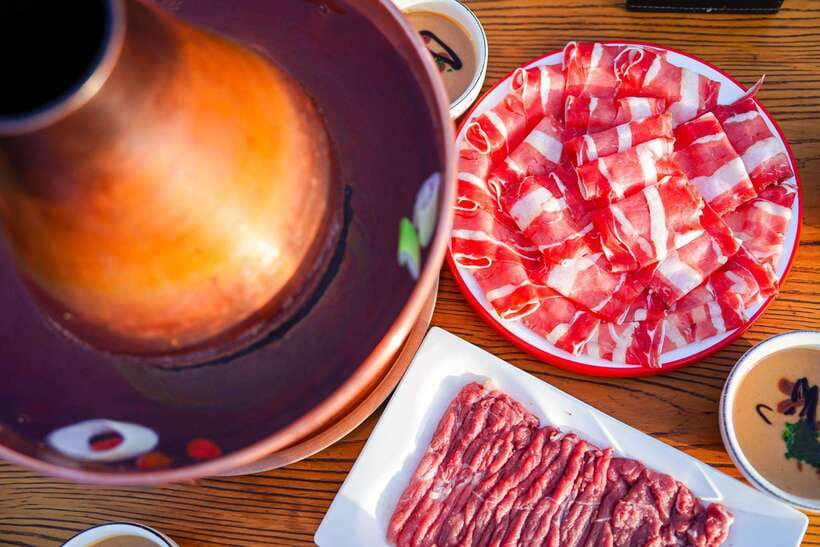
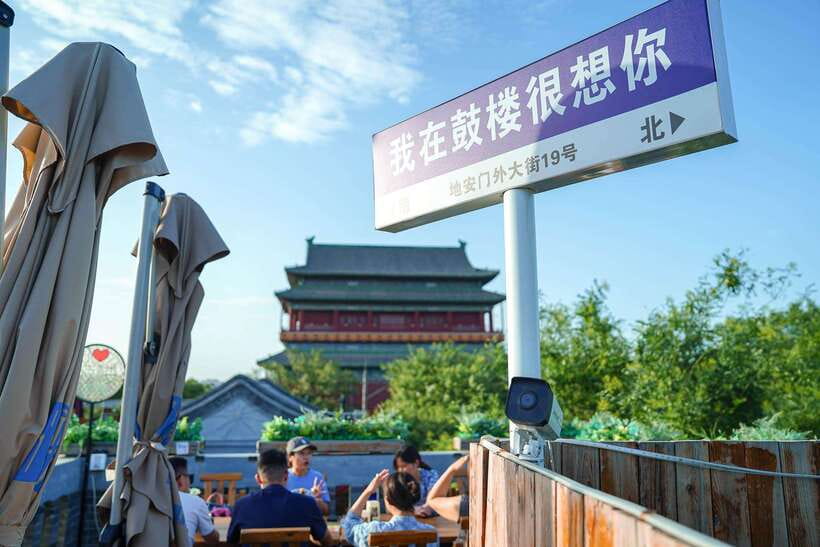
One of the evening’s most memorable stops is a hotpot restaurant with a rooftop view toward Beijing’s historic bell tower. The setting gives you a change from street-level lanes and makes the meal feel tied to the neighborhood rather than placed in a generic dining room.
The hotpot uses traditional copper pots filled with clear broth. Thin slices of mutton and beef cook quickly in the simmering liquid. You then dip the meat into a sauce based on sesame paste, a rich, nutty counterpoint to the clean broth.
This is a good introduction to Beijing-style hotpot because the ingredients do the work. The broth is not designed to overpower the meat with heavy spice. If you usually think of hotpot as a fiery meal, this version may seem restrained, but the sesame sauce gives it plenty of weight.
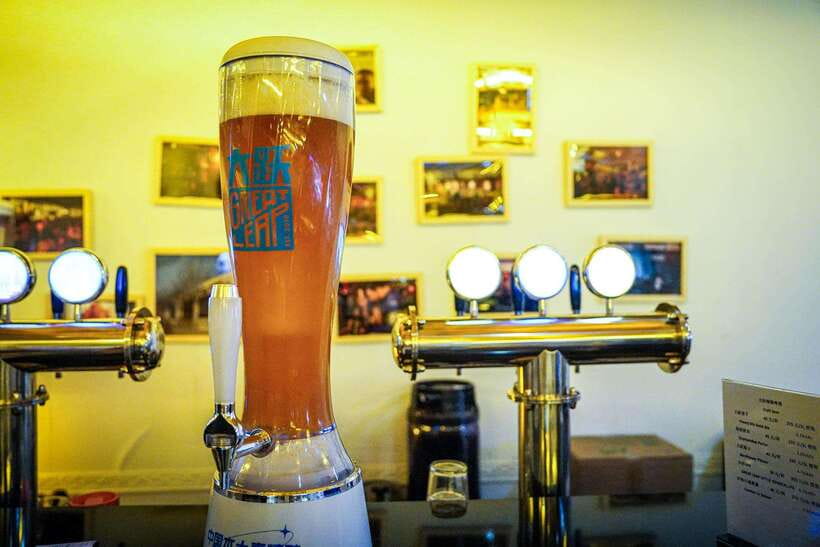
You also receive a pint of locally brewed craft beer. That pairing makes practical sense: the cold beer cuts through the sesame sauce and the richness of the meat. Unlimited beer and sodas are listed as included, though you should remember that the experience still involves a long walk and several food stops.
The rooftop view is a bonus, not the whole point. Weather and visibility can affect it, and the exact vendor lineup may change with daily operations. Still, the combination of copper pots, shared cooking, beer, and the bell tower gives this stop a strong sense of Beijing.
More guided tastings around China:
- Dubai: Old Town, Souks, Street Food, Guided Tour & Abra Ride
★ 4.9 · 7,170 reviews - Hanoi: Guided Food Tour with Train Street Visit
★ 4.9 · 6,239 reviews - Naples: Street Food Walking Tour with Local Guide
★ 4.9 · 4,976 reviews - Amsterdam: Guided Zaanse Schans, Windmills & Cheese Tour
★ 4.4 · 4,826 reviews
Beijing noodles in a small courtyard restaurant
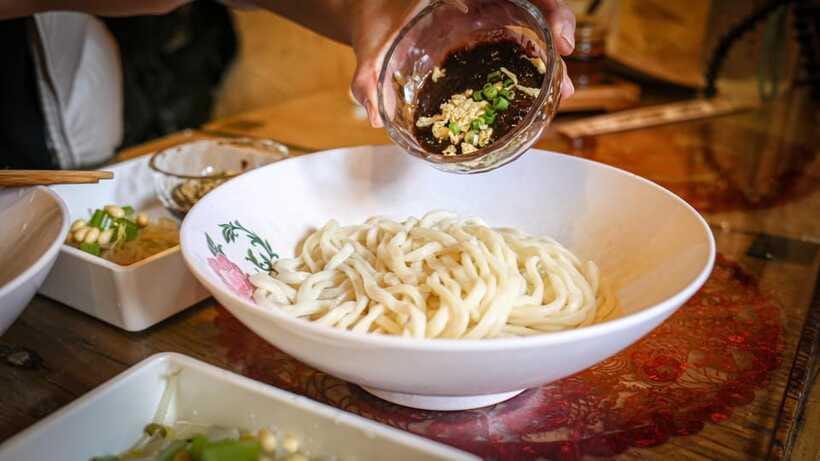
The noodle stop is designed to show you an everyday favorite rather than a dish created only for tourists. The restaurant is described as a small, hole-in-the-wall place set deep inside a hutong courtyard.
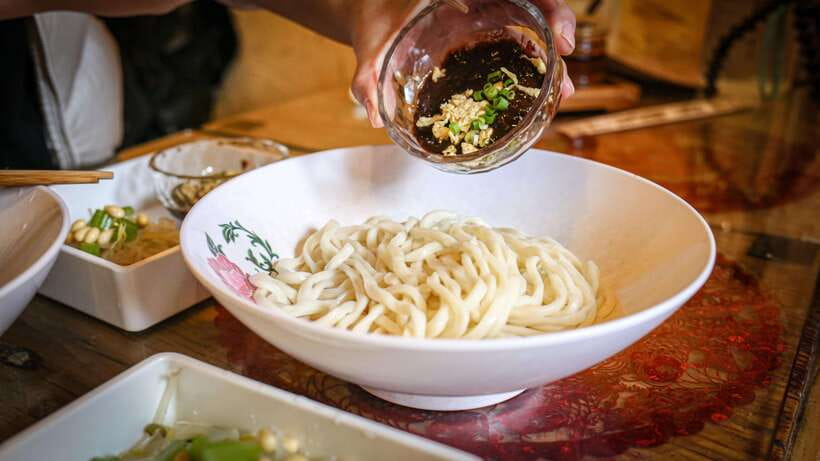
Beijingers commonly refer to their preferred noodle dish simply as Beijing noodles. The confidence behind that name is part of the fun. You are not being offered a broad survey of every noodle style in China. You are trying one local preparation that people in Beijing regard as their own.
The noodles are made from scratch using a house recipe. Expect the guide to explain how the dish is assembled and why it matters locally. The small setting is part of the appeal, although it may be less comfortable for anyone who prefers spacious restaurants or a polished dining room.
This is also the kind of stop you would struggle to find alone. The restaurant sits away from the main tourist paths, and the tour removes the uncertainty of choosing a place with no translated signs or obvious online presence.
Several guests singled out the noodles as one of the strongest dishes of the evening. That makes sense for a first-night meal: noodles are filling, recognizably local, and easy to compare with dishes you may try elsewhere in China.
The endangered Muslim dish with a court connection
The most unusual food stop is a small Muslim eatery that serves a Beijing specialty now found in only a few places. The dish was associated with Empress Cixi, often called the Dragon Lady, and has become increasingly rare.
The restaurant is primarily a neighborhood place. It is frequented by local men, and the atmosphere may feel less designed for international visitors than the other stops. That is a strength if you want a more direct look at local dining habits, but it also means you should arrive with an open mind.
The guide provides the cultural background that turns an unfamiliar dish into a meaningful part of the evening. You learn about Beijing’s Muslim food traditions, the dish’s connection with the imperial court, and why it is now considered endangered.
This stop may be the one you remember most clearly because it goes beyond the usual list of dumplings, roast duck, and noodles. You do not need to love every ingredient to appreciate the chance to taste something that is disappearing from the city’s restaurant scene.
The eatery also has a traditional drinking culture. Bottles of baijiu are kept behind the counter for neighborhood customers, and the tour may include a chance to try local spirits. Drink carefully. Baijiu can be much stronger than the beer served earlier, and you still have more food and walking ahead.
Spring pancakes for family and good fortune
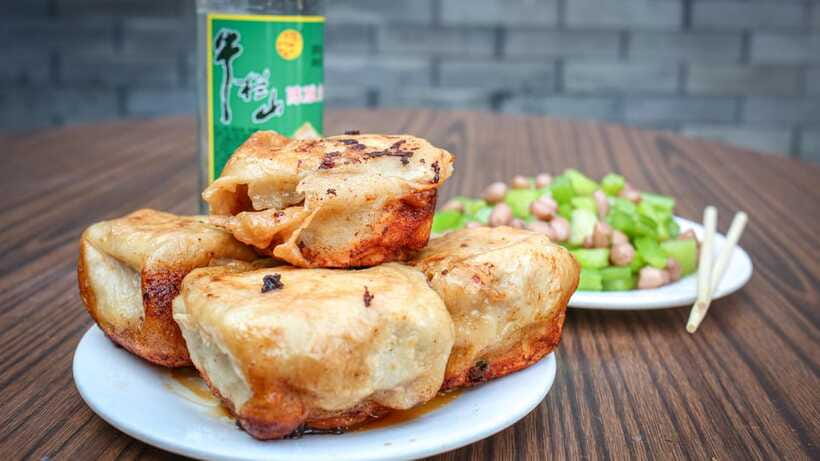
The final featured restaurant is run by a husband-and-wife team and focuses on spring pancakes. These thin pancakes are traditionally eaten with family during Chinese New Year to mark the arrival of spring and the hope for a good harvest.
You eat them in a way that may remind you of a burrito: fill the pancake, fold it, and eat it by hand. The form is casual, but the meaning is warm. The dish represents reunion and togetherness, which makes it a fitting part of a food walk built around shared plates.
The pancakes are made fresh to order. That means you get a dish prepared for the table rather than something sitting ready in advance. The meal also closes on a different note from hotpot and noodles, giving you a softer, more home-style finish.
This stop shows why the tour is more than a restaurant crawl. You get a story about the food, the calendar, and the family customs connected to it. I find that kind of explanation more useful than a long list of ingredients because it helps you remember what you ate after the trip.
The exact final stop can change. The provider notes that vendors may adjust the route and dishes based on daily operations and availability. The promise is a similar standard of local food and surprise, not a rigid menu printed in stone.
What $75 gets you
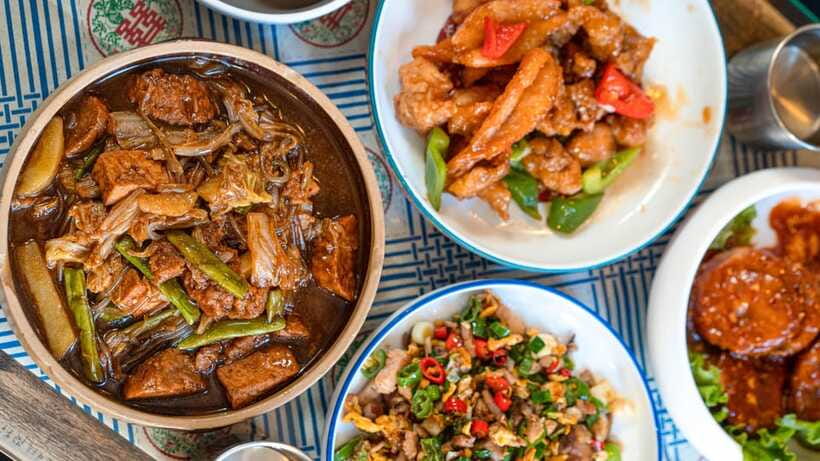
At $75 per person, this is not the cheapest way to eat in Beijing. You can certainly buy individual bowls of noodles or street snacks for much less.
The value comes from what is bundled together. You get four food stops, enough tasting portions to replace dinner, an English-speaking guide, a 2.5-kilometer hutong walk, a pint of local craft beer, and unlimited beer and sodas. You also get access to places that may be difficult to identify or order from on your own.
For a short stay, that makes the price easier to justify. You can sample several types of Beijing food in one evening instead of spending separate meals testing restaurants by trial and error. The guide also gives you background on the dishes and the neighborhood, which is difficult to price but useful when you are unfamiliar with the city.
The tour is especially good value if you are visiting Beijing briefly or want a confident first dinner. It is less suited to someone who prefers to eat slowly at one restaurant, choose every dish independently, or keep the evening inexpensive.
Who should book this evening?
I would point this tour toward first-time visitors, curious eaters, and anyone staying in Beijing for only a few nights. It is also a smart choice for solo visitors who want company at dinner without committing to a formal group sightseeing program.
You should book it if you enjoy trying unfamiliar dishes and want an English-speaking guide to explain what is on the table. The guide can also offer food suggestions for the rest of your stay, something several guides were praised for doing.
The experience suits people who want local atmosphere more than polished presentation. Restaurants may be small, the menu is selected for you, and the route can change. That is part of the point, but it is not ideal for travelers who need a tightly controlled schedule.
It is not a good match for people with mobility impairments because of the walking route and hutong surfaces. You should also report dietary requirements when booking. The supplied information does not promise that every dietary request can be met, so ask before paying.
Free cancellation is available up to 24 hours before the tour, and you can reserve now and pay later. The tour requires at least two participants to operate, so a confirmed booking can still be moved or refunded if that minimum is not reached.
My call: book it for a first Beijing night
I would book this tour early in a Beijing stay, ideally on the first or second evening. It gives you a practical food map, a gentle introduction to hutong neighborhoods, and enough dishes to reveal how varied Beijing cooking can be.
The strongest reasons to go are the rare Muslim specialty, the courtyard noodle shop, and the mix of food with neighborhood history. The main tradeoff is the fixed route, walking requirement, and $75 price. If those fit your style, this is a well-planned way to eat your way into Beijing without spending the evening decoding menus alone.
FAQ
Where does the Beijing food tour begin?
It begins at Shichahai Subway Station, Exit C, at street level. The station is served by Line 8.
What time should I arrive?
The tour begins at 6:30 PM. You should meet your guide 10 minutes before the start time.
How long does the tour last?
The experience lasts 3.5 hours.
How far do you walk?
The route covers about 1.5 miles, or 2.5 kilometers, through Beijing’s historic hutong lanes.
What food is included?
The tour includes tastings at four food stops, including mutton hotpot, Beijing-style noodles, a rare Muslim Beijing specialty, and spring pancakes. The itinerary can change with vendor operations and availability.
Is dinner included?
Yes. The four food stops provide tastings equivalent to dinner.
Are drinks included?
Yes. The package includes a pint of locally brewed craft beer, plus unlimited beer and sodas. Local spirits may also be part of the food experience.
Is the tour conducted in English?
Yes. It includes a live English-speaking guide.
Can people with mobility impairments join?
The experience is not suitable for people with mobility impairments because it involves a 2.5-kilometer walking route through hutong areas.
What happens if the tour does not reach the minimum number of participants?
At least two people are required for the tour to operate. If that minimum is not reached after confirmation, you will be offered another date or a full refund.
Can I cancel my booking?
You can cancel up to 24 hours in advance for a full refund.
Can I reserve without paying immediately?
Yes. Reserve now and pay later is available, allowing you to hold your place without paying on the day of booking.
Fresh off the menu around China
- Shanghai Must-See and Foodie Test Bike Tour( Day & Night)★ 4.7 · 70 reviews
- Shanghai-Cooking Dumpling & Meal in Local Family-w/Vegan★ 4.9 · 36 reviews
- Shanghai: Evening Walking Food Tour★ 4.9 · 115 reviews
- Shanghai: Half-Day Biking and Local Food Tour★ 4.9 · 170 reviews
- Late night food tour in Shanghai’s French Concession★ 4.9 · 31 reviews
- Beijing Hutong Food Crawl Delights: Peking duck, Hotpot&More★ 4.9 · 32 reviews
- Beijing: Dumpling Making Workshop with Meal and Tea★ 4.7 · 69 reviews
- Beijing: Hutong Breakfast Food Tour★ 5.0 · 22 reviews
Beijing Food Tours, compared.
Beijing: Hutong Culinary Walking Tour with 15+ Tastings
Read our review →
Beijing: Dumpling Making Workshop with Meal and Tea
Read our review →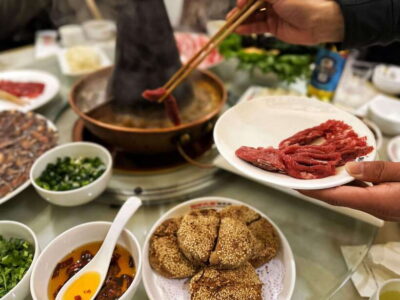
Beijing Hutong Food Crawl Delights: Peking duck, Hotpot&More
Read our review →Browse the lists this tour appears in