
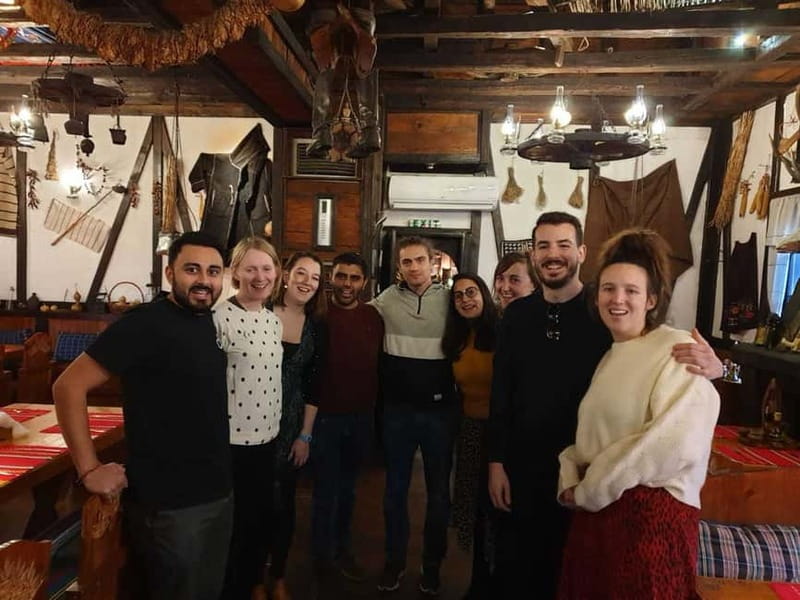
Review · CRYSTAL GARDEN
Sofia: Flea and Food Markets Tour
Sofia’s markets offer a quick way to understand the city. This walking tour links four very different market areas with four local food stops, while your guide explains how each place reflects a different chapter of Bulgarian life. Guides such as Ivo, Daniella, Danny, Theodora, and Nesi have led the experience, so expect the exact personality and route rhythm to vary.
I like the mix of food and city history, and I like that the tastings are spread across ordinary market districts rather than confined to one restaurant. The main consideration is the walking: you cover about 3 kilometers, and the tour is not suitable for wheelchair users or people with mobility impairments.
Key points to know before you book
- Four markets, four eras: Connect the Flea Market, Central Market Hall, Hali Market, and Women’s Market with post-Communist, Communist, royal, and Ottoman-era Sofia.
- Four food stops included: Taste traditional Bulgarian dishes and drinks, with a soft drink included at the final stop.
- A useful first-day tour: The route passes major sights such as Alexander Nevsky Cathedral, The Largo, Roman ruins, and Lion Bridge.
- A small-scale feel: Some departures have been private or nearly private, giving you plenty of time to ask questions.
- About 3 kilometers on foot: Wear comfortable shoes and expect city walking with pauses for food and stories.
- Good value at $50: The price covers the English-speaking guide and four local tastings, not just a short market visit.
Why Sofia’s markets make a good introduction
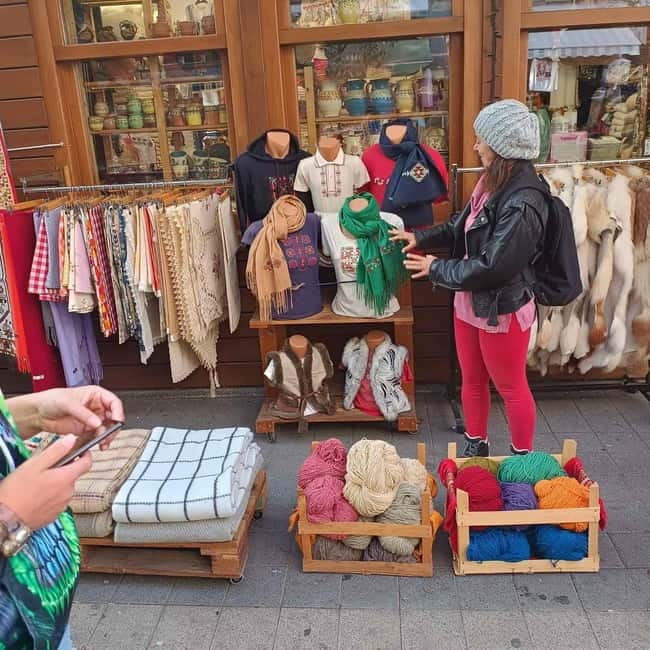
Sofia can feel like several cities layered on top of one another. Roman remains sit near Communist-era public buildings. An Ottoman mosque shares the central area with a synagogue, an Orthodox cathedral, and old market streets. This tour gives you a way to connect those pieces while eating your way through the city.
The markets are not treated as a decorative backdrop. Each one is used to explain a period of Sofia’s development. The Flea Market represents the post-Communist era, when informal selling, secondhand goods, and personal trading became an everyday part of city life. The Central Market Hall is tied to the Communist period. Hali Market reflects the Kingdom period, while the Women’s Market brings in the older Ottoman presence and the continuing role of open-air trade.
That historical structure gives the day a clear purpose. You are not simply walking from snack to snack. You are learning why different kinds of commerce appeared in different parts of Sofia, and how food and shopping changed with the city.
I especially like this approach for a first day in Bulgaria. The tour helps you get your bearings without turning Sofia into a list of monuments. You see important sights along the way, but the market stops keep the experience grounded in daily life.
More Market Food Tours in the world:
- Chef Guided Food Tour of Pike Place Market
★ 5.0 · 3,733 reviews - Tokyo Tsukiji Fish Market Food and Culture Walking Tour
★ 5.0 · 3,184 reviews - London Bridge & Borough Market Food Tour with 7 Authentic Dishes
★ 5.0 · 1,972 reviews
Starting at Crystal Park’s split-head monument
The meeting point is the Stefan Stambolov Monument in Crystal Park, a sculpture showing a split head. It is an unusual landmark, so allow enough time to find it and arrive 10 minutes before the start.
This opening point places you near several central Sofia sights. From here, your guide can set the scene for the city and explain the people, rulers, and political changes that shaped the capital. The exact order of sights and markets can vary, but the route includes major landmarks such as Alexander Nevsky Cathedral and Saint Sofia Church.
You may want to look around Crystal Park before the tour begins, but keep your attention on the meeting point. A distinctive sculpture is useful in a city where several nearby parks and public spaces can look similar.
The Flea Market and Sofia’s post-Communist side
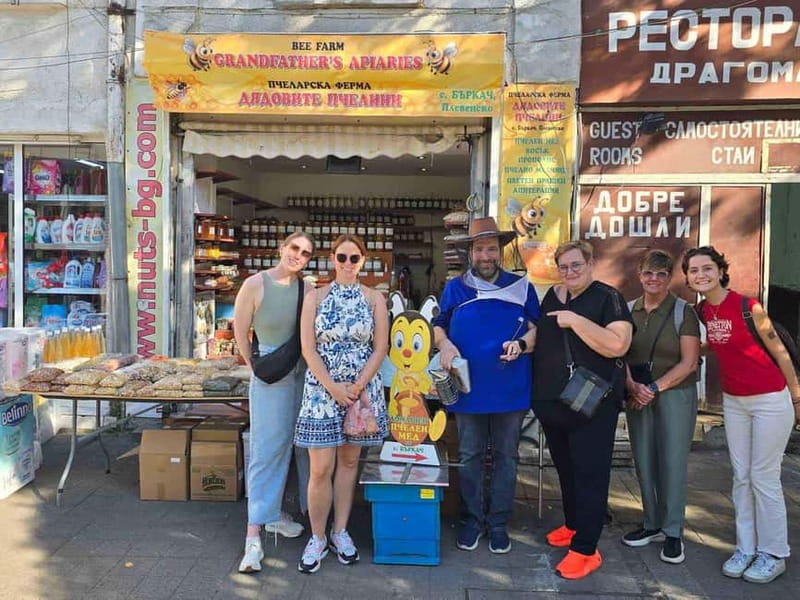
The Flea Market is the most useful stop if you enjoy objects with a past. You can browse for souvenirs, antiques, and small items that tell a more personal story than a standard gift shop purchase.
The key idea here is the post-Communist period. Flea markets often reveal how people buy, sell, reuse, and trade outside formal retail. You might find something worth taking home, but the better reason to visit is the chance to see a different side of Sofia’s commercial life.
Do not expect every item to be an important antique. The pleasure is in looking closely and asking your guide what may be worth attention. If you like browsing, this stop can easily tempt you to linger, so keep track of the group and the tour’s pace.
The food stops also help balance the market browsing. You get time to look at objects, then move on to taste something connected to Bulgarian food traditions. That rhythm keeps the tour from feeling like a long shopping walk.
Central Market Hall and the Communist-era story
The Central Market Hall gives the tour a more formal market setting. Here, the focus turns to the Communist period and to the way food shopping fit into life under that system.
Your guide adds the context that a quick visit alone cannot provide. You can look at the building and stalls, but the real value is hearing how the market connects to Sofia’s recent past. This is one reason the guide matters: the tour turns a place you might otherwise pass through into part of a larger story.
The food portion is not just an interlude. Bulgarian cuisine carries influences from nearby regions and from the empires that ruled or shaped the country. As you stop to taste local dishes, your guide explains the cultural setting behind what is on the plate.
The tour includes four food stops in total. The exact dishes are not specified in advance, so you should think of this as a guided introduction rather than a fixed tasting menu. Come hungry. One earlier group in particular found the food plentiful enough to remain full afterward.
More food tours around the world:
- Reykjavik Food Walk – Local Foodie Adventure in Iceland
★ 5.0 · 18,952 reviews - Dubai: Old Town, Creek, Museums, Souks, & Street Food Tour
★ 4.8 · 10,816 reviews - Madrid: Live Flamenco Show with Food and Drinks Options
★ 4.5 · 9,901 reviews - Ho Chi Minh City Street Food Tour & Sightseeing By Motorbike
★ 5.0 · 9,413 reviews
Hali Market and the Kingdom period
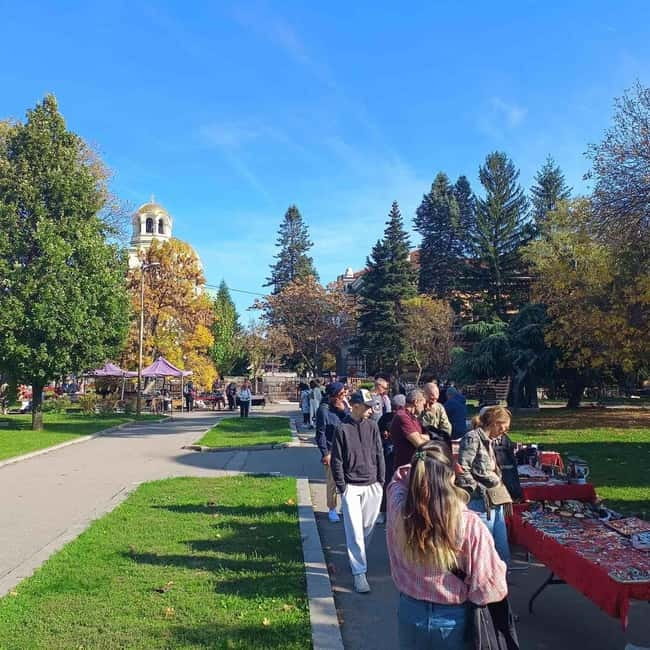
Hali Market represents the Kingdom period in the tour’s historical framework. This gives you a chance to consider Sofia before the Communist era and to see how the city’s public and commercial life developed during the monarchy.
The market itself is part of a wider central-Sofia route that includes The Largo and nearby Roman ruins. Your guide connects the modern streets with older layers beneath and around them. You do not need a specialist interest in archaeology to enjoy this. The point is to see that Sofia’s past is not confined to one museum or one archaeological site.
I like this part of the route because it avoids treating history as a separate lecture. You hear about political changes while walking through places where people still shop, eat, and meet. That makes the information easier to remember.
The pace is described as leisurely, with stops along the way. Even so, you will spend much of the outing on your feet. Comfortable clothing and shoes matter more here than dressing for a formal sightseeing tour.
The Women’s Market and Ottoman influence
The Women’s Market brings the Ottoman presence in Bulgaria into the conversation. It also offers the most direct link between historical trade and the way food markets continue to operate today.
Your guide explains how Ottoman influence shaped Bulgaria and how that influence fits into the country’s later identity. One part of the experience also covers Bulgarian yogurt and spring water, giving you a chance to connect familiar food traditions with local culture.
The market is a good place to pay attention to the ordinary details around you. Stalls, produce, prepared foods, and passing shoppers tell you more about everyday Sofia than a polished tourist display can. You might not want to buy anything, but the setting is worth seeing.
This is also one of the places where the tour’s food focus makes sense. Tasting local dishes while discussing Ottoman influence helps explain why Bulgarian cuisine cannot be reduced to one narrow tradition. The food has developed through contact, adaptation, and local habits.
The four food stops and what you should expect
The tour includes four tastings at different locations. The supplied details do not list a fixed menu, so you should not book this expecting particular dishes or a formal meal. Instead, expect an introduction to traditional Bulgarian cuisine through several small stops.
The food is described as tasty and plentiful, and several guides are praised for explaining the origins and cultural meaning of what you eat. You may also sample traditional drinks, and a soft drink is included at the last food stop.
For me, the value is in the range. A single restaurant meal can give you a good dish, but four stops let you compare settings and styles. You also get help understanding what you are eating, which matters if you do not know Bulgarian food already.
The tour can work well for cautious eaters because you are not left to decode an unfamiliar menu alone. Still, the available information does not identify allergy arrangements or dietary substitutions. If you have strict food needs, ask the provider before booking.
The food is also a practical reason to avoid scheduling a large meal immediately afterward. One group finished the tour still feeling full, and the four stops are intended to provide a substantial amount of tasting.
The landmarks between the markets
The market route passes many of Sofia’s central sights. These include Alexander Nevsky Cathedral, Saint Sofia Church, The Largo, Roman ruins, Banya Bashi Mosque, Sofia Synagogue, and Lion Bridge.
You should think of these as outdoor orientation points rather than full guided visits. The experience is built around walking past them and hearing about their history. If one sight is a major priority, plan a separate visit so you have enough time to explore it properly.
The mix of landmarks is one of the tour’s strongest features. Alexander Nevsky Cathedral and Saint Sofia Church show the importance of Orthodox Christianity. Banya Bashi Mosque points to the Ottoman period, while Sofia Synagogue adds another part of the city’s religious and cultural story. The Roman ruins and The Largo reach even farther back.
Lion Bridge helps extend the route toward the market districts. Together, these sights give the tour a broad sense of Sofia without requiring a full day inside museums.
Guides, group feel, and the value of local explanation
The tour is conducted in English with a live local guide. Guides named in the feedback include Theodora, Nesi, Ivo, Daniella, Dany, and Danny. Their strengths are consistent: clear explanations of Sofia and Bulgaria, a friendly manner, and willingness to answer questions.
The exact guide matters because much of the experience depends on conversation. If you enjoy asking about food, history, or local customs, you should get more from this than someone who prefers to move quietly from one stop to the next.
The group size can also vary. Some departures have been run for only two people or one small group, which allowed the guide to answer every question and adjust the pace. You should not assume every departure will be private, but the experience appears capable of feeling personal when numbers are low.
The tour has also operated in poor weather. Rain did not prevent one group from enjoying the day, but you should still dress for conditions. Sofia’s markets and city streets are best approached with practical clothing rather than a polished sightseeing outfit.
Is $50 a fair price?
At $50 per person, the tour is not the cheapest way to walk through central Sofia, but it offers more than a market stroll. The price includes a local guide, four food stops, and a soft drink at the final stop.
To judge the value, compare it with what you would otherwise pay for several snacks, a meal, and a separate city orientation. You also receive explanations about four historical periods and many major sights. For a first day, that combination can save you time and help you choose what to revisit independently.
The value is strongest if you want food and context together. If you only want to shop for antiques, you may find the tour too broad. If you only want a standard monument walk, the market visits and tastings may feel like extra time.
The price also includes a useful social benefit: you can ask a local guide where to continue eating, shopping, or sightseeing after the tour. Specific follow-up recommendations are not guaranteed, but the conversation itself can help you plan the rest of your stay.
Walking, timing, and practical limits
The route covers about 3 kilometers, or 2 miles, with stops. That distance is manageable for many people, but the market surfaces, city streets, and standing time may make the outing tiring if walking is difficult.
The experience is not suitable for wheelchair users or people with mobility impairments. If you need regular seating, accessible surfaces, or a route with minimal walking, choose a different activity.
The meeting point is at the Stefan Stambolov Monument in Crystal Park. Arrive 10 minutes early. The activity is listed as valid for one day, with starting times available when you check the date.
The tour has sometimes taken longer than expected. One group found that a late start pushed the end of the experience into its evening plans. I would avoid booking a fixed dinner, performance, or airport transfer immediately afterward.
Free cancellation is available up to 24 hours before the activity for a full refund. You can also reserve now and pay later, which helps if your Sofia plans are still shifting.
Who should book this Sofia market tour?
I would choose this tour for a first day in Sofia, especially if you want a friendly introduction to Bulgarian food and need help making sense of the city center. It suits curious eaters, history fans, couples, small groups, and younger visitors who prefer a moving tour to a formal museum visit.
It is also a good fit if you want to find antiques or unusual souvenirs but do not know which market areas to visit. The guide gives the shopping a historical frame, so you are not simply wandering among stalls without context.
I would skip it if you dislike group walking, prefer a fixed meal, have strict dietary requirements that have not been confirmed, or need wheelchair access. I would also avoid it on a tightly scheduled evening.
Should you book it?
Book this tour if you want four tastings, four market settings, and a city history lesson in one outing. The strongest part is the balance: you see major Sofia landmarks, hear about Ottoman, royal, Communist, and post-Communist periods, and eat local food along the way.
At $50, it is good value for a first-day orientation, provided you are comfortable walking about 3 kilometers and allowing some flexibility at the finish. Arrive early, wear sensible shoes, come hungry, and leave your evening schedule open.
FAQ
How much does the Sofia Flea and Food Markets Tour cost?
The tour costs $50 per person. This includes the English-speaking local guide, four food stops with local dishes, and a soft drink at the final stop.
How long is the tour?
The activity is listed as lasting one day, with starting times available when you check availability. The walk covers about 3 kilometers, or 2 miles, with stops.
Where does the tour meet?
Meet at the Stefan Stambolov Monument, a split-head sculpture in Crystal Park. You should arrive 10 minutes before the activity begins.
Which markets does the tour visit?
The route includes the Flea Market, Central Market Hall, Hali Market, and the Women’s Market.
What language is the tour conducted in?
The live tour guide conducts the experience in English.
Is food included?
Yes. The tour includes four food stops with local dishes. A soft drink is included at the final food stop, and traditional drinks may also be part of the tastings.
Is the tour suitable for wheelchair users?
No. The tour is not suitable for wheelchair users or people with mobility impairments because it involves walking through Sofia’s market areas and streets.
Fresh off the menu around the world
- Vienna: The Ultimate Full Meal Austrian Food Tour★ 4.8 · 112 reviews
- Taste of Chiang Mai: Michelin Guide & Street Food Tour★ 4.9 · 159 reviews
- Eat Porto Like a Local: The Ultimate Full-Meal Food Tour★ 5.0 · 97 reviews
- Jerez: Traditional Tapas Tour★ 4.6 · 138 reviews
- Taste my Fribourg Self-Guided Food Tour★ 4.5 · 29 reviews
- Taste of Albania: Tirana Food Tour★ 5.0 · 26 reviews
- Taormina Pizza making class★ 4.8 · 140 reviews
- Taormina: Pizza Making Class with Lunch and Wine Tasting★ 4.8 · 145 reviews
Market Food Tours, compared.
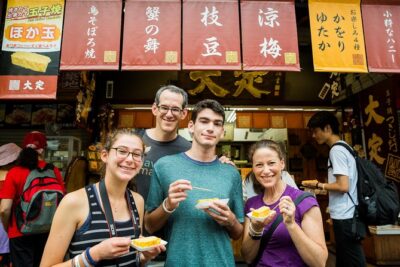
Tokyo Tsukiji Fish Market Food and Culture Walking Tour
Read our review →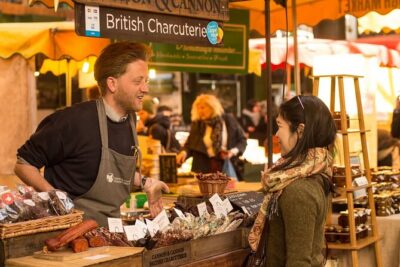
London Bridge & Borough Market Food Tour with 7 Authentic Dishes
Read our review →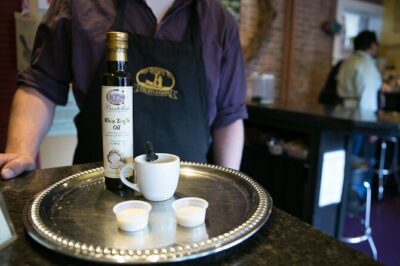
Small Group Cooking Class & Market Food Tour in Florence
Read our review →
Nishiki Market Brunch Walking Tour (7 Tastings + Brunch)
Read our review →
Bologna Food & Market Tour with 6 Tastings, Pasta, Wines & More
Read our review →
Browse the lists this tour appears in