
Review · SINGAPORE
Singapore: Foodie Experience Guided Tour with 5 Tastings
Singapore Chinatown is easiest to understand with something in your hand and a local guide beside you. This three-hour evening walk moves from charcoal-grilled bakkwa to hawker-stall classics, Michelin-starred chicken rice, and dessert, with food stories along the way.
I like two things right away: the tour teaches you how to use a Singapore hawker centre, and it gives you a useful first taste of dishes you might otherwise pass by. Guides such as Grace, Kim, Sam, and Hui are praised for clear explanations, good pacing, and practical help, including how to order coffee like a local.
The main consideration is that the advertised five tastings may turn into many more small bites, sometimes 10 or even 16. That is excellent value for a hungry eater, but the evening can feel rushed if you want long pauses between dishes. Chili crab is not included.
Key points at a glance
- Start with bakkwa on Pagoda Street: Try Singapore’s sweet, smoky, tender meat jerky at the meeting point.
- Learn the hawker-centre basics: Your guide helps you understand ordering, local drinks, food stalls, and economical eating.
- Taste a Michelin-starred hawker dish: Soya sauce chicken rice is the main event, served with rice and peanuts.
- Expect more than five bites: The official plan lists five dishes, while guides may add extra samples when group size and appetite allow.
- Walk Chinatown after dark: The route links food with local stories, street scenes, shops, and the area’s Chinese heritage.
- Plan for an evening on foot: Singapore’s covered walkways help with sun and rain, but the route is not suitable for wheelchair users.
Why this Chinatown food walk works so well
Singapore has plenty of famous food, but the hard part is knowing where to begin. Menus can be crowded, stall names unfamiliar, and the best-looking choice is not always the most useful one. This tour gives you a simple introduction before you face the hawker centres alone.
You meet at Bee Cheng Hiang, 69 Pagoda Street, at 5 pm. Look for the guide in a Discova black T-shirt. The location is central to Chinatown, but allow a few extra minutes to find the shop. One person had trouble locating the meeting point, so do not assume that arriving at the general Chinatown area is enough.
From there, the tour combines eating with a walk through the district. You are not simply seated for a meal. You move between food counters, market-style shops, and the Chinatown Complex while the guide explains what you are seeing and eating.
That mix is the real value. A meal can fill you up, but a good food walk also helps you make better choices for the rest of your stay. By the end, you should have a clearer idea of what to order, how much food to expect, and which flavours suit you.
More guided tastings around Singapore:
- Singapore: Guided Street Food Tour at Night
★ 4.5 · 393 reviews - Singapore: Chinatown Hawker Guided 8-Dish Tasting Tour
★ 4.9 · 41 reviews - Dubai: Old Town, Souks, Street Food, Guided Tour & Abra Ride
★ 4.9 · 7,170 reviews
Bakkwa, tropical fruit, and Pagoda Street at 5 pm
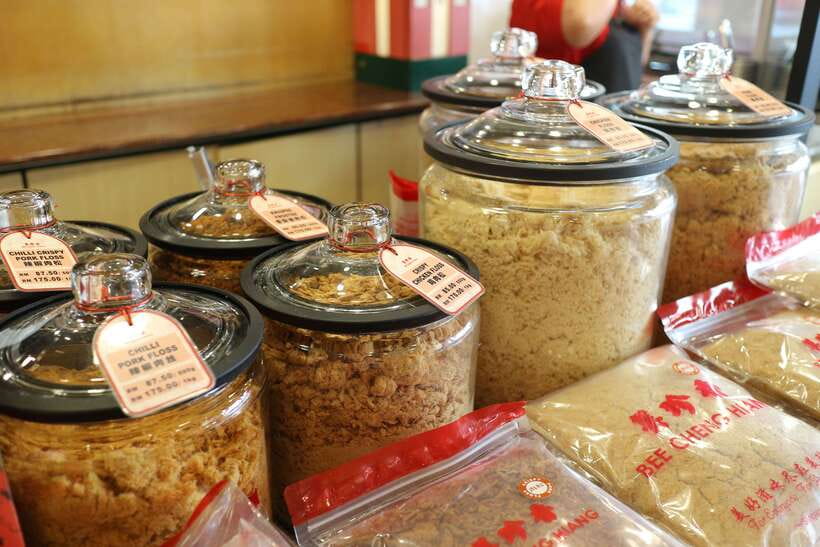
The first tasting is bakkwa, a Singapore favourite made from meat that is seasoned, pressed, and grilled over charcoal. It is sweet, savoury, smoky, and soft rather than dry. The Bee Cheng Hiang shop provides a fitting opening because the tasting begins right where you meet your guide.
Bakkwa is a useful first dish because it is familiar enough for cautious eaters, but distinctive enough to feel local. It also gives your guide a chance to explain how Singapore food often balances sweet, salty, smoky, and savoury notes in one bite.
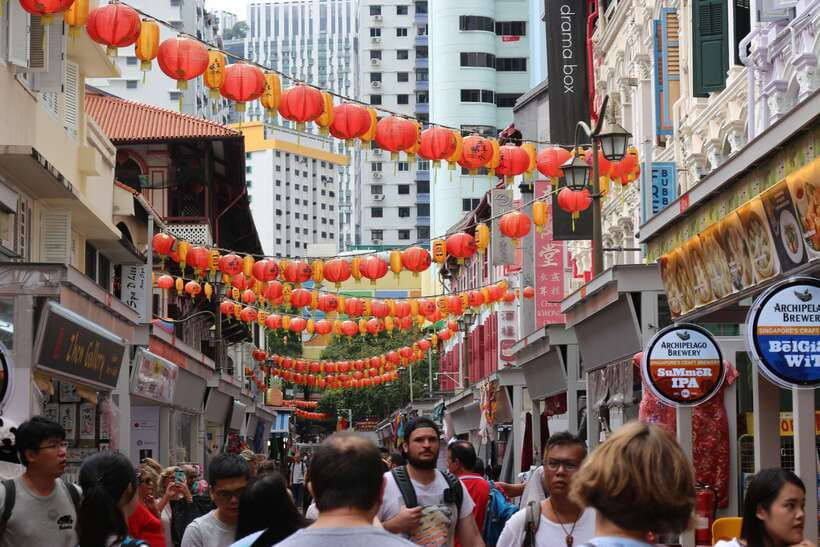
After that, you walk along Pagoda Street and nearby Chinatown lanes. Stalls and shops sell tropical fruit, seafood, and everyday goods. Durian may appear during this part of the walk, and your guide may encourage you to try it.
Durian is a serious test for some people. The smell can be strong, and the texture is soft and custard-like. You do not need to pretend it is love at first bite. The useful part is being able to try it in context, with someone who can explain why it matters to local food culture.
The route also gives you time to look around rather than stare only at a plate. Chinatown at night has a different feel from its daytime streets, and the walk helps connect the food with the district itself.
Chinatown Complex and the art of ordering at a hawker centre
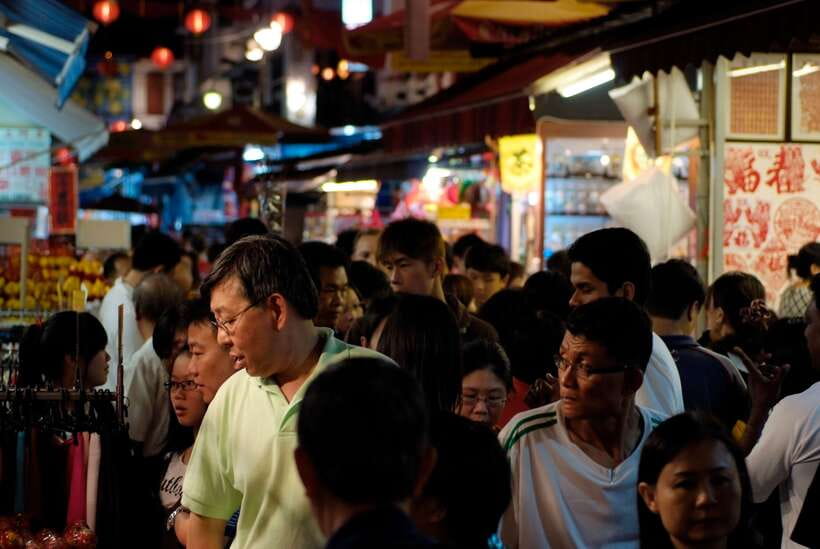
The tour then spends much of its time at Chinatown Complex. This is the heart of the food experience, since hawker centres are central to daily eating in Singapore.
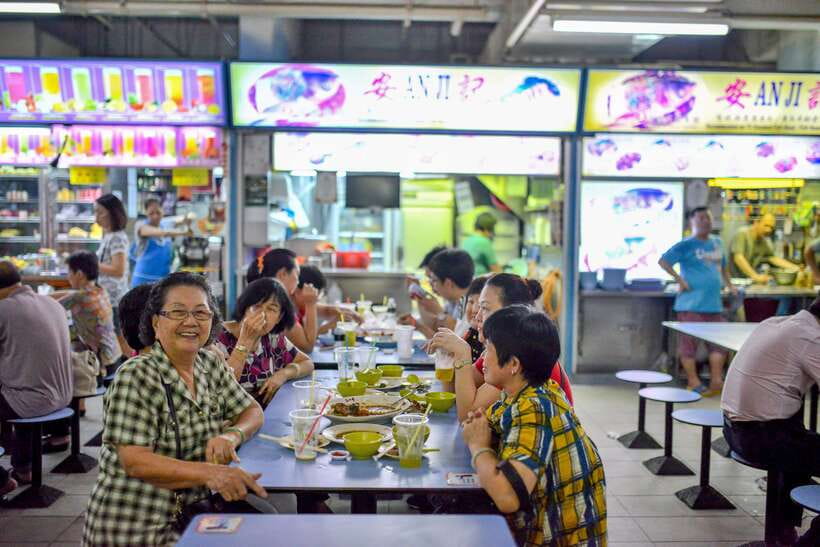
Your guide helps you understand how to approach the stalls and how different dishes fit into a meal. That may sound basic, but it is one of the most useful parts for a first visit. You learn by watching where the group goes, what the guide orders, and how the food is shared.
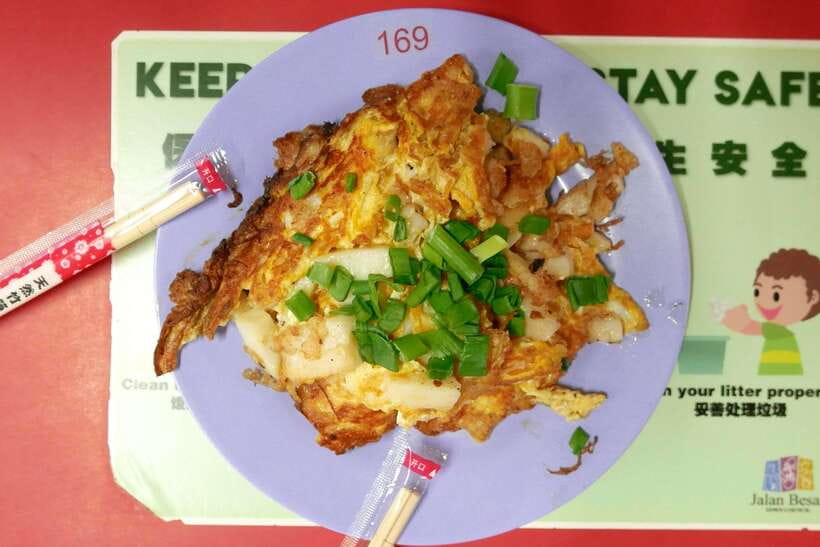
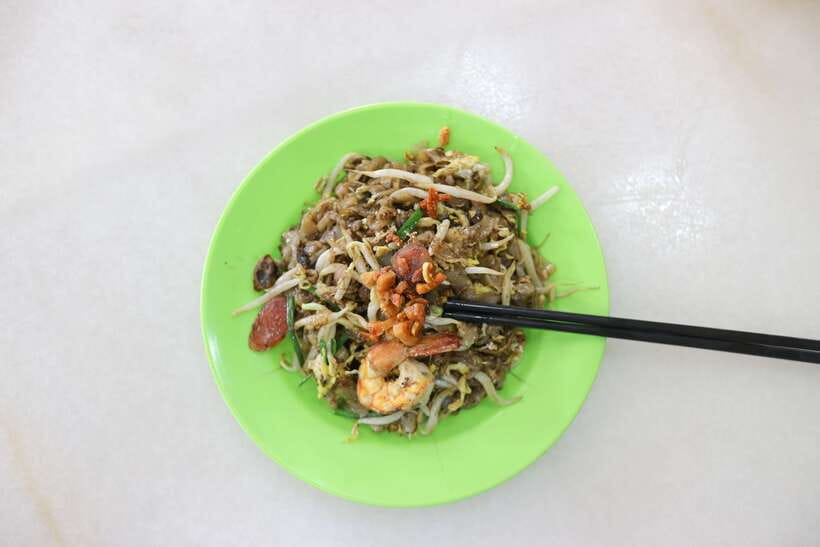
One early tasting is either carrot cake or char kway teow. Singaporean carrot cake is not a cake at all. It is a savoury dish made with rice cake, usually fried with egg and seasoning. Char kway teow uses flat rice noodles and simple ingredients, but the result can be smoky, salty, and filling.
The exact choice can vary, so you should not book this expecting a rigid five-course menu. The guide may adjust the food to the day, the stall, the group, or what is available. That flexibility is usually a strength, but it means the experience is better understood as a guided tasting route than a fixed restaurant meal.
You also get a lesson in local drinks. One guide helped a participant order coffee in the local way, which is a small but useful skill. Singaporean coffee orders can sound like code at first, and knowing a few terms makes later visits to hawker centres less awkward.
The Michelin-starred chicken rice stop
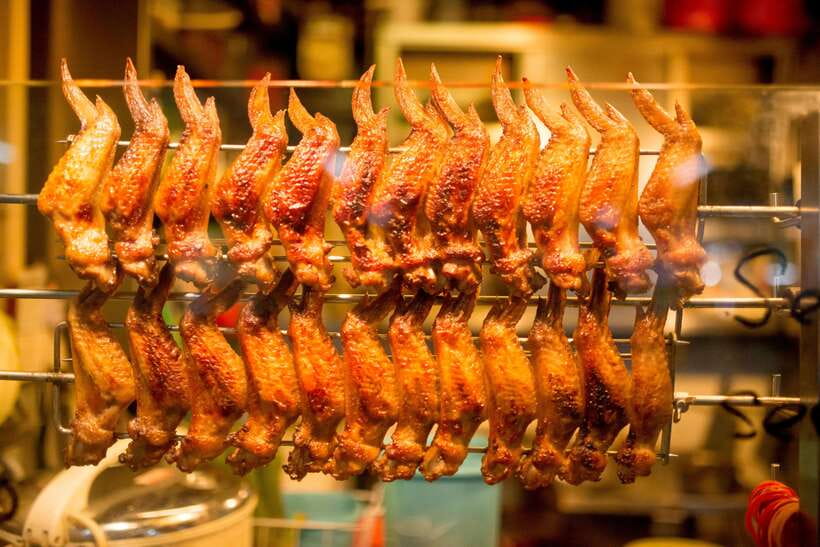
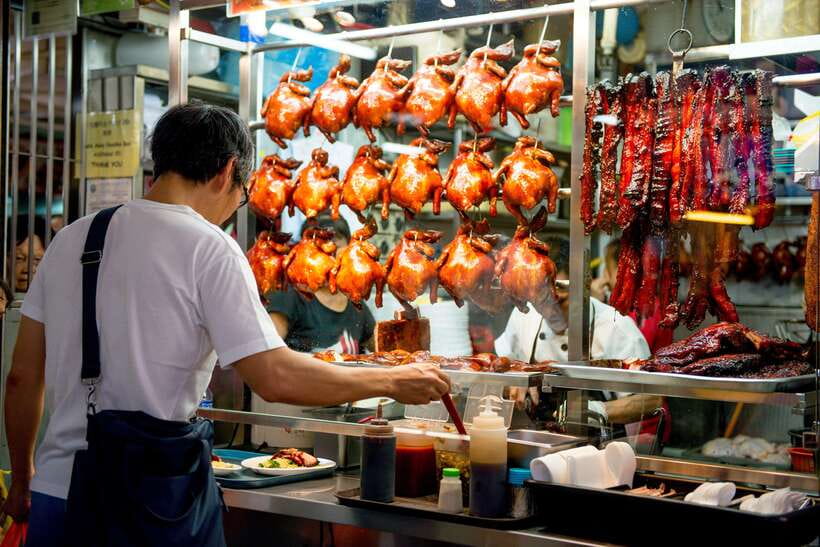
The main course is soya sauce chicken rice from Singapore’s first Michelin-starred hawker stall. The dish is straightforward: tender marinated chicken with white rice and peanuts. Its appeal is not a long list of ingredients. It is the balance of seasoning, texture, and careful cooking.
This stop also makes an important point about Singapore’s food scene. Some of the city’s most famous meals are served from modest hawker counters rather than formal dining rooms. You get the chance to taste a dish that drew international attention while still eating in the setting where ordinary Singaporeans eat.
Do not expect a large restaurant-style portion at every stop. Food tours work by building a meal through small servings. Still, the combined amount is substantial. Several participants found themselves very full, and some groups sampled well beyond the five dishes promised in the basic description.
That makes it wise to arrive hungry but not desperate. If you eat a full lunch late in the afternoon, you may struggle by the time dessert arrives. If you are a serious eater, the extra tastings will be welcome. If you prefer small portions, tell the guide early so the pace and serving size can be managed where possible.
More food tours around Singapore:
- Small Group: Michelin and Local Hawker Food Tour with 9 tastings
★ 5.0 · 1,890 reviews - Small Group: Singapore Street Food & Night Tour with 9 tastings
★ 5.0 · 1,240 reviews - The Award-Winning PRIVATE Food Tour: 10 Tastings of 3 Cultures
★ 4.5 · 1,017 reviews - Singapore: Chinese, Indian & Arabic Quarters, Culture & Food Tour
★ 5.0 · 789 reviews
Dessert, extra tastings, and the evening pace
The final scheduled stop is a popular dessert shop. This sweet finish matters because the earlier food leans heavily toward savoury, salty, smoky, and spicy flavours. Dessert gives the meal a change of direction and helps round out the tasting.
The exact dessert is not specified, so you should not book this expecting one particular sweet. The wider route can also include drinks and extra bites. Some people tasted around 10 items, while one group reported trying 16 different dishes.
That range tells you something important about the tour. The five-dish description is best treated as the guaranteed core, not a strict ceiling. A small group may allow the guide to add more. A larger group may need to stick closer to the planned route.
The tour is designed to last three hours, usually beginning at 5 pm and ending back at 69 Pagoda Street. Several people found the pace comfortable, while one person felt slightly rushed because so much food was included. Both impressions make sense. You cover food, streets, history, and several tastings in a fairly short evening.
I would choose this tour early in your Singapore stay. You will gain practical food confidence before making your own hawker-centre visits. You may even find yourself returning to Chinatown Complex the next day to order a dish you first tried with the guide.
The guide makes the difference
The food is important, but the guide shapes the evening. The strongest guides bring more than directions to each stall. They explain the origins of dishes, the history of Chinatown, and the cultural influences that shaped Singaporean food.
Grace is often described as attentive, prepared, and good at connecting food with local history. She has even been noted for carrying tissues and wet wipes, a small touch that matters when you are eating messy food in a warm city.
Kim is praised for her warmth, local knowledge, and willingness to answer questions. She has taken solo participants and very small groups through extra sights and tastings, and she is particularly helpful for people who want to understand what to eat during the rest of their stay.
Sam is known for an easy manner and strong food and cultural explanations. Hui has been described as passionate about her neighbourhood and good at sharing less familiar pieces of Singapore’s past.
You cannot select a particular guide with certainty, and the team may include other English-speaking hosts. The useful point is that the guide is not just there to lead you between stalls. The best part of the job is translating the food scene into choices you can make on your own.
What the $63 price really buys you
At $63 per person, this is not the cheapest way to eat in Singapore. You could visit Chinatown Complex independently and spend far less on individual dishes. That comparison is fair, especially for confident eaters who already know what they want.
The tour earns its price through guidance, variety, and the chance to sample food without ordering full portions at every stop. It also includes five food tastings, a local English-speaking guide, and bottled water. Extra tastings may add further value, though they should be treated as a pleasant possibility rather than a promise.
The Michelin-starred chicken rice is another part of the calculation. You are paying for more than a plate of chicken and rice. You are paying for the route, explanations, introductions to unfamiliar dishes, and help navigating a busy food centre.
For a first-time visitor, I consider the price reasonable if you want a structured introduction. For a repeat visitor or a budget-focused eater, the value is less clear. You may prefer to spend the money on several independent meals and take your chances.
The tour is particularly useful for solo visitors and small groups. Smaller parties can sometimes receive more personal attention, and guides may add tastings or answer more questions. Families can also enjoy it, though children should be comfortable walking and trying unfamiliar foods. One eight-year-old took part successfully.
Weather, comfort, and practical limits
Singapore is hot and humid, and an evening walk still involves standing, walking, and eating in open public spaces. The route runs in all weather. Much of the street is covered by sunroofs, which helps with rain and direct sun, but you should still dress for warmth and carry an umbrella if the forecast looks unsettled.
Wear comfortable shoes. You will be moving between Pagoda Street and Chinatown Complex, and the tour is not suited to wheelchair users. The supplied information does not give a precise walking distance, so expect a food-centred neighbourhood walk rather than a vehicle-based tour.
Hotel pickup and drop-off are not included. You meet and finish at 69 Pagoda Street, so plan your route before the 5 pm start. At the end, guides may help you understand how to get home, but you remain responsible for your own onward transport.
The tour is conducted in English. Private and small-group options are available, which may suit couples, families, or friends who want more control over the pace.
You can cancel up to 24 hours before the start for a full refund, and the reserve-now, pay-later option keeps your plans flexible. Those terms are useful if your Singapore schedule is still shifting.
Who should book this Chinatown experience?
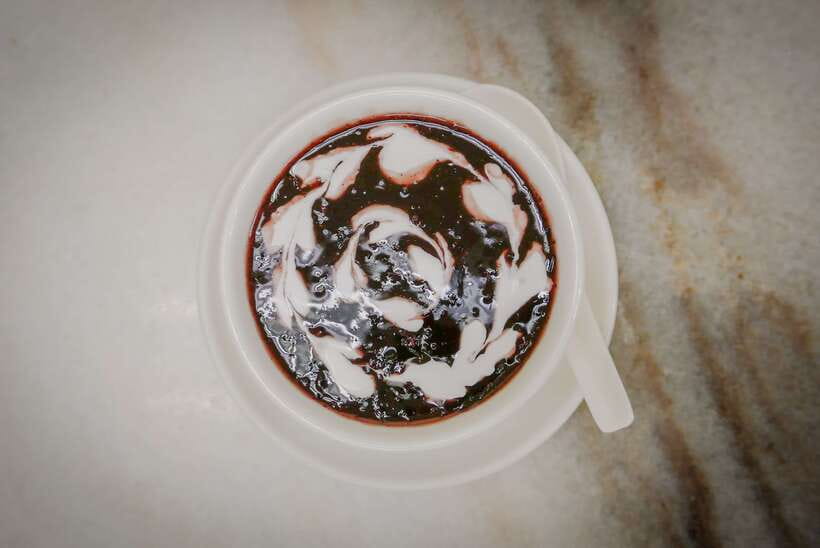
I would book it on the first or second evening of a Singapore trip. You get a meal, a neighbourhood walk, basic hawker-centre training, and a list of dishes to seek out later.
It suits curious eaters who want to try durian, bakkwa, carrot cake, char kway teow, local coffee, chicken rice, and dessert without having to plan every stop. It is also a good choice if you want food paired with stories rather than a silent sequence of tastings.
You may want to skip it if you dislike shared food, need a fully fixed menu, use a wheelchair, or prefer to explore Chinatown at your own pace. It is also not the tour for chili crab, since that dish is specifically excluded.
Should you book it?
Book this tour if you want a friendly introduction to Singapore’s hawker culture and would rather learn by tasting than by reading a menu. The strongest reasons are the Michelin-starred chicken rice, the practical hawker guidance, and the guides’ habit of explaining the history behind each dish.
Go with a light appetite and an open mind. Expect five core tastings, but be ready for more, especially in a small group. At $63, it is best value early in your trip, when the food advice can improve every meal that follows.
FAQ
Where does the tour start and finish?
It starts and ends at Bee Cheng Hiang Shop, 69 Pagoda Street, Singapore 059228. Look for a guide wearing a Discova black T-shirt.
What time does the tour begin?
The stated starting time is 5 pm. The total duration is three hours, but you should check availability when booking.
What food is included?
The core experience includes five food tastings, including bakkwa, either carrot cake or char kway teow, soya sauce chicken rice from a Michelin-starred hawker stall, and dessert. Extra tastings may be added.
Is chili crab included?
No. Chili crab is not included in this experience.
Is the tour suitable for wheelchair users?
No. The activity is not suitable for wheelchair users.
Can I cancel or pay later?
You can cancel up to 24 hours in advance for a full refund. A reserve-now, pay-later option is also available.
Fresh off the menu around Singapore
- Street Food, Cultural & Historical Tour of 3 Ethnic Quarters★ 5.0 · 23 reviews
- Singapore: Private Food Tour – 10 Tastings with Locals★ 4.7 · 194 reviews
- Singapore: Chinatown Hawker Guided 8-Dish Tasting Tour★ 4.9 · 41 reviews
- Singapore: Local Hawker Food Tour with Tastings★ 4.7 · 181 reviews
- Singapore: Local Street Food Tasting Tour★ 4.8 · 36 reviews
- Singapore: Little India Hawker Street Food Tour★ 4.8 · 27 reviews
- Singapore: Guided Street Food Tour at Night★ 4.5 · 393 reviews
- Singapore: Hawker Culture Food Tour and Sightseeing★ 4.8 · 23 reviews
Singapore Food Tours, compared.
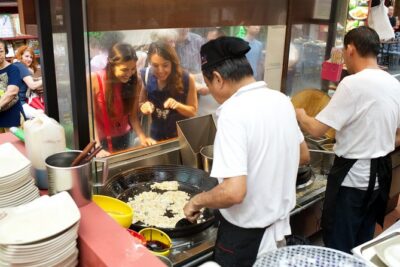
Small Group: Michelin and Local Hawker Food Tour with 9 tastings
Read our review →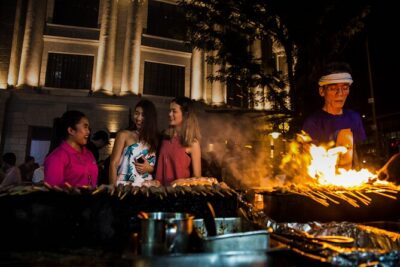
Small Group: Singapore Street Food & Night Tour with 9 tastings
Read our review →
The Award-Winning PRIVATE Food Tour: 10 Tastings of 3 Cultures
Read our review →
Singapore: Chinese, Indian & Arabic Quarters, Culture & Food Tour
Read our review →
Singapore: Private Food Tour – 10 Tastings with Locals
Read our review →
Singapore: Local Hawker Food Tour with Tastings
Read our review →
Singapore: Chinatown Hawker Guided 8-Dish Tasting Tour
Read our review →Browse the lists this tour appears in