
Review · SHANGHAI
Shanghai: Half-Day Biking and Local Food Tour
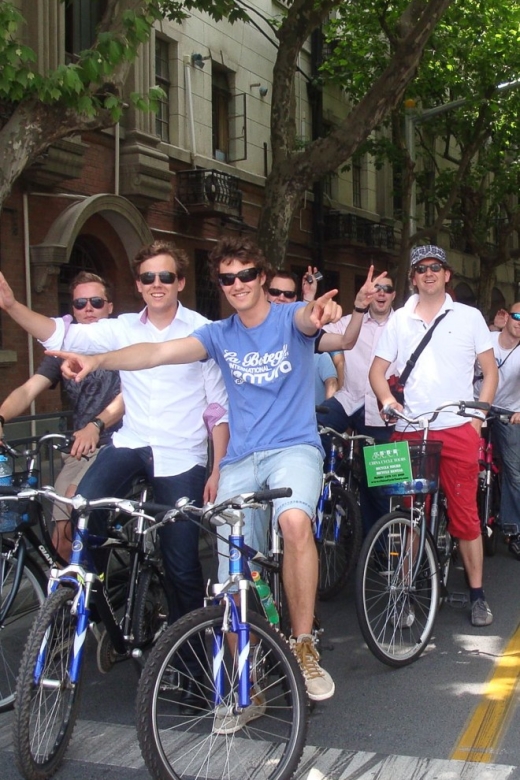
Shanghai makes more sense from a bicycle seat. In three hours, you can pedal from the French Concession to the Bund, pass old lane houses and modern streets, stop for local food, and cover far more ground than you could on foot. The tour is led in English, usually with no more than 10 people, and has earned a 4.9 rating from 170 reviews.
I especially like the mix of major sights and ordinary city life, including parks where older residents exercise, traditional housing, food markets, and streets you might otherwise miss. The included bike, helmet, water, food, and entrance fees also make the $88 price easier to justify. The main caution is traffic: much of the route uses bike lanes, but some sections place you among scooters, motorcycles, cars, and buses.
Key points at a glance
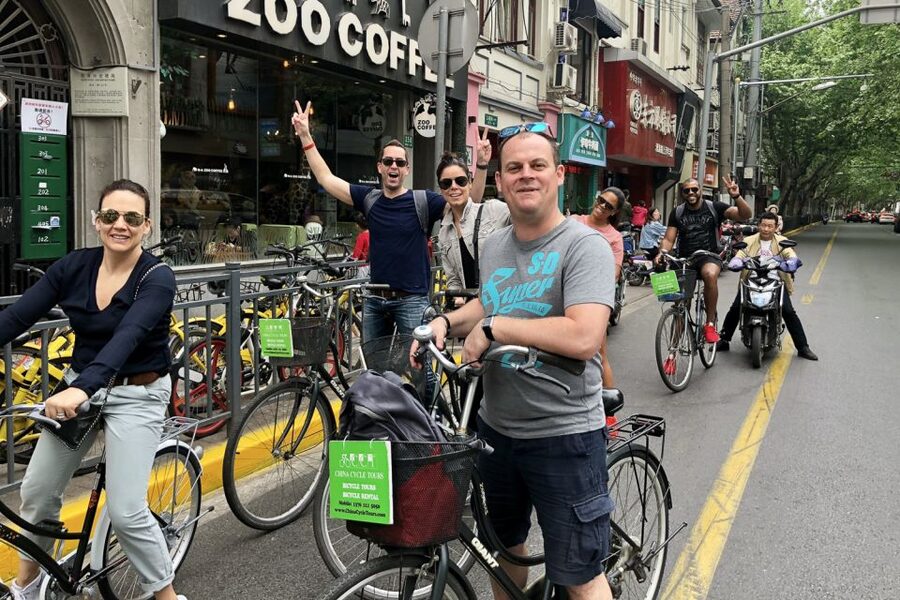
- About 11 miles in three hours: A fast but manageable way to get your bearings across central Shanghai.
- French Concession to the Bund: The route links old neighborhoods, renovated districts, historic lanes, and Shanghai’s famous waterfront.
- Local food included: Expect snacks and a local food stop or meal, with guides helping explain what you are eating.
- Good for cautious riders: The route is mostly flat, and guides give clear hand signals, but you still need to be comfortable riding near traffic.
- Small groups capped at 10: This matters on crowded streets, since the guide can watch the group and adjust the pace.
- More than a bike ride: You will sometimes park the bikes and walk through markets, lane houses, parks, and older districts.
Why a bicycle is a smart way to see Shanghai

Shanghai is too spread out for a short walking tour to connect its main districts. A taxi can move you between them, but you lose the gradual change from one neighborhood to the next. On a bicycle, you see the city shift in real time: elegant French Concession streets give way to old housing, local shops, food stalls, modern commercial areas, and eventually the Bund.
The pace is also useful. You move quickly enough to see a lot, yet slowly enough to notice street life. Several stops include time off the bike, so this is not three hours of continuous pedaling. You can take pictures, listen to the guide, and look around without trying to steer at the same time.
The ride covers about 11 miles, but the route is described as flat and suitable for complete novices as well as experienced riders. Guides such as Ellen have been praised for clear hand signals and careful positioning in traffic. That support makes a real difference in Shanghai, where electric scooters and bicycles may pass from several directions.
Still, do not mistake suitable for beginners for traffic-free. You will ride in normal city traffic when bike lanes are not available. If nearby vehicles make you tense, this may not be your best first activity in Shanghai. If you can ride steadily, follow instructions, and stay alert, the route appears designed to keep the pace calm rather than sporty.
More half-day food tours around China:
- Montserrat Half-Day Tour with Tapas and Gourmet Wines
★ 5.0 · 7,359 reviews - Santorini Food Tour: Fira Half-Day Small-Group Tour with Tastings
★ 5.0 · 437 reviews - Adelaide: Half-day McLaren Vale & Glenelg Wine Tasting Tour
★ 4.8 · 417 reviews
Starting near South Shanxi Road
The meeting point is in front of the Garden Hotel, a one or two minute walk from South Shanxi Road Station on Metro Line 1, Exit 3. Look for the guide holding a ChinaCycleTours sign.
The central location is handy if you are using the metro, and it puts you close to the areas covered by the ride. Allow a little extra time to find the correct exit and meeting spot. The supplied information does not give a hotel pickup, so plan to make your own way there.
After meeting the guide, you receive a bicycle and helmet. Past participants have described the bikes as comfortable, well maintained, and available in different styles and sizes. Older accounts mention a choice between city and mountain bikes, though you should confirm current bike options when booking.
Water is included, which is particularly useful in Shanghai’s warmer months. One rider described cycling in 36-degree heat with shade along the route, while another found biking more comfortable than walking during a 31-degree day. Even so, light clothing, sun protection, and a willingness to drink water are sensible choices.
French Concession: leafy streets and old homes
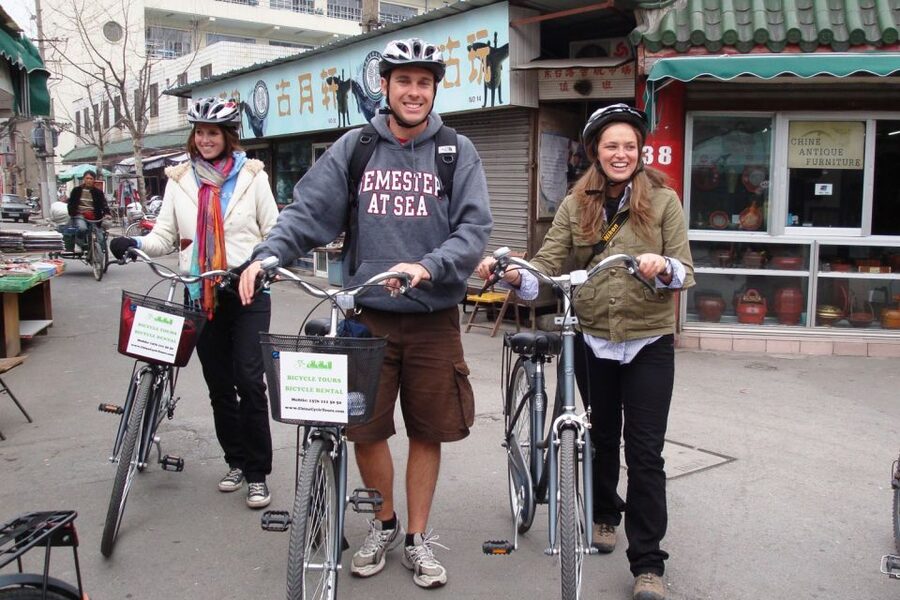
The French Concession is one of the most appealing parts of the route. Its streets provide a break from Shanghai’s larger roads, with mature trees, older villas, small businesses, and lanes that reveal how the city has changed.
This is also where the tour gives useful housing context. The route can include shikumen homes, the distinctive stone-gate houses associated with old Shanghai. These buildings combine elements of Western row houses with Chinese courtyard living. Some have been restored, while others are disappearing as the city changes.
The guide may stop at two shikumen areas and explain how they differ from the hutongs of Beijing. That comparison helps you understand that old Chinese urban housing is not all the same. You get a clearer sense of how Shanghai families lived in close, shared neighborhoods.
The French Concession is a good early section because it lets you settle into the bike before busier roads arrive. You will likely ride, park, and walk in turns. That rhythm keeps the tour from becoming a simple sightseeing checklist.
Xintiandi and Taikang Road: restored districts with different moods
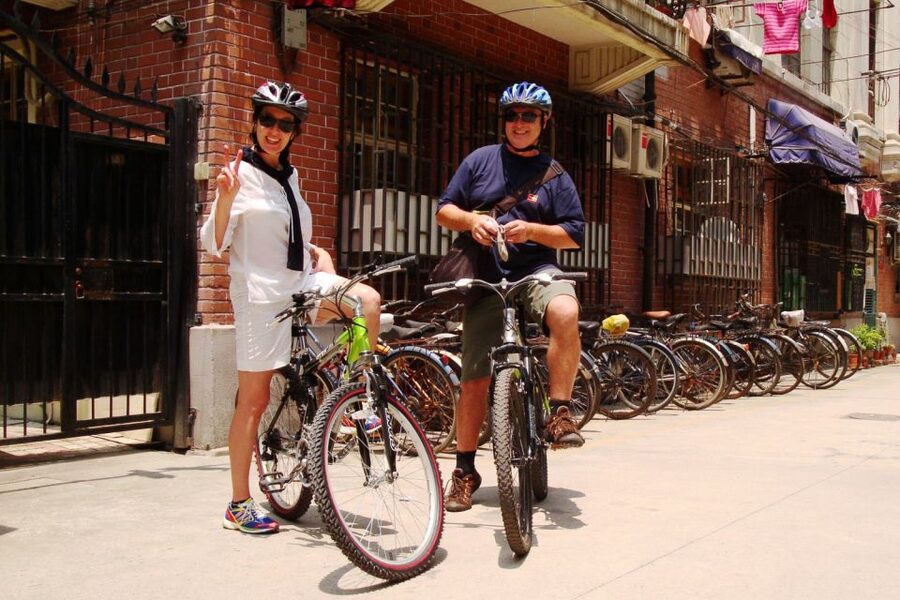
Xintiandi is one of Shanghai’s best-known restored areas. Its shikumen architecture, restaurants, and polished public spaces show how historic buildings can be repackaged for modern use. It is attractive and easy to explore, but it can feel more commercial than the less restored neighborhoods on the route.
Taikang Road offers another angle. The area is associated with small lanes, studios, galleries, cafés, and creative businesses. You will have more reason to leave the bike here and walk, since the interest is in the narrow lanes and details at street level.
These stops work well together. Xintiandi shows a carefully renewed version of old Shanghai, while Taikang Road gives you a closer look at lanes used by local businesses and residents. I would treat them as orientation stops rather than places to fully explore. If you like either district, mark it for a longer return visit after the tour.
More food tours around China:
- Authentic Local Food Tour in Central Shanghai
★ 5.0 · 1,382 reviews - Shanghai: 3-Hour Local Food Tasting Tour
★ 4.9 · 806 reviews - Eat Like A Local: Shanghai Night Food Tour
★ 5.0 · 616 reviews - Eat Like a Local Through Shanghai’s French Concession
★ 5.0 · 353 reviews
Shanghai Old Town and daily city life
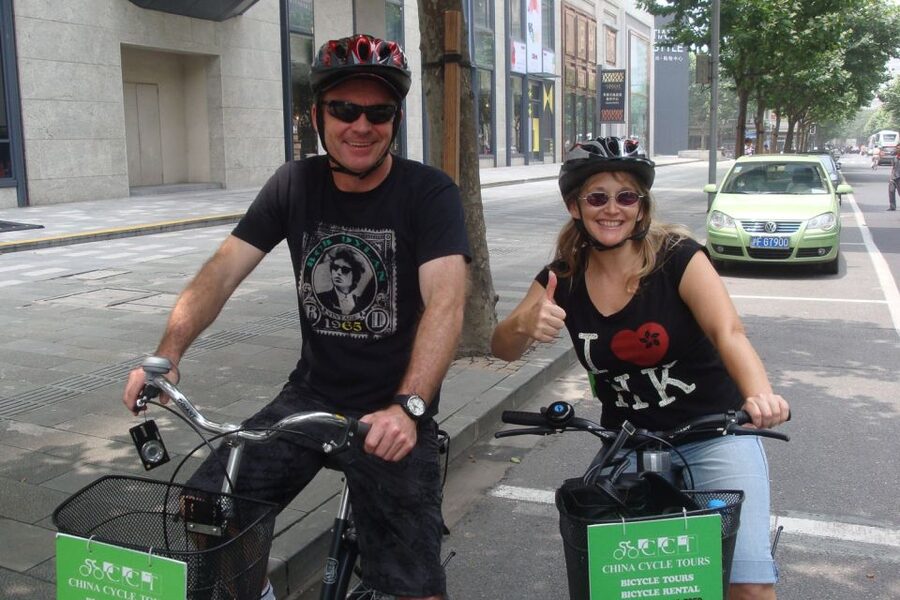
Shanghai Old Town adds a more local feel. The streets and lanes here help explain what the city was like before its modern towers and international business districts took over the skyline.
The route can include traditional houses, food markets, and older neighborhood streets. You may also see the practical side of city life: people shopping, eating, exercising, and moving through narrow urban spaces. This is where the bicycle becomes especially useful, since you can reach small streets that are awkward for a coach or taxi.
The tour also makes room for local customs and social life. Several outings included time in Fuxing Park, where older residents were exercising, dancing, or playing traditional games. Those moments are valuable because they are not staged attractions. You are seeing how public parks work as social spaces for older Shanghai residents.
Do not expect every group to have exactly the same encounter. The guide adjusts the route and timing to the group, traffic, and the day’s conditions. But the park and neighborhood sections are a strong reason to choose this tour over a standard bus circuit.
Local food: more than a token tasting
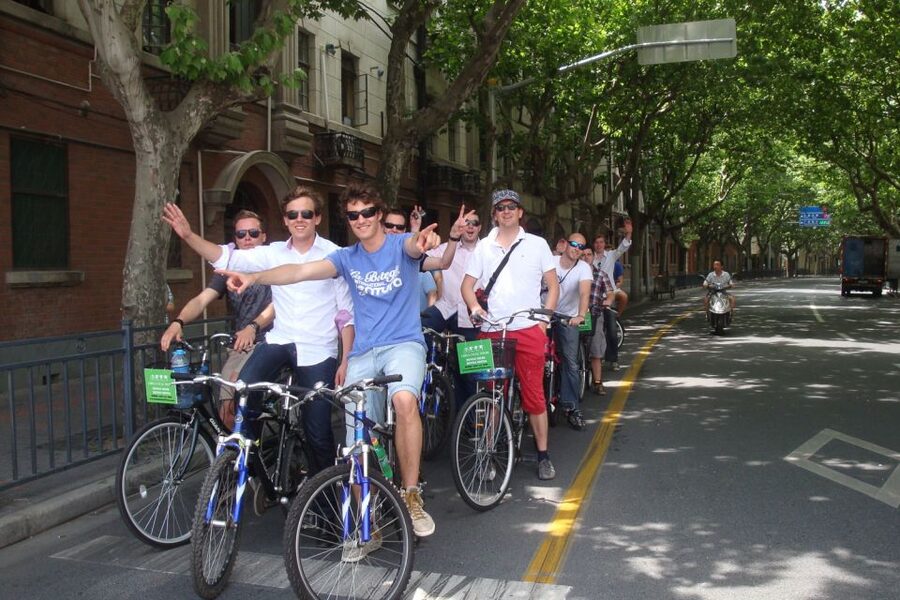
Food is built into the experience, not added as an afterthought. The tour includes local food and snacks, and the exact format can vary. You might stop with a street vendor, try tea, or sit down for a more filling spread of Shanghai dishes.
One outing included two local food stops. Another ended with a generous selection of local dishes rather than a few tiny samples. Guides have also helped with ordering when menus were not in English, which is useful if you want to try something unfamiliar without guessing.
Vegetarians should mention their needs before or at the start of the tour. A guide named Ellen was able to find meat-free alternatives for one rider, but the supplied details do not promise a fixed vegetarian menu. The same applies to allergies and other dietary restrictions: raise them early and ask what can be arranged.
The food stop also gives the ride a welcome pause. Three hours on a bike is not strenuous for most riders on a flat route, but a snack, water, and time to sit make the morning or afternoon more comfortable. I would think of the food as a local introduction rather than a full culinary tour. You get to taste and ask questions, but the main subject remains Shanghai itself.
The Bund: a strong finish
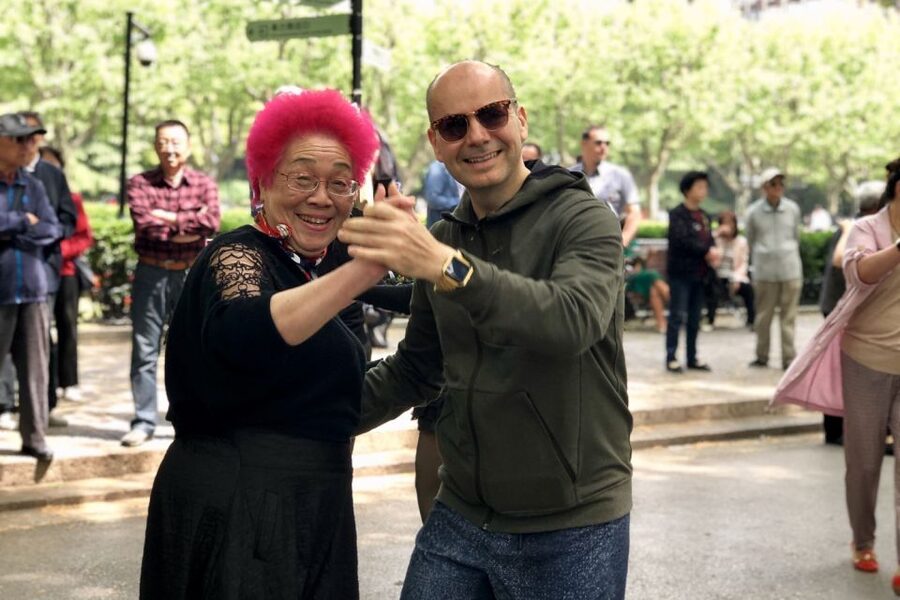
The Bund is the route’s big visual payoff. Its waterfront promenade faces Pudong’s famous skyline and gives you one of Shanghai’s clearest contrasts: historic European-style buildings on one side and modern towers across the river.
Arriving by bicycle feels different from arriving by taxi. You have moved through residential lanes, parks, markets, and older districts before reaching the city’s most photographed view. That sequence gives the Bund more context.
You will stop for pictures, but the time is limited. The tour is built as an overview, not a full Bund architecture walk or an extended skyline photography session. If this is your first visit, note the spots you want to revisit later, especially if you want to see the waterfront in different light.
The Bund is also a useful endpoint because it leaves you near one of Shanghai’s best-known areas. The tour does not promise transport back to your hotel, so ask the guide about the easiest next step. Past guides have helped with directions, translations, and even arranging a taxi, but that kind of help should be viewed as courtesy rather than a listed service.
How safe and demanding is the ride?

The route is flat, and the reported pace is slow enough to look around. One guide, Ellen, was praised for giving early signals for turning, slowing, and stopping. Another guide, Li, was described as taking an active role in helping the group cross difficult sections.
Those details matter more than the distance itself. Shanghai traffic can look intimidating, especially when scooters and electric bikes share the road. A good guide keeps the group together, chooses practical crossings, and makes the next movement clear.
The tour is not a race or a fitness challenge. It includes walking breaks, sightseeing stops, and food. Still, you should be able to ride a bicycle, brake confidently, and follow instructions without frequent assistance.
The small group limit of 10 is another plus. A guide can keep track of fewer riders and spend more time answering questions. Some groups have been as small as a handful of people, though the actual size depends on the date.
Guides who add local context
The guide is central to the experience. Ellen appears often in the tour’s feedback, with praise for her English, care with nervous riders, history explanations, and ability to answer questions. Alisa and Alyssa have also led outings, while earlier tours included Li.
The best part of the guiding style is the combination of movement and explanation. You are not just pointed toward a building and given its name. The guide can explain housing, old Shanghai, current social life, food, and the way different districts have changed.
Guides have also adjusted the experience around the group. Ellen asked what people wanted to see and added less obvious stops when possible. A guide helped one rider find vegetarian food, while another helped with a taxi and translation at the end.
That flexibility is useful, but it also means the exact emphasis may differ. If you care most about food, architecture, local parks, or history, tell the guide at the beginning. A three-hour tour cannot cover everything in depth, but a clear preference can shape the experience.
Is $88 a fair price?
At $88 per person, this is not the cheapest way to rent a bike in Shanghai. The value comes from what is bundled together: bicycle, helmet, water, English-speaking guide, local food and snacks, entrance fees, a small group, and photos.
You are also paying for route planning and traffic management. Finding the French Concession, Old Town, Taikang Road, food stops, and the Bund on your own would be possible, but not always quick. The guide connects these areas in one compact outing and helps with the language gap.
The price makes the most sense for a first day, a short stay, or a layover. Several people used the ride to decide which districts deserved a longer visit. If you have many days in Shanghai and enjoy exploring independently, you might prefer a cheaper bike rental and more time in one neighborhood.
The food inclusion strengthens the deal, especially if the stop is substantial rather than just a small snack. Since the exact dishes can vary, do not book it solely as a food tour. Book it for the combination of cycling, orientation, local context, and a taste of Shanghai along the way.
Who should book this Shanghai bike tour?
I would choose this for a first visit, a short stay, or a long layover when you want a quick sense of how the city fits together. It also suits couples, solo visitors, and small groups who prefer active sightseeing to sitting in a vehicle.
It is a good match if you want to:
- See several central districts in one morning or afternoon
- Learn about Shanghai from an English-speaking local guide
- Try local food without planning every stop yourself
- Visit ordinary parks, markets, lanes, and old housing
- Use a bike but avoid planning your own route
- Find places to return to later
I would hesitate if you dislike riding near traffic, need a fully predictable meal menu, or want a slow, detailed tour of one district. The route covers a lot, so some stops are introductions rather than full visits.
You can cancel up to 24 hours ahead for a full refund, and the reserve-now, pay-later option helps if your schedule is still changing. Starting times vary, so check availability before booking.
FAQ
How long is the Shanghai bike tour?
The tour lasts three hours and covers about 11 miles by bicycle, with walking and sightseeing stops along the way.
Where does the tour meet?
The meeting point is in front of the Garden Hotel, near South Shanxi Road Station on Metro Line 1, Exit 3. It is about a one or two minute walk from the station exit.
How will I find the guide?
Your guide will be standing with a ChinaCycleTours sign.
Is the tour conducted in English?
Yes. The tour includes a live English-speaking guide.
What does the price include?
The price includes the guide, bicycle, helmet, local food and snacks, water, entrance fees, a small group, and free photos.
How large is the group?
The small group is limited to 10 participants.
Is the ride suitable for beginners?
Yes. The route is described as suitable for complete novices and experienced riders, and it is mostly flat. You still need to be comfortable riding near normal city traffic in some sections.
Can I cancel for a refund?
Yes. You can cancel up to 24 hours in advance for a full refund.
Should you book it?
Book this tour if you want to get your bearings quickly while seeing real neighborhood life. The strongest combination is the flat route, careful English-speaking guides, local food, and access to places that are easy to miss on foot.
The one serious consideration is traffic. You will not be on a fully separated cycle path for the whole ride. If that sounds manageable, the $88 cost is fair for the equipment, guiding, food, and compact route. For a first morning in Shanghai, it is a practical and enjoyable way to learn where you want to spend the rest of your time.
Fresh off the menu around China
- Shanghai Must-See and Foodie Test Bike Tour( Day & Night)★ 4.7 · 70 reviews
- Shanghai-Cooking Dumpling & Meal in Local Family-w/Vegan★ 4.9 · 36 reviews
- Shanghai: Evening Walking Food Tour★ 4.9 · 115 reviews
- Late night food tour in Shanghai’s French Concession★ 4.9 · 31 reviews
- Beijing Hutong Food Crawl Delights: Peking duck, Hotpot&More★ 4.9 · 32 reviews
- Beijing: Dumpling Making Workshop with Meal and Tea★ 4.7 · 69 reviews
- Beijing: Hutong Breakfast Food Tour★ 5.0 · 22 reviews
- Eat Like A Local: Shanghai Night Food Tour★ 5.0 · 616 reviews
Shanghai Food Tours, compared.
Authentic Local Food Tour in Central Shanghai
Read our review →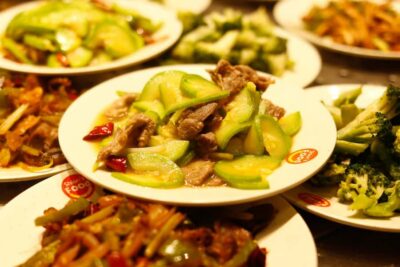
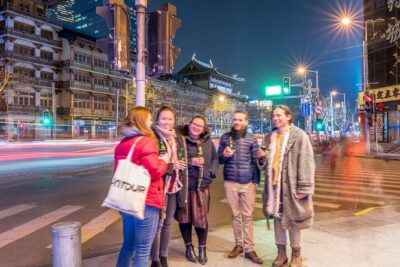
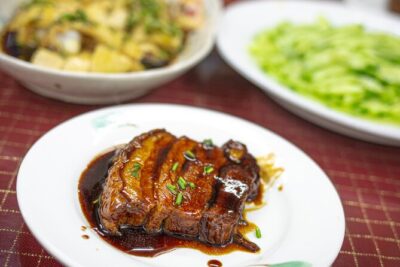
Eat Like a Local Through Shanghai’s French Concession
Read our review →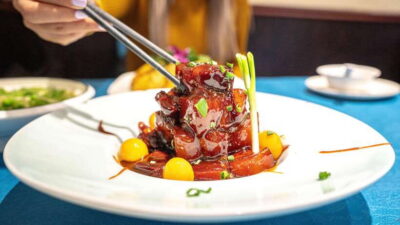
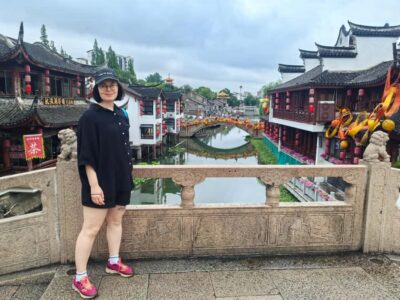
Shanghai Must-See and Foodie Test Bike Tour( Day & Night)
Read our review →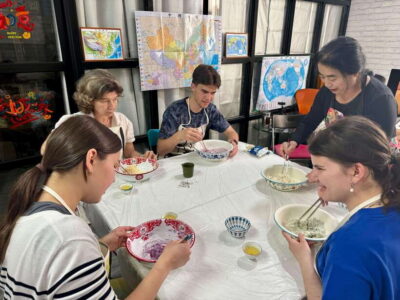
Shanghai-Cooking Dumpling & Meal in Local Family-w/Vegan
Read our review →
Late night food tour in Shanghai’s French Concession
Read our review →Browse the lists this tour appears in