
Review · MOROCCO
Rabat: Walking Food Tour
Rabat’s best food experience is not a single restaurant. It is the steady move from market stall to pastry shop to traditional dining room, with a guide explaining what you are eating along the way. This three-hour Medina walk includes six tasting stops, a full meal, and a final finish near the Kasbah des Oudayas.
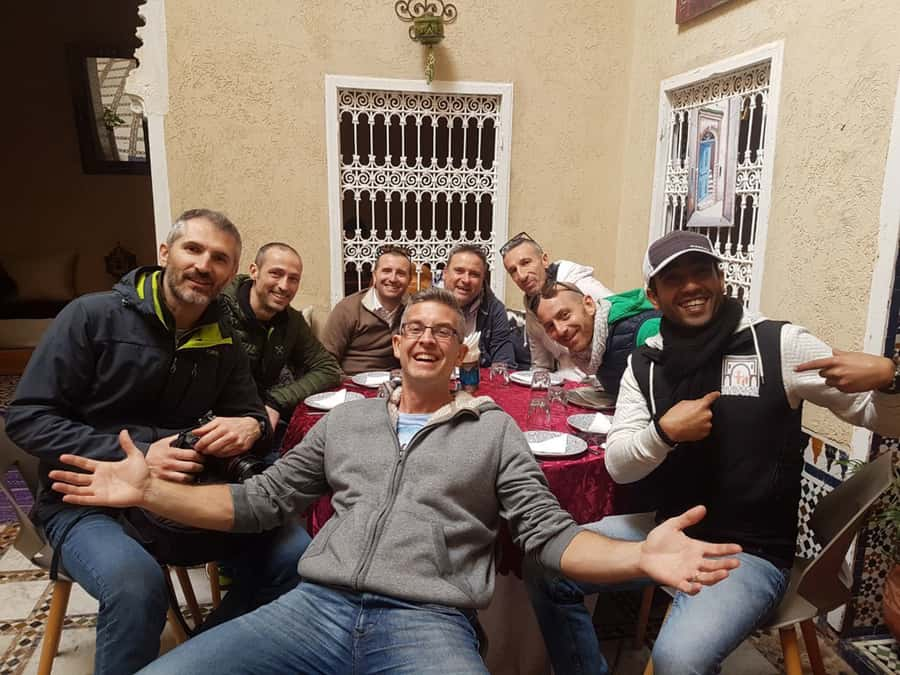
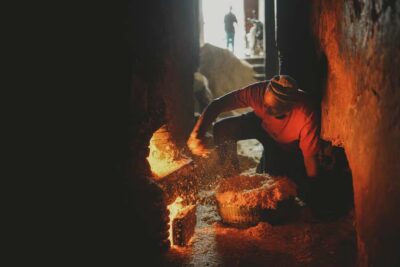
I like the range of food, from sardines and dates to chebakia, tagines, couscous, mint tea, and Moroccan pastries. I also like the cultural side: your guide points out community ovens, local markets, architecture, customs, and daily life instead of treating lunch as the whole show.
The main drawback is quantity. You are told to arrive hungry for good reason, and several parts of the meal can add up fast. At $72 per person, this is not a cheap snack crawl, so you should want both a full lunch and a guided introduction to Rabat to feel good about the price.
Key points to know before you book
- Six tasting stops plus a full meal: This is closer to a substantial half-day outing than a quick sample of street food.
- A walk through Rabat’s Medina: You see market stalls, fresh produce, artisans, narrow lanes, and ordinary neighborhood life.
- Local food with context: Guides such as Mohammed, Imane, and Sarra explain Moroccan cooking, traditions, religion, architecture, and city history.
- A strong final stretch: The route ends near the Kasbah des Oudayas, with mint tea, pastries, and views toward the river area.
- Dietary needs can be discussed: Vegetarian, gluten-free, and lactose-free requests are accepted when arranged in advance.
- Come very hungry: Generous portions are a repeated theme, and one person found the amount of food excessive.
Starting at Rabat Ville station
The meeting point is easy to identify: Gare Rabat Ville on Avenue Mohammed V, in front of the main door. That makes this a practical tour for a first full day in Rabat, since you can arrive by train and begin without arranging a taxi across town.
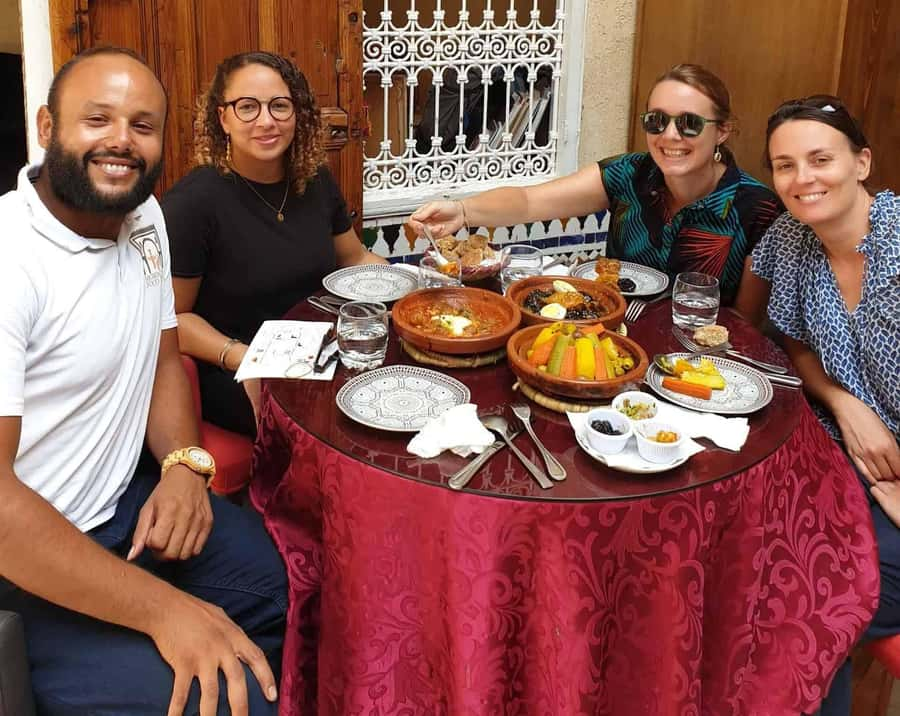
Your guide meets you there and leads you toward the Medina. English is the listed tour language. Mohammed appears often among the guides, while Imane and Sarra have also led groups. The strongest reports focus on guides who explain clearly, answer questions, and make the walk feel personal rather than scripted.
You should allow a few minutes to find the station entrance and gather your group. Transportation is not included, so getting to Rabat Ville and making your own way afterward is up to you. The tour ends at the Kasbah des Oudayas, not back at the station. That is useful if you plan to continue sightseeing, but you should note the end point before making a tight rail connection.
More Food Walking Tours in Morocco:
- Marrakech: Authentic Moroccan Food Walking Tour & Dinner
★ 4.8 · 261 reviews - Tangier: Food Walking Tour
★ 4.9 · 43 reviews - Reykjavik Food Walk – Local Foodie Adventure in Iceland
★ 5.0 · 18,952 reviews
First tastes in Rabat’s Medina
The Medina is the heart of the tour. Its narrow lanes, traditional buildings, food sellers, small shops, and working neighborhood streets provide the setting for the tastings. You are not simply seated while plates arrive. You walk between stops and watch food being sold in the places where local people buy it.
The early samples may include sardines, stuffed dates, chebakia, juices, and Moroccan pastries. Sardines give you a savory taste tied to Morocco’s Atlantic food culture. Stuffed dates and chebakia move the meal in a sweeter direction, with the latter bringing the familiar Moroccan combination of honey, spice, and sesame.
This is where a guide adds real value. A market item can be hard to identify when you see it alone. Your guide can explain how it is made, when it is eaten, and how it fits into Moroccan food customs. You can also ask questions as you go, which is more useful than trying to decode every stall by yourself.
Some stops may be foods you would hesitate to order without help. Cow’s head is one example mentioned in connection with the tour. That does not mean you must eat anything you dislike, but it does show that the route aims to cover everyday local fare, not only familiar tourist dishes.
Six stops, not six tiny bites
The six tasting stops are spread through the walk, and the food comes in different forms. You might sample a small market product at one stop, drink something fresh at another, then try sweets or savory items before sitting down for the main meal.
That variety is the tour’s strongest feature. You get a better picture of Moroccan eating habits when you compare street snacks, pastries, dates, drinks, and cooked dishes in one outing. I especially like this approach for anyone who has only eaten Moroccan food in hotel restaurants, where the dining can be polished but less connected to daily life.
The portion sizes are generous. Several parts of the experience are substantial enough that you may not need dinner afterward. One practical point is worth taking seriously: come on an empty stomach, but do not treat that as a challenge to eat everything quickly. Pace yourself. If you are full, tell the guide.
The amount may be too much for some people. One person specifically felt that smaller portions would reduce overeating and waste. That is a fair concern, especially if you prefer a tasting tour built around small samples rather than a full lunch with extra stops.
The Medina beyond the food
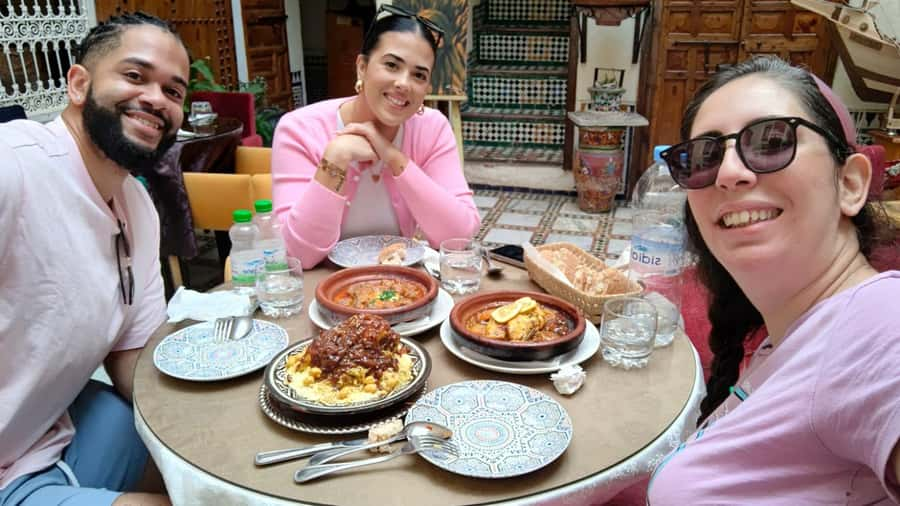
Food is the hook, but the walking route gives you a wider look at Rabat. Your guide discusses local history, architecture, religion, traditions, and general lifestyle while you move through the streets. You may see fresh produce sellers, artisans, community ovens, and the small details of neighborhood trade.
The community ovens are a particularly useful cultural detail. They show how food preparation can connect households and neighborhoods, rather than happening only in a private kitchen. Details like this help explain the city in practical terms.
The Medina also gives you plenty to photograph, though you should keep the camera secondary to the walk. Narrow lanes can be busy, and food stalls work best when you watch where you step and give sellers room. Your guide can point out good views and explain what you are seeing, which helps turn a pleasant stroll into a clearer picture of Rabat.
I would book this early in your stay if you want help with the city. A good guide can give you food ideas and general advice for nearby destinations. One past participant even received tips for other Moroccan cities during the conversation.
More food tours around Morocco:
- Marrakech: Street Food Tour with a Local Guide
★ 4.9 · 3,119 reviews - Marrakech: Street Food Tour by Night
★ 4.8 · 2,838 reviews - Authentic Moroccan Food Tour in Marrakech with Dinner
★ 5.0 · 1,423 reviews - Marrakech: Jemma El Fnaa Food Tour with Dinner
★ 4.7 · 394 reviews
The full Moroccan meal
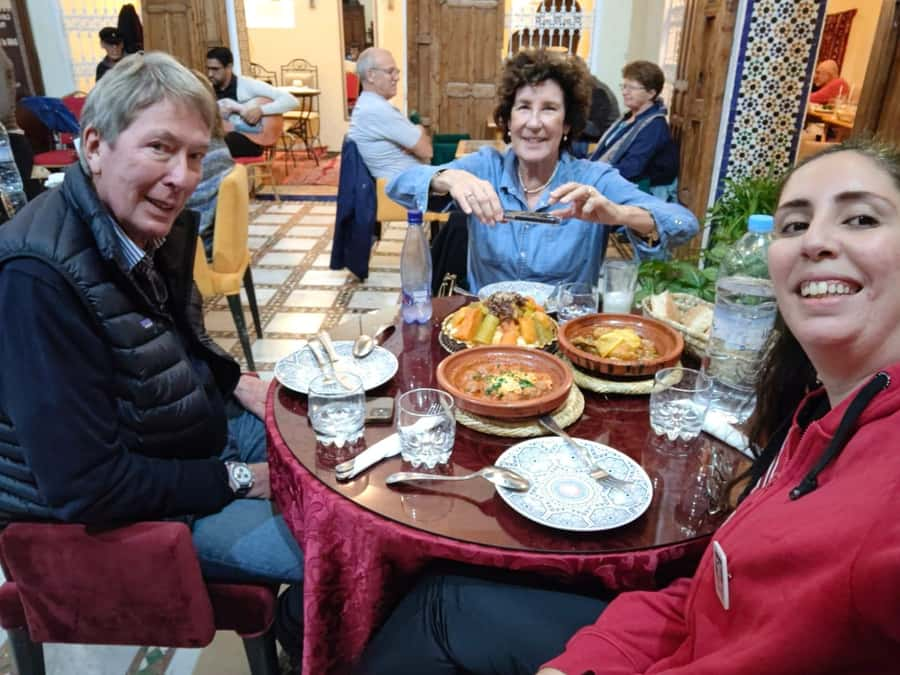
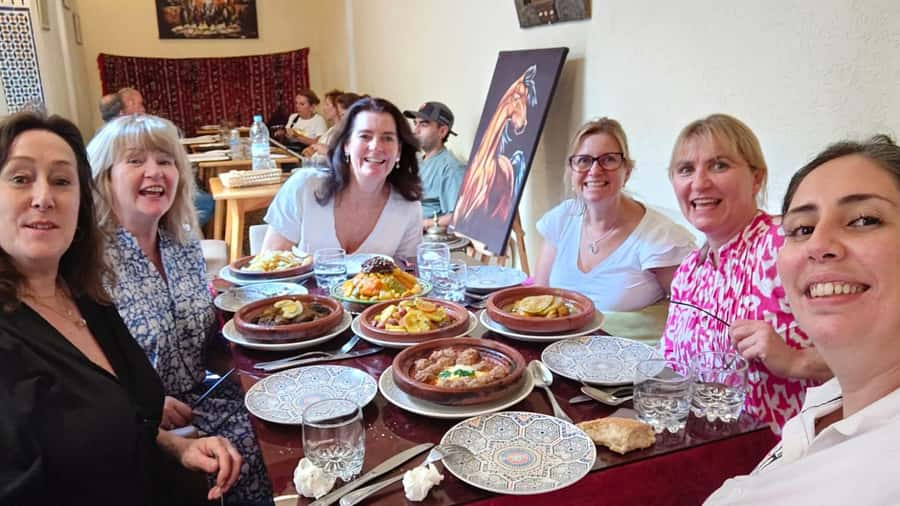
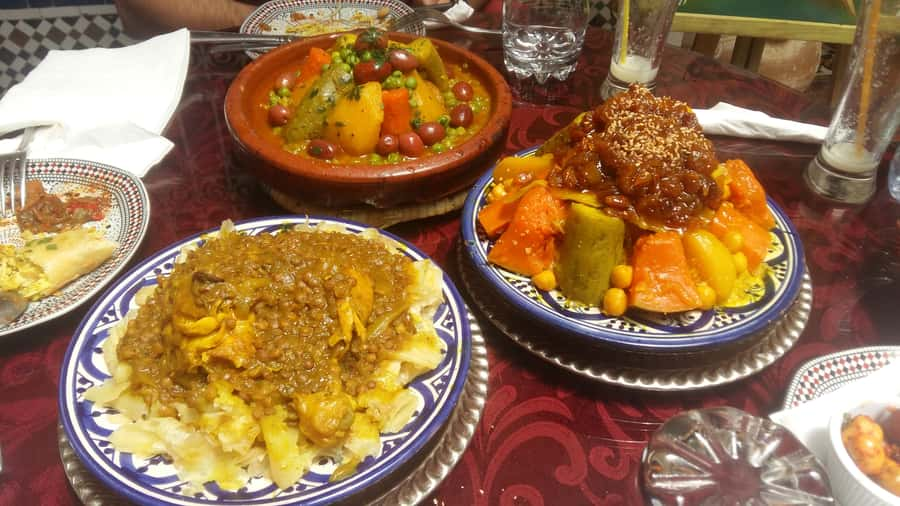
The tour includes a full meal, not just grazing. The meal may begin with traditional salads and spreads, followed by tagine dishes and couscous. This is the point where the tour shifts from street food sampling to a more formal picture of Moroccan home-style and restaurant dining.
Tagine is worth tasting in this setting because the name refers to both the cooking vessel and the dish prepared in it. Couscous gives you another important part of the national food tradition. Having both in one meal helps you compare the slow-cooked saucy dishes with the grain-based centerpiece.
The restaurant meal has been described as a favorite part of the experience, with Dar Medina mentioned as a possible dining stop. Since restaurant arrangements can change, I would treat the included meal as certain but a specific restaurant as subject to confirmation.
This meal is also where the $72 price begins to make more sense. You are paying for six stops, a substantial lunch, a guide for three hours, and the local knowledge that ties the food together. If you only want a few bites and a short orientation walk, the cost will feel high. If you would otherwise pay for lunch and a separate Medina tour, the combined value is more reasonable.
Mint tea, pastries, and the Kasbah des Oudayas
The final stretch brings the food walk toward the Kasbah des Oudayas. The tour ends there, a good location for continuing your afternoon with one of Rabat’s major sights.
Mint tea and Moroccan pastries are part of the reported finishing pattern. Almond cookies have also been included at the end of the meal sequence. This is a gentler close after the heavier tagines and couscous, and it gives you time to sit, talk, and ask final questions.
A riverside café has been used for coffee or mint tea, with the route offering views and photo opportunities near the end. The setting matters because it changes the rhythm of the outing. After walking through food lanes and market streets, you get a chance to slow down near the water.
The finish at the Kasbah is also practical. You can continue exploring instead of retracing your steps to the station. Just remember that the tour does not provide transportation after the walk.
Dietary needs and family suitability
The operator says it can accommodate vegetarian, gluten-free, and lactose-free diets when told ahead of time. You should share your needs before the tour rather than waiting until the first stall. Food tours depend on advance planning, especially when several independent stops are involved.
Vegetarians have been accommodated successfully, with alternate choices provided during the tasting route and meal. Still, you should ask exactly what can be substituted if you have a strict allergy rather than a preference.
This can work well for families. A six-year-old and a thirteen-year-old were able to enjoy the food and conversation, and the slower pace of walking between stops gives children a change from sitting through a long meal. The amount of food may be harder for younger children, so sharing and pacing will help.
Anyone who dislikes narrow lanes, frequent food stops, or a long meal should think twice. This is not a quick culinary demonstration. It is a walking route with a lot of eating built into it.
The guide makes the difference
The most praised part of this experience is the guiding. Mohammed is repeatedly described as warm, funny, and able to explain both food and place. Imane has led groups with enthusiasm, and Sarra has been praised for explaining the link between Moroccan dishes and culture.
Those names matter because the guide is not just carrying you from one stall to the next. The best version of this tour depends on conversation. Ask why a dish is prepared in a certain way, what people eat during celebrations, how the Medina functions, or what to order elsewhere in Morocco.
The tour can also feel personal when the group is small. One outing had only one participant, creating nearly private attention. Group size is not fixed in the details provided, so do not book expecting a private tour, but the format allows for questions and discussion.
Price, timing, and practical value
The cost is $72 per person for three hours. That price includes the six tasting stops, the full meal, and the guide. It does not include transportation.
Compared with buying street food on your own, $72 is expensive. But that comparison misses the main service. You are paying for access to a planned sequence of foods, help identifying unfamiliar dishes, a meal, and a guided walk through the Medina. The value is strongest if you want food and cultural orientation in one booking.
The duration is long enough to feel like a real meal and short enough to fit into a day of sightseeing. Starting at Rabat Ville and ending at the Kasbah gives the tour a useful one-way shape. You do not spend the final part walking back to your starting point.
Free cancellation is available up to 24 hours before the activity for a full refund, and you can reserve now and pay later. Check the available starting time when booking, since the exact departure time is not fixed in the details provided.
Who should book this Rabat food walk?
I would choose this tour if you want to understand what you are eating, not just photograph it. It suits first-time visitors, curious eaters, families comfortable with a three-hour outing, and anyone who wants a guided introduction to the Medina.
It is also a good choice for vegetarians who want help finding suitable Moroccan dishes. The food is varied enough to appeal to adventurous eaters, though you can ask questions before trying less familiar items such as cow’s head.
I would skip it if you want a cheap snack tour, dislike large meals, or already have a strong grasp of Moroccan food and Rabat’s Medina. The price and quantity are the two main concerns. For everyone else, the mix of market food, restaurant dishes, local stories, and a finish near the Kasbah gives you a useful first taste of the city.
Should you book it?
Book it if a full stomach and a better understanding of Rabat sound like a good afternoon. The guide is the key reason to choose this over eating independently, and the route gives you foods you might not identify or order alone.
Arrive hungry, tell the operator about dietary restrictions, wear comfortable shoes, and leave room for the final tea and pastries. At $72, it is best viewed as a meal, Medina orientation, and food lesson combined, rather than a simple series of free samples.
FAQ
Where does the Rabat food tour start?
It starts at Gare Rabat Ville on Avenue Mohammed V, in front of the main door of the station.
Where does the tour finish?
The tour finishes at the Kasbah des Oudayas.
How long does the food tour last?
The experience lasts three hours.
What food is included?
The tour includes six tasting stops and a full meal. Foods connected with the experience include sardines, stuffed dates, chebakia, pastries, tagines, couscous, mint tea, and other local products.
Is the tour available in English?
Yes. The listed live tour language is English.
Can dietary restrictions be accommodated?
Vegetarian, gluten-free, and lactose-free requests can be accommodated when you provide your preferences in advance.
Is transportation included?
No. Transportation is not included, so you must arrange your own way to the meeting point and after the tour.
Can I cancel the booking?
Yes. You can cancel up to 24 hours in advance for a full refund. You can also reserve now and pay later.
Fresh off the menu around Morocco
- Tangier: Food Walking Tour★ 4.9 · 43 reviews
- Marrakech Night Street Food Tour / Taste The Real Marrakech★ 4.9 · 200 reviews
- Marrakesh: Guided Street Food Tasting by Locals★ 4.6 · 47 reviews
- Marrakech: Medina Stories Food Tour with 15+ Tastings★ 5.0 · 141 reviews
- Marrakech: Authentic Moroccan Food Walking Tour & Dinner★ 4.8 · 261 reviews
- Fez: Foodie tour in the old Medina★ 4.7 · 27 reviews
- Night Tour of Casablanca with Street Food Tasting★ 4.8 · 29 reviews
- Medina Tasting Tour: Experience Local Street Food & Culture!★ 4.9 · 25 reviews
Morocco Food Tours, compared.
Marrakech: Street Food Tour with a Local Guide
Read our review →
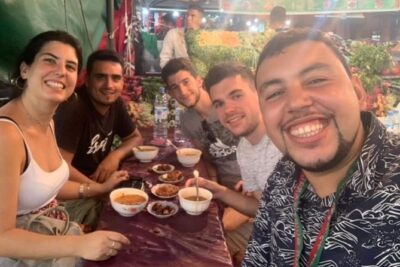
Authentic Moroccan Food Tour in Marrakech with Dinner
Read our review →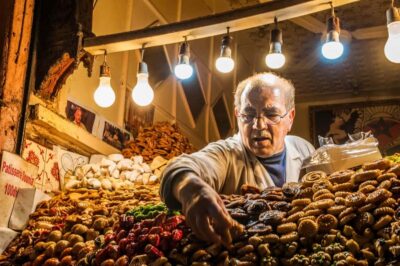
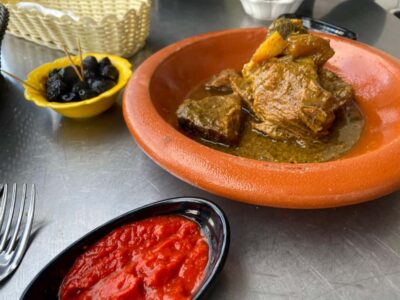
Marrakech Night Street Food Tour / Taste The Real Marrakech
Read our review →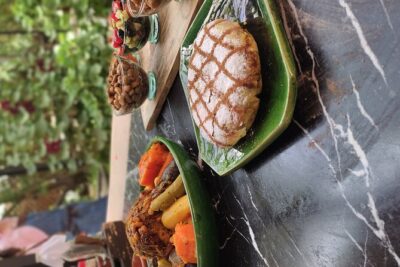
Marrakech: Medina Stories Food Tour with 15+ Tastings
Read our review →
Browse the lists this tour appears in