
Review · MARRAKECH
Authentic Moroccan Food Tour in Marrakech with Dinner
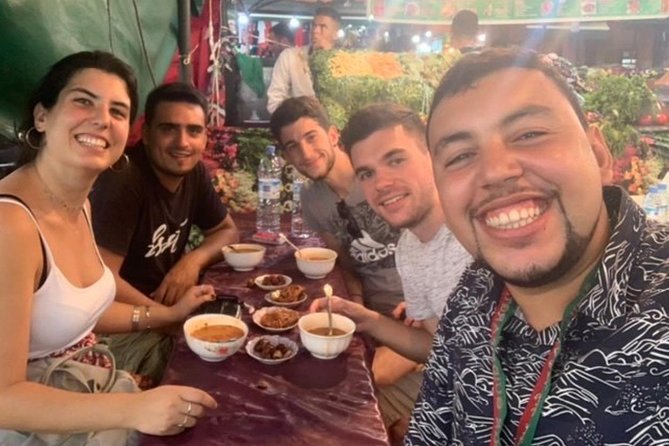
The best part of this Marrakech food tour is the way it turns the Medina into your dining room. Instead of sitting down for one meal, you taste your way through pastries, soup, olives, pancakes, snails, fruit, and other local specialties before ending with a three-course Moroccan dinner above the square. I especially like the chance to try foods you might skip alone, including babbouche, sfenj, and sheep’s head, and the way guides such as Mehdi, Hamza, Ali, and Mo add cultural context along the way.
I also like the small maximum of 15 people, which is much easier to manage in the Medina’s tight lanes than a large coach group. The main caution is that the evening can vary by guide and route. Some outings include a herbalist shop, which can feel like an interesting spice lesson or an unwanted sales stop, and a few bookings have had delays or confusion about the final dinner.
Key points at a glance
- About 10 tasting stops: Sample Moroccan sweets, olives, soup, pancakes, fruit, snails, and more around the Medina.
- Two possible food routes: Your guide may follow a pastry-and-tea route or a Jemaa el-Fna route featuring street-food specialties.
- Dinner is part of the plan: Finish with a sit-down three-course Moroccan meal, often at a rooftop restaurant overlooking the square.
- Guides vary: Mehdi, Houssaine, Hamza, Ali, Mohammad, Mo, and Hamsa have all led versions of this experience.
- Come very hungry: The tastings are substantial, and the final meal can leave you carrying dessert away.
- Practical limit: The group can include up to 15 people, and the meeting point is Poste du Maroc near the Medina.
Why this food walk works in Marrakech
Marrakech is easy to admire and surprisingly hard to understand through food alone. The dishes sold in the Medina are not always labeled clearly, portions can be shared, and some of the best snacks are tucked into ordinary-looking stalls. A guide helps you move from one bite to the next without spending half the evening guessing what to order.
This is not a cooking class. You will not prepare tagine or knead dough. Instead, you get a guided tasting walk through the center of Marrakech, with explanations about when foods are eaten, how they are prepared, and what they mean in Moroccan daily life.
The experience lasts about three hours and begins at Poste du Maroc on Rue Beni Marine. It ends back near the starting point, which is useful if you are staying in or near the Medina. You should still expect a walking-heavy evening through narrow lanes, crowded market areas, and stairways at the rooftop restaurant.
More food tours that end at dinner around Morocco:
- Marrakech: Jemma El Fnaa Food Tour with Dinner
★ 4.7 · 394 reviews - Marrakech: Authentic Moroccan Food Walking Tour & Dinner
★ 4.8 · 261 reviews - Bateaux Parisiens Seine River Gourmet Dinner & Sightseeing Cruise
★ 4.5 · 6,930 reviews
Two routes, one very full evening
The company uses two possible food routes. The exact path depends on the guide, season, and pace of the group. You should not expect every item below on every departure, but both versions cover a wide range of Moroccan flavors.
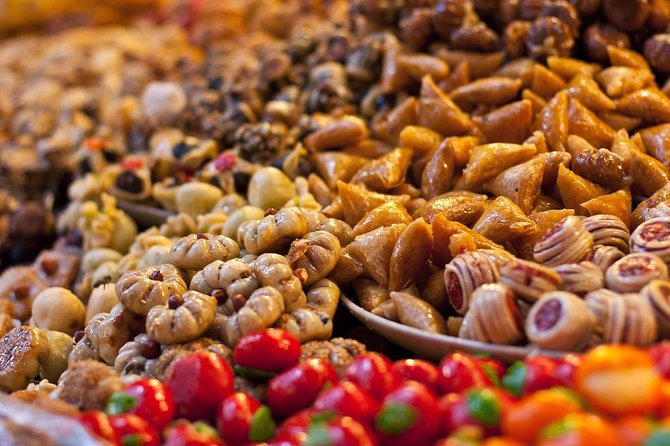
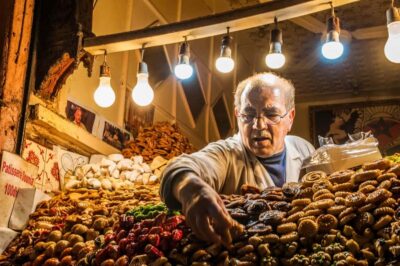
One route begins with sweets and familiar local comfort foods. You might start with Moroccan coconut macaroons, a soft, sweet treat that is especially popular with children. Kaab ghzal, sometimes called gazelle ankles, follows the same sweet direction. This delicate pastry is filled with almond paste and scented with orange blossom water.
Harira is another key stop. This tomato-based soup is traditionally served with dates and chebakia, a sticky sesame pastry. The combination is closely tied to breaking the fast during Ramadan, but it is enjoyed beyond the holy month as well. Tasting the soup with its sweet accompaniment gives you a useful lesson in Moroccan flavor balance: savory, sweet, warm, and gently spiced in one sitting.
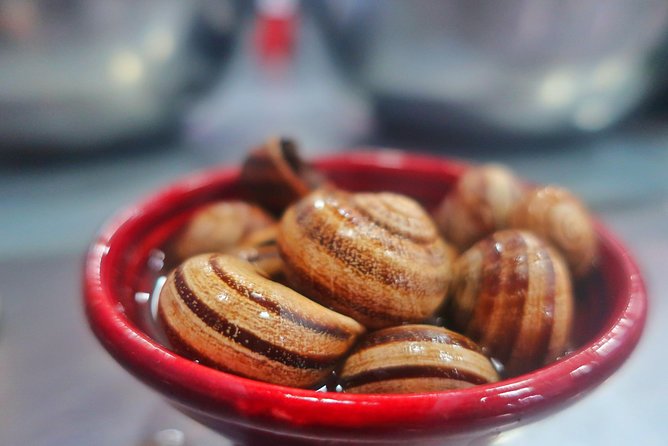
The same route may include babbouche, Moroccan snails cooked slowly in an aromatic herbal broth. The snails are less about novelty than the broth, which is fragrant and warming. If you are unsure, ask your guide how to taste them and whether the flavor is likely to suit you.
You may also stop for mint tea with msemmen. This flat, pan-fried Moroccan pancake can be served with honey, cheese, or other fillings. It is a good example of the food you might see at breakfast or tea time, rather than only at a formal meal.
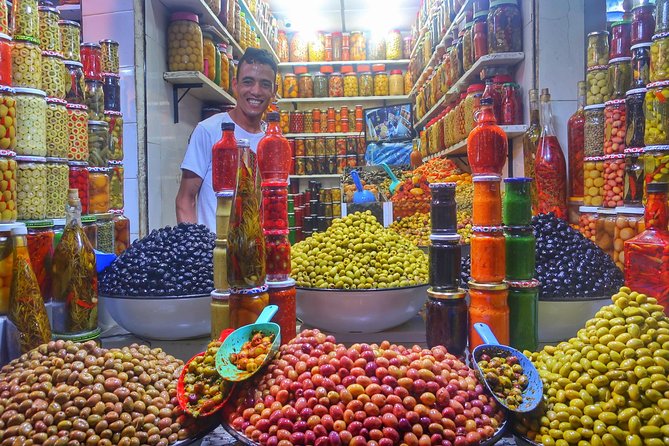
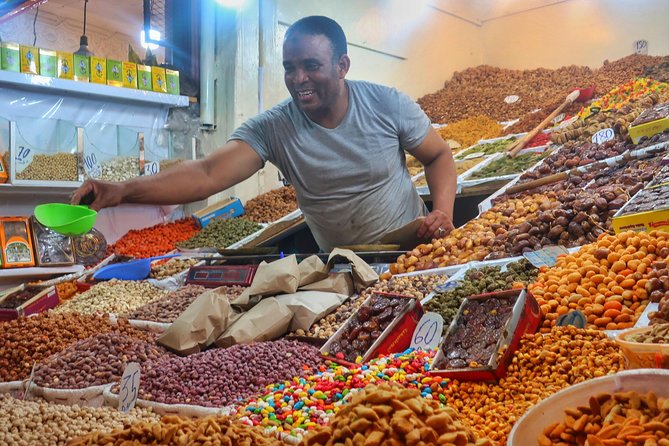
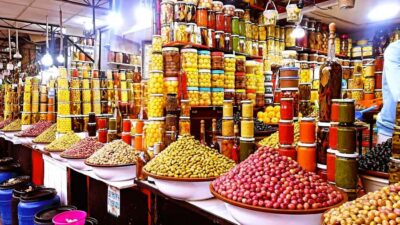
Fakya adds another texture to the evening. This festive mixture of dried fruit and nuts is commonly shared at celebrations. Moroccan olives may follow, with green varieties and other local styles offering a salty break from the pastries.
The second route leans more toward the food around Jemaa el-Fna. Msemen Amer is a savory stuffed pancake, often filled with spiced vegetables. It is the sort of snack that makes sense during an afternoon tea break, but it also works well as a first savory bite on an evening walk.
You may then try makla bel kefta, a Moroccan take on shakshouka, with spiced meat and eggs served in a richly seasoned sauce. Sfenj is another likely highlight. These Moroccan doughnuts are crisp outside and airy inside, and they are among the country’s favorite street snacks.
The route can become more adventurous at this point. Lhindiya is cactus fruit, a cool and refreshing option when Marrakech is hot. Rass mbekher is steamed sheep’s head seasoned with cumin. You may only receive a small portion, but this stop gives you a direct look at traditional nose-to-tail cooking.
Panaché, a fresh seasonal fruit smoothie, provides a sweet and cooling pause. Khoudenjal is a hot Moroccan herbal drink that rounds out the street-food route. Together, these stops show that Moroccan food is not simply tagine, couscous, and mint tea. The everyday menu is broader, more varied, and often more surprising.
Jemaa el-Fna after dark
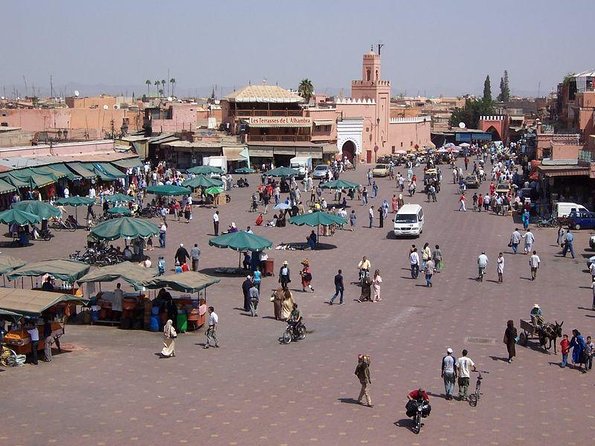
The tour centers on the Medina and Jemaa el-Fna, Marrakech’s famous main square. This is where the evening gains its strongest sense of place. Food stalls, small eateries, and narrow lanes create a setting that can be exciting but also confusing if you are trying to compare menus and prices on your own.
A guide can make the movement between stops easier. Hamza, Mehdi, Houssaine, Ali, Mohammad, Mo, and Hamsa are among the guides associated with different departures. The strongest guide experiences described in the supplied material share the same traits: clear explanations before each tasting, easy navigation through the alleys, and a willingness to discuss Moroccan culture beyond the food.
That human element matters. A dish tastes different when you know why it is eaten, how it is made, or when it appears at family gatherings. The guides also help you decide how adventurous to be. You can ask questions before trying snails, sheep’s head, unfamiliar herbs, or strongly spiced dishes.
The tradeoff is that market eating is not always comfortable. Stalls can be small, seating may be limited, and a group of 10 or 15 people can crowd a tiny food counter. One poor experience involved a larger-than-expected group trying to fit around small stalls, so you should not picture a leisurely private tasting at each stop.
The herbalist stop: useful or unnecessary?
Depending on the pace and route, the group may pause at a traditional herbalist’s shop. This can be a practical break for mint tea and a restroom, and it may give you a chance to learn about Moroccan spices, teas, and plant-based products.
It can also take longer than expected. The stop is not part of the food tastings, and some visitors found the sales presentation distracting. If you prefer a strictly food-focused walk, ask your guide how long the stop will last and feel free to treat it as a short pause rather than a shopping obligation.
This is one of the few parts of the experience that does not appeal equally to everyone. I would not book the tour specifically for the herbalist visit. Think of it as an optional interlude that may appear between the market tastings and dinner.
More sit-down food experiences around Morocco:
- Sorrento Farm and Food Experience including Olive Oil, Limoncello, Wine tasting
★ 5.0 · 2,524 reviews - Rome: Gourmet Food Tour with Dinner & Barolo Wine
★ 4.9 · 2,347 reviews - Porto Food & Wine Tasting Tour with Lunch or Dinner Option
★ 5.0 · 2,303 reviews - Lisbon: Baixa District Food Tour with Dinner and Drinks
★ 4.9 · 1,997 reviews
Rooftop dinner above the Medina
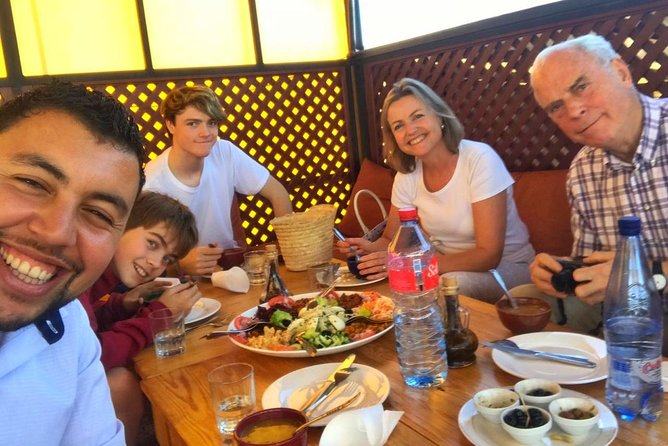
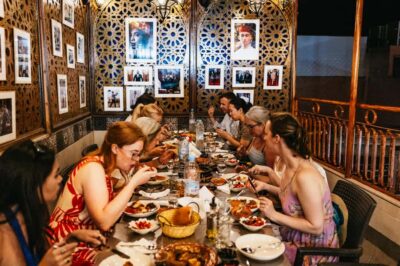
The evening is supposed to finish with a sit-down Moroccan dinner at a rooftop restaurant. This changes the pace in a welcome way. After eating from stalls and standing or walking between stops, you get a proper table, a slower meal, and a chance to talk with the rest of the group.
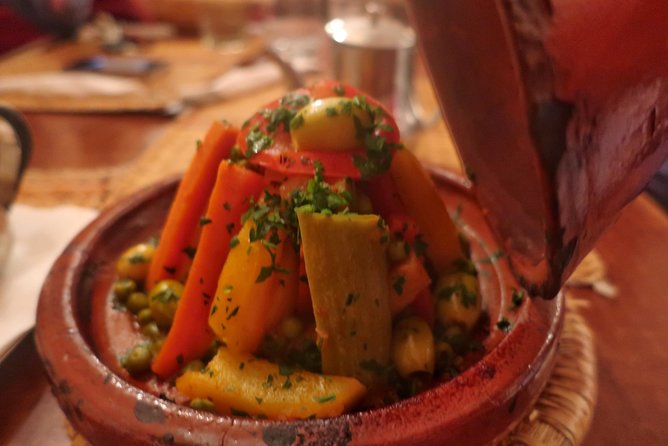
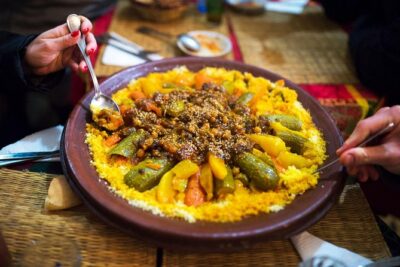
The advertised meal is a three-course dinner with various menu options. Different accounts describe dishes such as Moroccan specialties followed by dessert, and several people particularly enjoyed the rooftop setting overlooking Jemaa el-Fna. The view is part of the value. You can watch the square from above while taking a breath after the lively food walk below.
The dinner also helps explain why you should not judge the price by the tastings alone. At $54.45 per person, you are paying for a guide, multiple food samples, mint tea, and a full meal, not merely a quick walk through market stalls. For anyone who would otherwise order several small dishes while trying to find the right places, the package can be good value.
There is one important point to clarify before booking. The experience description includes dinner, and most accounts describe a final restaurant meal. One dissatisfied party reported receiving only food-stall visits, while another account described confusion about a restaurant stop. I would confirm the dinner arrangement with the provider before departure, especially if the meal is the main reason you are booking.
How much food will you actually eat?
This is not a light nibble tour. The combination of pastries, soup, pancakes, savory snacks, fruit, tea, and a three-course dinner can be a lot. One evening ended with the group so full that dessert had to be taken away.
That is good news if you want a serious introduction to Moroccan food. It is less useful if you plan to eat a late dinner elsewhere or prefer tiny samples. Have a modest lunch, drink water before setting out, and avoid arriving after a large afternoon meal.
The food also arrives in waves. Sweet items may come early, followed by soup, pancakes, olives, street-food dishes, and then dinner. If you have a strong dislike or allergy, state it after booking. Vegetarian requests and specific dietary needs can be accommodated when communicated in advance, though the precise substitutions are not specified.
Timing, group size, and meeting details
The start point is Poste du Maroc, Rue Beni Marine, Marrakech 48000. The activity lasts roughly three hours and returns to the meeting point. There is no hotel pickup or drop-off, so plan your route to the post office carefully, especially if you are staying outside the Medina.
The group maximum is 15 people. That is small enough for a guide to explain each dish, though the actual feel depends on attendance and the size of each food stop. A group of eight will move more easily through tight lanes than a full group.
Timing deserves a little patience. Some departures have begun about 30 minutes late, with the guide notifying the group in advance. Another difficult start involved a replacement guide arriving after the original guide became unavailable. The food walk recovered well in that case, but you should keep your first evening in Marrakech flexible rather than scheduling a nonrefundable show immediately afterward.
Most people can take part, and the meeting area is near public transportation. The route may include stairs and narrow passages. If you are bringing a stroller, mention it when booking. A stroller created problems on one departure because the guide had not been told in advance.
Who will enjoy this experience most?
I would recommend this tour to first-time visitors who want an easy introduction to Marrakech’s food culture without choosing every stall alone. It is also a strong fit for solo visitors, since the shared meal and walking route make it easy to meet other people.
Food-focused couples and small groups will appreciate the range. You can sample Moroccan sweets, soup, drinks, fried dough, fruit, offal, and traditional snacks in one evening. The experience is especially useful if you want to try unusual foods but would rather have a local guide explain them first.
It is less suitable for anyone who wants a quiet, polished restaurant evening. The first part involves market lanes, standing, crowds, and small food counters. It may also frustrate you if you dislike changing plans or do not want a possible herbalist stop.
Families should consider the walking and stairs. Children who enjoy trying new foods may like the coconut macaroons, pancakes, fruit, and smoothies, but the sheep’s head and snails will not appeal to everyone. Tell the provider about young children or mobility concerns before the tour.
Is the $54.45 price fair?
At $54.45, the tour is not the cheapest way to eat in Marrakech. You could buy individual snacks for much less. But the comparison is not quite fair because the fee also covers a certified local guide, an organized route, multiple tastings, mint tea, and dinner.
I see the price as reasonable if you value guidance and variety. You are paying to avoid guesswork, to learn what you are eating, and to reach places you might miss while wandering. The value drops if the tour runs late, the group is too large for comfortable tasting, or the dinner is not clearly provided.
Free cancellation up to 24 hours before the start gives you some planning flexibility. Changes or cancellations made within 24 hours are not refundable, so check your arrival plans before committing.
Should you book it?
Book this food tour if you want a generous, social evening that combines Medina exploration with a real meal. The strongest reasons are the wide menu, the chance to try foods such as snails and sheep’s head with guidance, and the rooftop dinner overlooking Jemaa el-Fna.
Before paying, confirm three things: the dinner is included on your date, the expected meeting time, and any dietary or stroller needs. If you want a focused introduction to Moroccan food and do not mind a little market chaos, this is a worthwhile choice. If you prefer a small private group, exact timing, and no shopping-style stop, choose a more tightly controlled food experience instead.
FAQ
How long does the Marrakech food tour last?
The experience lasts approximately three hours.
Where does the tour begin and end?
It begins at Poste du Maroc on Rue Beni Marine in Marrakech and ends back at the meeting point.
Is dinner included?
Yes. The experience includes a three-course Moroccan dinner, along with food samples and mint tea. Because one account reported confusion about the meal, confirm the dinner arrangement with the provider before departure.
How many people can join the tour?
The maximum group size is 15 people.
Can vegetarians or people with dietary needs join?
Yes. You should tell the provider about vegetarian preferences or specific dietary needs after booking so arrangements can be made.
Is hotel pickup included?
No. Hotel pickup and drop-off are not included.
Fresh off the menu around Morocco
- Tangier: Food Walking Tour★ 4.9 · 43 reviews
- Rabat: Walking Food Tour★ 4.9 · 48 reviews
- Marrakesh: Guided Street Food Tasting by Locals★ 4.6 · 47 reviews
- Marrakech: Medina Stories Food Tour with 15+ Tastings★ 5.0 · 141 reviews
- Marrakech Night Street Food Tour / Taste The Real Marrakech★ 4.9 · 200 reviews
- Marrakech: Authentic Moroccan Food Walking Tour & Dinner★ 4.8 · 261 reviews
- Fez: Foodie tour in the old Medina★ 4.7 · 27 reviews
- Night Tour of Casablanca with Street Food Tasting★ 4.8 · 29 reviews
Marrakech Food Tours, compared.
Marrakech: Authentic Moroccan Food Walking Tour & Dinner
Read our review →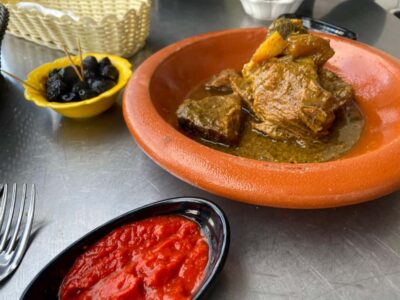
Marrakech Night Street Food Tour / Taste The Real Marrakech
Read our review →
Marrakech: Medina Stories Food Tour with 15+ Tastings
Read our review →
Medina Tasting Tour: Experience Local Street Food & Culture!
Read our review →Browse the lists this tour appears in