
Review · MARRAKECH
Marrakech: Authentic Moroccan Food Walking Tour & Dinner
Marrakech’s best food often hides behind an ordinary doorway, at a market stall, or in a bowl that looks unfamiliar. This three-hour evening walk takes you through the Old Medina for local snacks, mint tea, and a full Moroccan dinner, with possible stops for snails, sheep’s head, cactus fruit, and sizzling barbecue.
I like two things right away: the tour gives you a useful introduction to foods you might not order alone, and guides such as Yahya, Ali, Mehdi, and Rachid add family stories, cultural context, and practical tips about Marrakech. The main consideration is quantity. You may taste more than a dozen items, so arrive very hungry and plan to keep lunch light.
Key points at a glance
- Meet at Poste du Maroc: The tour begins and ends in front of Morocco’s main post office on Rue Beni Marine.
- Two possible food routes: Your guide may serve a tajine in a local restaurant or take you to an open-air Moroccan grill.
- Many small tastings: Expect foods such as Harira, Chebakia, Msemmen, olives, pastries, and mint tea, with more unusual choices possible.
- Local Medina knowledge: The walk includes lesser-known food stops and stories about Moroccan customs, markets, and daily eating habits.
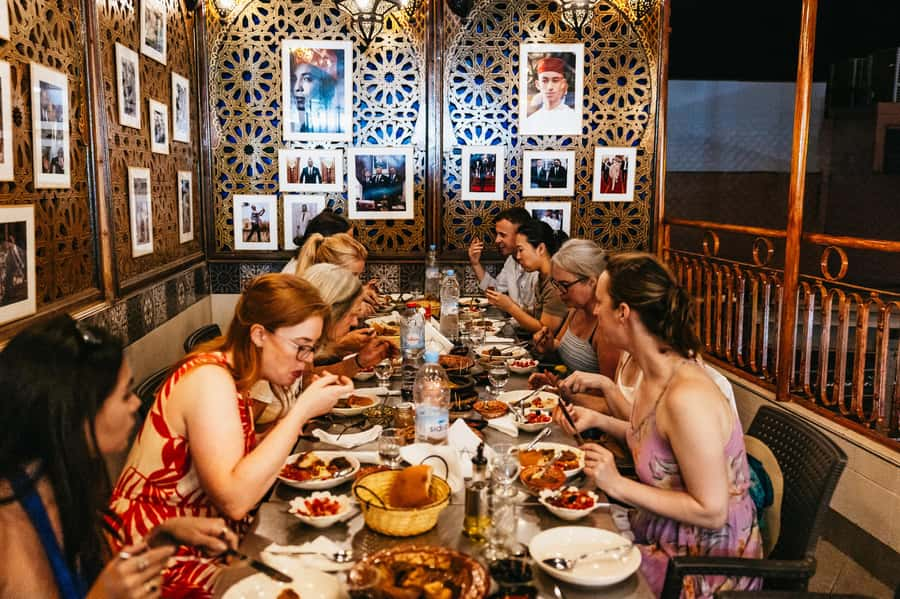
- A full dinner is included: The final meal may be a tajine with salad or grilled beef, turkey, and liver.
- Best for curious eaters: Vegetarians can be accommodated at tastings, but you should tell your guide about dietary needs at the start.
Why this food walk is a smart first evening in Marrakech
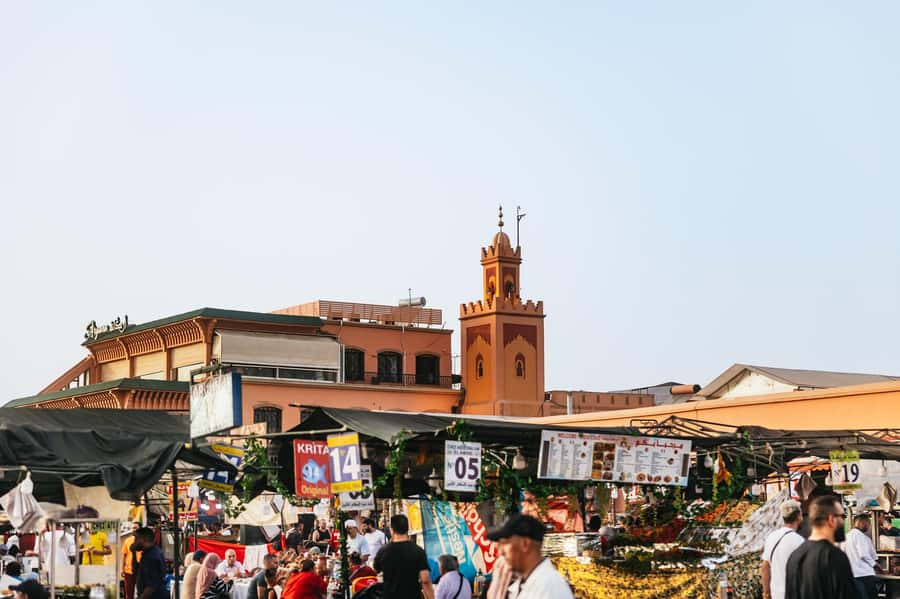
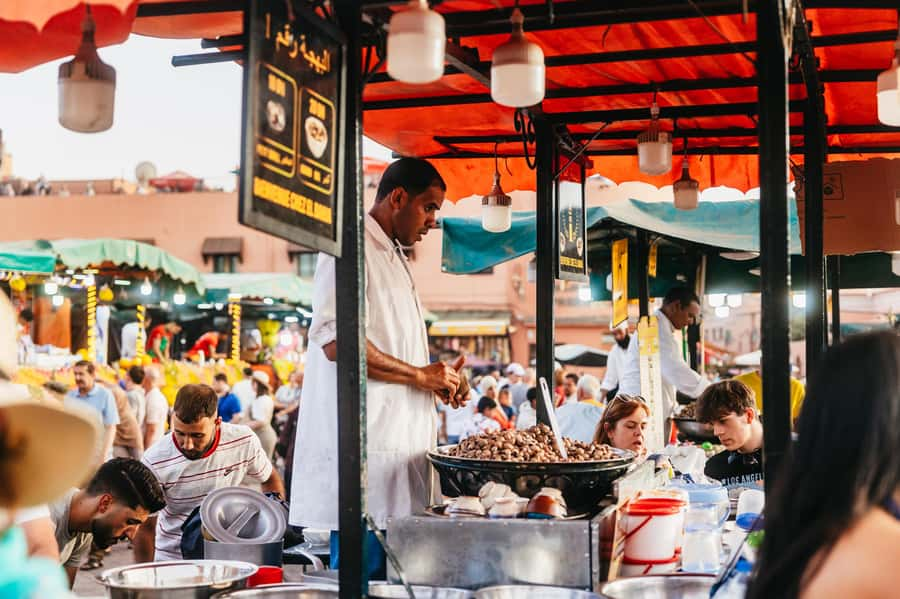
Marrakech can feel intense when you first arrive. The Medina is a maze of narrow lanes, food stalls, motorbikes, shopkeepers, unfamiliar smells, and crowds that shift as the evening goes on. A guided food walk gives you a reason to move through it slowly, with someone else handling the question of where to eat.
I especially like this as an early activity. You learn which foods interest you, become more comfortable walking around the souks, and pick up useful hints for the rest of your stay. One guide, Yaya, was praised for helping people feel at ease while explaining both the food and the parts of the Medina that many visitors miss.
The experience begins in front of Poste du Maroc, on Rue Beni Marine. That is a clear central meeting place, but give yourself time to find it. The tour does not include hotel pickup or drop-off, and you return to the same area after roughly three hours.
This is a walking tour, not a seated tasting menu. Wear comfortable shoes. You will stop often, but you should still expect steady walking through Medina streets and market areas.
More Food Walking Tours in Morocco:
- Rabat: Walking Food Tour
★ 4.9 · 48 reviews - Tangier: Food Walking Tour
★ 4.9 · 43 reviews - Reykjavik Food Walk – Local Foodie Adventure in Iceland
★ 5.0 · 18,952 reviews
Harira, dates, and the taste of Moroccan tradition
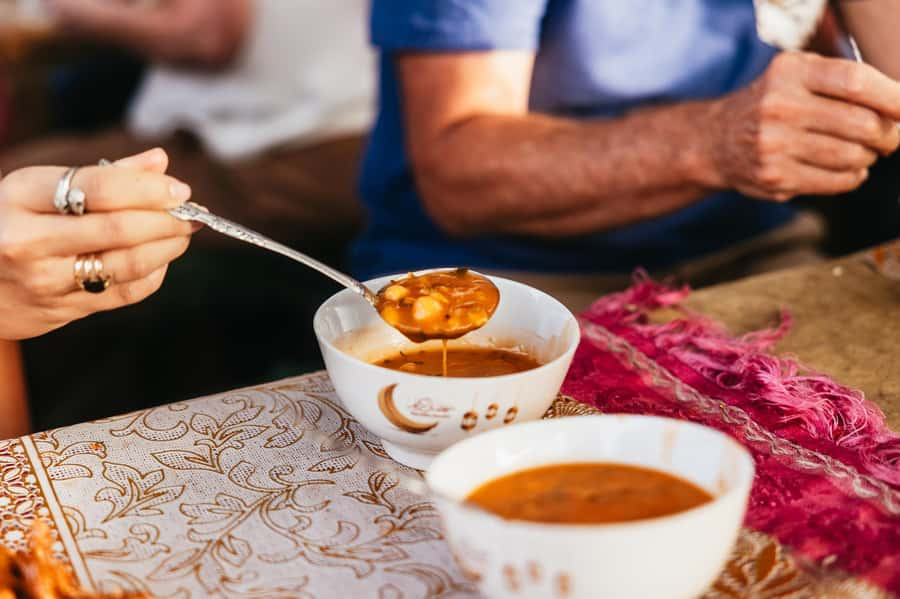
One of the most meaningful stops is Harira, Morocco’s tomato, lentil, and herb soup. It is commonly served with dates and Chebakia, a sticky, sesame-coated pastry. Together, they are closely linked with breaking the fast during Ramadan.
The food itself is comforting, but the cultural setting gives it more meaning. Your guide can explain how Moroccan families use this combination during Ramadan and why the meal is more than a simple bowl of soup. If you visit during Ramadan, the timing may coincide with sunset and the end of the daily fast, which can add a memorable cultural moment to the evening.
The dinner arrangement changes during Ramadan, so you should check the current details when booking. The included dinner is listed as unavailable during Ramadan, even though the tastings and sunset food experience may still form part of the evening.
Harira is also a good reminder that Moroccan food is not just about tagine. Soup, bread, pastries, preserved foods, grilled meats, fruit, and sweet drinks all have a place at the table.
The first route: pastries, snails, olives, and tajine
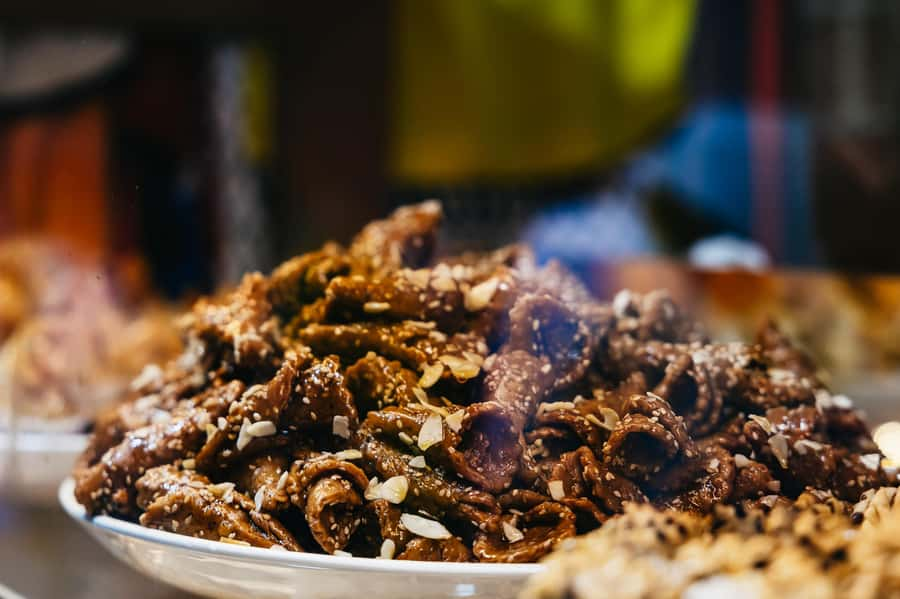
One possible route starts with Moroccan coconut macaroons, a simple sweet that is especially popular with children. You may then try Kaab Ghzal, often translated as gazelle ankles, a delicate pastry filled with almond paste and scented with orange blossom water.
The pastry is a useful introduction to Moroccan sweets. Almonds, honey, sesame, and orange blossom appear again and again in Moroccan cooking, and the portions are usually small enough to let you keep tasting.
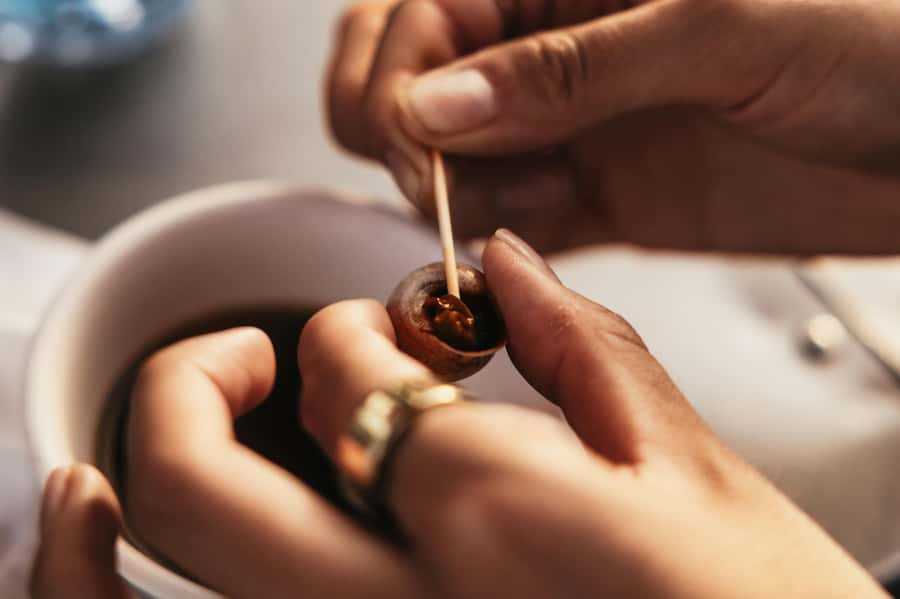
Next may come Harira with dates and Chebakia, followed by Babbouche, or Moroccan snails. The snails are slowly cooked in an aromatic herbal broth. This is one of the stops where a guide earns their keep. You can ask how the dish is eaten and decide for yourself if you want a full taste or just a cautious sample.
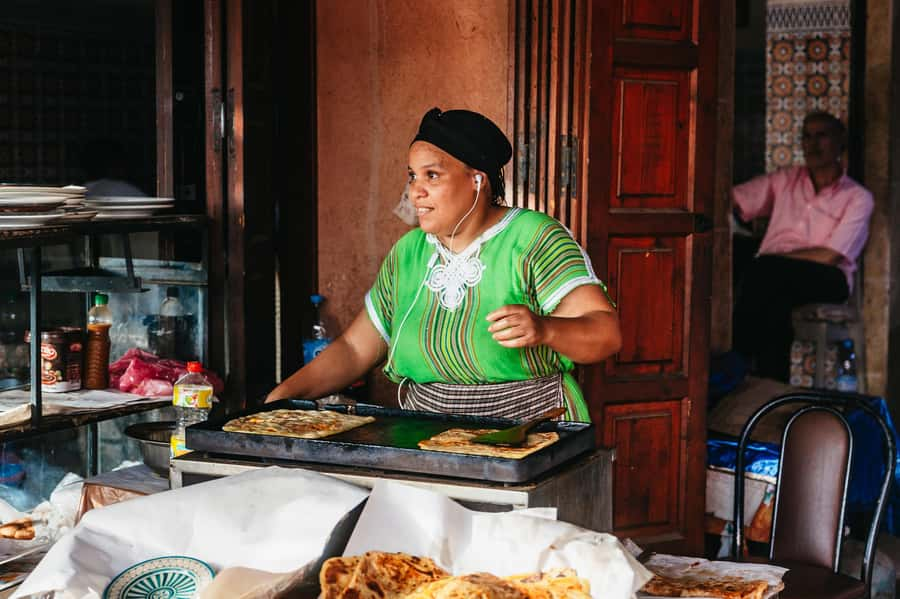
The tour may then pause for Moroccan mint tea and Msemmen, a pan-fried flatbread or pancake. It can be served with honey and cheese, giving you a savory and sweet combination in one stop. Msemmen is common at tea time and makes a filling snack, so it is worth remembering if you want an easy breakfast during the rest of your trip.
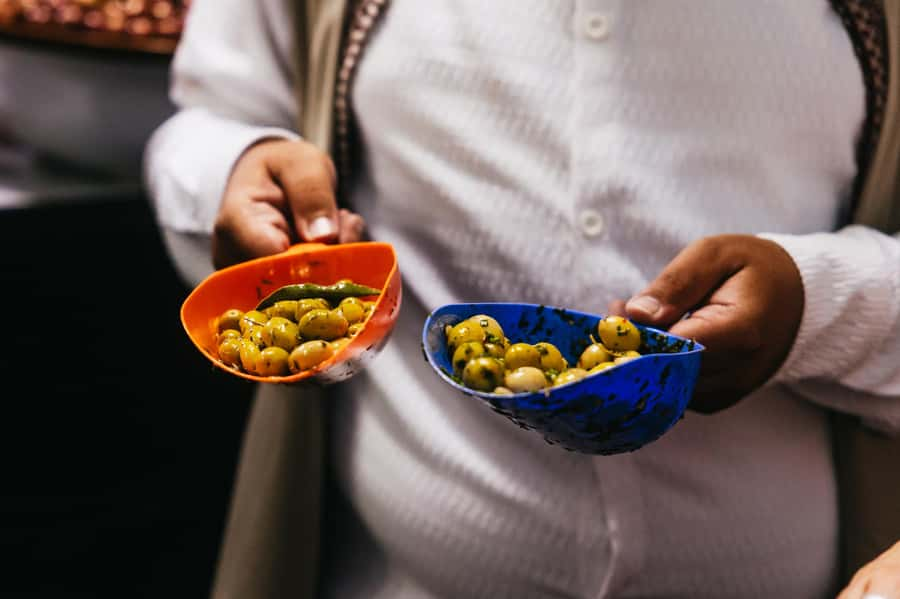
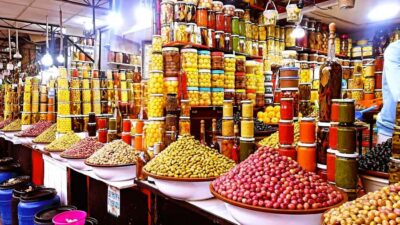
Fakya follows the same theme of food shared socially. It is a festive mixture of dried fruits and nuts, often prepared for family gatherings and celebrations. You may also sample Moroccan olives, including creamy green varieties and red olives mixed with parsley and cilantro.
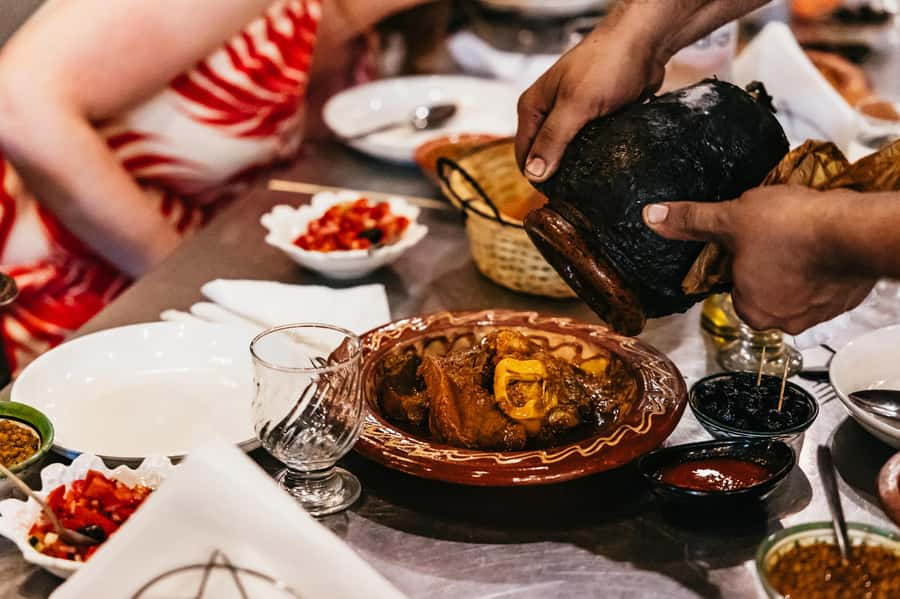
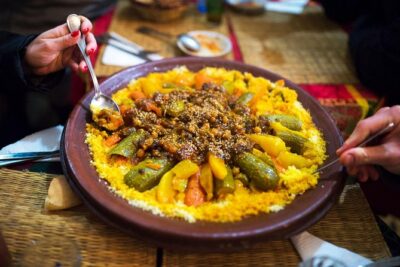
The first route ends at a cozy local restaurant. Dinner includes a fresh Moroccan salad and a hearty tajine, followed by Raïb, a homemade yogurt. The tajine is likely to be the most familiar dish of the evening, but it tastes different after you have sampled the smaller foods that locals eat throughout the day.
The second route: Msemen Amer, sfenj, and open-air grilling
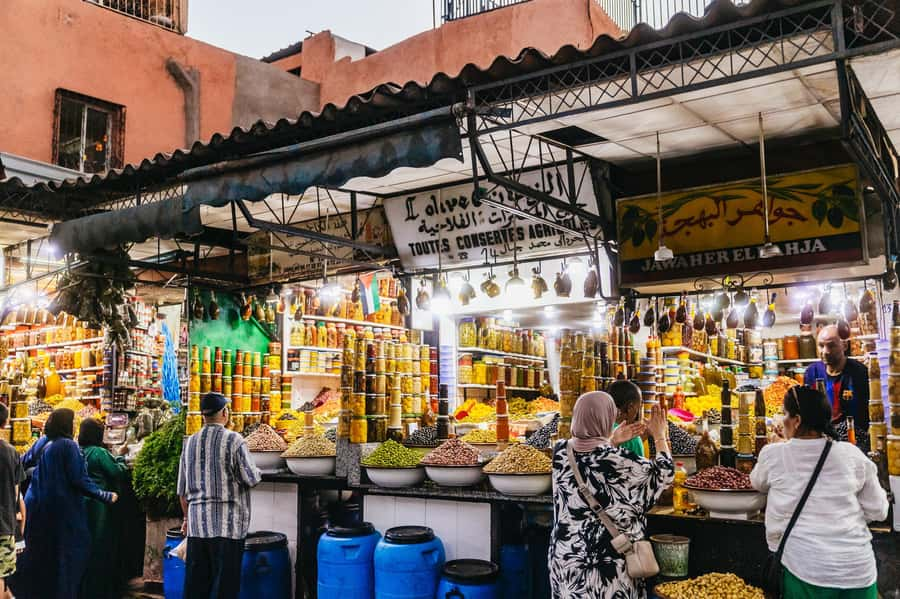
The other possible route is more adventurous in places. It may begin with Msemen Amer, a Moroccan pancake filled with savory ingredients, often spiced vegetables. This is a good example of how a simple flatbread can become a substantial snack.
You may then try Harira and Chebakia, followed by Makkla bel Kefta, a Moroccan dish that resembles shakshouka but uses spiced meatballs. It is hearty, saucy, and easy to understand even if you are new to Moroccan cooking.
Sfenj is another likely stop. These traditional Moroccan doughnuts are crisp on the outside and airy inside. They are sold as street food and are best treated as a small taste rather than a dessert after dinner, since the tour keeps feeding you.
Lhindiya, or cactus fruit, offers a cool break from the pastries and fried foods. It is refreshing and especially welcome on a warm evening. Because the tour follows local availability, the exact selection can change with the season.
The most daring tasting may be Rass Mbekher, delicately steamed sheep’s head seasoned with cumin. It is not a compulsory test of courage, but it is part of the point of this tour: you get the chance to try a traditional food that you might never find on a standard restaurant menu. On some evenings, this stop is replaced by local chawarma, such as chicken or falafel.
A Panaché, made from fresh seasonal fruit, adds another lighter course. The evening may also include Khoudenjal, a hot herbal drink made with galangal root. It is traditionally enjoyed for digestion and as a warming drink in cooler weather.
This route finishes at an open-air Chwa grill. Dinner may include beef, turkey, and liver cooked over the coals. Compared with the restaurant-based tajine route, this ending feels more direct and smoky, with the grill itself becoming part of the meal.
More food tours that end at dinner around Morocco:
- Authentic Moroccan Food Tour in Marrakech with Dinner
★ 5.0 · 1,423 reviews - Marrakech: Jemma El Fnaa Food Tour with Dinner
★ 4.7 · 394 reviews - Bateaux Parisiens Seine River Gourmet Dinner & Sightseeing Cruise
★ 4.5 · 6,930 reviews - Rome: Gourmet Food Tour with Dinner & Barolo Wine
★ 4.9 · 2,347 reviews
What the Medina walk adds to the meal
The food is the main reason to book, but the walking gives the evening its character. You are not simply moved between restaurants in a vehicle. You pass through the Old Medina, visit small food spots, and see how eating fits into daily life.
The exact route depends on your guide, the season, and the pace of the group. That flexibility is useful because local food is not a fixed museum display. It also means you should not book this expecting an identical sequence every night.
Several guides have received especially strong praise for their personal approach. Yahya, also written as Yaya or Yaya in some accounts, is described as funny, warm, and eager to explain the foods and neighborhoods. Ali has been praised for his energy and local insight, while Mehdi was noted for keeping the pace comfortable and making the whole group feel included. Rachid has been singled out for explaining each dish and helping people with practical advice about seeing Marrakech.
Your guide may take you to a traditional herbalist’s shop for a short break. This can include a look at Moroccan spices, mint tea, and a restroom stop. Treat it as an educational pause, not a required shopping session. The value is in learning how herbs and spices are used, especially if you have questions about Moroccan cooking.
How much food do you really get?
Quite a lot. The number of tastings varies, but the experience can include more than a dozen samples before the final dinner. That is why the most useful advice is simple: eat a small lunch or skip it if you can comfortably do so.
The food comes in tasting portions, but several items are filling. Msemmen, sfenj, soup, pancakes, pastries, and grilled meat add up quickly. The final meal is not a token plate. It is intended as dinner.
This makes the tour good value at $52 per person. You receive a three-hour guided walk, food at multiple stops, mint tea, and either a restaurant dinner or open-air barbecue. If you tried to sample this range of food independently, you would need to find the stalls, judge which ones are worthwhile, order small portions, and understand what you were eating. The guide’s local connections and explanations are part of what you are paying for.
The value is strongest for first-time visitors and curious eaters. If you already have a carefully planned Marrakech food itinerary, some stops may overlap with places you intend to visit. Even then, the cultural explanation and access to unusual foods can make the cost reasonable.
Dietary needs and the less polished parts
This is an authentic street-food experience, which means it will not feel like a controlled restaurant tasting. Food is served in local settings, and some dishes may be unfamiliar in texture or flavor.
Vegetarians can be accommodated. One vegetarian participant was consistently offered alternatives, but you should tell your guide clearly at the beginning. The route may include meat, liver, sheep’s head, snails, and broth-based foods, so do not assume every tasting will suit your diet.
The tour is conducted in English. You should also be comfortable with walking, standing, eating in stages, and trying food in busy Medina surroundings. Families can enjoy it, and children have particularly liked the sweets and pastries, but the full route may be a lot for very young children who tire easily.
The group size is not stated, so you should be prepared for a shared tour rather than a private food crawl. A larger group can make the evening social, but it may also mean waiting briefly while everyone receives a sample.
Who should book this Marrakech food tour?
I would choose this tour if you want a friendly introduction to Moroccan food without spending your first night guessing at menus. It suits you if you enjoy trying unfamiliar dishes, want local context, and prefer eating in ordinary Medina settings rather than only in polished restaurants.
It is also a good choice for solo visitors and couples who want company. The shared format can make it easy to meet people from different countries, while the guide gives the evening a clear shape.
Families may enjoy the variety, especially the macaroon, pastries, fruit, and pancakes. Adventurous eaters will appreciate the chance to try snails or sheep’s head. Vegetarians can join, but should state their needs early.
I would think twice if you dislike surprises in your food, have strict dietary restrictions, or prefer a quiet, seated dinner. This tour is busy, filling, and designed around discovery rather than control.
Practical details before you reserve
The listed price is $52 per person, and the activity lasts three hours. It begins and ends at Poste du Maroc, Rue Beni Marine, with no hotel transportation included.
The tour offers free cancellation up to 24 hours before the start and allows you to reserve now and pay later. Starting times vary, so check the available evening slots for your date.
Bring comfortable walking shoes. You do not need special equipment, but modest, practical clothing is sensible for moving through the Medina and eating at local stops.
The menu is not fixed. You may follow the tajine route, the open-air grill route, or a version adjusted for season and local conditions. That is useful if you want a genuine food walk, but less suitable if you need an exact menu in advance.
FAQ
Where does the Marrakech food tour begin?
Meet your English-speaking guide in front of Poste du Maroc on Rue Beni Marine. The tour returns to the same location after about three hours.
What food is included?
Possible tastings include Harira, Chebakia, Moroccan macaroons, Kaab Ghzal, Babbouche, Msemmen, olives, Fakya, sfenj, cactus fruit, Panaché, and Moroccan herbal tea. The exact route and menu can vary.
Is dinner included?
Yes. Depending on the route, dinner is either a fresh salad and tajine at a local restaurant or an open-air Moroccan barbecue with grilled beef, turkey, and liver. The dinner format is not available during Ramadan.
Can vegetarians join the tour?
Yes. Vegetarian alternatives can be provided, but you should tell your guide about your dietary needs at the start of the experience.
Is hotel pickup included?
No. You must make your own way to the meeting point at Poste du Maroc, and hotel drop-off is not included.
What should I bring?
Comfortable walking shoes are recommended. You may also want to arrive with a light appetite because the tour includes many tastings and a full dinner.
Should you book it?
Yes, if you want to understand Marrakech through the food locals eat between formal meals. The combination of Medina walking, unusual tastings, mint tea, personal stories, and a proper dinner gives you far more than a single restaurant reservation.
Book it early in your stay if you can. You will gain food ideas, neighborhood confidence, and practical advice for the rest of your visit. Just arrive hungry, mention dietary needs clearly, and accept that the evening may include something unexpected, from snails to sheep’s head.
More sit-down food experiences around Morocco
- Sorrento Farm and Food Experience including Olive Oil, Limoncello, Wine tasting
★ 5.0 · 2,524 reviews - Porto Food & Wine Tasting Tour with Lunch or Dinner Option
★ 5.0 · 2,303 reviews - Lisbon: Baixa District Food Tour with Dinner and Drinks
★ 4.9 · 1,997 reviews - Paris 3-Courses Gourmet Dinner Seine River Cruise with Champagne
★ 4.0 · 1,659 reviews
Fresh off the menu around Morocco
- Tangier: Food Walking Tour★ 4.9 · 43 reviews
- Rabat: Walking Food Tour★ 4.9 · 48 reviews
- Marrakesh: Guided Street Food Tasting by Locals★ 4.6 · 47 reviews
- Marrakech: Medina Stories Food Tour with 15+ Tastings★ 5.0 · 141 reviews
- Marrakech Night Street Food Tour / Taste The Real Marrakech★ 4.9 · 200 reviews
- Fez: Foodie tour in the old Medina★ 4.7 · 27 reviews
- Night Tour of Casablanca with Street Food Tasting★ 4.8 · 29 reviews
- Medina Tasting Tour: Experience Local Street Food & Culture!★ 4.9 · 25 reviews
Marrakech Food Tours, compared.
Authentic Moroccan Food Tour in Marrakech with Dinner
Read our review →
Marrakech Night Street Food Tour / Taste The Real Marrakech
Read our review →
Marrakech: Medina Stories Food Tour with 15+ Tastings
Read our review →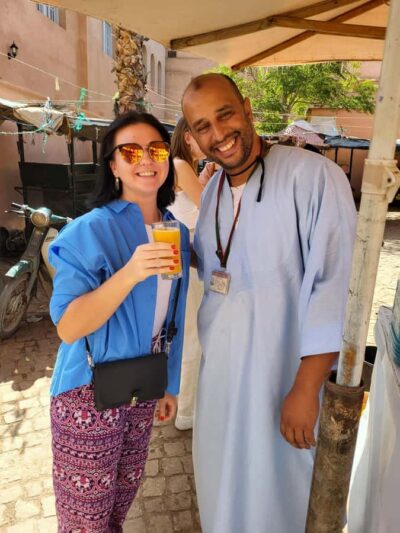
Medina Tasting Tour: Experience Local Street Food & Culture!
Read our review →Browse the lists this tour appears in