
Review · FLORENCE
Florence: Sant’Ambrogio Market Food Tour of 10+ Local Dishes
Florence’s Sant’Ambrogio district is the right place for a food tour that feels tied to daily life. You’ll move from a handsome café to the Sant’Ambrogio Market, family-run food stops, and a gelato shop, tasting more than 10 Tuscan specialties along the way. The big draw is lampredotto, Florence’s famous beef tripe sandwich, served alongside cheeses, cured meats, pasta, wine, and a final surprise dish.
I like the small-group feel reported by recent participants, with one morning group numbering only four people. I also like the range of food: this is not just a cheese-and-wine walk, but a look at Florentine breakfast customs, market shopping, street food, trattoria cooking, and dessert. The main point to consider is the walking. It is described as easy by one recent participant, but the tour still involves several hours on foot and is not suitable for wheelchair users or people with mobility impairments.
Key points at a glance
- Start with Florentine café culture: Learn how locals begin the day before heading into the neighborhood.
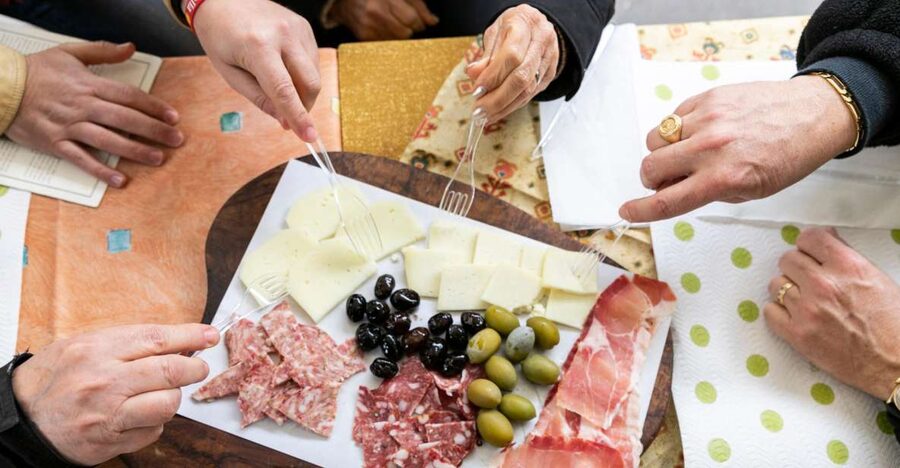
- Sant’Ambrogio Market is the heart of the tour: Sample seasonal fruit, cheeses, hams, and salami while seeing where residents shop.
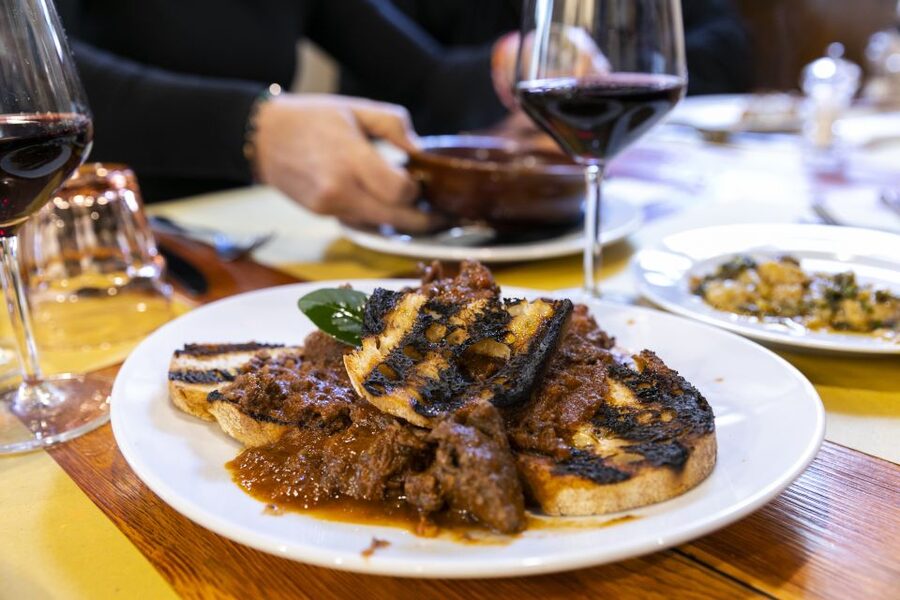
- Lampredotto is the boldest bite: Florence’s classic street food gives you a taste of the city’s working-class cooking.
- A family-run trattoria adds substance: Expect traditional starters, Tuscan pasta, and hearty regional flavors.
- The finish is sweet: Artisanal gelato and a Secret Dish close the three-hour route.
- Guides shape the experience: Paolo, Pablo, and Gerardo have each been praised for their warmth, food knowledge, and local stories.
Why Sant’Ambrogio is a smart setting for a Florence food tour
Many Florence food walks stay close to the historic center’s major sights. This one heads toward Santa Croce and Sant’Ambrogio, where the rhythm feels more local and less tied to the big museum circuit.
You begin in Piazza di Santa Croce, at the bottom of Dante’s statue. Look for the guide carrying an orange umbrella. That meeting point is easy to identify, and the location gives you a quick visual reminder of Florence’s grand religious and literary past before the tour turns toward food.
The Sant’Ambrogio district is useful for a food tour because several types of eating happen close together. You have the market, cafés, street food, traditional restaurants, and artisanal dessert shops. Instead of treating Tuscan cuisine as a list of famous dishes, the tour connects food to the places where it is bought, prepared, and eaten.
I especially like that the route includes both everyday products and prepared dishes. You may taste a wedge of local cheese or a slice of salami at the market, then sit down for pasta at a trattoria. That contrast helps you understand Tuscan food as a practical cooking tradition rather than a polished restaurant performance.
More Market Food Tours in Italy
- Small Group Cooking Class & Market Food Tour in Florence
★ 5.0 · 1,574 reviews - Florence: Cooking Class with Local Food Market Tour
★ 4.9 · 407 reviews - Bologna Food & Market Tour with 6 Tastings, Pasta, Wines & More
★ 5.0 · 1,328 reviews
The opening café and the Florentine start to the day
The first stop is one of Florence’s beautiful cafés. Here, the guide explains how Florentines begin the day and introduces the café traditions that shape local routines.
This is a useful opening because it gives the tour a sense of place before the heavier tastings begin. You are not simply handed food at random. You start with the social side of eating in Florence, then move into the ingredients and dishes that make up the region’s cooking.
The café stop should also help you settle into the pace. A three-hour food tour works best when it has pauses between tastings, and the route appears to use frequent stops rather than rushing from one address to the next. One participant specifically described the morning as easy walking with many stops, while another said the tour never felt rushed.
The exact café offering can change, so you should treat this as an introduction to local café life rather than a fixed breakfast menu. The itinerary and menu may shift according to weather, availability, and the places operating that day.
Shopping and tasting inside Sant’Ambrogio Market
Sant’Ambrogio Market is the tour’s main window into ordinary Florentine food shopping. You’ll see seasonal produce, regional cheeses, cured meats, and other ingredients that support Tuscan home cooking.
The fruit tasting is a small detail, but it matters. Seasonal fruit gives the meal a fresh break from the salty meats and cheeses, while also showing how much of Italian food culture depends on what is available at the market. You may also sample Tuscan hams and salami with regional bread, a simple combination that puts the quality of the ingredients first.
I would pay close attention here to the way the guide explains products. This is where guides such as Paolo, Pablo, or Gerardo can add value, since the tour is built around local food, history, geography, and culture rather than tasting alone. A good explanation of a cheese or cured meat can make a familiar snack feel specific to Tuscany.
The market can also be the most socially active part of the route. You are walking through a working food market, not a staged tasting room. That means the atmosphere can depend on the day and the weather, and the route may change if a particular stall or product is unavailable.
Tuscan cheeses, meats, coccoli, and regional bread
The early savory tastings focus on the building blocks of Tuscan eating. Expect several cheeses, hams, salamis, and traditional starters, often paired with bread and selected Tuscan wines.
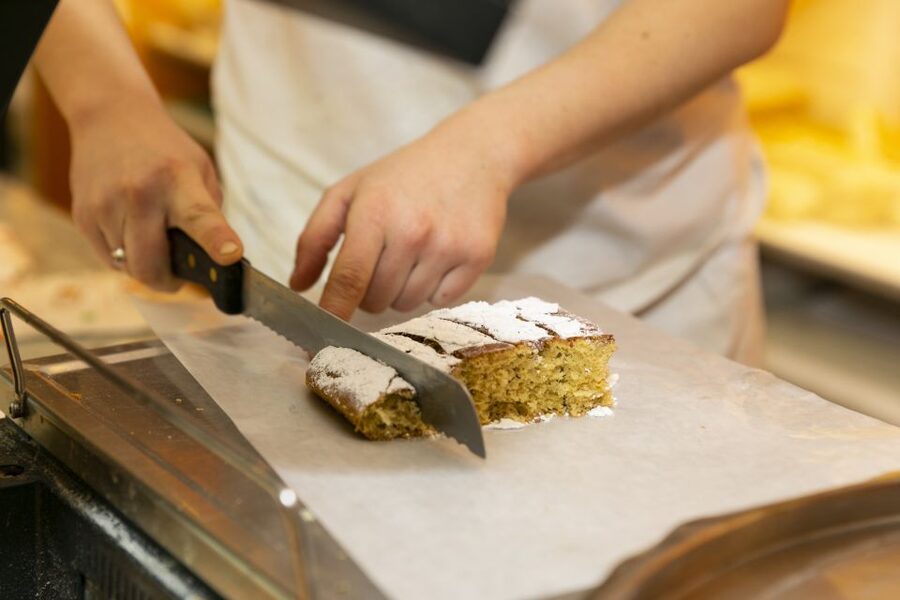
Coccoli are one of the more distinctive bites. These are small fried dough balls, usually enjoyed as a snack or starter. Their appeal is straightforward: crisp, warm, and satisfying, they provide a change in texture from the sliced meats and soft cheeses.
This part of the tour suits anyone who wants to understand how a meal develops in Tuscany. You are likely to move from small bites into more filling food, rather than eating one large dish at a single restaurant. The range also makes the $115 price easier to assess. You are paying for food, wine at selected stops, a guide, neighborhood interpretation, and a three-hour route, not just one sit-down meal.
Still, the value depends partly on your appetite and interests. If you already plan several market visits and restaurant meals, some tastings may overlap with what you would order on your own. If you want a guided introduction and prefer to sample many things without choosing every dish yourself, the price is more convincing.
More Market Food Tours in Florence:
- Chef Guided Food Tour of Pike Place Market
★ 5.0 · 3,733 reviews - Tokyo Tsukiji Fish Market Food and Culture Walking Tour
★ 5.0 · 3,184 reviews - London Bridge & Borough Market Food Tour with 7 Authentic Dishes
★ 5.0 · 1,972 reviews - Pike Place Market Tasting Tour
★ 5.0 · 1,696 reviews
Lampredotto, Florence’s famous working-class dish
Lampredotto is the tour’s most adventurous and most specifically Florentine tasting. It is made from beef tripe and is closely associated with Florence’s street-food tradition.
If you are unsure about it, this is a good setting to try it. You receive a small portion as part of a guided food walk, rather than ordering a full serving without knowing what to expect. The guide can explain its place in Florentine cooking and help put the dish in context.
Lampredotto will not suit every palate. Its texture and offal-based character can be challenging if you prefer mild food or avoid organ meats. I would not book this tour expecting only familiar pasta, cheese, and gelato. The point is to try at least one dish that says something important about Florence’s food culture, even if it is not your favorite bite of the day.
That balance is one of the tour’s strengths. You get approachable foods such as fruit, bread, cheese, and gelato, but also a chance to taste a local classic with a stronger identity.
A family-run trattoria for starters and pasta
The move into a family-owned trattoria gives the tour a proper meal component. Here, you can expect a selection of traditional Tuscan starters and pasta dishes, with hearty regional cooking taking center stage.
The menu is not fixed. It can change with availability and other conditions, so do not book this experience expecting one named pasta dish. Instead, think of the trattoria stop as a chance to taste the kind of food that gives Tuscan cuisine its reputation for simple, filling meals.
This is likely to be the point where you feel the full effect of the tour’s generous portions. Recent feedback described plenty of food and wine, so arriving hungry is practical advice. Eating a light breakfast may be wise, especially if you want to sample each stop rather than pick and choose.
Wine is served at selected stops, along with water. The inclusion of Tuscan wine adds value for adults who want to connect the dishes with the region’s drinking culture, though the tour is not presented as a dedicated wine tasting. If you do not drink alcohol, the food remains the main focus, and water is available.
Stories about Florence between the stops
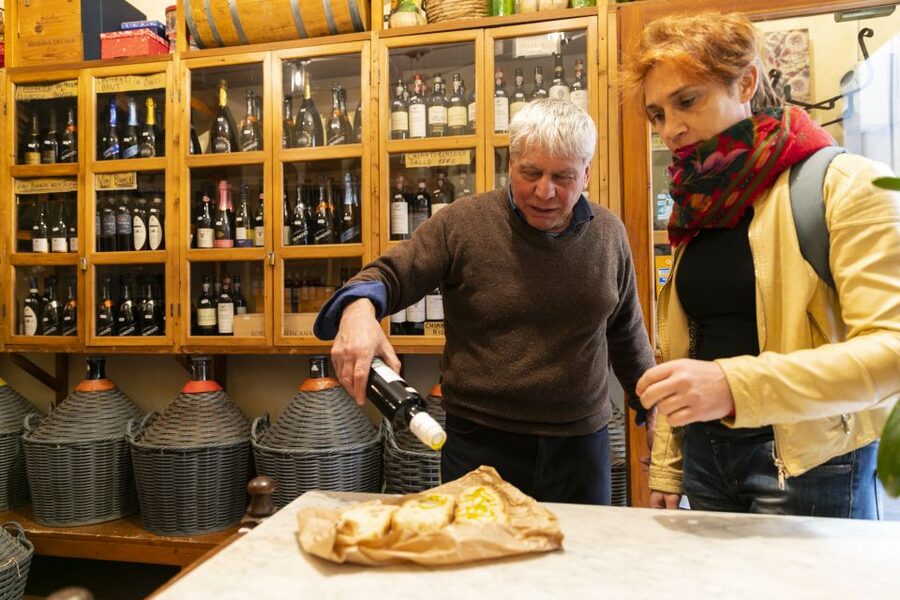
The walking sections are not filler. They connect Santa Croce, Sant’Ambrogio, market life, and Tuscan food customs into one experience.
Guides Paolo, Pablo, and Gerardo have each been described as friendly, passionate, and strong on local stories. The most useful guide will help you see how geography, history, and food fit together without turning the tour into a lecture. You should expect explanations about Florence and Tuscany as you move, along with practical comments about what you are eating.
Group size can shape this part of the experience. A four-person group allows for more questions and a more personal pace. The tour is advertised with a live English-speaking guide, but the exact number of people on your departure can vary.
The walking is generally described as manageable, with many stops, but you still need comfortable shoes. The route is not suitable for wheelchair users or people with mobility impairments. If you have dietary requirements, contact the operator before the tour so the team can assess what substitutions are possible.
Gelato and the Secret Dish finale
No Florence food walk would feel complete without gelato, and the final dessert stop brings a cool, sweet finish after the savory dishes.
The gelato comes from an artisanal shop. The exact flavor is not specified, which is sensible because selection can depend on the day. You can expect creamy handmade gelato rather than a fixed flavor pairing or formal dessert course.
The Secret Dish is also revealed only during the tour. That gives the ending a bit of surprise, though it means you cannot plan around the final item. The menu can change, so you should think of the secret tasting as an extra local bite rather than a guaranteed signature dish.
By this point, you will have moved through several sides of Florentine eating: café habits, market ingredients, fried snacks, street food, trattoria cooking, wine, and gelato. That broad range is more useful than a tour that focuses on only one type of food.
How the $115 price compares with the experience
At $115 per person, this is not a cheap snack walk. It becomes a reasonable purchase if you value a guided route, a small-group atmosphere, several food stops, selected wine, and enough tastings to replace a meal.
The three-hour duration also matters. You are not paying for a quick market visit. The time allows you to eat at multiple locations, hear about Florence and Tuscany, and pause between courses. Recent feedback describes the route as personalized and unhurried, which is important when the food itself is the main attraction.
Hotel pickup and drop-off are not included. You meet in Piazza di Santa Croce, so plan to reach the statue and orange umbrella on your own. The tour has free cancellation up to 24 hours before departure, and you can reserve now and pay later, which is useful if your Florence schedule is still shifting.
Who should book this Sant’Ambrogio food tour
I would recommend this experience if you want to taste many Tuscan foods in one morning or afternoon and prefer local context over a simple list of restaurant stops.
It is especially well suited to:
- First-time Florence visitors who want food guidance early in their stay
- People curious about lampredotto and other traditional dishes
- Couples and small groups who enjoy conversation with a local guide
- Eaters who want both market products and sit-down trattoria food
- Visitors who prefer a steady walking route with frequent tasting breaks
I would think twice if you need step-free access, have serious mobility limits, or want a completely fixed menu. The route and dishes can change, and lampredotto may not appeal to everyone.
Should you book it?
Book this tour if you want a full introduction to Florentine food culture, not just a restaurant meal. The strongest reasons are the Sant’Ambrogio setting, the mix of market and trattoria tastings, the chance to try lampredotto, and the guides’ personal connection to Florence.
Skip it if you already have a carefully planned food itinerary or dislike offal, walking, and flexible menus. For most curious eaters, though, the $115 cost buys three useful hours, plenty of food, local stories, and a practical sense of where Florentines eat beyond the main tourist streets.
FAQ
Where does the Florence food tour meet?
The meeting point is in Piazza di Santa Croce, at the bottom of Dante’s statue. The guide will carry an orange umbrella for easy recognition.
How long does the tour last?
The experience lasts three hours.
What language is the tour conducted in?
The tour is conducted in English with a live guide.
What foods are included?
Included tastings are coccoli, lampredotto, seasonal fruit, Tuscan meats, hams, salamis, cheeses, traditional starters and pasta dishes, artisanal gelato, a Secret Dish, Tuscan wines at selected stops, and water.
Is the menu fixed?
No. The route and menu may change according to location availability, weather, and other circumstances.
Can people with dietary requirements join?
You should contact the operator in advance with any dietary requirements so the team can determine how best to accommodate them.
Is the tour suitable for wheelchair users?
No. The tour is not suitable for wheelchair users or people with mobility impairments. Comfortable shoes are recommended because the experience involves a fair amount of walking.
What is the cancellation policy?
You can cancel up to 24 hours in advance for a full refund. You can also reserve now and pay later.
Fresh off the menu around Florence
- Florence: San Gimignano & Volterra Day Trip with Food & Wine★ 4.7 · 57 reviews
- From Florence: Sunset Wine Tasting Tour in Vintage Car★ 5.0 · 68 reviews
- Florence: Taste of Tuscany Wine and Local Food Tour★ 4.7 · 27 reviews
- Florence: Tuscan Food and Wine Guided Walking Tour★ 4.8 · 72 reviews
- Florence Street Food Walking Tour with Wine in Duomo Area★ 4.9 · 76 reviews
- Florence: Street Food Walking Tour with Wine★ 4.9 · 719 reviews
- Florence: Small-Group Sunset Food & Wine Tour in Oltrarno★ 4.8 · 39 reviews
- Florence’s Ultimate Food Tour: Full Tuscan Meal with a Local★ 4.7 · 92 reviews
Florence Food Tours, compared.
Winner 2025 Florence Sunset Food & Wine Tour by Eating Europe
Read our review →
From Florence: Small Group Wine Tasting Tour to Tuscany
Read our review →
Florence: Cinque Terre Park Day Trip with Optional Street Food
Read our review →
From Florence: Tuscany Wine & Food Tour with Guide
Read our review →
Small Group Cooking Class & Market Food Tour in Florence
Read our review →
Florence: Street Food Tour with Wine & Local Guide
Read our review →
Florence Exclusive PRIVATE Food Tour with 6 or 10 Tastings
Read our review →Browse the lists this tour appears in