
Review · LA PAZ
Evening Foodie Tour of La Paz
La Paz reveals itself through its food, from market stalls and street vendors to modest local restaurants where a meal is part of the evening’s social life. This three-hour tour gives you a practical introduction to five Bolivian specialties, plus a local drink and the stories behind the people, ingredients, and customs.
I like two things right away: the stops include places you might walk past on your own, and the guides connect each dish with everyday Bolivian life. Daniel, Max, Matt, Marisol, and other guides have been praised for being warm, funny, and easy to understand. The main drawback is simple: there is a lot of food, and some stops may suit adventurous eaters better than cautious ones.
Key points to know before you book

- Five substantial food stops: Expect a mix of street food, market food, and local restaurants rather than one long sit-down meal.
- A useful first night in La Paz: The route passes markets, monuments, and central sights while showing you where to eat later on your own.
- Strong guides make the difference: Daniel, Max, Matt, and Marisol have all been singled out for clear English, good stories, and friendly attention.
- Come very hungry: Several people found the portions generous enough to feel full before the final stop.
- Limited vegetarian choice: Tell the operator about dietary restrictions when booking, and do not assume every dish can be adapted.
- Budget about more than $32: The tour includes listed food and drinks, but you need cash for extras, tips, and a taxi home.
A food-first introduction to La Paz
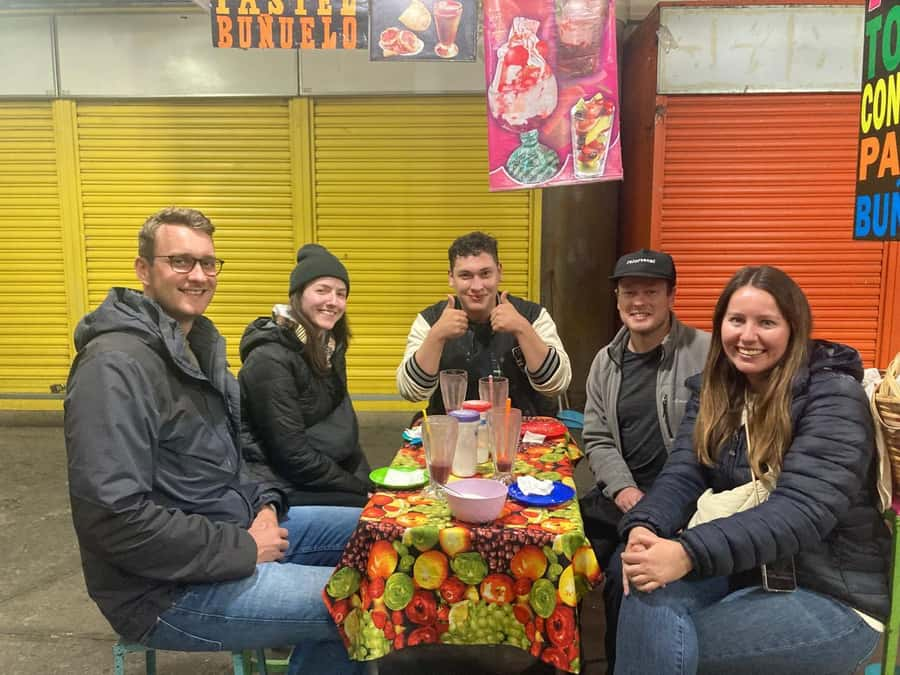
Bolivian food can be unfamiliar at first. It often favors warmth, filling portions, potatoes, grains, meat, and hearty sauces over the lighter, more instantly recognizable dishes found in some other South American capitals. That is exactly why this tour is useful. You are not simply handed a plate and left to guess what it is.
Your guide explains what you are eating, how it fits into local routines, and why particular ingredients matter. The tour description places food in the setting of family, work, conversation, and the end of the day. That context is valuable. A market snack is not just a cheap bite, and a shared drink is not merely a refreshment. Both can tell you something about how people spend time together.
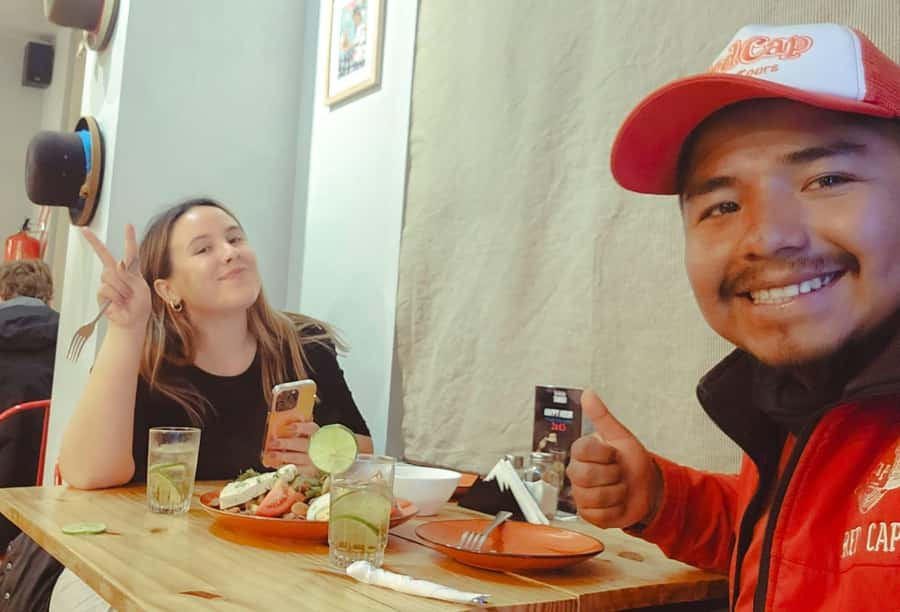
The meeting point is San Francisco Square, at the large doors of the church. Look for the guide wearing a red cap. The map may point to the church office rather than the exact meeting spot, so go to the church doors instead of searching for a numbered office entrance.
The tour begins at 18:25. That timing works well for a proper evening meal, but it also means you should plan your afternoon carefully. Do not arrive after eating a full dinner. A very light snack, or no meal at all, is the sensible choice.
More Evening Food Tours in the world:
- Winner 2025 Rome Twilight Trastevere Food Tour by Eating Europe
★ 5.0 · 5,157 reviews - Winner 2025 Florence Sunset Food & Wine Tour by Eating Europe
★ 5.0 · 5,015 reviews - Saigon By Night and Street Food By Motorbike | Opt: Ao Dai Riders
★ 5.0 · 4,066 reviews
Five stops, from street stalls to restaurants
The exact dishes can vary, but the structure is clear. You visit about five food locations, with stops that may include street vendors, market sellers, and local restaurants. Some people have tasted six items in total, so the number of bites can exceed the headline promise of five specialty dishes.
The first few stops tend to introduce you to the quicker, more informal side of La Paz eating. Street food can be the most revealing part of the evening because it shows what people actually grab during the day. You get to see food being sold in a working market setting rather than presented only for international visitors.
This is also the part where guidance matters most. You may not know which stall looks trustworthy or how to order a dish you cannot pronounce. The stops are selected with attention to cleanliness and proper food handling, which gives you a useful level of reassurance. Still, the experience remains local and informal. Expect food served in places that may be busy, plain, or compact rather than polished.
Market food adds another layer. Markets are where ingredients, snacks, household shopping, and daily conversation come together. Your guide can explain the local produce and the relationship between raw ingredients and prepared dishes. This is one reason I would place the tour near the start of a La Paz visit. You will learn what to look for when you return to a market alone.
The later stops move into local restaurants. These provide a more settled place to sit, talk, and compare the flavors you have already tried. One stop may feel less appealing than the others. A small, empty restaurant was not a favorite for every participant, and the food there did not suit the whole group. That is a fair warning, not a deal breaker. A food tour should show more than the highlights, and local eating is not a carefully edited tasting menu.
The final stop includes a drink and conversation at one of La Paz’s interesting restaurants. Depending on the evening, that may mean a local beer or a cocktail. Extra drinks are not included, so keep some cash with you if you want to continue ordering.
What the guides add to the meal
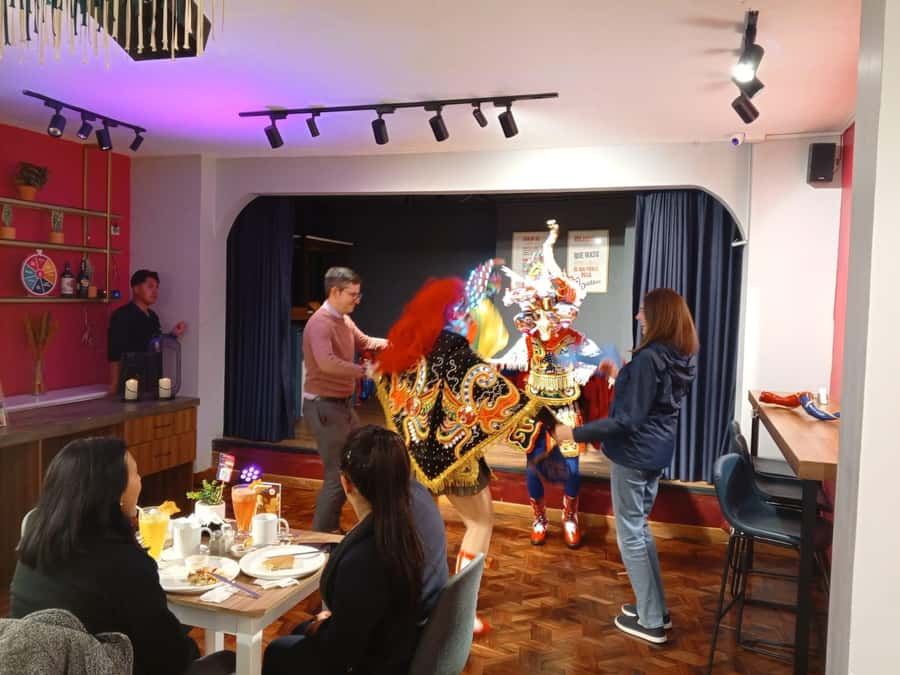
The food is the reason to book, but the guide controls the quality of the evening. This tour has earned its strongest praise for the people leading it.
Daniel appears often in the tour’s feedback and is described as warm, entertaining, and well informed about both food and La Paz. He has guided groups through market vendors, street food locations, and restaurants while explaining the links between cuisine and Bolivian culture. Matt has also been praised for attentive service, clear English, and a good sense of humor.
Max is another name that comes up often. He has been described as friendly, present, and full of stories. Marisol has been praised for explaining where to eat, how local customs work, and what makes each stop different. Other guides, including Denise and Roberto, have also been appreciated for their explanations and relaxed manner.
You cannot choose a specific guide with certainty, but the pattern is encouraging. The bilingual guides speak Spanish and English, and the best part of their work is not just translation. They help you understand why a dish matters, how drinking customs bring people together, and what food says about daily life in Bolivia.
The group dynamic also matters. This is a social evening, with conversation between stops and around the table. Solo visitors can fit in easily, while couples and small groups get a chance to compare reactions to unfamiliar flavors. If you prefer to eat quietly at your own pace, this may feel more involved than a standard restaurant dinner.
Why the cultural explanation matters
Food tours can become a string of samples with no lasting meaning. This one aims for more. Your guide talks about the people behind the ingredients and the role of food when families meet and the day slows down.
The drinking culture discussion is particularly useful. In Bolivia, a shared drink can carry social meaning beyond simply ordering alcohol. Learning that context helps you understand why a local beer or cocktail appears at the end of the evening rather than treating it as an unrelated extra.
The route also passes central markets, monuments, and historic sights. The tour is not a full sightseeing walk, and you should not book it as a substitute for a dedicated city tour. Its value is that the streets and landmarks provide a setting for the food. You see how eating places sit within the city rather than being isolated attractions.
There is not much walking compared with a standard walking tour. That is good news if you want to save your legs after a day in La Paz, but it also means you will not cover a huge part of the city on foot. The point is the sequence of food stops and the explanations between them.
More food tours around the world:
- Reykjavik Food Walk – Local Foodie Adventure in Iceland
★ 5.0 · 18,952 reviews - Dubai: Old Town, Creek, Museums, Souks, & Street Food Tour
★ 4.8 · 10,816 reviews - Madrid: Live Flamenco Show with Food and Drinks Options
★ 4.5 · 9,901 reviews - Ho Chi Minh City Street Food Tour & Sightseeing By Motorbike
★ 5.0 · 9,413 reviews
Quantity, altitude, and the pace of the evening
The most repeated practical advice is to arrive hungry and pace yourself. The food is generous. Some people were already full by the last two stops, and one group could not finish everything served near the end.
You do not need to clean every plate. Taste carefully, ask questions, and leave room for what comes next. A food tour is more enjoyable when you treat each stop as a sample rather than a challenge.
Alcohol needs a little thought in La Paz. The city sits at high altitude, and one participant found that several drinks did not mix well with the elevation. You can decline alcohol or keep your portions modest. The tour includes specified drinks, but you do not need to prove anything by accepting every alcoholic option.
Bring a jacket. Evening temperatures can feel cool, and you will spend time moving between stops. Comfortable shoes are sensible, even though the walking is limited. Bring your passport or ID card, as well as cash for extra drinks, tips, and a taxi home.
Vegetarian and dietary concerns
The tour includes only a few vegetarian options. That is the most important limitation for anyone who does not eat meat or has a strict diet.
Tell the operator about allergies, restrictions, or preferences when you book. Do not wait until the first stop. The experience is built around tasting a range of local specialties, so people with serious allergies should ask specific questions before paying.
If you eat meat and are open to unfamiliar dishes, the menu should feel varied. If you are vegetarian, vegan, gluten-free, or highly selective, the experience may be less satisfying unless the operator confirms suitable substitutions in advance.
Is $32 good value?
At $32 per person, the price is reasonable if you want a guided introduction rather than simply buying a cheap dinner. You receive five food tastings, specified drinks, a bilingual guide, and access to places you might not find easily by yourself.
The value is not only in the cost of the ingredients. It comes from the organization, the explanations, and the confidence of being taken to inspected venues. You also get practical information for later meals. One participant enjoyed several places enough to return to them independently during the rest of the stay.
Still, the price can feel less attractive if you judge it only by the amount of street food. Some stops are inexpensive in local terms, and you might spend less by ordering directly. You are paying for interpretation, variety, and the chance to try several places in one evening without guessing.
For me, the strongest value is on your first or second night. You gain a food map of the city, learn what you like, and discover how to order with more confidence. If you already know La Paz well and are comfortable eating from markets alone, the price may seem harder to justify.
Who should book this evening tour?
I would recommend it to first-time visitors who want a friendly introduction to Bolivian food without spending a week figuring it out alone. It also suits solo visitors, couples, and anyone who enjoys asking questions while eating.
It is a good choice if you want:
- A local food introduction with cultural explanation
- Several small stops instead of one formal dinner
- A gentle amount of walking
- English and Spanish guidance
- A social evening with a clear start and finish
- Advice about places to revisit later
I would think twice if you have strict dietary restrictions, dislike street food, or want a quiet meal. It may also be too much food for anyone who has trouble eating large portions. The limited vegetarian selection is worth treating as a real concern, not a footnote.
Booking details that matter
The meeting point is San Francisco Square, at the big church doors. Find the guide with the red cap. The map information may show the church office, but the group meets outside at the church entrance.
The tour lasts three hours and is offered with a live guide in English or Spanish. Transport to and from the meeting point is not included. You are responsible for getting there and arranging your way home, so keep money aside for a taxi.
The tour allows free cancellation up to 24 hours before departure for a full refund. You can also reserve now and pay later, which helps if your La Paz plans are still shifting. Check the available start time when booking, since the advertised start is 18:25 but availability should be confirmed for your date.
Should you book the La Paz Foodie Tour?
Book it if you want to understand La Paz through everyday eating, not just admire its sights. The best parts are the variety of stops, the chance to try food you might otherwise avoid, and the guides who explain the social meaning behind each dish.
Go in hungry, wear comfortable shoes, bring a jacket and cash, and pace yourself. If you need many vegetarian choices or prefer a polished restaurant experience, choose another evening. For most curious eaters, this is a useful, good-value introduction to Bolivian food culture, with enough practical detail to improve the rest of your stay.
FAQ
How long does the Evening Foodie Tour of La Paz last?
The tour lasts three hours.
What time does the tour start?
The tour starts at 18:25. Check availability for the exact starting time on your chosen date.
Where is the meeting point?
Meet at San Francisco Square, at the large doors of the church. Look for the guide wearing a red cap. The map may show the church office, but the group meets at the church doors.
What languages are available?
The live guides speak Spanish and English.
How much does the tour cost?
The listed price is $32 per person.
How many dishes will I taste?
The tour includes five specialty dishes. Depending on the evening, you may try six separate items in total.
Are drinks included?
The specified food and drinks are included. Extra drinks are not included.
Are vegetarian options available?
Only a few vegetarian options are available. Tell the operator about dietary restrictions when booking.
Can I cancel the tour for a refund?
You can cancel up to 24 hours in advance for a full refund. Reserve now and pay later is also available.
Fresh off the menu around the world
- Eat Porto Like a Local: The Ultimate Full-Meal Food Tour★ 5.0 · 97 reviews
- Vienna: The Ultimate Full Meal Austrian Food Tour★ 4.8 · 112 reviews
- Taste of Chiang Mai: Michelin Guide & Street Food Tour★ 4.9 · 159 reviews
- Jerez: Traditional Tapas Tour★ 4.6 · 138 reviews
- Taste my Fribourg Self-Guided Food Tour★ 4.5 · 29 reviews
- Taste of Albania: Tirana Food Tour★ 5.0 · 26 reviews
- Taormina Pizza making class★ 4.8 · 140 reviews
- Taormina: Pizza Making Class with Lunch and Wine Tasting★ 4.8 · 145 reviews
Evening and Night Food Tours, compared.
Winner 2025 Rome Twilight Trastevere Food Tour by Eating Europe
Read our review →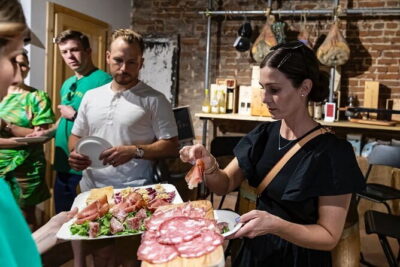
Winner 2025 Florence Sunset Food & Wine Tour by Eating Europe
Read our review →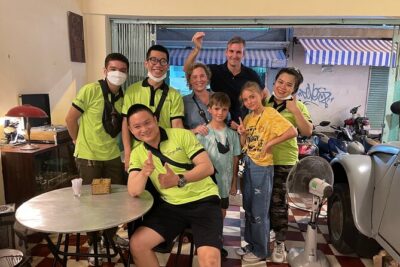
Saigon By Night and Street Food By Motorbike | Opt: Ao Dai Riders
Read our review →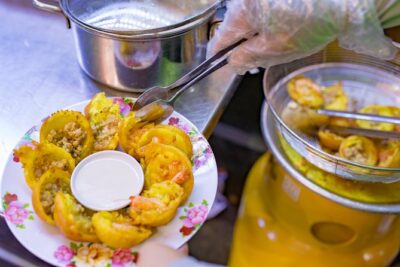
Private Street Food Evening Walking Tour in Ho Chi Minh City
Read our review →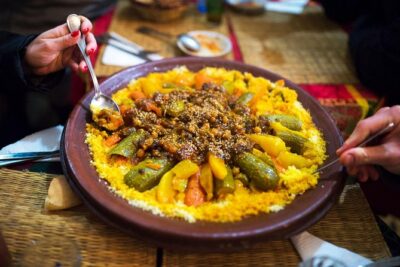
Kyoto Night Foodie Tour in Gion (9+ dishes + 6 Sake tastings)
Read our review →
Hanoi Motorbike Tours Led By Women: Hanoi By Night Foodie Motorbike Tours
Read our review →
Saigon: Day-Night Sights & Local Food Tour l Female Option
Read our review →Browse the lists this tour appears in