
Review · BUDAPEST
Budapest Food Walking Tour: Eat, Sip & Explore Like a Local
Budapest’s best food stories are told one plate at a time. This three-hour walk takes you from an old synagogue through District 7, pairing street food such as lángos with sit-down Hungarian dishes, Tokaji wine, beer, and pálinka. You get a real meal, not a few token samples.
I like the generous portions and the way the guide links each dish to Hungarian and Jewish traditions. I also like the local advice: guides including Eszti, Laura, Kitti, Peter, Nica, and Kelly have helped visitors choose restaurants, ruin bars, and sights for the rest of their stay. The main caution is simple: come hungry, and tell the operator about dietary needs before booking. Vegetarian food is available, but gluten-free and vegan diets cannot currently be accommodated.
Key points at a glance
- Four substantial food stops: Expect soup, lángos, a Hungarian main course, and dessert rather than tiny tasting portions.
- District 7 with context: The walk begins near the Kazinczy Street Synagogue and explains how Jewish traditions shaped Hungarian food.
- Three drinks included: The experience can include beer, wine, and pálinka, with alcohol-free drinks available.
- Guides who add city advice: Eszti, Laura, Kitti, Peter, Nica, and other local guides are praised for practical recommendations.
- A sociable evening: Small groups, shared meals, and a walking route make this a useful choice for solo visitors and couples.
- Dietary limits matter: Vegetarian options are offered, but vegan and gluten-free menus are not available.
What the $73 price buys you in Budapest
At $73 per person, this is more than a quick sampling walk. Your price covers food at four local eateries, three alcoholic drinks or alcohol-free alternatives, a local guide, the District 7 walk, and the planning that connects each stop into one evening.
The value depends on how much you eat and drink, but the portions appear to be a major part of the deal. Several people needed no further meal that day, and one detailed food lineup included a full soup, a proper lángos, a hearty pörkölt, and dessert. You are not simply receiving a bite of each dish while standing in a shop doorway.
I see the price as fair for visitors who want both dinner and orientation. You could spend less by eating one street-food meal on your own, but you would miss the guide’s food explanations, the ordered progression through four venues, and the chance to try several drinks without planning the route yourself.
The tour also saves you from guessing which places are worth your time. Priority entry and an arranged menu matter in District 7, where many bars and restaurants compete for attention. You still need to decide if the included food suits your tastes, especially if you prefer light meals or avoid alcohol.
More Food Tours with Locals in the world:
- Naples: Street Food Walking Tour with Local Guide
★ 4.9 · 4,976 reviews - Rome: Street Food Tour with Local Guide
★ 4.8 · 4,077 reviews - Eat Like a Local: Venice 3-Hour Small-Group Food Tasting Tour
★ 5.0 · 3,137 reviews
Starting beside the Kazinczy Street Synagogue
The meeting point is at the Kazinczy Street Synagogue, although the exact starting point can vary with the option you book. This is a useful beginning because the food story starts with the neighborhood, not with a plate dropped in front of you.
Your guide introduces the connection between Jewish communities and Hungarian cooking. That background helps explain why the tour includes Jewish-Hungarian dishes and pastry, rather than treating them as unrelated menu items.
The synagogue also puts you in District 7, once Budapest’s Jewish neighborhood and now one of the city’s main nightlife areas. You can expect the guide to point out the contrast between older, worn streets and the bars and restaurants that now draw evening crowds.
The first guided portion of the route through the Jewish Quarter lasts about 30 minutes. This is not a full architectural tour, so book it for the food and neighborhood context rather than for a detailed survey of Budapest’s synagogues.
Soup first, with a taste of local comfort food
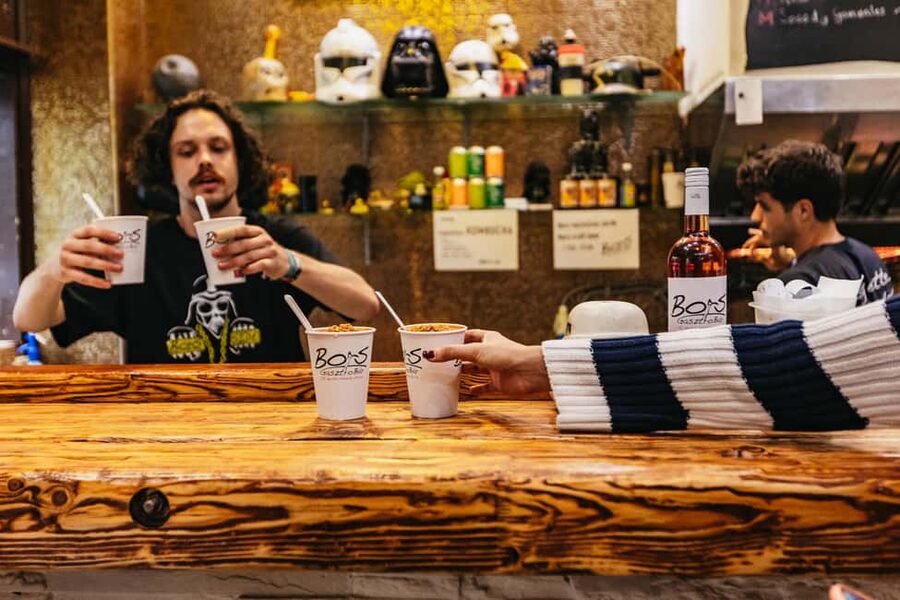
The opening food stop features traditional soup, and it has become one of the most memorable parts of the route for many people. Specific versions have included mushroom cream soup with chorizo and paprika, as well as Hortobágyi malacragu leves, a hearty pork and vegetable soup.
Soup is a smart first course in Hungary. It introduces paprika, meat, cream, and the habit of treating soup as a serious part of the meal. It also gives your guide an easy way to explain how Hungarian cooking balances warmth, spice, and filling ingredients.
One person found the soup less appealing than the other courses, so this is not a guaranteed favorite for every palate. If you dislike creamy or strongly seasoned soups, ask your guide what is being served that day and keep an open mind.
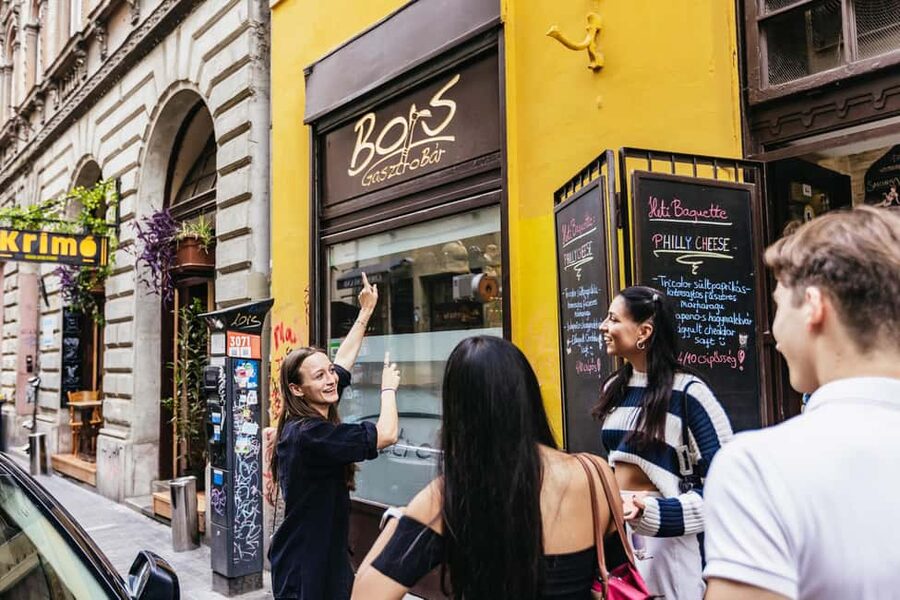
You may also be visiting a place such as Bors Bistro, which has been singled out as a favorite stop. The exact dish can vary, so do not treat any one soup as a fixed promise.
Lángos, beer, and the casual side of District 7

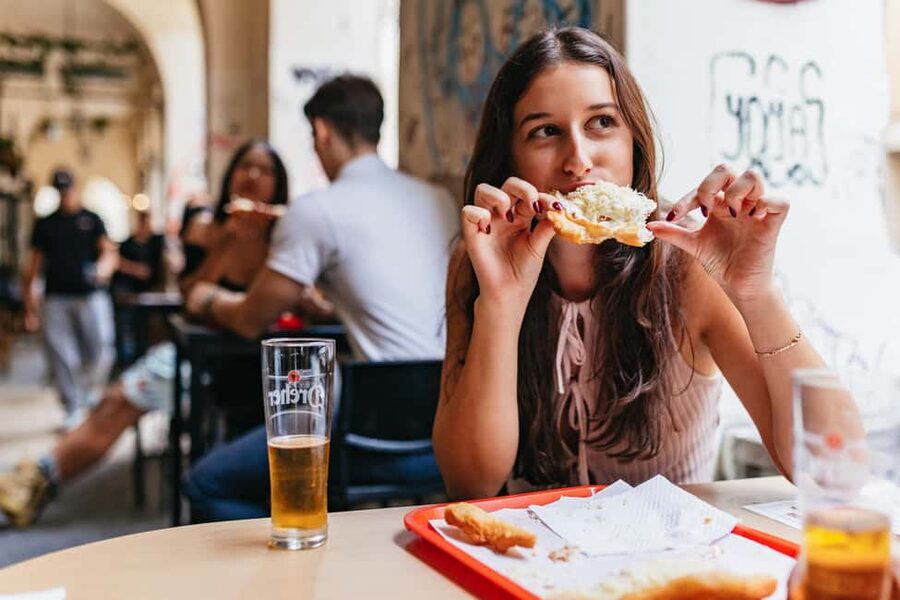
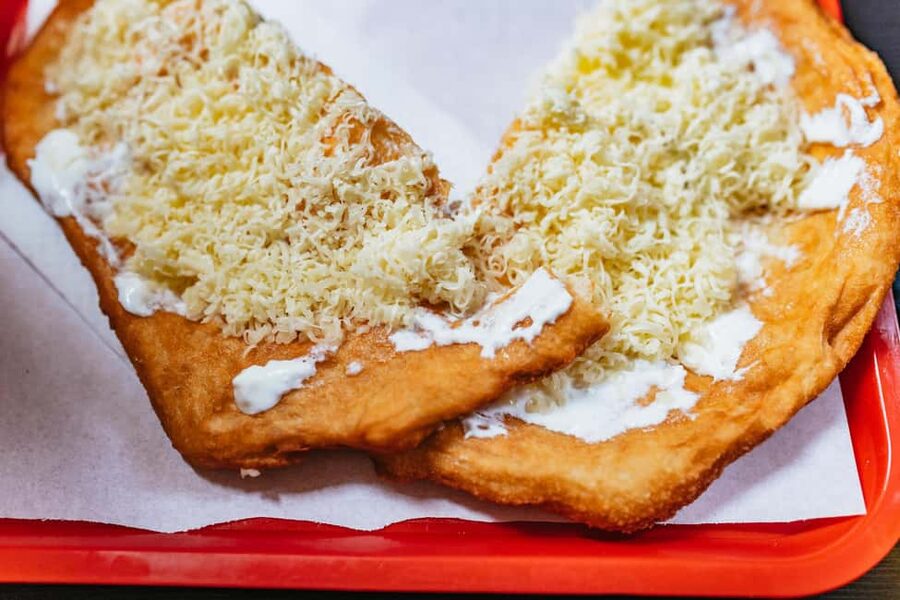
Next comes lángos, one of Budapest’s essential street foods. This deep-fried flatbread is commonly served with sour cream, garlic, and cheese. It is direct, messy, filling food, so you may be encouraged to skip utensils and eat it in the casual spirit intended.
The lángos is paired with beer, including Dreher in one reported menu. This is where the tour shifts from the neighborhood’s background to the easy pleasure of eating outdoors or in a relaxed local food setting.
I like this part because it gives you a clear contrast with the later sit-down courses. You see the everyday, snack-like side of Budapest before moving into more formal dishes. It also gives you a useful reference point for ordering lángos later in your trip.
Do not underestimate it. Lángos is fried bread with toppings, and the portion can be large. If you eat a full breakfast or lunch immediately before the tour, you may reach the final dessert with little room left.
More Food Walking Tours in the world:
- Reykjavik Food Walk – Local Foodie Adventure in Iceland
★ 5.0 · 18,952 reviews - New Orleans Food Walking Tour of the French Quarter with Small-Group Option
★ 5.0 · 6,118 reviews - Greek Food Walking Tour in Athens
★ 5.0 · 4,740 reviews - Savannah First Squares Culinary & Cultural Walking Food Tour
★ 5.0 · 3,229 reviews
Hungarian classics at a sit-down meal

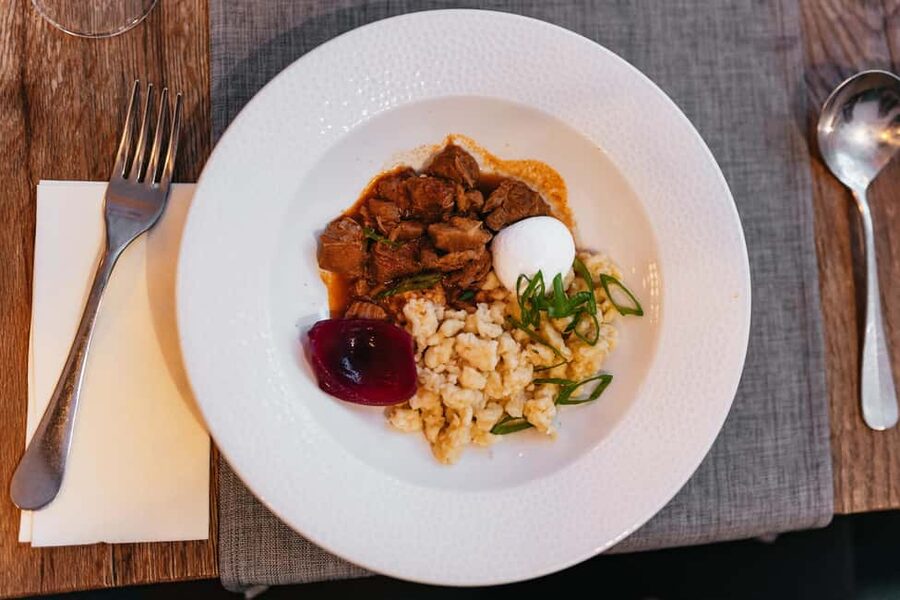
The later meal brings more traditional Hungarian cooking to the table. Dishes mentioned on the tour include pörkölt, a stew-like preparation, nokedli dumplings, and other local classics. These courses give you a better sense of Hungary’s main-meal cooking than street food alone can provide.
Pörkölt is especially useful for first-time visitors because it shows how paprika and slow-cooked meat work together. Nokedli adds the soft dumpling element that often makes Hungarian meals so satisfying. Portions are generally generous, and some meals provide an individual serving rather than only shared bites.
This is also the point where the guide can explain how dishes fit into Hungarian culture and family cooking. The best part of a food walk is often the answer to a small question: why is this served this way, what makes the seasoning different, or which dish should you order again?
There is a practical drawback. A three-hour tour with four food stops is not a light tasting menu. I would book it early in your Budapest stay only if you are ready to let the food guide later choices. Otherwise, book it on a day when you do not already have a dinner reservation.
Pálinka, Tokaji, and the drinks built into the route

Three drinks are included, with examples such as beer, wine, and pálinka. Pálinka is a strong fruit brandy, and the tasting is meant to be part of the cultural experience rather than a race to finish a large serving.
Tokaji wine provides a sweeter finish to the drinks. Tokaj is one of Hungary’s famous wine regions, so tasting it during the dessert course gives you a simple introduction to a product closely tied to the country.
The alcohol is well matched to the food, but it changes the pace of the evening. You will be walking, eating, and drinking over three hours, so take the tour at a comfortable speed. Alcohol-free drinks are available, which makes the experience workable for people who do not drink, though the exact alternatives should be confirmed when you book.
If you are traveling with someone who does not drink, mention it in advance. The tour includes three alcoholic beverages as a standard feature, but alcohol-free options are listed.
Flódni, Somlói galuska, and the sweet finish
Dessert brings the Jewish-Hungarian connection back into focus. Flódni, a layered pastry associated with Jewish-Hungarian baking, is one of the named possibilities. Somlói galuska, a soft Hungarian dessert served with sweet elements, has also appeared at the final stop.
The pastry is an important part of the route because it prevents the experience from becoming a parade of paprika-heavy meat dishes. You get a different side of Hungarian food, with the guide explaining how traditions crossed between communities.
Dessert may be the least consistent hit for you. One person found it only fine after enjoying the savory food, while others liked the sweet finish. I would judge the tour by the whole meal, not by expecting every course to be your favorite.
By this point, you should be full. The tour works best as dinner, not as an appetizer before dinner.
The walk through District 7 and Andrassy Avenue

The walking portion covers District 7 and includes a guided section along Andrassy Avenue, listed at about one hour. The route lets you see how Budapest changes from the former Jewish Quarter to a grander city setting.
The combination is useful because you are not confined to restaurant interiors. You get streets, neighborhood stories, and a look at both the rougher and more polished sides of central Budapest. The walk also helps you place the food in the city around it.
Do keep your expectations clear. This is a food tour with a city walk, not a dedicated Budapest sightseeing tour. If your main goal is museums, architecture, or a full political history of Hungary, choose a separate walking tour.
The tour finishes back at the Kazinczy Street Synagogue. That makes the route easy to understand, although the booking option may affect the exact meeting point.
Why the guide can make or break the evening
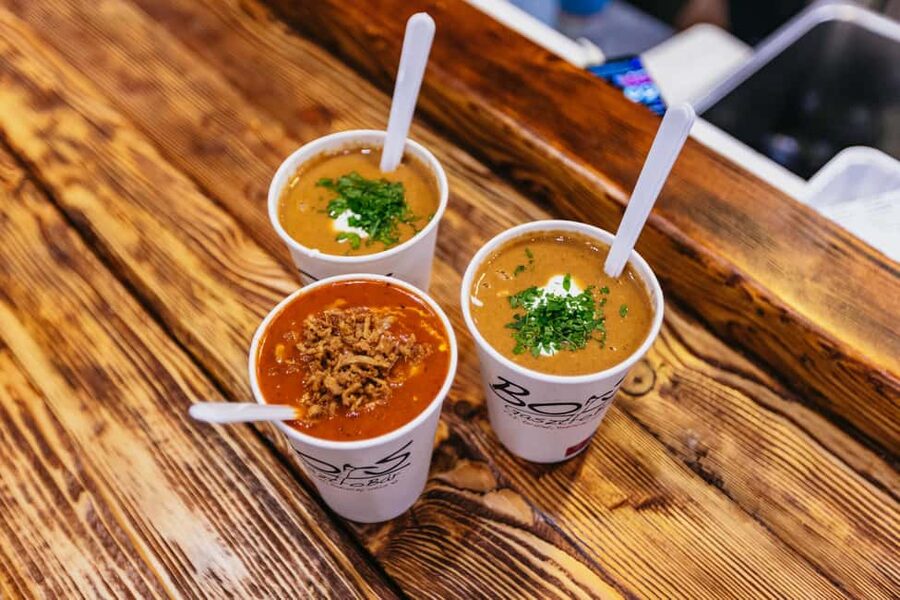
The food is important, but the guide controls the rhythm. A strong guide explains without turning every dish into a lecture, keeps the group together, answers questions, and knows when to let you simply eat.
The guides most often praised include Eszti, Laura, Kitti, Peter, Nica, Kelly, Agnes, and Zahonyi. Their strengths are similar: warm conversation, clear food explanations, local stories, and useful advice for the rest of your stay.
That last part is worth money on its own. Guides have suggested restaurants, ruin bars, and other places to visit, and some have followed up with written recommendations after the tour. One guide even handled a birthday dessert with a candle, a small touch that shows how personal the evening can become.
Group size affects this. Smaller groups allow more questions and make it easier to speak with the guide and other people. A private group is available, but the standard format is designed to help solo visitors and couples meet others.
Dietary needs and practical planning
Vegetarian options are available, but there may be fewer choices than on the regular menu. Vegan and gluten-free diets cannot currently be accommodated, so this experience is not a safe pick if either restriction is essential.
Tell the operator about dietary needs when booking. Do not assume that removing one ingredient will produce a suitable meal, since several stops are arranged in advance.
The tour is in English and lasts three hours. Wear shoes suitable for walking between four eateries, and avoid planning a large meal beforehand. You can cancel up to 24 hours before the start for a full refund, and the reserve-now, pay-later option allows some flexibility while you finalize your Budapest plans.
Who should book this food walk?
I would choose this tour for a first or second day in Budapest if you want to learn what to eat before exploring restaurants on your own. It is especially useful for solo visitors, couples, and small groups who enjoy talking with a guide and meeting other people over a meal.
It also suits anyone who wants an evening with both food and place. You will not just sample lángos and goulash in isolation. You will walk through District 7, hear about Jewish-Hungarian food traditions, taste local drinks, and get suggestions for the days ahead.
I would skip it if you need vegan or gluten-free food, dislike substantial meals, or want a purely sightseeing-focused walk. The four stops are generous, and the alcohol component may not suit everyone.
Should you book the Budapest Food Walking Tour?
Book it if you want a filling, social introduction to Budapest’s food culture and value a guide who can point you toward good places afterward. The strongest reasons are the generous portions, four-stop route, local drinks, and guides such as Eszti, Laura, Kitti, Peter, and Nica, who bring useful city advice to the table.
Book early in your stay if you want the recommendations to shape the rest of your visit. Book later if you prefer to use the tour as a final feast.
At $73, it is a solid value for a full three-hour meal with drinks and neighborhood touring. Just arrive hungry, keep your dietary limits in mind, and do not schedule dinner afterward.
FAQ
How long does the Budapest Food Walking Tour last?
The tour lasts three hours.
Where does the tour start?
The listed starting point is the Kazinczy Street Synagogue, but the meeting point can vary depending on the option booked.
Where does the tour finish?
The tour finishes at the Kazinczy Street Synagogue.
How many eateries are included?
Traditional Hungarian food is served at four local eateries.
What food can I expect to try?
Possible dishes include traditional soup, lángos, pörkölt, nokedli dumplings, Flódni, and Somlói galuska. The exact menu may vary.
Are drinks included?
Yes. Three alcoholic beverages are included, with examples such as beer, wine, and pálinka.
Are alcohol-free drinks available?
Yes. Alcohol-free options are available.
Is there a vegetarian option?
Yes. Vegetarian options are available, though there may be fewer choices than on the regular menu.
Can the tour accommodate vegan or gluten-free diets?
No. Vegan and gluten-free diets cannot currently be accommodated.
What language is the tour conducted in?
The live tour guide speaks English.
Can I book a private group?
Yes. A private group option is available.
Can I cancel for a refund?
Yes. You can cancel up to 24 hours in advance for a full refund.
Fresh off the menu around the world
- Taste of Chiang Mai: Michelin Guide & Street Food Tour★ 4.9 · 159 reviews
- Eat Porto Like a Local: The Ultimate Full-Meal Food Tour★ 5.0 · 97 reviews
- Vienna: The Ultimate Full Meal Austrian Food Tour★ 4.8 · 112 reviews
- Jerez: Traditional Tapas Tour★ 4.6 · 138 reviews
- Taste my Fribourg Self-Guided Food Tour★ 4.5 · 29 reviews
- Taste of Albania: Tirana Food Tour★ 5.0 · 26 reviews
- Taormina Pizza making class★ 4.8 · 140 reviews
- Taormina: Pizza Making Class with Lunch and Wine Tasting★ 4.8 · 145 reviews
Budapest Food Tours, compared.
Budapest Centre Food Tour with 10+ Tastings, Wine & Street Food
Read our review →
From Budapest: Etyek Wine Tasting Tour with 3-Course Meal
Read our review →
Budapest Guided Food Walking Tour with Drinks Included
Read our review →
Budapest: Food Tour Market to Tavern: 14+ Tasters & Wines
Read our review →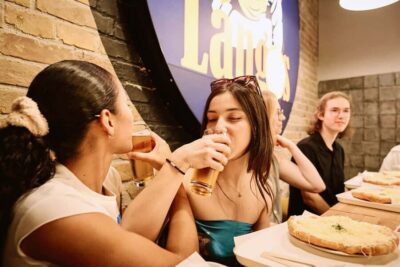
Budapest: Guided Street Food Tour with Sweet Wine
Read our review →
Budapest: Private Food Tour – 10 Tastings with Locals
Read our review →
Budapest: Guided Food Tour with Wine, Beer, and Shots
Read our review →
Browse the lists this tour appears in