
Review · DUBROVNIK
Dubrovnik Food and Drink Walking Tour with a Local Guide
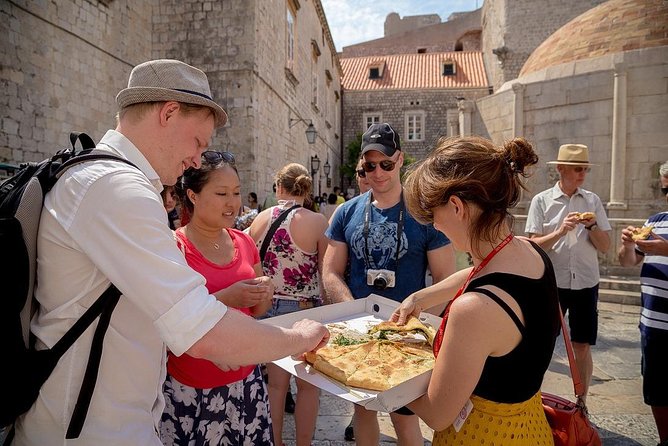
Dubrovnik’s Old Town is easier to understand with a plate in front of you. This three-hour walk links its stone streets and famous landmarks with four local restaurant stops, where you taste Croatian dishes, wine, coffee, and liqueur. The food is not an afterthought. It is the reason the history feels more personal.
I like the small group size, capped at 12, and the fact that food and drinks are included from the start. I also like the chance to get useful restaurant advice from guides such as Ana and Dražen, who can point you toward places to eat later in your stay. The main consideration is that this is a food tour with a substantial history lesson, not a quick hop between tiny samples. If you prefer constant tasting and little commentary, some explanations may feel long.
Key points to know before booking
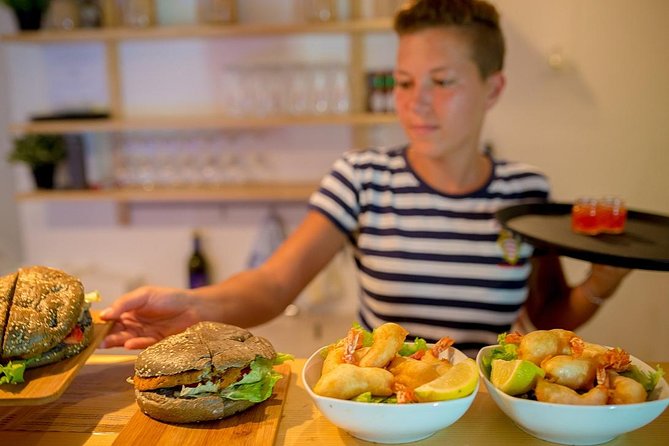
- Four restaurant stops: Expect more than ten tastings, with generous portions rather than one-bite samples.
- A full Croatian meal: The sample menu includes kopun salad, creamy barley with Adriatic shrimp, Pag cheese, and Dubrovnik carob cake.
- Wine is built in: You receive red or white wine at three stops, water at three stops, and local brandy or liqueur with dessert.
- A useful first-day activity: The walk gives you dining suggestions for the rest of your time in Dubrovnik.
- A history walk as well as a food tour: The route passes the fountain, Rector’s Palace, Stradun, the cathedral, the market, and the Old Port.
- Dietary limits matter: Vegetarian food is available with advance notice, but there is no vegan option.
Dubrovnik food tour review: what the experience is really like
This is a good choice if you want to meet Dubrovnik through both its streets and its table. You begin at Poljana Paska Miličevića, close to the Large Onofrio’s Fountain and Pile Gate, then walk through the Old Town while stopping for food along the way.
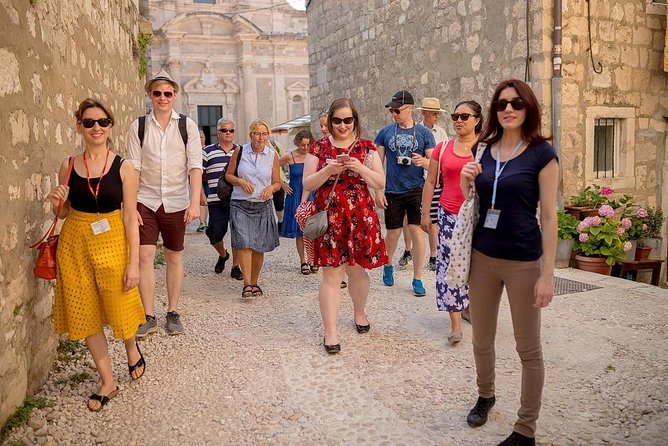
The group can be as small as two people and no larger than 12. That size matters in Dubrovnik, where narrow streets and compact dining rooms can make a large tour awkward. A small group also gives you more room to ask about food, local customs, and places to eat later.
The price is $175.35 per person. That is not a budget snack tour, but the cost includes the guide, four restaurant visits, more than ten food tastings, wine, bottled water, coffee or tea, and a final local liqueur. You are also paying for a private-feeling walk through the Old Town with a guide who can connect the dishes to Dubrovnik’s past.
I would book this early in your stay, especially since it is commonly reserved well ahead of time. You can use the restaurant suggestions afterward, rather than spending your entire Dubrovnik visit guessing which Old Town menu deserves your money.
More Food Tours with Locals in Croatia:
- Naples: Street Food Walking Tour with Local Guide
★ 4.9 · 4,976 reviews - Rome: Street Food Tour with Local Guide
★ 4.8 · 4,077 reviews - Eat Like a Local: Venice 3-Hour Small-Group Food Tasting Tour
★ 5.0 · 3,137 reviews
Starting at Onofrio’s Fountain near Pile Gate
The Large Onofrio’s Fountain is more than a meeting point. Built in 1438 by Italian engineer Onofrio della Cava, it was part of a water system that carried water more than seven miles into Dubrovnik.
The fountain suffered damage in the 1667 earthquake and during the Croatian War of Independence, but it has been restored and still provides public water. It gives your guide an easy way to begin with a practical story: Dubrovnik’s beauty depended on serious engineering and careful planning.
Allow a little extra time to reach the meeting point. Pile Gate is one of the main approaches to the Old Town, and the area can be busy. The tour does not include hotel pickup or transportation, so you need to make your own way there.
Bošković Square and the city’s learned side
From the fountain, the walk moves through the stone lanes toward Ruđer Bošković Square. The square honors Ruđer Bošković, a Dubrovnik-born scientist, astronomer, mathematician, philosopher, diplomat, poet, theologian, and Jesuit priest.
You will not spend long here, but the stop adds useful context. Dubrovnik is often presented only as a walled medieval port, yet its story also includes science, education, religion, and diplomacy. The narrow streets around the square show the compact scale of the Old Town, where a short walk can take you from a major monument to a quiet corner.
This is also where you begin to see how the tour balances walking and eating. The historical stops are brief, usually a few minutes, so you get the setting without spending the whole afternoon in lecture mode.
Rector’s Palace and the old Republic of Ragusa
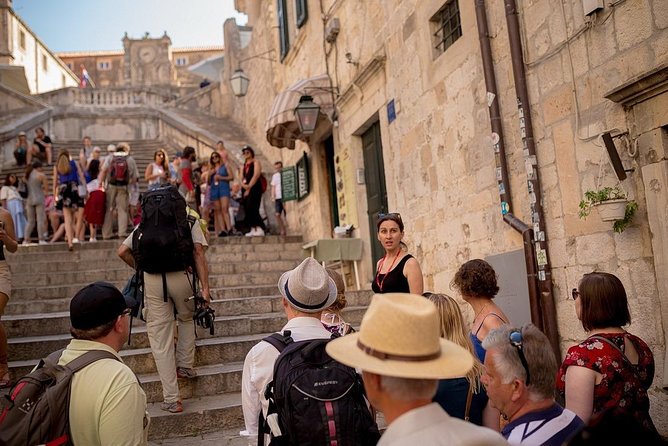
Rector’s Palace was once the seat of the rector of the Republic of Ragusa, Dubrovnik’s former maritime republic. Its Gothic and Renaissance design reflects the city’s position between Adriatic trade, Mediterranean politics, and local government.
Your guide uses the palace to explain how Dubrovnik was run and why the city became prosperous. The stop is short and does not include admission inside the palace, so think of it as an exterior orientation rather than a museum visit.
That distinction matters. If you want to see the palace interiors, you will need a separate visit. On this walk, the goal is to place the food and streets within the larger story of the old republic.
More guided tastings around Croatia:
- Dubai: Old Town, Souks, Street Food, Guided Tour & Abra Ride
★ 4.9 · 7,170 reviews - Hanoi: Guided Food Tour with Train Street Visit
★ 4.9 · 6,239 reviews - Amsterdam: Guided Zaanse Schans, Windmills & Cheese Tour
★ 4.4 · 4,826 reviews - Chef Guided Food Tour of Pike Place Market
★ 5.0 · 3,733 reviews
Saint Blaise, Stradun, and the symbols of Dubrovnik
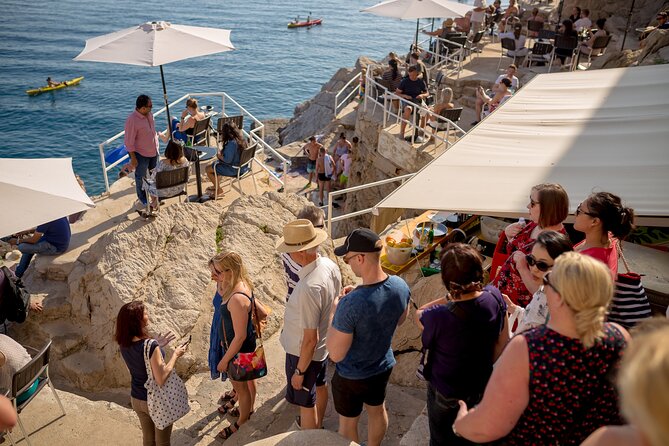
The Baroque Church of Saint Blaise honors Dubrovnik’s patron saint, Sveti Vlaho. It is one of the city’s most familiar religious landmarks, and the stop gives your guide a chance to discuss local faith and civic identity.
Next comes Stradun, the pale limestone street running through the center of the Old Town. At about 300 meters long, it links Pile Gate with Ploče Gate and functions as Dubrovnik’s main pedestrian spine.
Stradun is impressive, but it can also be crowded and exposed. Wear comfortable shoes with good grip, and keep your pace flexible. The route is on foot, and the polished stone can be hard on feet after several hours.
The Orlando Column follows. Erected in 1418, this limestone column depicts the medieval knight Orlando, also called Roland. It once served as a place for public announcements and justice, and its length was used as a measurement for cloth sellers.
That small detail brings daily life into the tour. A monument is not just something to photograph. It can reveal how people bought goods, heard news, and understood authority in the city.
Gundulić Square Market and Sponza Palace
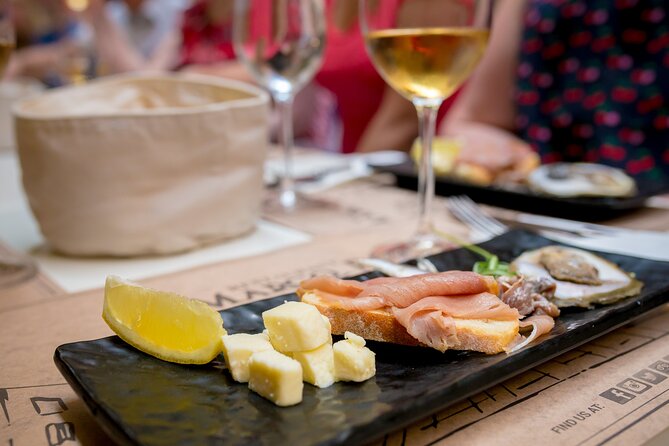
Gundulić Square becomes an open-air market each morning. It is named after poet Ivan Gundulić, and the market offers a look at the everyday food culture behind the dishes served on the tour.
The stop is brief, so do not expect a long shopping session. Still, the market helps you connect local produce with the food on your plate. If you want to return on your own, ask your guide about the best time to visit and what is worth buying.
Nearby, Sponza Palace, also called Divona, adds another architectural highlight. It sits at the end of Stradun near the bell tower and is one of the Old Town’s most admired buildings.
As with Rector’s Palace, this tour uses Sponza Palace as part of the outdoor route. Admission to attractions is not included, and the experience does not provide a separate palace visit.
The Old Port and Dubrovnik Cathedral
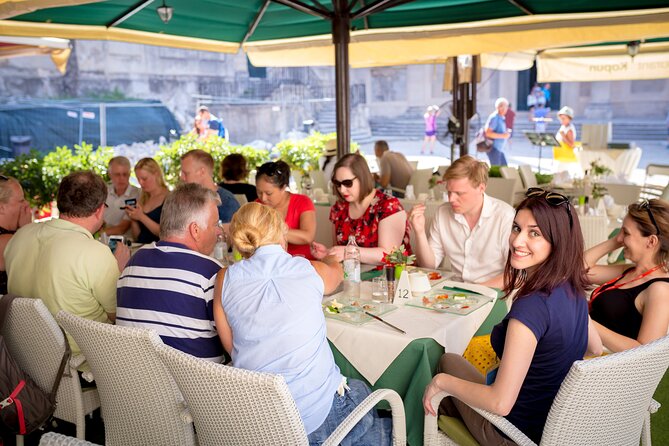
The route continues to Porat, Dubrovnik’s Old Port. This harbor once connected the city with ports around the Mediterranean, making it a natural place to explain Dubrovnik’s trading past.
The port also changes the feel of the walk. After the narrow lanes of the center, the harbor opens the view and reminds you that Dubrovnik’s wealth came from the sea. It is a useful setting for discussing ingredients, trade, and the movement of people and goods across the Adriatic.
The Cathedral of the Assumption of the Virgin Mary follows. This Baroque cathedral is one of the Old Town’s major landmarks, with a long religious and artistic history.
The route does not promise a detailed interior visit, so consider the stop an introduction. If art and church architecture matter to you, you may want to return later when you can explore at your own pace.
The Orthodox church and the end of the walk
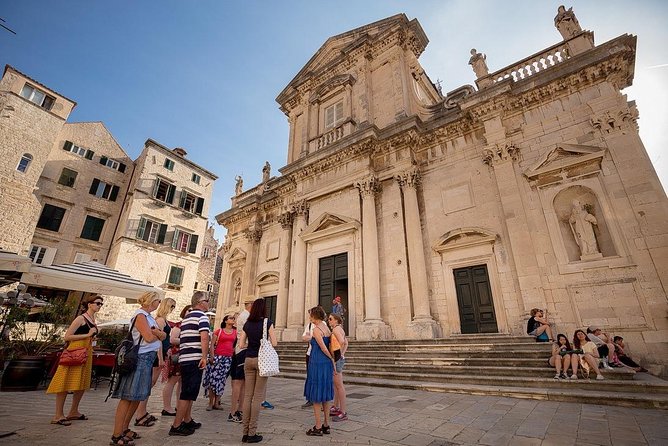
The Holy Annunciation Orthodox Church adds another religious tradition to the route. Its design combines Byzantine and southern Adriatic influences, showing that Dubrovnik’s cultural life was never limited to one community or one style of worship.
The stop lasts only a couple of minutes, but it widens the story of the city. A short visit can still be worthwhile when it helps you see Dubrovnik as a meeting place of different traditions.
The route also passes the 31-meter Bell Tower at the eastern end of Stradun. The original tower was built in 1444 and reconstructed in 1928 after it began to lean. The tour ends back at the starting point, so you are not left to find your way from a distant restaurant.
What you eat and drink during the three hours
The exact dishes can vary, but the sample menu gives you a clear idea of the style. A starter may include kopun salad with seasonal vegetables and fruit. Kopun is a traditional capon dish, so this is not the standard international salad course you might find on a generic sightseeing tour.
You may also receive cheese from the island of Pag, one of Croatia’s best-known regional cheeses. The first main course is creamy barley with Adriatic shrimp, followed by a second main course at another stop. Dessert is Dubrovnik carob cake with wild bitter orange jam.
The food is served across four restaurants rather than in one seated meal. That structure lets you see several small dining rooms and compare different preparations, but it also means you will stand and walk between courses.
Drinks are generous for a three-hour activity. You receive a glass of red or white wine at three stops, a glass of water at three stops, and a local brandy or liqueur with dessert. Coffee or tea is included as well.
One point is worth stressing: this is not a tiny-sample crawl. You should expect enough food to feel full. That is good value if you want lunch or an early dinner included, but it may be too much if you planned to eat a large meal immediately afterward.
How the guides shape the experience
Guide quality matters greatly on a food and history walk. Ana and Dražen are named guides associated with this experience, and the strongest praise centers on their personal approach, local knowledge, and ability to keep conversation flowing among the group.
Ana is described as warm and proud of her Croatian background, with useful advice about restaurants and local customs. She has also shared personal experience of growing up during the war, which can give the modern history of Dubrovnik a human scale.
Dražen is noted for his food and wine knowledge, his easy manner, and his ability to explain the city without making the walk feel stiff. One useful feature of the tour is the practical follow-up advice. You may leave with suggestions for other meals, including local dishes such as peka.
The guide makes a difference in another way. The tour is designed to explain some sights while you are standing in front of them. That keeps the story tied to the place, though it can mean listening outdoors in a crowded area. If you prefer all commentary while seated, this may not be your ideal format.
Who should book, and who should skip it
I would recommend this tour to first-time visitors who want a quick orientation to Dubrovnik’s Old Town and a proper introduction to Croatian food. It also suits couples, families with older children, and solo visitors who enjoy sharing a meal with a small group.
It is especially useful if you want restaurant advice early in your stay. The walk gives you a sense of the Old Town’s layout, then lets you return later with a better idea of where to eat.
You should think twice if you want a pure tasting tour with many tiny portions and little history. The food is plentiful, but the guide also spends time explaining monuments, customs, and the city’s past. Vegans should skip this activity because no vegan menu is available. Vegetarians can be accommodated if you mention it when booking.
The tour runs in all weather conditions, so dress for the forecast. It requires walking over historic stone streets, and children must be accompanied by an adult. Service animals are allowed, and most people can participate, but the activity does not include transportation or hotel pickup.
Is the Dubrovnik food and drink walk worth $175.35?
For three hours in one of Croatia’s most expensive sightseeing centers, the price is reasonable if you value a full meal, wine, and a private-feeling small group. You are not paying only for food. You are also paying for four restaurant stops, a local guide, Old Town orientation, and advice you can use for the rest of your stay.
The value is weaker if you mainly want a cheap lunch or if you do not drink alcohol. Much of the package includes wine and a final liqueur, though coffee, tea, water, and substantial food remain part of the experience.
Free cancellation is available up to 24 hours before the start time. If poor weather cancels the tour, you can choose another date or receive a full refund. Changes or cancellations made less than 24 hours ahead are not refunded.
Should you book this Dubrovnik food tour?
Book it if you want Croatian food tied to Dubrovnik’s streets and stories, not just a series of restaurant samples. The small group, included drinks, four dining stops, and practical local advice make it a strong first or second-day activity.
Skip it if you need vegan food, dislike walking on stone streets, or want a fast tasting crawl with no long explanations. For everyone else, $175.35 buys a substantial meal, a useful Old Town introduction, and a friendly way to get your bearings before choosing the rest of your Dubrovnik dining.
FAQ
Where does the Dubrovnik food and drink tour begin?
It begins at Poljana Paska Miličevića in Dubrovnik, near the Large Onofrio’s Fountain and Pile Gate. The activity ends back at the meeting point.
How long does the food tour last?
The tour lasts approximately three hours.
How many people can join the tour?
A minimum of two people is required per booking, and the maximum group size is 12.
Are food and drinks included?
Yes. The experience includes more than ten food tastings, wine at three stops, water at three stops, coffee or tea, and a local brandy or liqueur with dessert.
Is a vegetarian or vegan option available?
A vegetarian option is available if you request it when booking. A vegan option is not available, and the tour is not recommended for vegans.
What happens if bad weather cancels the tour?
If poor weather causes the tour to be canceled, you will be offered a different date or a full refund. You can also cancel for a full refund if you do so at least 24 hours before the start time.
Fresh off the menu around Croatia
- Split: Private Food Tasting Tour★ 4.9 · 36 reviews
- Split: Small Group Food Tour with Private Option★ 4.8 · 116 reviews
- Split: Food Tasting Walking Tour★ 4.9 · 102 reviews
- Korcula: Buggy Safari with Local Food and Wine Tasting★ 5.0 · 97 reviews
- Pelješac Full-Day Wine and Food Tour from Dubrovnik★ 5.0 · 72 reviews
- From Split: Krka Waterfalls with Wine & Cheese Tasting Tour★ 4.6 · 33 reviews
- Zagreb: Food Tour with Tastings★ 4.9 · 153 reviews
- Dubrovnik: Oyster, Mussles, and Wine Tasting Tour in Ston★ 5.0 · 77 reviews
Dubrovnik Food Tours, compared.
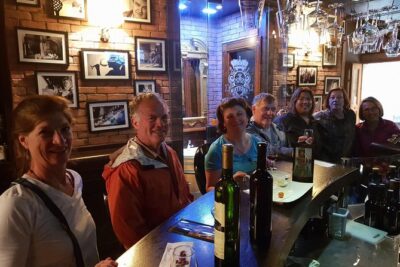
Dubrovnik Old Town Food Tour: Small-Group Experience
Read our review →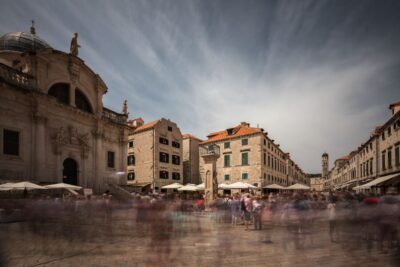
Dubrovnik Gastronomy: 3-Hour Food and Wine Tour
Read our review →
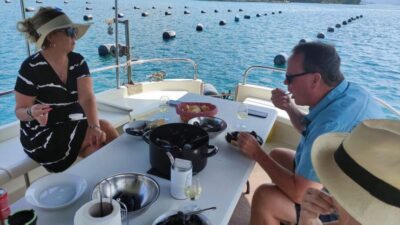
Dubrovnik: Oyster, Mussles, and Wine Tasting Tour in Ston
Read our review →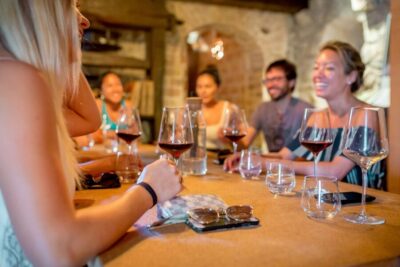
Pelješac Full-Day Wine and Food Tour from Dubrovnik
Read our review →Browse the lists this tour appears in