
Review · BUDAPEST
Budapest Culinary & Wine Walk—Budapest’s Signature Food Tour
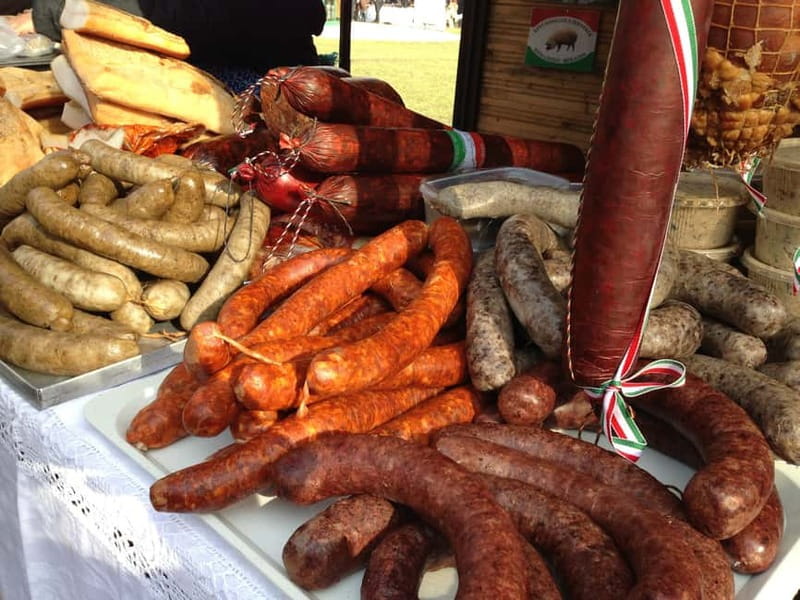
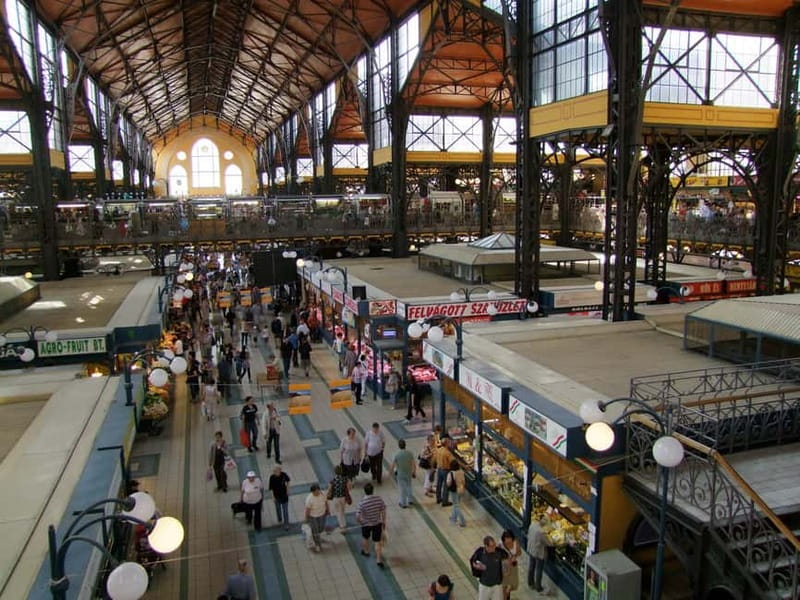
Budapest’s food story begins in the Central Market Hall, where paprika, pork fat, goose liver, produce, and local specialties give you a quick lesson in how Hungarians cook. From there, you walk into nearby neighborhoods for tastings at small food shops, a café or patisserie, and a final sampling of three Hungarian wines. I like that this is more than a market visit: it connects ingredients with everyday eating.
I especially like the small-group format, capped at eight people, and the mix of stops. You may taste savory dishes at a butcher’s shop, try elegant cakes at a traditional patisserie, and sample chocolates or candies before sitting down with wine. The main drawback is the walking. You cover a lot of ground over four hours, and the route is not wheelchair accessible.
Key points to know before you book
- Central Market Hall sets the scene: Learn how the building fits into Budapest’s food culture before tasting your way through the surrounding area.
- Four or five venues keep the route varied: Expect a mix of savory food, sweets, coffee, specialty shops, and wine.
- The guide shapes the experience: Barbara, George, Anna, and other English-speaking guides have been praised for clear explanations, friendly conversation, and good pacing.
- The final tasting covers three wine regions: Wine is not an afterthought, but a proper ending to the food walk.
- Come hungry and wear practical shoes: There are plenty of tastings, but this is still an active walking tour.
- Sunday and holiday planning matters: Some venues close on Sundays and Hungarian national holidays, so the tour does not operate then.
Why this four-hour food walk works so well in Budapest
Food is one of the fastest ways to understand Budapest. A church or palace can tell you about rulers and dates, but a discussion of paprika, pork fat, goose liver, pastries, and wine gets closer to daily life. This tour gives you that context while moving through the city on foot.
The route begins at the Central Market Hall, then shifts toward smaller neighborhood businesses. That change matters. The market gives you the grand public version of Hungarian food, while the later stops show how ingredients become meals, snacks, sweets, and drinks.
The tour costs $120 per person. That is not a bargain-priced lunch, but the price includes four hours with an English-speaking guide, generous food and drink samples, bottled water, the market visit, four or five additional venues, and three wines from Hungarian regions. If you would otherwise pay for several tastings, a meal, coffee and cake, and a wine flight, the value becomes easier to see.
This is best treated as a substantial food experience rather than a quick snack walk. You may still want dinner later, but you should not arrive after a large meal. The tasting stops are spread out, so you get time to walk between them and let each sample settle.
More Food and Wine Tours around the world:
- From Split: Krka Waterfalls, Food & Wine Tasting Tour
★ 5.0 · 9,326 reviews - From Split: Krka Waterfalls, Food & Wine Tasting Tour
★ 4.9 · 6,598 reviews - Winner 2025 Undiscovered Lisbon Food & Wine Tour by Eating Europe
★ 5.0 · 6,390 reviews
Starting inside Budapest’s Central Market Hall
Meet inside the main entrance of the Central Market Hall at Vámház körút 1 to 3, near the escalators going up. The guide carries a canvas tote bag with the tour operator’s logo, which gives you a simple way to spot the right person in a busy building.
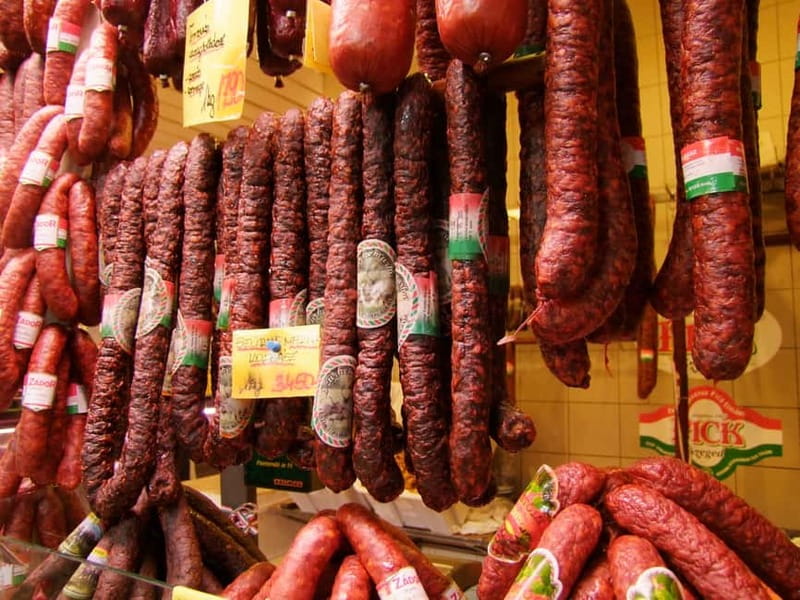
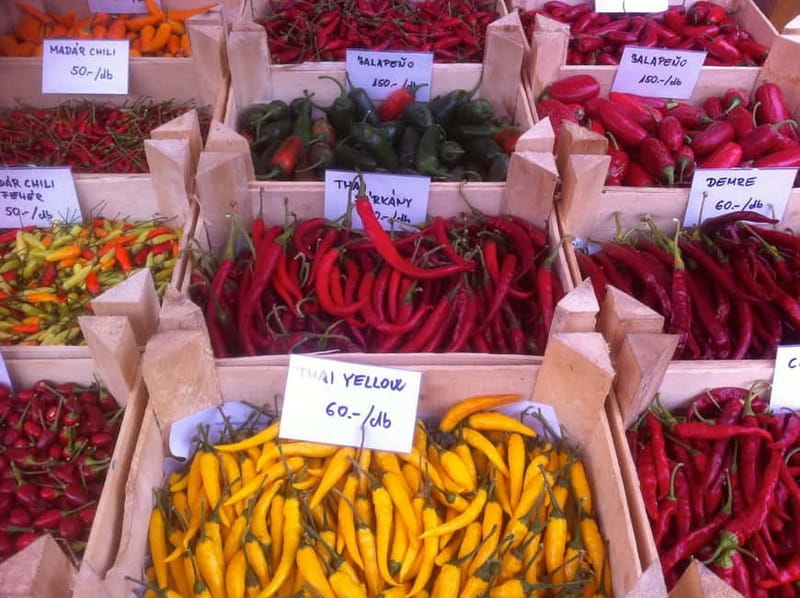
The market itself is an important part of the experience. You will look over the produce and food stalls while learning about the building and Hungary’s eating habits. The point is not simply to photograph rows of paprika. Your guide explains how ingredients such as pork fat, paprika, and goose liver are used in Hungarian cooking, and you can ask questions as you walk.
This opening section is particularly useful if you are new to Hungarian food. It gives you a basic vocabulary for the rest of the morning or afternoon. You begin to understand why certain flavors appear again and again, and you can compare the food sold for everyday use with the versions prepared for visitors.
The market is also a practical place to stop if you want to buy food later. The tour includes time for photographs, questions, and some food shopping. Keep your purchases modest at the beginning, though. Carrying bottles or jars for the rest of a four-hour walk is not ideal.
From market ingredients to neighborhood food shops
After the market, the route moves into nearby neighborhoods. The exact stops depend on the day of the week, since some businesses close on certain days. You might visit a spice shop, kosher bakery, coffee house, candy producer, or artisan chocolate shop.
That changing schedule is both a strength and a limitation. It lets the tour use real local businesses rather than forcing every group through one fixed sequence. On the other hand, you cannot count on every named type of shop appearing on your particular departure.
A spice shop can help you see paprika as more than a souvenir powder. A kosher bakery offers another window into Budapest’s food traditions. A candy or chocolate stop shifts the focus toward sweets, while a coffee house gives you a chance to sit down and take a break from walking.
The route also makes room for conversation. The guides have been praised for answering questions about Hungarian culture and food, not just reciting prepared facts. Barbara has received particular praise for her warmth and attention to questions, while George has been described as patient, funny, and easy to spend several hours with.
Savory tastings at a butcher’s shop and local café
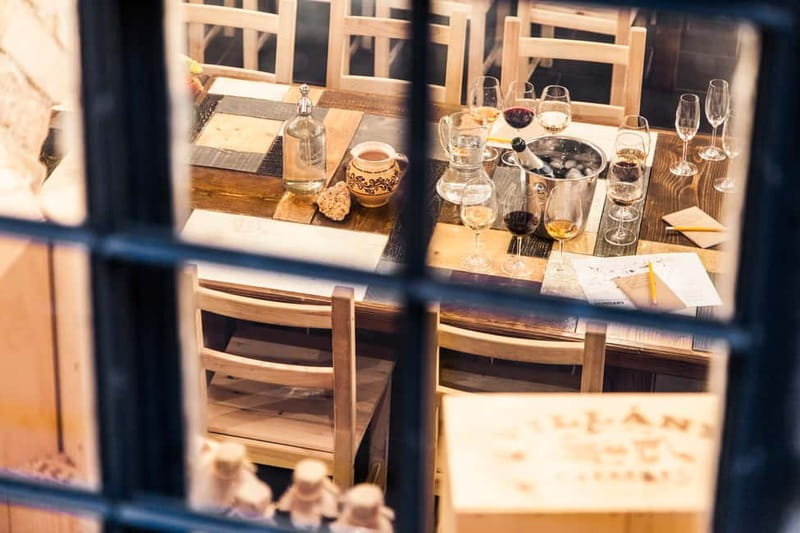
One of the more useful parts of the tour is the chance to sample typical dishes in a setting that feels less formal than a restaurant meal. The guide may take you to a butcher’s shop or a small, popular café where you can stand and eat.
At one such stop, the guide ordered several different plates for the group to share. That approach is smart for first-time visitors. Instead of choosing one unfamiliar dish and hoping for the best, you get to compare several flavors and textures in one sitting.
You should expect Hungarian food to be filling. Pork, fat, paprika, and rich sauces are not rare accents here. The tastings help you understand the food without requiring you to commit to a full plate of one dish. If you have dietary restrictions, ask about them when booking or before the tour begins, since the supplied information does not promise specific substitutions.
The standing format at some stops may not suit everyone. It gives you a local, informal feel, but it is less comfortable than a long restaurant lunch. That is part of the trade-off: you get more variety and movement, but less time settled at a table.
More food tours around the world:
- Reykjavik Food Walk – Local Foodie Adventure in Iceland
★ 5.0 · 18,952 reviews - Dubai: Old Town, Creek, Museums, Souks, & Street Food Tour
★ 4.8 · 10,816 reviews - Madrid: Live Flamenco Show with Food and Drinks Options
★ 4.5 · 9,901 reviews - Ho Chi Minh City Street Food Tour & Sightseeing By Motorbike
★ 5.0 · 9,413 reviews
Coffee, cake, chocolate, and the Hungarian sweet tooth
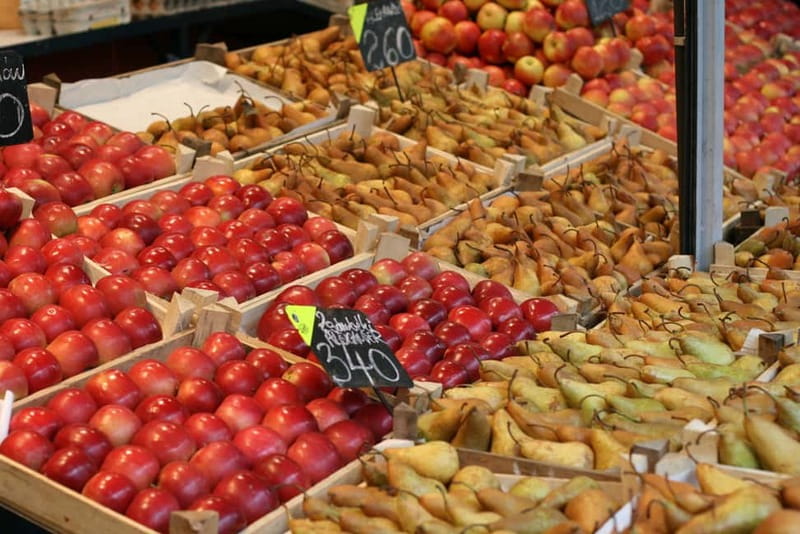
The sweet portion gives the tour a pleasant change of pace. A traditional patisserie provides elegant cakes, while a coffee house may be paired with locally produced chocolates or other sweets.
This is where the experience becomes more than a list of famous dishes. Hungarian food culture includes a strong café and pastry tradition, and the cakes offer a different picture of the city from the market’s produce and meat stalls. Sitting with coffee and cake also gives you a chance to ask follow-up questions after the more hurried tasting stops.
The sweet stops can be especially helpful for anyone who is not a committed foodie. You do not need to know much about Hungarian cuisine to enjoy a good pastry, and the café setting provides a calm pause in the middle of the route.
Still, portion sizes add up. The tour is generous with food and drink, so pacing yourself makes sense. You can taste everything without finishing every sample, especially if the group has already visited a butcher or café.
Three Hungarian wines to finish the route
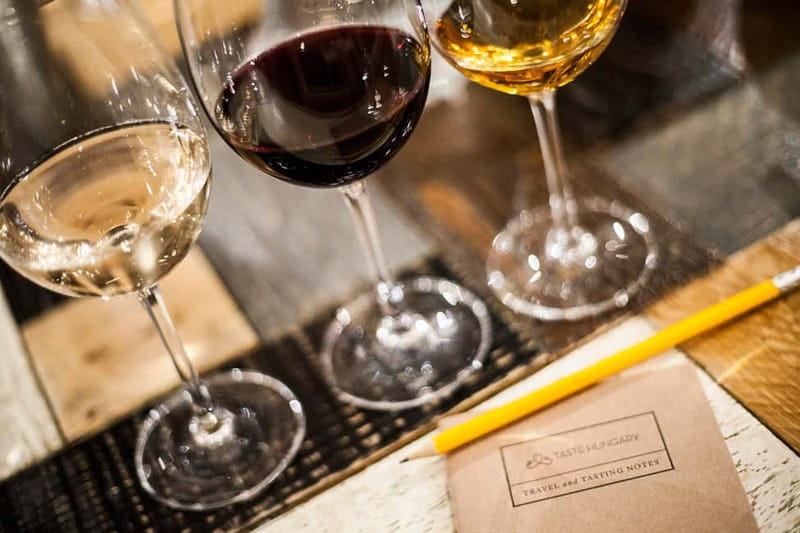
The final stop is a tasting of three essential Hungarian wines from different wine regions. This gives the tour a clear ending and adds a useful layer to the food discussion.
Hungary is not represented by one single wine style, and tasting three regional examples side by side helps show that variety. You do not need to be a wine expert. The value is in learning how wine fits into Hungarian meals and seeing how different regions contribute to the country’s drinking culture.
The wine session has been singled out as a favorite part of the experience, with Carlos hosting at least one tasting. It is also a good chance to slow down after the walking and talk through what you have eaten.
If you have a flight or another fixed appointment, watch the clock. One participant had to leave before the wine tasting because of a flight schedule. The full experience lasts four hours, and the final tasting is part of the planned route, not an optional extra you should assume will happen early.
Guides, group size, and the pace of the walk
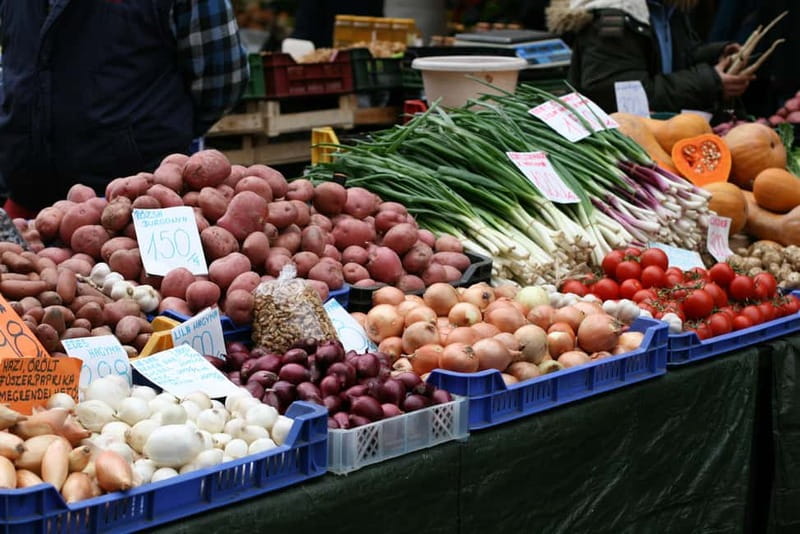
The small-group option allows two to eight participants. That is a useful size for a food tour. You can hear the guide, ask questions, and share dishes without the stop feeling like a large bus excursion.
The guides named in the feedback include Barbara, George, and Anna. Barbara has been praised for her interaction with the group and her ability to answer questions about Hungary and its culture. George has been described as funny, patient, and well organized. Anna led an earlier food and wine walk that left a strong impression.
Guide quality matters here because the route is built around explanation. Without a good guide, the market could become a quick photo stop and the tastings could feel disconnected. With a clear guide, the ingredients, shops, dishes, and wines form one story.
The pace is generally designed to leave room for eating, walking, and conversation. You still need comfortable shoes. This is not a sit-down tasting with short transfers. You will cover plenty of ground on foot, and the tour operates in rain or sunshine.
Private tours are also available and can be customized if requested when booking. A private version may make sense for a family, a group with specific food interests, or anyone who wants more control over timing. The standard small-group option is likely the better value for most people.
Getting there and planning the day
The meeting point is easy to reach by public transport. Kálvin tér is the nearest metro station on the M3 line, while Fővám tér is served by the M4 line. Trams 47 and 49 also go to Fővám tér.
Arrive with enough time to find the market entrance. The guide waits inside the main entrance, near the up escalators, and carries the branded canvas tote bag. This is a working market building, not a quiet hotel lobby, so a few extra minutes will make the start less rushed.
The tour is offered on most days, but not Sundays or Hungarian national holidays because some venues close. Check the available departure times for your date before building the rest of your day around it.
You can cancel up to 24 hours ahead for a full refund, and the reserve-now, pay-later option keeps your plans flexible. The tour needs at least two participants to run. If that minimum is not reached, an alternative or full refund is offered.
The route is not wheelchair accessible. The combination of market access, neighborhood walking, standing tastings, and changing venues makes this a poor fit for wheelchair users. Anyone who finds long periods on foot difficult should also think carefully before booking.
Who should book this Budapest food tour?
I would recommend it most strongly to first-time visitors who want a useful introduction to Hungarian food without spending days researching restaurants and specialty shops. It is also a good choice if you like asking questions, sharing dishes, and learning the background behind what you eat.
Food-focused visitors will appreciate the range, but you do not need to be a serious foodie. The market, coffee, cake, and wine give the route enough variety for a general Budapest sightseeing day.
It suits couples, friends, and small groups who enjoy an active half-day. The tour is less suitable if you want a leisurely restaurant meal, need a fully seated itinerary, or prefer to choose every dish yourself.
The $120 price is easiest to justify when you value the guide and the range of included tastings. You are paying for access to several food settings, not just a market walk. If you plan to eat lightly or skip wine, the price may feel high. If you want an organized introduction to Hungarian flavors, it can replace several separate food decisions during your first days in Budapest.
Should you book the Budapest Culinary and Wine Walk?
Book it if you want to get your bearings through food, taste across several settings, and finish with three Hungarian wines. The Central Market Hall gives you a strong opening, while the smaller shops, café, patisserie, and butcher’s stop keep the route varied.
Skip it if long walks are difficult, Sundays are your only available day, or you want a quiet sit-down meal. For everyone else, this is a well-paced introduction to Budapest’s food culture, with enough practical guidance to help you choose what to eat for the rest of your stay. Arrive hungry, wear comfortable shoes, and leave room for cake.
FAQ
Where does the Budapest Culinary and Wine Walk meet?
Meet inside the main entrance of Central Market Hall at Vámház körút 1 to 3, near the up escalators. The guide carries a canvas tote bag with the tour operator’s logo.
How long does the tour last?
The experience lasts four hours. Starting times vary, so check availability for your chosen date.
How many venues does the tour visit?
The tour includes the Central Market Hall plus four or five additional venues. Possible stops include a spice shop, kosher bakery, coffee house, candy producer, artisan chocolate shop, butcher’s shop, and traditional patisserie.
Is wine included?
Yes. The tour ends with a tasting of three wines from different Hungarian wine regions.
Is the tour available every day?
It operates on days other than Sundays and Hungarian national holidays, when some venues are closed.
Is the tour wheelchair accessible?
No. The tour is not wheelchair accessible, and participants should be prepared to walk a lot and spend time on their feet.
What happens if the tour does not reach the minimum group size?
The tour requires at least two participants. If that minimum is not reached after confirmation, you will be offered an alternative or a full refund.
Fresh off the menu around the world
- Taste of Chiang Mai: Michelin Guide & Street Food Tour★ 4.9 · 159 reviews
- Eat Porto Like a Local: The Ultimate Full-Meal Food Tour★ 5.0 · 97 reviews
- Vienna: The Ultimate Full Meal Austrian Food Tour★ 4.8 · 112 reviews
- Jerez: Traditional Tapas Tour★ 4.6 · 138 reviews
- Taste my Fribourg Self-Guided Food Tour★ 4.5 · 29 reviews
- Taste of Albania: Tirana Food Tour★ 5.0 · 26 reviews
- Taormina Pizza making class★ 4.8 · 140 reviews
- Taormina: Pizza Making Class with Lunch and Wine Tasting★ 4.8 · 145 reviews
Budapest Food Tours, compared.

Budapest Food Walking Tour: Eat, Sip & Explore Like a Local
Read our review →Budapest Centre Food Tour with 10+ Tastings, Wine & Street Food
Read our review →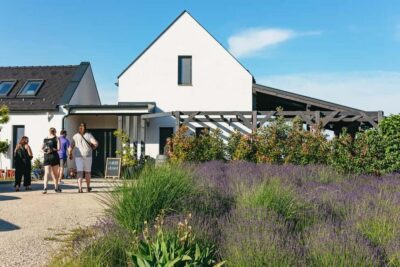
From Budapest: Etyek Wine Tasting Tour with 3-Course Meal
Read our review →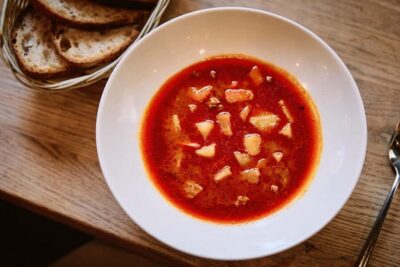
Budapest Guided Food Walking Tour with Drinks Included
Read our review →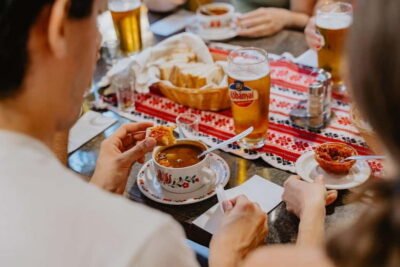
Budapest: Food Tour Market to Tavern: 14+ Tasters & Wines
Read our review →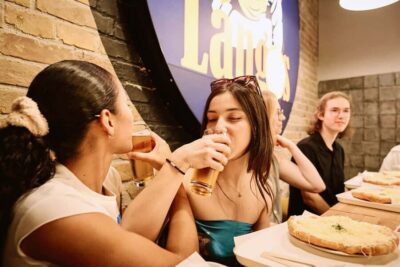
Budapest: Guided Street Food Tour with Sweet Wine
Read our review →
Budapest: Private Food Tour – 10 Tastings with Locals
Read our review →
Budapest: Guided Food Tour with Wine, Beer, and Shots
Read our review →Browse the lists this tour appears in