
Review · GREECE
Thessaloniki: Open Market Food Tour with Tasting
Thessaloniki’s best food story is told at street level, among fish counters, cheese shops, pastry ovens, coffee cups, and market stalls. This three-hour walk takes you from Ladadika to Kapani and Modiano, with generous samples of bougatsa, feta, olives, dips, sweets, and tsipouro along the way. I like the mix of eating and city history, plus the practical advice on where to return for dinner. I also like that the route includes everyday shops, not just polished restaurants.
The English-speaking guides, including Eleni, Konstantina, Elvina, Rita, and Margarita, bring their own local knowledge to the walk. You should be ready for a relaxed pace and plenty of food. The main caution is timing: one outing ran about three and a half hours rather than two, while this experience is advertised as three hours, so do not schedule a tight appointment afterward.
Key points at a glance
- Start with Thessaloniki’s working markets: Kapani and Modiano offer a close look at the city’s daily food trade.
- Expect more than a snack: Tastings can include bougatsa, tiropita, feta, olives, spreads, sweets, coffee, and tsipouro.
- Bougatsa is an early highlight: A stop at a historic local workshop introduces the city’s famous pastry.
- The guide matters: Eleni, Konstantina, Elvina, Rita, and other English-speaking hosts have been praised for combining food advice with local history.
- Save room for recommendations: The guide points out tavernas, cafés, shops, and market stalls you can revisit later.
- Plan for easy walking: Comfortable shoes, sunscreen, and a hat in summer will make the three-hour route easier.
Why Thessaloniki is so good for a food walk
Thessaloniki’s food culture reflects its position as a major port and crossroads in northern Greece. You do not need a lecture to understand that. Walk through the central markets and you see the idea in practice: cheeses beside olives, pastries near coffee, prepared spreads beside fresh vegetables, and small food shops serving both local residents and curious visitors.
I like tours that explain what a food means in daily life, rather than simply handing you a plate. Here, the guide connects ingredients and dishes with Thessaloniki’s customs, neighborhoods, and older businesses. That gives you a better chance of recognizing foods later when you order in a taverna.
The experience begins near Le Palace Art Hotel at 12 Tsimiski Street. From there, you walk toward the central food districts. The route is close enough together to suit families and older members of a group, though you should still expect several hours on your feet.
More Market Food Tours in Greece:
- Athens: Food Market Visit and Cooking Class with Wine
★ 4.9 · 1,087 reviews - Classic Athens Food Tour with Local Drink & Market Visit
★ 4.9 · 99 reviews - Chef Guided Food Tour of Pike Place Market
★ 5.0 · 3,733 reviews
Ladadika sets the scene
The opening walk through Ladadika gives you a useful introduction to Thessaloniki’s dining side. The district is known for restaurants, tavernas, and evening activity, but the tour uses it as a starting point for understanding the city’s food habits.
This is also where the host begins to connect the modern dining scene with older local traditions. You may hear about popular tavernas and the kinds of places best suited to a family meal, a casual drink, or an evening with friends.
I would not treat this first section as a major tasting stop. Its value is orientation. You begin to understand where the central food areas sit, how the neighborhoods connect, and which streets are worth returning to after the tour.
Bougatsa gives you an immediate taste of Thessaloniki
One of the first food stops centers on bougatsa from a historic local workshop. This pastry can be sweet, usually with custard, or savory, with fillings such as cheese or meat. The tour’s focus is on the traditional sweet version, though the food stops can include savory pies as well.
Bougatsa is a smart early tasting because it tells you something about the city’s bakery culture. It is simple food, but the pastry, filling, texture, and serving style matter. You can also compare it with tiropita, the savory cheese pie sampled on some outings.
Several people found the pastries among the strongest parts of the experience. I recommend arriving hungry enough to enjoy this stop, but not so hungry that you rush through the history and explanations. The portions are generally arranged so you can sample several items without being completely full at the start.
Kapani Market brings the food culture into focus
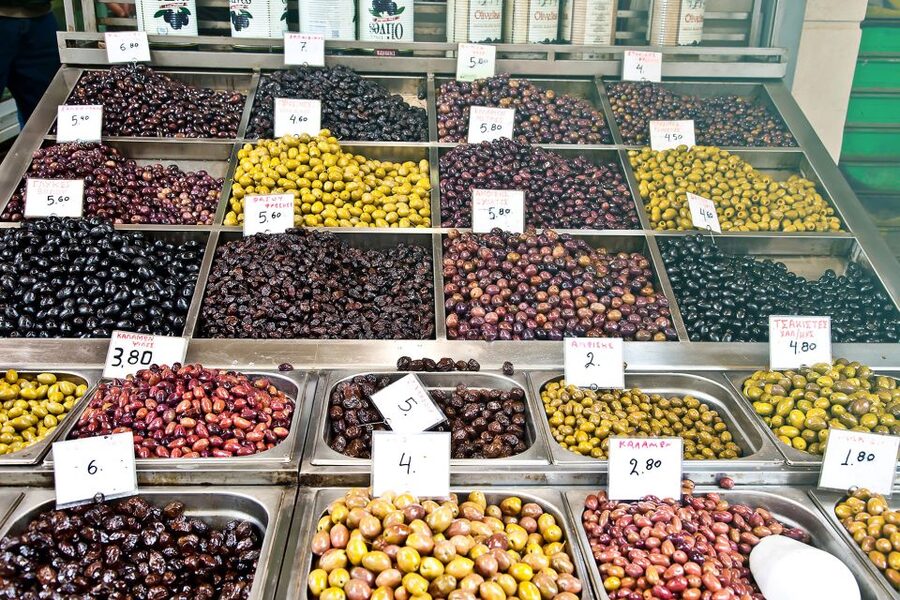
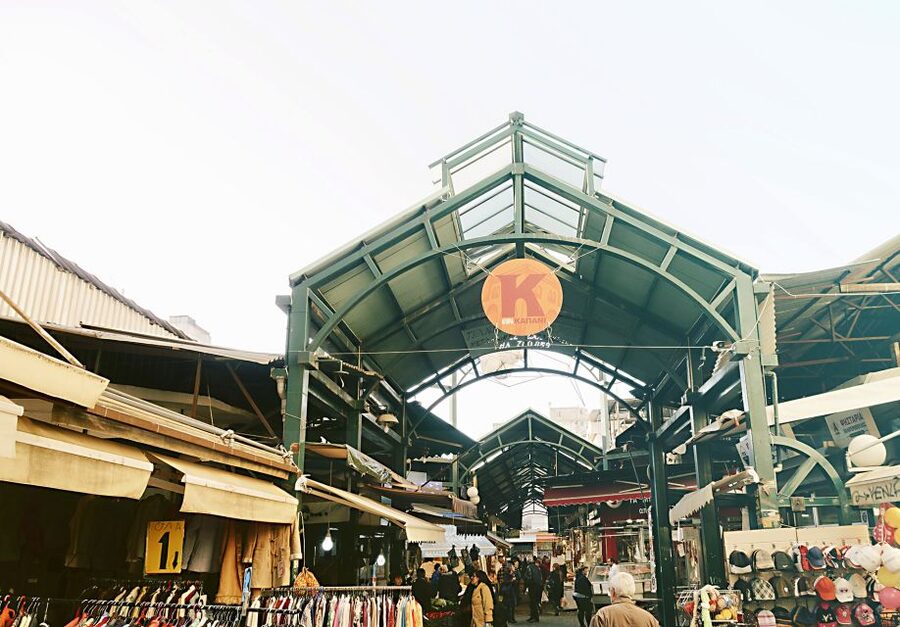
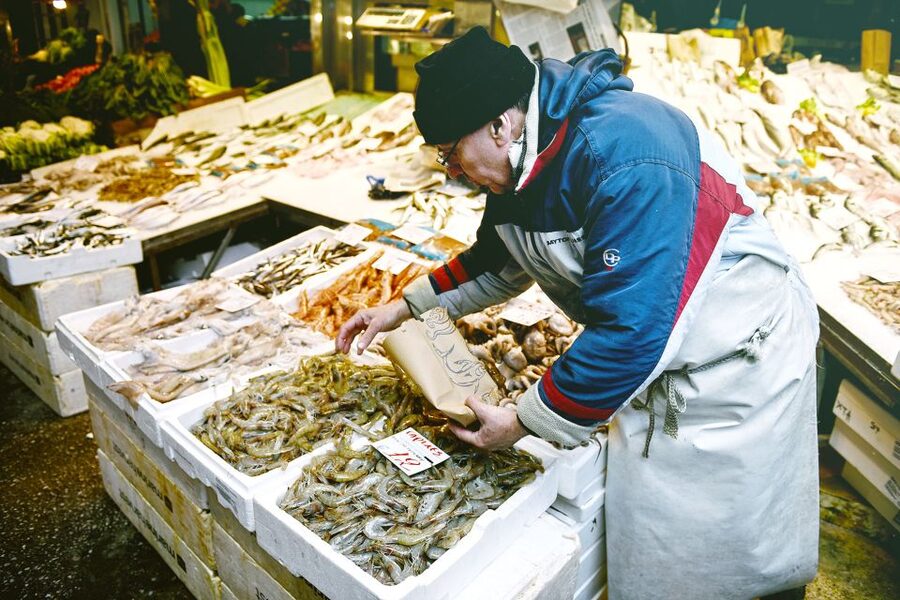
Kapani Market is the heart of the walk. Its lanes bring you close to the everyday buying and selling of Thessaloniki. The guide points out fresh vegetables, cheeses, olives, coffee, spreads, and other local products, explaining how they are used and what makes them worth trying.
The market is not presented as a museum. It is a working place, and that matters. You may see the sort of food residents buy for home cooking, rather than a set of products designed only for sightseeing.
The route can feel maze-like, which is part of the appeal. It is also the reason a guide adds real value. Alone, you might notice colorful displays and busy stalls but miss the best places for feta, the difference between varieties of olives, or the foods most closely linked with Thessaloniki’s kitchens.
The guide may also buy samples for the group at different stops. That approach allows you to try several items without ordering a full serving of each. You can taste, ask questions, and decide which foods you want to buy later.
More food tours around Greece:
- Greek Food Walking Tour in Athens
★ 5.0 · 4,740 reviews - Athens: Street Food Tasting Tour
★ 4.9 · 3,343 reviews - Athens: Guided Greek Food Walking Tour with Tastings
★ 4.9 · 2,859 reviews - Small Group Greek Traditional Food Tour in Athens 20+ Tastings
★ 5.0 · 1,759 reviews
Greek coffee makes a useful pause

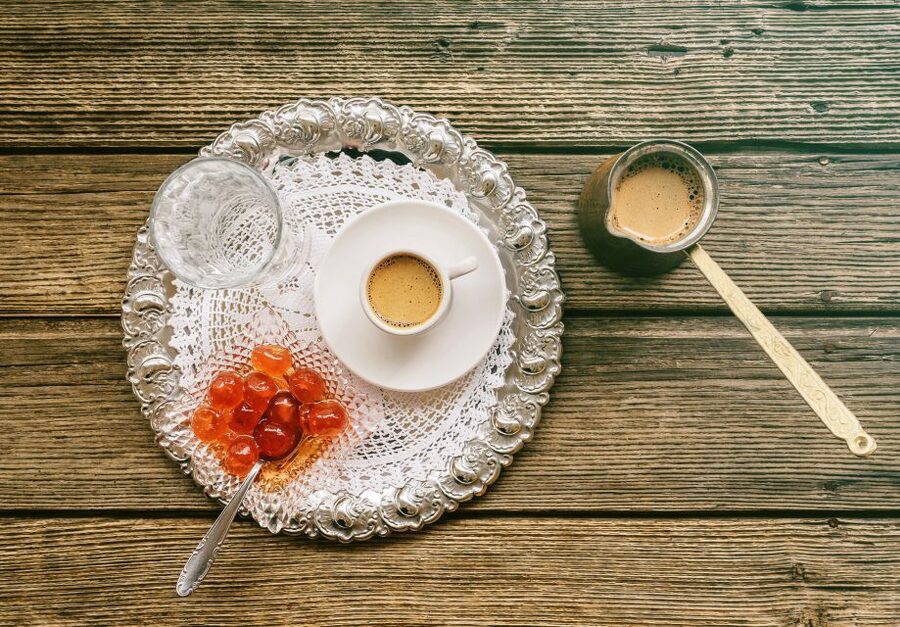
The coffee break at Kapani is more than a chance to sit down. Traditional Greek coffee is strong, finely ground, and served in a small cup. The pause gives you time to talk with the guide and sort out what you have tasted so far.
You may also try local bites with the coffee. Depending on the day and the exact route, these can include sweets, Turkish delight, or small savory items. One detailed food selection included olives, feta, a cheese similar to gouda, Greek coffee, Turkish delight, tzatziki with koulouri, and smoked eggplant spread.
This is one of the tour’s better design choices. Food walks can become tiring when every stop is standing room only. The chance to sit between tastings keeps the pace comfortable and gives you time to enjoy the food instead of treating each sample as a quick checkpoint.
Modiano Market adds another view of the city
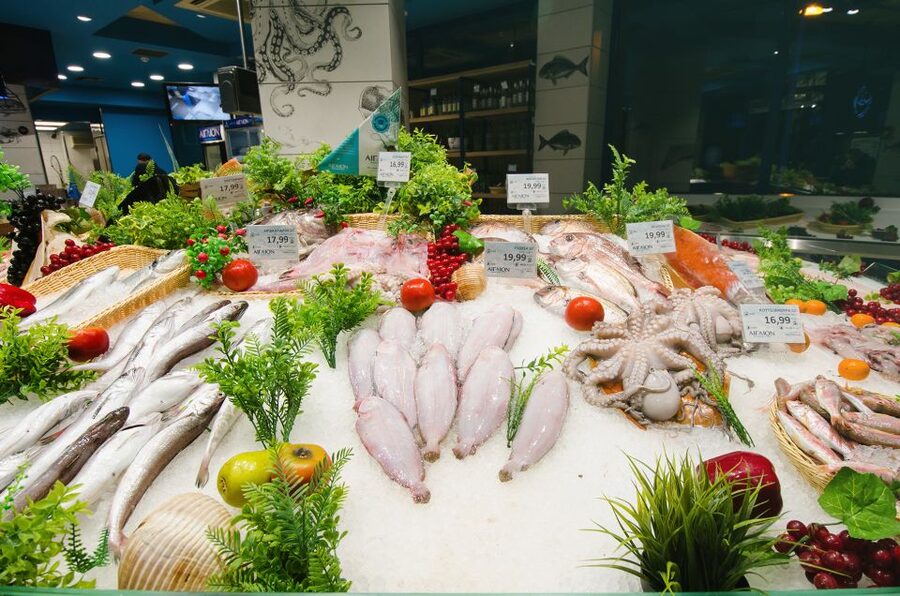
Modiano Market offers another look at central Thessaloniki’s food trade. Along with Kapani, it helps you see the difference between wandering through a market and understanding one.
The guide points out products that may be unfamiliar, including fish-based items, spreads, cheeses, and pantry ingredients. You might taste fish egg cream, melitzanosalata, or other traditional dips with bread or koulouri. These foods make more sense when you know how they fit into a shared meal.
The two markets can involve some backtracking depending on the day’s route. One outing received criticism for walking back and forth, and another found that the planned coffee shop was closed. The guide handled the closure with an alternative, but you should understand that market tours must adjust to shop hours and local conditions.
That flexibility is useful, though it means the order of stops may not match the advertised sequence. If you care more about a smooth route than spontaneous changes, this is worth keeping in mind.
Louloudadika and Athonos Square show the social side
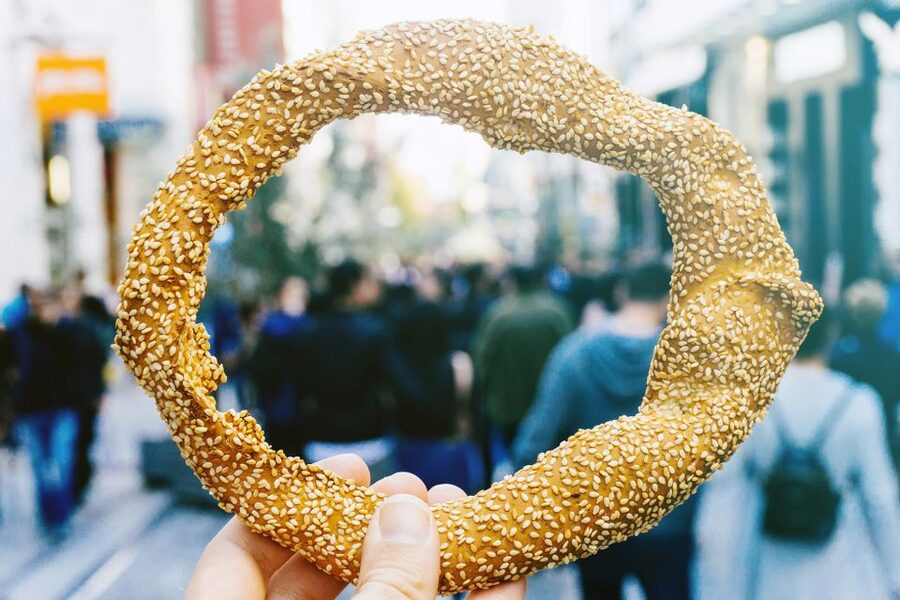
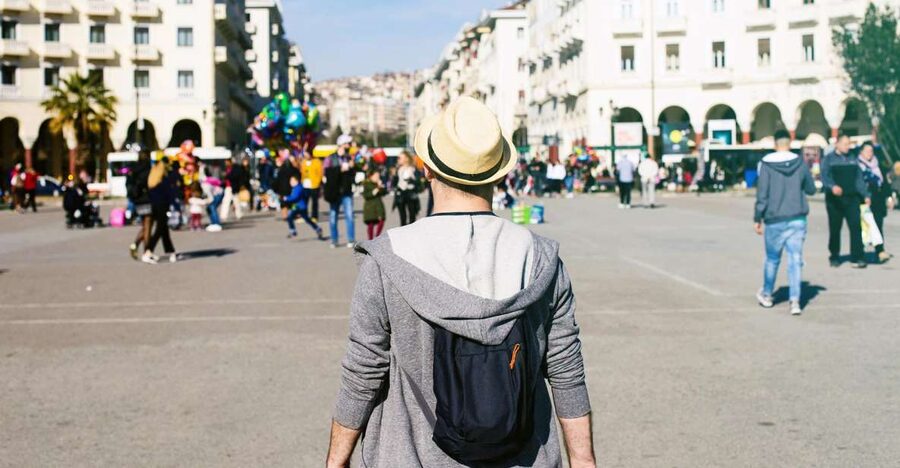
The walk continues through Louloudadika and Athonos Square, areas with a strong connection to eating, meeting, and local shopping. Athonos Square is a good place to notice how food markets and casual dining overlap.
This part of the tour helps balance the market tastings. You are not only learning the names of Greek foods. You are also seeing the settings in which people buy, share, and talk about them.
The guide can point out places for a later meal or drink. That advice is one reason I would schedule this tour early in your stay. If you take it near the end of your trip, the restaurant suggestions may arrive too late to use.
The tastings cover both familiar and less familiar foods
The food list is broad, though it can vary. You may try:
- Bougatsa and tiropita
- Feta and other local cheeses
- Green or black olives
- Tzatziki and melitzanosalata
- Traditional spreads
- Koulouri
- Greek coffee
- Turkish delight and cakes
- Tsipouro
- Fresh produce and market items
A particularly generous tasting sequence included portokalopita, karidopita, coconut cake, halvah, and several savory foods. You should not assume every item appears on every departure, but the overall pattern is clear: this is not a single-dish tasting.
The portions are usually small enough to let you keep going. Even so, the food adds up quickly. Several people finished the walk feeling full, and one useful tip is to skip or reduce breakfast before you go.
Tsipouro deserves a note. It is a strong local spirit and may be offered as part of the tasting. If you do not drink alcohol, tell the guide. The supplied information does not promise a substitute, so it is best to make your preference clear at the start.
The crafts shop adds a welcome non-food stop
The traditional crafts shop is a small but worthwhile change of pace. It sells folk art and gives the tour a link to local making, not just local eating.
After several food stops, this break prevents the experience from becoming a nonstop series of samples. It also gives you a chance to look for a small souvenir with a stronger connection to Greek folk culture than a generic tourist item.
Do not expect a full museum visit. The shop is a short stop within a walking route, but it broadens the picture of Thessaloniki’s traditional life.
The guide is the most important part of the experience
The host does more than lead you from one stall to the next. The best guides explain why a product matters, answer questions, suggest places to eat, and help you feel comfortable in the markets.
Eleni and Konstantina were repeatedly singled out for warm, clear explanations. Elvina was praised for covering Greek coffee, pastries, cheeses, olives, tsipouro, and local produce. Rita was noted for explaining where to find good deals and quality ingredients, while Margarita was remembered for making the walk feel easy and social.
Guide assignments can change, so you cannot book a specific person based on these names. You can expect an English-speaking host, but the personality and exact route will depend on the guide working that day.
The guides also bring different interests. One host had studied archaeology and added useful facts about Thessaloniki and Greece beyond food. That sort of extra context is valuable if you want a city introduction rather than a list of snacks.
How much value do you get for $53?
At $53 per person, the price is fair if you use the tour as both a food tasting and a city orientation. You receive three hours with an English-speaking host, traditional Greek coffee, and food tastings. You also get advice that can shape the rest of your time in Thessaloniki.
The value is strongest when you are visiting for the first time. A guide can save you from ordering blindly, help you identify foods in the markets, and direct you back to shops or restaurants you liked.
The value is weaker if you expect a full lunch or a private restaurant meal. Lunch after the tour is not included. You should also know that one older account described a shorter advertised duration and fewer market interactions than expected, while the current experience is listed as three hours with several tastings.
For me, the price makes the most sense when you plan to buy some products afterward or use the restaurant advice later. If you only want a quick snack, the cost may feel high.
Who should book this walk?
I would recommend it to first-time visitors who want to understand Thessaloniki through food. It suits couples, families, and small groups that enjoy walking at an easy pace and trying several unfamiliar items.
It is also a good choice for anyone who feels uncertain in open markets. The guide helps with names, choices, and local customs, which makes the experience less intimidating.
Families should find the route manageable, but children may not enjoy every explanation or strong flavor. The activity is family-friendly, and one guide handled a child in the group well, yet parents should remember that the tour lasts three hours and includes walking and standing.
Food-focused visitors should come hungry. People with dietary restrictions should ask the provider before booking, since the available information does not set out vegetarian, vegan, allergy, or gluten-free arrangements.
Wear comfortable shoes. In summer, carry sunscreen and a hat. There is no need to dress formally, and the practical clothing advice matters more than looking ready for a restaurant.
Booking early in your stay is the best strategy. You can return to a market stall, pastry shop, café, or taverna while you still have days left in the city.
Should you book the Thessaloniki market food tour?
Book it if you want a friendly introduction to the city’s food habits, enjoy trying many small portions, and value local advice as much as the tastings. The strongest features are the central markets, the range of food, the relaxed explanations, and the chance to learn where to eat afterward.
Skip it if you need a tightly timed two-hour activity, want a full sit-down lunch, or dislike strong coffee, spirits, cheeses, and unfamiliar spreads. For most first visits, I would choose this early in the trip, arrive with a light appetite, and leave the rest of the day open enough to enjoy the Greek pace.
FAQ
Where does the Thessaloniki food tour meet?
Meet in front of Le Palace Art Hotel at 12 Tsimiski Street in Thessaloniki.
How long does the tour last?
The activity is listed as three hours. Allow some extra time in case the route moves slowly or a market stop takes longer than planned.
What language is the tour conducted in?
The tour is conducted in English with a live English-speaking guide.
What food and drinks are included?
The tasting can include bougatsa, Greek coffee, cheeses, olives, pastries, traditional spreads, dips, sweets, and tsipouro. The exact selection can vary by day.
Is lunch included?
No. The cost of lunch after the tour is not included.
What should I bring?
Wear comfortable shoes. In summer, bring sunscreen and a hat. It is also sensible to arrive with enough appetite for several tastings.
Fresh off the menu around Greece
- Thessaloniki: Small-Group Wine Tasting Tour with Appetizers★ 4.8 · 31 reviews
- Thessaloniki Food Tour with a Local Chef★ 5.0 · 111 reviews
- Santorini: Private Catamaran Cruise with Food & Drinks★ 5.0 · 180 reviews
- Santorini: Wine Tasting Tour & Sunset Viewing★ 4.8 · 255 reviews
- Santorini: Sunset Walking Tour with Local Food and Drinks★ 4.9 · 160 reviews
- Sailing tour around Lindos with food and drinks★ 4.8 · 54 reviews
- Rhodes: Boat Tour with Snorkeling, Gourmet Buffet & Open Bar★ 4.8 · 595 reviews
- Rethymno:Evening tasting tour★ 4.7 · 25 reviews
Greece Food Tours, compared.

Athens: Guided Greek Food Walking Tour with Tastings
Read our review →
Small Group Greek Traditional Food Tour in Athens 20+ Tastings
Read our review →
Rhodes Exclusive Swim Cruise Cocktail Open bar & Gourmet Buffet
Read our review →
Athens: Food Market Visit and Cooking Class with Wine
Read our review →
Athens Authentic Greek Food Walking Tour (Small Group)
Read our review →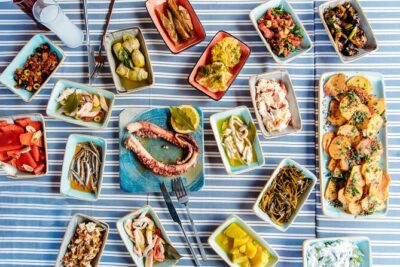
Browse the lists this tour appears in