Review · ROME
Rome: Street Food Tour with Local Guide
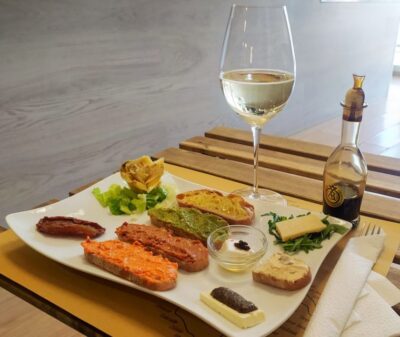
Rome’s best food lessons often happen between the famous sights. This 2.5-hour walk links Campo dei Fiori with the Jewish Ghetto, pairing small tastes of pizza, supplì, cured meat, wine, beer, and gelato with stories about the streets around you.
I like the easy mix of eating and sightseeing, especially the stops at the Portico of Octavia and the Turtle Fountain. I also like the guides’ personal touch: Mattia, Francesca, Marco, Ramona, and others have been praised for making Roman food and history clear without turning the walk into a lecture.
The main drawback is simple: this is a tasting tour, not a full meal. Food is served while standing, and vegans or people with gluten intolerance should choose another experience.
Key points to know before booking
- Five tastings across two historic districts: Try Roman staples while walking between Campo dei Fiori and the Jewish Ghetto.
- A morning tour has one extra advantage: Campo dei Fiori’s open-air market is open during the morning departure.
- The food comes with context: Learn why supplì, pizza, cured meats, and gelato matter in Roman eating culture.
- The guides are a major part of the experience: Mattia, Francesca, Marco, Ramona, and other English-speaking guides are praised for their humor, warmth, and city knowledge.
- Plan for snacks, not dinner: The tastings can be generous, but the portions are not designed to replace a full evening meal.
Starting beneath Giordano Bruno in Campo dei Fiori
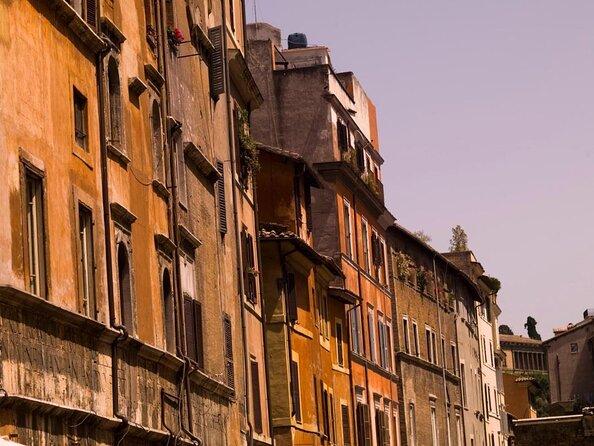
Meet beneath the statue of Giordano Bruno in the middle of Campo dei Fiori. It is an easy landmark to find, and the statue gives the tour a useful opening point because Bruno’s story connects the square with Rome’s long record of political and religious conflict.
From there, you begin on foot. The first section takes you through Campo dei Fiori, one of central Rome’s best-known squares and the site of an old open-air market. The market visit is available during the morning tour, so choose an earlier departure if browsing stalls matters to you.
The square changes character during the day. In the morning, you can look at market goods and food displays. Later, the area becomes more focused on restaurants, cafés, and evening activity. The tour works at either time, but the morning version gives you a more direct look at the market side of Roman food life.
You will not be sitting down for a long meal here. The food is handed out in tasting portions, usually eaten while standing. That keeps the tour moving, though it may be less comfortable if you want a relaxed restaurant experience.
More Food Tours with Locals in Italy
- Rome Street Food Tour with Local Guide
★ 5.0 · 2,361 reviews - Rome: The Ultimate Trastevere Food Tour with a Local
★ 4.9 · 114 reviews - Rome: Private Food Tour with Local Guide
★ 4.6 · 46 reviews
Campo dei Fiori and the first Roman bites
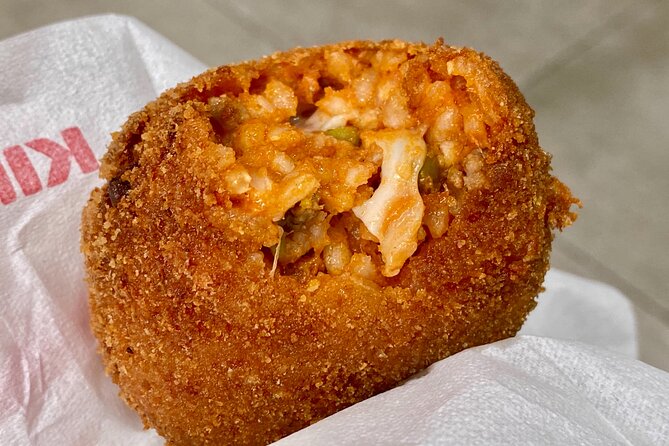
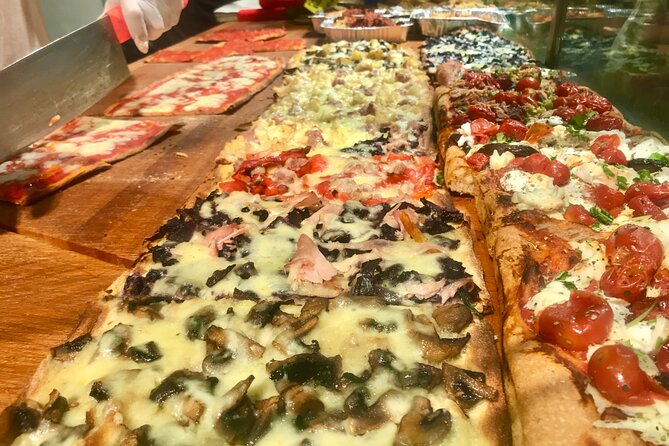
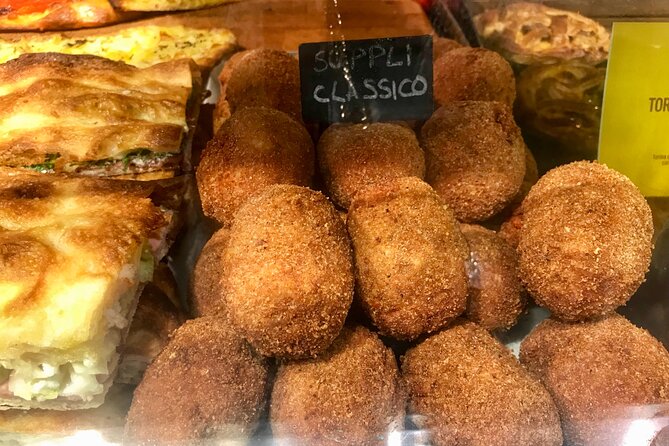
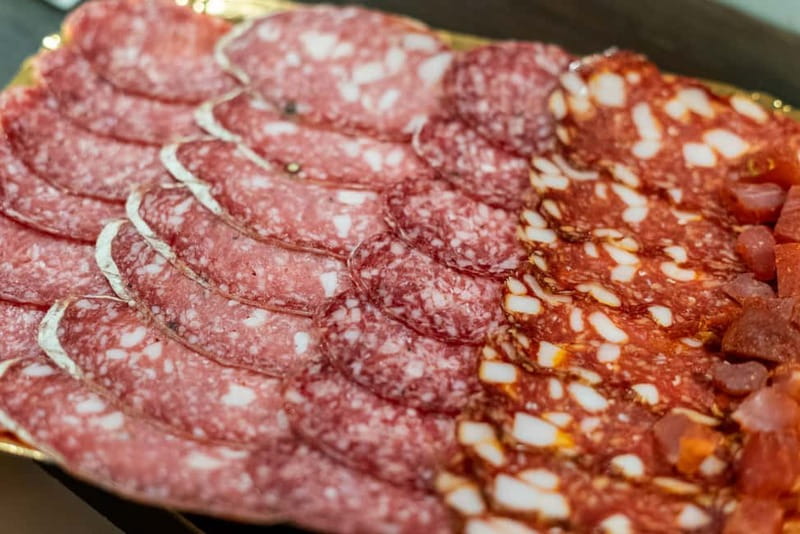
The opening tastings introduce you to the foods that define the rest of the walk. Expect classic Roman street food such as pizza and supplì, the crisp fried rice ball with a soft center. You may also taste cured meats, artichoke, and other regional specialties depending on the stops used that day.
Supplì is especially useful as a first taste because it is both humble and distinctly Roman. It is easy to carry, filling for its size, and a good example of how everyday Italian food often depends on texture: a crunchy outside, warm rice inside, and a savory filling.
The pizza tasting is not meant to compete with a long restaurant lunch. Instead, it gives you a quick introduction to the Roman style you may see again during your stay. Listen to the guide’s advice about places to return to, since several guides, including Mattia and Marco, have offered useful restaurant recommendations along the route.
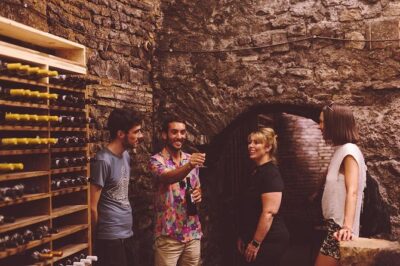
A small sample of wine and a small sample of beer are included. Extra drinks are not included, so you should not treat the included pours as an open bar. They are there to pair with the food and give you a taste of how Romans might enjoy these casual dishes.
Via dei Chiavari and the value of small portions
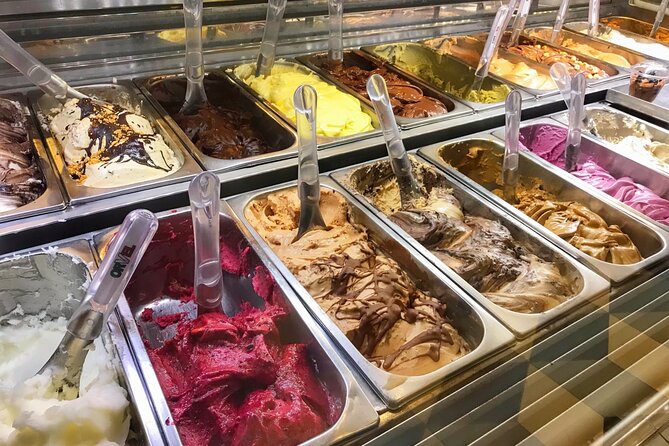
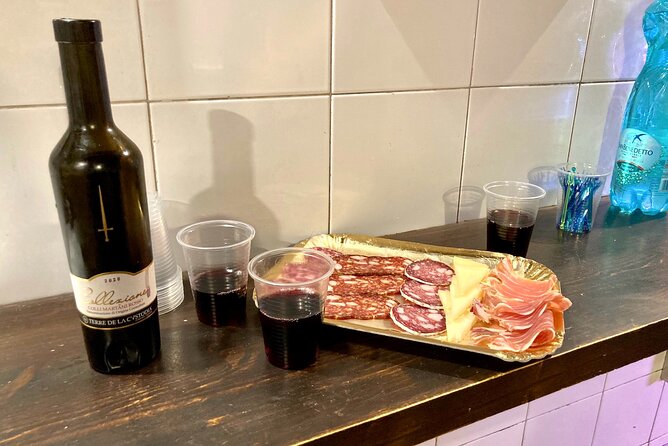
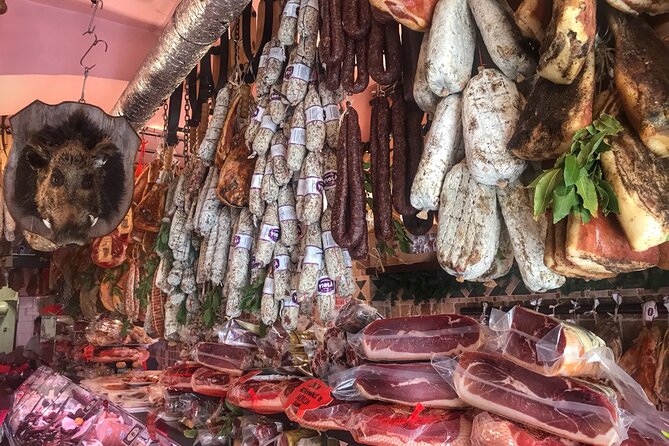
The route continues toward Via dei Chiavari, where another food stop gives you a closer look at local products. Cured meat is one of the likely highlights, and it helps broaden the experience beyond fried snacks and pizza.
This is where the tour’s format makes sense. You taste several foods in small amounts rather than filling up on one large serving. That lets you sample things you might not order on your own, especially if you are unsure about an unfamiliar Roman specialty.
Still, keep your expectations in check. One useful way to plan is to treat this as a substantial appetizer or late afternoon meal, followed by dinner later. One person who enjoyed the tour noted that the food was not enough for a full dinner, while others found the amount surprisingly generous. Both impressions can be true, since appetite, tasting size, and the day’s exact stops will vary.
The standing format also affects the pace. You will likely pause at food counters or shops, eat quickly, and then move on. Wear comfortable shoes and avoid carrying anything awkward. The route is short in distance, but cobbled streets and frequent stops make walking more comfortable than rushing.
Entering the Jewish Ghetto
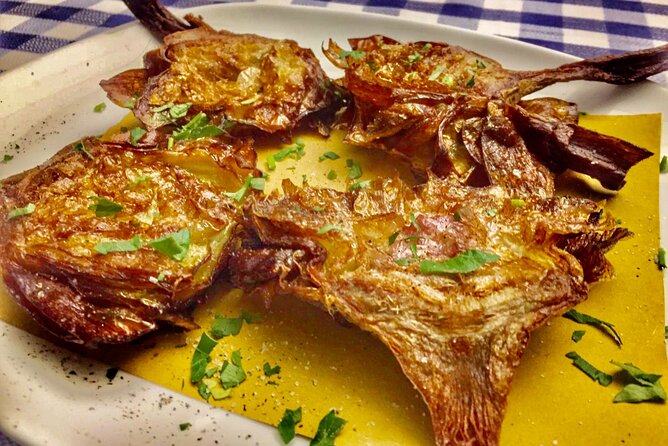
The move into Rome’s Jewish Ghetto is one of the strongest parts of the tour. Here, food is tied closely to community and place. The guide explains the neighborhood as you walk, so the tasting is not separated from the streets that shaped it.
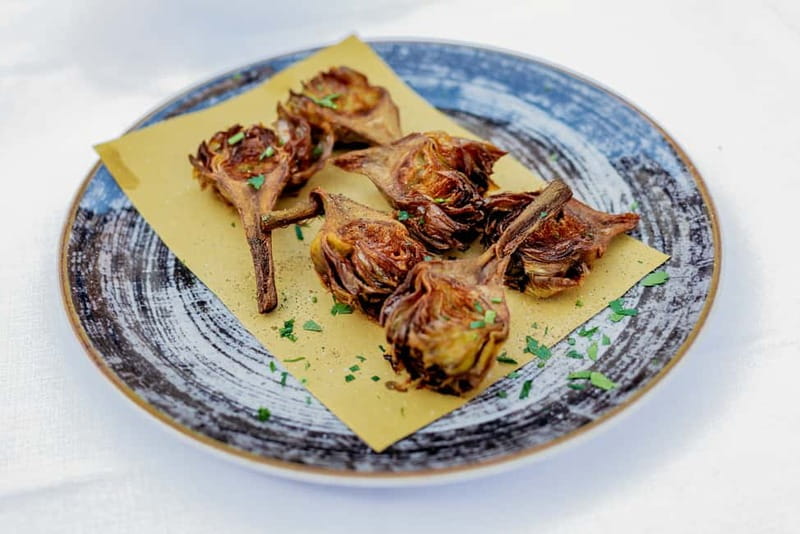
Look for regional foods such as artichoke and other Roman specialties. The food is only part of the point. You are also learning how Roman cuisine reflects different communities, local ingredients, and long-running cooking traditions.
The Jewish Ghetto is a good area for a guided walk because its meaning is not always obvious from a quick pass through. A guide such as Mattia, Francesca, Ramona, or Andrea can connect the lanes and landmarks with stories that you might otherwise miss.
The atmosphere can be calmer than Rome’s largest sightseeing routes, although the streets are still active and central. This makes the tour useful for people who want food plus a more local-feeling look at the historic center, rather than a route limited to major monuments.
More Street Food Tours in Italy
- Rome: Trastevere & Campo de Fiori Street Food Walking Tour
★ 4.9 · 2,768 reviews - Rome: Trastevere Street Food Walking Tour with Local Expert
★ 4.8 · 1,784 reviews - Hidden Rome: Small Group E-Bike Tour with Street Food Stops
★ 4.9 · 144 reviews - Rome: Trastevere & Tiber Island Street Food Tour at Sunset
★ 4.9 · 71 reviews
Portico of Octavia and the Turtle Fountain
At the Portico of Octavia, the tour pauses for photographs. The ancient structure was originally built under Augustus, Rome’s first emperor, and its remains provide a clear reminder that the city’s historic layers are often packed into a single block.
The stop is brief, only a few minutes, so do not expect a full archaeological explanation. Its value is in seeing the monument as part of the neighborhood rather than visiting it as a separate attraction. The guide can give you enough context to recognize why the site matters when you return on your own.
The Turtle Fountain is another memorable sight in this part of the walk. Its bronze turtles are associated with Bernini and Della Porta, and the fountain gives the group a small, photogenic pause before the route continues.
These stops help balance the food. If you only wanted to eat, the walking may feel like a delay. If you want a compact introduction to central Rome, the mix works well. You get landmarks, stories, and tastes without spending half a day inside a museum.
A look toward the Pantheon
The route passes by the Pantheon and includes scenic views along the way. This is not a Pantheon entrance tour, so you should not book it as a substitute for seeing the interior or learning the monument in detail.
Still, the pass-by is useful. You get a sense of how close Rome’s major sights are to its food streets, and you can mark the Pantheon for a later visit. The walk also helps you connect Campo dei Fiori and the Jewish Ghetto with the central sights you are likely already planning to see.
The tour’s compact route is one of its practical strengths. You are not spending time on buses or taxis. The listed transfers between stops are only a few minutes each, and the whole experience takes about 2.5 hours. That makes it easy to fit into a first or second day in Rome.
I especially like this timing for the start of a trip. It gives you ideas for places to eat later, shows you how the center fits together, and introduces food names before you encounter them on restaurant menus.
Ending with gelato near Sant’Eustachio
The final food stop is dessert, with gelato near Sant’Eustachio. Ending with something cold and sweet is an obvious crowd-pleaser, but it also gives you a chance to compare Roman gelato with the many tourist-oriented versions sold around the city.
The guide may also point out a famous coffee shop in the area. The tour does not include a full coffee stop, but this part of central Rome is a useful place to note for later. One guide even shared local stories connected with the café, including a tale involving Henry Kissinger.
Gelato is a personal choice, and not every flavor will suit every palate. One person disliked a hazelnut selection but enjoyed an unusual orange, lemon, and chili combination. That is a good reminder to ask about flavors and try something that interests you rather than choosing automatically.
The ending is relaxed, but the tour does not finish with a seated meal. If you are hungry after the walk, use the guide’s recommendations and continue with a proper Roman dinner.
What the guides add to the food
Food tours depend heavily on the person leading them, and this experience uses a rotating team. Guides named in the feedback include Mattia, Francesca, Marco, Ramona, Andrea, Barbara, Chiara, Tiziano, Kristian, Marti, and others.
The qualities most often praised are warmth, humor, clear explanations, and enthusiasm for Rome. Mattia is often singled out for combining food details with stories about Giordano Bruno, Largo di Torre Argentina, and the Jewish Ghetto. Francesca is praised for kindness, careful group management, and her ability to explain the background of each dish.
Marco and Tiziano are noted for friendly, energetic presentations, while Ramona is remembered for humor and practical advice that helped people during the rest of their stay. These details matter because a food tour can become a list of snacks if the guide does not connect them to the city.
You should also feel free to ask questions. The strongest guide-led moments come when the food opens a conversation about Roman habits, local ingredients, history, and where to eat next.
Dietary needs and comfort
Vegetarian options are available with advance notice. A vegetarian can take part, but you should state your needs when booking rather than waiting until the meeting point.
The tour is not suitable for vegans or people with gluten intolerance. Dairy restrictions may also be difficult, since the tasting list includes gelato and other foods that may contain dairy. If you have an allergy or strict dietary requirement, contact the provider before paying.
Food is served while standing. There are no listed seated meal breaks, and the tour moves between stops on foot. That setup suits you if you enjoy a casual market-style experience, but it is not ideal if you need regular seating or prefer to eat slowly.
The group size can be small. One reported group had around eight or nine people, which made conversation easy and helped the guide keep everyone together. Group size can change, so do not assume every departure will be identical.
Is $53 a fair price?
At $53 per person, the tour is not the cheapest way to buy pizza, gelato, or supplì in Rome. You could purchase individual snacks for less if you already know where to go.
The value comes from the combination. You receive five tastings, a beer sample, a wine sample, a guided walk through two historic districts, and explanations that help you understand what you are eating. You also save the work of finding reliable food stops on your own.
The price makes the most sense early in your visit, when recommendations have practical value. If the guide directs you to a favorite supplì shop or gelateria, you can return later. Several people have gone back to stops after the tour, especially for supplì and gelato.
It is less suitable if you want a formal meal, a long archaeology tour, or a highly specialized wine tasting. Think of it as a food-centered orientation to central Rome.
Who should book this Rome food walk?
I would choose this tour for first-time visitors, curious eaters, couples, families with older children, and anyone who likes learning a little history while eating. It is also a good choice for people who normally feel uncertain about ordering local specialties.
Book the morning if Campo dei Fiori’s market is important to you. Choose it early in your stay if you want food suggestions for later meals. If you are visiting in hot weather, carry water because extra drinks are not included and the walking takes place outdoors.
Families can enjoy the casual format, and one guide received praise for keeping children engaged. The tour can also work for a last-minute dinner plan, although you should still arrange a full meal afterward if you expect to be hungry.
Should you book it?
Book this tour if you want a friendly introduction to Roman food and central neighborhoods in one compact outing. The strongest reasons are the five tastings, the Jewish Ghetto route, and guides who add useful stories rather than simply handing you food.
Skip it if you are vegan, gluten intolerant, need a seated meal, or want enough food for dinner. For everyone else, $53 is a reasonable price for a guided tasting walk that can help you eat better for the rest of your time in Rome.
FAQ
How long does the Rome street food tour last?
The tour lasts 2.5 hours.
What is the meeting point?
Meet beneath the statue of Giordano Bruno in the middle of Campo dei Fiori square.
What food is included?
The tour includes five street food tastings. Typical foods include pizza, supplì, cured meat, artichoke, and gelato, though the exact selection can vary.
Are drinks included?
One sample of beer and one sample of wine are included. Extra drinks are not included.
Is the Campo dei Fiori market open during every tour?
No. The market is open only during the morning tour.
Is the tour conducted in English?
Yes. The live guide language is English.
Are vegetarian options available?
Yes. Vegetarian options are available if you provide advance notice when booking.
Can vegans or people with gluten intolerance join?
The tour is not suitable for vegans or people with gluten intolerance.
Is this tour a full dinner?
No. The tastings may be satisfying, but the tour is designed as a food tasting experience rather than a full dinner. Food is served while standing.
Can I cancel the booking?
You can cancel up to 24 hours in advance for a full refund. You can also reserve now and pay later.
More Food Tours with Locals in Rome
- Naples: Street Food Walking Tour with Local Guide
★ 4.9 · 4,976 reviews - Eat Like a Local: Venice 3-Hour Small-Group Food Tasting Tour
★ 5.0 · 3,137 reviews - Marrakech: Street Food Tour with a Local Guide
★ 4.9 · 3,119 reviews - Venice: Street Food Tour with a Local Guide and Tastings
★ 4.8 · 2,613 reviews
More Street Food Tours in Rome
- Rome E-Bike Tour: Ultimate Street Food and Market Feast
★ 4.9 · 50 reviews - Rome: Vegan Street Food Tour with Local Guide
★ 5.0 · 37 reviews - Rome: Vatican Street Food and Wine Tour with Farmers Market
★ 5.0 · 37 reviews - Rome: Jewish Quarter and Campo de’ Fiori Street Food Tour
★ 4.8 · 36 reviews
Fresh off the menu around Rome
- Rome: 3-Hour Guided Food Tour with Tastings★ 4.9 · 41 reviews
- Rome: Trionfale and Prati Food and Wine Tasting Tour★ 4.8 · 115 reviews
- Rome: Vegan Street Food Tour with Local Guide★ 5.0 · 37 reviews
- Rome: Trastevere & Tiber Island Street Food Tour at Sunset★ 4.9 · 71 reviews
- Rome Trastevere Walking Food Tour★ 4.8 · 97 reviews
- Rome: Vatican Street Food and Wine Tour with Farmers Market★ 5.0 · 37 reviews
- Rome: Trastevere Food Walking Tour with Beer and Wine★ 4.9 · 71 reviews
- Rome: Trastevere Quarter Street Food Tour with Sightseeing★ 4.9 · 21 reviews
Rome Food Tours, compared.
Winner 2025 Rome Twilight Trastevere Food Tour by Eating Europe
Read our review →
Rome Food Tour: Unlimited Tastings with Fine Wine & Barolo
Read our review →
Rome Food Tour: Campo de’ Fiori, Ghetto, Trastevere Winner 2024
Read our review →
Rome: Guided Food Walking Tour with Wine in Trastevere
Read our review →
Rome: Trastevere Food tour with Free-Flowing Fine Wine
Read our review →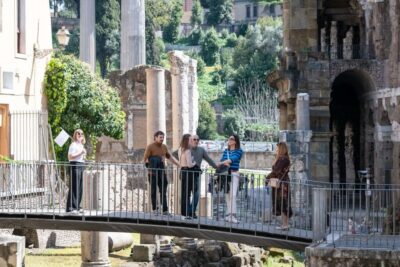
Rome: Trastevere & Campo de Fiori Street Food Walking Tour
Read our review →