
Review · PARIS
Paris: Pastries and Chocolate Walking Food Tour
Paris can make a meal out of a pastry, and this tour gives you a very tasty route through that tradition. You begin with award-winning pain au chocolat, then move through old covered passages, a tea salon, a bean-to-bar chocolate shop, a crêperie, and a modern pâtisserie.
I like the way food and architecture share the stage here. I also like the small group size, which makes it easier to hear guides such as Dave, Khosi, Vanessa, or Sam and ask questions. The main drawback is simple: this tour is not suitable for vegans, people with gluten intolerance, or anyone with a nut allergy.
Key points at a glance
- Start with one of Paris’s best-known breakfast pastries: Victoire Boulangerie serves a pain au chocolat that has received recent recognition among the city’s finest.
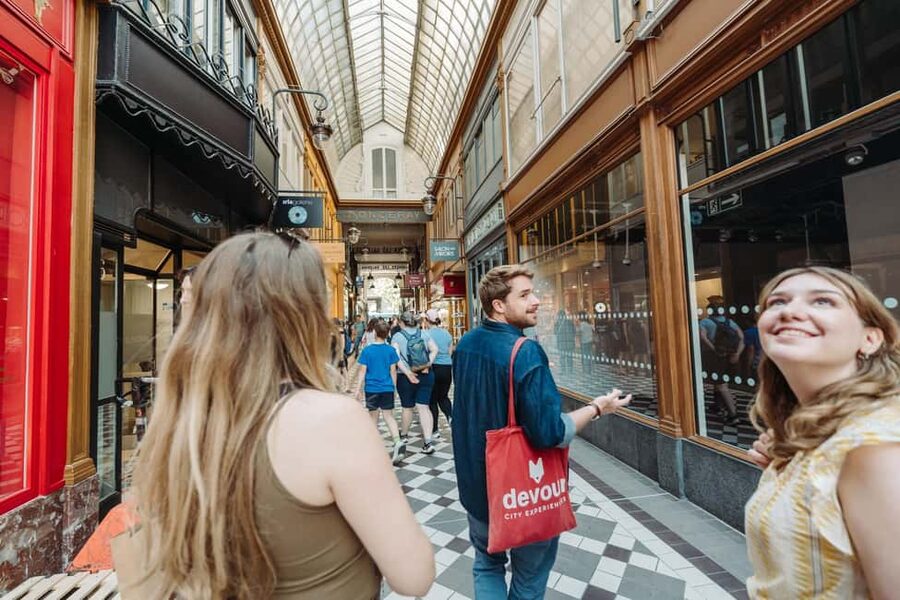
- Walk through three historic covered passages: Passage Jouffroy, Passage Verdeau, and Passage des Panoramas add architecture and local history between food stops.
- Expect a full morning or afternoon of sweets: Six or more tastings include cake, chocolate, crêpes, cider, and macarons.
- The group is capped at 10 people: That is a useful size for a walking tour with several indoor stops.
- Come hungry: Several portions are substantial enough that breakfast beforehand can leave you too full to enjoy the later tastings.
- Dietary limits matter: Vegetarians and pescatarians can be accommodated, but vegan, gluten-free, and nut-free diets are not suitable for this experience.
Paris pastry culture beyond the usual café stop
This is not simply a march from one famous bakery to another. The route takes you through the Grands Boulevards area, where the food is tied to the streets and buildings around it.
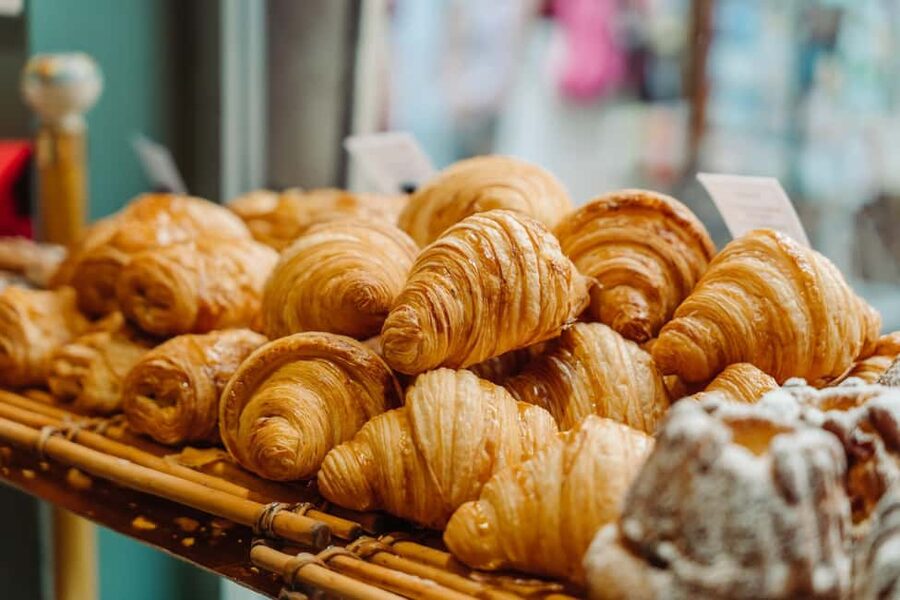
The starting point is 34 Rue du Faubourg Montmartre, in front of Faubourg 34. From there, you head to Victoire Boulangerie for the first tasting. The opening pain au chocolat sets the tone: this is a tour for people who want to compare quality, technique, and texture rather than merely check French food off a list.
I like beginning with a familiar item. Almost everyone knows what a pain au chocolat is, but a well-made one can be a revelation. The pastry should give you crisp layers around warm chocolate, and it provides an easy introduction before the route turns toward lesser-known streets and passages.
The timing also works well. You spend about 25 minutes at the bakery, enough time to eat, listen, and settle into the group without turning breakfast into a long sit-down meal.
More Food Walking Tours in France
- Saint-Germain: Gourmet Chocolate & Pastry Walking Food Tour
★ 4.8 · 495 reviews - Le Marais Walking Food Tour with Cheese, Wine & Pastries
★ 4.7 · 339 reviews - Paris: Saint Germain des Prés Guided Foodie Walking Tour
★ 4.8 · 146 reviews
Three covered passages with a story to tell
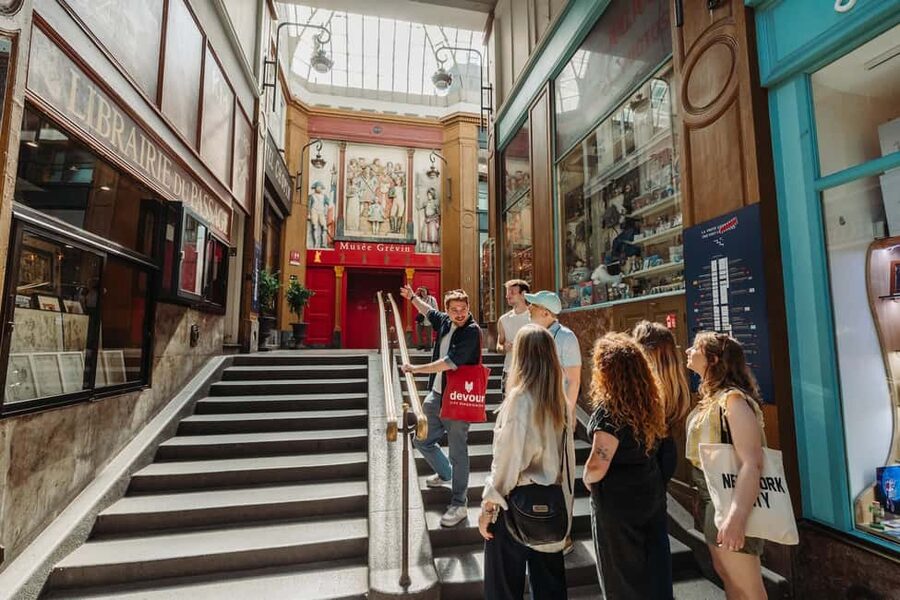
After the bakery, the tour shifts from pastry to Parisian urban design. You walk through Passage Jouffroy, Passage Verdeau, and Passage des Panoramas, with short guided visits of about five to ten minutes at each.
These glass-roofed walkways date from the 19th century. They were built as sheltered shopping and strolling streets, a useful detail when you are trying to understand why they feel different from ordinary Paris sidewalks. They offered protection from rain and traffic while bringing shops, cafés, readers, and artists into one elegant setting.
The passages are also a good answer to the common Paris problem of too much sightseeing and not enough noticing. You are not being hurried through a major monument. Instead, you get a closer look at doorways, ceilings, shopfronts, and the way a small piece of the city still functions as a passageway.
The walking distances are manageable, but you should still wear comfortable shoes. This is a moderate walking tour, and you will be on your feet between food stops. The covered passages provide shelter, but they do not turn the experience into a seated food crawl.
A seasonal cake at Le Valentin Jouffroy
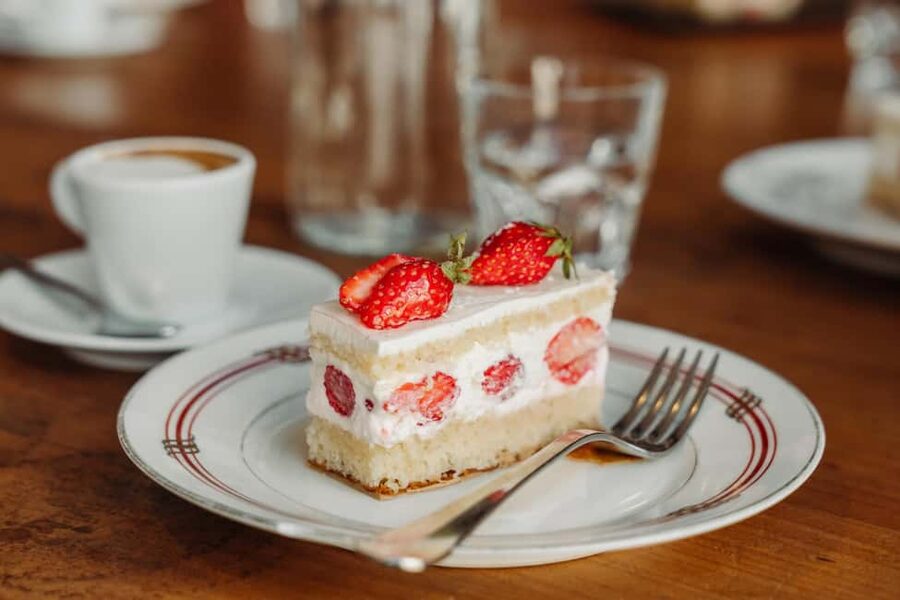
Le Valentin Jouffroy is the longest food stop on the first half of the route, with about 30 minutes for a tasting in a cozy historic tea salon.
The exact cake depends on the season. You might receive a Mont Blanc, with its chestnut and cream profile, or a fraisier, a strawberry cake that feels lighter and more fruit-focused. That seasonal approach is useful because French pastry changes through the year, and it keeps the tasting connected to what is being made at the time of your visit.
This is also where the architectural setting matters most. You are not just eating cake while standing outside a shop. You get time to sit, taste, and hear how the covered passages once shaped everyday Paris life.
Families and mixed-age groups should find this section comfortable. One guide helped create a relaxed pace for a multigenerational family, and that matches the structure of the tour: short walks, seated tastings, and enough explanation to keep the route from feeling like a sugar rush with no pause.
Bean-to-bar chocolate at PLAQ Chocolat
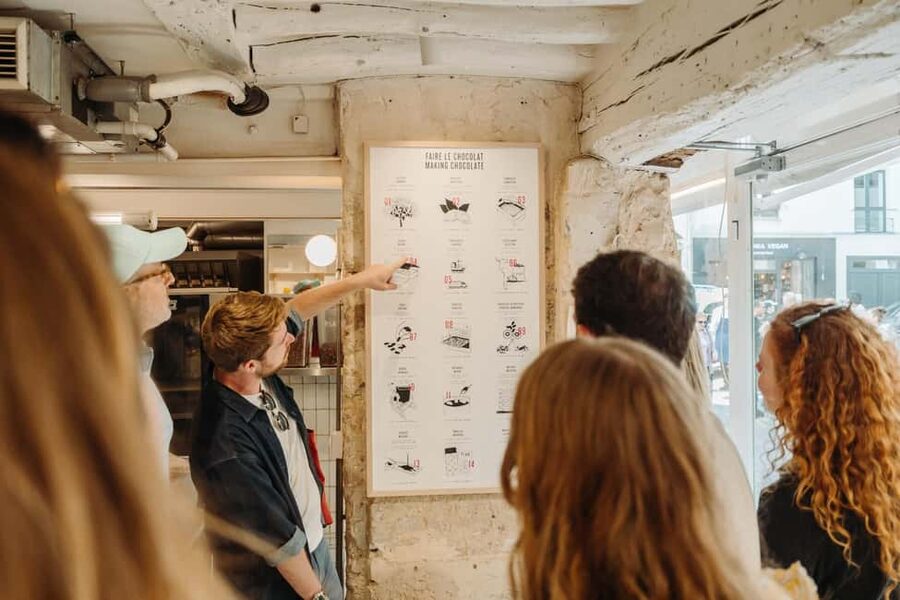
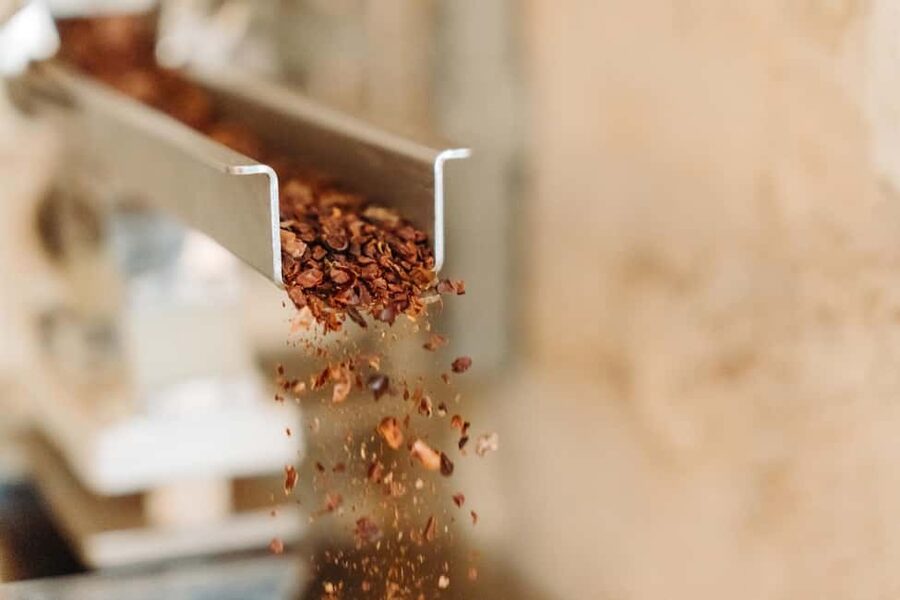
The stop at PLAQ Chocolat offers a more modern view of French sweets. This is a bean-to-bar chocolate atelier, where cacao is turned into chocolate rather than simply used as a finished ingredient in a pastry.
You can expect to smell roasted cacao and taste artisan chocolate during the 15-minute stop. The experience is brief, so set your expectations correctly. This is a tasting visit, not a full workshop in which you watch every stage of chocolate production.
That distinction matters. One person found the chocolate stop disappointing because they expected to see chocolates being made and received a brownie and a piece of chocolate instead. If you want a long explanation of roasting, grinding, tempering, and molding, this tour may feel light on technique.
I still think the stop earns its place because it breaks up the cakes and pastries. Chocolate lovers, especially fans of darker flavors, get a different style of sweetness and a chance to consider how cacao origin and roasting affect the final taste.
More Dessert Tours in Paris:
- Paris French Sweets Tasting Tour with Pastries and Chocolates
★ 4.5 · 947 reviews - Paris Chocolate, Macaron & Pastry Food Tour: 10 Gourmet Tastings
★ 5.0 · 339 reviews - Paris: Le Marais Bakery and Pastry Food Tour with Tastings
★ 4.7 · 64 reviews - Le Marais: Pastry and Chocolate Food Tour
★ 4.5 · 52 reviews
Salted caramel crêpes and Normandy cider
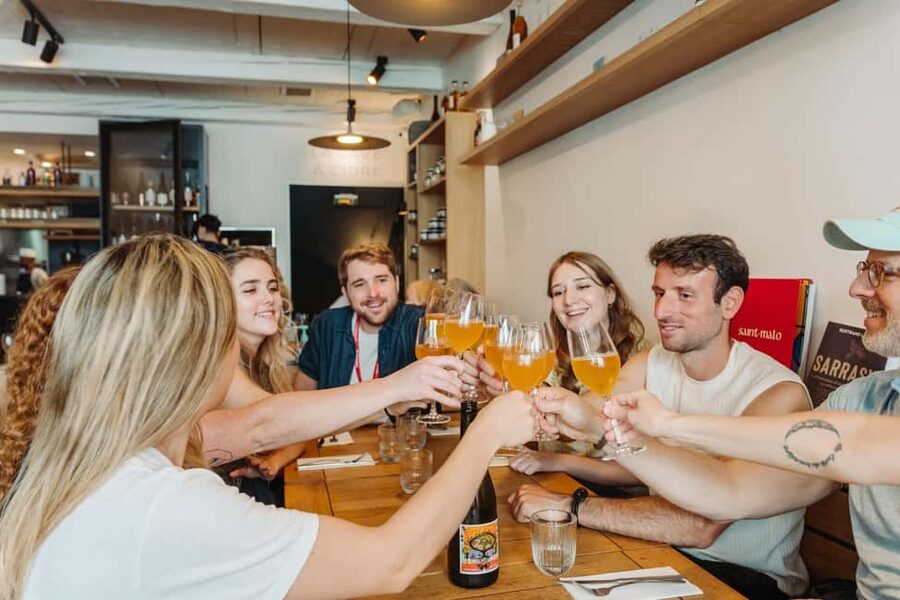
At Le Comptoir du Commerce, the tour settles into a Breton-style crêperie for about 30 minutes. The signature pairing is a salted butter caramel crêpe with a glass of dry Normandy cider.
This is one of the most comforting stops on the route. The crêpe brings warmth, butter, and caramel, while the cider adds acidity and dryness to keep the pairing from becoming one-note sweet. It is a good example of why a food tour works better when it includes contrasts instead of six versions of the same dessert.
The cider is important for another reason: it connects the crêpe to a wider French regional tradition. Breton-style crêperies often serve cider alongside buckwheat galettes and sweet crêpes, while Normandy is known for apple-based drinks. You get a small taste of that regional relationship without leaving central Paris.
This stop may be the point at which you realize the advice to skip breakfast was serious. The route begins with a pastry, adds cake and chocolate, then gives you a full crêpe. If you want to enjoy the final tasting, arrive hungry rather than treating this as something to squeeze in after a hotel breakfast.
A macaron finale at Jeffrey Cagnes
The final food stop is Jeffrey Cagnes Paris 2ème, a sleek modern pâtisserie at 3 Rue Bachaumont. Here you finish with a macaron made by a rising pastry talent.
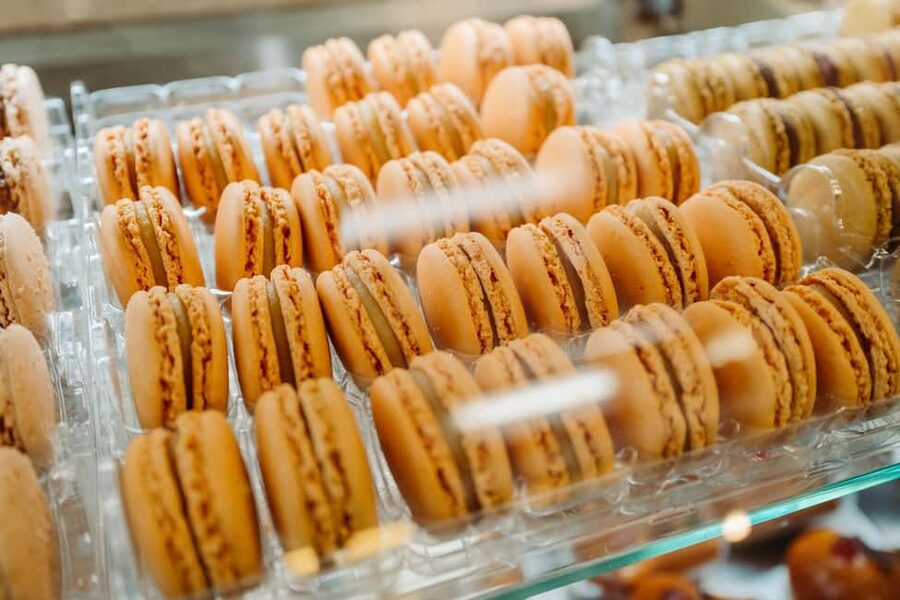
The macaron provides a neat ending because it is small, delicate, and flavor-focused after the more filling crêpe. The flavors can vary, but lemon and raspberry were among the combinations enjoyed on one tour. Expect a crisp shell, a softer center, and a clear flavor rather than a large portion.
The location also makes practical sense. You finish in the 2nd arrondissement, close to streets where you can continue walking or shopping after the tour. One person wished there had been more time for browsing the unusual shops along the route, so I would treat this as a starting point for your own afternoon rather than the end of your day in Paris.
What the guides add to the experience
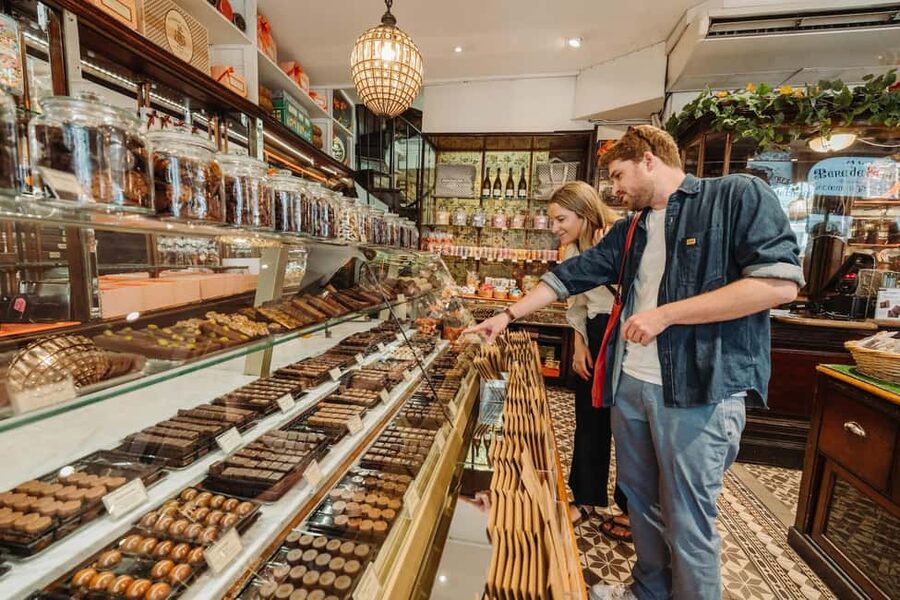
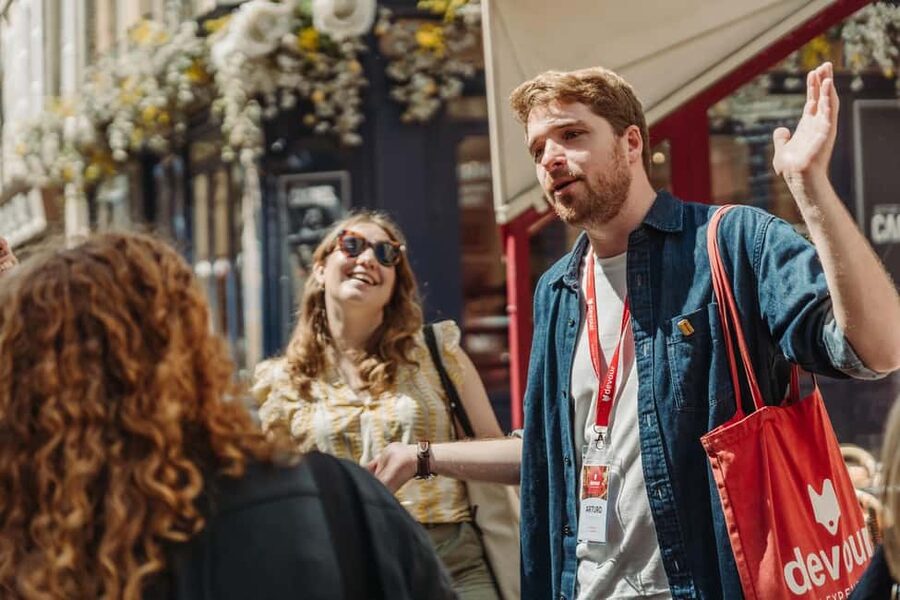
The food is the reason to book, but the guide can determine how much you take away from the walk. The strongest part of the experience is the combination of food knowledge with street-level context.
Dave received especially warm praise for his humor, interesting facts, and British accent. Khosi was appreciated for explaining the history of the food, streets, people, and passageways. Vanessa brought detailed background about the neighborhood and tasting locations, while Sam helped a mixed-age group feel comfortable from the beginning.
Other named guides include Emily, Juan, Joshua, and Davide. The repeated pattern is clear: guides are expected to explain more than what is on the plate. You should hear about pastry traditions, the covered passages, and the character of the surrounding streets.
The English-language format is useful if you want a relaxed conversation while walking. The group limit of 10 also matters. A large food group can make it hard to hear inside a small tea salon or shop, while a smaller group gives you a better chance to ask about ingredients and local customs.
How much food do you really get?
The experience includes six or more tastings. The named stops include pain au chocolat, seasonal cake, chocolate, salted caramel crêpe with cider, and a macaron, with the chocolate stop including more than one small taste.
Portions are not described in exact weights, but the practical message is clear: you will eat a lot. Several people found themselves very full by the final stop, and one person specifically advised skipping breakfast. I would also avoid planning a large lunch immediately afterward.
The menu leans heavily toward sweet food. The cider adds a dry note, and the route includes plenty of walking, but this is not a balanced meal with vegetables and savory courses. If you love French pastries, that focus is the point. If you need savory food or prefer to graze lightly, you may find the pace demanding.
Vegetarians and pescatarians can be accommodated if you contact the operator after booking. The tour is not suitable for vegans, people with gluten intolerance, or people with nut allergies. There are no peanuts on the tour, but almonds, hazelnuts, and pecans are used. Anyone with a serious allergy must sign a waiver at the start and should contact the guest experience team before the visit.
Is $93 a fair price?
At $93 per person, this is not the cheapest way to eat a pain au chocolat and a crêpe in Paris. You are paying for more than the food: the guide, the route planning, the access to several selected businesses, the small group, and the neighborhood explanation all form part of the price.
The value improves if you want a ready-made introduction to French pastry and do not want to research bakeries, passages, tea salons, and chocolatiers yourself. It also works well early in a Paris visit because the guide gives you places and foods to seek out later.
The price is less attractive if you mainly want a formal chocolate-making demonstration, a full meal, or a slow afternoon in each shop. The chocolate stop is short, and some tastings are designed as samples rather than long seated courses.
Free cancellation is available up to 24 hours in advance, and you can reserve now and pay later. The tour lasts 150 minutes, but allow extra time if you plan to continue exploring from the finish near Rue Bachaumont.
Who should book this Paris food walk?
I would recommend it to first-time Paris visitors who want an easy introduction to French pastry and a neighborhood they might not find on their own. It is also a good fit for families with teenagers, couples, and small groups who prefer explanation and conversation over a self-guided list of bakeries.
The route suits people who enjoy architecture as much as food. The covered passages give the tour a sense of place, and the guide explains why these streets matter instead of treating them as a corridor between snacks.
You should think twice if you have a serious dietary restriction, dislike sweet food, or want to watch pastry and chocolate being made. It is also not ideal if you have difficulty walking at a moderate pace, although wheelchair users and people with mobility impairments may be accommodated if arrangements are made by email at booking.
Should you book it?
Book this tour if you want a generous tasting session with a neighborhood walk attached. The best parts are the award-winning pain au chocolat, the old covered passages, the tea salon cake, and the small group atmosphere.
Skip it if your main goal is a chocolate workshop or a carefully balanced meal. For most pastry fans, though, $93 buys a well-planned introduction to Parisian sweets, with enough street history to keep the morning from feeling like a series of bakery counters. Arrive 15 minutes early, wear comfortable shoes, and save room for the macaron.
FAQ
Where does the tour start?
It starts at 34 Rue du Faubourg Montmartre, 75009 Paris, at the beginning of the pedestrian street in front of Faubourg 34.
Where does the tour finish?
The tour finishes at Jeffrey Cagnes Paris 2ème, 3 Rue Bachaumont, 75002 Paris, France.
How long does the experience last?
The tour lasts 150 minutes, or two and a half hours.
What language is the tour conducted in?
The tour is conducted in English with a live English-speaking guide.
How large is the group?
The group is limited to a maximum of 10 participants.
What food is included?
The experience includes six or more tastings, including pain au chocolat, seasonal French cake, artisan chocolate, salted caramel crêpes, Normandy cider, and a macaron.
Should I eat breakfast before the tour?
It is best to arrive hungry. The tour includes several substantial tastings, and eating breakfast beforehand may leave you too full for the later stops.
Can people with dietary restrictions join?
Vegetarians and pescatarians can be accommodated if arrangements are made after booking. The tour is not suitable for vegans, people with gluten intolerance, or people with nut allergies. Almonds, hazelnuts, and pecans are used, and serious allergies require a waiver.
Can I cancel or pay later?
You can cancel up to 24 hours before the tour for a full refund. You can also reserve now and pay later.
More Food Walking Tours in Paris
- Reykjavik Food Walk – Local Foodie Adventure in Iceland
★ 5.0 · 18,952 reviews - New Orleans Food Walking Tour of the French Quarter with Small-Group Option
★ 5.0 · 6,118 reviews - Naples: Street Food Walking Tour with Local Guide
★ 4.9 · 4,976 reviews - Greek Food Walking Tour in Athens
★ 5.0 · 4,740 reviews
Fresh off the menu around Paris
- Paris: Saint Germain des Prés Guided Foodie Walking Tour★ 4.8 · 146 reviews
- Paris: Taste of Montmartre Food & Wine Walking Tour★ 4.9 · 29 reviews
- Paris: Notre Dame & Latin Quarter Food Tour with 8+ Tastings★ 4.8 · 60 reviews
- Paris: Guided Champagne & Food Tour in St-Germain-des-Pres★ 4.6 · 26 reviews
- Paris Le Marais Food Tour: Full Traditional French Feast★ 4.8 · 119 reviews
- Paris: Montmartre Food Tour with 10 Local Tastings & Wines★ 4.8 · 191 reviews
- Paris: Le Marais District Food Tour with 10+ Tastings & Wine★ 4.8 · 382 reviews
- Paris: Le Marais Bakery and Pastry Food Tour with Tastings★ 4.7 · 64 reviews
Paris Food Tours, compared.
Bateaux Parisiens Seine River Gourmet Dinner & Sightseeing Cruise
Read our review →
Authentic Parisian Gourmet Food Tour with 10 Local Dishes & Wines
Read our review →
Montmartre Hill French Gourmet Food and Wine Tasting Walking Tour
Read our review →
Paris 3-Courses Gourmet Dinner Seine River Cruise with Champagne
Read our review →
Paris Gourmet Dinner Seine River Cruise with Singer and DJ Set
Read our review →
Private Montmartre Food Tour with Wine, Cheese & Pastries
Read our review →
Paris Le Marais Food Tour With 10+ Tastings, Cheese, Wine & More
Read our review →Browse the lists this tour appears in