
Review · MELBOURNE
Melbourne Flavors: Queen Victoria Market Food Tour
Melbourne’s best food stories are often told at a market stall, not in a restaurant. This Queen Victoria Market food tour gets you there early, when the aisles are easier to navigate and your guide can stop for a proper chat with vendors. I like the mix of tasting and local history, and I like that guides such as Tristan and Anna seem to have warm working relationships with the stallholders. The catch is the $176 price, which makes sense only if you value the guidance, tastings, and market know-how, not just the food itself.
The walk is easy, about 1 kilometer, but the advertised duration is 150 minutes and the pace may stretch longer if conversations and samples run over. You should also come ready for changing weather, since the tour runs in rain or shine.
Key points at a glance
- Early access to Queen Victoria Market: Visit before the main crowds arrive and get your bearings with a local guide.
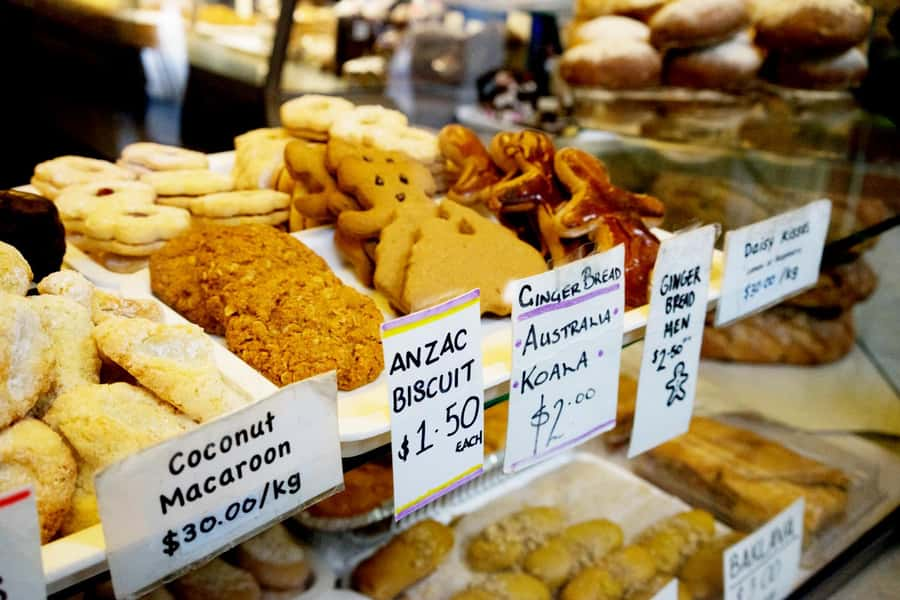
- A true mix of Melbourne flavors: Tastings can include coffee, cheese, charcuterie, sweets, seafood, regional foods, and multicultural specialties.
- Food shaped by migration: The tour explains how different communities helped form Melbourne’s present-day eating culture.
- Small groups capped at 12: The format gives you more room to ask questions and speak with stallholders.
- Guides with personal market connections: Tristan and Anna are both praised for their calm, friendly approach and rapport with vendors.
- Useful for the rest of your trip: You finish at the market with ideas about what to buy and where to return for another meal.
Starting outside the Multicultural Hub on Elizabeth Street
Your meeting point is outside the Multicultural Hub at 506 Elizabeth Street, Melbourne. From there, the guide leads you toward Queen Victoria Market, so you are not left to work out the market’s many sections on your own.
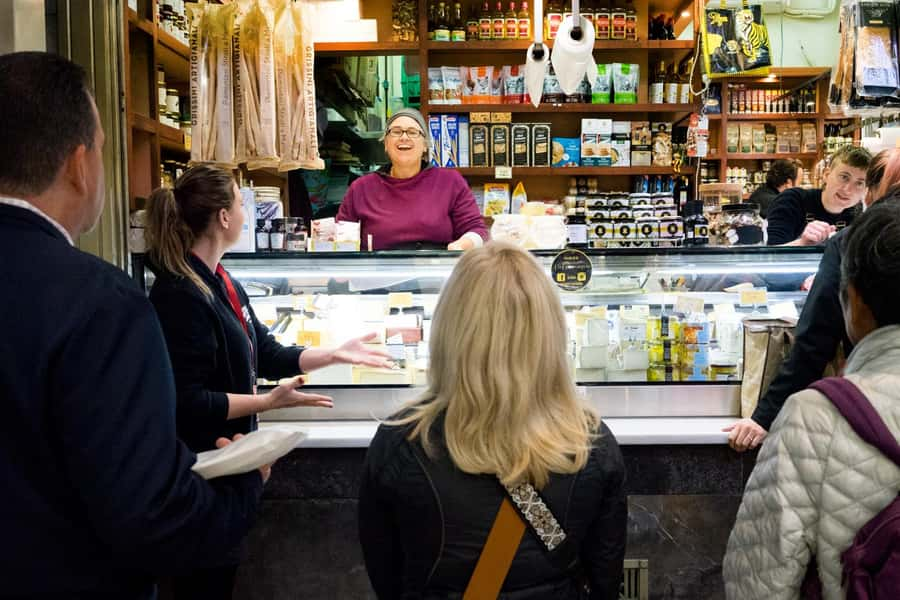
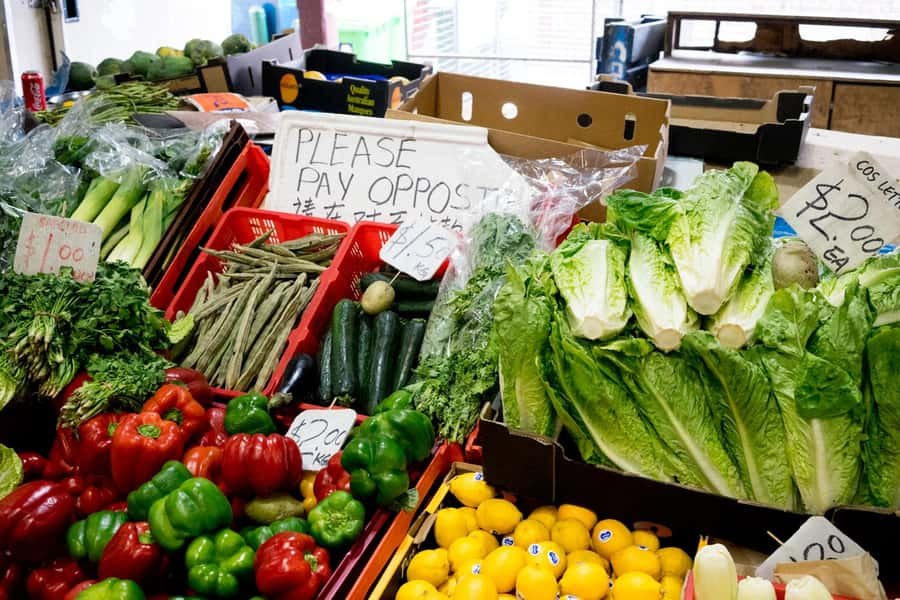
That short approach matters. Queen Victoria Market is large, and a first visit can feel like several markets stitched together: fresh produce, prepared foods, specialty goods, sweets, meats, seafood, and stalls selling ingredients from around the world. A guide gives the morning some shape instead of sending you into a pleasant but unfocused wander.
The group size is limited to 12 people, and the experience is also described as a private group. That creates a more personal setup than a large walking tour. You can ask why a particular product matters, how a stall operates, or what is worth buying later without having to shout across a crowd.
The guide is English-speaking, and past guides have included Tristan, Anna, and Kellie. The strongest pattern in the feedback is not flashy performance. It is a calm, attentive style, with guides who explain the market clearly and adjust the visit to the group.
More Market Food Tours in Australia:
- Queen Victoria Market Ultimate Foodie Tour
★ 5.0 · 295 reviews - Chef Guided Food Tour of Pike Place Market
★ 5.0 · 3,733 reviews - Tokyo Tsukiji Fish Market Food and Culture Walking Tour
★ 5.0 · 3,184 reviews
Queen Victoria Market before the crowds
The market is the main event, and the timing is one of the tour’s best features. Arriving before the busiest period lets you see the place while there is still room to pause at a stall. You get a clearer look at displays, ingredients, and the practical work of selling food.
Your guide leads you through the market for roughly two hours, combining walking, sightseeing, food tasting, and conversation. The route covers regional and multicultural foods rather than sticking to one narrow theme. You may see produce, spices, breads, cheese, cured meats, seafood, sweets, and other products that reflect Melbourne’s broad food culture.
The market itself is worth visiting even if you do not book a tour. The benefit here is interpretation. A stall of spices can become a story about migration and changing tastes. A family-run food business can lead to a discussion about how communities have shaped the city. A familiar product may look different once you understand where it comes from and why it is sold there.
The tour also touches on the market’s design, history, and the challenges involved in preserving such an important public place. That gives the visit more depth than a series of snacks. You are not only being shown what to eat. You are learning why this market matters to Melbourne.
Tastings that cover more than one food tradition
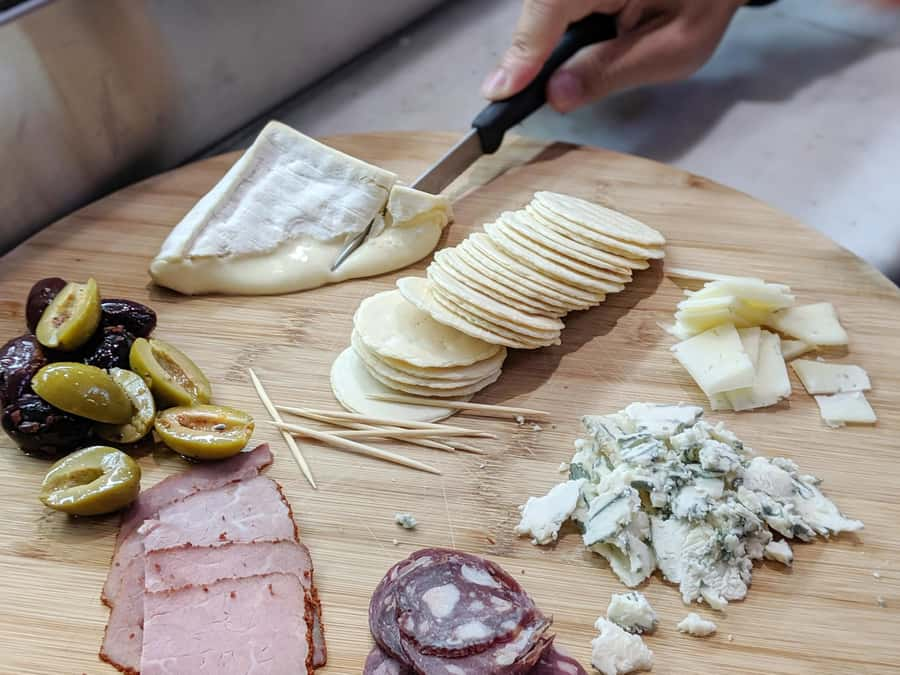
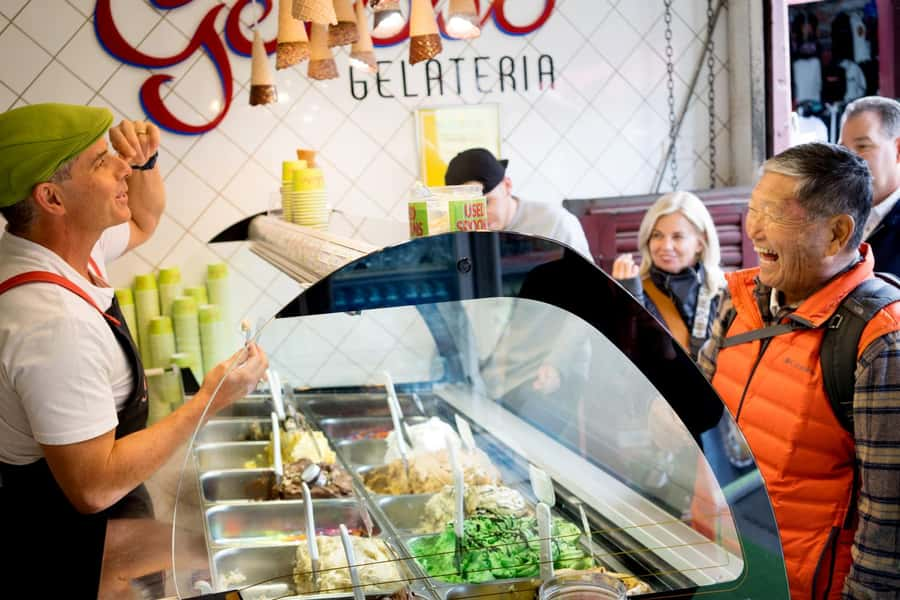
The tastings are included, but the exact selection can change. That is normal for a market tour, where availability depends on the day and the vendors. You should expect several small samples rather than a full sit-down meal, so have a little room in your schedule and appetite for additional food afterward.
Past tastings have included some particularly memorable choices:
- Melbourne coffee, including the city’s well-known coffee style
- Hot doughnuts
- Cheese and charcuterie
- Squid ink salami
- Kangaroo
- Sorbet
- Oysters
- Breads, spices, honey, and other specialty products
That list shows the tour’s range. You may move from a classic market sweet to a distinctly Australian ingredient, then on to products tied to European or other migrant food traditions. The point is not to prove that every bite is exotic. It is to show how many food cultures share space in Melbourne.
One participant singled out a market oyster as a personal highlight, while another enjoyed a cheese tasting. Those details matter because they show how the tour can work for different palates. You are not locked into one type of food, and the guide can explain unfamiliar items before you try them.
Do not expect every item listed above on your particular morning. Treat the examples as an indication of the range, not a fixed menu. Additional food and drinks are not included, so budget extra if you want to buy a breakfast, a larger serving, or products to take back to your accommodation.
Meeting the stallholders, not just passing their counters
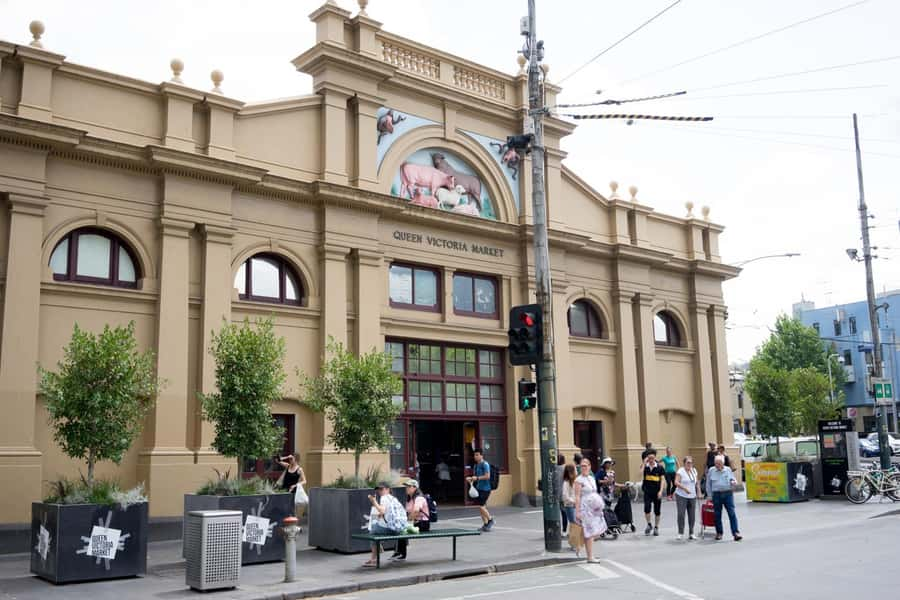
A good market tour depends on the quality of its conversations. Here, the guide does more than point at displays and move on. You stop to meet vendors, hear about their products, and ask questions.
This is where Tristan’s and Anna’s strengths come through most clearly. Tristan is repeatedly described as friendly, calm, and well prepared, while Anna is noted for being patient, attentive, and engaging. Both are said to have an easy rapport with stallholders, which adds warmth to the stops.
That connection changes the feel of the morning. Instead of treating the market as a backdrop for a lecture, you get a sense of the people who work there. You may hear how a product is made, where an ingredient fits into a food tradition, or why a particular stall has attracted a loyal following.
You also get a useful lesson in how to shop. The guide can point out products worth returning for, explain what to look for, and help you avoid buying something simply because it looks unfamiliar or photogenic. One of the practical pleasures of this tour is finishing with a better plan for a second, self-guided visit.
More food tours around Australia:
- Barossa Premium Wine Tasting Tour & lunch Departs 7 days a week
★ 5.0 · 1,475 reviews - Adelaide: Barossa Premium Wine Tasting tour & Winery Lunch
★ 4.8 · 1,452 reviews - Discover Barossa: 4 Wine Tastings, Gourmet Lunch, and Hidden Gems
★ 5.0 · 1,027 reviews - Bruny Island Traveller – Gourmet Tasting and Sightseeing Day Trip from Hobart
★ 5.0 · 786 reviews
How immigration shaped Melbourne’s food culture
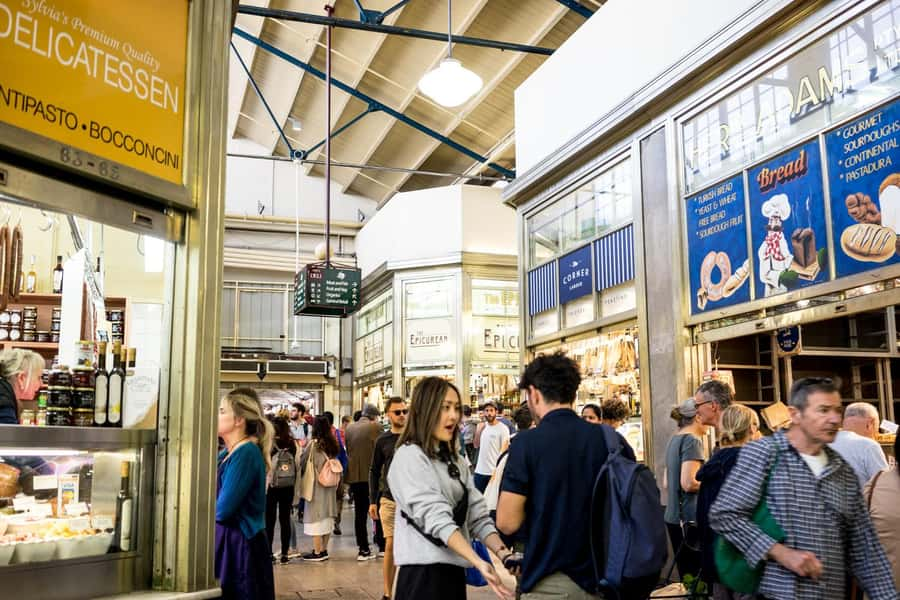
Melbourne’s food identity did not come from one tradition. The tour explains how waves of immigration brought ingredients, cooking methods, business ideas, and eating habits that became part of everyday city life.
At the market, that story is easier to understand because it appears in physical form. You see different ingredients sharing the same food hall. You hear names and recipes from different communities. You taste products that might never appear together on a standard sightseeing route.
The guide’s role is to connect those details. Rather than offering a broad lecture about Melbourne, the experience uses the stalls as examples. That keeps the subject grounded and gives you something to look at while you learn.
I especially like this approach for first-time visitors. You leave with more than a list of foods. You begin to understand why Melbourne has such a wide choice of cafés, bakeries, specialty grocers, restaurants, and market sellers. The city’s food scene becomes part of its social story.
A relaxed 1-kilometer walk, with weather in mind
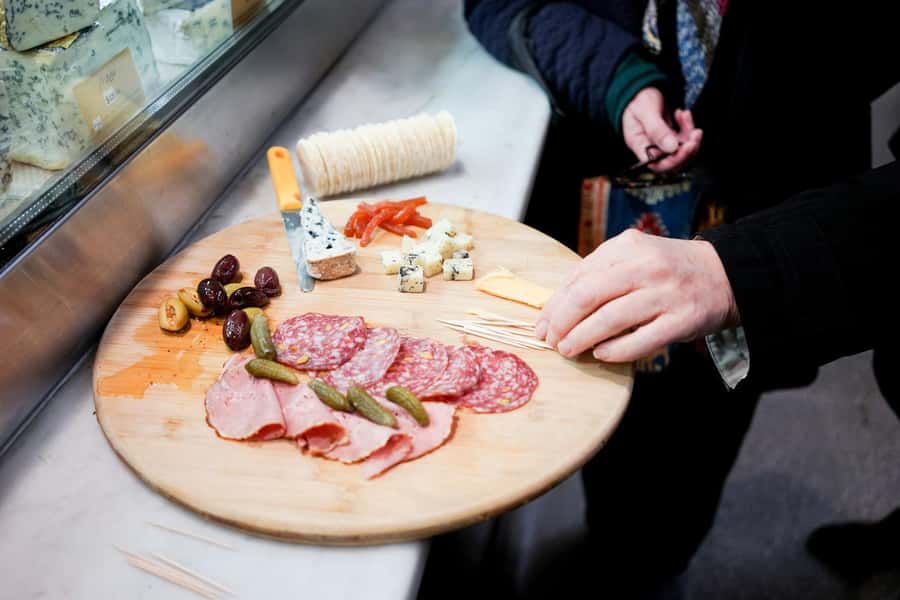
The walking distance is about 1 kilometer, making this an easy outing for most fitness levels. You will spend time standing at stalls and moving through market aisles, but this is not a strenuous hike.
Wear comfortable shoes and comfortable clothes. The market visit runs in all weather, so layers are sensible. Rain should not automatically cancel your plans, but you should bring a jacket or other wet-weather protection. The tour is designed to continue in changing conditions.
Some areas may have access limitations. If you need particular support, contact the operator before the tour so the route and tastings can be adjusted where possible. Vegetarian, vegan, and gluten-free requests can be accommodated when arranged in advance.
Children under six can join at no charge, and the experience is described as kid-friendly. A 13-year-old participant enjoyed trying the different foods, which suggests the format can work well for families with children who like tasting and asking questions. Very young children may find the two-and-a-half-hour pace less predictable, especially if the group stops often.
Is $176 good value?
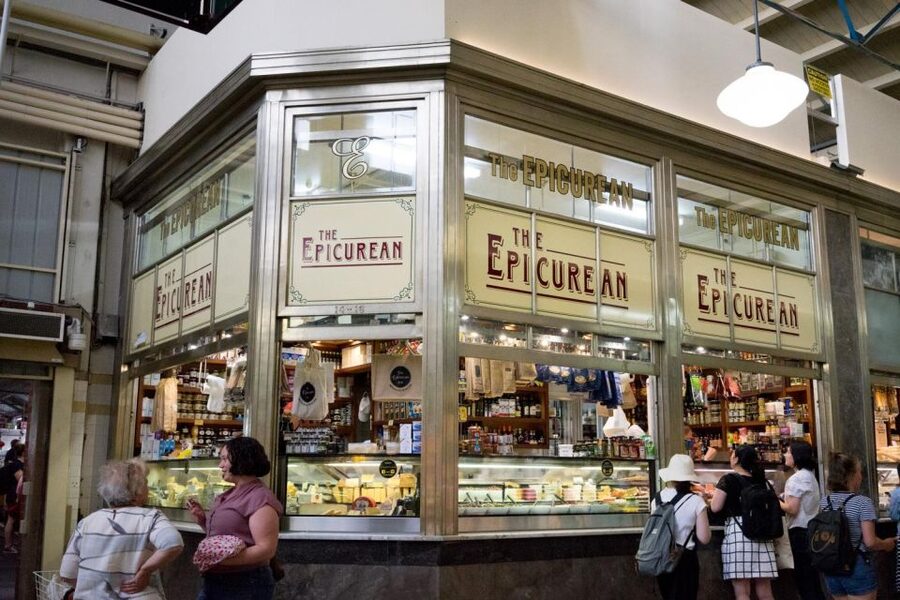
At $176 per person, this is not a cheap way to grab breakfast at Queen Victoria Market. You can visit the market independently for free and buy individual foods as you go. If your only goal is to eat as much as possible for the least money, this tour is not the right choice.
The price is easier to justify if you want a guided introduction. You are paying for a local English-speaking guide, several tastings, coffee, the historical and cultural explanation, and the convenience of being taken to selected stalls. The small group also matters. With no more than 12 people, the guide can respond to questions and manage tastings without the rushed feeling of a large group.
The range of food helps the value. Examples include coffee, doughnuts, cheese, charcuterie, sorbet, seafood, and Australian ingredients. You may not receive every one of those items, but the spread is broader than a single breakfast stop.
There is also a practical return on the cost. If you take the tour early in your Melbourne stay, you can go back later with a better idea of what to buy. One participant specifically appreciated receiving tips for shopping during the rest of the visit. That makes the tour more useful than a one-off eating experience.
Still, be realistic. Tastings are samples, not a full meal, and extra food and drinks cost more. If you have only one day in Melbourne, consider the time carefully. The planned length is 150 minutes, but one account described the outing as lasting more than three hours. Allow some flexibility if the guide spends longer with vendors or the group moves slowly.
Who should book this market tour?
I would choose this experience for a first visit to Melbourne, especially if you want food to help you understand the city. It suits solo visitors, couples, families, and small groups who enjoy conversation and trying unfamiliar products.
Solo travelers can benefit from the small-group format, and the tour has gone ahead with a single participant. That is unusual and useful if your dates are fixed. Families with older children may also appreciate the easy walk and variety of samples.
It is less suited to you if you prefer complete independence, need a guaranteed menu, or want a substantial meal rather than a series of tastings. It may also be a poor fit for a tightly packed one-day schedule if you cannot spare extra time beyond the stated 150 minutes.
The carbon-neutral operation and certified B Corp status will appeal to travelers who want responsible-travel standards built into their activities. Those credentials do not change the food itself, but they are a worthwhile part of the decision if sustainability affects how you book.
Practical tips for a better morning
Book this near the beginning of your Melbourne stay. You will learn which products interest you, where to return, and how to shop the market with more purpose.
Eat lightly beforehand. The tour includes several samples, and the appeal is trying a sequence of different foods rather than arriving hungry for one large plate.
Tell the operator about vegetarian, vegan, or gluten-free needs in advance. Do not wait until the meeting point, since the guide may need time to arrange suitable tastings.
Wear shoes that can handle a long morning on your feet. Bring layers and prepare for rain, since the tour operates in all weather.
If you are keen on a particular food, ask the guide. The itinerary is not a fixed menu, but the guides are described as flexible and willing to tailor the experience where possible.
Should you book Melbourne Flavors?
Book it if you want Queen Victoria Market explained by someone who knows its products, people, and past. The strongest parts are the early timing, the small group, the broad tasting list, and the personal exchanges with stallholders. Guides such as Tristan and Anna add the local touch this kind of tour needs.
Skip it if you mainly want the lowest-cost market breakfast or if your schedule is too tight for a flexible morning. At $176, the value lies in context and access, not quantity alone.
For most first-time visitors who enjoy food and local stories, I would book it early in the trip, arrive hungry but not starving, and keep part of the day open for returning to the stalls you discover.
FAQ
Where does the Queen Victoria Market food tour meet?
The meeting point is outside the Multicultural Hub at 506 Elizabeth Street, Melbourne VIC 3000.
How long does the tour last?
The stated duration is 150 minutes, or two and a half hours. You should allow some flexibility because the pace may run longer when the group spends time with vendors and tastings.
How far do you walk?
The tour covers about 1 kilometer and is described as an easy walk suitable for all fitness levels.
What food and drinks are included?
The tour includes tastings of local and multicultural specialties and famous Melbourne coffee. Additional food and drinks are not included.
Can dietary requirements be accommodated?
Vegetarian, vegan, and gluten-free requests can be accommodated when you provide notice in advance.
Is the tour suitable for children?
Yes. Children under six are welcome at no charge, and the experience is described as kid-friendly.
What happens if it rains?
The tour runs in all weather. Bring layers and suitable clothing for wet or changing conditions.
Fresh off the menu around Australia
- Sydney: Food Tour in Surry Hills with 8 Local Food Tastings★ 4.6 · 76 reviews
- Sydney: Chinatown Street Food & Culture Guided Walking Tour★ 4.9 · 48 reviews
- Sydney: Chef-Led Hunter Valley Food & Wine Tour★ 5.0 · 37 reviews
- Reef Sleep: 2-Day Great Barrier Reef Pontoon & Gourmet Meals★ 4.4 · 45 reviews
- From Port Douglas: Atherton Tablelands Adventure★ 4.7 · 67 reviews
- Melbourne: Guided Night-Time Food Walking Tour★ 4.7 · 76 reviews
- Melbourne: Yarra Valley Food & Wine Trip with 1 Wine Bottle★ 4.7 · 94 reviews
- Gold Coast: Premium Wine Tour with Gourmet Lunch★ 4.4 · 28 reviews
Melbourne Food Tours, compared.
Melbourne Food Tour with 8+ Food Tastings in Hidden Laneways
Read our review →
Melbourne: Yarra Valley Food & Wine Trip with 1 Wine Bottle
Read our review →
Browse the lists this tour appears in